
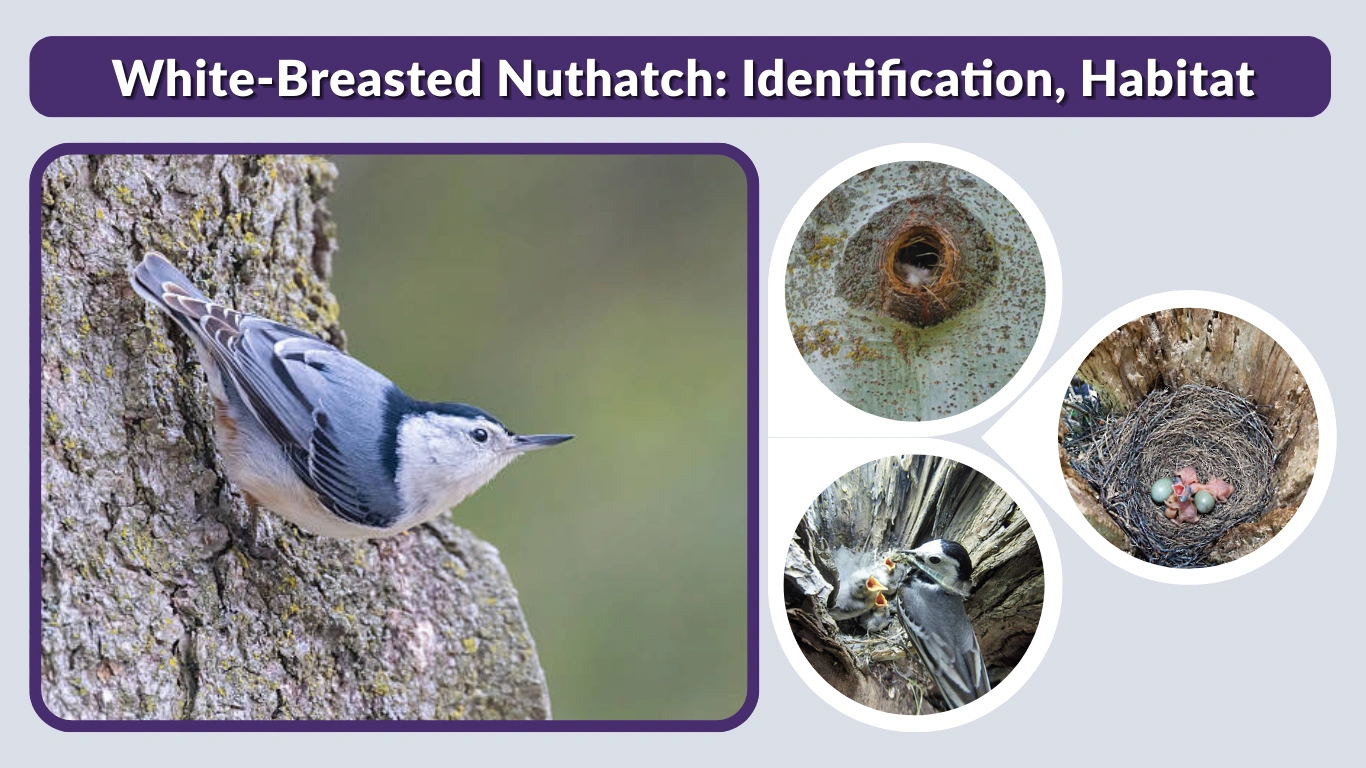
The white-breasted nuthatch is one of the most recognizable backyard birds in North America. Known for its bold habit of walking headfirst down tree trunks, this small but energetic bird is a favorite among birdwatchers. Its sharp call, compact body, and striking black-and-white pattern make it relatively easy to identify once you know what to look for. Often confused with chickadees, the white-breasted nuthatch has several unique features that set it apart. In this guide, you’ll learn how to identify it, where it lives, and what makes it such an interesting woodland species.
White-Breasted Nuthatch Identification
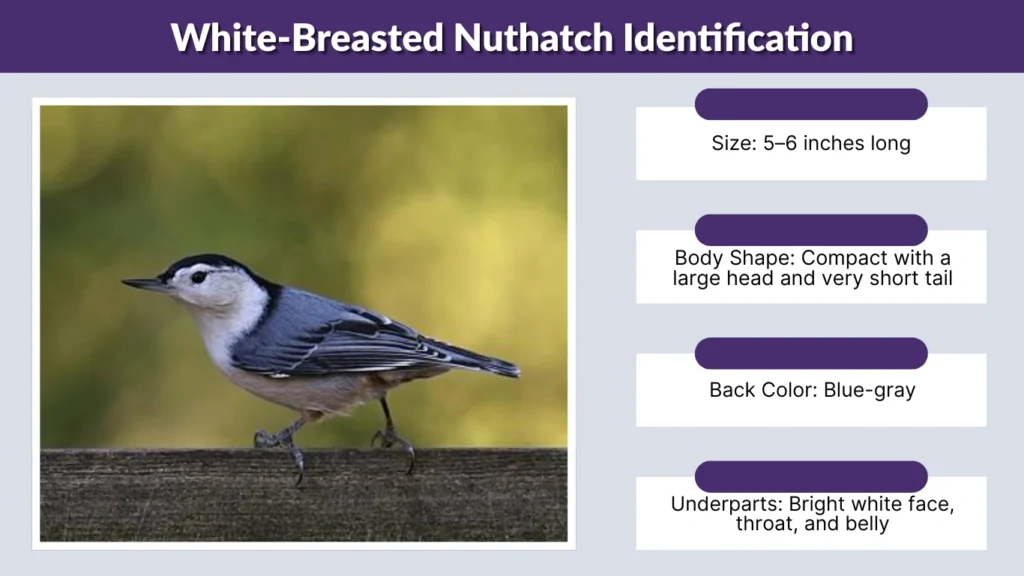
The white-breasted nuthatch is a small, active songbird that is easiest to identify by both its appearance and behavior. Its bold black-and-white pattern, compact body, and unusual headfirst climbing habit make it stand out in wooded areas and backyards alike. While it may resemble a chickadee at first glance, a closer look at its bill shape, posture, and movement quickly reveals the difference.
Here’s a quick identification overview:
- Size: 5–6 inches long
- Body Shape: Compact with a large head and very short tail
- Bill: Long, straight, and sharply pointed
- Back Color: Blue-gray
- Underparts: Bright white face, throat, and belly
- Head Marking: Black cap (darker in males, slightly grayer in females)
- Lower Belly: Slight rusty or chestnut tint under the tail
- Movement Style: Climbs up and down tree trunks, often headfirst
- Common Call: Loud, nasal “yank-yank”
If you see a small bird confidently creeping along tree bark—especially moving downward—you are very likely looking at a white-breasted nuthatch.
White-Breasted Nuthatch Habitat
Natural Habitat
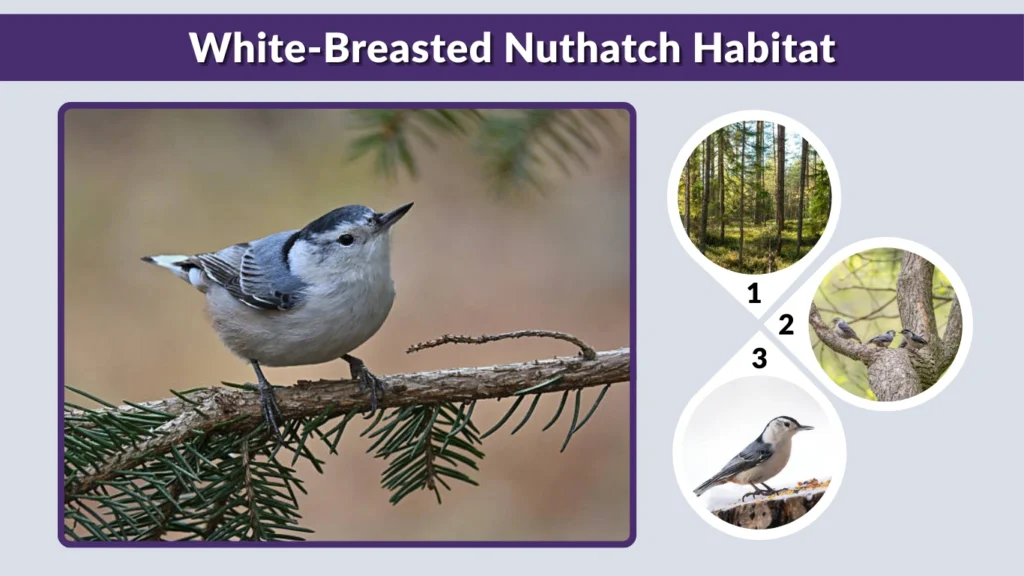
White-breasted nuthatches prefer mature deciduous forests, especially those dominated by oak and hickory trees. These trees provide abundant insects and nuts, which are essential parts of their diet. Mixed hardwood forests are also suitable habitats, particularly where older trees offer natural cavities for nesting.
They tend to avoid dense, young forests and heavily coniferous areas, although they may still appear in mixed woodlands. Because they rely on tree cavities, forests with standing dead trees (snags) are especially valuable for nesting opportunities.
Backyard and Urban Areas
One reason white-breasted nuthatches are so well known is their adaptability. They frequently visit suburban neighborhoods, parks, and wooded backyards. If you have mature trees nearby, there’s a good chance these birds may appear at your feeders.
They are particularly attracted to suet and sunflower seeds. Unlike some shy woodland species, nuthatches often approach feeders confidently, sometimes even feeding while other birds are present. Providing suitable food and maintaining natural tree cover can greatly increase your chances of spotting one.
Geographic Range
The white-breasted nuthatch is widespread across much of the United States and southern Canada. It is primarily a year-round resident, meaning it does not migrate long distances like many songbirds. Instead, it remains in its territory throughout the seasons.
In northern parts of its range, individuals may shift slightly southward during particularly harsh winters, but large-scale migration is uncommon. Because they stay in one general area year-round, birdwatchers can observe them in every season, including winter when their white underparts stand out against bare trees.
White-Breasted Nuthatch Nest and Eggs
Nest Location
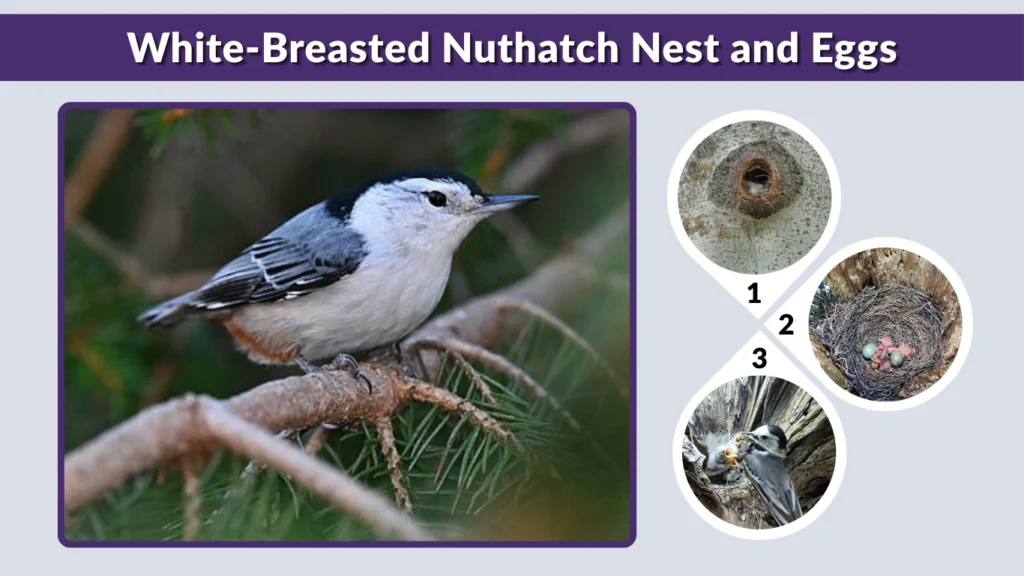
White-breasted nuthatches are cavity nesters. They typically choose natural holes in trees or old woodpecker cavities. Rather than excavating their own nests, they rely on existing openings, making mature forests especially important for their survival.
In residential areas, they may also use nest boxes designed for small cavity-nesting birds. The entrance hole must be appropriately sized to keep out larger competitors. Nest placement is usually several feet above the ground, offering protection from many predators.
Nest Construction and Eggs
Inside the cavity, the female builds a soft nest using bark strips, grass, fur, and feathers. These materials create insulation and comfort for the developing eggs. An interesting behavior sometimes observed is the smearing of crushed insects around the entrance hole, possibly to deter predators with scent.
White-breasted nuthatch eggs are typically white or creamy in color with fine reddish-brown speckles. A typical clutch contains between five and nine eggs. The female incubates the eggs for about 12 to 14 days, while the male often helps by bringing food to the nesting site.
White-Breasted Nuthatch Song and Calls
Common Vocalizations
The white-breasted nuthatch is often heard before it is seen. Its most familiar call is a loud, nasal “yank-yank” sound that carries clearly through the woods. This repeated call is sharp and slightly metallic, making it quite different from the musical songs of many other songbirds.
Both males and females give this call year-round. It serves as a contact call between mates and also helps establish territory. Because it is so distinctive, learning this sound is one of the quickest ways to identify the species in the field.
When They Vocalize Most
White-breasted nuthatches are vocal throughout the year, but calling becomes especially frequent during the breeding season in spring. At this time, males use their calls to defend territory and communicate with their mates.
Even outside the breeding season, they remain fairly chatty. During winter, they often join mixed-species flocks that include chickadees and woodpeckers, and their nasal calls can still be heard among the group.
Male vs Female Calls
While both sexes sound similar, careful listeners may notice slight differences in pitch. Male calls tend to be a bit lower and more resonant, while female calls are often slightly higher and softer. The distinction is subtle, but with practice, experienced birders can sometimes tell them apart by sound alone.
What Do White-Breasted Nuthatches Eat?
White-Breasted Nuthatch Diet in the Wild
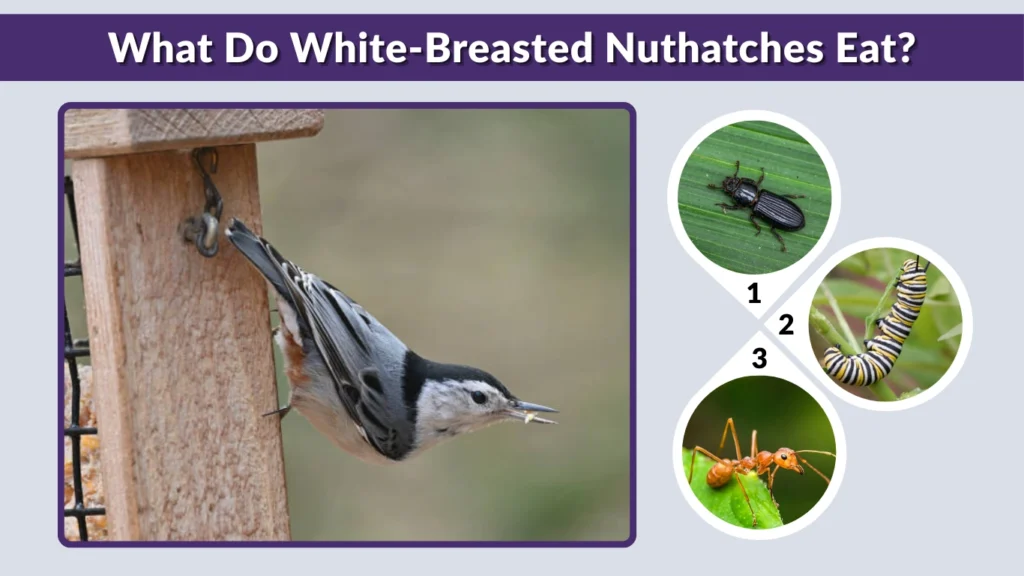
White-breasted nuthatches have a varied diet that changes with the seasons. During spring and summer, they feed heavily on insects and other invertebrates. Beetles, caterpillars, ants, and spiders are common food items. Their long, pointed bills allow them to probe deep into bark crevices where insects hide.
By moving headfirst down tree trunks, they can access food sources that many other birds overlook. This feeding strategy reduces competition and makes them highly efficient foragers.
Winter Diet
In fall and winter, their diet shifts more toward plant material. Seeds and nuts become especially important when insects are less available. Acorns, beechnuts, and other tree seeds provide essential energy during cold months.
White-breasted nuthatches are also known to store food. They wedge seeds or nuts into bark crevices and cover them lightly, returning later to retrieve them. This caching behavior helps them survive during periods of scarcity.
Foods at Bird Feeders
At backyard feeders, white-breasted nuthatches eagerly accept black oil sunflower seeds, peanuts, and suet. They often grab a seed and fly to a nearby tree to wedge it into bark before cracking it open. Providing high-energy foods, especially in winter, can attract them regularly.
White-Breasted Nuthatch vs Chickadee
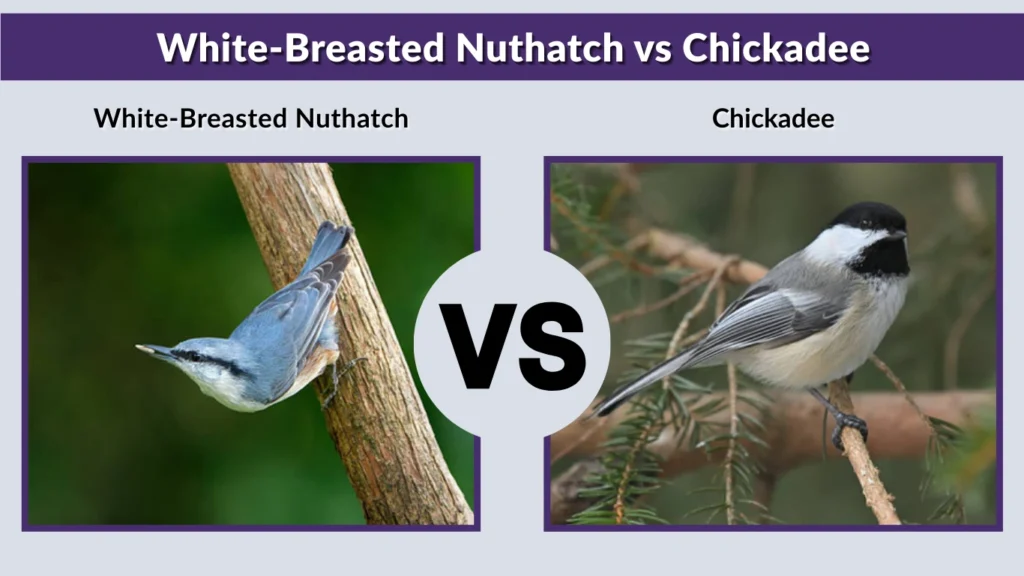
Because both species are small, black-and-white birds that visit feeders, they are often confused. However, several clear differences make identification easier.
Key Physical Differences
The white-breasted nuthatch has a long, straight bill and a very short tail. In contrast, chickadees have shorter, stubby bills and noticeably longer tails. Chickadees also have a distinct black throat patch, often called a “bib,” beneath their black cap. The nuthatch lacks this bib and instead shows a clean white throat.
In posture, nuthatches appear more elongated when clinging to trunks, while chickadees look rounder and more upright when perched.
Behavior Differences
Behavior is often the quickest way to tell them apart. White-breasted nuthatches climb vertically along tree trunks and frequently move headfirst downward. Chickadees, on the other hand, hop between branches and twigs and rarely descend headfirst.
Chickadees are typically more active and fluttery, while nuthatches move in a steadier, more deliberate manner along bark surfaces.
Vocal Differences
Their calls are also very different. The nuthatch’s nasal “yank-yank” contrasts sharply with the chickadee’s familiar “chick-a-dee-dee-dee” call. Chickadees also produce a clear, whistled “fee-bee” song in spring, which nuthatches do not.
Learning these vocal distinctions makes field identification much easier, especially in dense woods where visibility is limited.
How to Attract White-Breasted Nuthatches
If you want to attract white-breasted nuthatches to your yard, focus on providing both food and suitable habitat. Offer suet, peanuts, and sunflower seeds in sturdy feeders. Leaving mature trees standing, especially those with natural cavities, increases nesting opportunities.
Installing a properly sized nest box can also help. Avoid removing dead trees when they do not pose a safety risk, as these snags provide valuable nesting sites. A yard with large trees and reliable winter food sources is especially appealing to this species.
FAQs
Are white-breasted nuthatches rare?
White-breasted nuthatches are not considered rare. They are common throughout much of the United States and southern Canada, particularly in areas with mature hardwood trees. Because they remain year-round residents, they can be observed in all seasons where suitable habitat exists.
Do white-breasted nuthatches migrate?
Most white-breasted nuthatches do not migrate long distances. They are generally year-round residents within their range. In extreme northern areas, some individuals may move slightly south during harsh winters, but widespread seasonal migration is uncommon.
Why do nuthatches walk upside down?
White-breasted nuthatches walk upside down to access insects hidden beneath bark. By moving headfirst down tree trunks, they can find food that other birds miss. This unique feeding strategy reduces competition and helps them exploit a wider range of foraging opportunities.
