
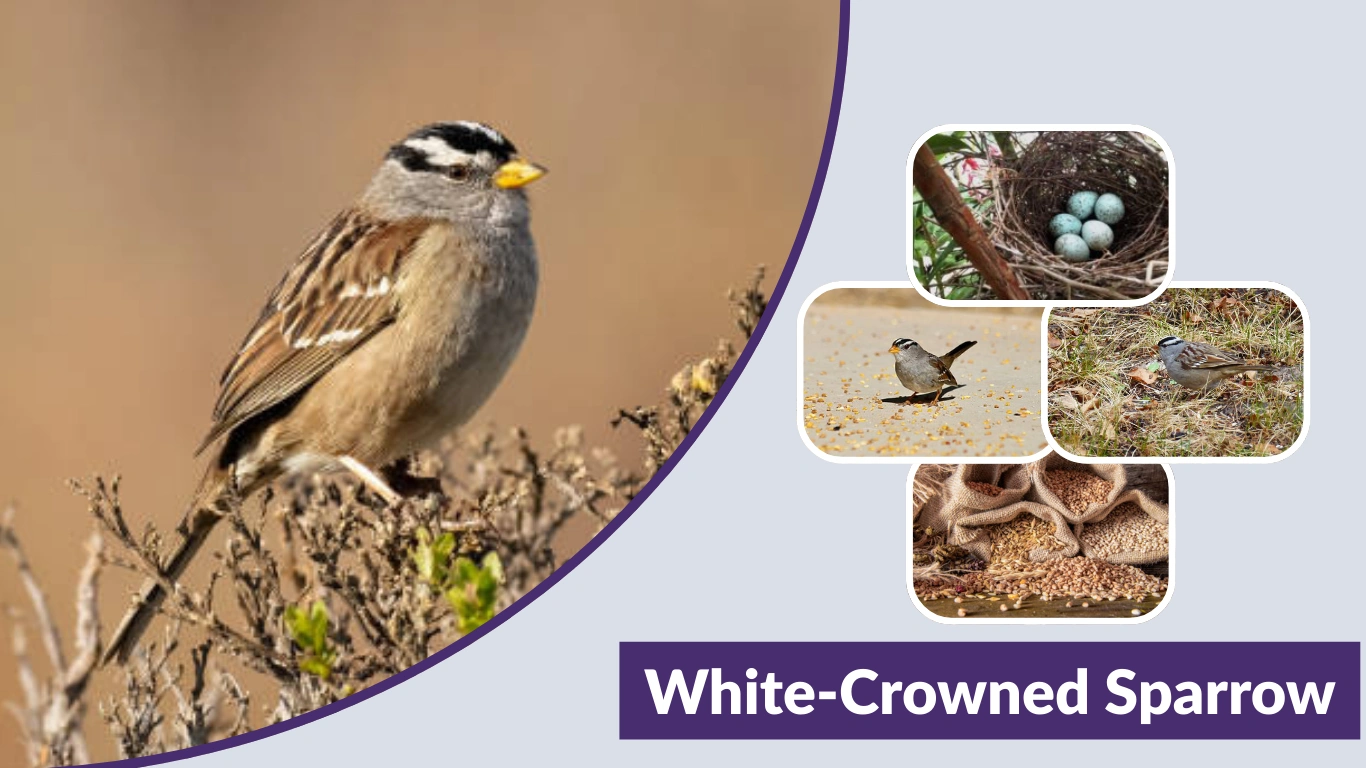
The white-crowned sparrow is one of the most recognizable sparrows in North America, famous for the bold black-and-white stripes on its head. Found across a wide range of habitats, from Arctic tundra to backyard gardens, this bird is a favorite among birdwatchers and researchers alike. Its clear whistling song, seasonal migrations, and adaptable lifestyle make it an important and fascinating member of the sparrow family.
Overview and Quick Facts
The white-crowned sparrow (Zonotrichia leucophrys) is a medium-sized sparrow belonging to the family Passerellidae. It is widely distributed across North America, breeding mostly in northern regions and higher elevations, while many populations migrate south during winter.
This species is well known in ornithology because of its strong site loyalty and regional song “dialects.” Scientists have studied it extensively to understand bird communication, migration, and learning behavior.
White-crowned sparrows are often seen hopping on the ground, scratching through leaves, or visiting feeders. Their calm appearance combined with striking head patterns makes them easy to notice, even for beginners.
Identification Features
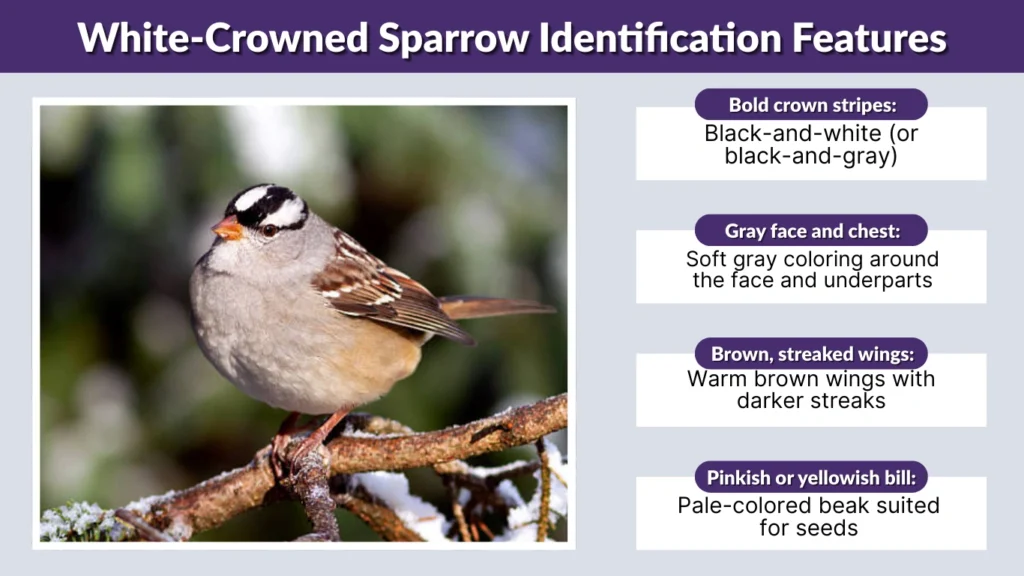
The white-crowned sparrow can be identified by a combination of head markings, body shape, and coloration. Key features include:
- Bold crown stripes: Black-and-white (or black-and-gray) stripes running from the beak to the back of the head
- Gray face and chest: Soft gray coloring around the face and underparts
- Brown, streaked wings: Warm brown wings with darker streaks
- Pinkish or yellowish bill: Pale-colored beak suited for seeds
- Juvenile differences: Young birds show brown-and-tan stripes instead of crisp black-and-white
These features together make the white-crowned sparrow one of the easiest North American sparrows to identify in the field.
Color Pattern and Physical Appearance
Adult white-crowned sparrows have a clean, patterned look. The crown is the most striking feature, with alternating dark and light stripes that contrast strongly against the pale gray face. This bold head design helps distinguish them from many other sparrow species.
The upperparts are mostly brown with darker streaks, providing camouflage when the bird feeds on the ground. The underparts are usually light gray to pale buff, giving the bird a soft, smooth appearance rather than a heavily streaked one.
Seasonal variation is mild, but fresh plumage after molting can appear crisper in late summer and fall. Juveniles look more muted, with brown and tan striping instead of black, which can sometimes cause confusion with other young sparrows.
Habitat and Geographic Range

Natural Habitats
White-crowned sparrows are highly adaptable. During the breeding season, they are commonly found in tundra, alpine meadows, shrublands, forest edges, and brushy mountain slopes. They prefer open or semi-open areas where low vegetation provides both food and shelter.
In winter, they move into a wider variety of habitats, including grasslands, agricultural fields, urban parks, roadsides, and backyard gardens. Their ability to use human-altered landscapes is one reason they remain widespread and common.
Distribution in North America
Breeding populations are concentrated in Alaska, Canada, and the western and northern parts of the United States. Some subspecies also nest in high-elevation regions farther south.
During winter, many white-crowned sparrows migrate to the southern United States and northern Mexico. Coastal areas, the southern plains, and parts of California often host large wintering populations.
Behavior and Daily Activity
White-crowned sparrows spend much of their day on or near the ground. They typically hop rather than walk, scratching at leaf litter to uncover seeds and insects. This ground-feeding habit often brings them into open view.
They are generally social outside the breeding season, forming loose flocks that move and feed together. Flocking increases feeding efficiency and offers better protection from predators.
During spring and early summer, males become more territorial. They sing frequently from shrubs, fences, or low tree branches to defend their nesting areas and attract mates.
Diet and Feeding Habits
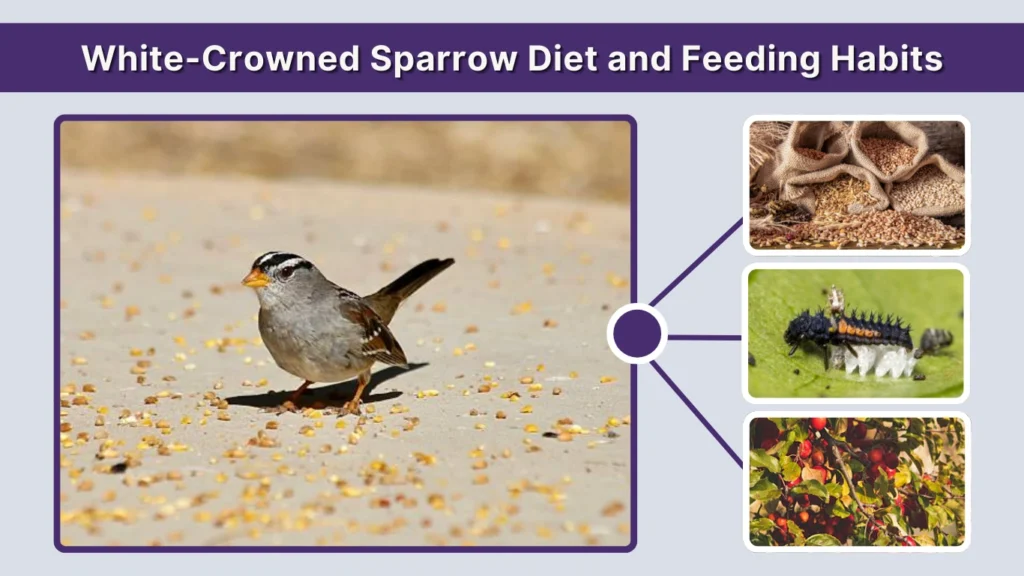
The white-crowned sparrow has an adaptable diet that changes with the seasons and available food sources. Common foods include:
- Seeds and grains from grasses and weeds
- Insects and larvae, especially during the breeding season
- Small berries and fruits in fall and winter
- Tender plant parts such as buds and shoots
This flexible feeding strategy allows the species to survive in a wide range of climates and habitats.
Song, Calls, and Communication
Typical Songs
The white-crowned sparrow is famous for its clear, whistling song, often described as a series of pure notes that sound like simple, sweet phrases. Males sing most frequently during the breeding season, usually from exposed perches such as shrubs, rocks, or fence posts.
One fascinating feature of this species is that its song varies by region. Different populations develop local “dialects,” meaning birds from one area may sing slightly different versions of the same basic tune.
Purpose of Vocalization
Songs are primarily used to defend territory and attract mates. A strong, consistent song signals that a male is healthy and capable of holding a breeding area. Shorter calls are used year-round to maintain contact between flock members and to warn others of danger.
Breeding and Life Cycle
Nesting Behavior
Breeding begins in spring or early summer, depending on location. Females usually build the nest low to the ground or within dense shrubs. The nest is made from grasses, twigs, moss, and hair, forming a soft cup that protects the eggs.
A typical clutch contains three to five eggs. The female incubates them for about two weeks, while the male helps defend the territory and may bring food.
Growth Stages
Chicks hatch blind and nearly featherless. Both parents feed them insects and other high-protein foods. After about one to two weeks, the young birds leave the nest but remain nearby, continuing to be fed until they can forage independently.
Migration Patterns
White-crowned sparrows are mostly migratory, though some coastal and southern populations are year-round residents. Northern breeders travel long distances each fall, sometimes moving from Arctic or subarctic regions to the southern United States.
Spring migration begins as days lengthen and food becomes more available. Many individuals return to the same breeding territories year after year, showing strong site fidelity that has been well documented by researchers.
Weather, food supply, and daylight length all influence the timing and distance of migration.
Predators and Survival Strategies
White-crowned sparrows face threats from many predators, especially because they spend so much time on the ground. Their main survival strategies include:
- Avoiding predators such as hawks, owls, snakes, cats, and foxes
- Using camouflage provided by brown streaked plumage
- Staying alert in flocks, which increases early warning
- Rapid takeoff and low flight to escape danger
These behaviors help them survive in both wild and human-dominated environments.
White-Crowned Sparrow vs White-Throated Sparrow
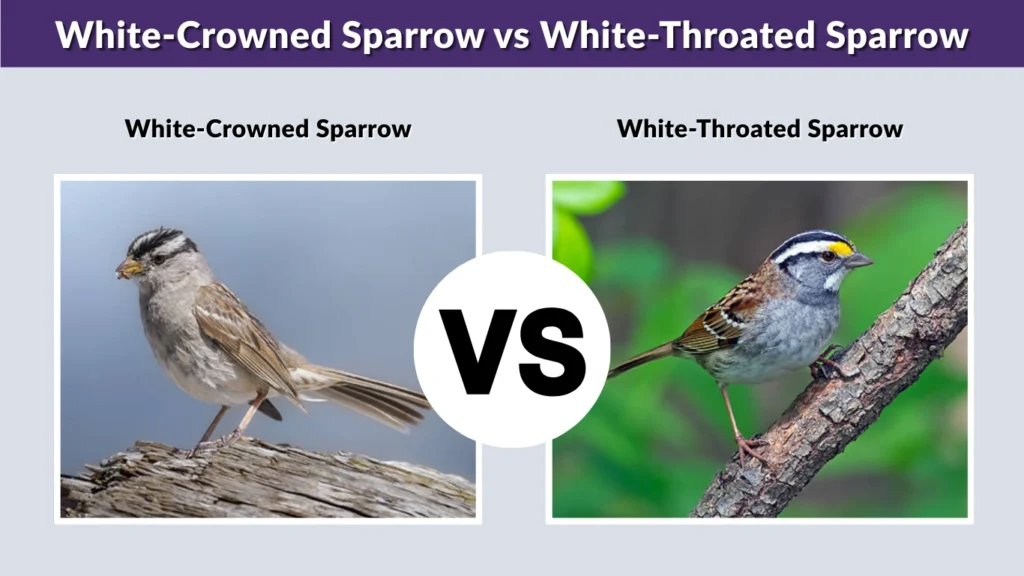
The white-crowned sparrow is often confused with the white-throated sparrow. Both have striped heads, but the white-crowned sparrow lacks the bright yellow facial patch found on white-throated sparrows.
White-crowned sparrows usually have a cleaner gray face and a simpler head pattern. Their songs are also different, with white-throated sparrows producing a more complex, melodic whistle. Habitat use overlaps, but white-throated sparrows are more strongly associated with forested areas.
Ecological Importance
White-crowned sparrows play an important role in their ecosystems. By feeding on seeds, they help regulate plant growth and contribute to seed dispersal across open landscapes.
During the breeding season, they consume large numbers of insects, including many that feed on plants. This makes them valuable natural controllers of insect populations.
They also serve as prey for many predators, forming an important link in food webs throughout North America.
Relationship With Humans
This species adapts well to human presence and is commonly seen in gardens, parks, farms, and suburban areas. It frequently visits bird feeders, especially those offering millet or mixed seeds.
White-crowned sparrows have been widely studied in laboratories and in the wild, particularly for research on song learning and brain development. Their tolerance of human observation makes them one of the most researched songbirds.
Conservation Status and Threats
The white-crowned sparrow is currently considered a species of low conservation concern. Its wide range and large population have helped keep numbers relatively stable.
However, habitat loss, urban expansion, and climate change may affect some populations, especially those breeding in Arctic and alpine environments. Protecting natural shrublands and migration stopover sites remains important for long-term stability.
Interesting Facts
White-crowned sparrows learn their songs when young, much like humans learn language. If a young bird does not hear adult songs during a critical period, it may never develop a normal song.
Some individuals migrate thousands of kilometers each year, navigating using stars, Earth’s magnetic field, and landscape features.
FAQs
What does a white-crowned sparrow eat?
White-crowned sparrows mainly eat seeds from grasses and weeds, but they also consume insects, larvae, and small berries. During the breeding season, insects become especially important because they provide the protein needed for growing chicks.
Where do white-crowned sparrows live?
They breed mostly in Alaska, Canada, and northern or mountainous regions of the United States. In winter, many migrate south to the southern U.S. and northern Mexico, living in open fields, brushy areas, parks, and gardens.
How can you identify a white-crowned sparrow?
You can identify this sparrow by its bold black-and-white striped crown, gray face, pale bill, and relatively unstreaked underparts. Juveniles show brown and tan head stripes instead of black.
Are white-crowned sparrows migratory?
Most white-crowned sparrows migrate seasonally. Northern populations move south in fall and return north in spring, while some coastal and southern groups remain in the same areas year-round.
Is the white-crowned sparrow rare?
No, the white-crowned sparrow is not rare. It is a common and widespread species across North America, often seen in open habitats, along roadsides, and at backyard bird feeders.
