
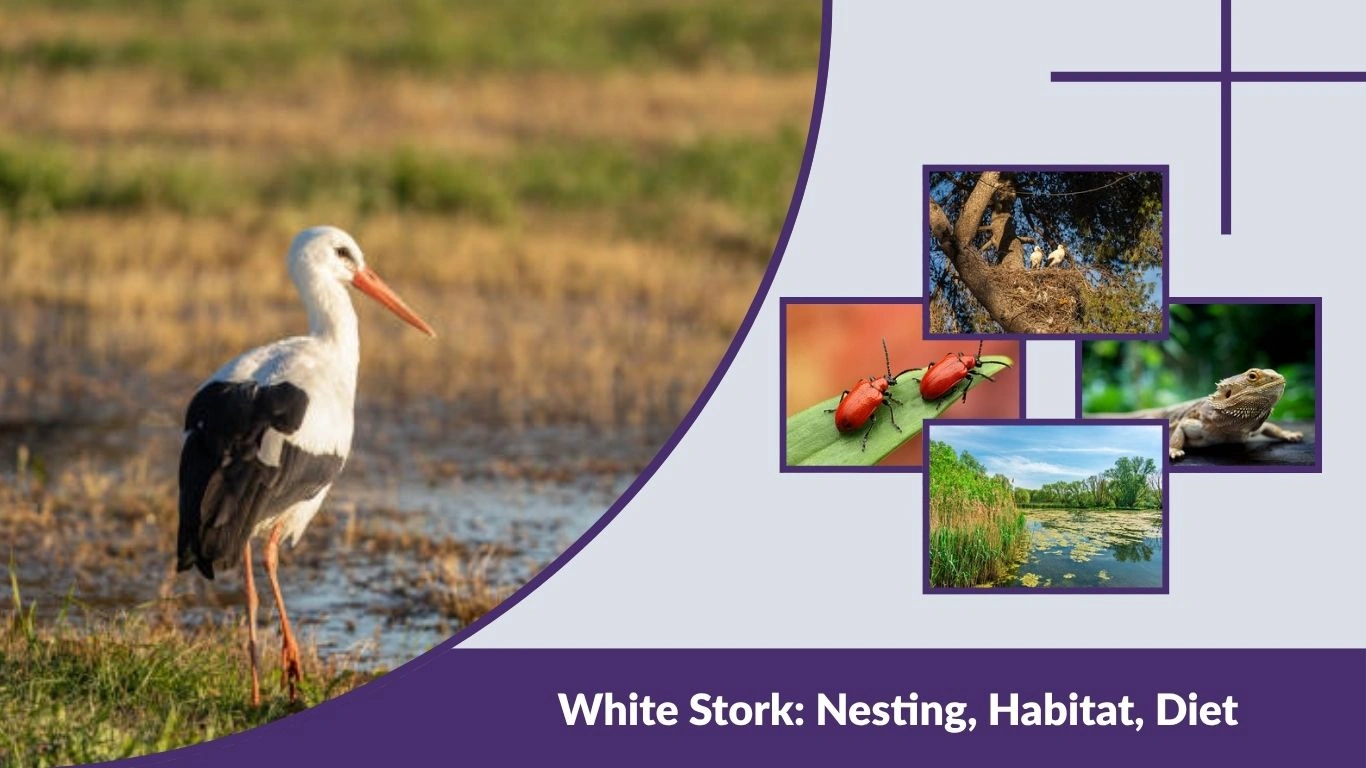
The White Stork is a large and graceful bird known for its long legs, striking white feathers, and impressive migration journeys. Widely found across Europe, Asia, and parts of Africa, this species is also deeply connected to human culture and folklore. White Storks are famous for building large nests on rooftops and chimneys, often living close to people. With their unique behavior and adaptability, they remain one of the most recognizable and fascinating wading birds in the world.
What is a White Stork?
Scientific Classification
The White Stork (Ciconia ciconia) belongs to the family Ciconiidae, a group of large wading birds known for their long legs, necks, and strong bills. It is one of the most well-known stork species globally.
Overview of the Species
This bird is easily recognized by its elegant posture and contrasting colors. It is a migratory species, traveling long distances between breeding and wintering grounds. White Storks are often associated with rural landscapes and human settlements, where they find both food and nesting sites. Their calm behavior and visible presence make them a favorite among birdwatchers.
White Stork Physical Characteristics
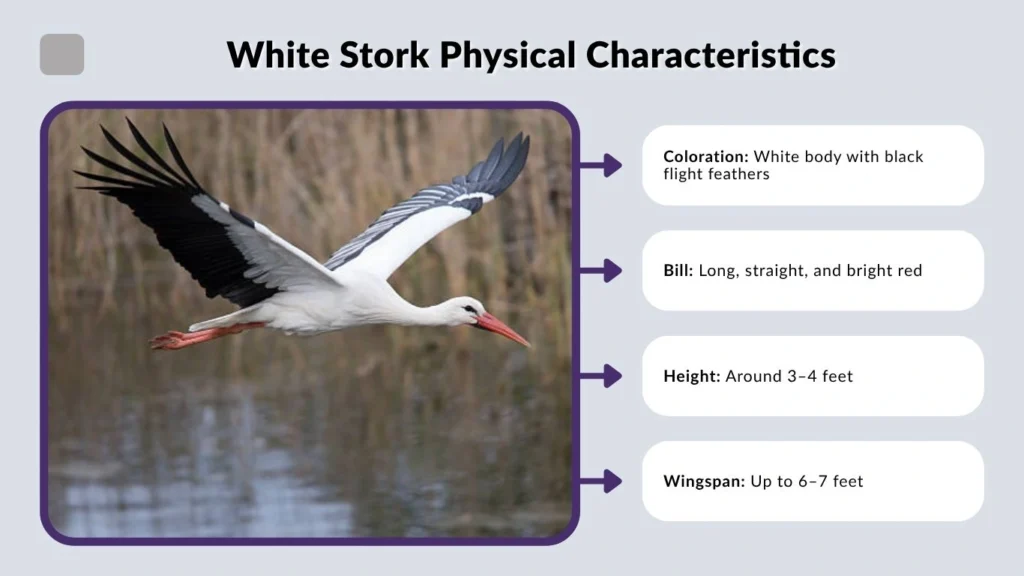
The White Stork is a large, elegant bird easily recognized by its striking colors and long, slender body. Its tall stance and slow, graceful movements make it stand out in open landscapes and wetlands. With its contrasting plumage and bright features, the White Stork is one of the most visually distinctive wading birds.
Key Physical Features:
- Coloration: White body with black flight feathers
- Bill: Long, straight, and bright red
- Legs: Long, red legs adapted for wading
- Height: Around 3–4 feet (1–1.2 meters)
- Wingspan: Up to 6–7 feet (1.8–2 meters)
- Neck: Long and extended, especially visible in flight
- Sex Differences: Males and females look very similar
- Flight Style: Glides smoothly with wings outstretched, minimal flapping
These features make the White Stork easy to identify, whether standing in a field or soaring high during migration.
White Stork Habitat
Natural Habitat
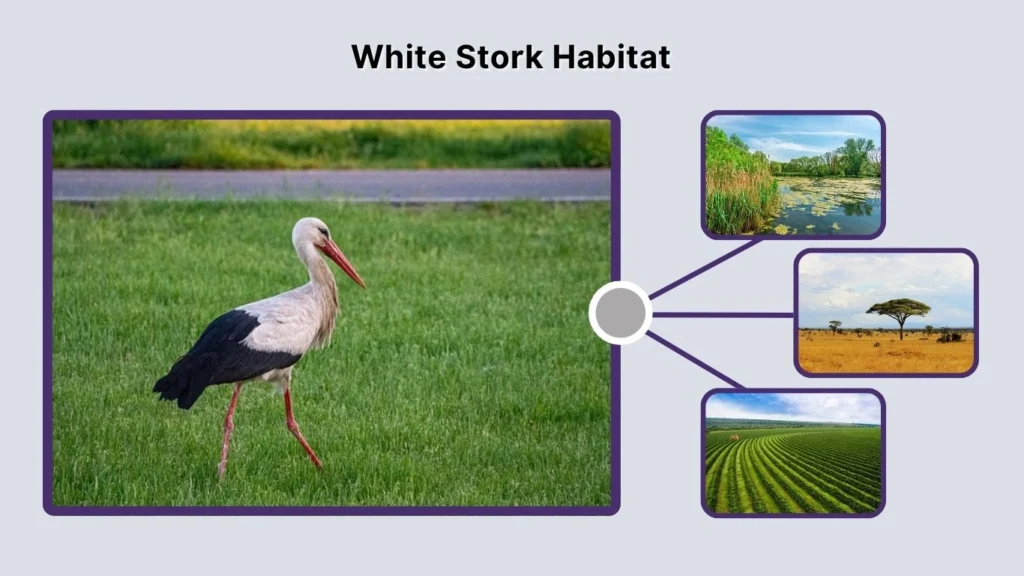
White Storks prefer open landscapes such as wetlands, grasslands, and agricultural fields. These environments provide easy access to food and safe areas for nesting.
Preferred Environments
They are commonly found near water sources like rivers, lakes, and marshes. However, they are also highly adaptable and frequently live near human settlements, including villages and farms.
Distribution Range
The White Stork is widely distributed across Europe, parts of Asia, and North Africa. During the breeding season, they are most common in Europe, while in winter they migrate to sub-Saharan Africa.
White Stork Migration
Migration Routes
White Storks are known for their long-distance migrations between Europe and Africa. They follow two main routes: a western route through Spain and Gibraltar, and an eastern route through the Middle East.
Migration Behavior
These birds migrate in large flocks and rely on warm air currents, known as thermals, to glide long distances without using much energy. This behavior helps them conserve energy during their journey.
Migration Challenges
Migration is a risky time for White Storks. They face challenges such as habitat loss, climate changes, and human-related threats like power lines. Despite these challenges, many storks successfully complete their journey each year.
White Stork Diet
What Do White Storks Eat?
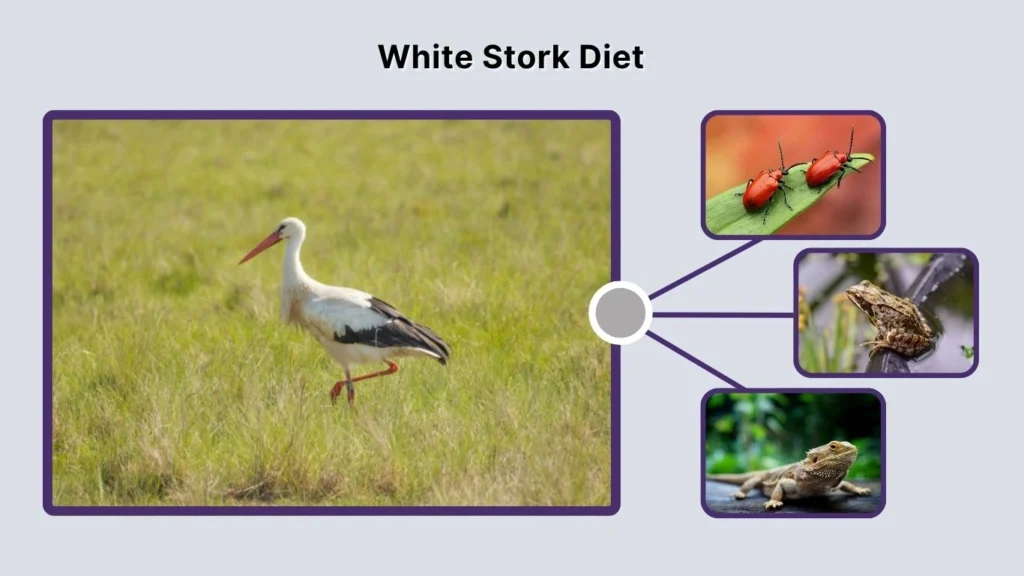
White Storks have a varied diet that includes insects, frogs, small mammals, fish, and reptiles. They are opportunistic feeders and will eat whatever prey is available in their environment.
Feeding Behavior
These birds typically forage by walking slowly through fields or shallow water, using their sharp bill to catch prey. Their hunting style is simple but effective, allowing them to adapt to different habitats.
White Stork Nesting
Nest Structure
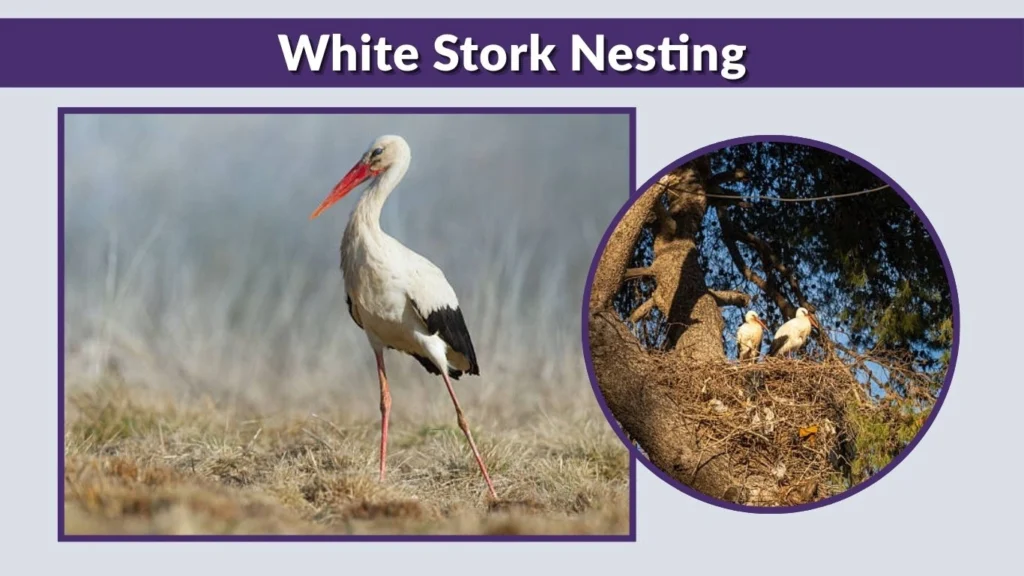
White Storks are famous for their large and durable nests made from sticks, grass, and other natural materials. These nests can grow quite massive over time, as the birds return to the same site each year and continue adding to them.
Nest Locations
They often build nests in high, open locations such as rooftops, chimneys, utility poles, and tall trees. In many regions, special platforms are even built to encourage storks to nest safely near human settlements.
Breeding Behavior
During the breeding season, females lay several eggs, which are incubated by both parents. Once hatched, the chicks are cared for and fed by both adults until they are strong enough to leave the nest.
White Stork Behavior and Lifestyle
Daily Activity
White Storks are diurnal birds, meaning they are active during the day. They spend much of their time foraging for food, resting, or maintaining their nests.
Social Behavior
These birds are often seen alone or in small groups during the breeding season. However, during migration, they gather in large flocks. They are generally calm birds and can coexist peacefully near human communities.
Interesting White Stork Facts
- White Storks are often associated with folklore, especially the story of delivering babies.
- They are known for returning to the same nest year after year.
- Their nests can become extremely large due to repeated use.
- They are strong gliders, traveling long distances with minimal effort.
Conservation Status
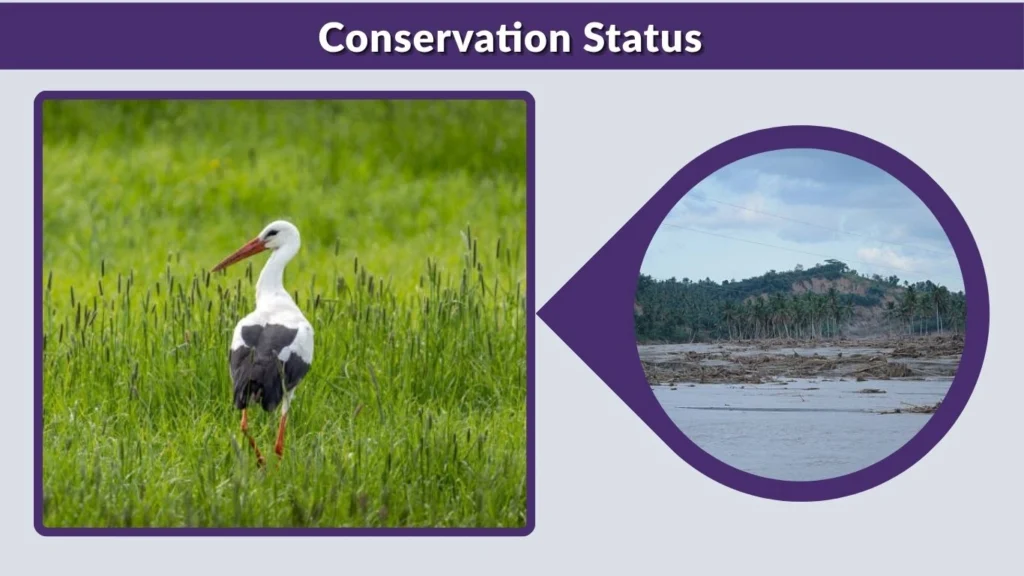
White Storks are not currently endangered, and their populations have remained stable or even increased in some regions. However, they still face threats such as habitat loss, pollution, and changes in climate. Conservation efforts, including nest protection and habitat management, have helped support their populations.
FAQs
Why do white storks build nests on rooftops?
White Storks prefer high, open places to keep their nests safe from predators. Rooftops, chimneys, and poles provide stable and secure locations close to food sources.
Do white storks return to the same nest every year?
Yes, White Storks are known for their strong nesting loyalty. They often return to the same nest annually and continue adding materials, making it larger over time.
How long do white storks live?
White Storks can live around 20–30 years in the wild, depending on environmental conditions and threats.
Are white storks social birds?
They are moderately social. While they may nest in pairs, they often gather in large groups during migration and feeding.
How do white storks communicate?
White Storks mainly communicate by bill-clattering sounds rather than vocal calls, as they lack strong vocal cords compared to many other birds.
Conclusion
The White Stork is a remarkable bird known for its long migrations, unique nesting habits, and close relationship with human environments. From its graceful flight to its impressive nests, it continues to capture attention around the world. By understanding its lifestyle and habitat needs, we can better appreciate and support this iconic species. Protecting wetlands and natural ecosystems will ensure that future generations can continue to witness the beauty of the White Stork.
