
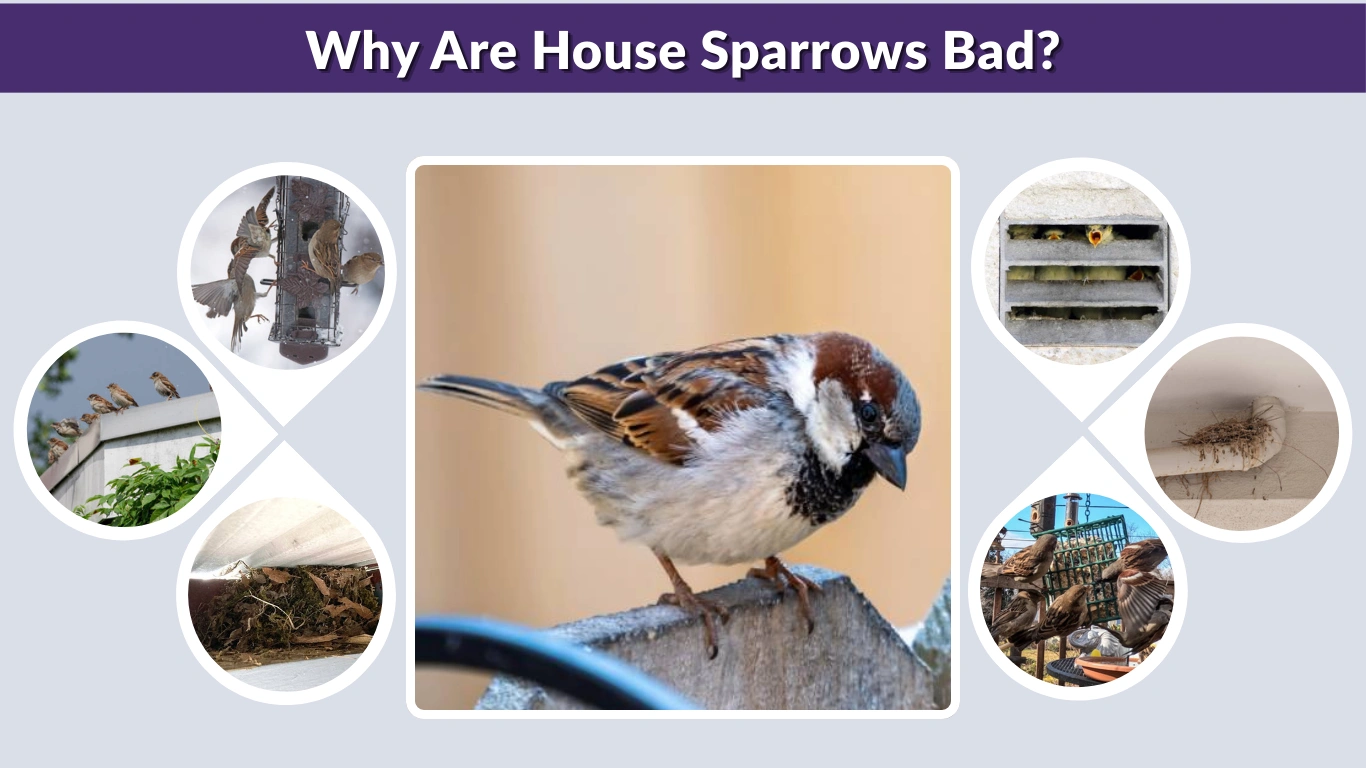
House sparrows (Passer domesticus) are among the most familiar birds in cities, farms, and suburbs across the world. Despite their friendly appearance and long history of living alongside humans, they carry a surprisingly negative reputation. In many countries, especially in North America, they’re considered invasive and harmful to both native wildlife and human environments.
This guide explores why house sparrows are often labeled as “bad,” the problems they create, and the concerns they raise for homeowners, bird enthusiasts, and conservationists.
Understanding House Sparrows
What Are House Sparrows?
House sparrows are small, adaptable birds native to Europe, Asia, and parts of Africa. They were introduced to many other regions—including North America, Australia, and South America—in the 1800s as a way to control insects. The plan backfired. Instead of balancing ecosystems, these sparrows became one of the most widespread invasive species on Earth.
Why They Spread So Widely
Their success comes from three traits:
- Ability to thrive in human environments
- Aggressive protection of feeding and nesting sites
- Extremely fast reproductive rate
House sparrows can raise four or more broods in a single season, allowing them to overwhelm native species very quickly.
Why House Sparrows Are Considered Bad
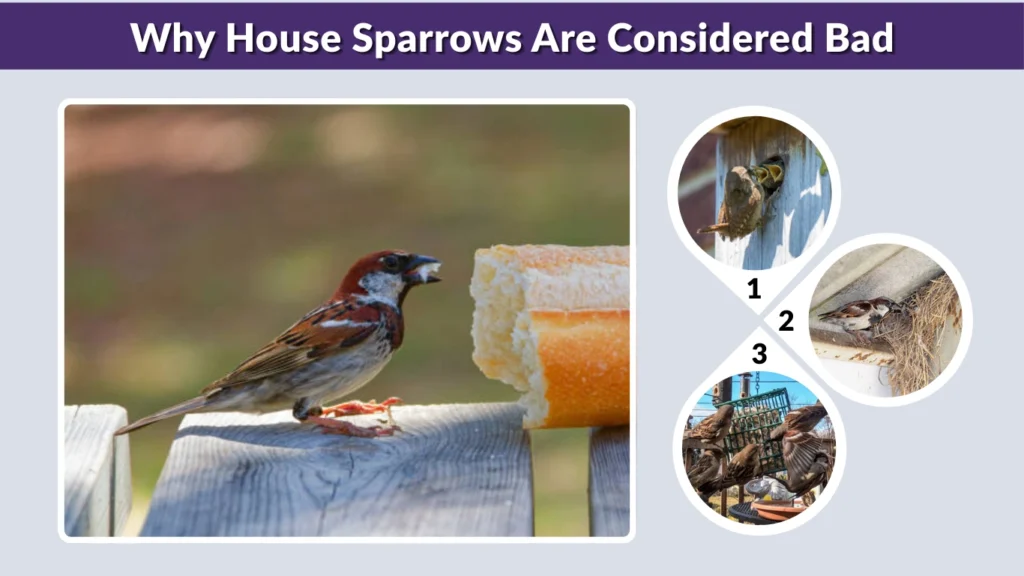
Although charming at a glance, house sparrows cause a variety of problems for both wildlife and people.
Ecological Impacts
House sparrows compete aggressively with native birds, especially cavity-nesting species that rely on nest holes or bird boxes. They don’t just outcompete them—they often attack them directly. This can lead to significant declines of sensitive birds.
Their ecological impact includes:
- Forcing bluebirds, wrens, swallows, and chickadees out of nest boxes
- Destroying eggs and nestlings of other species
- Taking over valuable nesting habitat
- Overpowering native birds at feeders through flock aggression
Because of these behaviors, many conservationists consider house sparrows one of the most harmful non-native birds in urban and rural regions.
Agricultural and Environmental Issues
House sparrows frequently form large flocks around barns, feed stores, gardens, and grain silos. Their presence leads to:
- Contamination of livestock feed
- Spoilage of stored grain
- Damage to fruit and vegetable crops
- Messy accumulations of droppings in farm buildings
In agricultural settings, a single flock can cause surprisingly costly problems over time.
Why House Sparrows Are Bad for Humans
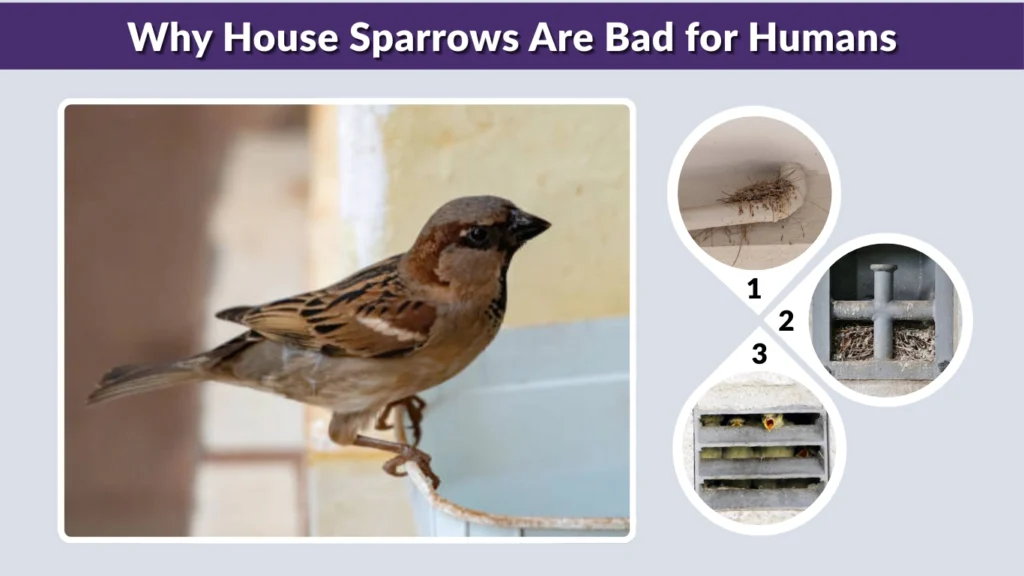
While they don’t deliberately target people, house sparrows cause several nuisances and health concerns when they live too close to homes.
Nesting Problems Around Homes
House sparrows are notorious for nesting in human-made structures. They squeeze into tiny cracks and openings, including:
- Dryer vents
- Roof gaps
- Gutter ends
- Bathroom exhaust vents
- Holes in siding or brickwork
Their nests are bulky, messy, and highly flammable—especially when stuffed into vents. In some cases, sparrow nests have contributed to fire hazards due to trapped heat and lint buildup.
Their constant chirping near windows and doorways can also be disruptive, especially during breeding season when activity peaks at dawn.
Health & Sanitation Issues
House sparrows often live in close proximity to humans, increasing the risk of sanitation problems. Their droppings collect under roosting and nesting areas and can carry pathogens such as:
- Salmonella
- E. coli
- Fungal spores associated with respiratory issues
In addition, nests commonly harbor parasites including mites, fleas, and ticks that may spread into homes when nests are built in vents or crevices.
Property Damage
Sparrows can remove insulation, disrupt airflow, and clog dryers or vents with nesting materials. When they nest in gutters or roof edges, they create blockages that may lead to water leakage or structural damage. In gardens, they feed on young plants, sprouting seeds, and fruit.
Aggressive Behavior Toward People
Although they rarely attack intentionally, house sparrows can become territorial. During nesting season, they may fly close to humans who approach their nest sites or perch in noisy flocks near living areas. While not dangerous, it can be startling and annoying.
Why House Sparrows Are Bad in the Winter
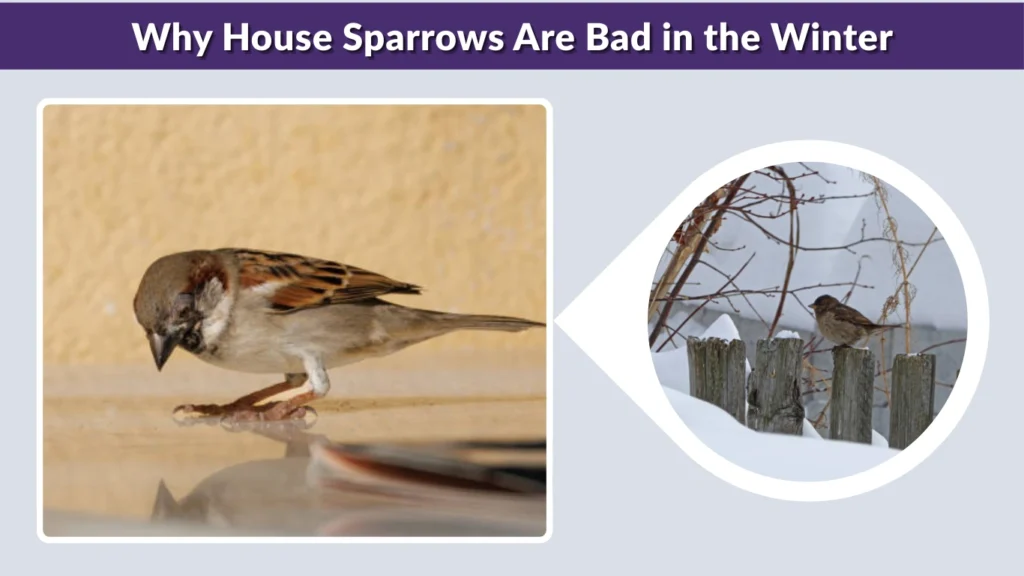
Winter amplifies many of the problems associated with house sparrows. As temperatures drop, they flock toward buildings seeking warmth, food, and shelter. This leads to several seasonal issues.
Winter Nesting Inside Buildings
When cold weather arrives, house sparrows often force their way into attic openings, vents, garages, and barns. Their presence leads to increased droppings, feathers, and noise within these spaces. The close quarters also encourage parasite buildup.
Increased Competition at Winter Bird Feeders
In colder months, food sources become scarce. House sparrows dominate feeders, chasing off native winter birds such as cardinals, chickadees, juncos, and nuthatches. This reduces biodiversity and limits viewing opportunities for backyard birdwatchers.
Why House Sparrows Are Bad for Native Birds
House sparrows have one of the most significant negative impacts on native cavity-nesting birds. Their aggressive behavior, high reproduction rate, and territorial nature allow them to dominate nesting areas quickly.
Aggression Toward Other Birds
House sparrows don’t just outcompete other species—they often attack them directly. Documented behaviors include:
- Destroying eggs and removing hatchlings
- Attacking adult birds inside nest boxes
- Taking over nests already built by other species
- Repeatedly harassing native birds away from feeders and birdhouses
This level of aggression is uncommon among many native species, which puts them at a severe disadvantage.
Outcompeting Local Species
Most native cavity nesters raise only one or two broods per season. House sparrows can raise four or more. This reproductive advantage allows them to increase population numbers rapidly and overwhelm local nesting opportunities. Over time, this contributes to reduced populations of sensitive species.
Examples of Birds Commonly Impacted
Some of the birds most frequently harmed by house sparrows include:
- Eastern and Western Bluebirds
- Tree Swallows
- Chickadees
- Wrens
- Purple Martins
These species often depend on nest boxes, which house sparrows aggressively take over. In martin colonies, sparrows can cause widespread loss of eggs, young, and breeding attempts.
Signs of a House Sparrow Problem
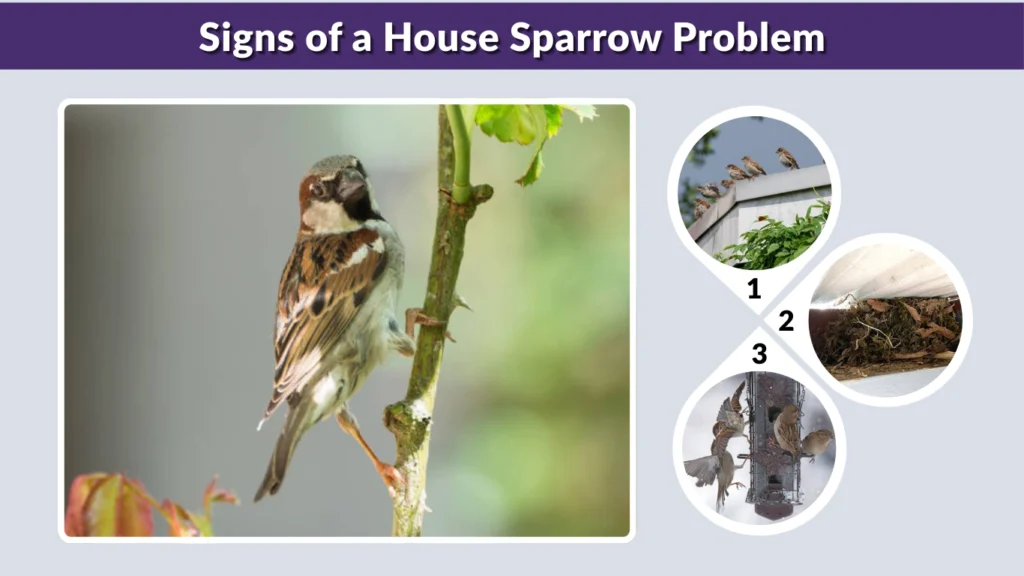
Knowing the signs early helps prevent larger infestations.
Excessive Noise Around Home
House sparrows are very vocal, especially at dawn. Loud chattering near vents, gutters, or porch roofs often indicates nesting activity.
Nest Debris in Vent Areas
Dry grass, feathers, litter, and other materials sticking out of vents or roof edges can signal an active nest inside.
Increased Aggression at Feeders
If native birds suddenly avoid your feeders or if large, noisy flocks take over, house sparrows may be the cause.
Foul Odors or Droppings Accumulation
Multiple birds roosting in one area leave behind droppings, which produce odors and attract parasites.
Management and Control
While house sparrows are invasive in many regions, management must always be humane and legal. Some locations allow removal; others require preventive approaches only. Below are accepted strategies to reduce their impact on your property and native birds.
Reduce Sparrow Numbers (Legal & Ethical Methods)
- Work with local wildlife authorities or professionals if removal is permitted
- Use birdhouses specifically designed to exclude house sparrows
- Avoid feeding seed mixes heavily favored by sparrows, such as cracked corn or millet
Many bird enthusiasts completely avoid open platform feeders, which sparrows dominate.
Prevention Around Homes
Blocking access is often the most effective long-term solution:
- Install vent covers on dryer and bathroom vents
- Seal openings in siding, rooflines, and attic spaces
- Repair damaged screens or soffits
- Clear old nests before the breeding season begins
These steps discourage sparrows from taking advantage of small, unprotected gaps.
Protecting Native Birds
You can encourage native species by offering sparrow-resistant habitats:
- Use nest boxes with 1⅛”–1¼” openings that exclude sparrows
- Place boxes away from buildings and open fields, which sparrows prefer
- Use feeders that appeal to native species, such as tube feeders with small perches
- Provide habitat features like shrubs, trees, and natural cavities
Bluebirds and wrens thrive when given nesting spaces shielded from sparrows’ aggression.
Common Misconceptions
Several myths about house sparrows prevent people from understanding the real issues they cause.
“House Sparrows Are Harmless”
False—house sparrows can significantly reduce native bird populations through direct aggression and competition.
“They Help Control Insects”
While they do eat insects occasionally, their diet is heavily seed-based. Their ecological harm outweighs this minor benefit.
“They Only Live in Cities”
House sparrows thrive in rural barns, open fields, suburban yards, and farmlands.
“They Don’t Harm Other Birds”
House sparrows are one of the leading causes of nest failure in bluebirds, swallows, and martins. They are known to kill nestlings and even adult birds.
Benefits of House Sparrows (A Balanced View)
Despite their problems, house sparrows have a few positive aspects:
- They consume leftover human food scraps in cities
- They offer an easy entry point for beginner birdwatchers
- Historically, they played cultural roles in farming communities
- They adapt well to human-modified environments
While these traits don’t outweigh their ecological drawbacks, they help provide a fair and balanced understanding of the species.
FAQs
Are house sparrows dangerous to humans?
Not directly, but their nests can harbor mites, bacteria, and fleas. Their droppings can contaminate surfaces near homes.
Can house sparrows spread diseases?
Yes. Their feces can carry salmonella, E. coli, and fungal spores. These risks are highest near vents, roofs, and enclosed spaces.
Why do house sparrows attack other birds?
They are highly territorial, especially during breeding. Their nesting competition with native birds drives aggressive behavior.
Are house sparrows invasive everywhere?
They are considered invasive in North America, South America, Australia, and parts of Asia. In Europe, they are native and not labeled invasive.
How can I keep house sparrows out of my birdhouse?
Use small entrance holes, place nest boxes away from buildings, and avoid seed mixes sparrows love.