
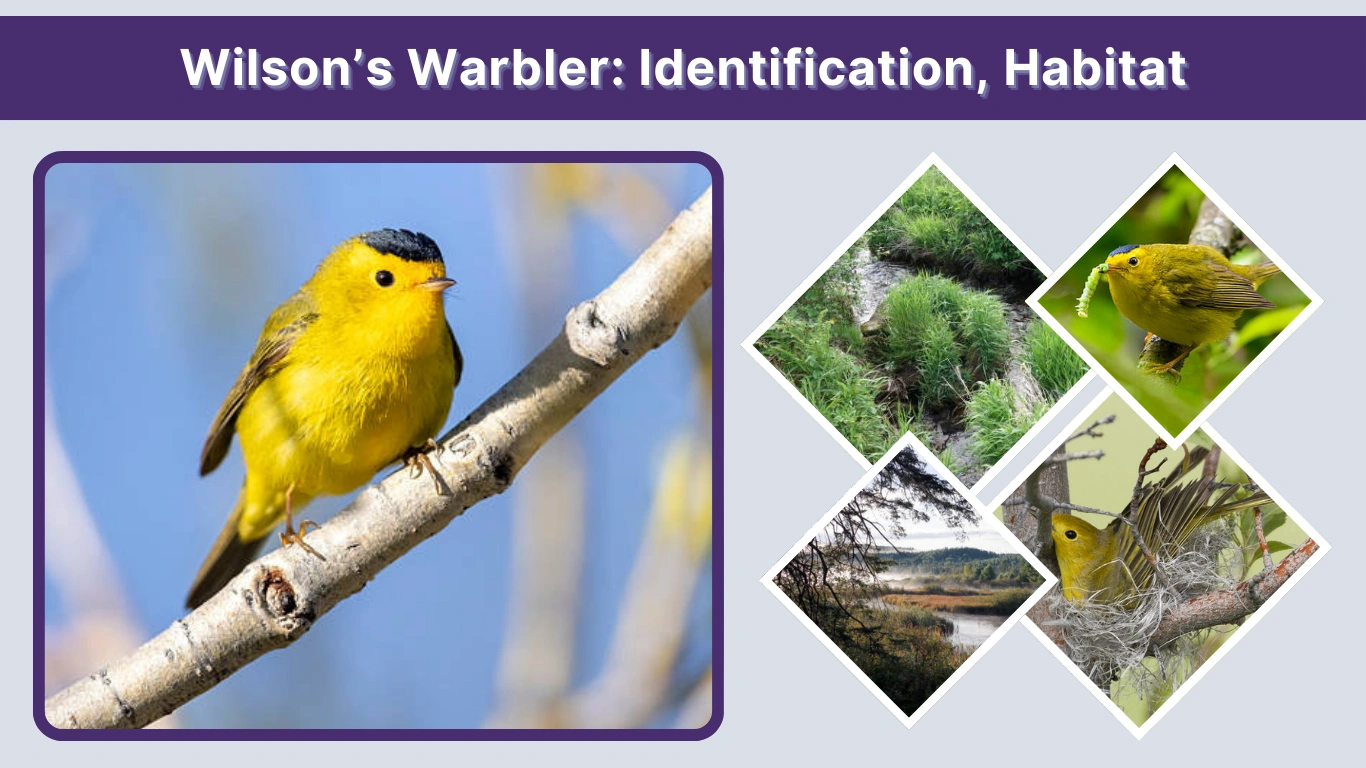
Wilson’s warbler is one of the most delightful small songbirds in North America. With its bright yellow plumage and energetic movements, it easily captures the attention of birdwatchers during spring and fall migration. Despite its tiny size, this warbler travels thousands of miles each year between its breeding and wintering grounds. Whether you are a beginner birder or an experienced enthusiast, learning to identify Wilson’s warbler can greatly enrich your outdoor experiences. In this guide, you’ll discover how to recognize this species, where it lives, and what makes it unique among New World warblers.
What Is a Wilson’s Warbler?
Wilson’s warbler (Cardellina pusilla) is a small migratory songbird belonging to the New World warbler family, Parulidae. It is named after the Scottish-American ornithologist Alexander Wilson, often called the “Father of American Ornithology.”
This species is best known for its vibrant yellow underparts and active behavior. Though small—measuring only about 4.5 to 5 inches in length—it has a bold personality. Wilson’s warblers are highly energetic and rarely stay still for long, constantly flitting through shrubs and low trees in search of insects.
Unlike some other warblers that prefer high forest canopies, Wilson’s warbler is often found in dense, shrubby habitats near water. Its preference for lower vegetation makes it slightly easier to observe compared to canopy-dwelling species. During migration, it can appear in a variety of habitats, including gardens, parks, and woodland edges.
How to Identify a Wilson’s Warbler
Correct identification is key, especially since many warblers share similar yellow coloring. Fortunately, Wilson’s warbler has several distinct features that set it apart.
Size and Physical Characteristics
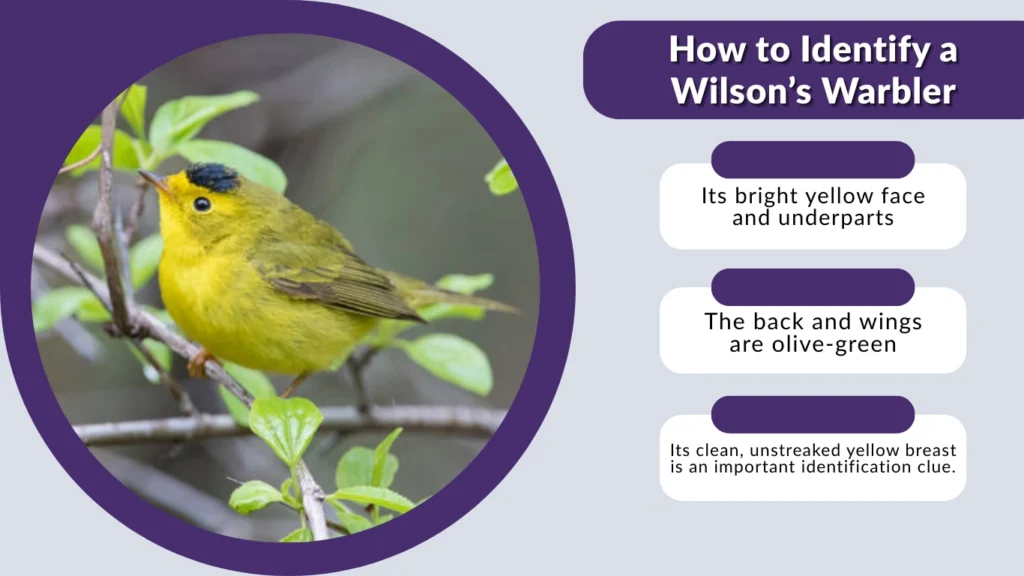
Wilson’s warbler is a small, compact bird with a rounded head and a thin, pointed bill designed for catching insects. Its most striking feature is its bright yellow face and underparts. The back and wings are olive-green, creating a subtle contrast with the vivid yellow below.
Unlike the Yellow Warbler, Wilson’s warbler lacks dark streaking on the chest. Its clean, unstreaked yellow breast is an important identification clue. The bird also has relatively long wings and a short tail, which it often flicks or fans while foraging.
Male vs. Female Differences
The adult male Wilson’s warbler is instantly recognizable because of its distinctive black cap. This small, rounded black patch sits neatly on the crown and contrasts sharply with the bright yellow face.
Females are slightly duller overall and may have a smaller or faint black cap. In some females, the cap may be barely visible or completely absent, especially outside of the breeding season. This difference can sometimes make identification more challenging.
Juvenile Appearance
Juvenile Wilson’s warblers are generally duller than adults. They lack the bold black cap seen in males and have softer, more muted yellow tones. Their plumage may appear slightly washed out, especially in late summer.
Because juveniles resemble adult females, careful attention to subtle color differences and behavior is often necessary for accurate identification.
Song and Call
Wilson’s warbler has a fast, chattering song composed of short, musical phrases delivered in rapid succession. The song often rises and falls in pitch, creating a lively and somewhat buzzy rhythm.
Its call note is a sharp “chip,” commonly heard during migration. Males sing most frequently during the breeding season to establish territory and attract mates. Learning to recognize its voice can greatly improve your chances of spotting one hidden in dense shrubs.
Habitat and Geographic Range
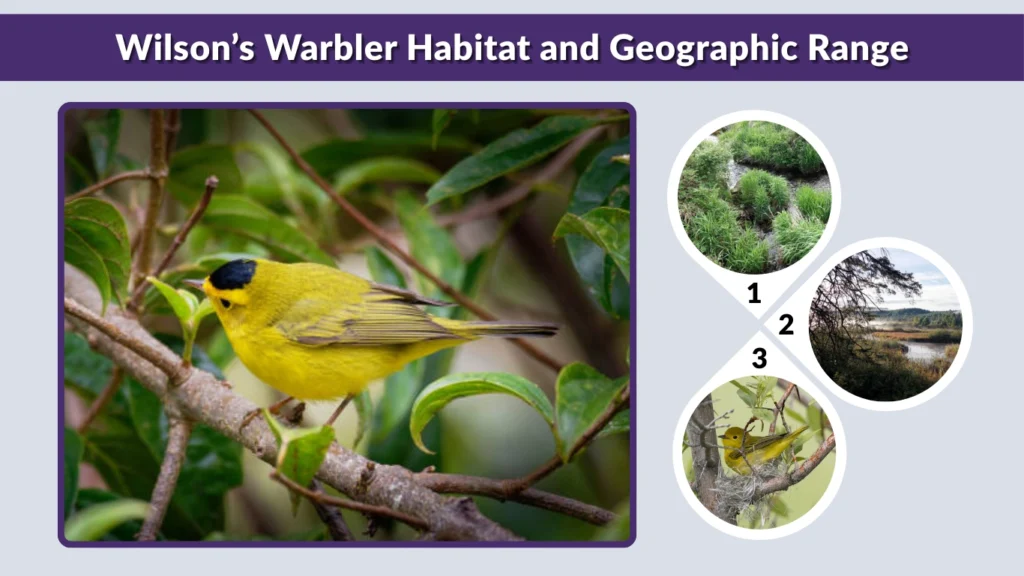
Wilson’s warbler has an impressive geographic range that spans much of North America during different times of the year.
Breeding Range
During the breeding season, Wilson’s warblers are found across Alaska, much of Canada, and parts of the western United States. They prefer moist, shrubby environments, particularly near streams, wetlands, and forest edges.
Thick willow thickets, alder patches, and dense undergrowth provide ideal nesting conditions. These habitats offer both protection from predators and an abundant supply of insects for feeding young.
Wintering Range
As a neotropical migrant, Wilson’s warbler travels south for the winter. It spends the colder months in Mexico and Central America. In these regions, it inhabits similar shrubby and woodland-edge environments, often at varying elevations.
Because it migrates long distances, Wilson’s warbler relies heavily on healthy stopover habitats to rest and refuel along the way.
Diet and Feeding Behavior
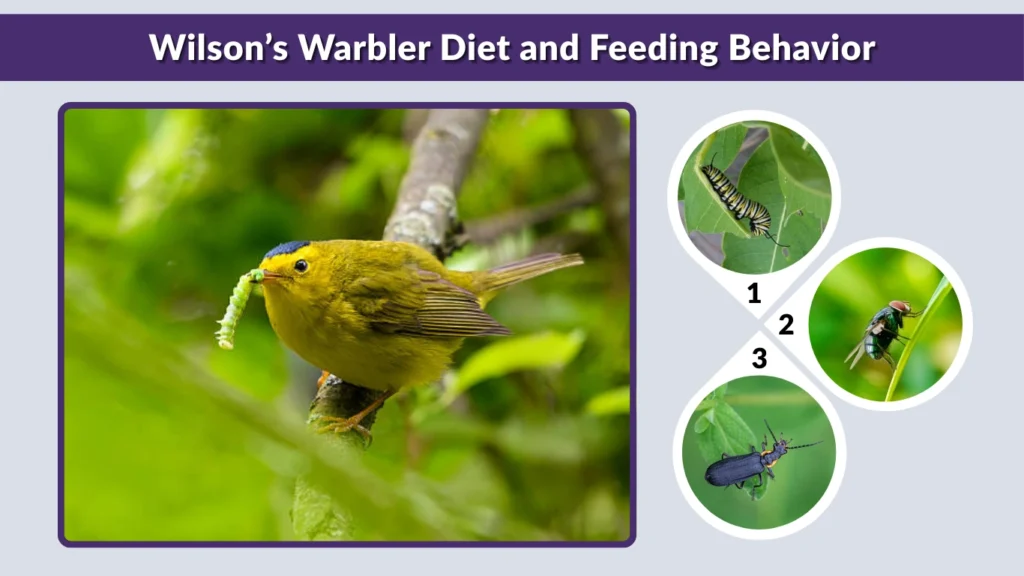
Wilson’s warbler is primarily insectivorous. Its diet consists of caterpillars, beetles, flies, spiders, and other small invertebrates. This high-protein diet supports its energetic lifestyle and long migrations.
The bird forages actively among shrubs and low branches, hopping quickly from twig to twig. It may also briefly hover or make short flights to snatch insects from leaves. Tail flicking is common during feeding, possibly helping to flush out hidden prey.
During migration, Wilson’s warbler may expand its feeding areas to include gardens, parks, and woodland edges, wherever insects are plentiful. Its constant movement and sharp “chip” call often reveal its presence before it is seen.
Migration Patterns
Wilson’s warbler is a long-distance neotropical migrant, traveling thousands of miles each year between its breeding and wintering grounds. Spring migration typically begins in March and peaks in April and May, when birdwatchers across the United States eagerly anticipate its arrival. During this time, the species can appear far outside its usual breeding range as it moves northward.
Fall migration generally starts in late summer and continues through September. Unlike spring, fall migration can feel quieter, as males sing less frequently and juveniles resemble females in appearance.
Because Wilson’s warblers migrate through much of North America, they are often spotted in parks, backyard gardens, hedgerows, and forest edges during these transitional periods. Stopover habitats with dense shrubs and abundant insects are essential. Without healthy resting and feeding areas along migration routes, their long journeys would be far more difficult.
Nesting and Reproduction
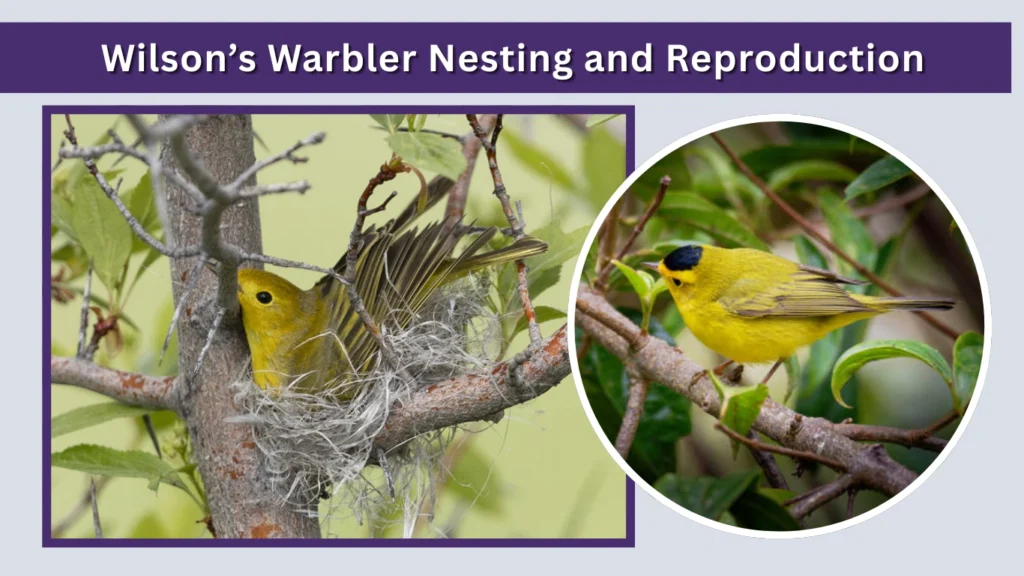
Wilson’s warblers breed during late spring and summer in northern regions. Their nesting habits are somewhat secretive, as nests are carefully concealed close to the ground.
Nest Location and Construction
Unlike many songbirds that nest in trees, Wilson’s warbler often builds its nest on or very near the ground. Nests are typically hidden at the base of shrubs, in thick grass, or among moss and leaf litter.
The female constructs a small, cup-shaped nest made of grasses, bark strips, moss, and other fine plant materials. The interior is lined with softer materials such as animal hair or fine grasses to cushion the eggs. The nest’s hidden placement helps protect it from predators.
Eggs and Incubation
A typical clutch consists of three to five eggs. The eggs are usually white or creamy with fine brown speckles, often concentrated near the larger end.
The female incubates the eggs for approximately 10 to 14 days. During this period, she remains attentive and leaves only briefly to feed. The male may guard the territory and help defend the nesting area from intruders.
Parental Care
After hatching, both parents share the responsibility of feeding the chicks. They bring a steady supply of insects to meet the growing nestlings’ high energy demands.
The young birds usually fledge about 9 to 12 days after hatching. Even after leaving the nest, they remain dependent on their parents for food and protection for a short time. This cooperative care increases the survival chances of the fledglings.
Similar Species and Identification Tips
Several yellow warblers can be confused with Wilson’s warbler, especially during migration. Careful observation helps distinguish them.
The Yellow Warbler is one of the most commonly mistaken species. However, Yellow Warblers typically show reddish streaks on the chest and lack the bold black cap of a male Wilson’s warbler.
The Common Yellowthroat is another similar species. Males of that species have a black facial mask rather than a neat black cap. Females and juveniles can appear similar, but habitat clues and subtle facial patterns often help with identification.
When identifying a Wilson’s warbler, focus on three key features: bright, unstreaked yellow underparts, olive upperparts, and (in males) a clean black crown patch. Behavior and habitat—especially dense shrubs near water—also provide helpful clues.
Conservation Status and Threats
Wilson’s warbler is currently classified as a species of Least Concern, meaning it is not considered globally threatened. However, like many migratory songbirds, it faces ongoing challenges.
Habitat loss is one of the primary concerns. Wetlands, riparian corridors, and shrubby breeding habitats are often altered or destroyed by development and land-use changes. Deforestation and habitat degradation in wintering areas also impact populations.
Climate change may further affect migration timing and insect availability. Protecting wetlands, maintaining healthy shrub habitats, and conserving migratory corridors are essential steps in ensuring the long-term survival of this energetic songbird.
FAQs
Are Wilson’s warblers rare?
Wilson’s warblers are not considered rare, especially during migration when they pass through large portions of North America. However, they can be locally uncommon outside of breeding or migration seasons. Their small size and active behavior sometimes make them harder to spot than they actually are.
Do Wilson’s warblers migrate long distances?
Yes, Wilson’s warblers are long-distance migrants. They breed in Alaska, Canada, and parts of the western United States, then travel south to Mexico and Central America for the winter. This annual journey covers thousands of miles.
What does a Wilson’s warbler eat?
Wilson’s warblers primarily eat insects such as caterpillars, flies, beetles, and spiders. They actively forage in shrubs and low trees, occasionally hovering to catch prey. Their insect-rich diet provides the energy needed for migration and raising young.
How can I attract Wilson’s warblers to my yard?
Planting native shrubs and maintaining dense vegetation can help attract Wilson’s warblers during migration. Providing a pesticide-free environment ensures an abundant insect supply. While they rarely visit feeders, they may stop by yards with suitable cover and natural food sources.
Where do Wilson’s warblers nest?
Wilson’s warblers typically nest on or near the ground, hidden in dense shrubs or grasses. The female builds a small cup-shaped nest and incubates the eggs. These well-concealed nest sites help protect the eggs and chicks from predators.
Conclusion
Wilson’s warbler may be small, but its vibrant color and remarkable migration make it an unforgettable species for bird enthusiasts. From its distinctive black cap to its energetic foraging behavior, this songbird offers many rewarding identification clues. By understanding its habitat needs, migration patterns, and conservation challenges, we can better appreciate—and help protect—this bright traveler of North America’s wetlands and woodlands.
