
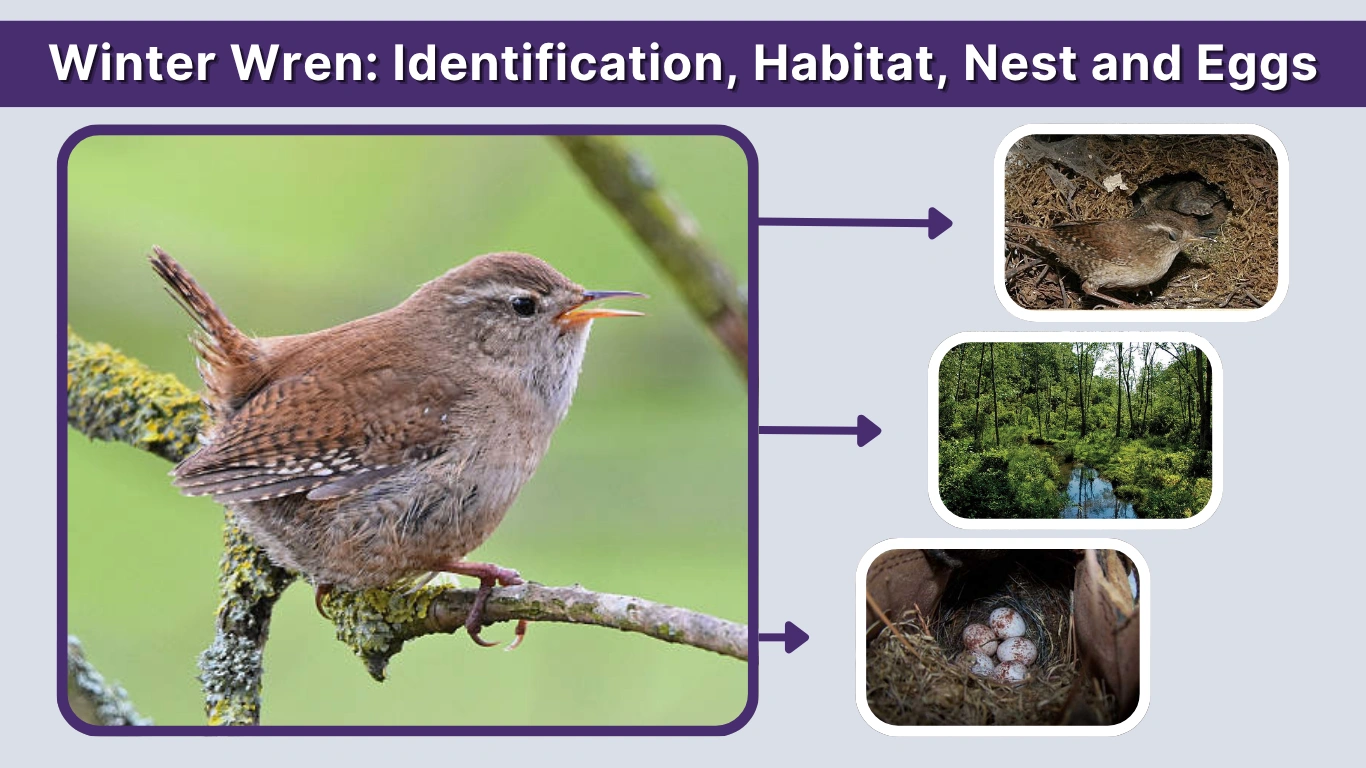
The Winter Wren (Troglodytes hiemalis) is a tiny yet remarkably energetic bird known for its powerful voice and secretive behavior. Despite its small size, this woodland species produces one of the most complex songs among North American birds. Often hidden in dense forests, it can be difficult to spot but easy to hear. In this guide, you’ll learn how to identify a Winter Wren, understand its habitat, and explore its nesting habits and unique characteristics.
What is a Winter Wren?
The Winter Wren is a small songbird belonging to the wren family (Troglodytidae). Native to North America, it is especially common in northern forests where dense vegetation provides ideal cover. Birdwatchers admire this species for its rich, bubbling song that seems far larger than the bird itself.
Although it may appear plain at first glance, the Winter Wren’s behavior and vocal abilities make it stand out. It spends much of its time near the forest floor, hopping among fallen branches and moss-covered logs in search of insects. Because of its shy nature, many people hear this bird long before they ever see it.
Winter Wren Identification
Physical Appearance
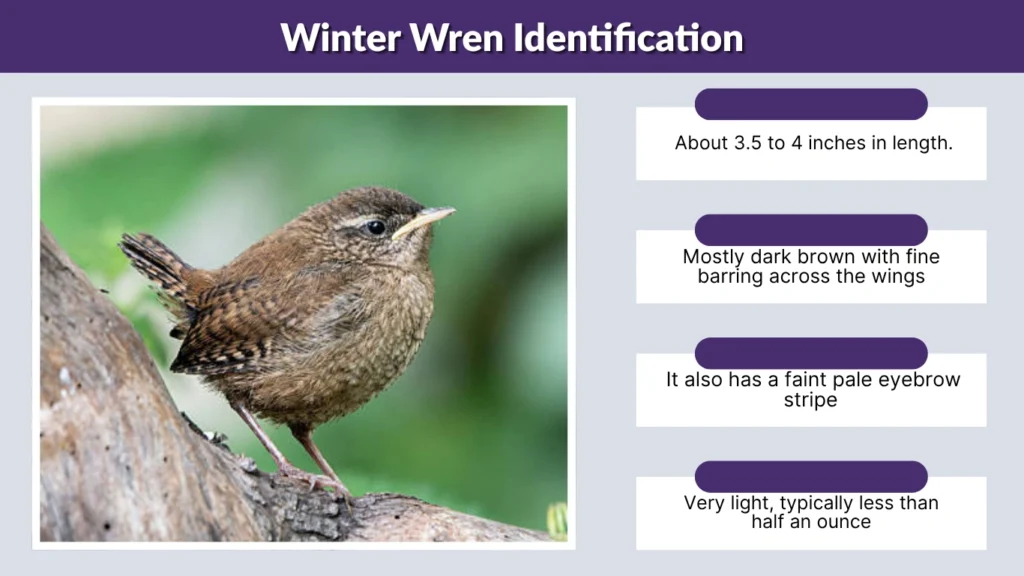
The Winter Wren is extremely small and compact, measuring only about 3.5 to 4 inches in length. Its body is rounded, with a short neck and a noticeably short tail that is often held upright. The plumage is mostly dark brown with fine barring across the wings, tail, and flanks, giving it a textured appearance.
Distinctive Features
One of the key features of the Winter Wren is its thin, slightly curved bill, which is well-suited for picking insects from crevices. It also has a faint pale eyebrow stripe, though it is much less prominent than that of similar species like the Carolina Wren. Its wings are short and rounded, helping it move quickly through dense vegetation.
Size and Measurements
- Length: approximately 3.5–4 inches
- Wingspan: around 6 inches
- Weight: very light, typically less than half an ounce
These measurements make it one of the smallest wrens in North America.
How to Identify in the Field
Spotting a Winter Wren can be challenging due to its secretive habits. It tends to stay close to the ground, darting quickly through thick undergrowth. Rather than relying on sight alone, birdwatchers often identify it by sound. Its loud, musical song carries far through the forest, making it easier to detect than to see.
Behavior and Song
Despite its tiny size, the Winter Wren is known for its bold and energetic behavior. It is constantly on the move, flicking its short tail and weaving through dense vegetation. This bird is highly active and rarely stays still for long, which adds to the challenge of observing it in the wild.
Its song is one of its most remarkable traits. The Winter Wren produces a long, complex series of musical notes that can last several seconds. The song is often described as bubbly or cascading, and it is surprisingly loud for such a small bird. Males use their song to establish territory and attract mates, especially during the breeding season.
In terms of diet, the Winter Wren feeds primarily on insects and spiders. It forages by probing into bark, leaf litter, and crevices, using its slender bill to extract prey. This behavior plays an important role in controlling insect populations within forest ecosystems.
Winter Wren Habitat
Preferred Environment
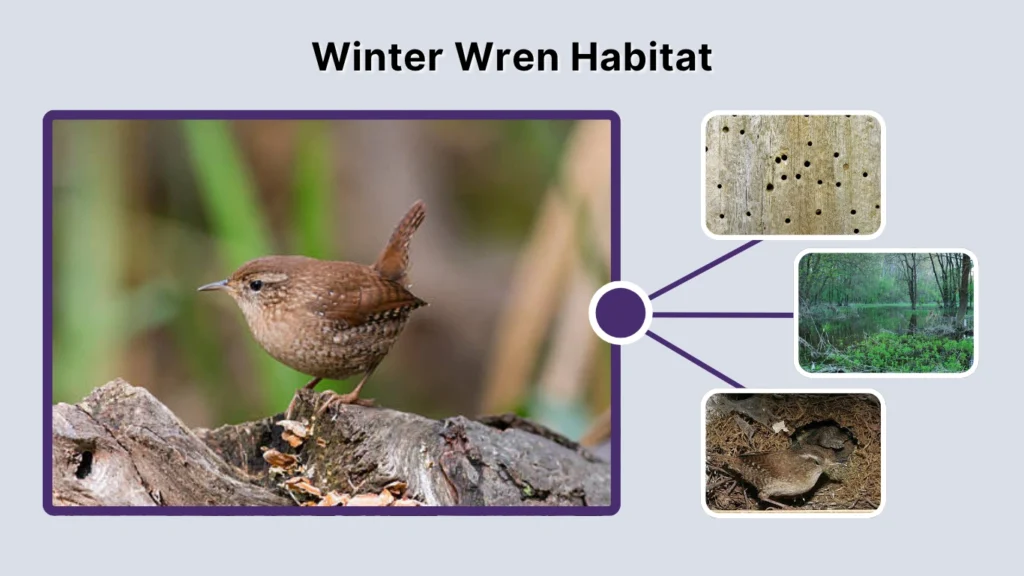
The Winter Wren thrives in dense, mature forests where there is plenty of ground cover. It is especially common in coniferous and mixed woodlands that provide a cool, shaded environment. Moss-covered logs, fallen branches, and tangled roots are essential features of its habitat, offering both shelter and feeding opportunities.
This bird prefers damp areas such as forests near streams or wetlands. The combination of moisture and dense vegetation creates an ideal environment for the insects it feeds on, making these locations particularly attractive to the species.
Geographic Range
The Winter Wren is widely distributed across North America. It breeds primarily in northern regions, including Canada and parts of the northern United States. During the colder months, many individuals migrate southward to milder climates, though some remain in suitable habitats year-round.
Its range overlaps with several other wren species, but its preference for dense forest environments helps distinguish it from others that favor more open or urban areas.
Seasonal Habitat Changes
While the Winter Wren prefers dense forests year-round, its habitat use can shift slightly with the seasons. During the breeding season, it is most commonly found deep within northern forests where thick vegetation provides protection for nesting. In winter, some individuals move to slightly more open woodlands or lower elevations, especially in southern parts of their range.
Even during migration or wintering periods, the bird still relies heavily on dense ground cover. It avoids open spaces and remains closely tied to areas with fallen logs, thick shrubs, and natural debris that offer both food and shelter.
Winter Wren Nest
Nest Structure
The nest of a Winter Wren is a remarkable structure, typically dome-shaped with a small side entrance. It is carefully constructed using natural materials such as moss, twigs, leaves, bark, and sometimes feathers. The moss covering helps the nest blend seamlessly into its surroundings, making it difficult for predators to detect.
Inside, the nest is lined with softer materials to provide insulation and comfort for the eggs and chicks. Its enclosed design offers protection from weather and predators, which is especially important in the cool, damp environments where the species lives.
Nest Placement
Winter Wrens are highly selective about where they place their nests. Common locations include tree cavities, root systems of fallen trees, rock crevices, and gaps within logs. These hidden spots provide excellent camouflage and safety.
Nests are usually positioned close to the ground, often within dense vegetation. This low placement allows the birds to remain concealed while still having easy access to food sources nearby.
Unique Nesting Behavior
One of the most interesting aspects of Winter Wren nesting behavior is the role of the male. Males often build multiple nests within their territory, sometimes referred to as “dummy nests.” These nests may vary in quality and completeness.
The female then chooses one of these nests to finish and use for laying eggs. This behavior is thought to help the male attract a mate and demonstrate his fitness as a provider. It also increases the chances of successful breeding by offering multiple nesting options.
Winter Wren Eggs
Appearance
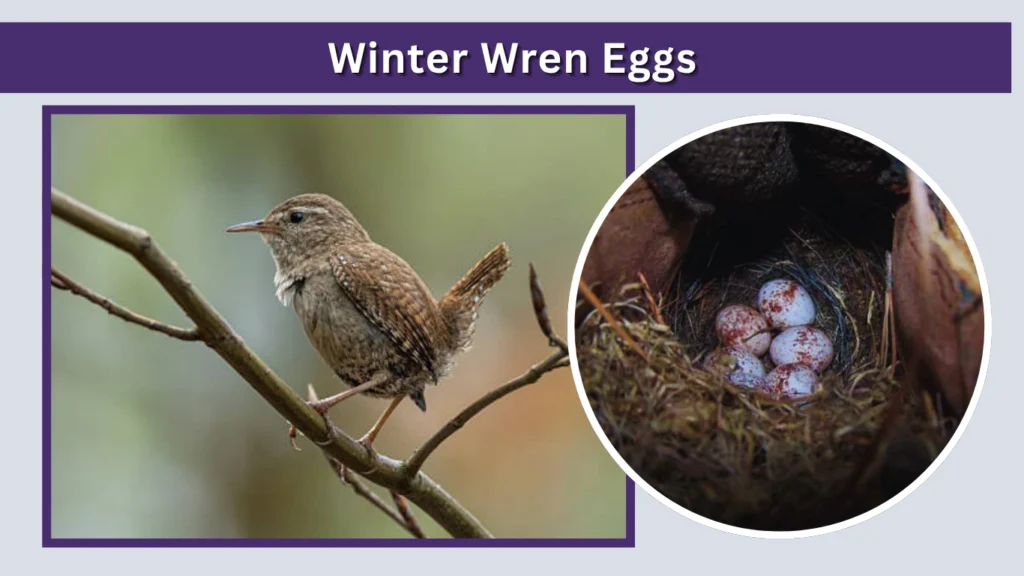
Winter Wren eggs are small and delicate, typically white with fine reddish-brown speckles concentrated toward the larger end. The speckling pattern can vary slightly, but it generally provides subtle camouflage within the nest.
Clutch Size
A typical clutch consists of about 5 to 8 eggs, although this number can vary depending on environmental conditions and food availability. Larger clutches are more common in areas with abundant resources.
Incubation and Care
The female is primarily responsible for incubating the eggs, which usually takes around 12 to 16 days. During this time, she remains in the nest for long periods, leaving only briefly to feed.
After the eggs hatch, both parents may participate in feeding the chicks. The young birds grow quickly and are usually ready to leave the nest within a few weeks. Parental care continues even after fledging, as the chicks learn to forage and survive on their own.
Winter Wren vs Carolina Wren
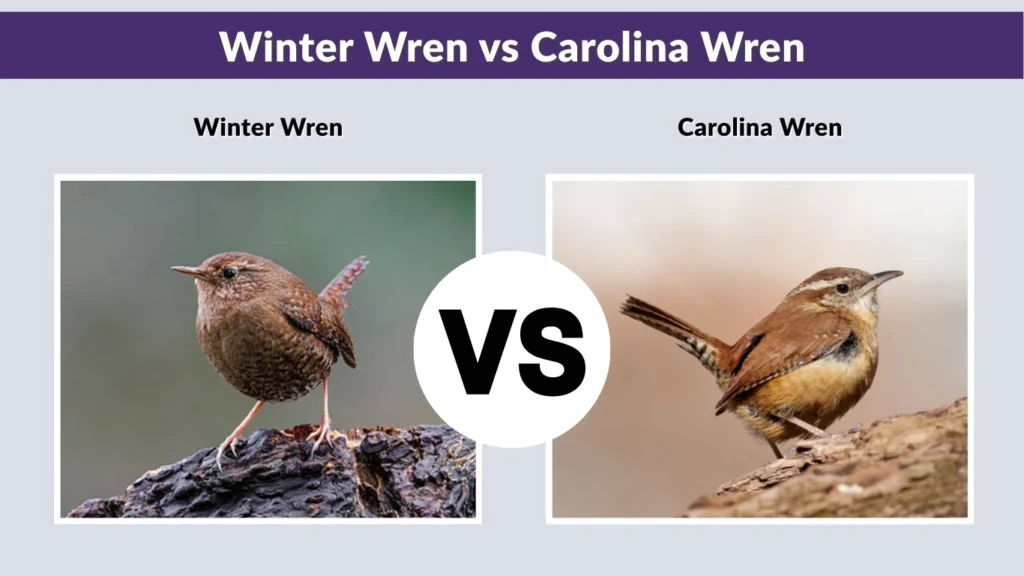
Size and Appearance
The Winter Wren and Carolina Wren can appear similar at first glance, but there are clear differences. The Winter Wren is smaller, darker, and more compact, with fine barring across its body. In contrast, the Carolina Wren is larger, with a warmer reddish-brown color and a bold white eyebrow stripe that is easy to spot.
Habitat Differences
Habitat is one of the easiest ways to distinguish between these two species. The Winter Wren prefers dense, remote forests with plenty of ground cover. Meanwhile, the Carolina Wren is more adaptable and commonly found in suburban areas, gardens, and open woodlands.
Song Comparison
Both birds are known for their vocal abilities, but their songs differ noticeably. The Winter Wren produces a complex, musical song with many notes and variations. The Carolina Wren, on the other hand, has a loud, clear, and repetitive call that is easier to recognize.
Range and Behavior
The Winter Wren is partially migratory, especially in colder regions, while the Carolina Wren is mostly non-migratory and remains in the same area year-round. Additionally, the Carolina Wren is generally more visible and less shy than the elusive Winter Wren.
Tips for Spotting a Winter Wren
Finding a Winter Wren in the wild requires patience and attention to detail. The best places to look are dense forests with plenty of fallen logs, thick undergrowth, and nearby water sources. These environments provide the cover and food the bird needs.
Listening is often more effective than looking. The Winter Wren’s loud, musical song can help you locate it even when it is hidden. Early morning is the best time for birdwatching, as activity levels are highest. Move slowly, stay quiet, and watch for quick movements near the forest floor.
Conclusion
The Winter Wren may be small, but it is a fascinating bird with a big presence in forest ecosystems. From its distinctive appearance and powerful song to its unique nesting behavior, it offers plenty for bird enthusiasts to admire. Understanding its habitat, eggs, and differences from similar species like the Carolina Wren can make spotting and identifying this elusive bird much easier. With patience and careful observation, you may be lucky enough to experience its remarkable song firsthand.
FAQs
Where do Winter Wrens live?
Winter Wrens live primarily in dense forests across North America, especially in northern regions during the breeding season and more southern areas in winter.
What do Winter Wren eggs look like?
Their eggs are white with reddish-brown speckles, usually concentrated at one end.
How can you identify a Winter Wren?
Look for a very small, dark brown bird with a short tail, fine barring, and a loud, complex song.
What is the difference between Winter and Carolina Wren?
Winter Wrens are smaller, darker, and prefer dense forests, while Carolina Wrens are larger, more colorful, and commonly found in suburban areas.
