
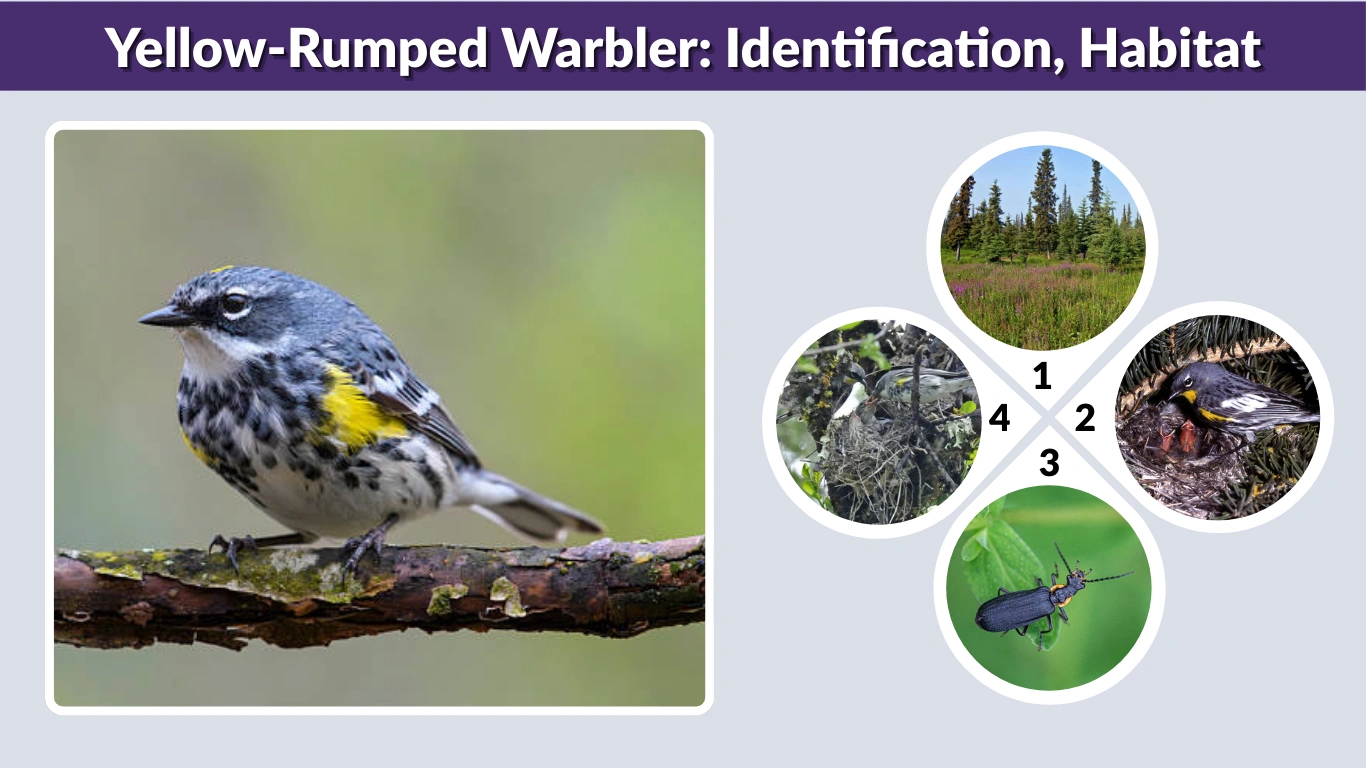
The yellow-rumped warbler is one of North America’s most widespread and recognizable songbirds. Known for the bright yellow patch on its rump, this small warbler stands out even during migration and winter months. Unlike many other warblers, it can survive on waxy berries, allowing it to winter farther north than most of its relatives. With two main forms—Myrtle and Audubon’s—the yellow-rumped warbler is a favorite among birdwatchers across the continent.
How to Identify a Yellow-Rumped Warbler
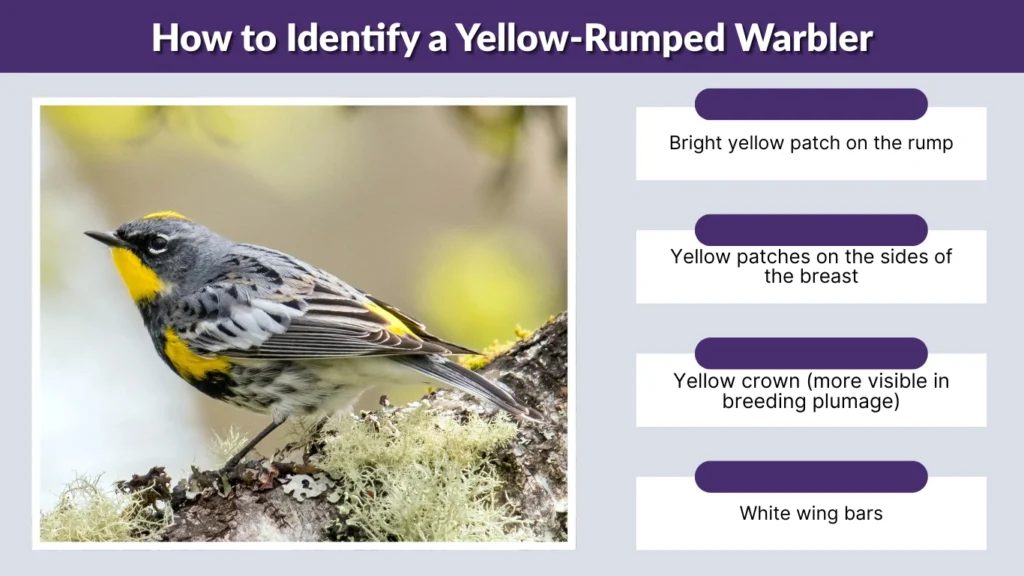
The yellow-rumped warbler is often nicknamed the “butter-butt” by birders because of its bright yellow rump patch. This field mark is usually the quickest way to confirm identification.
Key Field Marks
Look for these defining features:
- Bright yellow patch on the rump
- Yellow patches on the sides of the breast
- Yellow crown (more visible in breeding plumage)
- White wing bars
- Streaked flanks
- Slim, small songbird shape
In flight, the yellow rump is especially noticeable as the bird takes off or flicks its tail.
Male vs Female Differences
Male yellow-rumped warblers are generally brighter and more sharply patterned, especially during breeding season. Their yellow patches appear more vivid, and their gray-and-black contrast is stronger.
Females tend to look duller and browner overall, particularly in winter. However, they still show the signature yellow rump and side patches, which help with identification.
Breeding vs Winter Plumage
In spring and summer, breeding adults show bold contrast with dark streaking and vibrant yellow highlights. During fall and winter, their plumage becomes browner and more subdued. Despite the seasonal change, the yellow rump remains visible year-round.
Types of Yellow-Rumped Warblers
There are two primary forms of the yellow-rumped warbler in North America. They were once considered separate species but are now grouped together.
Myrtle Warbler (Eastern Form)
The Myrtle warbler is found primarily in eastern North America.
Key features:
- White throat
- Breeds in northeastern U.S. and Canada
- Winters in the southeastern United States, Caribbean, and parts of Central America
It is the form most commonly seen in the eastern United States during migration and winter.
Audubon’s Warbler (Western Form)
The Audubon’s warbler is found mainly in western North America.
Key features:
- Yellow throat (instead of white)
- Breeds in western U.S. and Canada
- Winters in the southwestern U.S. and Mexico
Key Differences Between Myrtle and Audubon’s
The easiest way to distinguish between the two is throat color. Myrtle warblers have a white throat, while Audubon’s warblers have a yellow throat. Their ranges overlap slightly in central North America, where hybridization can occur.
Yellow-Rumped Warbler Habitat and Range
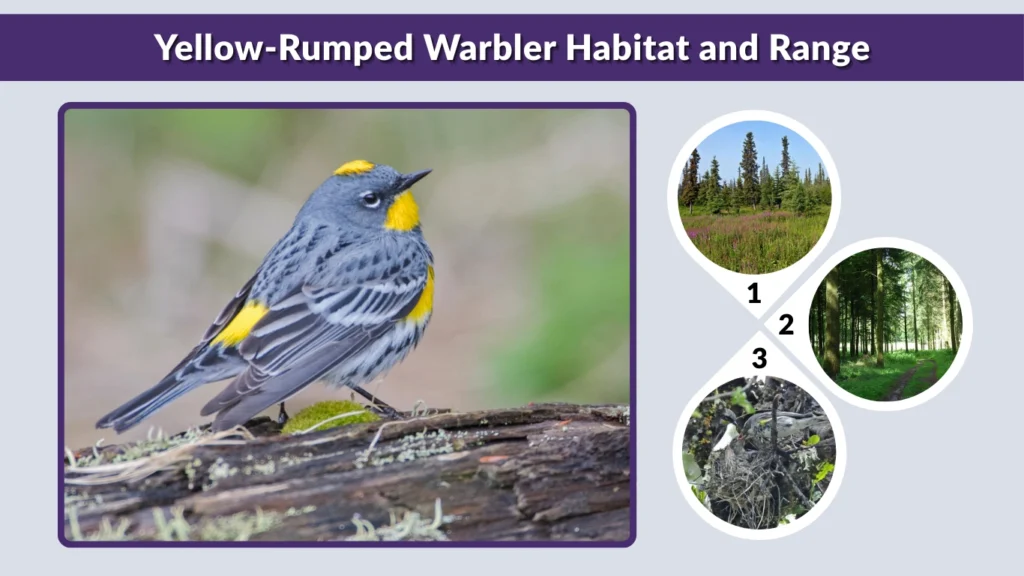
The yellow-rumped warbler is extremely adaptable, which helps explain its large population and widespread distribution.
Breeding Habitat
During the breeding season, these birds prefer:
- Boreal forests
- Coniferous woodlands
- Mixed forests with spruce and fir
They typically nest in northern forests across Canada and the northern United States.
Winter Habitat
In winter, yellow-rumped warblers move to:
- Coastal forests
- Shrubby fields
- Suburban parks and gardens
- Open woodlands
Because they can digest wax-coated berries, they are able to remain farther north than most other warbler species.
Migration Routes and Seasonal Movement
Yellow-rumped warblers are partial to long-distance migration. Many individuals travel from Canada to the southern United States, Mexico, and Central America.
Migration peaks:
- Spring: March to May
- Fall: September to November
They are often among the earliest warblers to arrive in spring and the last to leave in fall.
What Do Yellow-Rumped Warblers Eat?
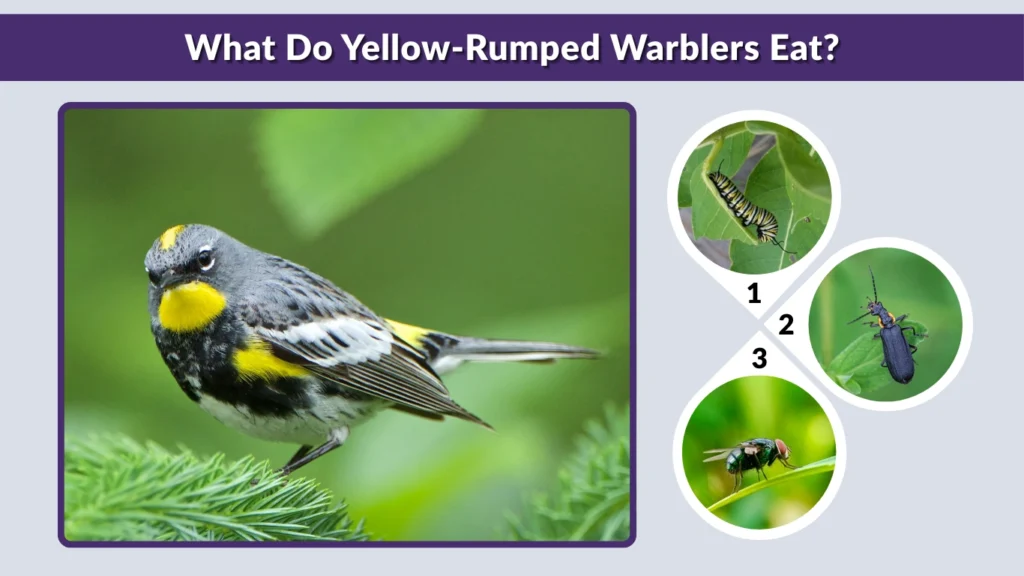
Diet plays a major role in this species’ success.
Insect Diet During Breeding Season
In spring and summer, yellow-rumped warblers primarily eat insects, including:
- Caterpillars
- Beetles
- Flies
- Ants
They forage actively among branches, sometimes hovering briefly to catch insects in midair.
Unique Ability to Digest Wax-Coated Berries
Unlike most warblers, the yellow-rumped warbler can digest the wax found in bayberries and wax myrtle berries. This special adaptation allows them to survive during colder months when insects are scarce.
Because of this dietary flexibility, they often gather in berry-rich shrubs throughout winter.
Feeding Behavior and Foraging Style
Yellow-rumped warblers are active, agile foragers. You’ll often see them moving quickly through tree branches, flicking their tails as they search for food. They use a mix of feeding techniques, including:
- Gleaning insects from leaves and bark
- Hovering briefly to pick prey off foliage
- Sallying out to catch flying insects midair
In winter, they frequently shift their focus to berry shrubs. Large flocks may gather in areas with abundant bayberries or wax myrtle, sometimes defending these food sources from other birds.
Their adaptability in feeding behavior is one of the main reasons they are so widespread and successful.
Nesting and Reproduction
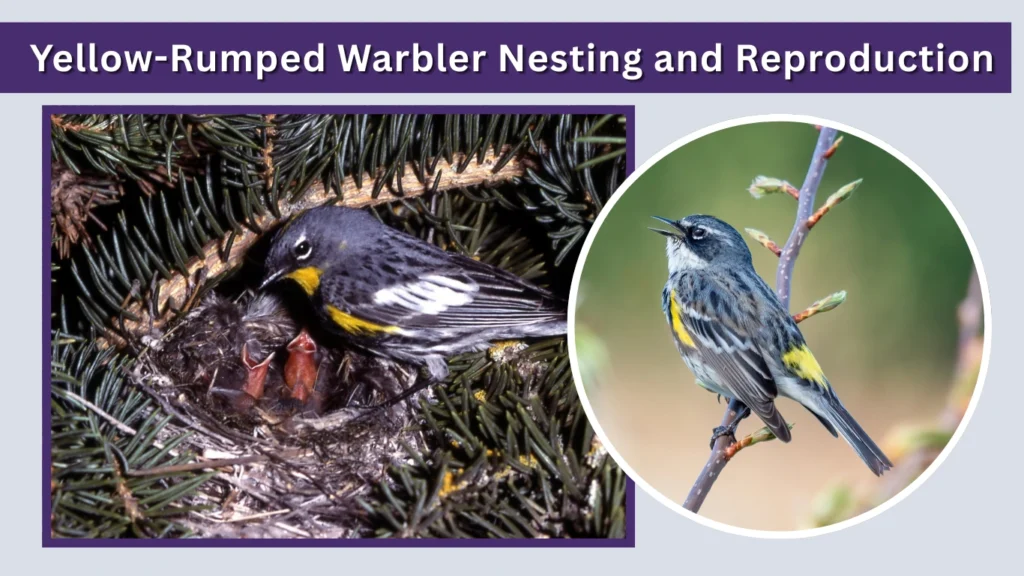
The yellow-rumped warbler breeds primarily in northern forests, where dense conifers provide cover and nesting sites.
Nest Location and Structure
Females build the nest, typically placing it:
- High in a conifer tree
- On a horizontal branch
- Close to the trunk for protection
The nest is cup-shaped and constructed from twigs, bark strips, grasses, and moss. It is often lined with softer materials like feathers and animal hair for insulation.
Eggs and Incubation
A typical clutch contains 4 to 5 eggs. The eggs are pale with small brownish spots.
- Incubation period: About 12–13 days
- Incubated mostly by the female
- Both parents feed the nestlings
After hatching, chicks remain in the nest for about 10–14 days before fledging.
Lifespan and Survival
While many young birds do not survive their first year, adults that reach maturity can live several years in the wild. Their wide distribution and flexible diet contribute to relatively stable survival rates compared to more specialized warbler species.
Yellow-Rumped Warbler Song and Calls
Like most warblers, the yellow-rumped warbler has a distinctive song used during breeding season.
Song Description
The song is typically a soft, musical trill that may sound like:
“tsee-tsee-tsee-tsee-tsee”
It often rises and falls slightly in pitch. Males sing from treetops to establish territory and attract mates during spring and early summer.
Common Calls
Outside of the breeding season, you’re more likely to hear their call notes. These include:
- A sharp “check”
- A soft “chip” sound
These short calls are commonly heard during migration and in winter flocks.
Migration Patterns Explained
The yellow-rumped warbler is considered one of the most cold-tolerant warblers in North America.
When They Migrate
Migration generally follows this pattern:
- Spring migration: March through May
- Fall migration: September through November
They are often among the earliest warblers to appear in spring, sometimes arriving before trees have fully leafed out.
Wintering Areas
Depending on the subspecies, yellow-rumped warblers winter in:
- Southern United States
- Coastal regions
- Mexico
- Central America
- The Caribbean (especially Myrtle warblers)
Because they can eat waxy berries, many individuals remain farther north than other warblers during winter.
Why They’re One of the Hardiest Warblers
Most warblers rely heavily on insects and must migrate long distances to survive winter. The yellow-rumped warbler’s ability to digest wax-coated berries allows it to endure colder climates, making it one of the most resilient and commonly seen warblers year-round.
Conservation Status and Population Trends
The yellow-rumped warbler has a large and stable population across North America. It is currently classified as Least Concern in terms of conservation status.
Although habitat loss and climate change can impact forest ecosystems, this species benefits from:
- Broad habitat tolerance
- Flexible diet
- Wide breeding range
Its adaptability has helped maintain strong population numbers compared to more specialized songbirds.
FAQs
What makes the yellow-rumped warbler unique?
The yellow-rumped warbler is unique because it can digest wax-coated berries such as bayberries and wax myrtle. This rare ability allows it to survive in colder climates during winter, making it one of the few warblers commonly seen year-round in parts of North America.
How can you tell a Myrtle warbler from an Audubon’s warbler?
The easiest way to distinguish them is throat color. Myrtle warblers have a white throat, while Audubon’s warblers have a yellow throat. Their geographic range also differs, with Myrtle in the east and Audubon’s in the west, though overlap and hybrids can occur.
Do yellow-rumped warblers stay in winter?
Yes, many yellow-rumped warblers remain in the southern United States and coastal regions during winter. Thanks to their ability to eat waxy berries, they can tolerate colder temperatures better than most other warbler species.
What attracts yellow-rumped warblers to your yard?
Planting native berry-producing shrubs like wax myrtle or bayberry can attract yellow-rumped warblers in winter. They may also visit yards with trees, shrubs, and a reliable source of insects during migration and breeding seasons.
