
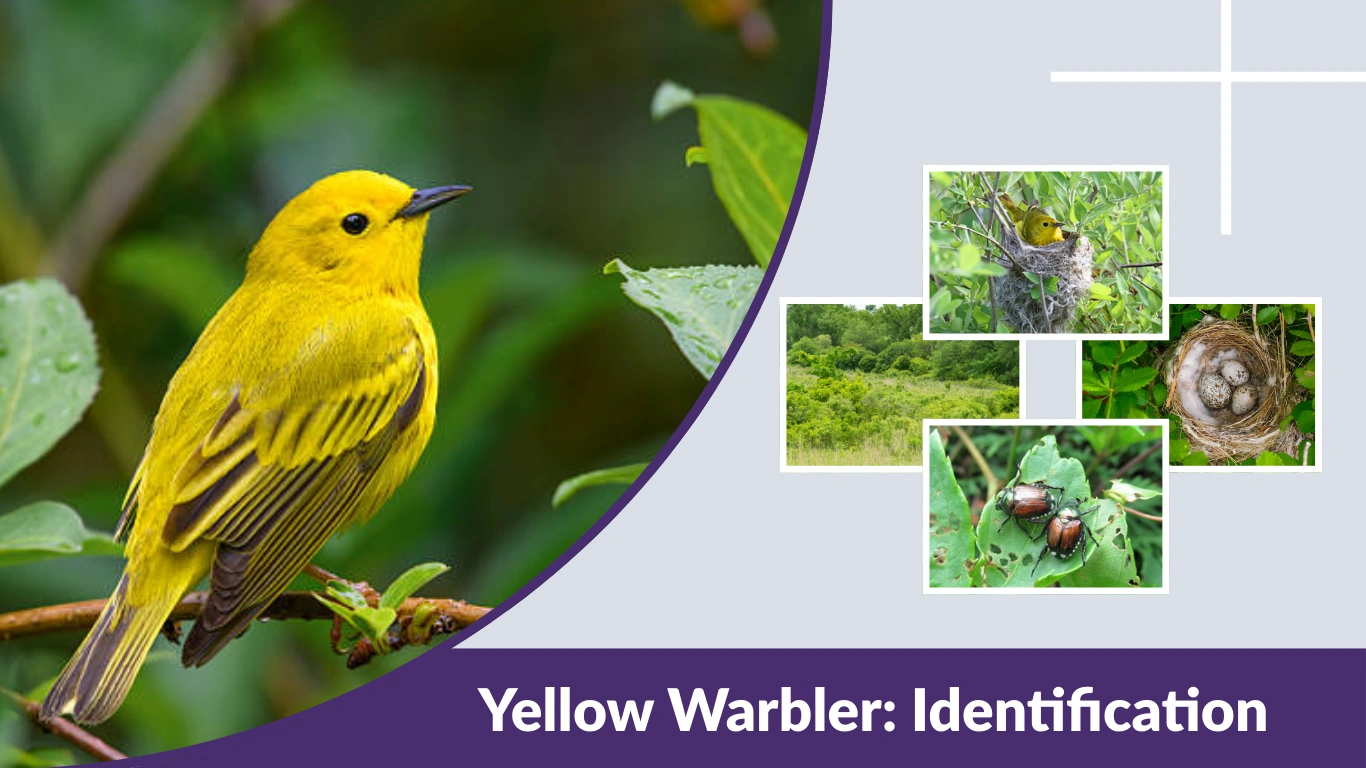
The yellow warbler is one of the brightest and most cheerful songbirds in North America. With its glowing yellow feathers and sweet, whistled song, it’s often one of the first birds people learn to recognize. Found in wetlands, shrubby fields, and backyard gardens, this small migratory bird is both beautiful and fascinating. In this guide, you’ll learn how to identify a yellow warbler, where it lives, how it nests, and what makes it different from similar yellow birds.
Yellow Warbler Identification
Correct identification is essential, especially since several small yellow birds can look similar at first glance. Fortunately, the yellow warbler has a few standout features.
Physical Appearance
Adult male yellow warblers are a brilliant golden yellow overall. Their most distinctive feature is the reddish or chestnut streaking across the breast, which contrasts beautifully against the bright yellow body. They have small, rounded heads, dark eyes, and thin, pointed bills designed for catching insects.
Females are also yellow but appear slightly duller. They usually lack the bold reddish streaks seen on males, or the streaking is much fainter. Both sexes are small, measuring about 4.7 to 5.1 inches in length, with a wingspan of around 6.3 to 7.9 inches.
Male vs Female Differences
The easiest way to tell males and females apart is by looking at the chest. Males display bold reddish streaks running down their bright yellow underparts, especially during breeding season. Females tend to have a more uniform yellow belly with little to no streaking.
Males also appear slightly brighter overall, particularly in spring and early summer when they are actively defending territory and attracting mates.
Juvenile Characteristics
Juvenile yellow warblers look more subdued than adults. They often have an olive-yellow tone and lack the strong chest streaking of adult males. Their plumage appears softer and less vibrant, which helps them blend into shrubs and foliage while they mature.
Song and Vocalizations
The yellow warbler’s song is one of its most recognizable traits. Many birdwatchers describe it as sounding like: “Sweet-sweet-sweet, I’m so sweet!” It’s a clear, high-pitched, and melodic series of notes that repeats frequently during the breeding season.
Males sing persistently to defend territory and attract females. In addition to their song, they produce short call notes used for communication between mates and warning signals when predators are nearby.
Yellow Warbler Habitat
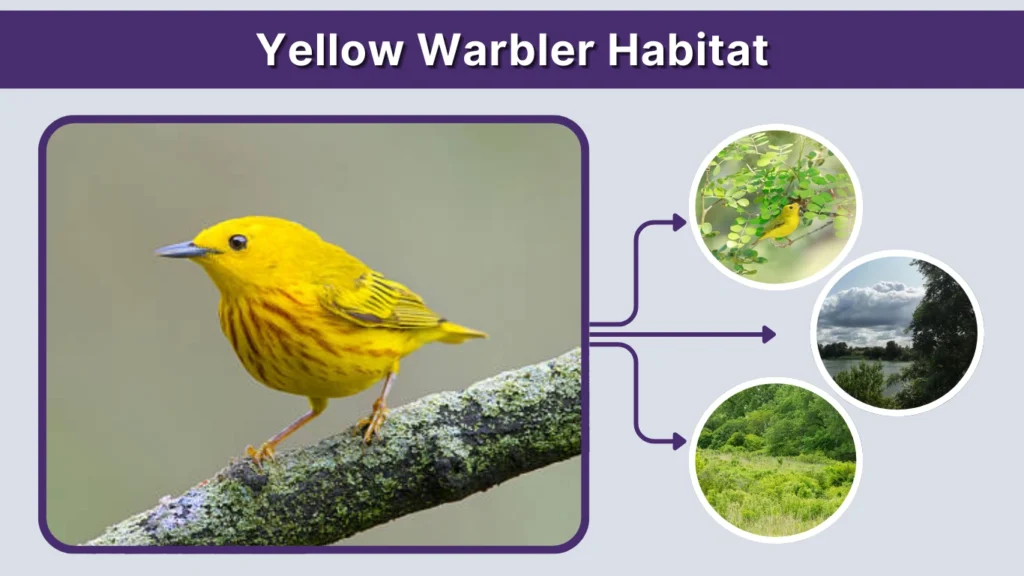
The yellow warbler prefers areas with plenty of shrubs and access to water. Unlike some warblers that live high in forest canopies, this species is commonly found in lower vegetation.
Preferred Natural Habitats
You’ll most often find yellow warblers in:
- Wetlands and marsh edges
- Riverbanks and lakeshores
- Shrubby meadows
- Brushy fields
- Forest edges with dense undergrowth
They are especially attracted to areas with willows and other small trees near water. Dense shrubs provide both nesting sites and protection from predators.
Geographic Range
The yellow warbler has one of the widest breeding ranges of any North American warbler. During the breeding season, it can be found across most of the United States and southern Canada, extending even into Alaska.
When colder weather approaches, yellow warblers migrate south. They spend the winter months in Central America, northern South America, and parts of the Caribbean. Their long migratory journeys make them true seasonal travelers.
Migration Patterns
Yellow warblers are long-distance migrants. They typically arrive in northern breeding grounds in spring, often between April and May, depending on the region. By late summer and early fall, they begin heading south again.
During migration, they may stop in gardens, parks, and shrubby habitats to rest and refuel. This makes spring and fall excellent times to spot them, even in areas where they don’t normally breed.
Yellow Warbler Nest
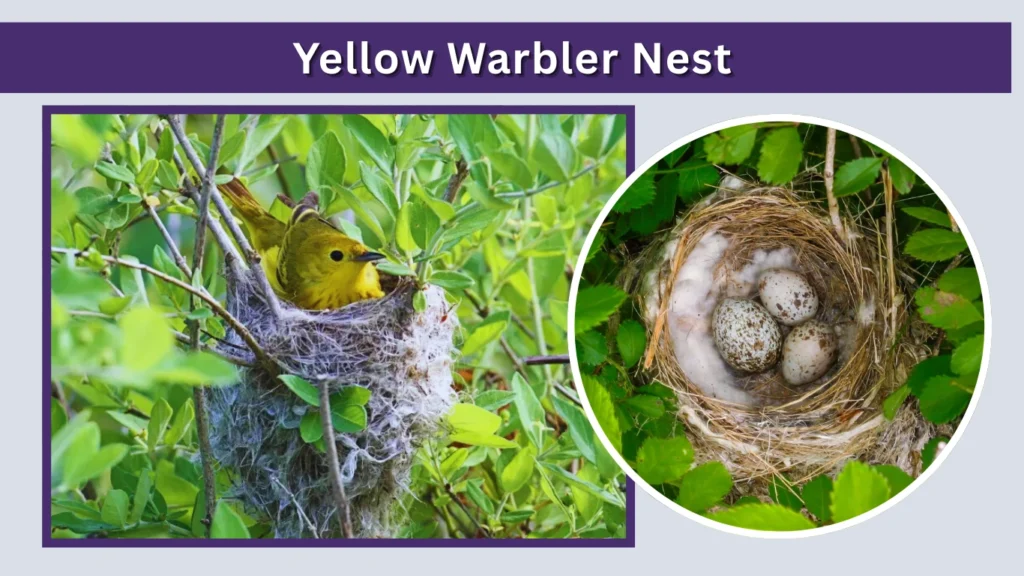
Nesting season is a busy and fascinating time for yellow warblers. Their nests are carefully constructed and cleverly hidden.
Nest Location
Yellow warblers usually build their nests in shrubs or small trees, typically 3 to 10 feet above the ground. The nest is often placed in dense foliage, making it difficult for predators to spot.
They commonly select willows, alders, or other shrubs near water. The surrounding leaves provide camouflage and protection from harsh weather.
Nest Structure and Materials
The nest is a compact, cup-shaped structure woven from grasses, bark strips, plant fibers, and stems. The interior is lined with soft materials such as plant down, animal hair, or fine grasses to cushion the eggs.
The female is primarily responsible for building the nest, though the male may stay nearby and defend the territory.
Eggs and Breeding Behavior
A typical yellow warbler clutch contains about 3 to 5 eggs. The eggs are pale greenish or bluish-white with small brown or gray speckles. The female incubates the eggs for roughly 11 to 12 days, rarely leaving the nest except to feed.
Once the chicks hatch, both parents help feed them. The nestlings grow quickly and usually leave the nest about 8 to 12 days after hatching. Even after fledging, the young birds remain dependent on their parents for food and protection for a short period while they learn to forage on their own.
Cowbird Parasitism
One of the most fascinating aspects of yellow warbler nesting behavior involves their response to brown-headed cowbirds. Cowbirds are brood parasites, meaning they lay their eggs in the nests of other birds.
Yellow warblers are frequent targets. However, they have developed a unique defense strategy. Instead of abandoning the nest, they may build a new nest layer directly on top of the parasitized eggs, effectively burying them. In some cases, they repeat this process multiple times, creating a multi-layered nest.
Yellow Warbler Diet
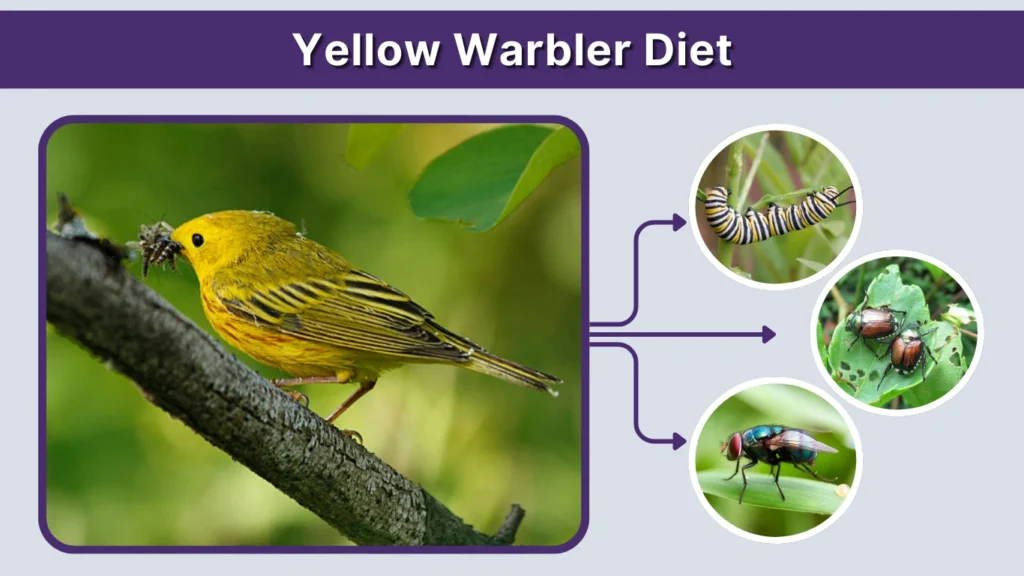
Yellow warblers are primarily insect-eaters, which makes them valuable for controlling insect populations.
Primary Food Sources
Their diet consists mainly of:
- Caterpillars
- Beetles
- Flies
- Midges
- Spiders
- Other small insects and larvae
Caterpillars are especially important during breeding season because they provide the protein needed for growing chicks.
Feeding Behavior
Yellow warblers are active and agile foragers. They move quickly through shrubs and low branches, carefully picking insects off leaves and stems in a method known as gleaning.
They also perform short aerial sallies, briefly flying out to catch insects in midair before returning to cover. Their thin, pointed bill is perfectly adapted for grabbing small prey.
Seasonal Diet Changes
During the breeding season, their diet is almost entirely insects. However, during migration and in wintering grounds, they may supplement their meals with small berries or fruits when insects are less abundant.
If you want to attract yellow warblers to your yard, planting native shrubs and avoiding pesticides can help create a healthy feeding environment.
Yellow Warbler vs Goldfinch
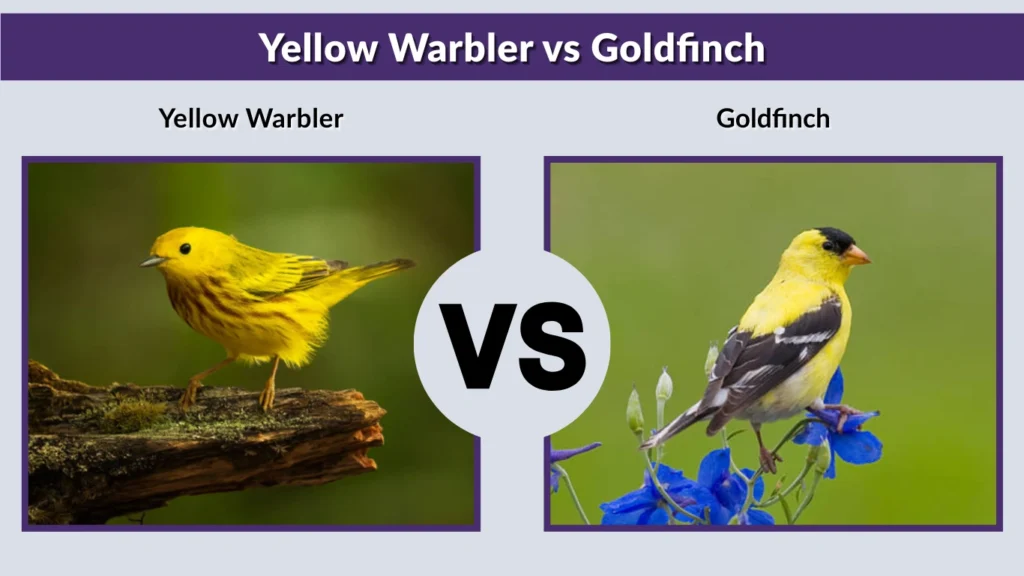
Because both birds are bright yellow and similar in size, people often confuse yellow warblers with American goldfinches. However, several key differences make identification easier.
Color and Appearance Differences
Male yellow warblers are mostly solid yellow with reddish streaks on the chest. They lack bold black markings.
In contrast, male American goldfinches during breeding season have bright yellow bodies with black wings, a black forehead cap, and white wing bars. These strong black accents are the quickest way to tell them apart.
Beak Shape Comparison
The bill shape provides another clear clue. Yellow warblers have thin, pointed bills designed for catching insects.
Goldfinches, however, have thick, conical bills suited for cracking seeds. Even from a distance, this difference in beak shape is noticeable.
Behavior and Habitat Differences
Yellow warblers prefer shrubby wetlands, river edges, and dense vegetation. They are often seen flitting through bushes rather than visiting feeders.
Goldfinches are more commonly found in open fields, meadows, and backyard feeders, especially where sunflower or thistle seeds are available.
Song Differences
The yellow warbler’s song is sweet and melodic, often described as “Sweet-sweet-sweet, I’m so sweet.”
Goldfinches produce a bouncy, musical song and a distinctive, twittering flight call that sounds quite different from the warbler’s steady repetition.
Interesting Yellow Warbler Facts
- The scientific name of the yellow warbler is Setophaga petechia.
- It is one of the most widespread warblers in North America.
- Some populations live in mangroves in tropical regions year-round.
- Their nest-burying behavior is a rare and impressive adaptation to brood parasitism.
- Yellow warblers play an important role in controlling insect populations.
- Their conservation status is currently considered stable, though habitat loss can impact local populations.
FAQs
Where do yellow warblers live?
Yellow warblers live in shrubby habitats near water, including wetlands, marshes, riverbanks, and forest edges. During the breeding season, they are found across much of North America. In winter, they migrate to Central and northern South America.
What do yellow warblers eat?
Yellow warblers mainly eat insects such as caterpillars, beetles, flies, and spiders. During migration or winter, they may also consume small berries when insects are less available.
How do you identify a yellow warbler?
Look for a small, bright yellow bird with a thin, pointed bill. Adult males have reddish streaks on their chest. Their sweet, repetitive song is also a strong identification clue.
How can you tell a yellow warbler from a goldfinch?
Yellow warblers lack black wings and caps, while goldfinches have bold black markings and thicker seed-eating bills. Warblers are usually found in shrubs, while goldfinches often visit feeders.
When do yellow warblers migrate?
Yellow warblers typically migrate north in spring, arriving between April and May. They head south again in late summer or early fall, traveling to Central and South America for the winter.
Conclusion
The yellow warbler is a vibrant and energetic songbird that brings color and music to wetlands, gardens, and forest edges across North America. With its bright plumage, sweet song, and fascinating nesting behavior, it remains a favorite among birdwatchers. By understanding its identification features, habitat preferences, and diet, you can better appreciate this remarkable migratory bird and help support its natural environment.
