
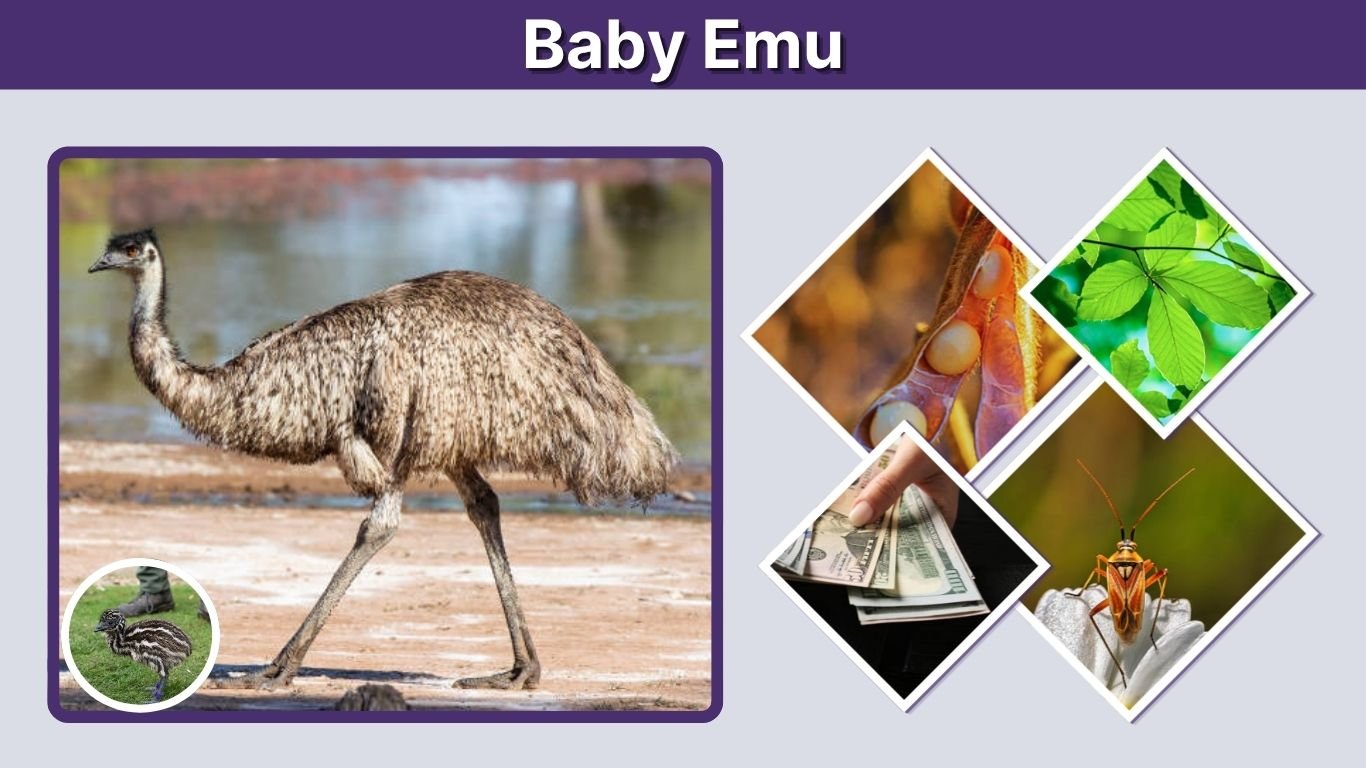
A baby emu is a fast-growing, striped chick that looks surprisingly different from the tall, shaggy adult bird it eventually becomes. Baby emus hatch from large dark-green eggs and are cared for primarily by their father. Within only a few months, these small chicks develop powerful legs and rapidly increase in height. Their unusual appearance, curious behavior, and close relationship with male emus make them especially fascinating. Understanding their diet, growth, hatching, behavior, and care reveals how these Australian birds survive their vulnerable first months.
What Is a Baby Emu Called?
A baby emu is usually called an emu chick. The terms baby emu and emu baby are commonly used in everyday conversation, but “chick” is the standard name for a newly hatched or young emu.
Baby emu chicks belong to the species Dromaius novaehollandiae, the large flightless bird native to Australia.
What Does a Baby Emu Look Like?
Newly hatched emu chicks look quite different from adults. Instead of the gray-brown shaggy feathers associated with mature emus, chicks have distinctive striped patterns.
Typical baby emu features include:
- Cream and brown longitudinal stripes
- Small wings that cannot support flight
- Long legs compared with body size
- Large feet with three toes
- Dark eyes
- Soft, downy feathers
- A compact body that becomes taller quickly
Their striped coloration helps them blend into vegetation and ground cover, providing camouflage when they are young and vulnerable.
Why Are Baby Emus Striped?
Baby emus have alternating light and dark stripes running along their bodies. These stripes help break up their outline among grass, shadows, and vegetation.
The pattern is especially useful during the early stages of life when chicks are too small to defend themselves effectively.
As they mature, the stripes gradually disappear and are replaced by the darker, shaggy plumage seen on adult emus.
Baby Emu Hatching and Early Life
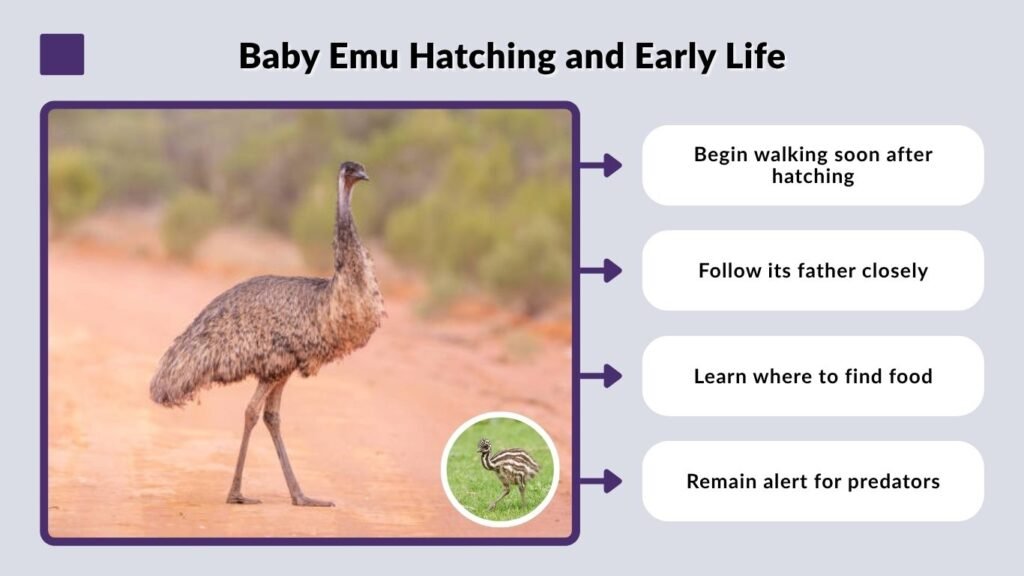
The life of a baby emu begins inside a large, dark-green egg. Emu reproduction is unusual because the male takes responsibility for most incubation and parental care. Once the eggs are laid, the male remains with the nest and later protects the chicks after they hatch.
How Long Does a Baby Emu Take to Hatch?
Emu eggs generally require around eight weeks of incubation before hatching.
During this period, the developing chick uses nutrients contained inside the egg. Near the end of incubation, the chick begins breaking through the thick shell using a temporary structure on its beak known as an egg tooth.
Hatching can be exhausting and may take considerable time.
What Happens After a Baby Emu Hatches?
Newly hatched chicks remain close to their father. During their earliest days, their priorities are staying warm, learning to follow the adult, and beginning to search for food.
Their development progresses rapidly.
A typical young emu will:
- Begin walking soon after hatching
- Follow its father closely
- Learn where to find food
- Remain alert for predators
- Develop stronger legs rapidly
- Grow noticeably from week to week
Chicks quickly become mobile because movement is essential for surviving in the environments where wild emus live.
Male Emu and His Babies
One of the most remarkable characteristics of emu family life is that the male cares for the babies. Male emus perform most incubation and then remain responsible for protecting and guiding their chicks.
This arrangement differs from many familiar bird species in which females provide most parental care.
How Does a Male Emu Care for Baby Emus?
After the chicks hatch, their father keeps them nearby and teaches them how to survive.
His responsibilities include protecting them from danger, leading them toward food, keeping the group together, and defending them against possible threats.
Baby emus commonly follow their father in a line or compact group. If danger approaches, the male may behave defensively.
How Long Do Baby Emus Stay With Their Father?
Young emus remain with their father for several months while developing the size and survival skills required for independence.
During this period they learn where and how to feed while becoming increasingly capable runners.
Eventually, the juveniles separate and begin living more independently.
What Do Baby Emus Eat?
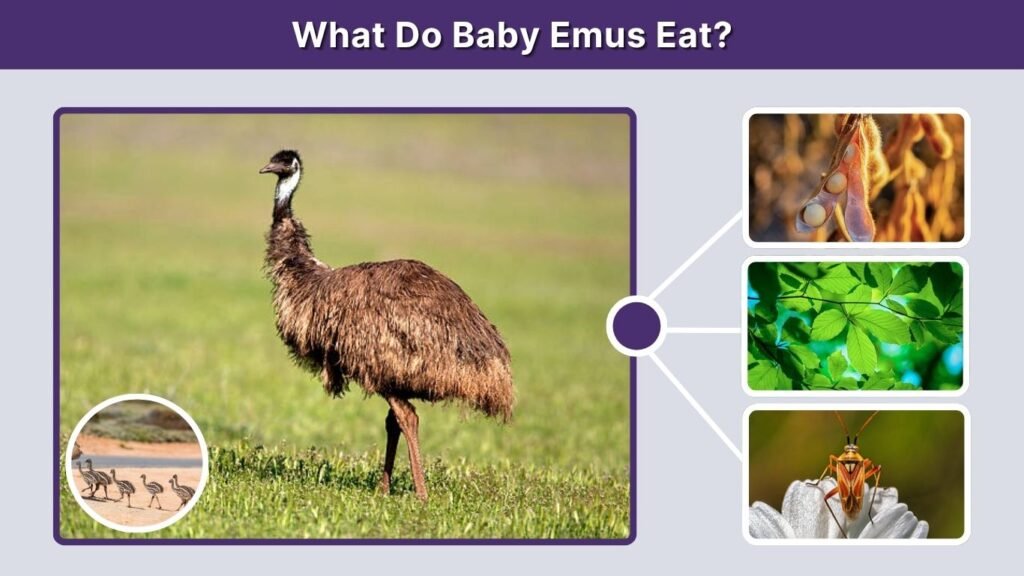
A baby emu diet consists of a variety of plant and animal foods. Emus are omnivorous, meaning they can eat both vegetation and small animals.
Growing chicks need nutritious food to support their exceptionally rapid physical development.
Baby Emu Food
Wild baby emus may consume:
- Tender grasses
- Seeds
- Leaves
- Young plant shoots
- Fruits
- Insects
- Beetles
- Caterpillars
- Grasshoppers
- Other small invertebrates
Insects can be especially useful because they provide protein needed during growth.
Captive baby emus require a properly balanced diet formulated for their developmental stage. Feeding inappropriate food can create nutritional deficiencies or abnormal growth.
Do Baby Emus Need Water?
Yes. Baby emus need reliable access to clean drinking water.
Although wild emus can cope with Australia’s often-dry environment, young birds still need water to remain healthy. Captive chicks should have water containers designed so they can drink easily without creating unnecessary drowning or injury risks.
How Fast Do Baby Emus Grow?
Baby emus grow exceptionally quickly. A tiny striped chick can become a tall juvenile in a surprisingly short period.
Their legs develop rapidly because running becomes one of their most important methods of escaping danger.
Baby Emu Growth Stages
Their development can broadly be divided into several stages:
- Hatchling: Small, striped and dependent on its father.
- Young chick: Rapidly gaining height and leg strength.
- Older chick: More active, independent and capable of running.
- Juvenile: Stripes begin fading and adult-type feathers develop.
- Young adult: Body size becomes increasingly similar to that of mature birds.
Emus may reach close to adult height relatively quickly, although full physical and reproductive maturity takes longer.
When Do Baby Emu Stripes Disappear?
The attractive striped pattern does not remain permanently.
As a baby emu grows, juvenile feathers gradually replace the striped down. Eventually the bird develops the loose brown or gray-brown feathers characteristic of adults.
The exact timing can vary somewhat between individuals.
Baby Emu Behavior
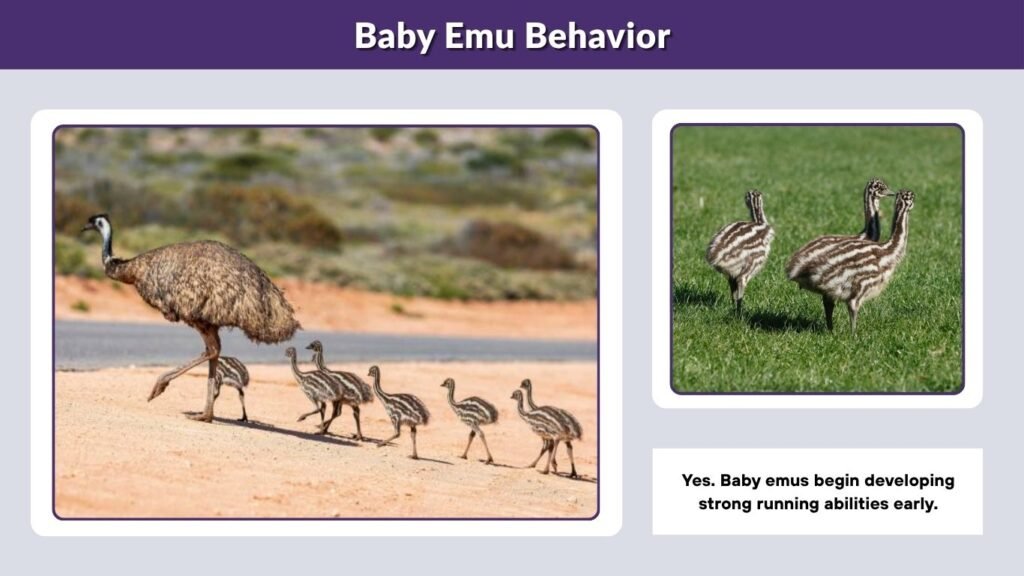
Baby emus are active, curious birds. They explore their surroundings while staying close enough to their father to receive protection.
Young birds may investigate unfamiliar objects, run around suddenly, chase one another, or interact playfully with members of their group.
Can Baby Emus Run?
Yes. Baby emus begin developing strong running abilities early.
They are not as fast as healthy adults, which can run at approximately 30 mph, but chicks become increasingly quick as their legs strengthen.
Fast growth and running ability are important defenses because young emus face greater predator risks than adults.
Are Baby Emus Friendly?
Captive baby emus raised around people can become comfortable with human presence. Some may appear very curious or friendly.
However, emus are large wild-type birds rather than traditional domesticated pets. Behavior can change significantly as a chick grows.
A friendly baby can eventually become a tall and powerful adult, so appropriate handling and boundaries are important from an early age.
Albino and Blonde Baby Emus
Occasionally, people encounter unusually pale emus described as albino emu babies, blonde emus, or white emus.
True albinism involves a lack of normal pigment and can affect skin, feathers, and eyes. However, not every light-colored emu is genuinely albino.
What Is a Blonde Baby Emu?
A blonde or unusually pale baby emu may have a genetic color variation that produces lighter feathers while retaining some pigmentation.
Such birds can look dramatically different from normally colored chicks.
Because true albino and unusually light-colored emus are uncommon, they often attract considerable attention when photographed or kept in captivity.
Baby Emu for Sale: What to Know
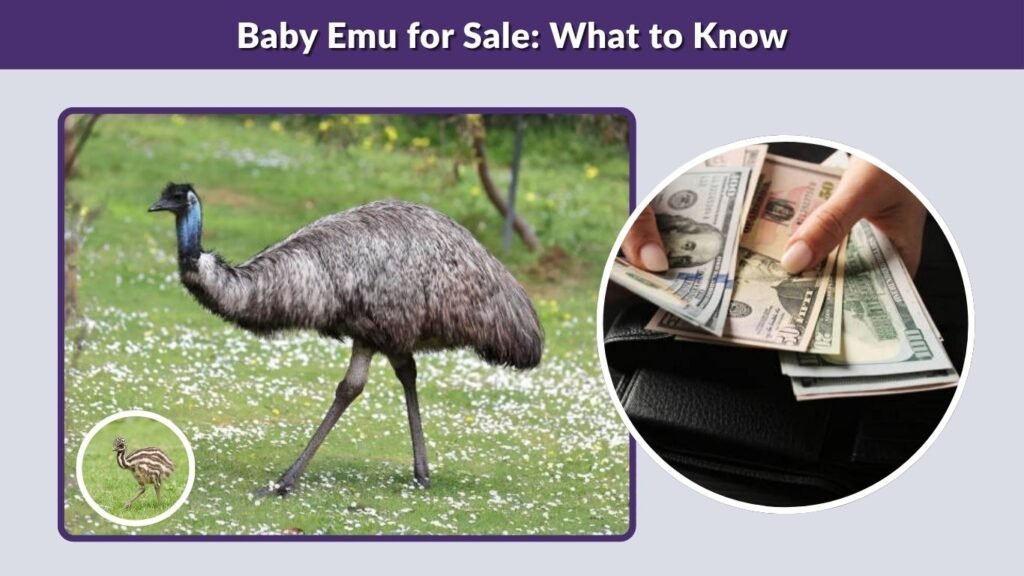
People searching for a baby emu for sale should remember that purchasing the chick is only the beginning of a long-term commitment. Emus become extremely large birds and require much more room than conventional poultry.
Availability and cost depend strongly on breeder, region, age, season, and the individual bird.
Before Buying a Baby Emu
Consider these requirements first:
- Large outdoor space
- Tall, secure fencing
- Appropriate shelter
- Proper emu nutrition
- Clean drinking water
- Veterinary access
- Safe transportation
- Local animal-keeping regulations
- Long-term care for an adult bird
Searching for a “baby emu for sale near me” may produce local breeders, farms, or exotic-animal sellers, but buyers should investigate the health and breeding practices of the seller before purchasing.
How Much Is a Baby Emu?
There is no single baby emu price that applies everywhere. The cost can change considerably according to location, chick age, breeder reputation, sex, genetics, availability, and whether transportation is required.
Rare color variations may also be priced differently from normally colored chicks.
More importantly, buyers should budget for fencing, food, shelter, veterinary care, and the space required to maintain an adult emu.
Baby Emu vs Adult Emu
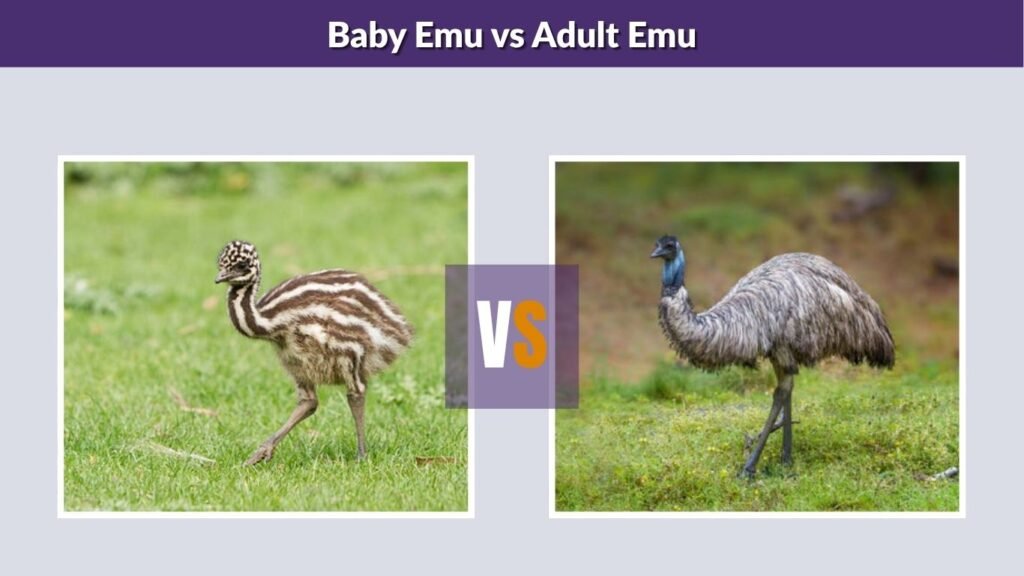
A baby emu and an adult can look so different that someone unfamiliar with the species might initially mistake them for different birds.
| Feature | Baby Emu | Adult Emu |
| Plumage | Striped cream and brown | Shaggy brown-gray |
| Size | Small at hatching | Up to around 6 feet tall |
| Movement | Developing rapidly | Powerful runner |
| Independence | Depends on father | Independent |
| Defense | Limited | Powerful legs and kicks |
| Flight | Cannot fly | Cannot fly |
Despite their dramatic transformation, both stages share the long legs and ground-dwelling lifestyle characteristic of emus.
FAQs
What is a baby emu called?
A baby emu is called an emu chick. “Baby emu” and “emu baby” are also commonly used informal terms.
What does a baby emu eat?
Baby emus eat plant material such as grasses, seeds and shoots, along with insects and other small invertebrates.
Who takes care of baby emus?
The male emu provides most parental care. He incubates the eggs and protects and guides the chicks after they hatch.
What color is a baby emu?
Most baby emus have cream-colored and dark brown stripes that provide camouflage. The stripes gradually disappear as they develop adult plumage.
Can you buy a baby emu?
Baby emus are available from some breeders and farms where ownership is legal. Prospective owners should consider enclosure size, fencing, feeding, veterinary care, local regulations, and the needs of the full-grown bird before purchasing.
