
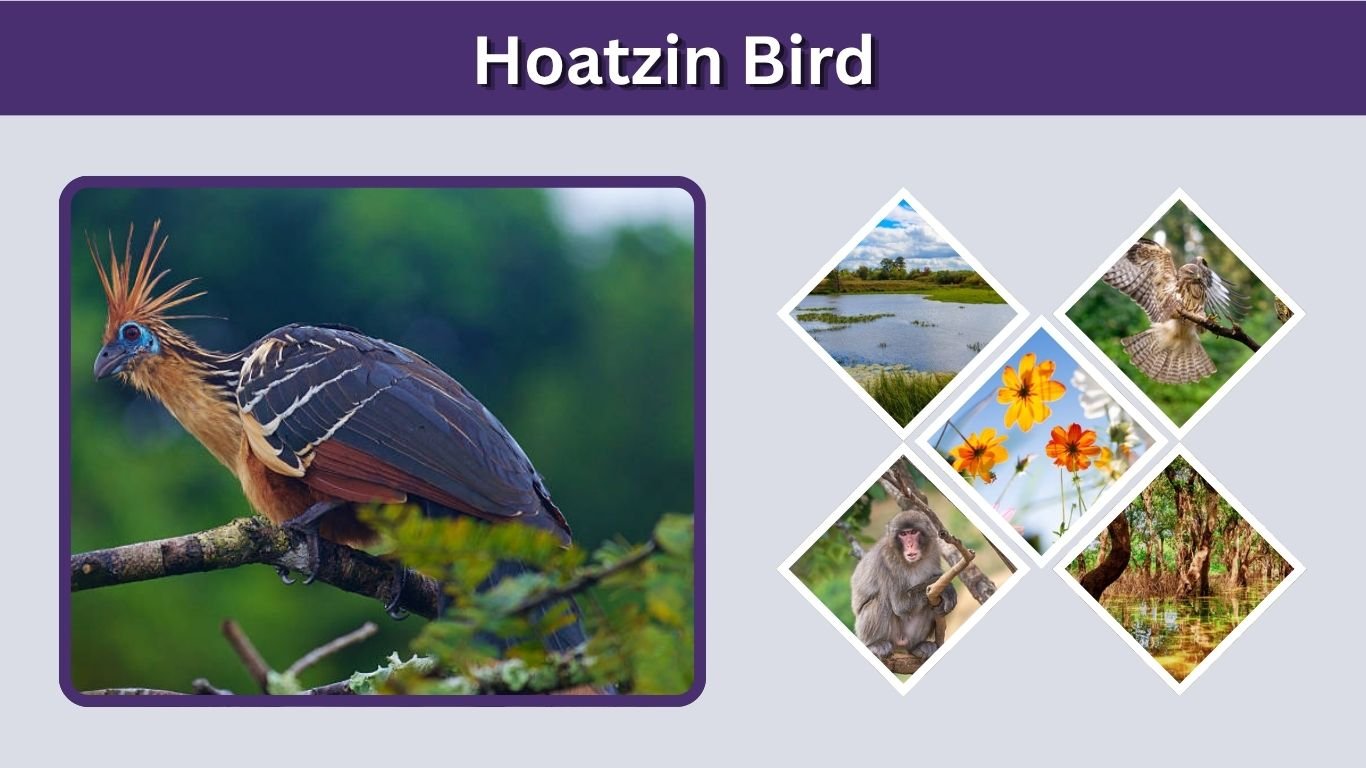
The hoatzin is one of South America’s strangest birds. Scientifically known as Opisthocomus hoazin, it is famous for its spiky crest, bright blue face, unusual digestive system, unpleasant smell, and chicks equipped with functional claws on their wings. Hoatzins inhabit wetlands and riverside vegetation throughout the Amazon and Orinoco regions. Unlike most birds, they digest leaves through microbial fermentation in an enlarged crop, a process that helped earn them the nickname “stinkbird.”
What Does a Hoatzin Look Like?
The hoatzin is a distinctive, somewhat prehistoric-looking bird with a small head, long neck, broad body, long tail, and short rounded wings.
Adults have a dramatic reddish-brown crest on top of the head, bright blue bare facial skin, and red eyes. Their plumage combines brown, chestnut, cream, bronze, and darker tones.
Hoatzin Identification
Important characteristics include:
- Bright blue bare face
- Red eyes
- Tall reddish-brown crest
- Long, broad tail
- Chestnut-colored wing feathers
- Pale buff breast
- Dark brown upperparts
- Short, rounded wings
- Thick body and relatively small head
Males and females look very similar, although females may have slightly shorter crests.
Hoatzin Size
An adult hoatzin typically measures around 24–28 inches (62–70 cm) long from bill to tail.
Adults generally weigh approximately 700–900 grams, or around 1.5–2 pounds. Despite their reasonably large bodies, hoatzins have relatively small flight muscles and are not particularly strong flyers.
Hoatzin Claws: Why Do Chicks Have Claws on Their Wings?
The most famous feature of the hoatzin is found on its babies.
A hoatzin chick has functional claws on its wings, associated with the first and second digits. Young birds use these claws to grip branches and climb through vegetation before they can fly effectively.
How Do Hoatzin Chick Claws Work?
When threatened, a chick can scramble through branches using its feet, bill, and wing claws.
If necessary, it can deliberately drop from vegetation into the water below. The chick can swim away from danger and later climb back into branches using its unusual claws.
Do Adult Hoatzins Have Claws?
The prominent functional wing claws are primarily a juvenile adaptation. As hoatzins mature, these structures become reduced and no longer function like the climbing claws of young chicks.
Hoatzin vs. Archaeopteryx
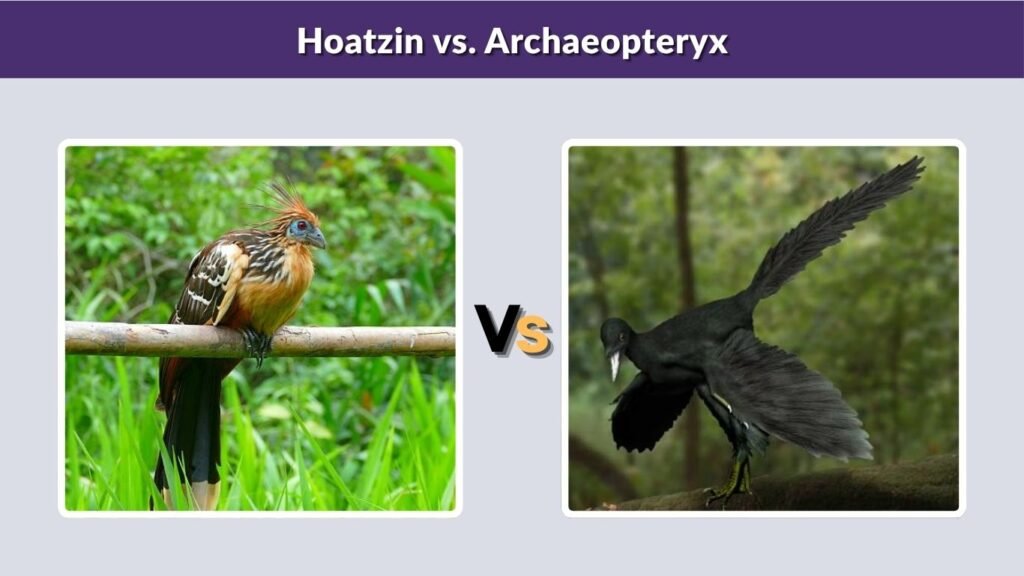
The hoatzin’s wing claws often cause comparisons with Archaeopteryx, an ancient feathered dinosaur-era bird.
However, a modern hoatzin should not be described as a living Archaeopteryx or a primitive bird that simply remained unchanged since dinosaur times.
Wing claws are an adaptation that can occur in birds, and their presence alone does not demonstrate that the hoatzin is a direct descendant or especially close relative of Archaeopteryx.
The hoatzin is a modern bird with its own long evolutionary history and is currently placed in the order Opisthocomiformes and family Opisthocomidae.
Does a Hoatzin Have Teeth?
No. Hoatzins do not have true teeth.
Like other living birds, they possess a bill rather than tooth-filled jaws. Their unusual appearance and wing-clawed chicks sometimes encourage descriptions comparing them with dinosaurs, but the hoatzin does not possess dinosaur-like teeth.
Why Is the Hoatzin Called the Stinkbird?
The hoatzin’s nickname “stinkbird” comes from its unusual digestive system.
Hoatzins eat large amounts of vegetation and ferment the plant material in an enlarged crop and lower esophagus. Microorganisms break down tough plant material before it moves farther through the digestive tract.
This fermentation produces a strong musky odor sometimes compared to manure, giving rise to names such as stinkbird or “stinking pheasant.”
Hoatzin Diet
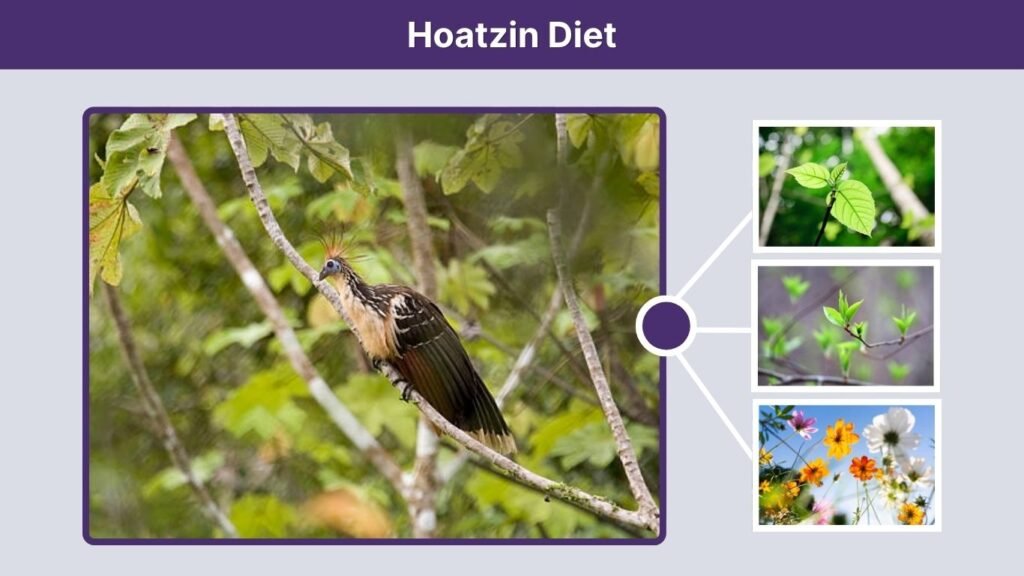
The hoatzin is primarily a folivore, meaning it specializes in eating leaves.
Its diet consists mainly of:
- Young leaves
- Leaf buds
- Flowers
- Some fruits
One detailed dietary estimate reports approximately 82% leaves and buds, 10% flowers, and 8% fruits. Hoatzins can consume foliage from many different plant species.
Hoatzin Digestive System
Perhaps even more remarkable than its wing claws is the hoatzin’s digestive system.
It has a greatly enlarged crop, an organ normally associated with temporary food storage in birds. In the hoatzin, the crop contains microorganisms that ferment plant material.
This process is known as microbial foregut fermentation.
The large digestive organs occupy substantial space inside the chest, leaving less room for the structures associated with powerful flight. This is one reason the hoatzin is a relatively clumsy, short-distance flyer.
Can Hoatzins Fly?
Yes, hoatzins can fly, but they are weak flyers.
Their flights are generally short, consisting of flapping and gliding between patches of vegetation. They spend much of their time perched, feeding, resting, and digesting leaves.
Young chicks cannot initially fly and rely instead on climbing and swimming when escaping predators.
Hoatzin Habitat and Range
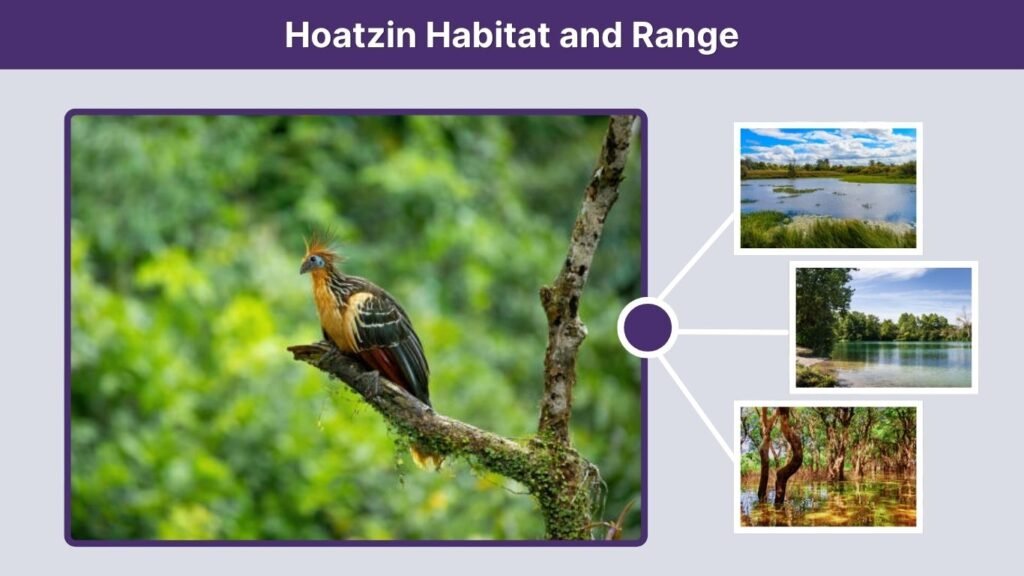
Hoatzins are South American birds strongly associated with water.
Typical hoatzin habitat includes:
- Swamps
- Freshwater marshes
- Riverbanks
- Lakeshores
- Streams
- Flooded forests
- Lagoons
- Mangroves
- Dense waterside vegetation
Their range covers much of the Amazon and Orinoco basins, including parts of Brazil, Venezuela, Colombia, Ecuador, Peru, Bolivia, Guyana, Suriname, and French Guiana.
Hoatzin Nest and Breeding
Hoatzins generally breed during the rainy season, although exact timing varies by location.
The nest is typically a relatively simple stick platform constructed in vegetation over water. This location provides an important escape route for young chicks.
Females generally lay around 2–4 eggs, and incubation lasts approximately one month. Both parents—and sometimes additional helpers—participate in caring for the young.
Hoatzin Baby and Chick Behavior
Baby hoatzins are especially unusual because climbing and swimming are essential survival skills.
When danger approaches, a chick may leap into the water, swim or dive away, and later climb back toward its nest using its feet and wing claws.
Young birds typically leave the nest after approximately 2–3 weeks, but remain dependent on adults for food much longer. Flight ability develops considerably later.
Hoatzin Predators
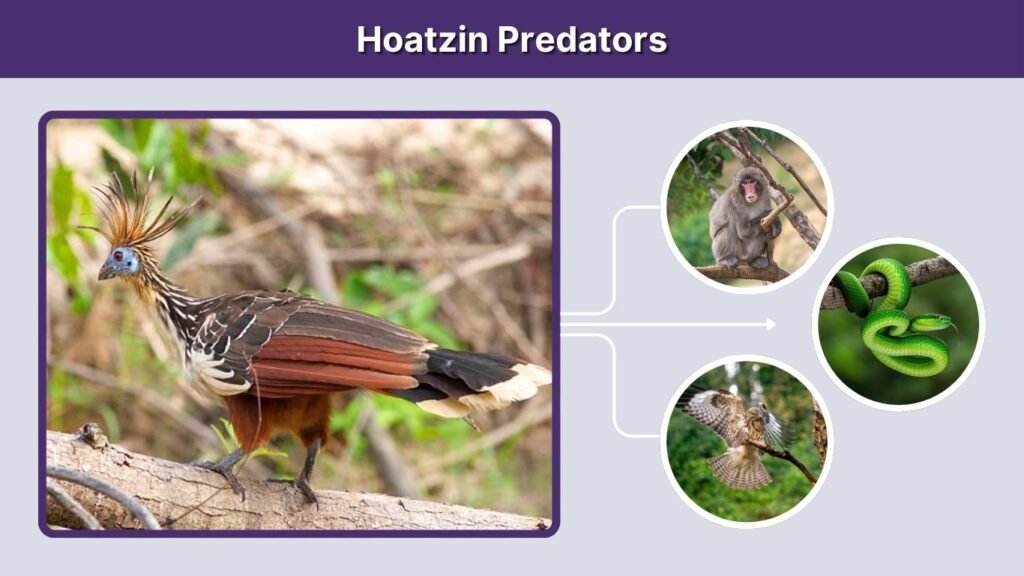
Young hoatzins face greater predation risk than adults.
Documented or reported predators include:
- Monkeys
- Snakes
- Birds of prey
Building nests above water provides young birds with an unusual defense. Rather than remaining trapped in a nest, chicks can escape by dropping into the water.
Hoatzin Sound and Call
Hoatzins are vocal birds and produce a variety of unusual sounds rather than beautiful melodic songs.
Their vocalizations can include harsh calls, grunts, croaks, hisses, and other rough noises. Vocal communication becomes especially important when birds defend breeding territories or communicate within social groups.
Is the Hoatzin Endangered?
The hoatzin is currently classified as Least Concern, rather than Endangered. It remains locally common across substantial areas of suitable South American habitat.
However, populations face pressures from habitat destruction and alteration. Wetland loss, agricultural development, disturbance, hunting in some areas, and changes to river systems can negatively affect local populations.
Interesting Hoatzin Facts
The hoatzin is the national bird of Guyana and one of the most distinctive inhabitants of South American wetlands.
Its combination of forget fermentation, strong body odor, weak flight, cooperative breeding, swimming chicks, and juvenile wing claws is exceptionally unusual among modern birds.
Despite its dinosaur-like reputation, it is not a surviving prehistoric bird. Instead, it is a highly specialized modern species with adaptations suited to feeding on leaves and living around tropical wetlands.
FAQs
How Do You Pronounce Hoatzin?
“Hoatzin” is commonly pronounced approximately WAHT-sin, although pronunciations can vary.
Why Do Hoatzins Smell?
Their odor comes from microbial fermentation of plant food in their enlarged digestive crop, which produces their famous “stinkbird” smell.
Can Hoatzin Chicks Swim?
Yes. Chicks can drop into water to escape predators, swim, and then climb back into vegetation using their feet and wing claws.
Are Hoatzins Dinosaurs?
No. Hoatzins are modern birds. Their wing-clawed chicks may look prehistoric, but this feature does not make them living dinosaurs in the everyday sense or direct descendants of Archaeopteryx.
What Does a Hoatzin Eat?
Hoatzins mainly eat leaves and buds, supplemented by flowers and fruit. Their specialized digestive system allows microbes to ferment this fibrous plant material.
