
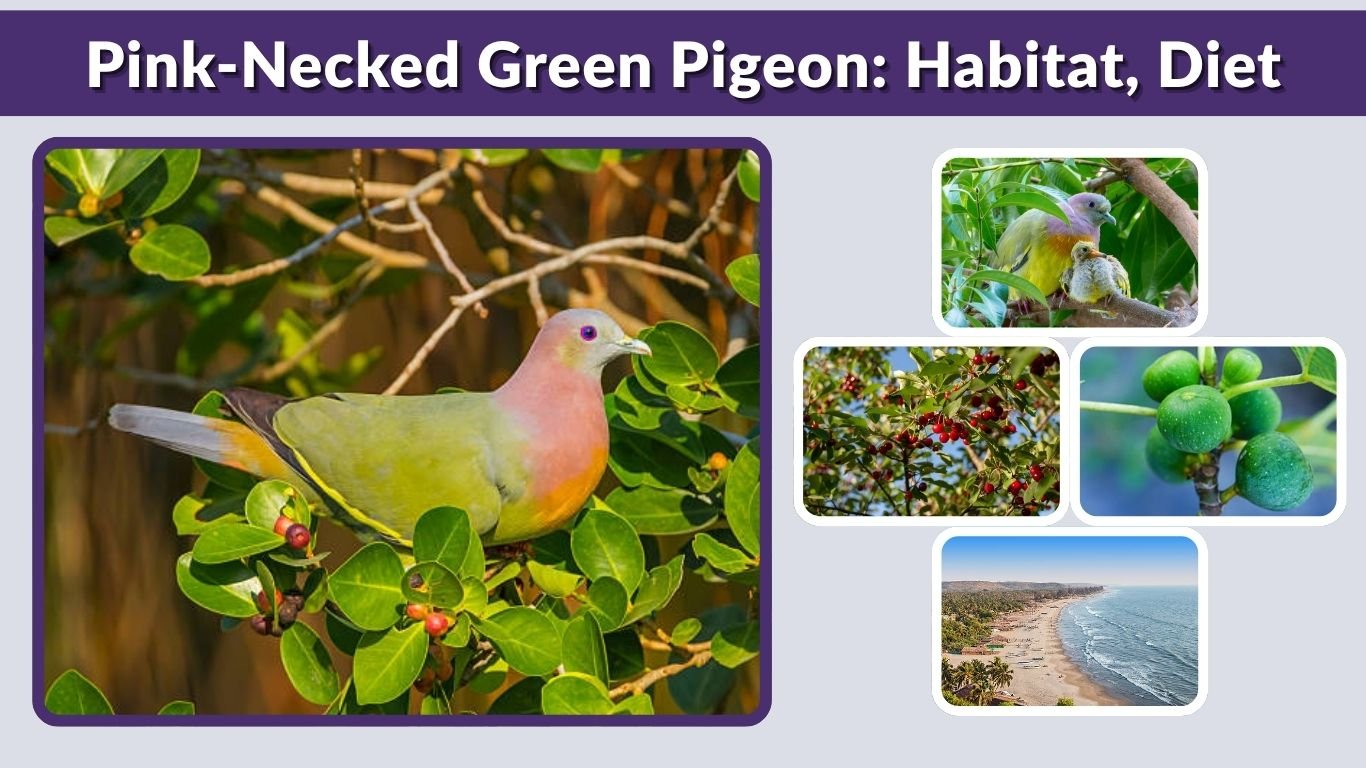
The pink-necked green pigeon (Treron vernans) is a colorful and eye-catching bird commonly found across Southeast Asia. Known for its vibrant green body and the male’s distinctive pink neck patch, this species stands out among tropical birds. Unlike ground-dwelling pigeons, it spends most of its time in trees, feeding on fruits and moving swiftly between branches. Its presence in both forests and urban parks makes it a fascinating subject for bird watchers and nature enthusiasts alike.
What Is a Pink-Necked Green Pigeon?
This species belongs to the green pigeon group and is well adapted to life in trees. It is often referred to as a fruit pigeon because of its diet and feeding habits.
Classification and Identity
- Scientific name: Treron vernans
- Belongs to the Columbidae (pigeon) family
- Common in Southeast Asia
General Characteristics
- Medium-sized bird with compact body
- Tree-dwelling lifestyle
- Strong beak for fruit consumption
Pink-Necked Green Pigeon Physical Appearance and Identification
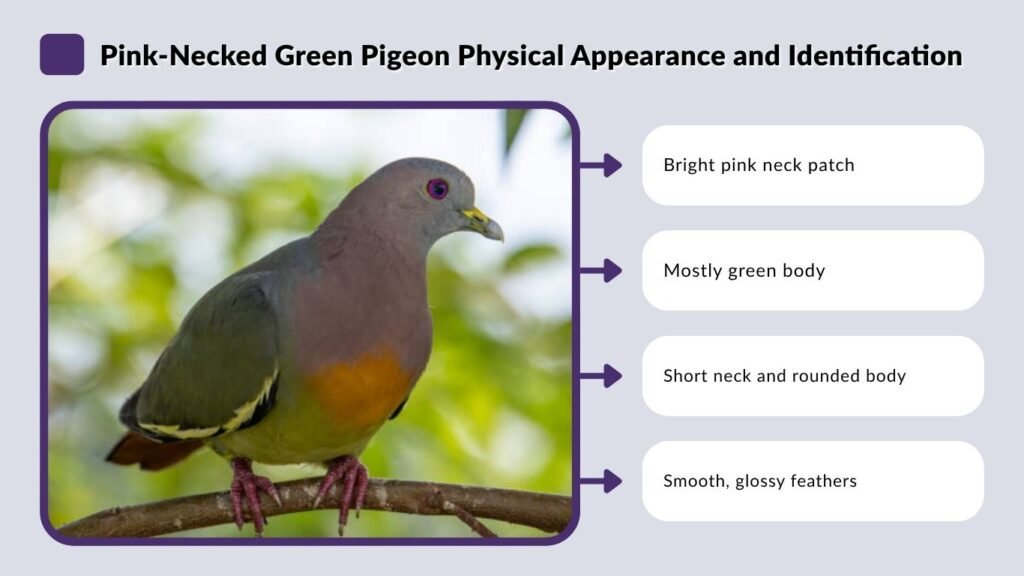
The pink-necked green pigeon is admired for its bright and smooth coloration. Its appearance varies slightly between males and females, making it easy to distinguish the sexes.
Male Appearance
- Bright pink neck patch
- Green wings with orange and gray tones
- More vivid and colorful overall
Female Appearance
- Mostly green body
- No pink neck marking
- Softer, more camouflaged look
Key Identification Features
- Short neck and rounded body
- Smooth, glossy feathers
- Subtle but attractive color contrasts
Pink-Necked Green Pigeon Natural Habitat and Distribution
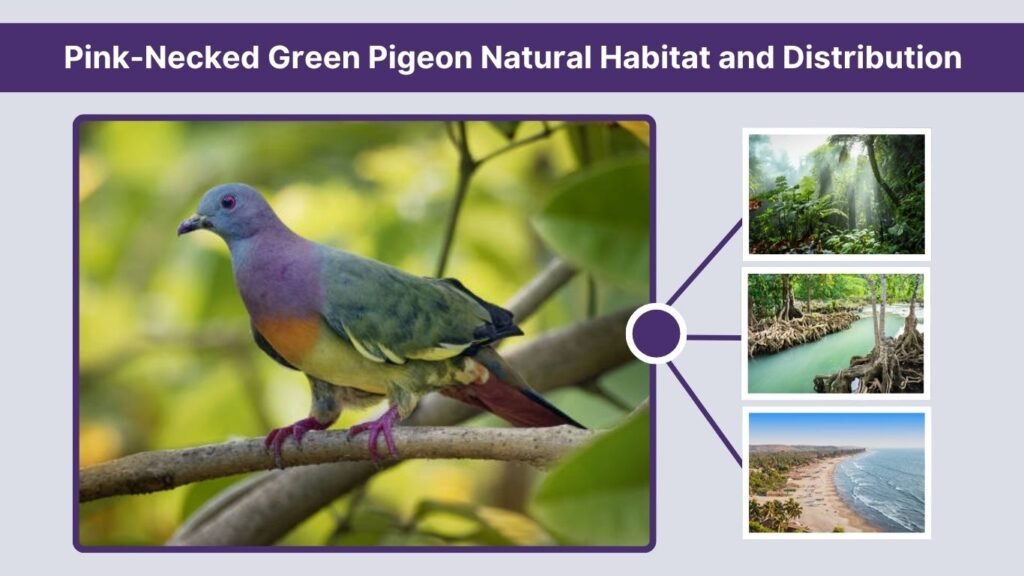
This bird thrives in warm, tropical regions where fruit-bearing trees are abundant. Its adaptability allows it to live in both natural forests and human-populated areas.
Geographic Range
- Singapore
- Malaysia
- Indonesia
- Thailand and nearby regions
Habitat Preferences
- Tropical rainforests
- Mangroves and coastal areas
- Urban parks and gardens
Living Style
- Spends most time in trees
- Rarely seen on the ground
- Moves frequently between feeding spots
Pink-Necked Green Pigeon Behavior and Lifestyle
Pink-necked green pigeons are active, social birds that are often seen in small groups. Their behavior reflects their tree-based lifestyle and reliance on fruit sources.
Social Behavior
- Often found in small flocks
- Maintain loose group structures
- Communicate through soft calls
Movement and Flight
- Fast and direct flight
- Travel between fruiting trees
- Agile in dense foliage
Daily Activity
- Active during daylight hours
- Spend time feeding and resting in trees
- Avoid ground-level exposure
Pink-Necked Green Pigeon Diet and Feeding Habits
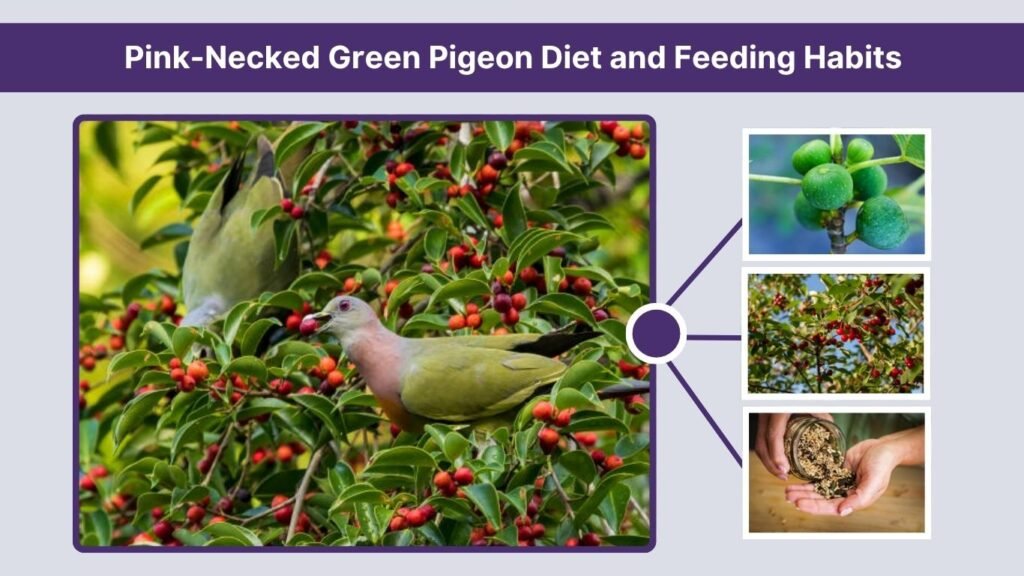
The diet of the pink-necked green pigeon plays a key role in its survival and ecological importance. As fruit eaters, they also help in seed dispersal across forests.
Natural Diet
- Figs and small fruits
- Berries and seeds
- Occasionally soft plant material
Feeding Behavior
- Pluck fruits directly from trees
- Swallow fruits whole
- Digest pulp and disperse seeds
Food in Captivity
- Fresh fruits like papaya and banana
- Special bird food mixtures
- Clean water provided daily
Pink-Necked Green Pigeon Lifespan and Life Cycle
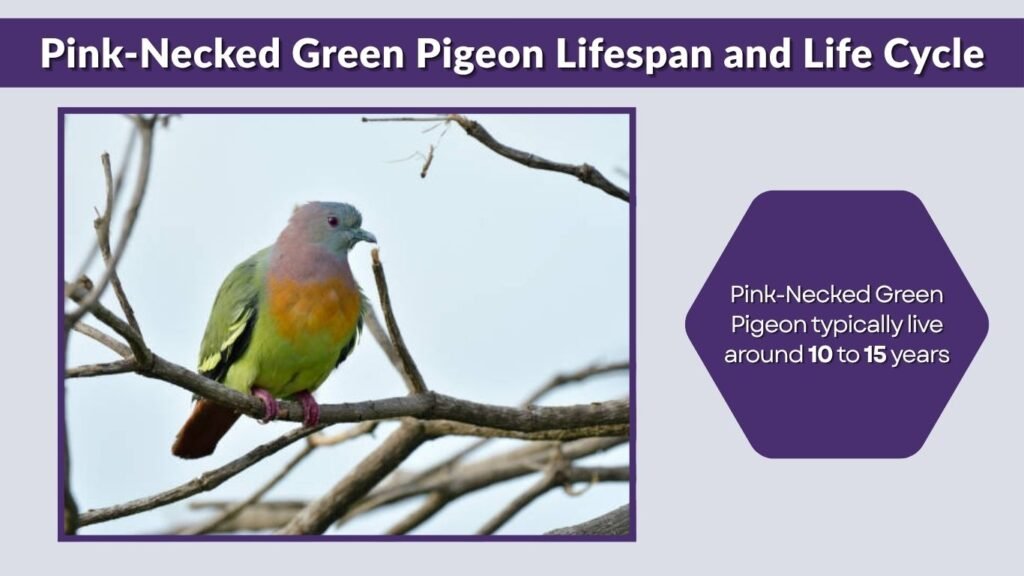
The pink-necked green pigeon has a moderate lifespan and follows a simple but effective breeding cycle. Their reproduction is closely linked to food availability and environmental conditions. In the wild, they typically live around 10 to 15 years, though this can vary based on habitat quality and threats. During the breeding season, males perform subtle displays to attract females. Once paired, they build small nests in trees, where the female lays one or two eggs. Both parents share responsibilities, ensuring the chicks are protected and properly fed until they are ready to survive independently.
Pink-Necked Green Pigeon as a Pet
Keeping a pink-necked green pigeon as a pet is uncommon and requires careful consideration. These birds are best suited to natural or controlled environments like aviaries, where their needs can be fully met.
Pet Suitability
- Not ideal for beginners
- Requires permits in many countries
- Best kept by experienced bird handlers
Care Requirements
- Large and secure aviary space
- Warm, tropical climate conditions
- Fruit-rich and balanced diet
Challenges of Keeping Them
- Sensitive to stress and noise
- Difficult to breed in captivity
- Needs regular monitoring and care
Price, Availability, and Breeders
The availability of pink-necked green pigeons varies depending on location and legal regulations. They are more commonly found in Southeast Asia and are considered rare in other parts of the world.
Availability in the Market
- Common in native regions like Singapore and Malaysia
- Rare in Europe and North America
- Often available through specialized breeders
Price Factors
- Age and health of the bird
- Breeder reputation
- Legal permits and transportation costs
Buying Considerations
- Ensure legal ownership in your country
- Purchase from certified breeders
- Avoid illegal wildlife trade
Pink-Necked Green Pigeon Breeding, Nesting, and Juveniles
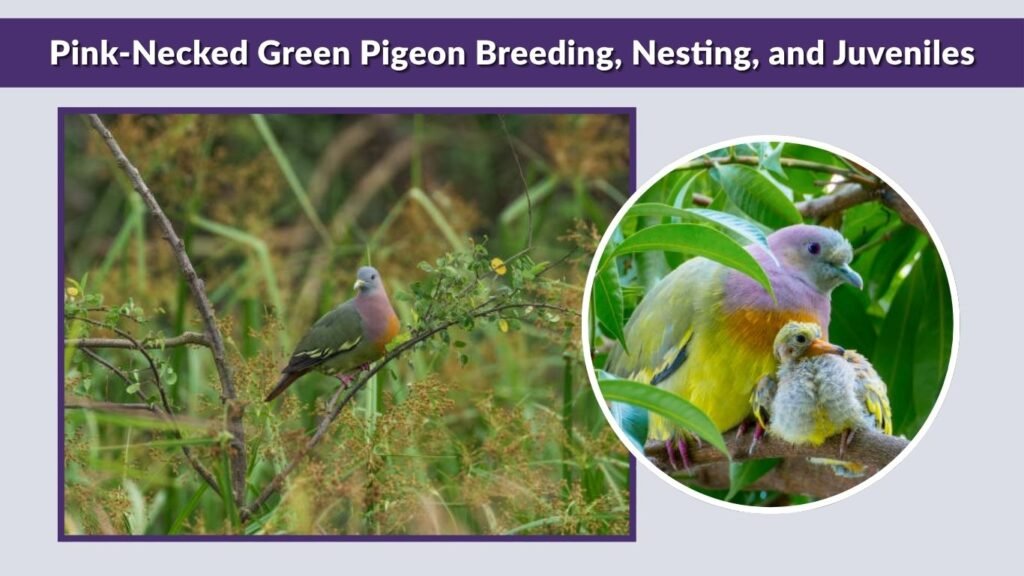
Pink-necked green pigeons have a simple breeding process that usually takes place in trees. Their nesting habits are minimal but effective for raising chicks safely.
Breeding Behavior
- Seasonal breeding depending on food supply
- Males perform light displays to attract females
- Pairs may stay bonded
Nesting Habits
- Build small, simple nests using twigs
- Located in tree branches
- Safe from ground predators
Juvenile and Baby Birds
- Duller coloration compared to adults
- Depend on parents for feeding
- Gradually develop full colors as they mature
Sounds and Communication
These pigeons are not loud birds, but they use soft vocalizations and body language to communicate. Their sounds are gentle and often go unnoticed in dense forests.
Common Sounds
- Soft whistling calls
- Low cooing tones
- Short communication signals
Communication Behavior
- Use calls to stay connected in flocks
- Display body movements for signaling
- Subtle interactions between mates
Interesting Facts About Pink-Necked Green Pigeons
Unique Facts
- Males have a bright pink neck patch
- Also known as fruit pigeons due to their diet
- Commonly seen in Singapore’s urban parks
Behavioral Facts
- Rarely come down to the ground
- Excellent and fast flyers
- Help in forest seed dispersal
Conclusion
The pink-necked green pigeon is a beautiful and unique bird that plays an important role in tropical ecosystems. Its vibrant colors, tree-dwelling lifestyle, and fruit-based diet make it different from most common pigeons. While it is admired for its appearance, it also contributes to maintaining forest health through seed dispersal. However, like many wildlife species, it faces challenges due to habitat changes and human activities. Protecting its natural habitat and ensuring responsible interaction with these birds is essential for their long-term survival.
FAQs
Where do pink-necked green pigeons live?
Pink-necked green pigeons are native to Southeast Asia, including countries like Singapore, Malaysia, Indonesia, and Thailand. They live in tropical forests, mangroves, and even urban parks where fruit trees are available, allowing them to feed and move easily within their environment.
What do pink-necked green pigeons eat?
They primarily eat fruits such as figs, berries, and small seeds. Their diet is rich in natural plant materials, and they play a role in spreading seeds. In captivity, they are fed fresh fruits along with balanced bird food to maintain proper nutrition.
How long do pink-necked green pigeons live?
These pigeons typically live between 10 and 15 years. Their lifespan depends on factors such as habitat quality, food availability, and safety from predators. Birds in captivity may live longer due to controlled conditions and proper care.
Are pink-necked green pigeons rare?
They are not very rare in their native regions but can be uncommon in other parts of the world. Their availability depends on local wildlife laws and habitat conditions, making them more frequently seen in Southeast Asia than elsewhere.
Can pink-necked green pigeons be kept as pets?
They are not ideal pets for most people because they require special care, space, and a fruit-based diet. Legal restrictions may also apply. They are better suited for aviaries or conservation environments rather than typical home settings.