
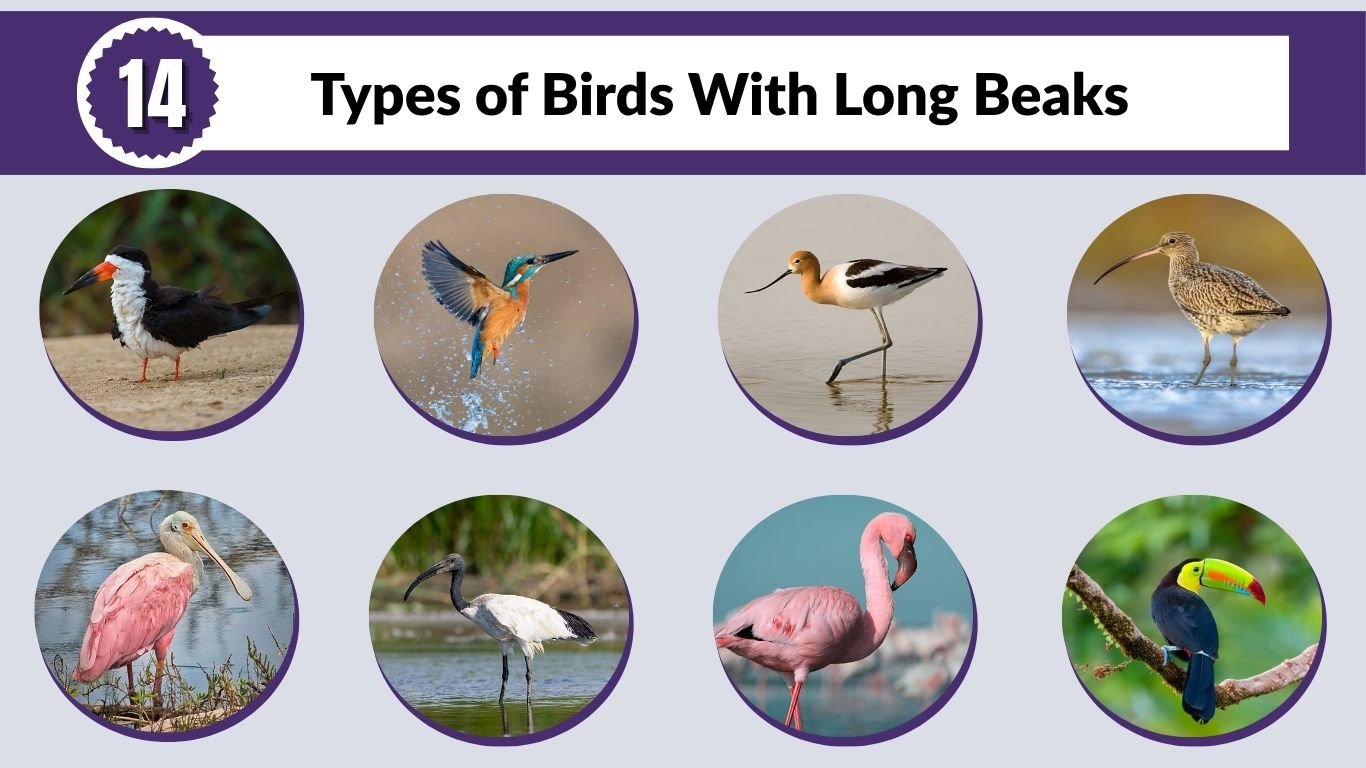
Birds with long beaks are some of the most fascinating species in the animal kingdom. Their beaks are specially adapted for different purposes such as catching fish, probing mud, sipping nectar, or even drilling into wood. These unique shapes and sizes help each bird survive in its specific environment.
From the colorful toucan to the highly specialized sword-billed hummingbird, each bird on this list shows how evolution shapes physical features for survival. In this guide, you’ll explore 14 types of birds with long beaks, each with distinct characteristics, habitats, diets, and beak functions.
1. Toucan
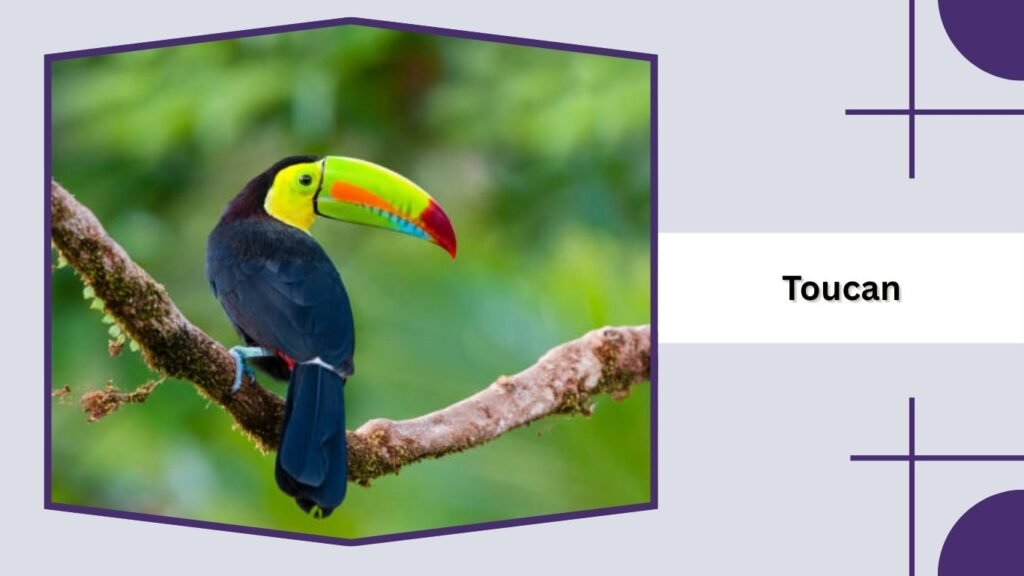
Toucans are colorful tropical birds known for their oversized, vibrant beaks. Native to Central and South America, they are often associated with rainforests and play an important role in seed dispersal. Their striking appearance makes them one of the most recognizable bird species in the world.
Identification
- Large, lightweight beak that is often brightly colored (yellow, orange, or green)
- Medium-sized body with black feathers and a contrasting white throat
- Long tail and short, rounded wings
- Distinctive loud, croaking calls
Habitat
Toucans mainly live in tropical and subtropical rainforests. They prefer dense forests with plenty of trees, as they rely on tree cavities for nesting and shelter. These birds are usually found in the canopy layer, where they can easily move from branch to branch.
Diet
Toucans are primarily frugivorous, meaning they eat mostly fruits. However, their diet is not limited to fruit alone. They also consume insects, small reptiles, eggs, and occasionally small birds. Their long beak helps them reach and grab food from branches that might otherwise be out of reach.
Beak Characteristics
The toucan’s beak is large but surprisingly lightweight, made of keratin with a hollow structure. Despite its size, it is not very strong for fighting or digging. Instead, it is used for feeding, regulating body temperature, and even attracting mates. The bright colors of the beak also help in communication and display.
2. Sword-billed Hummingbird
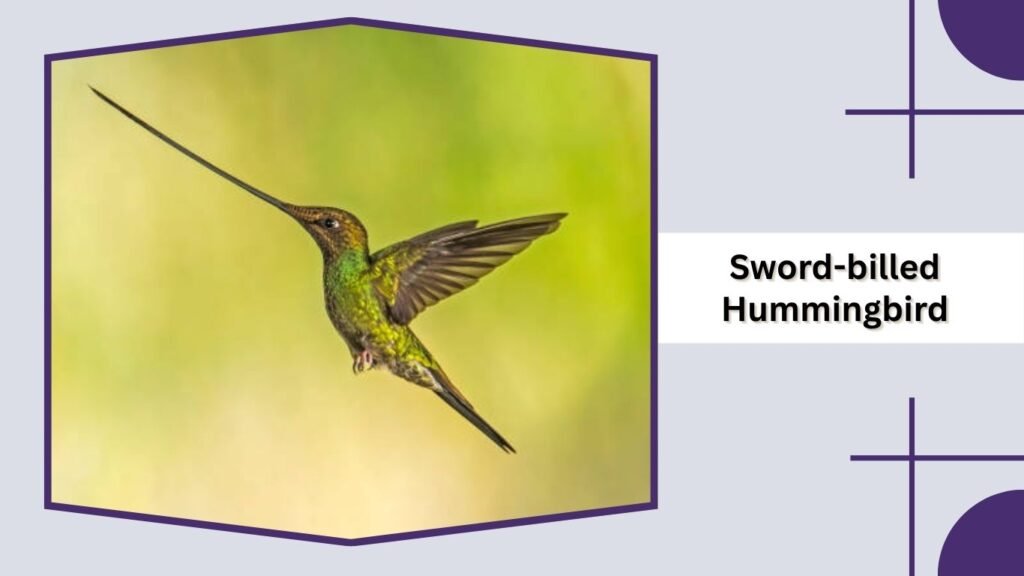
The sword-billed hummingbird is a unique bird famous for having a beak longer than its body. Native to the Andes Mountains of South America, this species is specially adapted to feed on flowers with deep, tubular shapes. Its unusual appearance makes it one of the most extraordinary hummingbirds in the world.
Identification
- Extremely long, straight beak longer than its body
- Slender body with greenish feathers and a lighter underside
- Small size typical of hummingbirds
- Fast wing movement with hovering ability
Habitat
This bird is mainly found in high-altitude regions of the Andes, including cloud forests and mountain slopes. It prefers areas rich in flowering plants, especially those with long corolla tubes. The cool, moist environment of these regions suits its specialized feeding habits.
Diet
The sword-billed hummingbird primarily feeds on nectar from long, tubular flowers. Its beak allows it to reach nectar that other birds cannot access. In addition to nectar, it also eats small insects and spiders, which provide essential protein for energy and growth.
Beak Characteristics
The beak of this hummingbird is its most remarkable feature. It is perfectly adapted to accessing deep flowers, making the bird a key pollinator. However, the long beak can be slightly inconvenient, as the bird often has to use its feet to groom itself. Despite this, the beak gives it a strong survival advantage.
3. Pelican
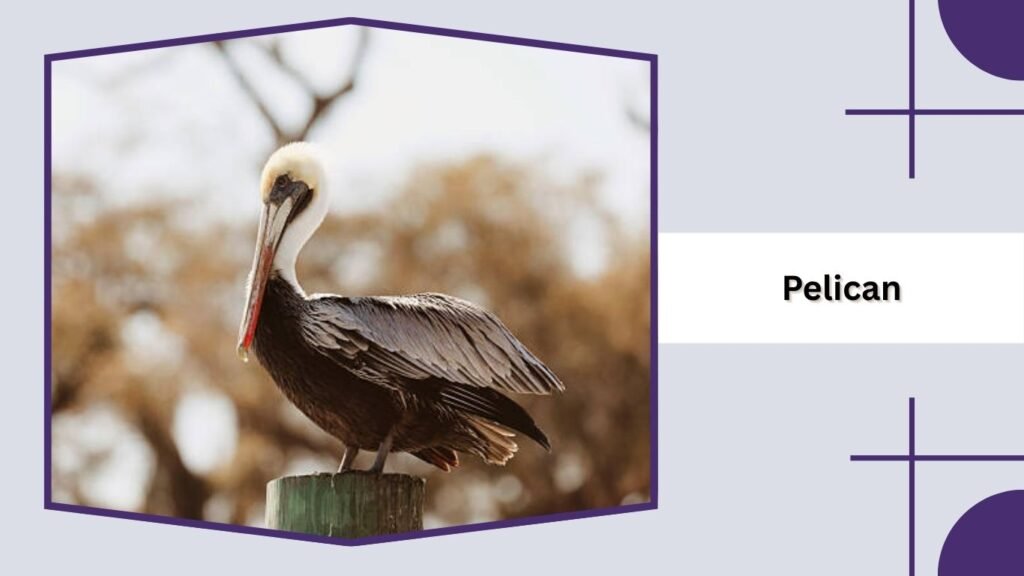
Pelicans are large water birds known for their long beaks and expandable throat pouches. They are commonly found near oceans, lakes, and rivers. Their unique feeding style and graceful flight make them easy to recognize in coastal and wetland environments.
Identification
- Long, straight beak with a large throat pouch
- Large body with broad wings
- Short legs with webbed feet
- Usually white, gray, or brown feathers
Habitat
Pelicans live in coastal areas, lakes, rivers, and wetlands. They prefer open water where fish are abundant. Some species are found near the sea, while others inhabit inland freshwater regions. They often rest and nest in colonies on islands or shores.
Diet
Pelicans mainly eat fish, which they catch using their pouch-like beak. They scoop up water and fish together, then drain the water before swallowing the prey. Sometimes they hunt alone, but many species work in groups to herd fish for easier capture.
Beak Characteristics
The pelican’s beak is long and strong, with a flexible pouch attached to the lower jaw. This pouch can expand to hold large amounts of water and fish. It is not used for storing food long-term but helps in efficient feeding and catching slippery prey.
4. Flamingo
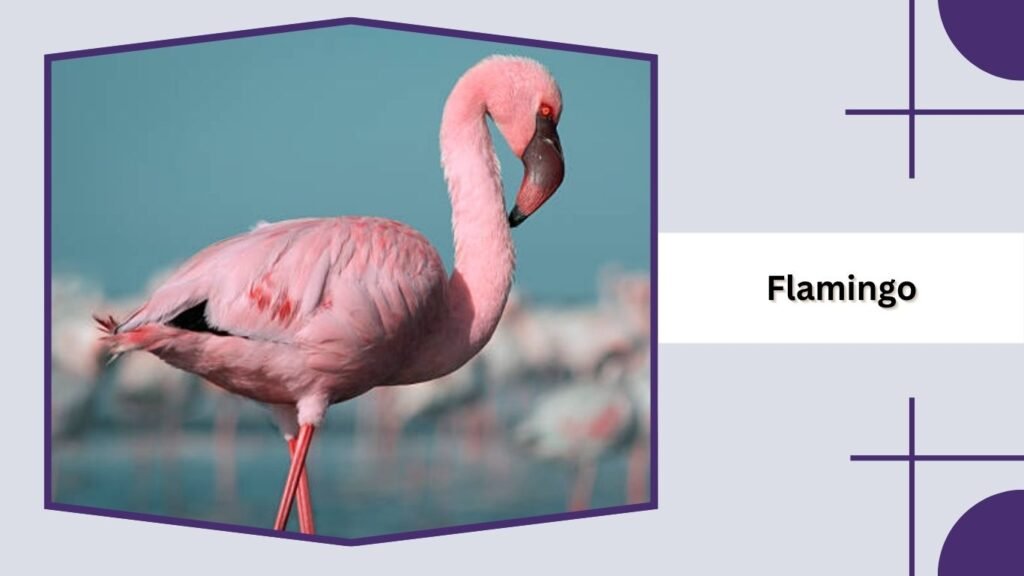
Flamingos are tall, elegant birds famous for their long legs, curved beaks, and pink feathers. They are often seen standing in shallow water in large groups. Their unique feeding behavior and striking color make them one of the most recognizable birds worldwide.
Identification
- Long neck and legs with a graceful posture
- Curved, downward-bent beak
- Pink, orange, or reddish feathers
- Thin body with wide wings
Habitat
Flamingos live in shallow lakes, lagoons, and wetlands. They prefer salty or alkaline waters where few predators exist. These birds are highly social and are usually found in large colonies, sometimes consisting of thousands of individuals.
Diet
Flamingos feed on algae, small crustaceans, and plankton. They use a filter-feeding method by turning their heads upside down in the water. Their diet is rich in pigments, which gives them their characteristic pink color.
Beak Characteristics
The flamingo’s beak is uniquely adapted for filter feeding. It is bent downward and contains comb-like structures inside that help strain food from water and mud. This specialized beak allows flamingos to efficiently gather tiny food particles.
5. Heron
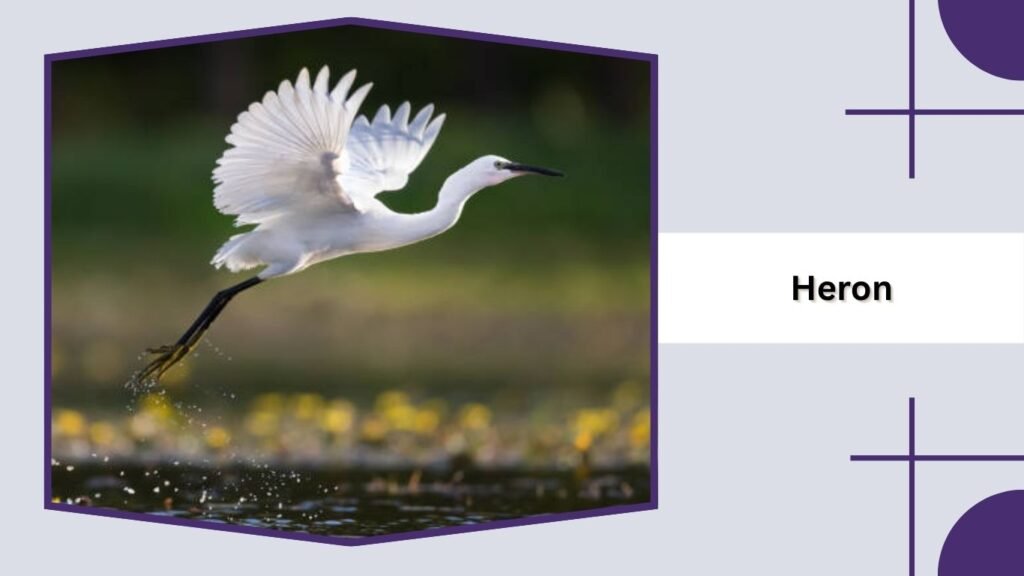
Herons are tall, wading birds known for their long legs, necks, and sharp beaks. They are often seen standing still in shallow water, patiently waiting to catch prey. Their calm behavior and slow movements make them highly effective hunters in wetland environments.
Identification
- Long, pointed beak
- Tall body with long legs and neck
- Usually gray, white, or blue feathers
- Slow, deliberate movements
Habitat
Herons are commonly found in wetlands, rivers, lakes, and coastal areas. They prefer shallow waters where they can easily hunt. These birds are adaptable and can also be seen in marshes, mangroves, and even urban water bodies.
Diet
Herons mainly feed on fish, frogs, and small aquatic animals. They use a “wait and strike” method, standing still before quickly stabbing prey with their beak. They may also eat insects, small reptiles, and crustaceans when available.
Beak Characteristics
The heron’s beak is long, straight, and very sharp. It is perfectly designed for spearing prey with precision. This strong and pointed beak allows herons to catch slippery fish quickly and efficiently.
6. Egret
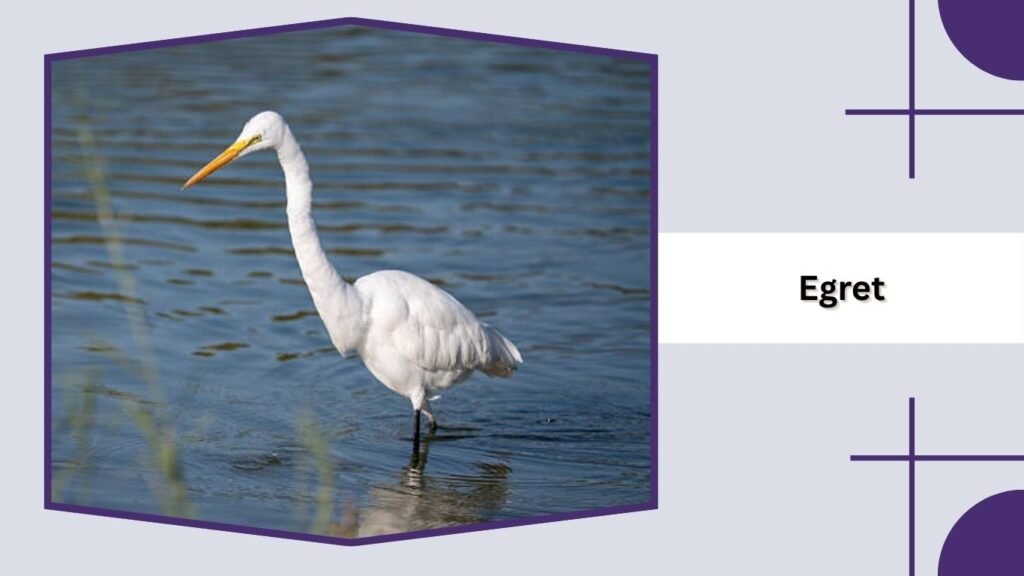
Egrets are elegant white birds closely related to herons, known for their slender bodies and long, pointed beaks. They are often seen gracefully walking through shallow water while hunting for food.
Identification
- Slim body with pure white feathers
- Long, thin, pointed beak
- Long legs and neck
- Graceful walking and hunting style
Habitat
Egrets live in wetlands, marshes, rivers, and coastal regions. They prefer shallow water areas where food is easy to find. These birds are also known to adapt to agricultural fields and flooded lands.
Diet
Egrets primarily eat fish, insects, frogs, and small aquatic creatures. They often walk slowly through water, stirring up prey before striking quickly. Their feeding style is active compared to the still hunting method of some other birds.
Beak Characteristics
The egret’s beak is long, straight, and sharp, similar to that of a heron but usually slimmer. It is well-suited for picking and stabbing prey. This beak helps them catch small, fast-moving aquatic animals with great accuracy.
7. Stork
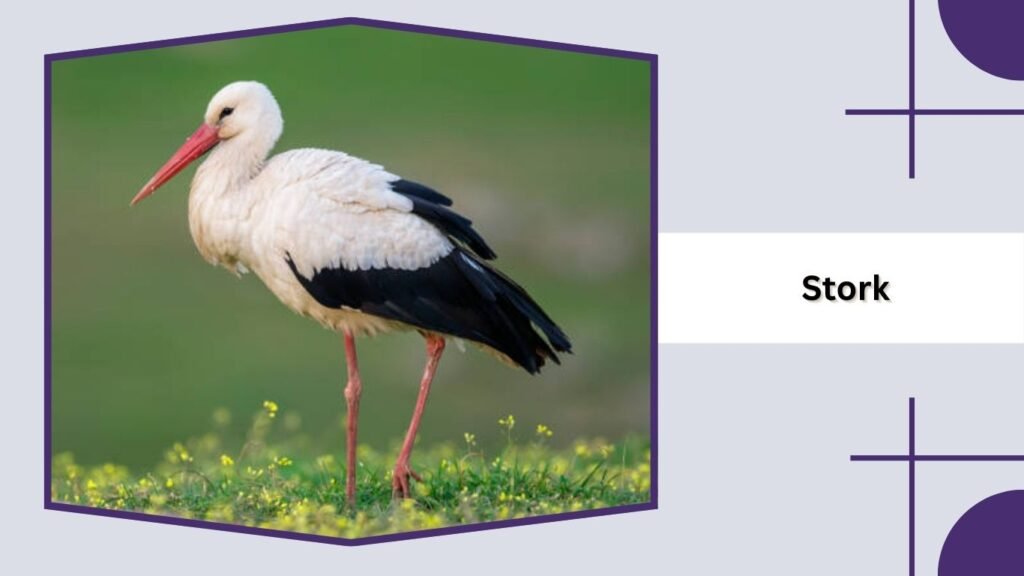
Storks are large, long-legged birds known for their long necks and strong, straight beaks. They are often associated with wetlands and open landscapes. These birds are powerful fliers and can travel long distances during migration.
Identification
- Large body with long legs and neck
- Long, straight, pointed beak
- Mostly white, black, or mixed plumage
- Broad wings for soaring flight
Habitat
Storks are commonly found in wetlands, grasslands, and open savannas. They prefer areas near water such as rivers, lakes, and marshes. Some species also live near human settlements, nesting on rooftops or tall structures.
Diet
Storks are carnivorous and eat a variety of prey, including fish, frogs, insects, and small mammals. They hunt by walking slowly and picking up food with their beaks. Their diet depends largely on what is available in their environment.
Beak Characteristics
The stork’s beak is long, thick, and strong. It is used for catching, holding, and swallowing prey. Unlike some birds, storks also use their beaks to make clattering sounds for communication, especially during courtship.
8. Ibis
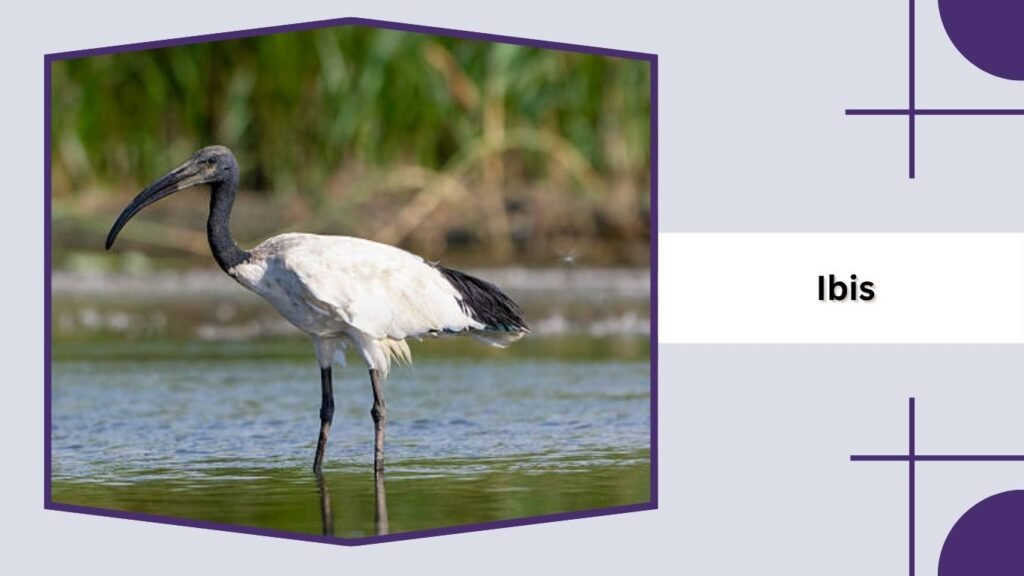
Ibises are wading birds recognized for their long, curved beaks and slender bodies. They are often seen in groups, searching for food in shallow water or muddy areas. Their distinctive beak shape helps them find hidden prey.
Identification
- Long, downward-curved beak
- Slender body with long legs
- Feathers usually white, brown, or black
- Often seen feeding in groups
Habitat
Ibises live in wetlands, marshes, lagoons, and coastal regions. They prefer shallow water environments where they can easily probe for food. Some species are also found in grasslands and agricultural fields.
Diet
Ibises mainly feed on insects, crustaceans, small fish, and worms. They use their curved beak to probe into mud and water, detecting prey by touch. This allows them to find food even when it is not visible.
Beak Characteristics
The ibis has a long, curved beak that is highly sensitive. This shape allows it to reach into mud and soft ground to locate hidden prey. The beak’s flexibility and sensitivity make it ideal for probing feeding techniques.
9. Curlew
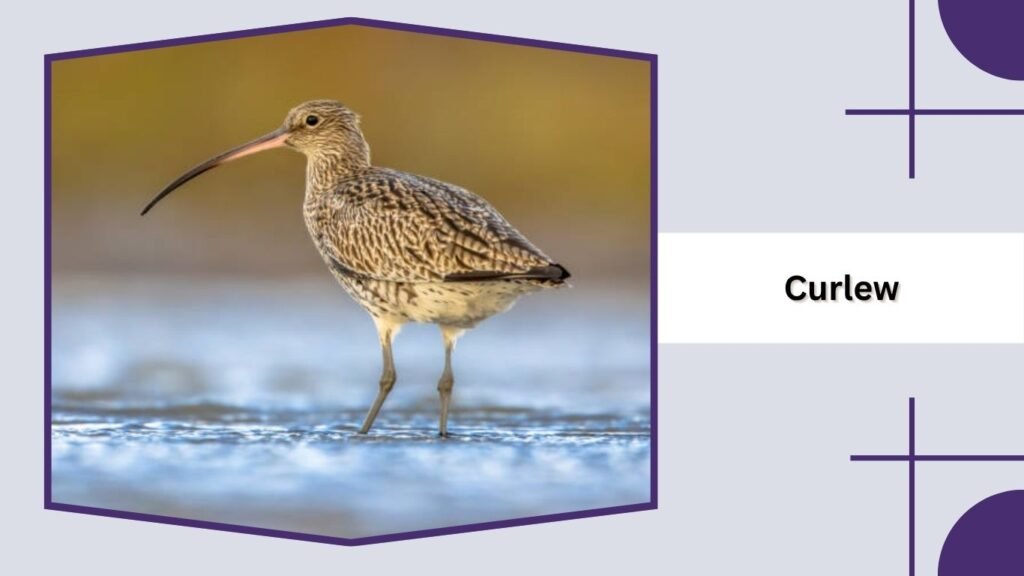
Curlews are medium to large shorebirds known for their long, slender, and downward-curved beaks. They are often seen walking along shores and mudflats, using their unique beak to search for food hidden beneath the surface.
Identification
- Long, curved beak pointing downward
- Slim body with brown, streaked feathers
- Long legs adapted for wading
- Soft, whistling calls
Habitat
Curlews are commonly found in coastal areas, mudflats, wetlands, and grasslands. They prefer open spaces where they can easily forage. During migration, they travel long distances and can be seen in a variety of habitats.
Diet
Curlews mainly feed on worms, crustaceans, and insects. They use their long beak to probe deep into mud and sand in search of hidden prey. Their feeding style allows them to access food that other birds cannot reach.
Beak Characteristics
The curlew’s beak is long and strongly curved, making it ideal for probing into soft ground. This specialized shape helps the bird reach deep-buried prey. The beak is also sensitive, allowing the bird to detect movement underground.
10. Spoonbill
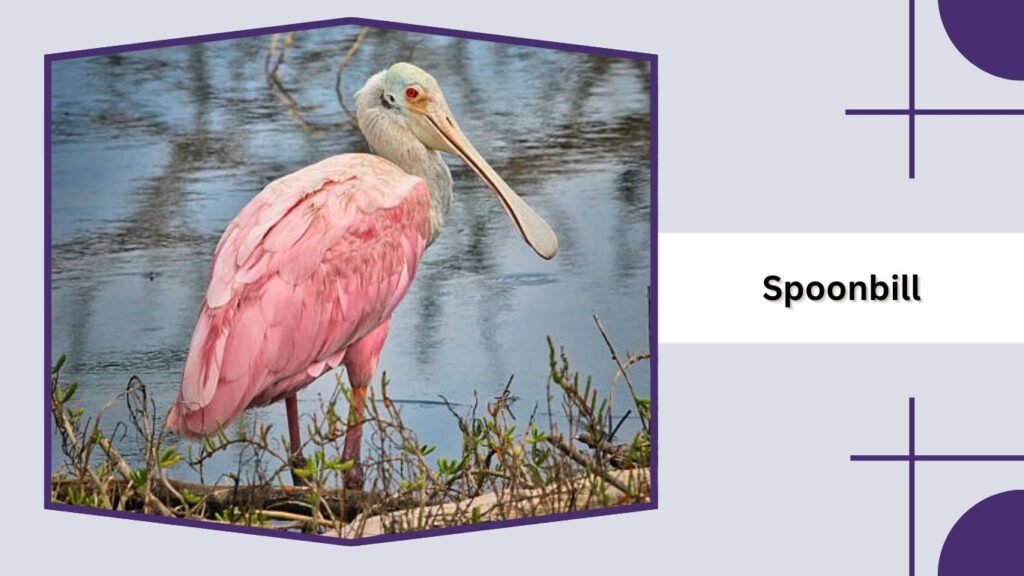
Spoonbills are large wading birds famous for their unique spoon-shaped beaks. They are often seen sweeping their beaks side to side in shallow water while searching for food.
Identification
- Long legs and neck
- Flat, spoon-shaped beak
- Usually white or pinkish feathers
- Slow, sweeping feeding movements
Habitat
Spoonbills live in wetlands, marshes, lagoons, and shallow coastal waters. They prefer calm, shallow environments where they can easily search for food. These birds are often found in groups or small colonies.
Diet
Spoonbills feed on small fish, insects, crustaceans, and aquatic organisms. They move their beaks through the water and snap them shut when they detect prey. This method allows them to catch food efficiently without relying heavily on sight.
Beak Characteristics
The spoonbill’s beak is long and flat with a widened tip, resembling a spoon. This shape is perfect for sweeping through water to detect prey by touch. The beak quickly snaps shut when food is sensed, making feeding highly effective.
11. Avocet
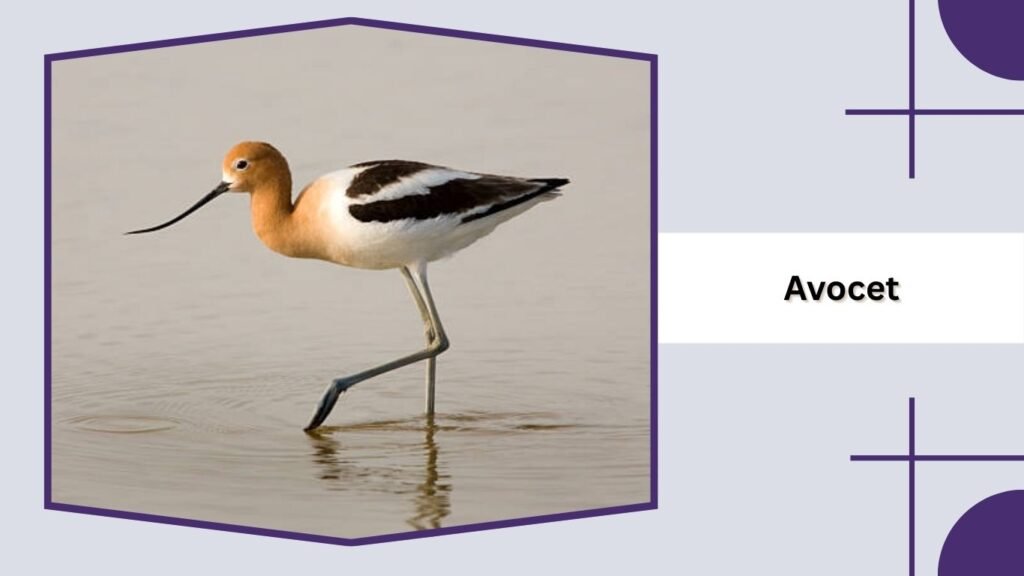
Avocets are graceful wading birds known for their long legs and thin, upturned beaks. They are often seen sweeping their beaks through shallow water in a smooth, side-to-side motion while feeding.
Identification
- Slender body with long legs
- Thin, upward-curved beak
- Black and white or brownish plumage
- Elegant walking and feeding style
Habitat
Avocets are commonly found in wetlands, shallow lakes, mudflats, and coastal lagoons. They prefer calm, shallow waters where they can easily move and feed. These birds often gather in small groups or colonies.
Diet
Avocets mainly feed on insects, crustaceans, and small aquatic creatures. They use a sweeping motion of their beak through the water to detect and catch prey. This feeding technique helps them find food efficiently in shallow environments.
Beak Characteristics
The avocet’s beak is long, thin, and curves upward at the tip. This unique shape allows it to sweep through water and mud to locate prey. The beak is sensitive and well-adapted for detecting small organisms.
12. Kingfisher
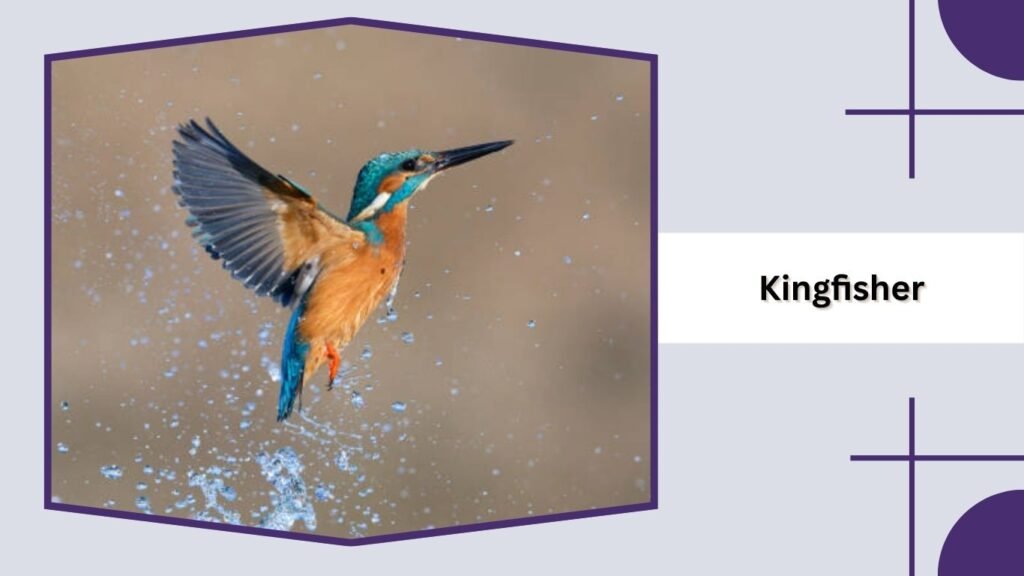
Kingfishers are small to medium-sized birds known for their bright colors and long, pointed beaks. They are excellent hunters, often seen perched near water before diving quickly to catch prey.
Identification
- Brightly colored feathers (blue, green, or orange)
- Long, straight, pointed beak
- Compact body with a large head
- Quick, darting flight
Habitat
Kingfishers are found near rivers, lakes, streams, and coastal areas. They prefer places with clear water where fish are easy to spot. Some species also live in forests and feed away from water.
Diet
Kingfishers mainly eat fish, which they catch by diving into the water from a perch. They also feed on insects, small amphibians, and crustaceans. Their sharp vision helps them spot prey from a distance.
Beak Characteristics
The kingfisher’s beak is long, straight, and very sharp. It is designed for diving and catching prey with precision. This strong beak allows the bird to grab slippery fish quickly and effectively.
13. Woodpecker
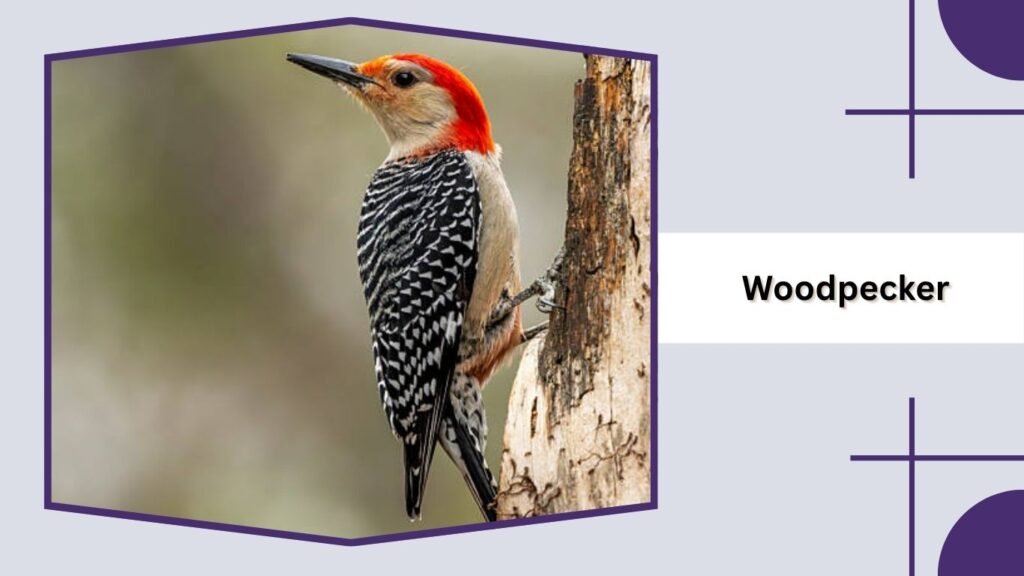
Woodpeckers are well-known birds recognized for their strong beaks and ability to peck at tree trunks. They are commonly found in forests and wooded areas, where they spend most of their time climbing and searching for insects.
Identification
- Strong, chisel-like beak
- Stiff tail used for support on tree trunks
- Usually black, white, and red feather patterns
- Distinctive drumming sound on wood
Habitat
Woodpeckers live in forests, woodlands, and sometimes urban areas with plenty of trees. They prefer places with old or dead trees, which provide food and nesting sites. These birds are often seen clinging vertically to tree trunks.
Diet
Woodpeckers mainly feed on insects, especially those hidden under tree bark. They also eat larvae, ants, and sometimes fruits and nuts. Their feeding habits help control insect populations in forests.
Beak Characteristics
The woodpecker’s beak is strong, straight, and shaped like a chisel. It is specially adapted for drilling into wood to find insects and create nesting holes. This powerful beak can withstand repeated impact without causing injury to the bird.
14. Skimmer
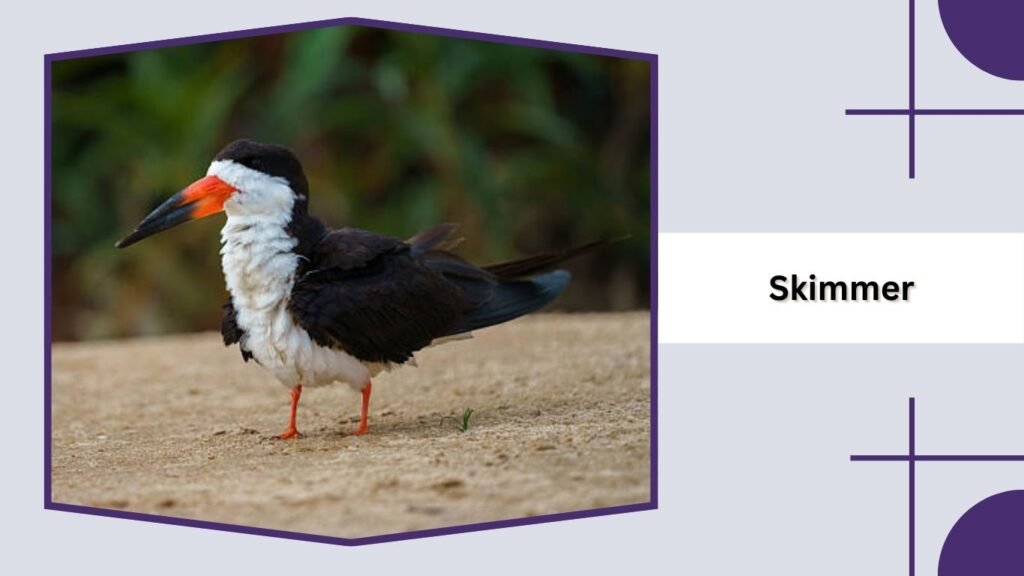
Skimmers are unique water birds known for their unusual beaks, where the lower part is longer than the upper. They are often seen flying low over water, using their beaks to catch prey.
Identification
- Long wings and slender body
- Black and white plumage
- Distinctive beak with longer lower mandible
- Smooth, gliding flight close to water
Habitat
Skimmers are found near rivers, lakes, and coastal regions. They prefer open water and sandy shores where they can rest and nest. These birds are usually seen in groups, especially during feeding.
Diet
Skimmers mainly feed on small fish. They fly just above the water surface with their lower beak touching the water. When they come into contact with prey, their beak snaps shut quickly to catch it.
Beak Characteristics
The skimmer’s beak is highly specialized, with the lower mandible longer than the upper. This unique design allows it to skim the water surface while flying. It is one of the most unusual beak adaptations among birds, perfectly suited for its feeding style.
FAQs
What are long-beaked birds called?
Long-beaked birds are not grouped under a single scientific name. Instead, they belong to different families and species. Their long beaks are adaptations for specific feeding habits such as probing, catching fish, or extracting nectar from flowers.
Why do some birds have long beaks?
Birds have long beaks mainly for survival. The shape and length help them access food that other animals cannot reach. For example, some use them to dig into mud, while others use them to reach deep into flowers or catch fish.
Which bird has the longest beak?
The sword-billed hummingbird is known for having the longest beak relative to its body size. Its beak is longer than its entire body, allowing it to feed on flowers that are inaccessible to other birds.
Are long-beaked birds dangerous?
Most long-beaked birds are not dangerous to humans. They typically use their beaks for feeding rather than defense. However, like any wild animal, they may defend themselves if they feel threatened or cornered.
Where can long-beaked birds be found?
Long-beaked birds can be found all over the world in different habitats. Some live in forests, others in wetlands, rivers, or coastal areas. Their location depends on their diet and environmental needs.
