

White doves are among the most admired birds in the world, known for their pure white feathers, gentle nature, and deep symbolic meaning. They are often associated with peace, love, and hope, making them popular in ceremonies such as weddings and cultural events. While many people think of them as a single species, white doves can belong to different types of pigeons and doves. Understanding their characteristics, behavior, and care needs helps bird lovers appreciate these beautiful birds even more.
What is a White Dove?
White doves are not always a separate species but are often a color variation of domesticated pigeons or certain dove species. They are commonly bred for their white plumage and calm temperament. These birds have been closely associated with humans for centuries, especially in symbolic and ceremonial uses.
Definition
- Often a white-colored form of pigeons or doves
- Bred for appearance and gentle behavior
- Commonly used in events and releases
Common Species
- Domestic White Dove (Rock Pigeon variant)
- White Ringneck Dove
- White Homing Pigeon
Types of White Doves
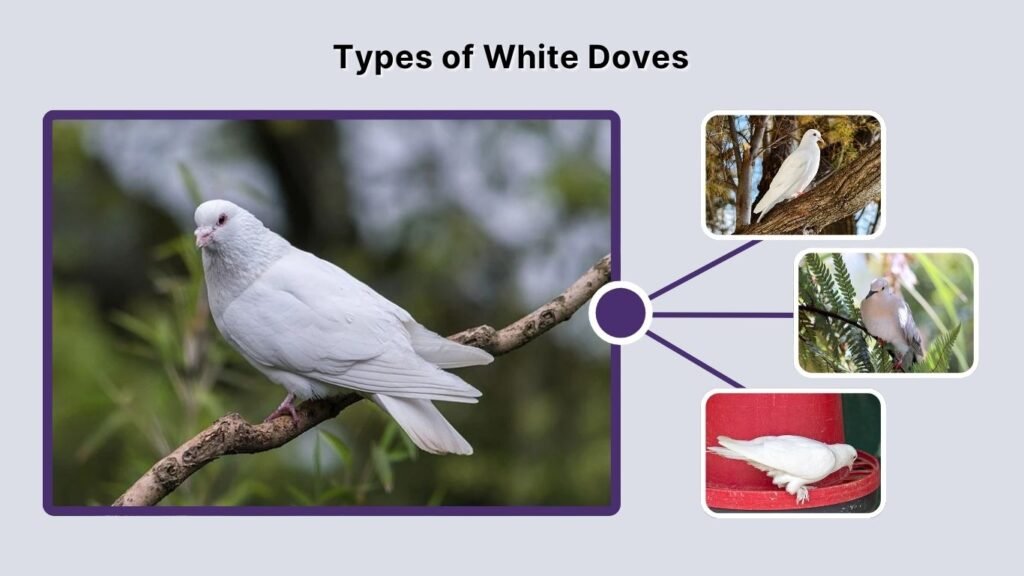
White doves come in different types, each with unique traits and uses. Some are kept as pets, while others are trained for flight or ceremonial releases.
Popular Types
- Domestic White Dove – most common and widely used
- White Ringneck Dove – popular as a pet bird
- White Homing Pigeon – known for navigation ability
- Albino Dove – rare with red eyes
Physical Characteristics of White Doves
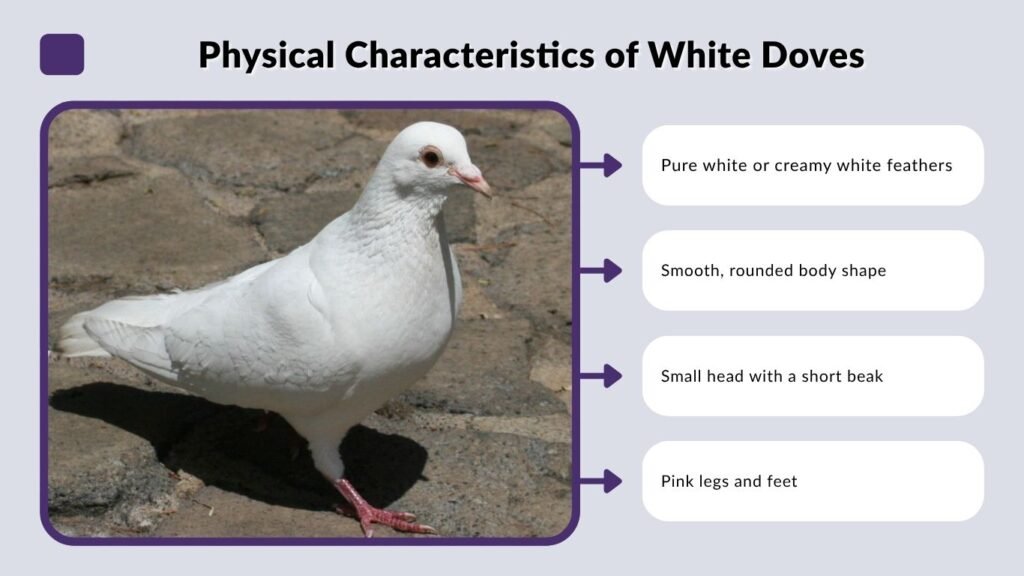
White doves are easily recognized by their clean, bright appearance and soft features. Although they may vary slightly depending on the type, most share similar physical traits that make them distinct.
Appearance
- Pure white or creamy white feathers
- Smooth, rounded body shape
- Small head with a short beak
- Pink legs and feet
Size and Wingspan
- Medium-sized bird
- Wingspan varies depending on species
- Generally lightweight with strong wings
White Dove Habitat and Distribution
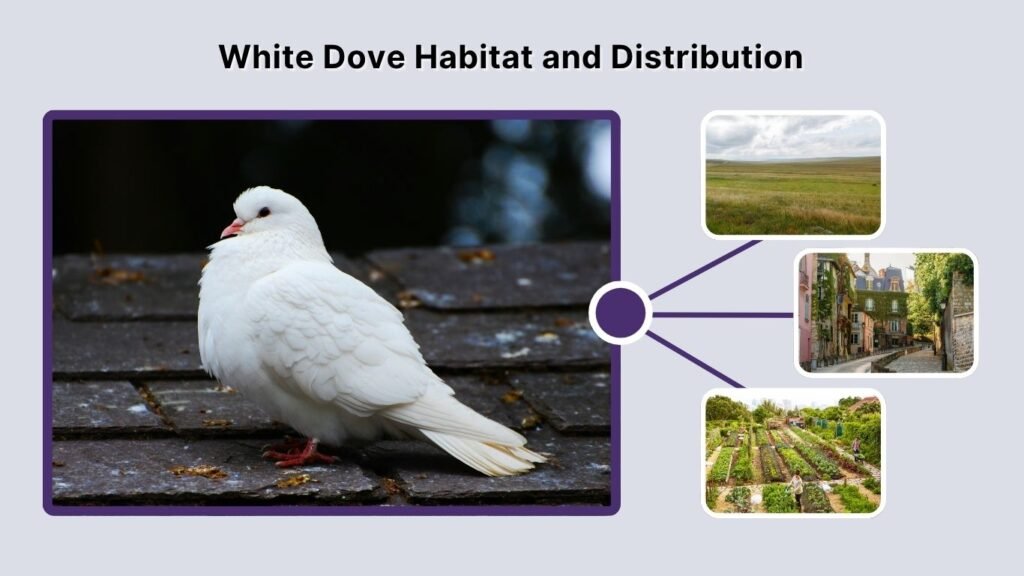
White doves are found in many parts of the world, especially where humans live. Because many of them are domesticated, their distribution is closely linked to human activity.
Natural and Urban Habitat
- Open fields and grasslands
- Urban areas, towns, and cities
- Farms and gardens
Global Distribution
- Found worldwide due to domestication
- More common in populated regions
- Often seen near human settlements
White Dove Behavior and Lifestyle
White doves are known for their calm and social nature. They usually live in pairs or small groups and form strong bonds with their mates. These birds communicate through soft cooing sounds and body movements.
Their flight is smooth and direct, and some types, like homing pigeons, can travel long distances and return to their original location. White doves are generally non-aggressive and prefer peaceful environments. They spend much of their time resting, feeding, and interacting with their partners, making them ideal birds for observation and companionship.
White Dove Diet and Feeding Habits

White doves require a balanced and consistent diet to stay healthy and active. Their feeding habits are simple, but proper nutrition is essential, especially for breeding and overall well-being.
Common Foods
- Seeds such as millet, sunflower seeds, and wheat
- Grains like corn and barley
- Fresh greens and small fruits occasionally
Feeding Patterns
- Feed mainly on the ground or flat surfaces
- Eat multiple small meals throughout the day
- Drink water frequently to aid digestion
White Dove Breeding and Lifespan
White doves reproduce in a similar way to other dove species, with strong parental care and simple nesting behavior. Their breeding cycle is efficient, allowing them to raise multiple broods in suitable conditions.
Nesting Habits
- Build simple nests using twigs and grass
- Choose safe, quiet locations for nesting
- May reuse or repair old nests
Eggs and Chicks
- Usually lay two eggs per clutch
- Both parents incubate the eggs
- Chicks are fed crop milk after hatching
White Dove Symbolism and Meaning
White doves hold deep symbolic meaning across many cultures and traditions. They are widely recognized as a universal symbol of peace, love, and purity. In religious contexts, they often represent hope, renewal, and spiritual connection.
These birds are commonly used in ceremonies such as weddings, where they symbolize unity and new beginnings. In some traditions, releasing white doves represents freedom and positive transformation. Their calm appearance and gentle behavior have strengthened their association with harmony and emotional healing throughout history.
How to Care for White Doves

Proper care ensures that white doves live a healthy and comfortable life, especially in captivity. They require a clean environment, proper nutrition, and regular attention.
Housing
- Spacious cage or aviary with good ventilation
- Safe and secure environment away from predators
- Clean nesting area with soft materials
Health Care
- Regular cleaning of cage and feeding areas
- Access to fresh water at all times
- Occasional checkups for signs of illness
FAQs
Are white doves and pigeons the same?
White doves and pigeons belong to the same bird family and are often closely related. Many white doves are actually domesticated pigeons bred for their color and calm behavior. The main difference is in naming and usage rather than biological classification.
What do white doves symbolize?
White doves symbolize peace, love, purity, and hope. They are often used in ceremonies like weddings and cultural events to represent new beginnings and harmony. Their calm nature and pure color make them a powerful symbol across many traditions.
Can white doves survive in the wild?
Most domesticated white doves cannot survive well in the wild because they lack survival skills. They may struggle to find food and avoid predators. However, wild dove species with white coloring can survive naturally in suitable environments.
What do white doves eat?
White doves mainly eat seeds and grains such as millet, corn, and wheat. They may also consume small amounts of fruits and greens. A balanced diet helps maintain their health, especially during breeding and growth periods.
How long do white doves live?
White doves typically live around 5 to 10 years in captivity, depending on care and environment. In the wild, their lifespan may be shorter due to predators and environmental challenges. Proper care can significantly increase their longevity.
