
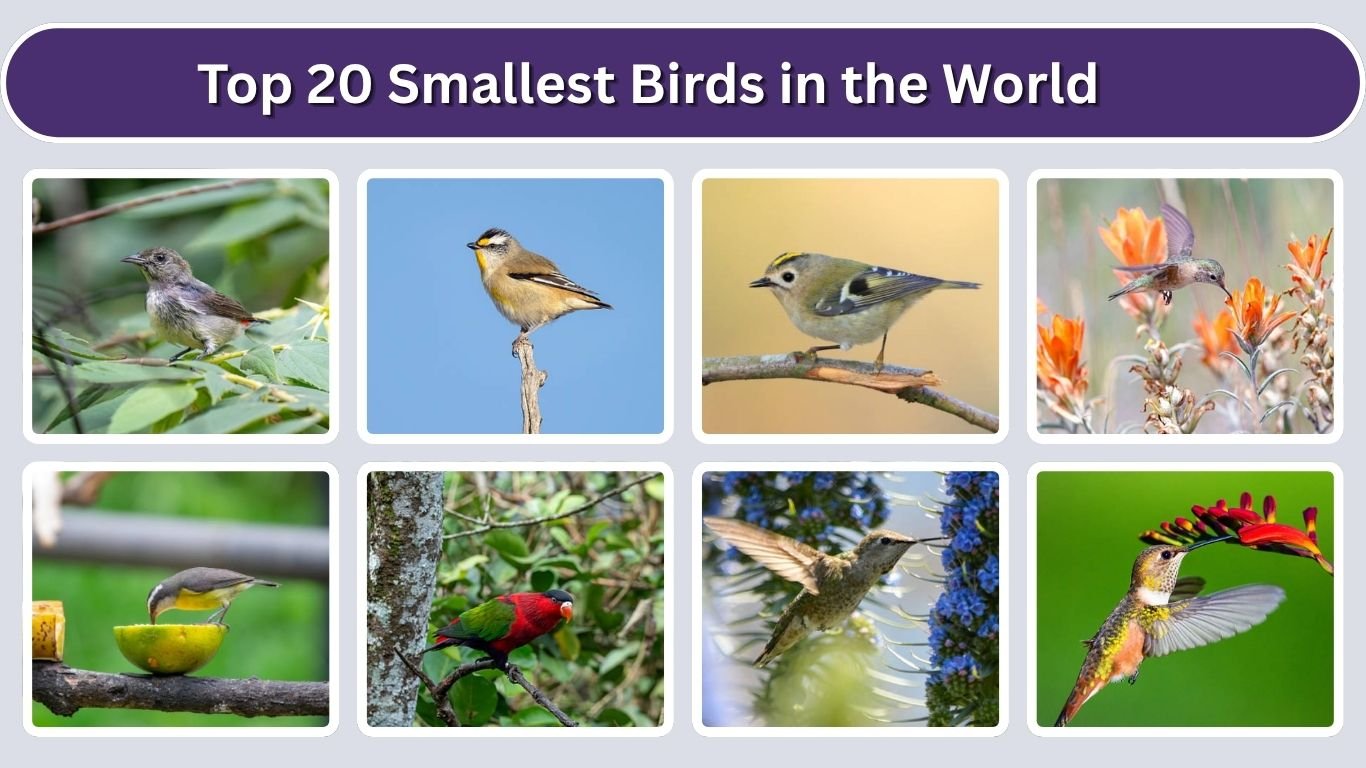
Small birds are some of the most fascinating creatures on Earth, known for their tiny size, rapid movements, and incredible energy. Despite their small bodies, many of these birds are powerful fliers and play important roles in pollination and insect control. In this guide, you’ll discover 20 of the smallest birds in the world, from the tiniest hummingbirds to other miniature species found across different continents.
1. Bee Hummingbird
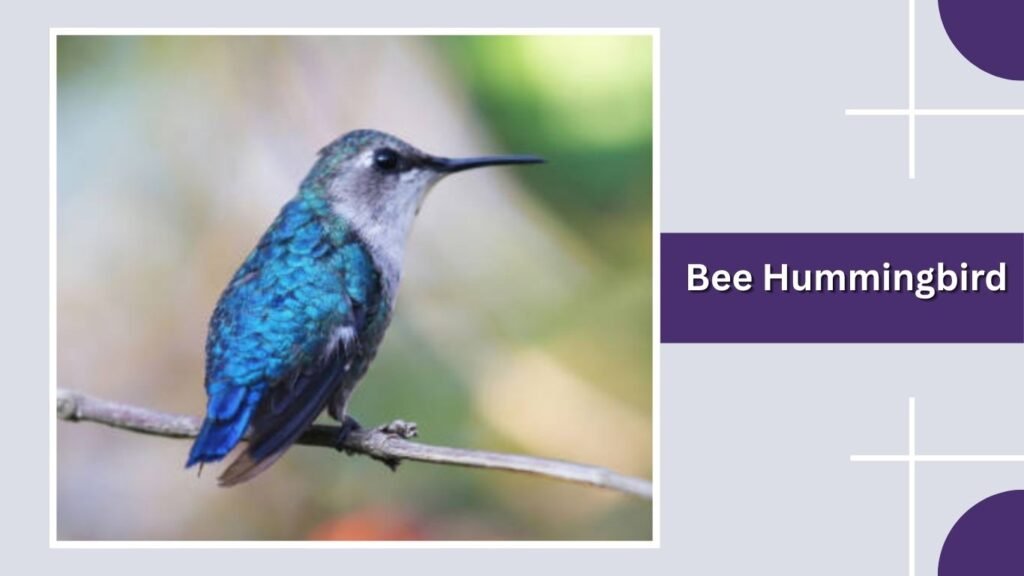
The Bee Hummingbird is the smallest bird in the world, famous for its tiny size and incredible agility. Native to Cuba, this species is often compared to a large insect due to its miniature body and rapid wingbeats. Despite its size, it is highly active and plays an important role in pollination.
Identification
- Extremely tiny bird with a compact body
- Males have a bright iridescent red or pink throat
- Metallic green upperparts and pale underside
- Short, straight bill for nectar feeding
- Females are slightly larger and less colorful
Size
The Bee Hummingbird measures about 2 to 2.4 inches (5 to 6 cm) in length. It weighs less than 2 grams, making it the lightest bird in the world. Its wings beat around 80 times per second, allowing precise hovering.
Habitat and Range
This species is found only in Cuba and nearby islands. It lives in forests, gardens, and areas rich in flowering plants. It prefers habitats where nectar sources are abundant throughout the year.
Behavior and Diet
Bee Hummingbirds feed mainly on nectar, visiting hundreds of flowers daily. They also consume tiny insects and spiders for protein. Their fast metabolism requires constant feeding, and they spend most of their time flying, hovering, and defending feeding territories.
2. Esmeraldas Woodstar
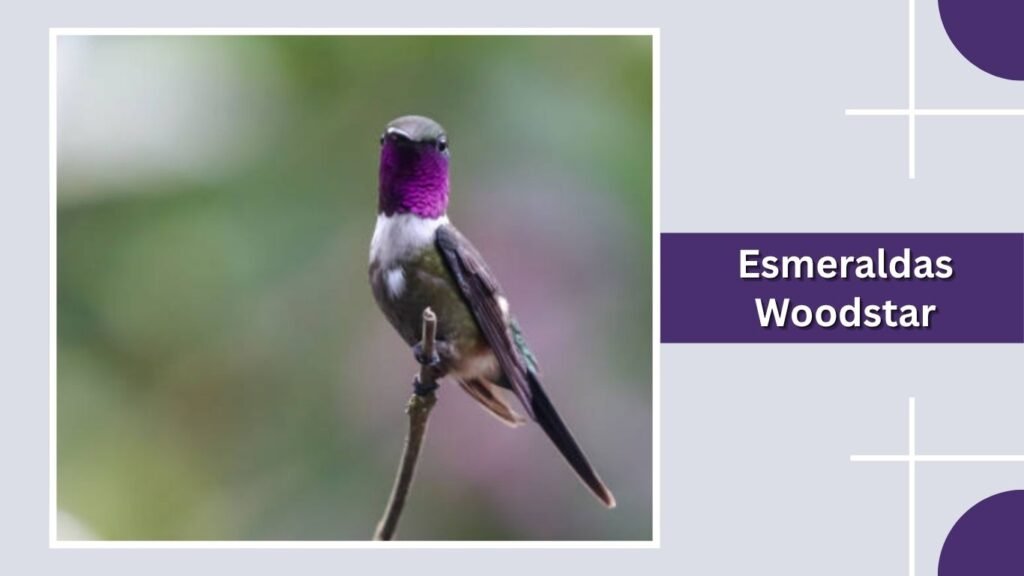
The Esmeraldas Woodstar is one of the smallest hummingbirds in the world, known for its delicate size and beautiful coloration. Native to parts of South America, this tiny bird is rarely seen but highly admired for its elegance and quick movements.
Identification
- Very small hummingbird with a slim body
- Males have a bright purple or violet throat patch
- Green upperparts with a pale underside
- Short, straight bill
- Females are less colorful with muted tones
Size
The Esmeraldas Woodstar measures about 2.5 to 2.8 inches (6.5 to 7 cm) in length. It weighs around 2 to 3 grams, making it one of the tiniest birds on Earth, just slightly larger than the Bee Hummingbird.
Habitat and Range
This species is found in western Ecuador, particularly in dry forests and shrublands. It prefers areas with flowering plants where nectar is readily available. Its range is limited, making it less commonly observed.
Behavior and Diet
Esmeraldas Woodstars feed mainly on nectar and also eat small insects. They are fast and agile fliers, often hovering while feeding. Like many hummingbirds, they can be territorial and actively defend their feeding areas.
3. Calliope Hummingbird
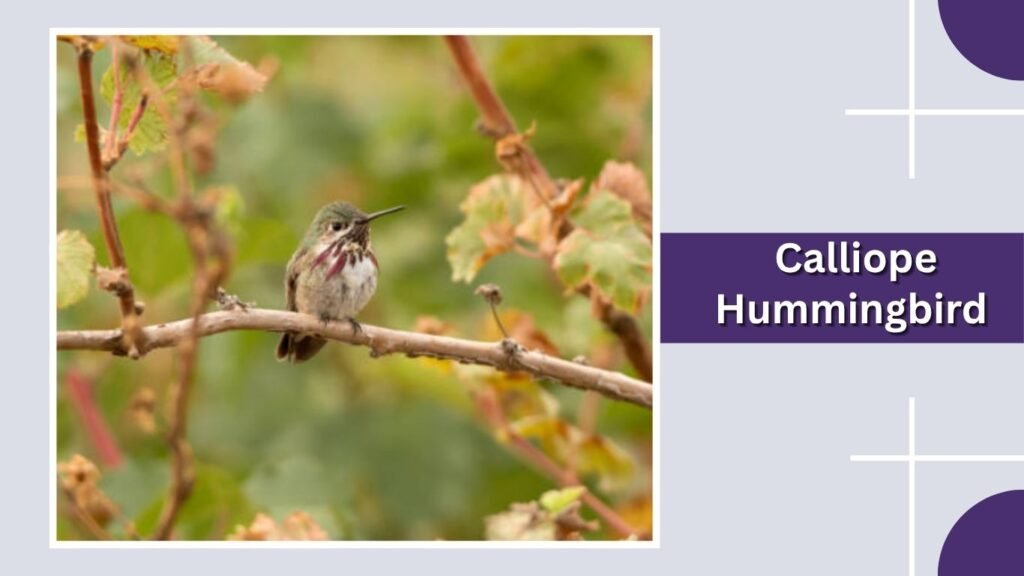
The Calliope Hummingbird is the smallest bird found in the United States and one of the tiniest in the world. Despite its small size, it is known for its bold behavior and unique streaked throat pattern.
Identification
- Very small hummingbird with a compact body
- Males have a magenta throat with streak-like rays
- Green upperparts and pale underparts
- Short, straight bill
- Females lack the bright throat and appear more subdued
Size
This hummingbird measures about 2.8 to 3.3 inches (7 to 8 cm) in length. It weighs approximately 2 to 3 grams, making it slightly larger than some of the tiniest species but still extremely small.
Habitat and Range
Calliope Hummingbirds breed in western North America and migrate to Mexico for winter. They prefer mountain meadows, open woodlands, and areas rich in wildflowers.
Behavior and Diet
They feed on nectar and small insects, using their agility to hover and dart between flowers. Calliope Hummingbirds are surprisingly territorial and may defend feeding areas despite their tiny size.
4. Little Woodstar

The Little Woodstar is a tiny and elegant hummingbird found in parts of South America. Its small size and quick, darting flight make it easy to overlook, but its beauty and activity are impressive when observed closely.
Identification
- Very small hummingbird with a slender body
- Males have a purple or violet throat patch
- Green upperparts with a pale underside
- Short, straight bill
- Females are duller with less vibrant colors
Size
The Little Woodstar measures about 2.5 to 2.8 inches (6.5 to 7 cm) in length. It weighs around 2 to 3 grams, placing it among the smallest birds in the world.
Habitat and Range
This species is found in tropical regions of South America, including Brazil and surrounding areas. It prefers open woodlands, savannas, and gardens where flowering plants are abundant.
Behavior and Diet
Little Woodstars feed mainly on nectar and also consume small insects. They are highly active and agile, often hovering while feeding. Like other hummingbirds, they can be territorial around food sources.
5. Short-tailed Woodstar
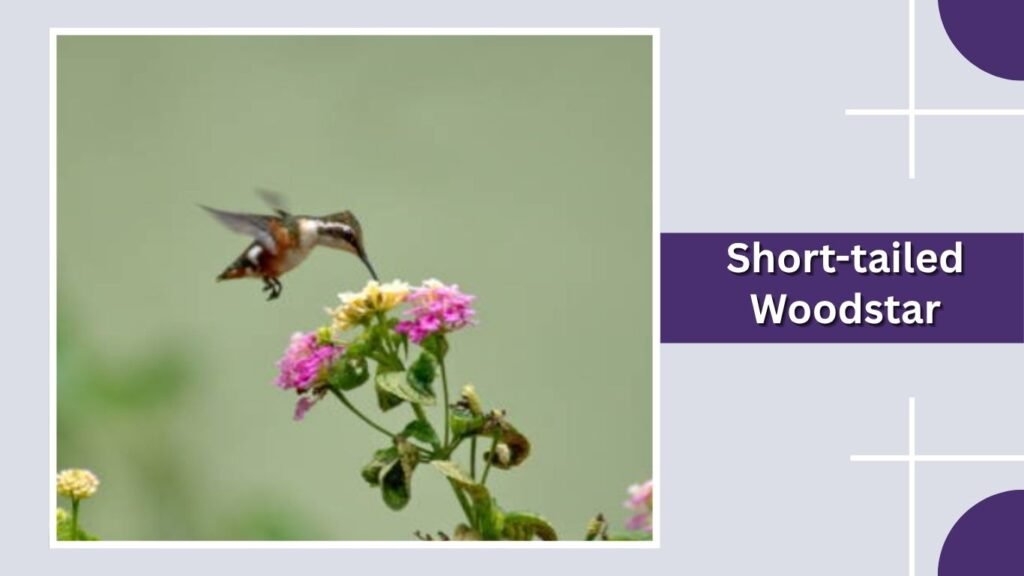
The Short-tailed Woodstar is another extremely small hummingbird known for its compact shape and very short tail. It is native to South America and is admired for its vibrant colors and energetic behavior.
Identification
- Tiny hummingbird with a noticeably short tail
- Males have a bright purple throat
- Green upperparts and whitish underparts
- Short, straight bill
- Females are less colorful with a pale throat
Size
This species measures about 2.6 to 3 inches (6.5 to 7.5 cm) in length. It weighs roughly 2 to 3 grams, making it one of the smallest hummingbirds globally.
Habitat and Range
Short-tailed Woodstars are found in northern and central South America, particularly in open areas like grasslands, savannas, and forest edges. They prefer habitats rich in flowering plants.
Behavior and Diet
They feed primarily on nectar and small insects. Their flight is fast and agile, allowing them to hover and move quickly between flowers. These birds are often seen alone and may defend feeding territories despite their tiny size.
6. Gorgeted Woodstar
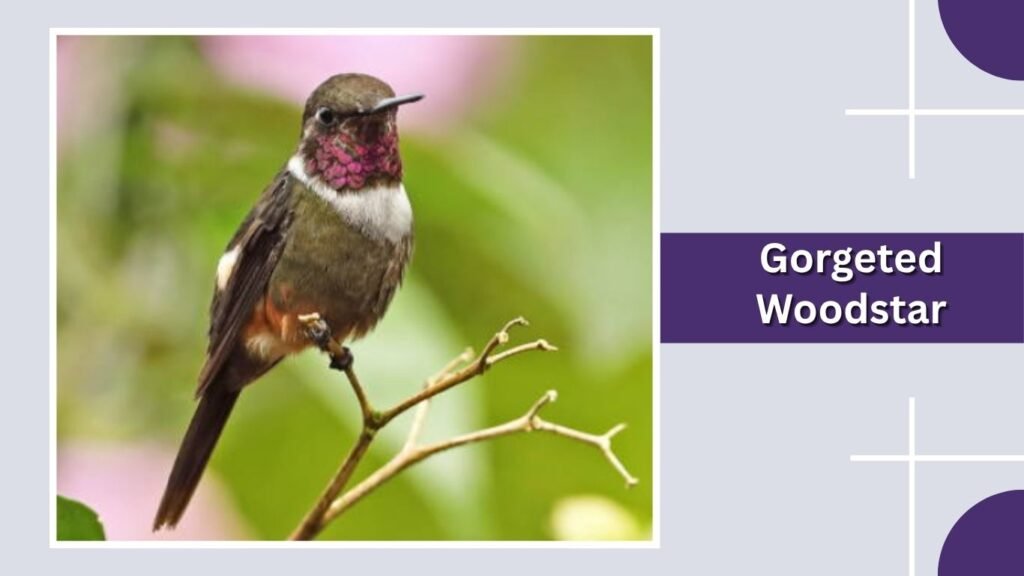
The Gorgeted Woodstar is a tiny and striking hummingbird known for its brilliant throat patch and delicate size. Found in South America, it is admired for its beauty and rapid, agile flight despite its extremely small body.
Identification
- Very small hummingbird with a slim body
- Males have a vivid purple or violet throat (gorget)
- Green upperparts with a pale underside
- Short, straight bill
- Females are less colorful with muted tones
Size
The Gorgeted Woodstar measures about 2.5 to 2.8 inches (6.5 to 7 cm) in length. It weighs around 2 to 3 grams, placing it among the smallest birds in the world.
Habitat and Range
This species is found in parts of northern South America, including Venezuela and Colombia. It prefers open habitats such as savannas, shrublands, and forest edges where flowering plants are plentiful.
Behavior and Diet
Gorgeted Woodstars feed mainly on nectar and also consume tiny insects. They are fast and agile fliers, often hovering while feeding. Like other hummingbirds, they can be territorial and defend feeding areas from intruders.
7. Costa’s Hummingbird
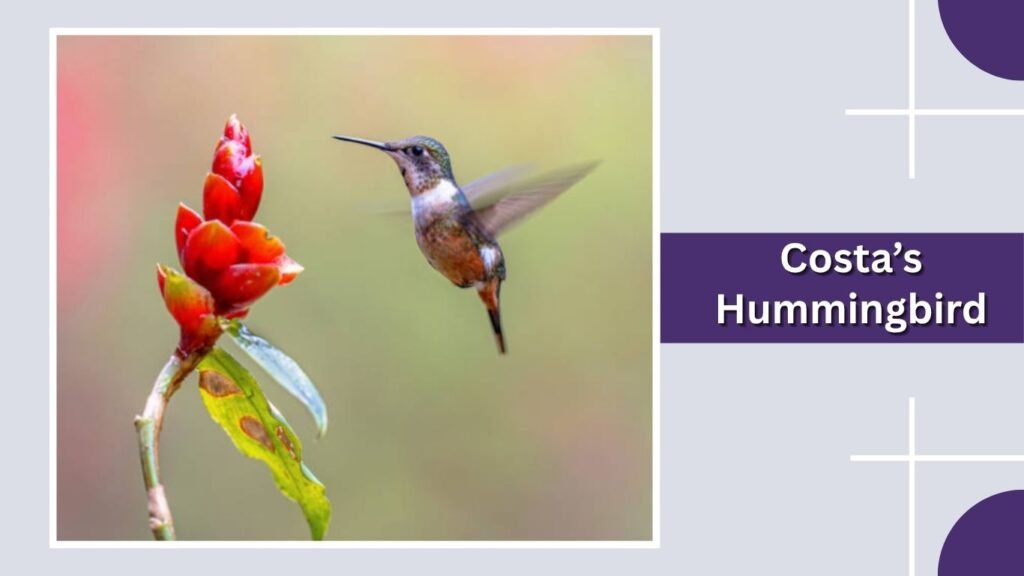
Costa’s Hummingbird is a small desert species known for its vibrant purple coloration and energetic behavior. It is commonly found in the southwestern United States and parts of Mexico.
Identification
- Small hummingbird with a compact body
- Males have a bright purple crown and throat
- Green upperparts and whitish underparts
- Short, slightly curved bill
- Females are less colorful with grayish tones
Size
Costa’s Hummingbird measures about 3 to 3.5 inches (7.5 to 9 cm) in length. It typically weighs around 2 to 4 grams, making it one of the smaller hummingbirds.
Habitat and Range
This species prefers arid and semi-arid environments such as deserts, scrublands, and dry open areas. It is mainly found in the southwestern United States and northern Mexico.
Behavior and Diet
Costa’s Hummingbirds feed on nectar from desert flowers and also eat small insects. Males are known for their dramatic display flights. They are territorial and often defend their feeding areas from other hummingbirds.
8. Black-chinned Hummingbird
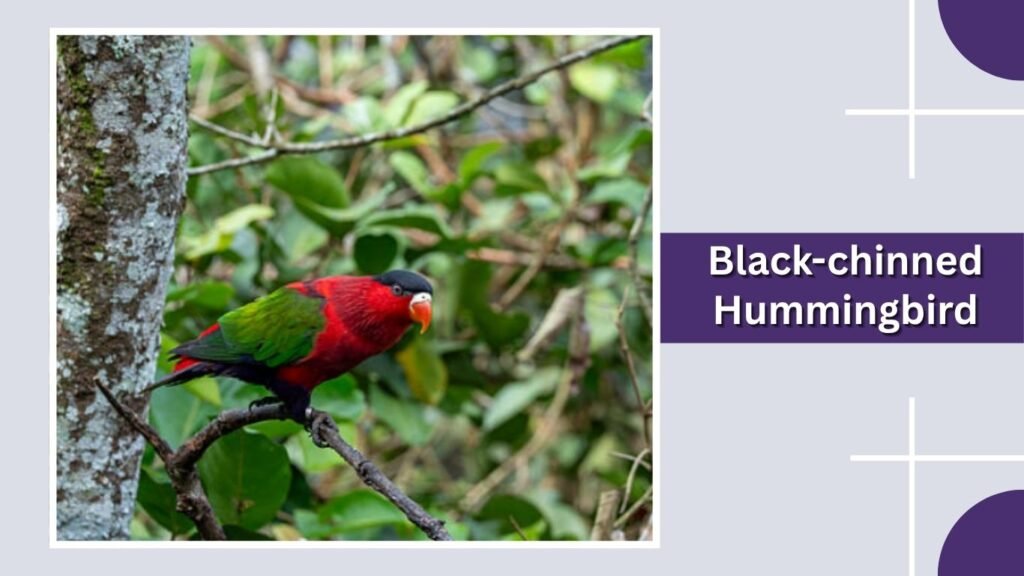
The Black-chinned Hummingbird is a small and highly adaptable species widely found across the western United States. Despite its understated appearance compared to more colorful hummingbirds, it is one of the most successful and widespread species. Its ability to thrive in diverse environments, including urban areas, makes it a common sight during the warmer months.
Identification
- Small hummingbird with a slender and slightly elongated body
- Males have a black throat with a subtle iridescent violet band at the base
- Dull green upperparts with pale grayish-white underparts
- Long, straight bill suited for nectar feeding
- Females lack the dark throat and have a more plain, light-colored appearance
Size
The Black-chinned Hummingbird measures about 3.25 to 3.5 inches (8 to 9 cm) in length. It typically weighs between 2.5 to 4 grams. While slightly larger than some of the tiniest hummingbirds, it is still considered a small species within the hummingbird family. Its lightweight body allows for efficient hovering and quick directional flight.
Habitat and Range
This species has a broad range, extending across the western United States, parts of Mexico, and into Texas during breeding and migration seasons. It thrives in a variety of habitats, including deserts, canyons, woodlands, and suburban gardens. Black-chinned Hummingbirds are particularly drawn to areas with reliable water sources and flowering plants, making them frequent visitors to backyard feeders.
Behavior and Diet
Black-chinned Hummingbirds primarily feed on nectar from flowers, using their specialized tongues to extract it efficiently. They also consume small insects and spiders, which provide essential protein. Unlike some more aggressive hummingbirds, they are relatively quiet and less confrontational, although they will still defend feeding territories when necessary. Their flight is swift and controlled, and they often perch between feeding sessions to conserve energy.
9. Lucifer Hummingbird
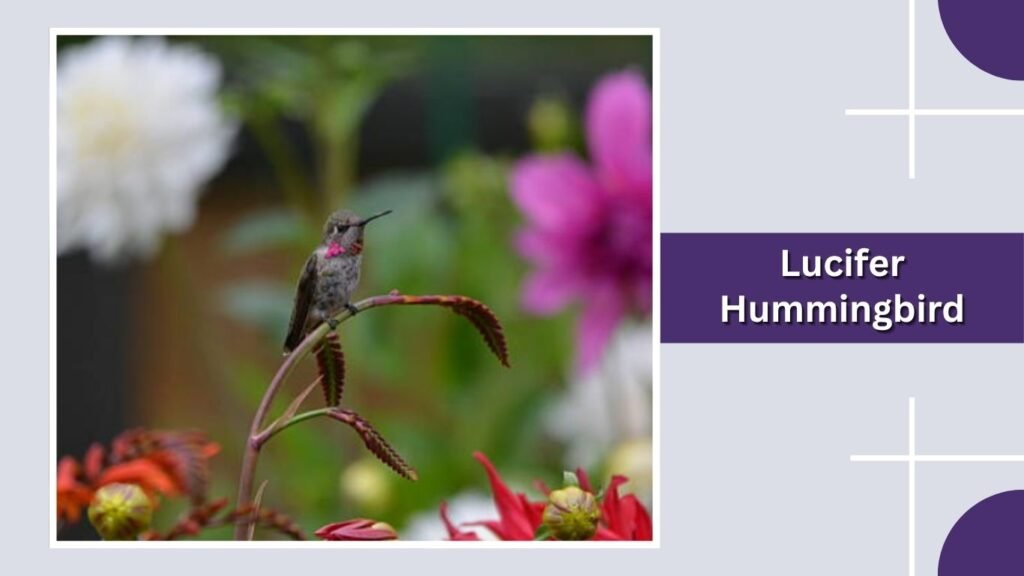
The Lucifer Hummingbird is a small but striking species known for its unique curved bill and vivid coloration. Though rare in the United States, it can occasionally be spotted in southwestern Texas, particularly in desert regions. Its distinctive appearance and limited range make it a prized sighting for bird enthusiasts.
Identification
- Small hummingbird with a slender, elongated body
- Males have a bright magenta throat with elongated, flared feathers
- Green upperparts and pale grayish underparts
- Long, strongly curved bill adapted for specific flowers
- Females are duller, with grayish tones and no bright throat
Size
Lucifer Hummingbirds measure about 3.5 to 4 inches (9 to 10 cm) in length. They typically weigh around 3 to 4 grams. Although slightly larger than the tiniest hummingbirds, their slim build and lightweight frame still place them among the smallest bird species.
Habitat and Range
This species is primarily found in northern Mexico, with occasional appearances in the Big Bend region of Texas. It prefers arid habitats such as desert canyons, dry slopes, and scrublands. These environments often contain the tubular flowers that match the bird’s curved bill, making feeding more efficient.
Behavior and Diet
Lucifer Hummingbirds feed mainly on nectar, especially from specialized desert flowers. They also consume small insects for added nutrition. Their flight is fast and agile, allowing them to move efficiently between feeding sites. Males are known to be territorial, often defending their preferred feeding areas. Despite their rarity, their bold coloration and unique shape make them unforgettable when seen in the wild.
10. Anna’s Hummingbird
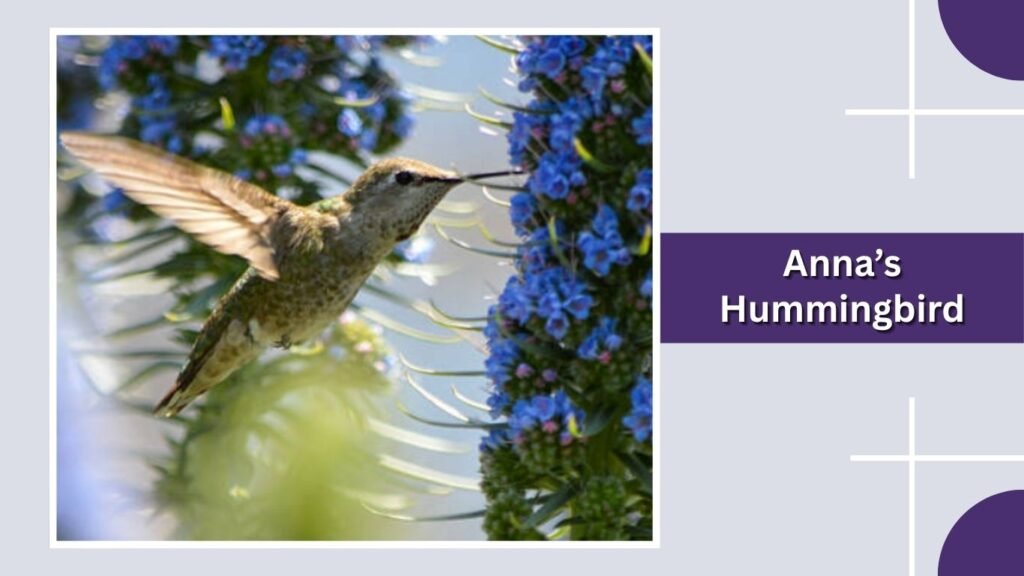
Anna’s Hummingbird is a small yet striking species known for its shimmering pinkish-red head and throat. Unlike many hummingbirds, it does not rely heavily on long-distance migration, allowing it to stay in certain regions year-round. Its adaptability has helped it expand beyond its traditional range.
Identification
- Small hummingbird with a slightly stocky body
- Males have an iridescent rose-pink head and throat
- Green upperparts and grayish underparts
- Straight, medium-length bill
- Females are less colorful with a small red spot on the throat
Size
Anna’s Hummingbird measures about 3.9 to 4.3 inches (10 to 11 cm) in length. It typically weighs between 3 to 6 grams. While not the tiniest hummingbird, it is still considered small compared to most bird species.
Habitat and Range
This species is commonly found along the western coast of North America but has expanded its range inland. It prefers gardens, parks, open woodlands, and urban areas with abundant flowers. It is often seen near feeders, especially in residential settings.
Behavior and Diet
Anna’s Hummingbirds feed on nectar and small insects. They are active and sometimes aggressive, especially when defending feeding territories. Males perform impressive courtship dives, creating a sharp sound with their tail feathers. Their ability to adapt to human environments makes them one of the more commonly observed hummingbirds.
11. Broad-tailed Hummingbird
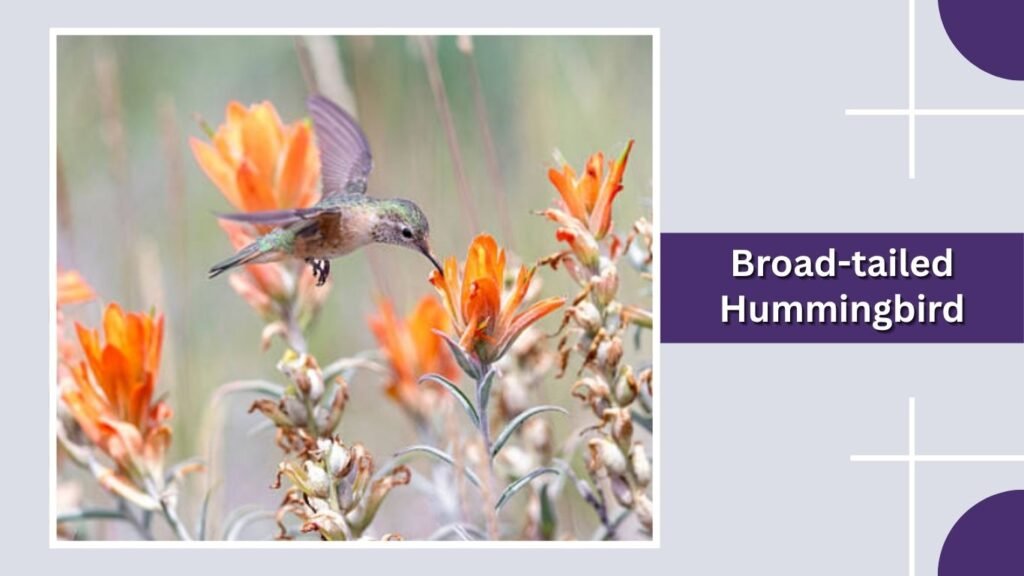
The Broad-tailed Hummingbird is a small and energetic species best known for the distinctive trilling sound produced by its wings during flight. It is commonly found in mountainous regions and occasionally appears in nearby lower elevations during migration.
Identification
- Small hummingbird with a slightly stocky build
- Males have a bright rose-pink throat (gorget)
- Green upperparts and white underparts
- Straight, medium-length bill
- Females are less colorful with spotted throat
Size
Broad-tailed Hummingbirds measure about 3.5 to 4 inches (9 to 10 cm) in length. They typically weigh between 3 to 5 grams. Their compact size and light weight allow for agile and sustained flight.
Habitat and Range
This species is primarily found in the western United States and Mexico, especially in mountainous areas. It prefers open woodlands, forest edges, and meadows filled with wildflowers. During migration, it may move through lower elevations and different regions.
Behavior and Diet
Broad-tailed Hummingbirds feed mainly on nectar and small insects. Males are easily recognized by the metallic wing trill they produce in flight. They are territorial around feeding areas and will defend their space from other hummingbirds. Their flight is swift and precise, allowing them to move efficiently between flowers.
12. Rufous Hummingbird
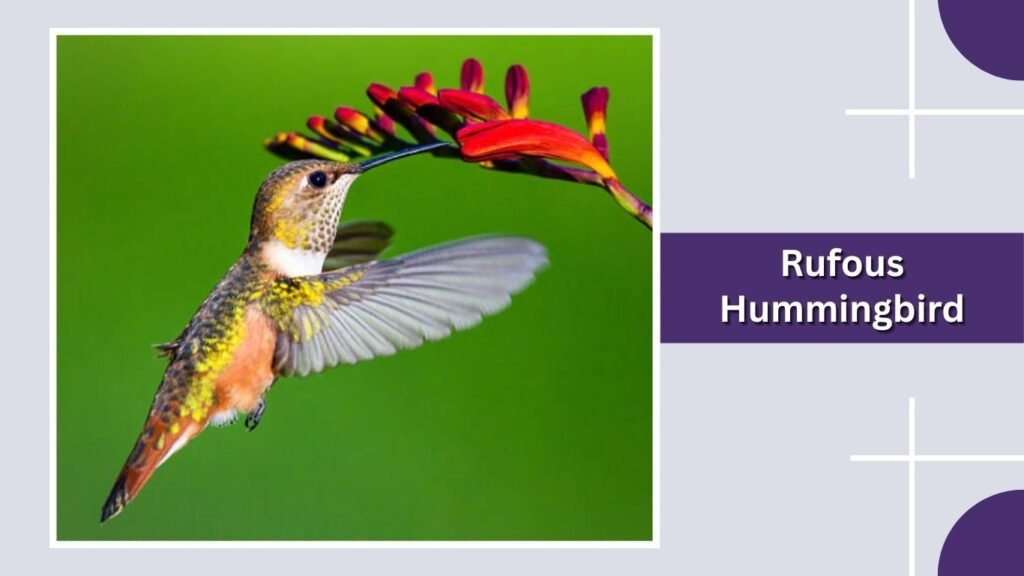
The Rufous Hummingbird is a small but incredibly tough species known for its long migration and bold attitude. Despite its tiny size, it travels thousands of miles between breeding and wintering grounds, making it one of the most remarkable hummingbirds in the world.
Identification
- Small hummingbird with a slender body
- Males have bright orange-rufous plumage and an iridescent red throat
- Some females and juveniles show green on the back with rufous sides
- Straight, medium-length bill
- White chest with light spotting in females
Size
Rufous Hummingbirds measure about 2.8 to 3.5 inches (7 to 9 cm) in length. They typically weigh around 2 to 5 grams. Their small size combined with strong wings allows them to complete one of the longest migrations relative to body size.
Habitat and Range
This species breeds in northwestern North America and migrates through the western and central regions, sometimes passing through Texas. It can be found in gardens, forests, and open areas with abundant flowers during migration.
Behavior and Diet
Rufous Hummingbirds feed on nectar and small insects. They are highly territorial and often aggressive, chasing away other hummingbirds regardless of size. Their flight is fast and energetic, and they frequently visit feeders during migration.
13. Allen’s Hummingbird
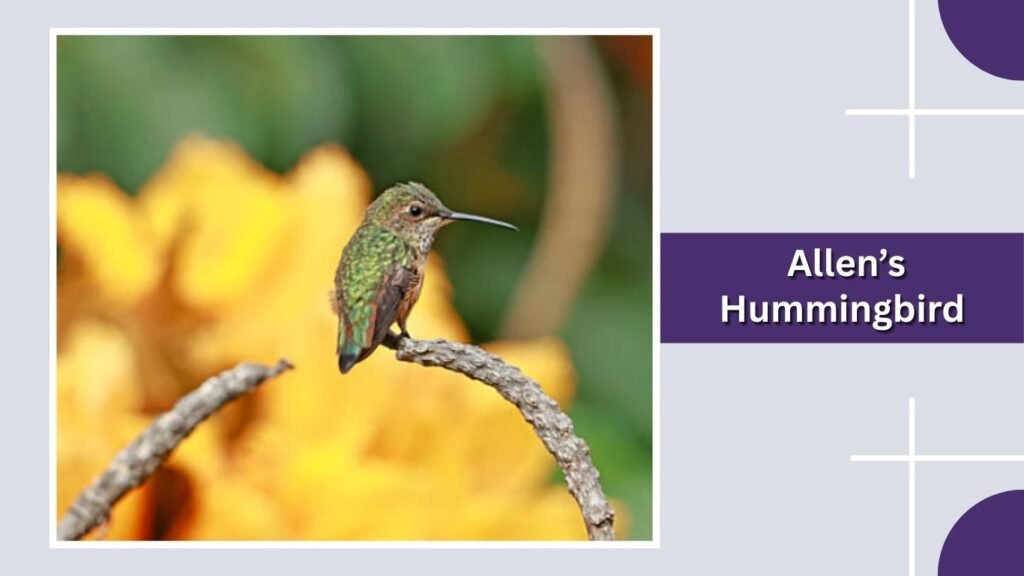
Allen’s Hummingbird is a small and colorful species closely related to the Rufous Hummingbird. Though mainly found along the Pacific Coast, it occasionally appears in other regions, making it a rare but exciting sight.
Identification
- Small hummingbird with a compact body
- Males have bright orange-rufous plumage with an iridescent orange-red throat
- Green back contrasts with rufous sides
- Straight, medium-length bill
- Females are greener with some rufous coloring
Size
Allen’s Hummingbird measures about 3 to 3.5 inches (7.5 to 9 cm) in length. It typically weighs around 2 to 4 grams, placing it among the smaller hummingbirds.
Habitat and Range
This species is primarily found in coastal California and parts of Oregon but may occasionally appear outside its normal range. It prefers gardens, coastal scrub, and open woodlands with plenty of flowering plants.
Behavior and Diet
Allen’s Hummingbirds feed mainly on nectar and small insects. They are energetic and territorial, often defending feeding areas. Males perform impressive aerial displays during courtship, showing off their vibrant colors and agility in flight.
14. Weebill
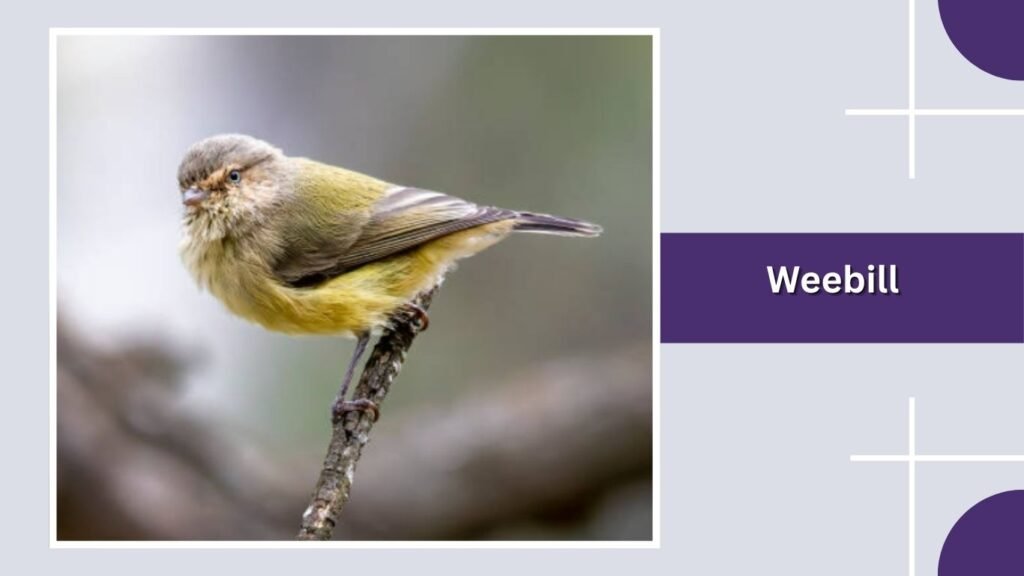
The Weebill is one of the smallest birds in Australia and is often recognized by its tiny size and constant activity. Despite its plain appearance, it is a lively and curious bird that spends much of its time moving through tree canopies in search of food.
Identification
- Extremely small bird with a compact body
- Olive-green upperparts and pale underparts
- Very short tail and a tiny, stubby bill
- Dark eyes with a simple facial appearance
- Lacks bright or flashy markings
Size
The Weebill measures about 3 to 3.5 inches (8 to 9 cm) in length. It typically weighs around 6 to 8 grams. Although slightly heavier than hummingbirds, its body remains very small and lightweight.
Habitat and Range
This species is found across most of Australia, especially in woodlands, forests, and areas with eucalyptus trees. It prefers habitats with dense foliage where it can easily move and forage.
Behavior and Diet
Weebills are highly active birds that constantly move through branches while searching for insects. They feed mainly on small insects and spiders. Their quick movements and soft calls make them easy to overlook despite being quite common in suitable habitats.
15. Goldcrest
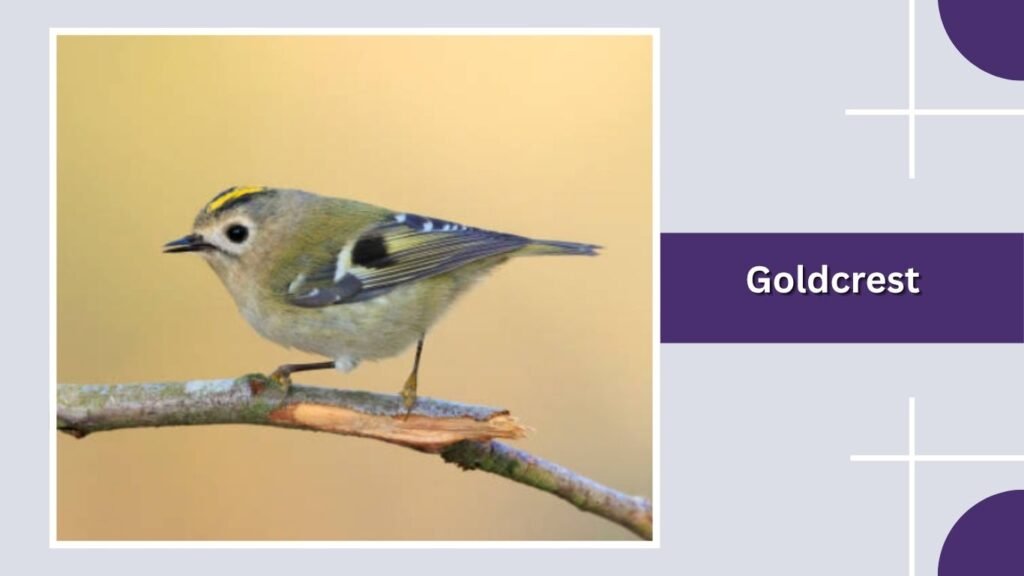
The Goldcrest is the smallest bird in Europe and is known for its tiny size and distinctive golden crown stripe. Despite its delicate appearance, it is surprisingly hardy and can survive in cold climates.
Identification
- Very small bird with a round body
- Olive-green upperparts and pale underside
- Bright yellow or orange crown stripe bordered with black
- Thin, pointed bill
- Short tail and fine legs
Size
Goldcrests measure about 3.3 to 3.7 inches (8.5 to 9.5 cm) in length. They weigh around 4.5 to 7 grams, making them one of the lightest birds in Europe.
Habitat and Range
They are found across Europe and parts of Asia, mainly in coniferous forests. Goldcrests prefer dense woodland habitats where they can find shelter and a steady supply of food.
Behavior and Diet
Goldcrests feed primarily on tiny insects, larvae, and spiders. They are constantly active, flitting through branches in search of food. Despite their small size, they are energetic and can survive harsh weather by continuously foraging to maintain their energy levels.
16. Firecrest
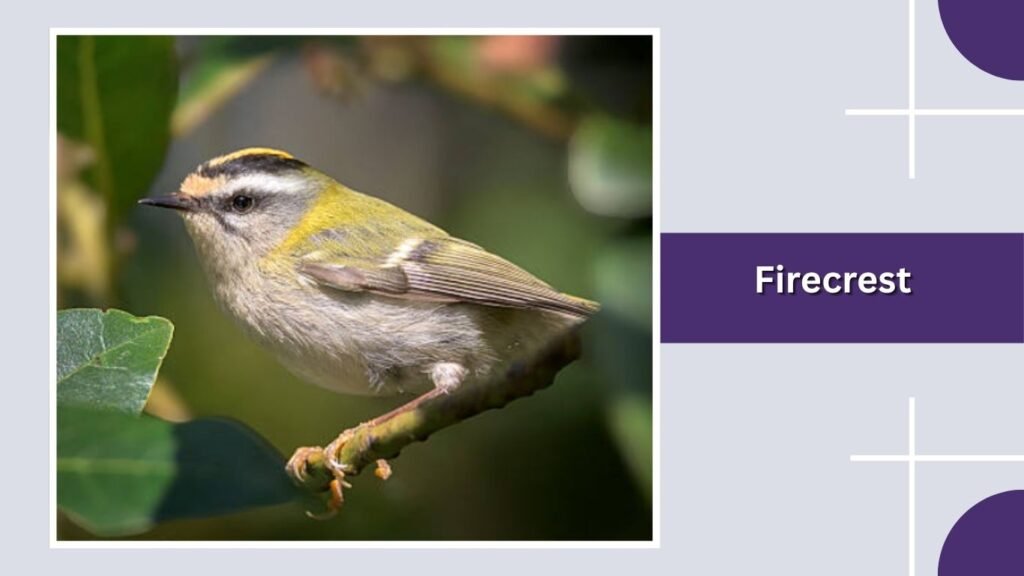
The Firecrest is a tiny and vibrant bird closely related to the Goldcrest. Found mainly in Europe, it stands out due to its bold facial markings and energetic nature. Despite its small size, it is active and constantly on the move.
Identification
- Very small bird with a compact body
- Olive-green upperparts and pale underside
- Bright orange crown stripe bordered with black
- Distinct white eyebrow stripe and black eye-line
- Thin, pointed bill
Size
Firecrests measure about 3.5 to 3.7 inches (9 to 9.5 cm) in length. They typically weigh around 5 to 7 grams. Their tiny size makes them one of the smallest birds in their range.
Habitat and Range
This species is found across Europe and parts of North Africa. It prefers woodlands, especially forests with dense vegetation, as well as gardens and parks with plenty of trees.
Behavior and Diet
Firecrests feed mainly on small insects, larvae, and spiders. They are highly active, constantly moving through branches while searching for food. Their quick movements and sharp calls make them noticeable despite their small size.
17. Pardalote
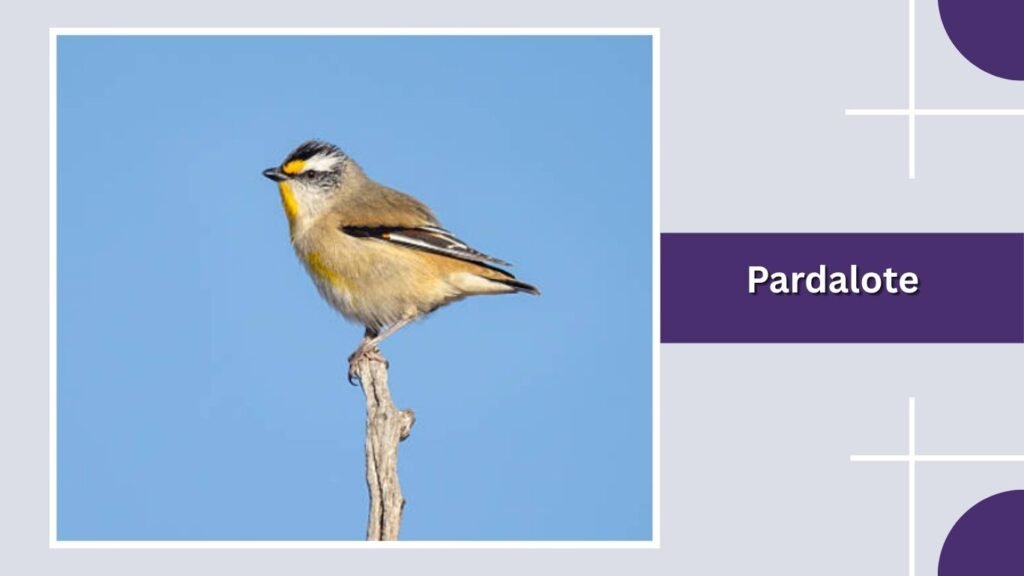
The Pardalote is a small, colorful bird native to Australia, known for its bright plumage and distinctive spotted patterns. Despite its tiny size, it is quite vocal and active, often heard before it is seen.
Identification
- Very small bird with a short, compact body
- Brightly colored plumage with spots or patterns
- Yellow throat and face in some species
- Short tail and small, stubby bill
- Strong contrast between colors and markings
Size
Pardalotes measure about 3.1 to 4 inches (8 to 10 cm) in length. They typically weigh around 6 to 10 grams. Their small size and light weight place them among the smallest birds in Australia.
Habitat and Range
They are found across Australia in forests, woodlands, and scrublands. Pardalotes prefer areas with eucalyptus trees, which provide both food and nesting sites.
Behavior and Diet
Pardalotes feed mainly on insects, especially lerps (a type of insect secretion) found on eucalyptus leaves. They are active and often move quickly through foliage. Their calls are sharp and repetitive, helping bird watchers locate them easily.
18. Bushtit
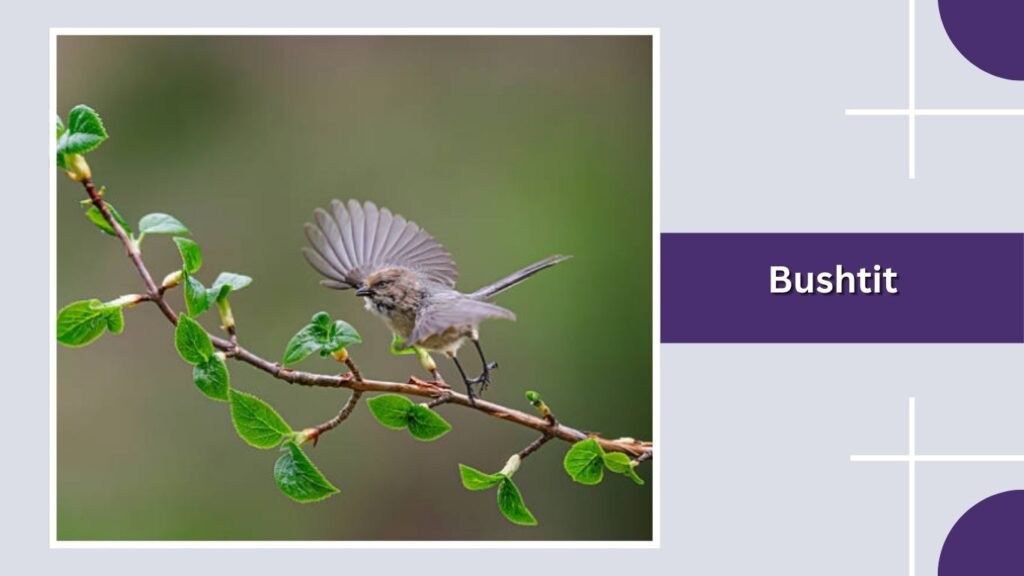
The Bushtit is a tiny, social bird known for its constant movement and strong group behavior. Found in North America, it is often seen traveling in small flocks, making soft calls as it moves through shrubs and trees.
Identification
- Very small bird with a round, fluffy body
- Gray to brownish plumage with a pale underside
- Long, thin tail compared to its body size
- Short, stubby bill
- Dark eyes (females may have lighter eyes in some regions)
Size
Bushtits measure about 2.8 to 3.3 inches (7 to 8.5 cm) in length. They typically weigh around 4 to 6 grams, making them one of the smallest birds in North America.
Habitat and Range
This species is found in the western parts of North America, including the United States and Mexico. It prefers woodlands, shrublands, and suburban areas with dense vegetation where it can easily forage.
Behavior and Diet
Bushtits feed mainly on small insects and spiders. They are highly social and often move in flocks, constantly chattering as they search for food. Their quick movements and group behavior make them both entertaining and easy to spot.
19. Bananaquit
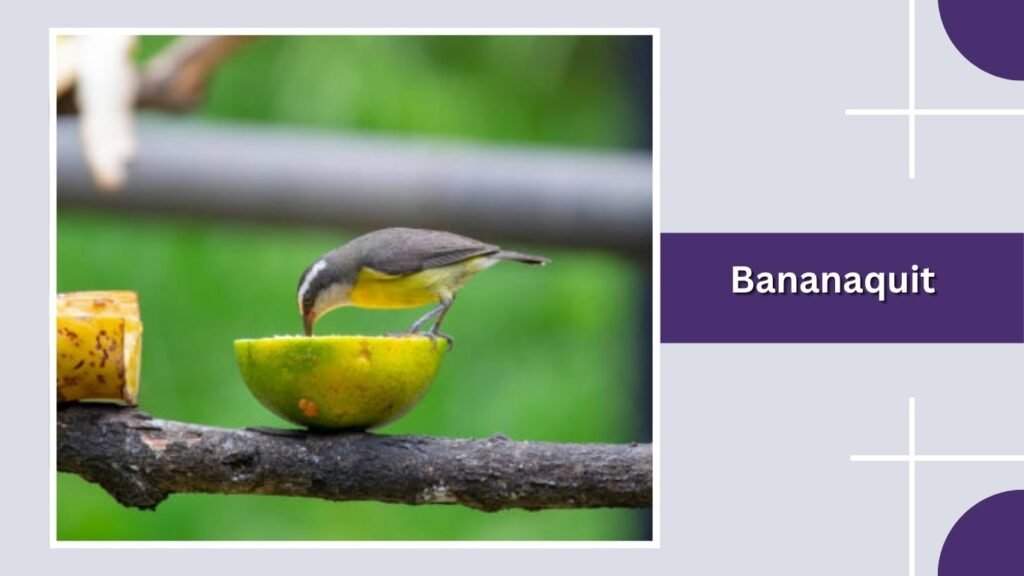
The Bananaquit is a tiny and lively bird commonly found in the Caribbean and parts of Central and South America. It is known for its energetic behavior and strong attraction to sweet foods, including nectar and fruit.
Identification
- Small bird with a compact body
- Black upperparts with a bright yellow chest
- Distinct white eyebrow stripe
- Thin, slightly curved bill
- Short tail and active posture
Size
Bananaquits measure about 4 to 4.5 inches (10 to 11 cm) in length. They typically weigh around 7 to 12 grams. While slightly larger than some others on this list, they are still considered very small birds.
Habitat and Range
They are widely distributed across the Caribbean, Central America, and northern South America. Bananaquits prefer tropical forests, gardens, and coastal areas with plenty of flowering plants.
Behavior and Diet
Bananaquits feed on nectar, fruits, and small insects. They are very active and often seen hopping quickly between branches or visiting flowers. Their curiosity and bold nature make them a common sight in gardens and near human habitation.
20. Flowerpecker
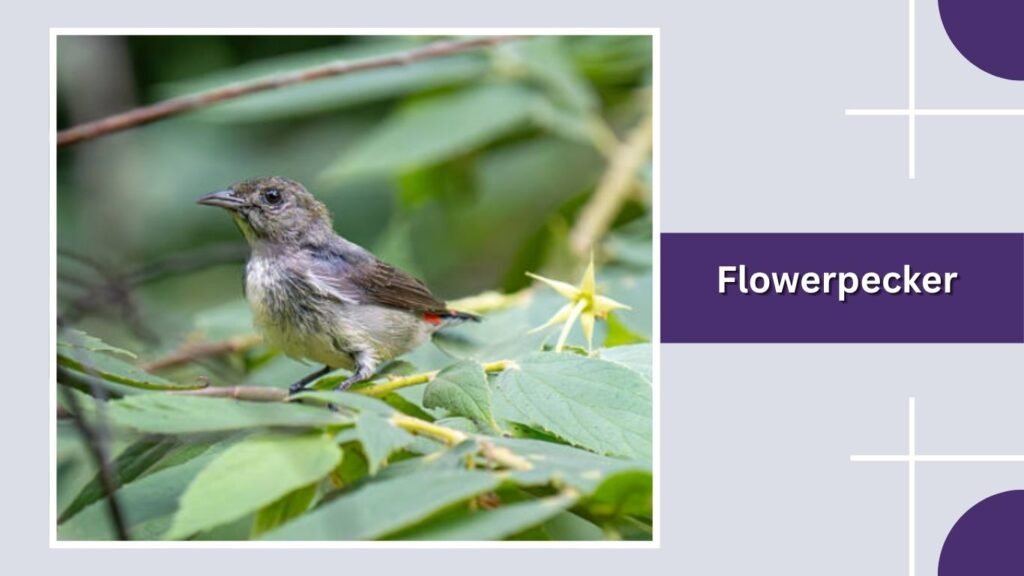
Flowerpeckers are among the smallest birds in the world, known for their tiny size and quick movements. Found mainly in Asia, these birds are often overlooked due to their speed and small stature, but they play an important role in pollination and seed dispersal.
Identification
- Very small bird with a compact body
- Short tail and tiny, slightly curved bill
- Plumage varies by species, often with combinations of gray, yellow, or olive
- Some species have bright patches on the chest or back
- Simple facial features with dark eyes
Size
Flowerpeckers typically measure about 3 to 4 inches (7.5 to 10 cm) in length. They usually weigh between 5 to 10 grams, making them one of the smallest bird groups in the world.
Habitat and Range
These birds are found across South and Southeast Asia, including India, Sri Lanka, Indonesia, and the Philippines. They prefer forests, gardens, and areas with flowering plants and fruiting trees.
Behavior and Diet
Flowerpeckers feed mainly on nectar, small fruits, and berries. They also eat tiny insects for protein. They are fast-moving and often hover briefly while feeding, though they usually perch. Their role in spreading seeds makes them important for maintaining healthy ecosystems.
