
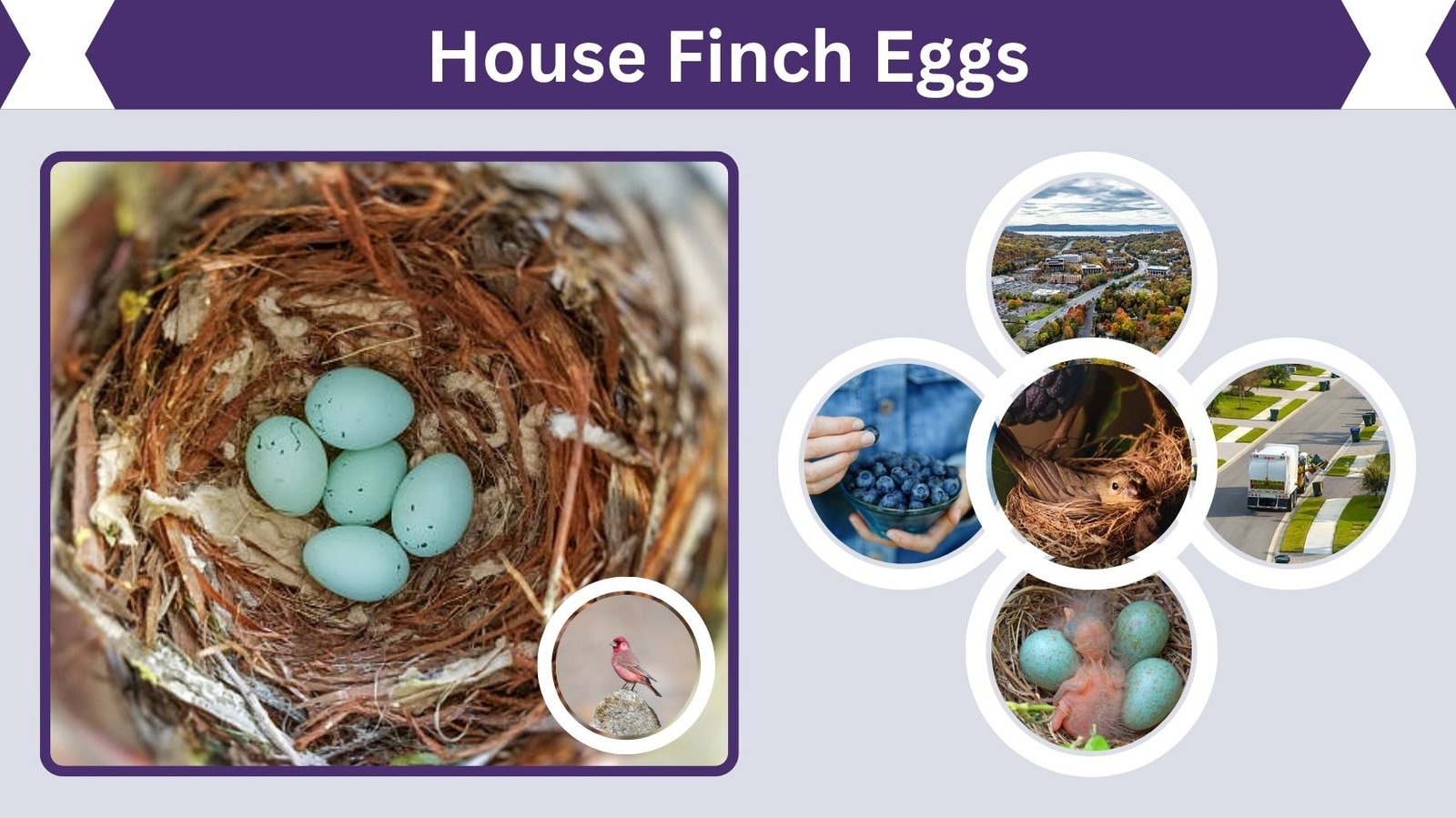
House finches are small songbirds whose reproductive behavior is fascinating to observe. Female house finches lay small, speckled eggs that vary in color from pale blue to greenish-white. They build nests in trees, shrubs, or man-made structures, carefully selecting safe and concealed locations. Understanding egg size, color, incubation time, and nesting habits helps birdwatchers identify house finches and monitor their breeding success. This guide covers egg characteristics, incubation periods, nesting behavior, and how to distinguish house finch eggs from similar species.
Physical Characteristics of House Finch Eggs
Female house finch eggs have distinct features that make them identifiable among other small songbird eggs. Observing their size, color, and pattern can help distinguish them in the wild.
Size and Shape
- Eggs are small, averaging 0.7–0.8 inches (1.8–2 cm) in length
- Oval shape, slightly pointed at one end
- Comparable to other small songbird eggs
Color and Pattern
- Pale blue, greenish, or occasionally white
- Light speckling or mottling is common
- Some eggs may appear almost solid in color depending on lighting
Comparison with Similar Birds
- House sparrows: smaller, duller, uniform brown
- Robins: larger, bright blue, smooth
- Purple finches: slightly larger, darker speckling
Egg-Laying Behavior and Frequency
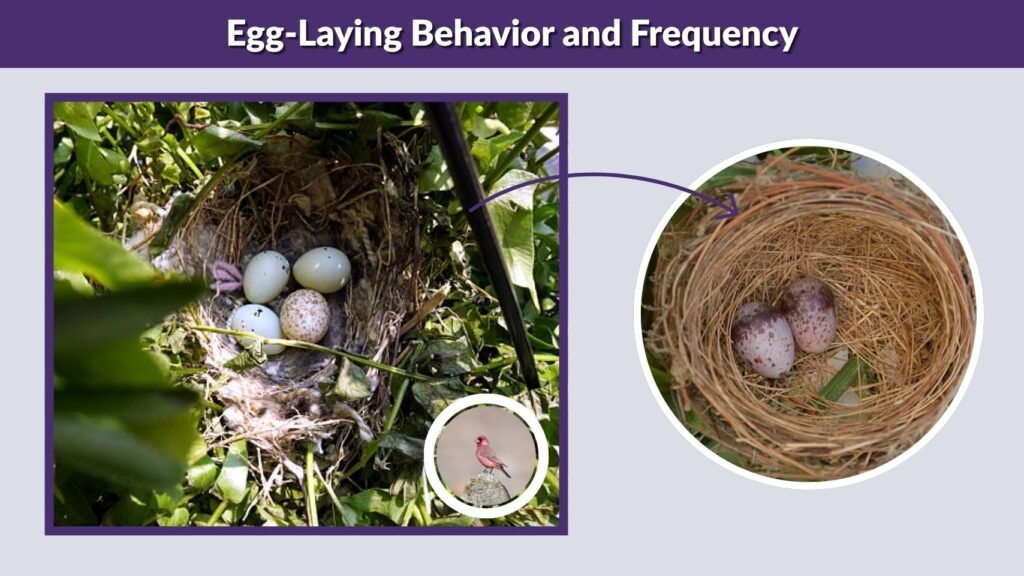
House finches lay eggs systematically and may have multiple clutches in a breeding season. The timing, number, and frequency of eggs are influenced by food availability and environmental conditions.
Number of Eggs
- Typically 2–6 eggs per clutch
- Multiple clutches per season are possible
- Occasionally eggs may be abandoned or lost
Timing and Frequency
- Eggs are laid mainly in spring and summer
- One egg is laid per day until the clutch is complete
- Some females may lay eggs more than once per year
Parasitism and Egg Challenges
- Cowbirds occasionally lay eggs in house finch nests
- Eggs may be displaced or removed by parents
- Predation and environmental factors affect hatching success
Incubation and Hatching
The female house finch is primarily responsible for incubating the eggs, a process critical for proper development. Incubation requires careful attention to warmth, turning, and protection from predators.
Incubation lasts about 12–14 days, with females spending most of the day sitting on eggs. Males rarely incubate but assist by feeding the female nearby. Hatching results in altricial chicks that are blind and featherless, requiring intensive care from both parents. Eggs are delicate, and parents may eat shells after hatching to recycle nutrients. Environmental factors such as temperature and nest concealment influence hatching success and chick survival.
Parental Care
- Female primarily incubates; male feeds and guards
- Chicks are altricial and dependent on parents
- Nest protection is essential for successful hatching
Nesting Habits and Egg Placement
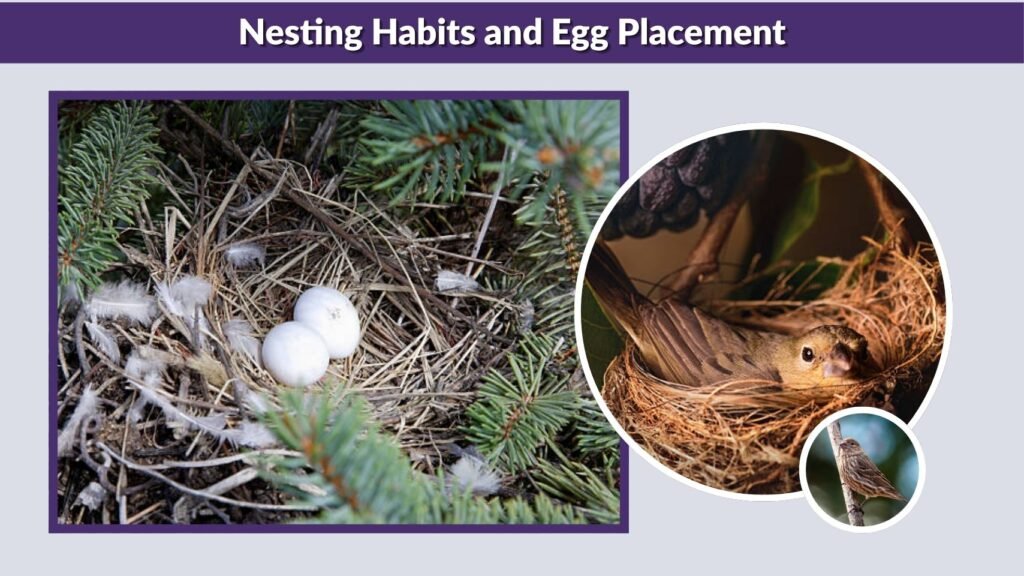
Female house finches build secure nests to house their eggs. They select locations that are hidden and safe from predators, ensuring the best chance for their young to survive.
Nest Construction
- Nests are made from twigs, grasses, feathers, and soft materials
- Located in trees, shrubs, ledges, or man-made structures
- Concealment is key to protecting eggs and chicks
Nest with Eggs
- Eggs are placed carefully within the nest, often evenly spaced
- Typical clutch size of 2–6 eggs
- Nest observations provide insight into breeding timing
Multiple Clutches and Nest Reuse
- House finches may lay more than one clutch per season
- Nests may be cleaned, reused, or abandoned depending on previous success
Habitat and Distribution
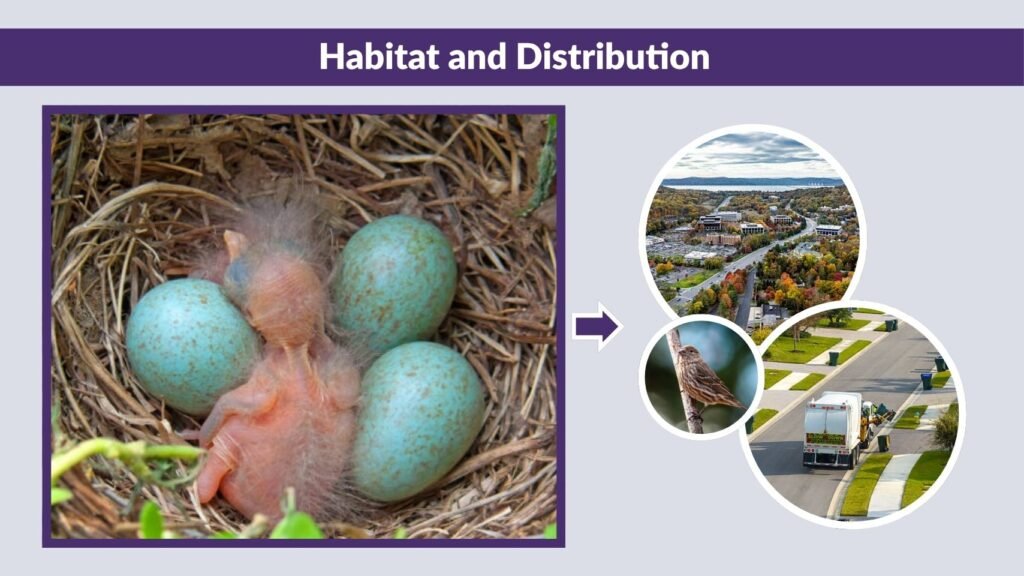
Female house finches and their eggs are found across a wide range of habitats in North America. They thrive in urban, suburban, and rural areas, showing remarkable adaptability. They often nest in trees, shrubs, or man-made structures, taking advantage of human-provided food sources and shelter. Understanding their preferred habitats helps birdwatchers locate nests and observe breeding behavior safely.
- Found throughout North America, from southern Canada to Mexico
- Prefer urban and suburban areas with trees, shrubs, or ornamental plants
- Nest placement often includes ledges, hanging planters, and building eaves
- Adaptable to backyard feeders and areas with fruiting trees
Diet and Feeding Behavior
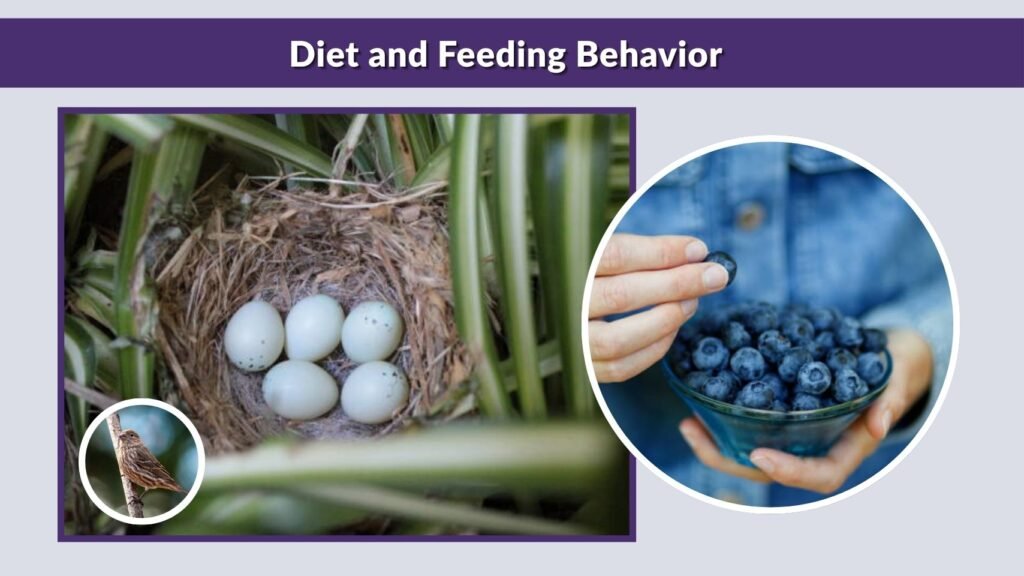
Female house finches feed primarily on seeds and plant material, which provides energy for egg production and chick-rearing. They also consume berries and occasionally small insects. Feeding habits influence their nesting success and can affect how frequently they lay eggs.
Common Foods
- Seeds: sunflower, dandelion, millet
- Berries and small fruits from shrubs or backyard trees
- Occasionally small insects for protein during breeding season
Feeding Habits
- Forage in flocks, often with males or other small birds
- Visit backyard feeders frequently, particularly in urban areas
- Feeding efficiency is vital for supporting egg-laying and chick development
Social Behavior and Communication
Female house finches are social birds, often seen in flocks outside the breeding season. They communicate using soft chirps and subtle calls, maintaining bonds with mates and other flock members. These behaviors also help protect eggs and chicks from predators.
Communication
- Short calls and soft chirps used within flocks
- Alert mates to nearby danger
- Vocalizations are simpler than male songs but still vital for coordination
Flocking and Pairing
- Females often stay close to mates during breeding season
- Flocking helps locate food and avoid predators
- Pair bonds usually last through the breeding season, though not strictly year-round
FAQs
How long do house finch eggs take to hatch?
Typically, 12–14 days under careful incubation by the female. Temperature and nest concealment can slightly influence timing.
What color are house finch eggs?
Pale blue, greenish, or occasionally white, often with light speckles. Egg color may vary slightly between clutches.
How many eggs does a house finch lay?
Between 2–6 eggs per clutch. Females may lay multiple clutches per season if conditions are favorable.
Do male house finches sit on eggs?
Males rarely incubate eggs. They mainly assist by feeding the female and guarding the nest after chicks hatch.
Can house finches move or abandon their eggs?
Yes, eggs may be moved or abandoned due to predation, parasitism (such as cowbird eggs), or environmental stress.