
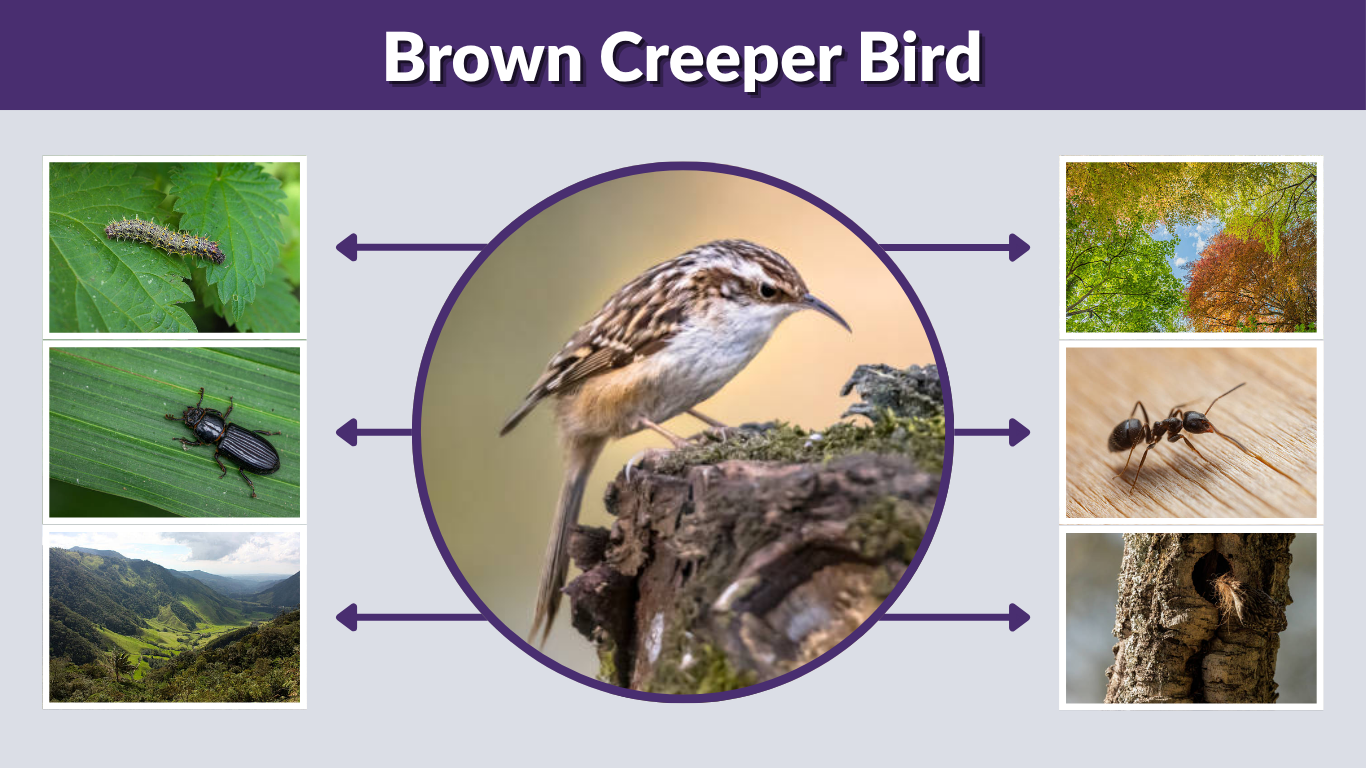
The Brown Creeper is one of North America’s most fascinating woodland birds. Its bark-colored feathers and unusual climbing behavior make it difficult to spot, even for experienced birdwatchers. This tiny songbird spends most of its time creeping upward along tree trunks while searching for insects hidden in bark crevices.
Although the brown creeper is small and quiet, it plays an important role in forest ecosystems by controlling insect populations. Bird enthusiasts often recognize it by its thin curved beak, stiff tail feathers, and high-pitched calls. In this guide, you will learn how to identify brown creepers, where they live, what they eat, and how they behave in the wild.
What Is a Brown Creeper?
The brown creeper is a tiny woodland bird known for its remarkable camouflage and tree-climbing habits. It belongs to a group of birds called treecreepers and is commonly found in forests across Canada and the United States. Because its feathers blend perfectly with tree bark, the bird can be surprisingly difficult to notice.
Brown Creeper Scientific Classification
The brown creeper has a simple but interesting scientific background that helps separate it from wrens and nuthatches.
- Scientific name: Certhia americana
- Family: Certhiidae
- Bird type: Small songbird
- Common group: Treecreepers
- Native region: North America
Why It Is Called a “Creeper”
The bird gets its name from the way it slowly creeps upward around tree trunks. Unlike woodpeckers, which hop vertically, brown creepers spiral around trees while searching for insects hiding beneath bark.
After reaching the top of a tree, the bird usually flies down to the base of another trunk and starts climbing again. This repetitive movement is one of the easiest ways to identify the species in forests.
Brown Creeper Characteristics
Brown creepers have several special features that help them survive in wooded environments.
- Bark-like brown and white feathers
- Thin curved beak for extracting insects
- Stiff pointed tail feathers
- Small lightweight body
- Excellent camouflage abilities
Brown Creeper Identification Guide
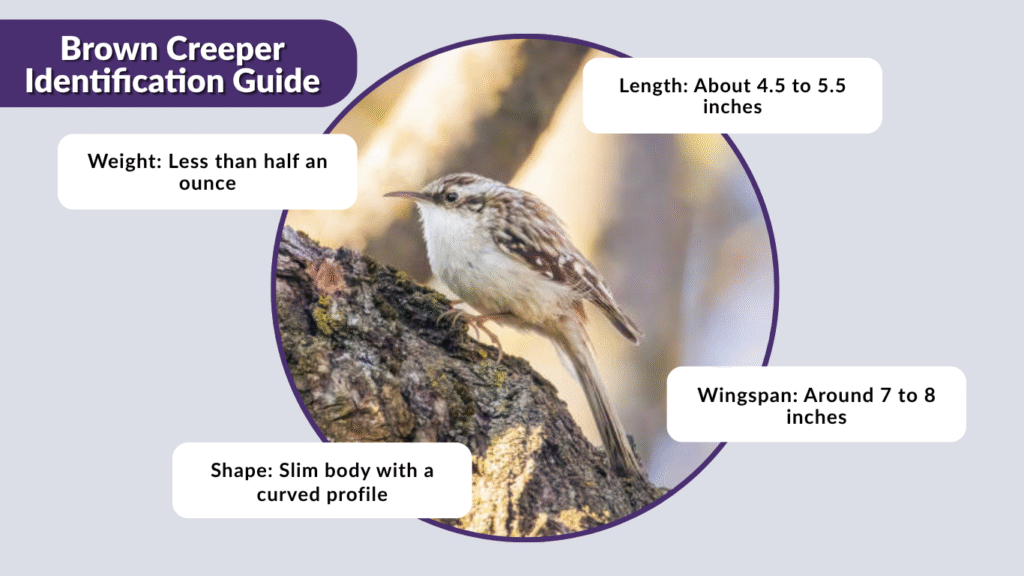
Identifying a brown creeper can be challenging because its plumage blends almost perfectly with tree bark. However, certain physical traits and behaviors make this species easier to recognize once you know what to watch for.
What Does a Brown Creeper Look Like?
The brown creeper is a tiny bird with mottled brown upperparts and a bright white underside. Its back contains streaks of brown, black, and white that resemble bark patterns. This natural camouflage helps protect the bird from predators.
The bird also has a slender, downward-curved beak that is ideal for removing insects from bark crevices. Its long stiff tail acts like a support brace while climbing vertical tree trunks.
Brown Creeper Size and Wingspan
Brown creepers are among the smaller woodland birds in North America. Despite their tiny size, they are active and agile climbers.
- Length: About 4.5 to 5.5 inches
- Wingspan: Around 7 to 8 inches
- Weight: Less than half an ounce
- Shape: Slim body with a curved profile
Because of their small size and bark-colored feathers, they often go unnoticed even in busy forests.
Brown Creeper Male vs Female
Male and female brown creepers look almost identical. Both sexes share the same bark-patterned plumage, curved beak, and climbing behavior. Unlike many songbirds, the male does not display bright breeding colors.
Juvenile brown creepers are similar to adults but may appear slightly duller with softer feather markings. Young birds also have shorter tails until they fully mature.
Brown Creeper Feet and Tail Adaptations
The brown creeper’s feet and tail are specially designed for climbing trees. Its curved claws grip rough bark surfaces easily, allowing it to move vertically without slipping.
The stiff tail feathers press against tree trunks like a support prop. This adaptation helps the bird balance while probing bark for insects. These physical traits make the brown creeper one of the most skilled climbers among North American songbirds.
Brown Creeper Habitat and Range
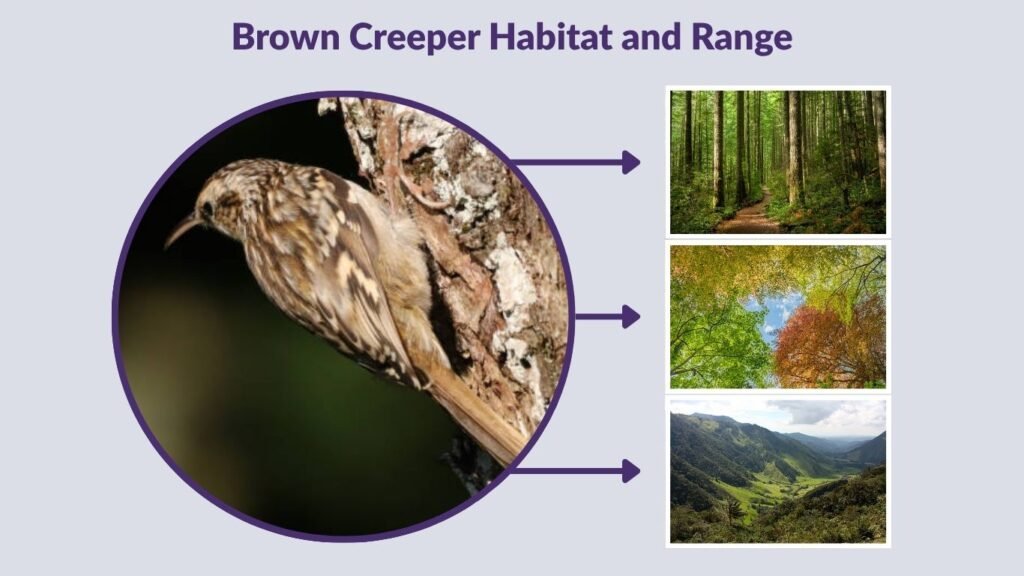
Brown creepers prefer mature forests filled with large trees and rough bark surfaces. They are commonly seen in old woodlands where insects are plentiful and nesting sites are available.
Brown Creeper Habitat
This species thrives in forests with older trees because loose bark provides shelter, nesting areas, and feeding opportunities.
Common habitats include:
- Coniferous forests
- Mixed woodland forests
- Pine and spruce woods
- Mature deciduous forests
- Mountain forest regions
Brown creepers are especially attracted to forests containing dead trees or trees with peeling bark because these areas contain many insects.
Brown Creeper Range Map
The brown creeper is widely distributed across North America. It breeds mainly in Canada and the northern United States, then moves slightly south during colder months.
During winter, the bird may appear in parks, suburban woodlands, and backyard trees throughout much of the United States. Some populations remain in the same region year-round if food sources stay available.
Brown Creeper in Different States
Brown creepers can be found in many states and regions depending on the season.
- Michigan: Common in northern forests
- Maine: Frequently seen in evergreen woods
- Ohio: Mostly winter sightings
- Oregon: Found in mountain forests
- Arizona: Appears in cooler woodland habitats
Birdwatchers often spot them during migration and winter months when leaves no longer hide tree trunks.
Brown Creeper Behavior and Feeding
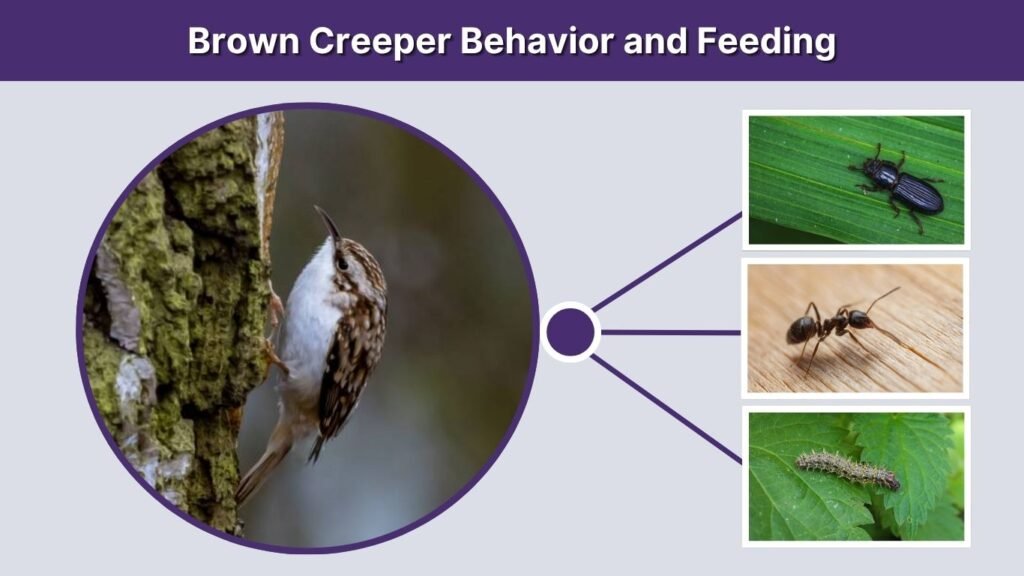
The brown creeper spends most of its day searching tree bark for tiny insects. Its quiet movements and camouflage make it difficult for predators to detect.
Brown Creeper Diet
Brown creepers mainly eat insects and spiders hidden within bark crevices. Their curved beaks are perfect for reaching into narrow spaces that other birds cannot access.
Their diet commonly includes:
- Beetles
- Ants
- Spider eggs
- Insect larvae
- Small caterpillars
- Tiny seeds during winter
This insect-heavy diet helps forests by reducing populations of harmful tree insects.
Unique Tree-Climbing Behavior
One of the most unusual features of the brown creeper is its climbing style. The bird starts near the bottom of a tree and spirals upward in short hops while searching for food.
Unlike nuthatches, which climb both upward and downward, brown creepers almost always move upward only. Once they reach the top, they glide down to another tree trunk and begin again.
Brown Creeper Nesting and Reproduction
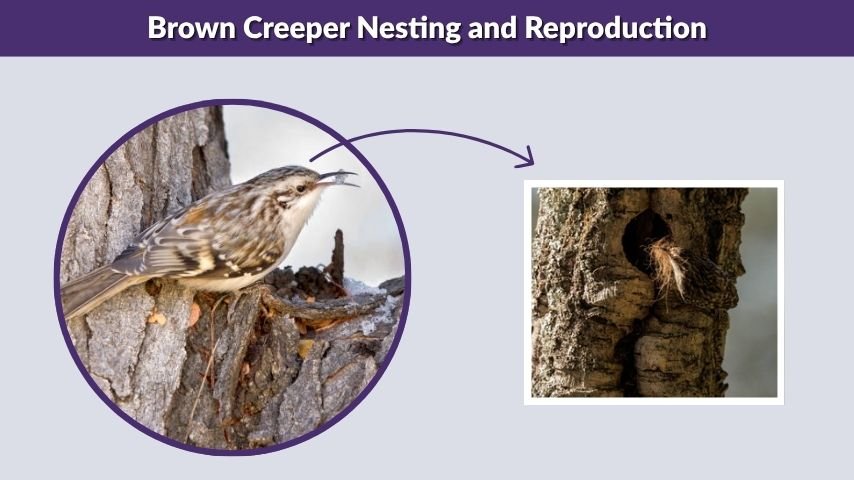
Brown creepers have unique nesting habits that help protect their eggs and chicks from predators. They usually build nests in hidden spaces behind loose bark or inside natural tree crevices. These secretive nesting locations make their nests difficult to find in the wild.
Brown Creeper Nest Locations
Brown creepers prefer nesting in mature forests with old trees and peeling bark. The female builds a soft cup-shaped nest using bark strips, moss, feathers, and plant fibers.
Common nesting sites include:
- Behind loose tree bark
- Dead or decaying trees
- Natural bark cavities
- Cracks in large trunks
- Occasionally in nest boxes
Because their nests blend into bark surfaces, they are extremely well hidden from predators.
Brown Creeper Eggs
Brown creeper eggs are tiny and lightly colored with reddish or brown speckles. Females usually lay several eggs during the breeding season.
- Clutch size: 4 to 8 eggs
- Egg color: White or creamy with spots
- Incubation period: About 2 weeks
- Main incubating parent: Female
After hatching, both parents help feed the chicks until they are ready to leave the nest.
Brown Creeper Fledgling Development
Young brown creepers grow quickly during the nesting period. Chicks hatch nearly featherless and rely entirely on their parents for food and warmth.
As they mature, fledglings begin climbing bark surfaces before mastering short flights. Juvenile birds often stay near adults for a short period while learning feeding behaviors and survival skills.
Brown Creeper Birdhouse and Nest Box Tips
Brown creepers rarely use traditional birdhouses, but specially designed bark-style nest boxes may attract them in wooded areas.
Helpful tips include:
- Place boxes on mature trees
- Use rough natural wood
- Keep entrances narrow
- Install in quiet forested locations
- Maintain nearby insect habitat
Leaving dead trees standing safely in wooded areas can also encourage natural nesting.
Brown Creeper Calls, Songs, and Sounds
Brown creepers are easier to hear than to see. Their soft high-pitched calls often reveal their presence in dense forests before birdwatchers spot them climbing tree trunks.
Brown Creeper Call
The brown creeper call is a thin, high “tsee” sound that may be difficult to hear from far away. These quiet notes are used for communication while foraging among trees.
Because their calls are subtle, many people overlook them during forest walks.
Brown Creeper Song
During breeding season, male brown creepers produce delicate musical songs consisting of thin whistles and rising notes. Their songs are soft compared to louder woodland birds like wrens and thrushes.
The song often echoes lightly through quiet forests during spring mornings.
Brown Creeper Bird Sound Identification
Learning the bird’s sounds can greatly improve identification skills. Birdwatchers often recognize brown creepers by combining their calls with climbing behavior.
Key sound clues include:
- High-pitched thin whistles
- Short repeated notes
- Quiet musical phrases
- Soft forest calls
Listening carefully in mature forests during early morning offers the best chance of hearing them.
Brown Creeper vs Similar Birds
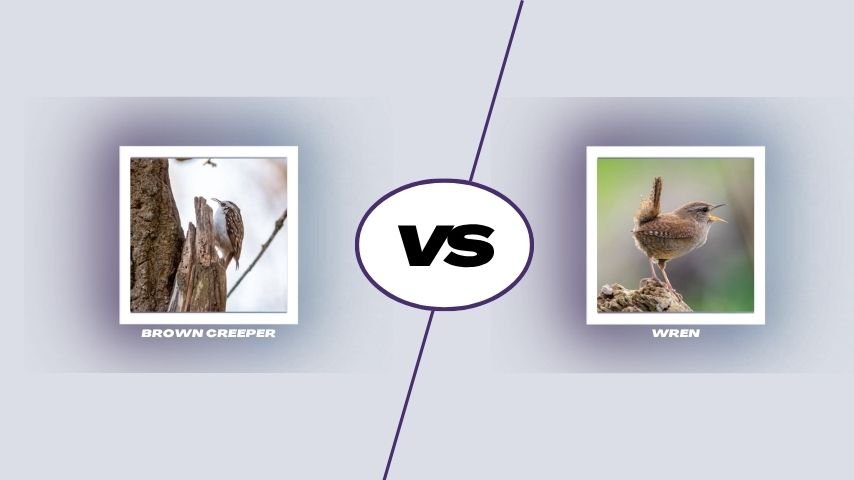
Brown creepers are commonly confused with other small woodland birds. Their climbing behavior and brown coloring can resemble wrens or nuthatches at first glance.
Brown Creeper vs Wren
Wrens and brown creepers are both small birds, but their behavior differs significantly.
| Feature | Brown Creeper | Wren |
| Movement | Climbs tree trunks upward | Hops among branches |
| Tail | Stiff support tail | Upright flexible tail |
| Beak | Thin and curved | Straight or slightly curved |
| Habitat | Tree bark surfaces | Bushes and shrubs |
Wrens are generally louder and more active in open vegetation.
Brown Creeper vs Carolina Wren
Carolina wrens are larger and more colorful than brown creepers. They also sing much louder songs and spend more time near shrubs, houses, and gardens.
Brown creepers remain quieter and usually stay attached to tree trunks while feeding.
Brown Creeper vs Nuthatch
Nuthatches share tree-climbing behavior with brown creepers, but their movement patterns are different.
- Brown creepers climb upward only
- Nuthatches move both upward and downward
- Creepers have curved beaks
- Nuthatches have straighter bills
- Nuthatches are usually bulkier birds
Watching climbing direction is one of the easiest ways to separate the two species.
Birds Similar to Brown Creeper
Several birds may resemble brown creepers from a distance.
- White-breasted nuthatch
- Red-breasted nuthatch
- Winter wren
- Treecreepers
- Small woodland warblers
Careful observation of feeding behavior usually confirms the correct identification.
Fascinating Brown Creeper Facts
Brown creepers may appear plain at first glance, but they possess several remarkable traits that make them unique among North American birds.
Amazing Camouflage Abilities
The brown creeper’s feather pattern closely resembles tree bark. This camouflage helps hide the bird from predators while it searches for insects on trunks.
Even experienced birdwatchers sometimes struggle to spot one until it moves.
Why Brown Creepers Rarely Visit Feeders
Unlike finches and chickadees, brown creepers rarely come to seed feeders because they specialize in eating insects found on bark surfaces.
They may occasionally visit suet feeders during winter, especially in wooded backyards.
Lifespan and Survival Skills
Brown creepers survive harsh winters by constantly searching for hidden insects in bark cracks. Their camouflage and quiet behavior help them avoid predators.
Although small, they are surprisingly hardy birds capable of surviving cold northern climates.
Interesting Brown Creeper Facts for Kids
- Brown creepers climb trees like tiny mice
- Their tails work like climbing supports
- They spiral around trunks while hunting insects
- They blend into bark almost perfectly
- They often move silently through forests
FAQs
What does a brown creeper look like?
A brown creeper is a tiny brown-and-white bird with bark-like feathers, a thin curved beak, and a stiff tail. It climbs upward along tree trunks while searching for insects.
What does a brown creeper eat?
Brown creepers mainly eat insects, larvae, spiders, and eggs hidden beneath bark. During winter, they may also consume tiny seeds or visit suet feeders occasionally.
Where do brown creepers live?
Brown creepers live in mature forests across North America. They prefer wooded areas with old trees, rough bark, and plenty of insects.
How can I attract brown creepers?
You can attract brown creepers by preserving mature trees, offering suet during winter, and maintaining insect-friendly woodland habitats in your yard.
What bird looks similar to a brown creeper?
Brown creepers are often confused with nuthatches and wrens because of their small size and climbing behavior. However, their upward spiraling movement and curved beak help distinguish them.
