
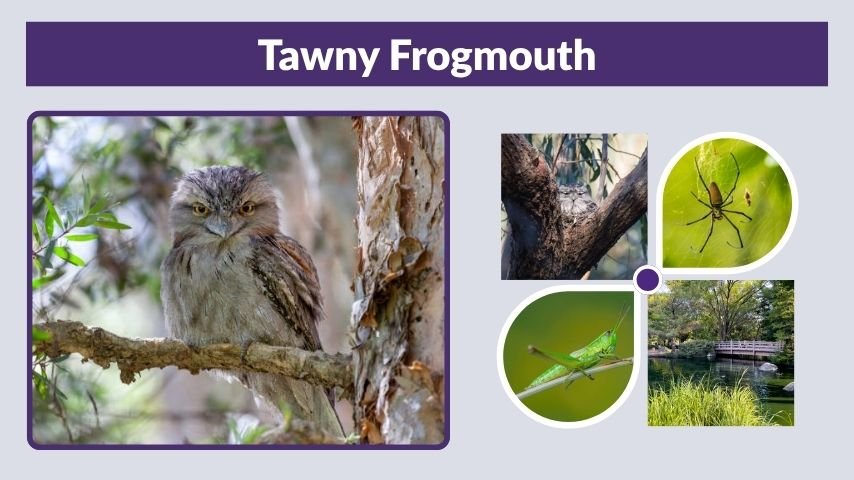
The Tawny Frogmouth is one of Australia’s most unusual and fascinating birds. Known for its bark-like camouflage and enormous frog-shaped mouth, this nocturnal species often surprises birdwatchers with its strange appearance and owl-like behavior. Despite being mistaken for an owl, the tawny frogmouth actually belongs to a different bird family closely related to nightjars.
Tawny frogmouths are masters of disguise and spend much of the day perched motionless on tree branches. Their incredible camouflage, haunting nighttime calls, and large yellow eyes make them one of Australia’s most iconic nighttime birds. This guide explores their appearance, habitat, behavior, diet, and unique survival adaptations.
What Is a Tawny Frogmouth?
The tawny frogmouth is a nocturnal bird native to Australia and Tasmania. It is famous for its wide mouth, camouflage feathers, and ability to resemble a broken tree branch while resting. Although many people call it a “frogmouth owl,” it is not a true owl.
Tawny Frogmouth Scientific Classification
The tawny frogmouth belongs to a group of birds adapted for nighttime hunting and quiet flight.
- Scientific name: Podargus strigoides
- Family: Podargidae
- Bird group: Frogmouths
- Related to: Nightjars
- Native region: Australia and Tasmania
Unlike owls, tawny frogmouths catch prey mainly with their beaks rather than strong talons.
Why It Is Called a Frogmouth
The bird’s unusual name comes from its broad flattened beak and huge mouth opening. When the bird opens its mouth, it resembles the shape of a frog’s mouth.
This wide gape helps the tawny frogmouth catch insects and small prey during nighttime hunts. The mouth is surrounded by sensitive bristles that assist in detecting movement while feeding in darkness.
Tawny Frogmouth Characteristics
Tawny frogmouths possess several unique physical traits that help them survive in forests and woodland habitats.
- Large yellow eyes for night vision
- Broad frog-like mouth
- Thick gray-brown feathers
- Excellent bark camouflage
- Short legs and weak feet
- Rounded wings for silent flight
Their bark-colored feathers make them almost invisible when perched on tree branches during the day.
Tawny Frogmouth Identification Guide
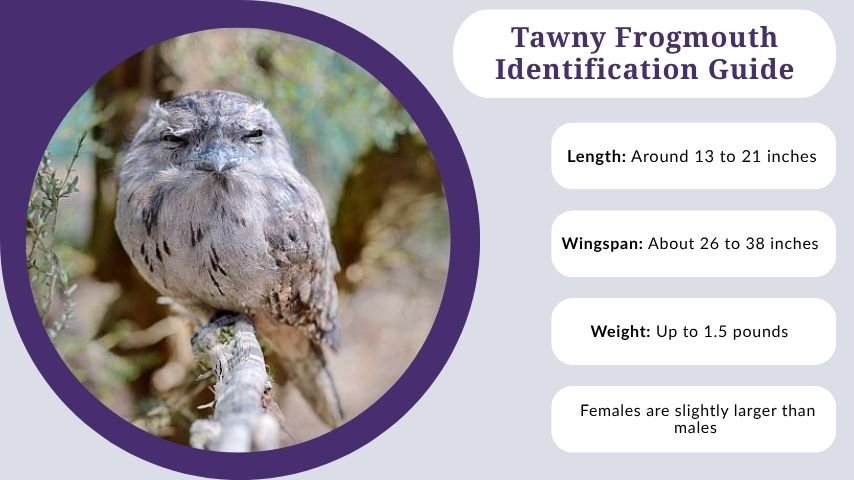
The tawny frogmouth has one of the most recognizable appearances among Australian birds. Its posture, feather patterns, and large mouth make it easy to identify once spotted.
What Does a Tawny Frogmouth Look Like?
Tawny frogmouths have mottled gray, brown, black, and white feathers that closely resemble tree bark. During daylight hours, they stretch their bodies upward and remain perfectly still to imitate broken branches.
Their oversized head, wide mouth, and bright eyes create a somewhat comical but mysterious appearance. When resting, the bird often closes its eyes to narrow slits, further improving its camouflage.
Tawny Frogmouth Size and Wingspan
Tawny frogmouths are medium-sized nocturnal birds with broad wings and sturdy bodies.
- Length: Around 13 to 21 inches
- Wingspan: About 26 to 38 inches
- Weight: Up to 1.5 pounds
- Females are slightly larger than males
Their soft feathers allow nearly silent flight while hunting at night.
Male vs Female Tawny Frogmouth
Male and female tawny frogmouths look similar, but females sometimes display slightly darker or reddish feather coloring. Males are often grayer in appearance.
Both sexes share parenting duties and remain together for long periods, often forming strong lifelong pair bonds.
Tawny Frogmouth Eyes, Feet, and Beak
The tawny frogmouth’s large yellow eyes are specially adapted for seeing in dim light. Their vision helps them detect insects and movement during nighttime hunts.
Unlike owls, their feet are relatively weak because they rely more on their beaks for catching prey. Their broad hooked beak is designed for snapping up insects, frogs, mice, and small reptiles.
Tawny Frogmouth Habitat and Distribution
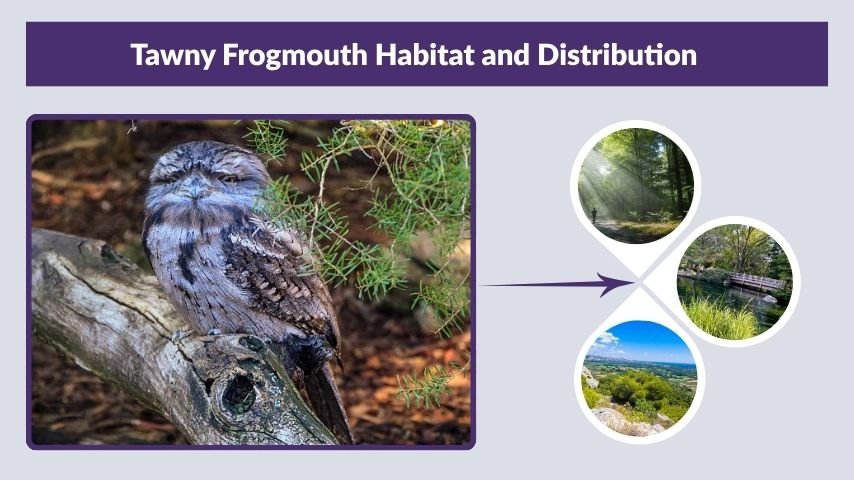
Tawny frogmouths are highly adaptable birds capable of living in many different environments throughout Australia. They thrive in areas with trees, open woodland, and good camouflage opportunities.
Tawny Frogmouth Habitat
These birds prefer habitats that provide safe daytime roosting locations and open nighttime hunting areas.
Common habitats include:
- Forests
- Woodland areas
- Scrublands
- Parks and gardens
- Open countryside
- Urban tree-lined suburbs
They often perch quietly on tree branches where their camouflage keeps them hidden from predators.
Tawny Frogmouth Distribution Map
Tawny frogmouths are widespread throughout mainland Australia and Tasmania. They are absent only from the harshest desert regions with little tree cover.
Different regional populations adapt to local climates and habitats, allowing the species to survive across a broad range of environments.
Australian Tawny Frogmouth
The tawny frogmouth is considered one of Australia’s best-known nocturnal birds. Many Australians hear their deep repetitive nighttime calls without ever seeing the bird itself.
These birds commonly appear in suburban gardens and parks where mature trees provide shelter and hunting opportunities.
Are Tawny Frogmouths Endangered?
Tawny frogmouths are currently not considered endangered, and their population remains relatively stable across much of Australia. However, certain local threats still affect their survival.
Major threats include:
- Habitat destruction
- Vehicle collisions
- Pesticide poisoning
- Predators such as cats and foxes
- Severe storms and bushfires
Conservation efforts focus on preserving woodland habitats and reducing environmental dangers.
Tawny Frogmouth Behavior and Adaptations
Tawny frogmouths are famous for their unusual daytime posture and nighttime hunting behavior. Their survival depends heavily on camouflage and stealth.
Tawny Frogmouth Camouflage
Camouflage is the tawny frogmouth’s greatest defense mechanism. During the day, the bird remains motionless while perched upright on branches.
Its feathers perfectly mimic bark textures and colors, making it extremely difficult for predators to notice. Even experienced birdwatchers can walk past one without realizing it is there.
Are Tawny Frogmouths Nocturnal?
Yes, tawny frogmouths are fully nocturnal birds. They rest quietly during the day and become active after sunset.
At night, they hunt insects and small animals using silent flight and sharp vision. Their nighttime lifestyle helps them avoid daytime predators and competition from other birds.
Tawny Frogmouth Adaptations
Tawny frogmouths possess several remarkable adaptations that make them highly successful nighttime hunters. Their bodies are designed for stealth, camouflage, and survival in woodland environments.
Silent Flight and Night Vision
Like owls, tawny frogmouths have soft feathers that reduce sound during flight. This allows them to approach prey quietly without being detected.
Their large forward-facing eyes provide excellent night vision, helping them locate insects and small animals in low light conditions. They can spot movement easily while perched silently on branches.
Wide Mouth for Catching Prey
The tawny frogmouth’s broad mouth is one of its most recognizable features. Its enormous gape allows the bird to catch insects directly in flight and swallow prey quickly.
Sensitive bristles around the beak help detect movement during nighttime hunts. These whisker-like feathers work almost like touch sensors when visibility is low.
Defensive Body Posture
When threatened, tawny frogmouths often freeze and stretch their bodies upward to resemble tree branches. This behavior is extremely effective against predators because their camouflage blends perfectly with bark.
If danger becomes more serious, the bird may open its mouth widely and hiss to scare predators away.
Tawny Frogmouth Open Mouth Behavior
Many people notice tawny frogmouths sitting with their mouths open. This behavior serves several important purposes.
- Cooling the body during hot weather
- Threat display toward predators
- Defensive warning posture
- Relaxed nighttime behavior
Their open-mouth display can appear intimidating, especially because of their enormous yellow eyes.
Tawny Frogmouth Diet and Feeding Habits
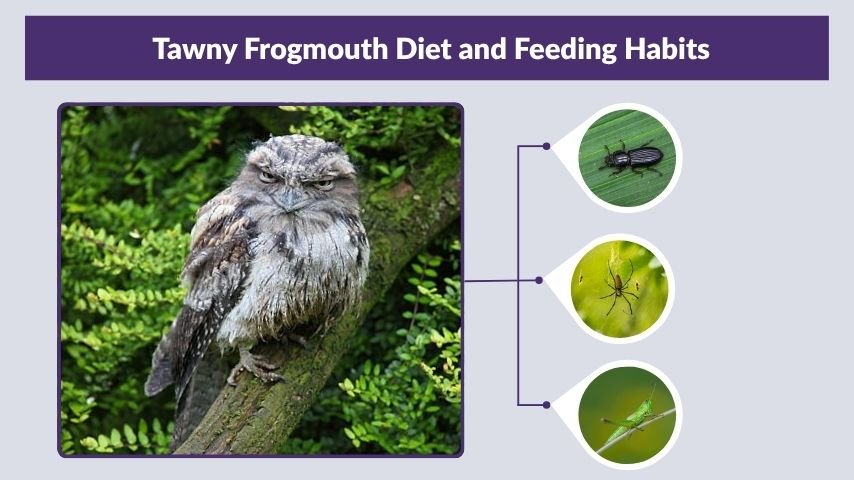
Tawny frogmouths are skilled nighttime hunters that feed on a wide variety of insects and small animals. They usually hunt from low tree branches or fence posts while watching the ground carefully.
Tawny Frogmouth Diet
Their diet changes depending on season and food availability, but insects make up most of their meals.
Common foods include:
- Beetles
- Moths
- Spiders
- Grasshoppers
- Small frogs
- Mice
- Small reptiles
- Worms
Because they consume many insects, tawny frogmouths help control pest populations naturally.
How Tawny Frogmouths Hunt
Tawny frogmouths typically hunt by sitting quietly on branches and waiting for prey to move below them. Once they spot movement, they glide silently downward to capture it.
Unlike hawks or owls, they rely more on quick beak strikes than powerful claws. Their hunting style is calm, patient, and energy efficient.
Tawny Frogmouth Eating Behavior
These birds usually swallow small prey whole. Larger prey items may be beaten against branches before being eaten.
Tawny frogmouths often hunt alone or with their mate during nighttime hours. After feeding, they return to quiet perches before sunrise.
Tawny Frogmouth Sounds and Calls
Tawny frogmouths are famous for their strange nighttime sounds that echo through forests and suburban neighborhoods. Their calls are deep, repetitive, and sometimes haunting.
Tawny Frogmouth Sound
The tawny frogmouth produces a variety of sounds used for communication and defense.
Common sounds include:
- Deep repeated “oom-oom” calls
- Low growls
- Hissing noises
- Soft rattling sounds
Their vocalizations are usually heard after sunset and during breeding season.
Tawny Frogmouth Call at Night
Nighttime calls help tawny frogmouths communicate with mates and defend territory. Pairs often call back and forth to each other from nearby trees.
Their low booming calls can travel long distances through quiet nighttime forests.
Juvenile Tawny Frogmouth Calls
Young tawny frogmouth chicks produce softer begging sounds while waiting for food from their parents. These calls become louder as the chicks grow older and more active.
Juveniles continue practicing vocalizations even after leaving the nest.
Tawny Frogmouth Nesting and Reproduction
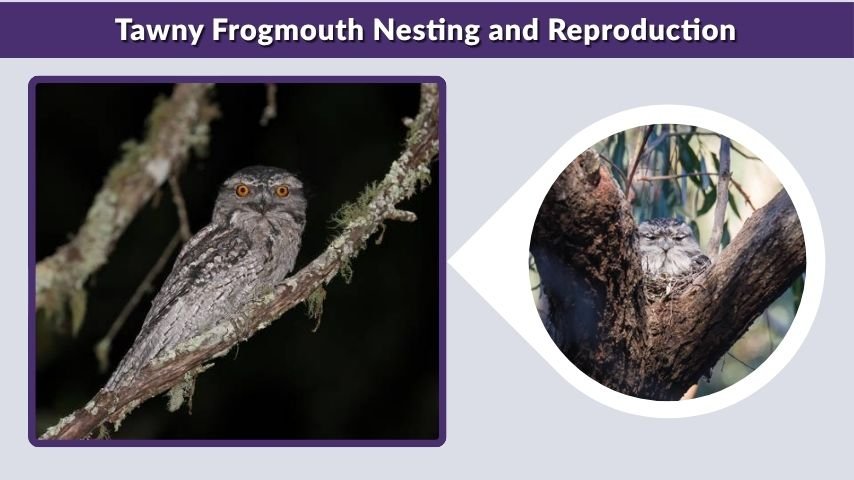
Tawny frogmouths are devoted parents that often remain with the same mate for many years. Both adults cooperate closely while raising chicks.
Tawny Frogmouth Nest
The nest is usually a loose platform made from sticks, leaves, and twigs. Nests are commonly built on horizontal tree branches several feet above the ground.
Although nests may appear fragile, they are strong enough to support growing chicks throughout the nesting season.
Tawny Frogmouth Eggs
Female tawny frogmouths usually lay a small number of eggs each breeding season.
- Egg color: White
- Clutch size: 1 to 3 eggs
- Incubation period: Around 30 days
- Both parents help incubate
The male often guards the nest during daylight hours while the female rests nearby.
Tawny Frogmouth Chick Development
Baby tawny frogmouths hatch covered in soft white down feathers. Chicks depend completely on their parents for food and protection during early life.
As they grow, their camouflage feathers slowly develop. Young birds begin climbing branches and practicing short flights before leaving the nest fully.
Do Tawny Frogmouths Mate for Life?
Tawny frogmouths are well known for forming long-term pair bonds. Many pairs stay together for life and return to the same nesting areas each year.
Both parents share responsibilities such as incubation, feeding chicks, and protecting the nest from predators.
Tawny Frogmouth vs Owl
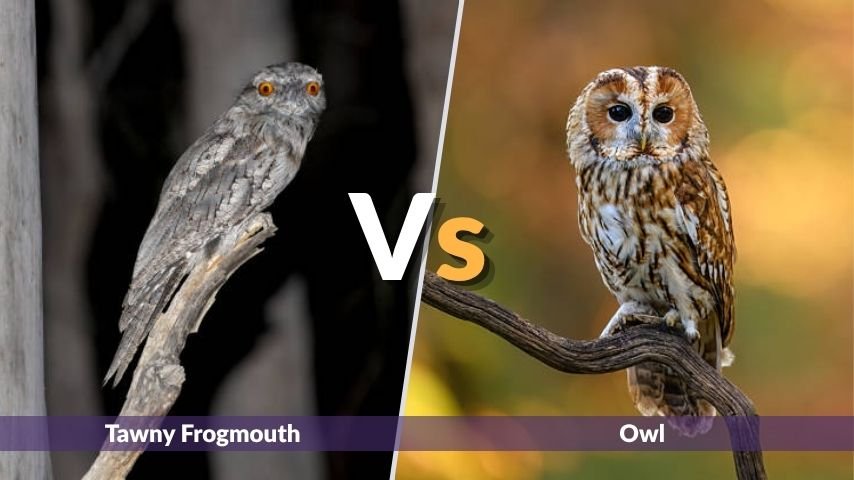
Many people mistakenly believe the tawny frogmouth is an owl because of its nighttime behavior and large eyes. However, important differences separate the two groups.
Is a Tawny Frogmouth an Owl?
No, the tawny frogmouth is not a true owl. It belongs to the frogmouth family, while owls belong to entirely different bird groups.
Although both are nocturnal hunters, tawny frogmouths are more closely related to nightjars.
Tawny Frogmouth vs Owl Appearance
Several physical differences help distinguish tawny frogmouths from owls.
| Feature | Tawny Frogmouth | Owl |
| Mouth | Very wide frog-like gape | Smaller hooked beak |
| Feet | Weak grasping feet | Strong hunting talons |
| Camouflage | Bark-like branch mimicry | Feather camouflage |
| Hunting style | Uses beak mainly | Uses talons mainly |
Owls are generally more aggressive predators with stronger claws.
Tawny Frogmouth vs Potoo
Tawny frogmouths and potoos look surprisingly similar because both species use camouflage and perch upright on branches.
However, potoos live mainly in Central and South America, while tawny frogmouths are native to Australia.
Owlet Nightjar vs Tawny Frogmouth
Owlet nightjars are much smaller than tawny frogmouths and have different hunting behaviors. Nightjars are more active flyers, while frogmouths rely heavily on ambush hunting from branches.
Their body shapes and calls are also noticeably different.
FAQs
Is a tawny frogmouth an owl?
No, tawny frogmouths are not owls. They belong to the frogmouth family and are more closely related to nightjars.
What does a tawny frogmouth eat?
Tawny frogmouths mainly eat insects, spiders, frogs, mice, and small reptiles hunted during nighttime hours.
Are tawny frogmouths dangerous?
Tawny frogmouths are not dangerous to humans. They are shy birds that prefer camouflage and avoidance rather than aggression.
Why do tawny frogmouths open their mouths?
They open their mouths to cool themselves, display warnings to predators, or during relaxed nighttime behavior.
Where do tawny frogmouths live?
Tawny frogmouths live throughout Australia and Tasmania in forests, woodlands, parks, and suburban areas with trees.
