
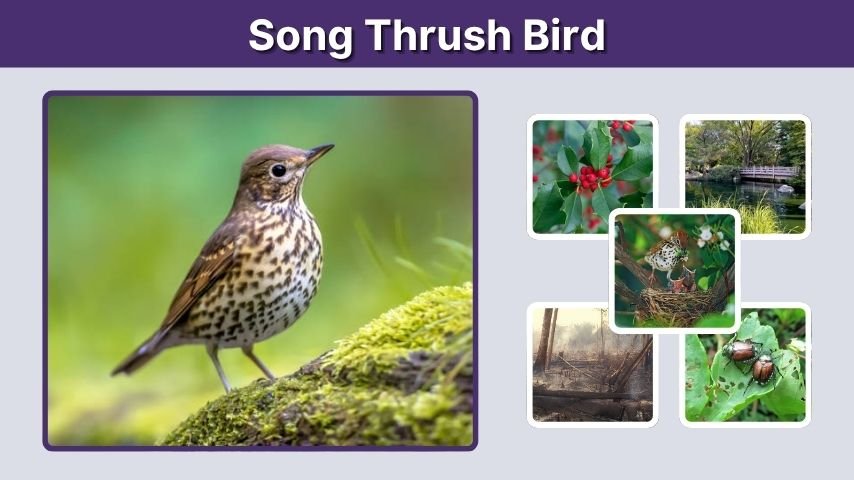
Song thrushes are among the most recognizable singing birds in Europe and many other regions. Known for their repeated musical phrases and spotted chests, these birds attract birdwatchers, gardeners, and nature lovers alike. The species is admired for its loud, flute-like voice and active feeding habits in woodlands and gardens.
The song thrush, scientifically called Turdus philomelos, belongs to the thrush family and is closely related to mistle thrushes and blackbirds. Its beautiful song, nesting habits, and unique feeding behavior make it one of the most interesting backyard birds to observe throughout the year.
What Is a Song Thrush?
The song thrush is a medium-sized bird famous for its rich and repeated melodies. Native to Europe and parts of Asia, this bird has also been introduced to countries such as New Zealand. It thrives in forests, hedgerows, parks, and gardens where food and shelter are easy to find. The species is highly adaptable and often seen hopping across lawns searching for insects and snails.
Scientific Classification
The song thrush belongs to the thrush family known as Turdidae. Its scientific name is Turdus philomelos. The bird is closely related to blackbirds, fieldfares, and mistle thrushes. Bird experts recognize it for its strong vocal abilities and spotted underparts.
Why It Is Called the Song Thrush
This bird earned its name because of its powerful and musical singing style. Male song thrushes repeat short musical phrases several times before changing notes. This repeating pattern makes the bird easy to identify even when hidden among trees or bushes.
European Song Thrush Overview
The European song thrush is one of the most widespread thrush species in Europe. It appears in woodlands, suburban gardens, orchards, and farmland. In some regions, the bird migrates south during winter, while others remain year-round residents.
Song Thrush Identification and Appearance
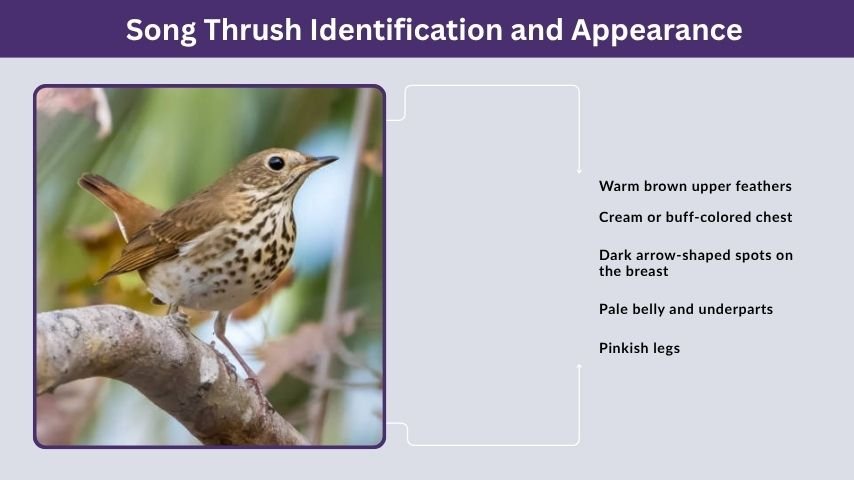
The song thrush has a soft brown appearance with a cream-colored chest covered in dark spots. Although it may look similar to the mistle thrush, closer observation reveals several important differences. Its compact body, warm brown feathers, and musical behavior help birdwatchers identify it quickly.
Song Thrush Color and Markings
The bird has several unique identification features:
- Warm brown upper feathers
- Cream or buff-colored chest
- Dark arrow-shaped spots on the breast
- Pale belly and underparts
- Pinkish legs
- Thin yellowish beak
Male vs Female Song Thrush
Male and female song thrushes look very similar, making them difficult to separate visually. Males are often slightly larger and more vocal during breeding season. Females may appear slightly duller in color, especially during nesting periods.
Juvenile Song Thrush Features
Young song thrushes have golden or buff spots across their backs and wings. Juveniles usually appear fluffier and less sharply marked than adults. Their spotted appearance helps camouflage them among leaves and forest floors.
Size and Wingspan
Adult song thrushes usually measure around 20 to 23 centimeters in length. Their wingspan ranges from 33 to 36 centimeters. They are smaller than mistle thrushes but larger than many sparrow species.
Song Thrush Bird Song and Calls
The song thrush is famous for one of the most beautiful bird songs in Europe. Bird enthusiasts often describe its voice as clear, melodic, and repetitive. Males sing from rooftops, trees, or tall shrubs to attract mates and defend territory during spring and summer.
What Does a Song Thrush Sound Like?
The song includes repeated whistles, chirps, and flute-like notes. A single phrase may repeat two or three times before changing into another melody. This pattern separates the song thrush from many other birds that sing continuously without repetition.
Song Thrush Call vs Alarm Call
Song thrushes use different sounds depending on the situation:
- Musical repeated phrases for mating
- Sharp “tuck-tuck” calls for warning
- Short flight calls during movement
- Soft contact sounds between mates
Why Song Thrushes Repeat Notes
Scientists believe repeated notes help the bird communicate more clearly across forests and gardens. Repetition also makes the male’s song stronger and more attractive during breeding season.
Best Time to Hear a Song Thrush
The best time to hear a song thrush is early morning during spring. Males often sing at dawn from exposed branches or rooftops. Evening singing is also common during calm weather.
Song Thrush Habitat and Distribution
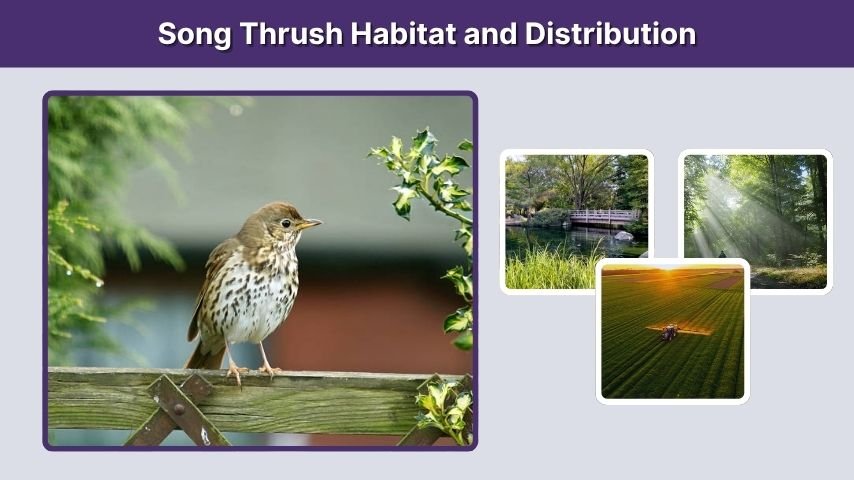
Song thrushes live in a wide range of habitats across Europe and Asia. They prefer places with dense vegetation, open feeding grounds, and safe nesting sites. Urban gardens with shrubs and trees can support healthy song thrush populations.
Native Range in Europe
The species is widespread across the United Kingdom, Ireland, France, Germany, and Scandinavia. Some populations migrate south during colder months while others stay throughout winter.
Song Thrush in New Zealand
Song thrushes were introduced to New Zealand during the nineteenth century. The birds adapted quickly and are now common in gardens, forests, and farmland across the country.
Woodland and Garden Habitats
Common habitats include:
- Deciduous forests
- Woodland edges
- Parks and gardens
- Hedgerows
- Orchards
- Farmland with shrubs
Seasonal Migration Patterns
Northern populations often migrate toward warmer southern regions during winter. Birds living in milder climates may remain in the same territory throughout the year.
Song Thrush Nesting Habits
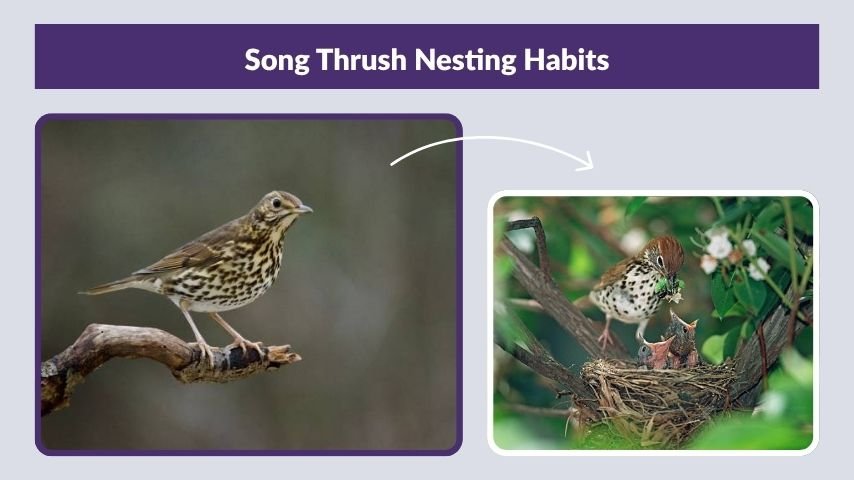
Song thrushes are careful nest builders that choose sheltered places with thick vegetation. Their breeding season usually begins in spring when males sing frequently to attract mates. The female mainly builds the nest and cares for the eggs while the male protects the surrounding territory from rivals and predators.
Where Song Thrushes Build Nests
Song thrushes prefer hidden nesting locations such as:
- Dense shrubs
- Garden hedges
- Small trees
- Ivy-covered walls
- Woodland bushes
Song Thrush Nest Materials
The nest is made from grass, moss, twigs, and leaves. One unique feature is the smooth inner lining made from mud and decayed wood pulp. This hard interior helps protect the eggs and chicks from damage.
Song Thrush Eggs
Song thrush eggs are easy to recognize because of their bright appearance.
- Glossy blue color
- Small black spots
- Usually 3 to 5 eggs per clutch
- Incubation lasts about two weeks
How Long Do Song Thrush Eggs Take to Hatch?
The eggs usually hatch after 12 to 14 days of incubation. Once the chicks hatch, both parents help feed them insects and worms. Young birds normally leave the nest within another two weeks.
Song Thrush Diet and Feeding Behavior
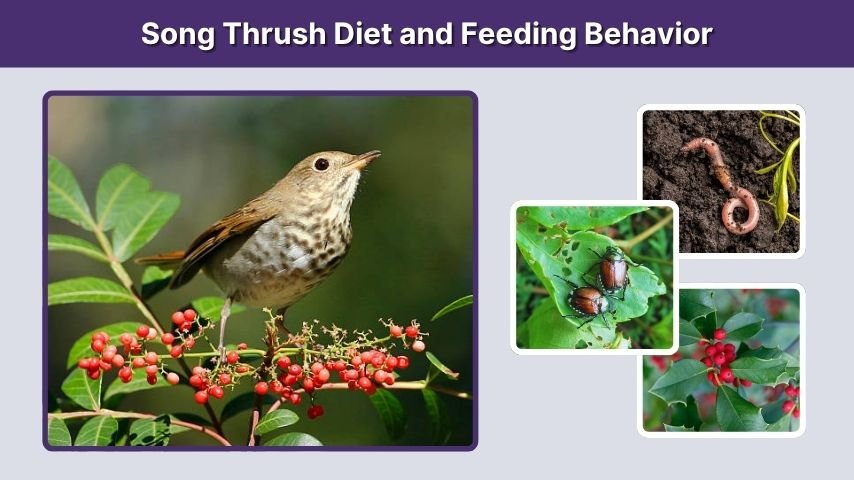
Song thrushes are omnivorous birds that feed on both animal and plant matter. Their diet changes with the seasons and food availability. These birds are especially useful in gardens because they consume insects, snails, and other small pests.
What Does a Song Thrush Eat?
Common foods include:
- Earthworms
- Snails
- Beetles
- Caterpillars
- Berries
- Soft fruits
Favorite Garden Foods
In gardens, song thrushes search lawns and flower beds for worms and insects. During colder months, they often eat fallen fruit and berries when insects become harder to find.
Hunting and Feeding Techniques
Song thrushes usually hop across the ground while searching for prey. They stop suddenly, tilt their heads, and listen carefully for movement beneath the soil or leaves before striking quickly.
Why Song Thrushes Break Snail Shells
One of the bird’s most famous behaviors is smashing snail shells against stones. These “anvil stones” allow the bird to crack hard shells and reach the soft body inside. Broken snail shells are often signs that a song thrush lives nearby.
Behavior and Daily Life
Song thrushes are active and territorial birds. Males become especially aggressive during breeding season when defending nesting areas. Outside breeding months, the birds may gather loosely with other thrush species while feeding.
Singing Behavior
Male song thrushes sing loudly from high branches, rooftops, and fences. Their songs are strongest during spring mornings and evenings. Singing helps attract mates and warn other males away from the territory.
Territorial Nature
Song thrushes defend feeding and nesting areas fiercely. Males may chase intruders, spread their wings, and call loudly to protect their space from rival birds.
Mating and Courtship
Courtship begins with singing displays and short chasing flights. Males often bring food to females during nesting season. Strong singing ability is believed to play an important role in mate selection.
Seasonal Activity
During spring and summer, song thrushes remain highly active and vocal. In autumn and winter, they spend more time feeding quietly and conserving energy during colder weather.
Song Thrush vs Mistle Thrush
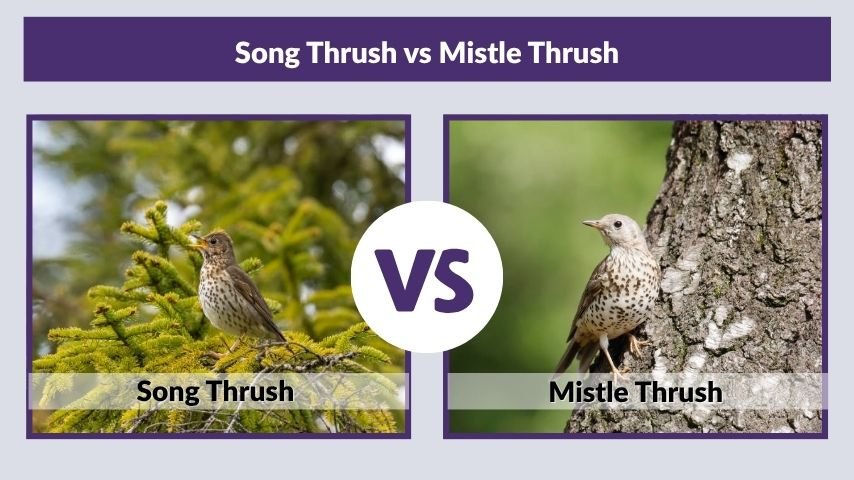
Many people confuse the song thrush with the mistle thrush because both species have spotted chests and brown feathers. However, several clear differences can help identify them correctly in the field.
Size Differences
The mistle thrush is noticeably larger with longer wings and a taller posture. Song thrushes appear more compact and rounded.
Song Differences
Song thrushes produce repeated musical phrases, while mistle thrushes sing louder, simpler, and less repetitive songs. The song thrush generally sounds more melodic.
Spot Pattern Comparison
Song thrushes have dark arrow-shaped spots on the chest. Mistle thrushes display larger and rounder spots spread farther apart across the body.
Habitat Preferences
Song thrushes prefer gardens, hedges, and woodland edges. Mistle thrushes are more commonly found in open woodlands, fields, and larger parks.
Conservation Status and Threats
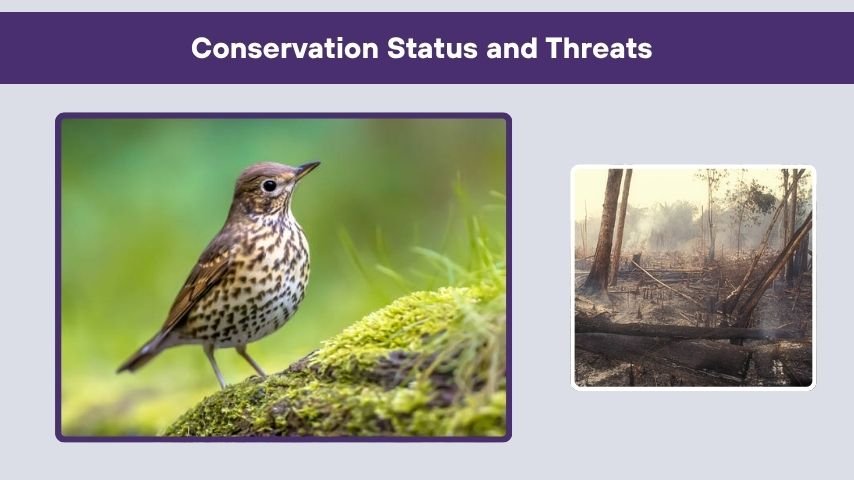
Song thrush populations have declined in some regions due to habitat loss and environmental changes. Conservation groups continue monitoring the species to protect breeding habitats and food sources.
Main Threats
Several factors affect song thrush populations:
- Habitat destruction
- Pesticide use
- Reduced insect populations
- Climate change
- Predators such as cats
Conservation Efforts
Wildlife organizations encourage the planting of hedges, native shrubs, and pesticide-free gardens to support song thrush survival. Protected woodland habitats also help maintain healthy populations.
How Gardeners Can Help
People can help song thrushes by leaving natural garden areas, providing shallow water sources, and growing berry-producing plants. Avoiding harmful chemicals also increases insect availability for feeding birds.
FAQs
What is special about the song thrush song?
The song thrush is famous for repeating short musical phrases several times. This repeated singing style makes the bird easy to identify and gives its song a rich, flute-like quality.
How can you identify a song thrush?
A song thrush has brown upperparts, a cream-colored chest, and dark arrow-shaped spots. It is smaller than a mistle thrush and often sings repeated musical phrases from high perches.
What do song thrushes eat in gardens?
Song thrushes commonly eat earthworms, snails, beetles, berries, and soft fruits. They often search lawns and flower beds for insects and other small invertebrates.
Are song thrushes migratory birds?
Some northern populations migrate south during winter, while birds living in milder regions may stay in the same area throughout the year.
What is the difference between a song thrush and a mistle thrush?
Song thrushes are smaller with repeated musical songs and arrow-shaped spots. Mistle thrushes are larger, louder, and have rounder chest spots with a more open habitat preference.
