
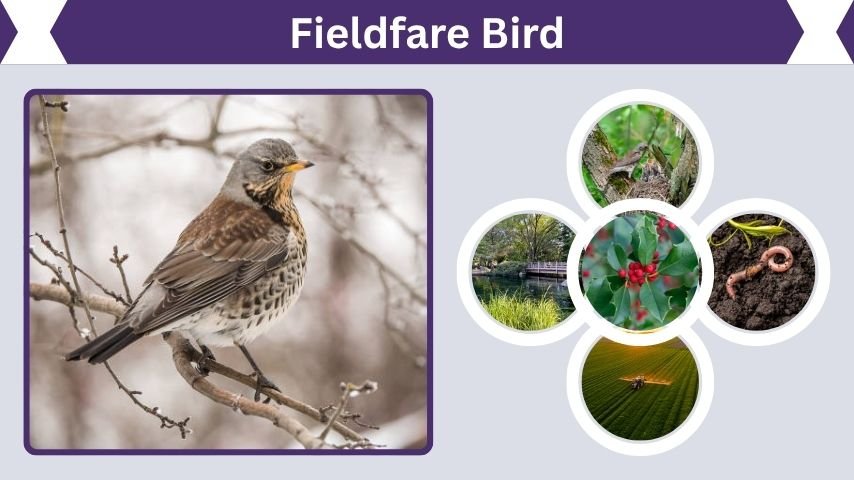
The fieldfare is a colorful migratory thrush commonly seen across Europe and the United Kingdom during colder months. Known for traveling in noisy flocks, this bird is easy to recognize because of its gray head, chestnut back, and spotted breast. Fieldfares often feed together in open fields, hedgerows, and orchards where berries and insects are abundant.
Scientifically known as Turdus pilaris, the fieldfare belongs to the thrush family. Birdwatchers admire this species for its winter movements, social behavior, and striking appearance in flight. Although common in many areas, the bird remains fascinating because of its seasonal migrations and energetic flocking habits.
What Is a Fieldfare Bird?
The fieldfare is a medium-sized migratory thrush that breeds mainly in northern Europe and Asia. During winter, large numbers move south into the United Kingdom and other parts of Europe. These birds often gather in flocks, especially in farmland and berry-rich habitats. Their noisy calls and active feeding habits make them easy to notice during migration seasons.
Scientific Classification
The fieldfare belongs to the thrush family Turdidae. Its scientific name is Turdus pilaris. It is closely related to redwings, song thrushes, and mistle thrushes, all of which share similar feeding and migration behaviors.
Meaning of the Name “Fieldfare”
The word “fieldfare” comes from old European terms connected to traveling through fields and open countryside. The name suits the bird well because it frequently feeds in grasslands, farmland, and open woodland edges.
Why Fieldfares Are Called Winter Visitors
In many countries, especially the UK, fieldfares are mainly seen during autumn and winter. Large flocks arrive from northern breeding areas when colder weather reduces food supplies farther north.
Fieldfare Identification and Appearance
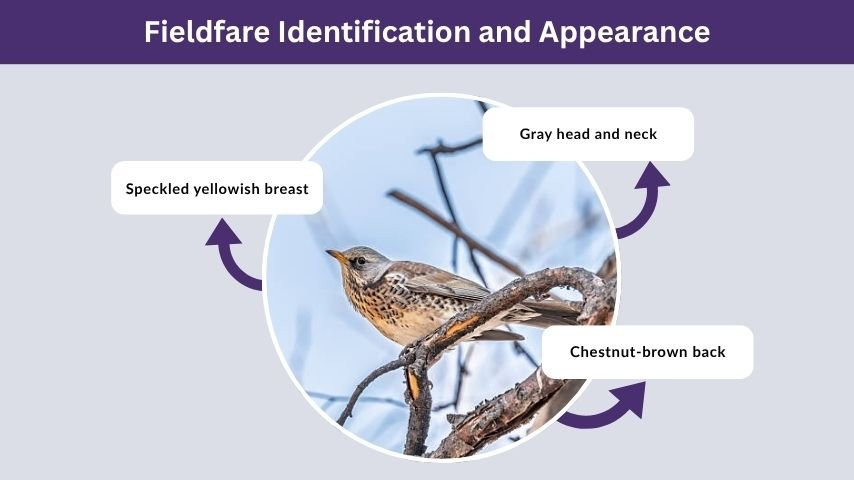
Fieldfares have one of the most colorful appearances among European thrushes. Their gray heads, spotted breasts, and warm brown backs help separate them from other birds in the same family. They are also slightly larger and more upright than many common thrush species.
What Does a Fieldfare Look Like?
Important identification features include:
- Gray head and neck
- Chestnut-brown back
- Speckled yellowish breast
- Dark wings and tail
- Yellow beak with dark tip
Fieldfare Size and Wingspan
Adult fieldfares usually measure between 24 and 27 centimeters long. Their wingspan ranges from 39 to 42 centimeters. They are larger than redwings but similar in size to mistle thrushes.
Male vs Female Fieldfare
Male and female fieldfares look very similar. Males may appear slightly brighter during breeding season, while females can have duller tones around the chest and head.
Juvenile Fieldfare Appearance
Young fieldfares show softer feather colors and less distinct markings. Juveniles often appear browner overall before developing the stronger gray and chestnut shades seen in adults.
Fieldfare Bird Song and Calls
Unlike the musical song thrush, the fieldfare is better known for its harsh and chattering calls. These sounds are commonly heard when birds travel together in flocks or react to danger.
What Does a Fieldfare Sound Like?
Fieldfares produce loud chattering and clicking calls. Their most common sounds are rough “chak-chak” notes often repeated during flight or feeding activities.
Fieldfare Alarm Calls
When threatened, fieldfares become noisy and aggressive. Alarm calls are sharp and fast, warning nearby flock members about predators or disturbances.
Fieldfare Flight Calls
During migration, flocks communicate constantly while flying. Their repeated contact calls help keep the group together across long distances.
Differences Between Song and Contact Calls
Fieldfare songs are softer and less musical than their everyday calls. Most people notice their harsh communication sounds rather than true breeding songs.
Fieldfare Habitat and Distribution
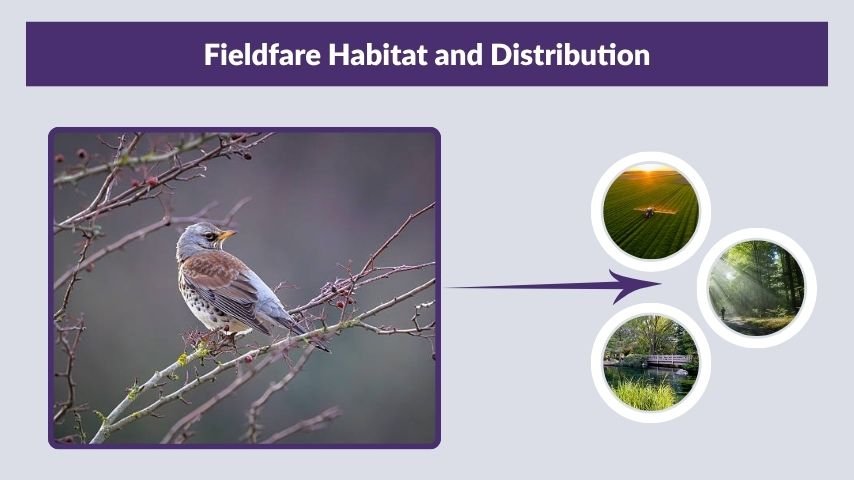
Fieldfares live across large areas of Europe and Asia. They prefer habitats with open feeding grounds and nearby trees for shelter and nesting. During winter, they commonly appear in orchards, farmland, parks, and hedgerows filled with berries.
Fieldfare Range Across Europe and Asia
The species breeds in northern Europe, Scandinavia, and parts of Russia. Winter migration brings millions of birds farther south into central and western Europe.
Fieldfare Bird UK Distribution
Fieldfares are common winter visitors in the United Kingdom. Large flocks often arrive during late autumn and remain until early spring before returning north.
Woodland and Farmland Habitats
Fieldfares frequently use habitats such as:
- Open farmland
- Woodland edges
- Berry-rich hedgerows
- Parks and orchards
- Grass fields
Winter Roosting Areas
At night, fieldfares gather in sheltered woodlands and dense trees for warmth and safety. Large communal roosts help protect the birds from predators and severe winter weather.
Fieldfare Migration Patterns
Fieldfares are highly migratory birds that travel in large seasonal flocks. Migration usually begins during autumn when colder northern temperatures reduce insect and berry supplies. Their arrival is often considered a sign that winter is approaching.
Why Fieldfares Migrate
The main reason for migration is food availability. Northern winters make feeding difficult, so fieldfares move south where berries, insects, and softer ground remain accessible.
Fieldfare Migration Map Overview
Migration routes stretch from Scandinavia and Russia into western and southern Europe. Some birds travel thousands of kilometers before reaching winter feeding grounds.
Best Time to See Migrating Fieldfares
Fieldfares are easiest to observe during late autumn and winter. Large flocks often appear after cold northern winds push migrating birds southward. Early mornings are usually the best time to spot them feeding in open fields or perched in berry-covered trees.
Flock Behavior During Migration
Fieldfares rarely travel alone during migration. Their flocking behavior provides protection from predators and helps birds locate feeding areas more efficiently. Large groups may suddenly rise into the air together when disturbed.
Fieldfare Diet and Feeding Habits
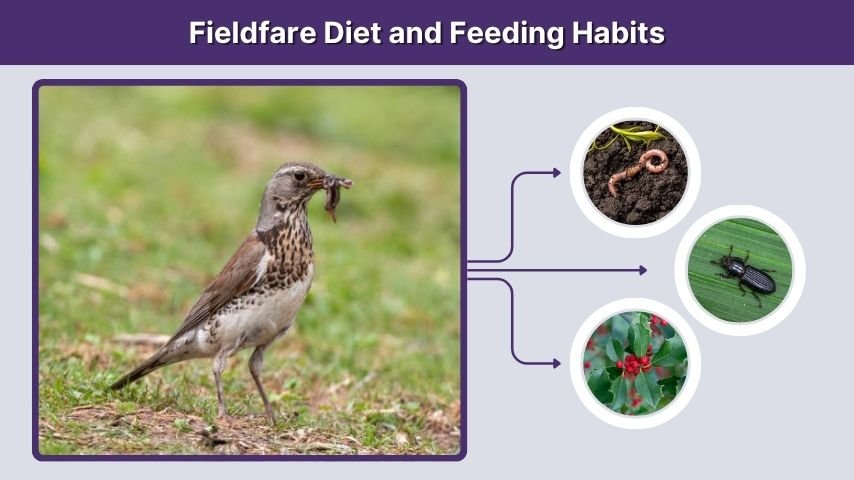
Fieldfares are adaptable feeders that change their diet depending on the season. During warmer months they eat more insects and worms, while winter diets mainly consist of berries and fallen fruit. Their feeding activity plays an important role in seed dispersal and ecosystem balance.
What Do Fieldfares Eat?
Common foods include:
- Earthworms
- Beetles
- Snails
- Berries
- Fallen apples
- Small insects
Favorite Winter Foods
During winter, fieldfares rely heavily on berry-producing trees and shrubs. Rowan berries, hawthorn berries, and crab apples are especially important food sources when insects are scarce.
Feeding in Flocks
Fieldfares commonly feed in groups across fields and orchards. Large flocks spread out while searching for food, but birds remain alert and quickly react when danger approaches nearby.
Fieldfare Feeding Behavior
The birds usually hop across the ground searching for worms and insects. When feeding on berries, they often perch high in trees and swallow fruit whole before moving to another branch.
Fieldfare Nesting and Breeding
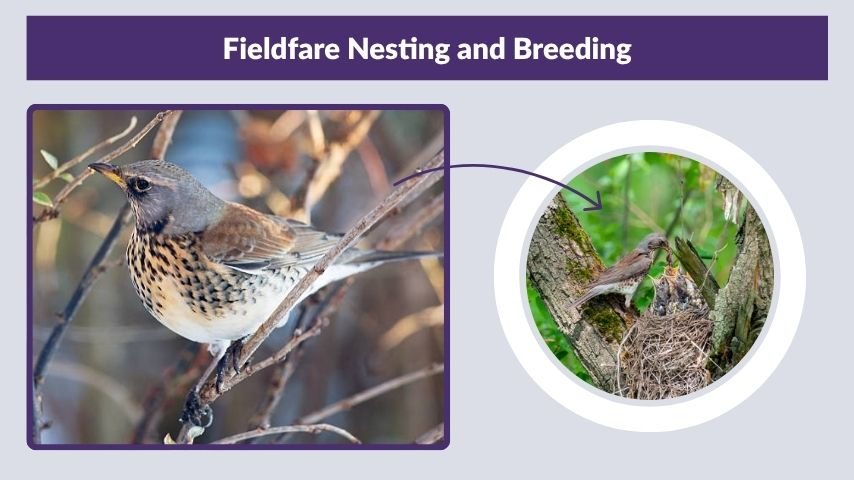
Fieldfares breed mainly in northern forests and woodland edges. Unlike some thrush species, they often nest in loose colonies where several pairs breed close together. This social nesting behavior improves protection against predators.
Where Fieldfares Build Nests
Common nesting locations include:
- Tall trees
- Forest edges
- Shrubs
- Woodland clearings
- Riverbank vegetation
Fieldfare Eggs
Fieldfare eggs are smooth and lightly glossy with pale blue coloring and reddish-brown spots. Females usually lay between 4 and 6 eggs during the breeding season.
Fieldfare Chick Development
Young chicks hatch after about two weeks of incubation. Both parents feed the chicks insects, worms, and soft foods until they are ready to leave the nest roughly two weeks later.
Parenting and Protection Behavior
Fieldfares are known for aggressive nest defense. Adults often dive at predators and may even spray droppings toward threats to protect eggs and chicks from danger.
Fieldfare vs Redwing
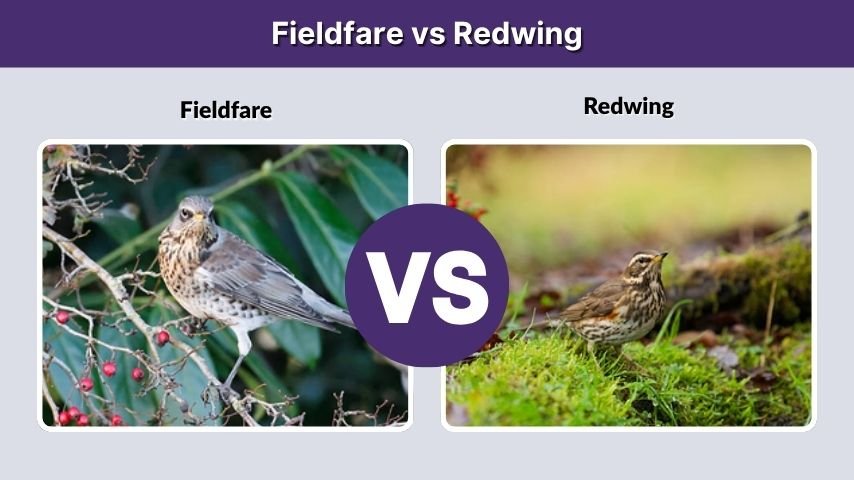
Fieldfares and redwings are commonly seen together during winter migrations. Although both belong to the thrush family, they have several noticeable differences in appearance and behavior.
Size Differences
Fieldfares are larger and bulkier than redwings. Redwings appear slimmer with shorter tails and more delicate body shapes.
Plumage and Color Comparison
Fieldfares have gray heads and chestnut backs, while redwings show reddish flanks and a creamy stripe above the eye. These markings make redwings easier to identify at close range.
Song and Call Differences
Fieldfare calls are harsh and chattering, while redwing calls sound thinner and higher-pitched. Neither species is as musical as the song thrush.
Habitat Preferences
Fieldfares often prefer open farmland and orchards, whereas redwings spend more time in woodland edges and dense hedgerows.
Fieldfare vs Song Thrush and Mistle Thrush
Many birdwatchers confuse fieldfares with other thrush species, especially during winter. However, careful observation reveals clear differences in plumage, size, and behavior.
Fieldfare vs Song Thrush
Song thrushes are smaller with warm brown feathers and dark arrow-shaped chest spots. Fieldfares are larger with gray heads and more colorful plumage.
Fieldfare vs Mistle Thrush
Mistle thrushes are similar in size but appear grayer overall without the fieldfare’s chestnut back. Mistle thrushes also have larger chest spots and a more upright posture.
Birds Similar to Fieldfare
Several birds resemble fieldfares during migration:
- Redwing
- Song thrush
- Mistle thrush
- Blackbird
- American robin
Quick Identification Tips
The easiest way to identify a fieldfare is by its combination of gray head, chestnut back, and noisy flock behavior. Their loud chattering calls also help separate them from quieter thrush species.
Conservation Status and Threats
Fieldfares remain widespread across much of their natural range, but habitat changes can affect local populations. Severe winters, reduced berry supplies, and habitat destruction may impact migration success and breeding numbers.
Current Population Trends
Most fieldfare populations remain stable, especially in northern Europe. Large migratory flocks still appear regularly across wintering regions each year.
Threats to Fieldfares
Several environmental problems affect fieldfares:
- Habitat loss
- Climate change
- Reduced winter berries
- Pesticide exposure
- Natural predators
Conservation Efforts
Protecting woodlands, hedgerows, and berry-producing plants helps support healthy fieldfare populations. Wildlife organizations also monitor migration trends to study population changes.
FAQs
What is a fieldfare bird?
A fieldfare is a migratory thrush with a gray head, chestnut back, and spotted breast. It commonly appears in Europe and the UK during winter.
What do fieldfares eat in winter?
Fieldfares mainly eat berries, fallen fruit, and other soft plant foods during winter when insects become less available.
How can you identify a fieldfare?
You can identify a fieldfare by its gray head, yellow beak, chestnut back, and noisy flocking behavior during migration seasons.
Are fieldfares migratory birds?
Yes, fieldfares are strongly migratory. Many populations travel south from northern Europe and Russia during autumn and return north in spring.
What is the difference between a fieldfare and a redwing?
Fieldfares are larger with gray heads and chestnut backs, while redwings are smaller and have reddish flanks with a pale stripe above the eye.