
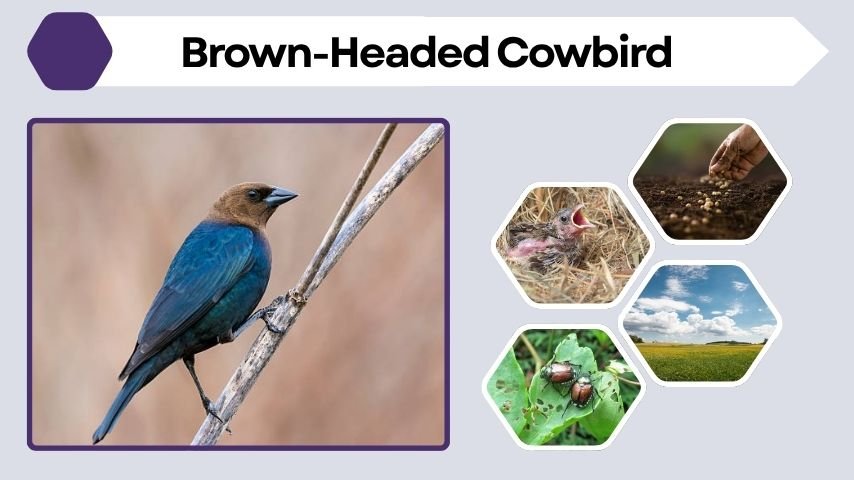
The brown-headed cowbird is one of the most unusual birds in North America because of its unique nesting behavior. Instead of building its own nest, this bird lays eggs inside the nests of other bird species. Known for its adaptability and social flocking habits, the cowbird can be found in grasslands, forests, farms, and suburban areas throughout much of the continent.
Scientifically called Molothrus ater, the brown-headed cowbird belongs to the blackbird family. Birdwatchers often recognize the species by its glossy dark feathers, brown head, and bubbling calls. Its brood parasitism strategy has made the bird both fascinating and controversial among bird enthusiasts and conservationists.
What Is a Brown-Headed Cowbird?
The brown-headed cowbird is a medium-sized blackbird native to North America. It is famous for laying its eggs in the nests of other birds, allowing host parents to raise cowbird chicks. This behavior is known as brood parasitism. Cowbirds are highly adaptable and commonly gather in flocks near open grasslands, farms, and feeding areas.
Scientific Classification
The brown-headed cowbird belongs to the family Icteridae, which includes blackbirds and grackles. Its scientific name is Molothrus ater. The species is closely related to bronzed cowbirds and shiny cowbirds found in other regions.
Why It Is Called a Cowbird
Cowbirds earned their name because they often follow grazing animals such as cattle and bison. As these animals move through grasslands, insects are disturbed from the ground, providing easy food for the birds.
Brown-Headed Cowbird Overview
Brown-headed cowbirds are widespread across the United States, Canada, and parts of Mexico. They are known for strong social behavior, mixed feeding flocks, and their unusual breeding strategy.
Brown-Headed Cowbird Identification
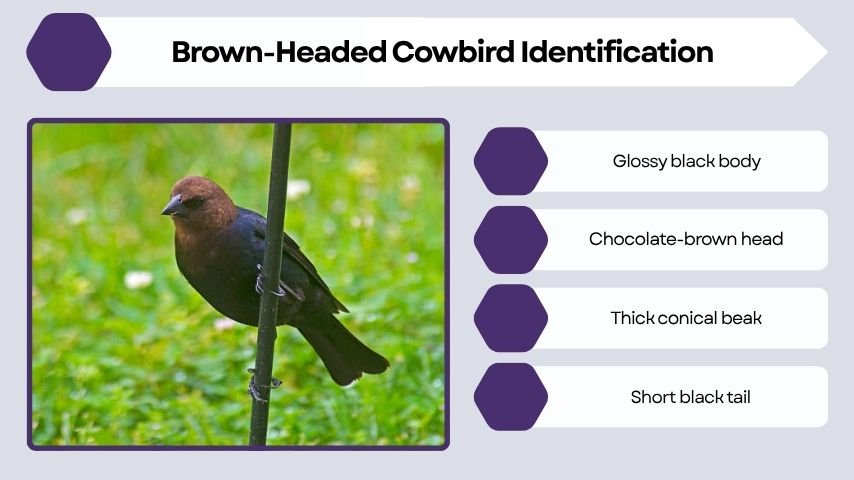
Brown-headed cowbirds are compact birds with thick beaks and short tails. Males and females look noticeably different, making identification easier than with many other bird species.
Male Brown-Headed Cowbird Appearance
Important features of male cowbirds include:
- Glossy black body
- Chocolate-brown head
- Thick conical beak
- Short black tail
- Dark eyes
Female Brown-Headed Cowbird Appearance
Female cowbirds are less colorful but still easy to recognize.
- Plain brown feathers
- Slightly lighter throat
- Dark bill
- Compact body shape
- Soft brown underparts
Juvenile and Immature Cowbird Features
Young cowbirds appear dull brown overall with faint streaking on the chest. Juveniles gradually develop adult plumage as they mature through late summer and autumn.
Brown-Headed Cowbird Size and Wingspan
Adult brown-headed cowbirds usually measure between 16 and 22 centimeters long. Their wingspan ranges from 30 to 36 centimeters. Males are generally larger and heavier than females.
Brown-Headed Cowbird Calls and Sounds
Brown-headed cowbirds produce several unusual sounds including whistles, bubbling notes, and chatter calls. Males become especially vocal during breeding season when attracting mates.
What Does a Brown-Headed Cowbird Sound Like?
The most recognizable sound is a liquid bubbling whistle often described as a “gurgling” call. These sounds are commonly heard in open fields and woodland edges during spring.
Male Mating Calls
Male cowbirds puff out their feathers and bow while producing musical bubbling sounds. These displays help attract females during courtship season.
Female Cowbird Calls
Females use softer chatter calls for communication within flocks and around nesting areas. Their calls are generally quieter and less musical than male vocalizations.
Flight and Flock Sounds
Cowbirds remain noisy while flying in groups. Common flock sounds include:
- Sharp chirps
- Metallic clicks
- Short whistles
- Rapid chatter calls
Brown-Headed Cowbird Habitat and Geographic Range
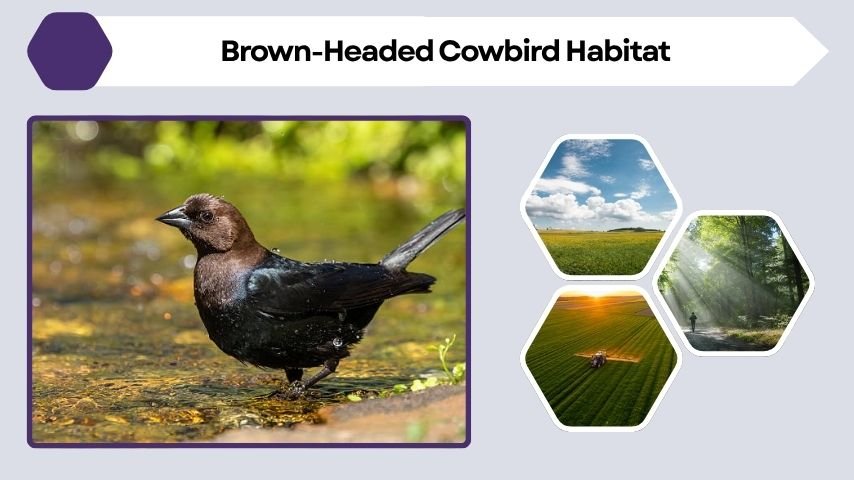
Brown-headed cowbirds are highly adaptable birds capable of surviving in many environments. They are especially common in open landscapes with scattered trees and feeding opportunities.
Brown-Headed Cowbird Range in North America
The species occurs throughout most of the United States, southern Canada, and northern Mexico. Some populations migrate seasonally while others remain year-round residents.
Preferred Habitats
Common habitats include:
- Grasslands
- Farms and ranches
- Woodland edges
- Suburban parks
- Open forests
Brown-Headed Cowbird Migration
Northern populations migrate south during winter months. Large flocks often travel together, mixing with blackbirds, grackles, and starlings during migration.
Winter Distribution and Flocks
During winter, cowbirds gather in massive feeding flocks that may contain thousands of birds. These flocks search agricultural fields and grasslands for seeds and insects.
Brown-Headed Cowbird Diet and Feeding
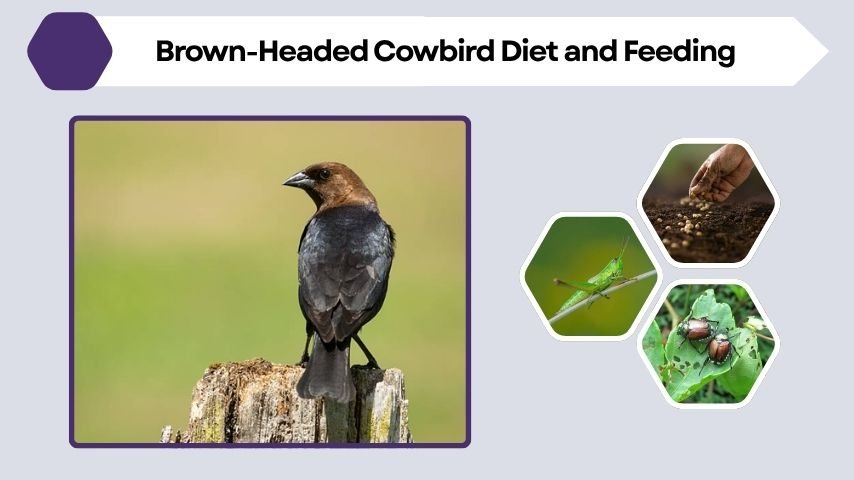
Brown-headed cowbirds feed on a wide variety of plant and animal matter. Their flexible diet allows them to survive in changing environments and seasons.
What Do Brown-Headed Cowbirds Eat?
Common foods include:
- Seeds
- Grasshoppers
- Beetles
- Grains
- Fruits
- Small insects
Feeding Behavior Around Cattle
Cowbirds frequently follow grazing livestock because moving animals disturb insects hidden in the grass. This feeding strategy helps the birds locate food with minimal effort.
Brown-Headed Cowbird Seasonal Diet Changes
The diet of brown-headed cowbirds changes throughout the year. During spring and summer, they eat more insects and protein-rich foods needed for breeding and chick development. In autumn and winter, seeds and grains become a larger part of their diet.
Feeding in Mixed Bird Flocks
Cowbirds often feed alongside blackbirds, grackles, starlings, and sparrows. Large feeding groups provide protection from predators and improve the chances of locating food sources quickly.
Brown-Headed Cowbird Brood Parasitism
Brown-headed cowbirds are famous for their unusual breeding behavior known as brood parasitism. Instead of building nests and raising their own young, females place eggs inside the nests of other bird species. Host birds then unknowingly incubate and raise the cowbird chick.
What Is Brood Parasitism?
Brood parasitism is a reproductive strategy where one species depends on another species to care for its offspring. Cowbirds are among the best-known brood parasites in North America.
How Cowbirds Lay Eggs in Other Nests
Female cowbirds quietly watch host birds build nests and lay eggs. When the nest is unattended, the cowbird quickly deposits one of its own eggs inside before leaving the area.
Brown-Headed Cowbird Eggs
Cowbird eggs have several recognizable features:
- Pale white or gray color
- Brown or gray speckles
- Slightly glossy shell
- Small oval shape
- Similar size to many songbird eggs
Relationship With Songbirds and Warblers
Cowbirds often target smaller songbirds such as warblers, vireos, and sparrows. In some cases, the larger cowbird chick grows faster and receives more food than the host’s own young, reducing survival rates for native chicks.
Brown-Headed Cowbird Nestlings, Chicks, and Life Cycle
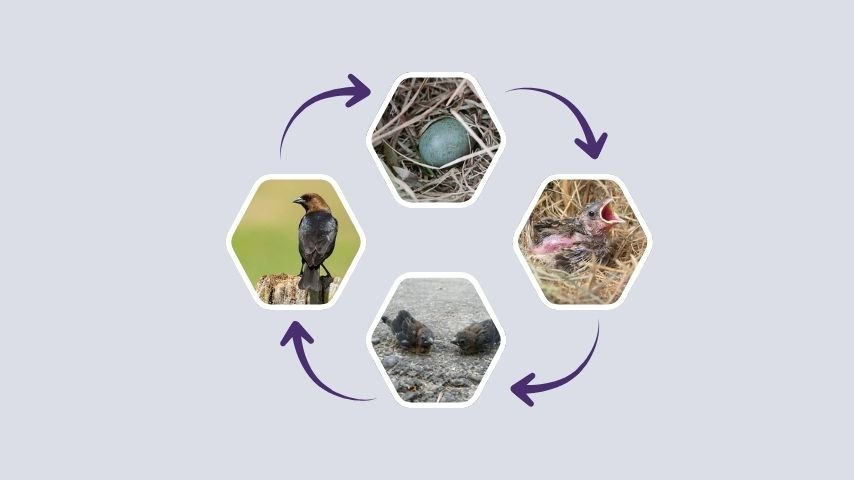
Cowbird chicks develop rapidly after hatching. Because they depend on host parents for care, fast growth improves their survival and increases feeding success within crowded nests.
Brown-Headed Cowbird Hatchlings
Newly hatched cowbirds are usually larger and stronger than many host chicks. Their loud begging calls encourage foster parents to feed them frequently throughout the day.
Baby and Juvenile Cowbirds
Young cowbirds leave the nest roughly 8 to 13 days after hatching. Juveniles often follow adult cowbirds after fledging and gradually learn feeding and flocking behavior.
Brown-Headed Cowbird Fledgling Stage
Fledgling cowbirds continue depending on adult birds for food while learning to fly and forage. Their plumage remains dull brown until adult feathers develop later.
Complete Life Cycle
The life cycle includes egg, hatchling, nestling, fledgling, juvenile, and adult stages. Many cowbirds live several years in the wild if food and habitat conditions remain favorable.
Brown-Headed Cowbird Behavior
Brown-headed cowbirds are highly social birds that spend much of the year in groups. Their behavior changes during breeding season when males compete for mates and females search for host nests.
Flocking Behavior
Cowbirds frequently gather in large mixed-species flocks. These groups move together across grasslands and feeding areas while searching for food and safe roosting locations.
Courtship and Mating Dance
Male cowbirds perform dramatic courtship displays by puffing their feathers, spreading their wings slightly, and producing bubbling songs while bowing toward females.
Aggressive Behavior
Cowbirds can become aggressive around feeding sites and breeding areas. Females sometimes remove host eggs from nests before laying their own eggs inside.
Molting and Seasonal Changes
After breeding season, cowbirds molt into fresh feathers. During this period, birds may appear patchy or dull before their plumage fully regrows.
Brown-Headed Cowbird vs Grackle
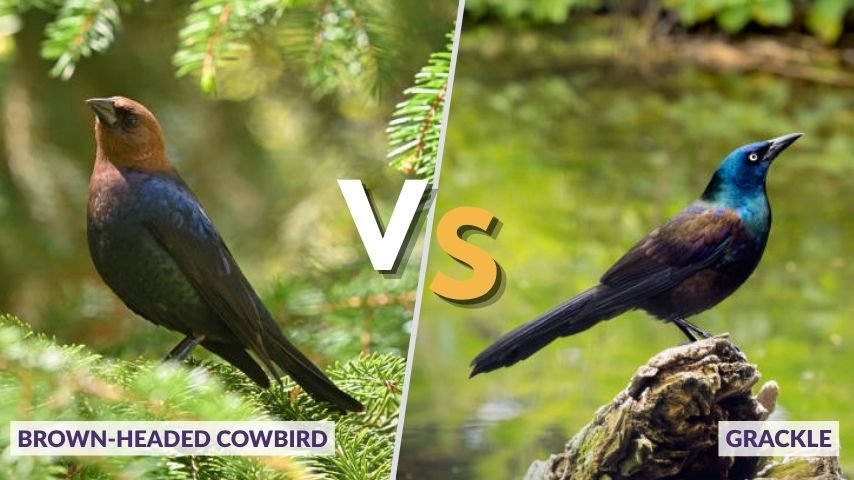
Brown-headed cowbirds are often confused with grackles because both species belong to the blackbird family. However, several clear differences help separate them.
Size and Shape Differences
Grackles are much larger with longer tails and slimmer bodies. Cowbirds appear shorter, stockier, and more compact overall.
Feather Color Comparison
Male cowbirds have a brown head with a glossy black body, while grackles usually show iridescent blue or purple feathers without a brown head.
Bill and Tail Differences
Cowbirds possess short, thick bills designed for seed feeding. Grackles have longer pointed bills and noticeably longer tails.
Habitat and Behavior Comparison
Cowbirds prefer grasslands, farms, and woodland edges, while grackles commonly gather in urban areas, parking lots, and wetlands.
Are Brown-Headed Cowbirds Invasive or Harmful?
Brown-headed cowbirds create debate among bird conservationists because of their brood parasitism behavior. Some bird species experience nesting problems when cowbirds use their nests.
Are Brown-Headed Cowbirds Invasive?
Brown-headed cowbirds are native to North America, so they are not technically invasive. However, habitat changes caused by humans have allowed them to expand into new regions.
Are Brown-Headed Cowbirds Aggressive?
Cowbirds can behave aggressively around nests and feeding areas. Their nesting strategy may negatively affect smaller songbirds when cowbird chicks outcompete host young for food.
Are Brown-Headed Cowbirds Protected?
In the United States, brown-headed cowbirds are protected under the Migratory Bird Treaty Act. It is generally illegal to harm the birds, remove eggs, or disturb nests without permits.
FAQs
What is a brown-headed cowbird?
The brown-headed cowbird is a North American blackbird known for laying its eggs in the nests of other bird species instead of building its own nest.
Why are brown-headed cowbirds considered parasites?
They are considered brood parasites because they rely on other birds to incubate their eggs and raise their chicks.
What do brown-headed cowbirds eat?
Brown-headed cowbirds eat seeds, grains, insects, grasshoppers, beetles, and fruits depending on the season.
Are brown-headed cowbirds protected by law?
Yes, brown-headed cowbirds are protected under federal wildlife laws in the United States and Canada.
How can you tell a male from a female brown-headed cowbird?
Males have glossy black bodies with brown heads, while females are plain brown with less noticeable markings.
