
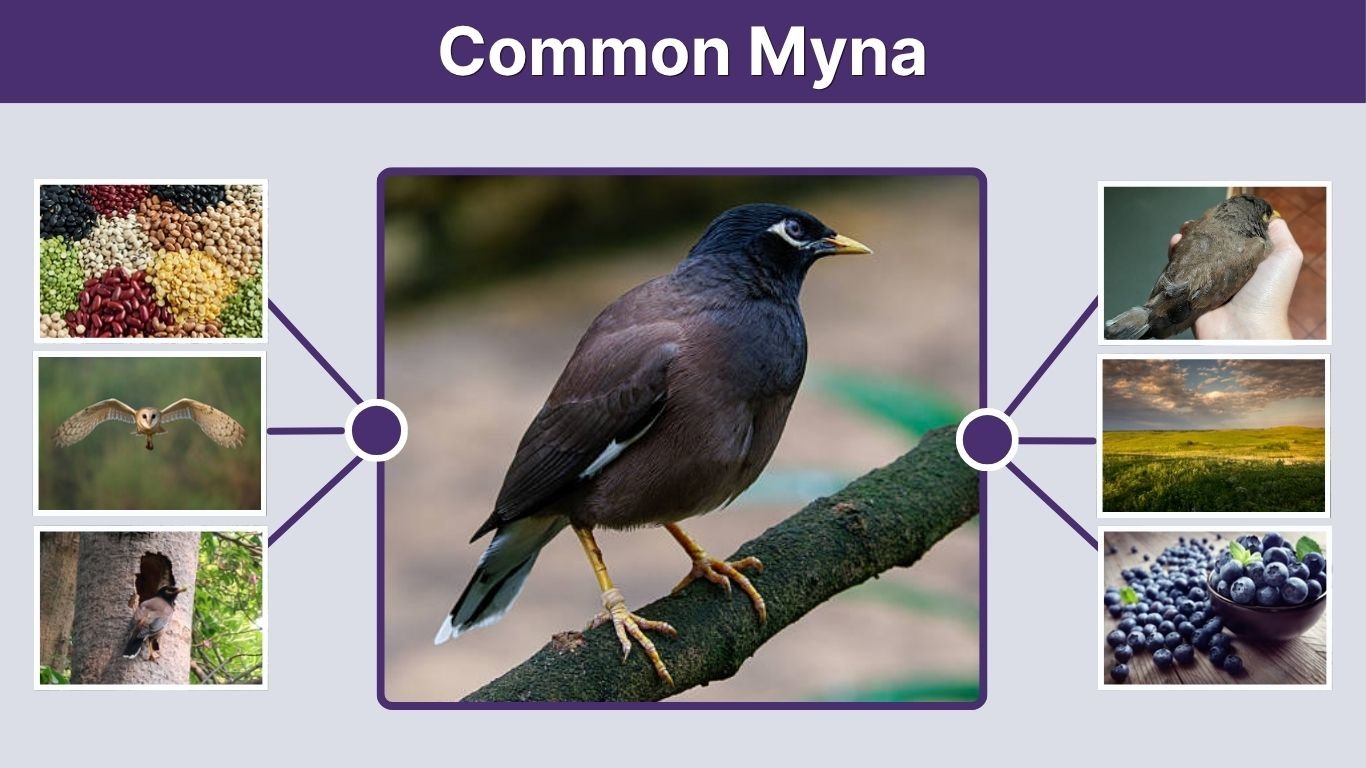
The common myna is a highly adaptable bird known for its intelligence, loud calls, and ability to thrive in cities and suburban areas. Native to South Asia, this bird has spread to many parts of the world, including Australia, Hawaii, and other tropical regions. Some people admire its vocal skills, while others consider it an invasive species.
Common mynas are social birds that feed on many different foods and nest close to human activity. This guide explains their habitat, diet, behavior, lifespan, nesting habits, and differences between the common myna and common hill myna.
What Is a Common Myna?
The common myna is a medium-sized bird belonging to the starling family. It is well known for its bold personality, strong adaptability, and loud vocalizations in urban environments.
Scientific Name of the Common Myna
The scientific name of the common myna is Acridotheres tristis. It belongs to the starling family called Sturnidae.
Common Myna Appearance
- Brown body feathers
- Black head
- Bright yellow eye patch
- Yellow legs and beak
Common Myna Size
Adult common mynas are medium-sized birds with sturdy bodies, strong legs, and broad wings suited for active flight.
Common Myna Range
The common myna naturally occurs in South Asia but has spread to many countries because of human introduction and urban adaptability.
Common Myna Habitat and Distribution
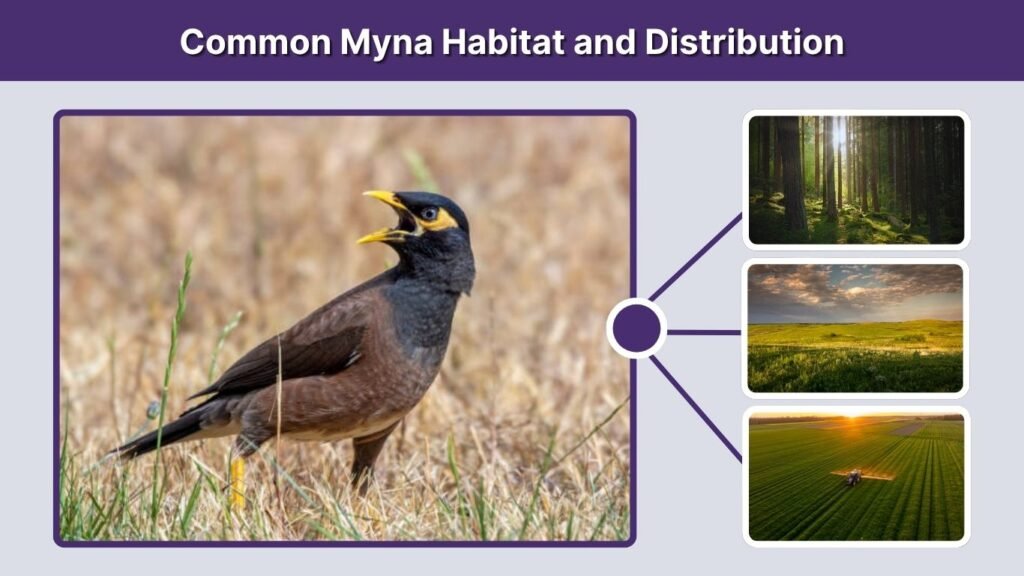
Common mynas survive well in many environments, especially near people. Their flexibility allows them to live successfully in cities, farms, parks, and suburban neighborhoods.
Native Habitat
The species originally lived in open forests, grasslands, agricultural areas, and villages throughout South Asia.
Common Myna in Australia
- Large populations in cities
- Strong urban adaptation
- Considered invasive in some regions
- Common around parks and buildings
Common Myna in Hawaii and Florida
Introduced populations exist in Hawaii and some parts of Florida where warm climates support year-round survival.
Why Common Mynas Thrive in Cities
Urban areas provide food scraps, nesting spaces, shelter, and reduced predator pressure, helping mynas reproduce successfully.
Common Myna Behavior
Common mynas are intelligent and social birds that often live near humans. They communicate loudly and may gather in groups around food and roosting sites.
Social and Group Behavior
Mynas frequently travel in pairs or small groups. Larger flocks may gather at feeding sites or evening roost locations.
Territorial Behavior
- Defend nesting areas
- Chase away other birds
- Compete for nesting cavities
- Aggressive around food sources
Vocalizations and Calls
Common mynas produce many sounds, including whistles, squawks, chatter, and alarm calls. Their noisy communication is common in urban areas.
Daily Activity Patterns
These birds are most active during daylight hours when searching for food, defending territory, and interacting socially.
Common Myna Diet and Feeding Habits
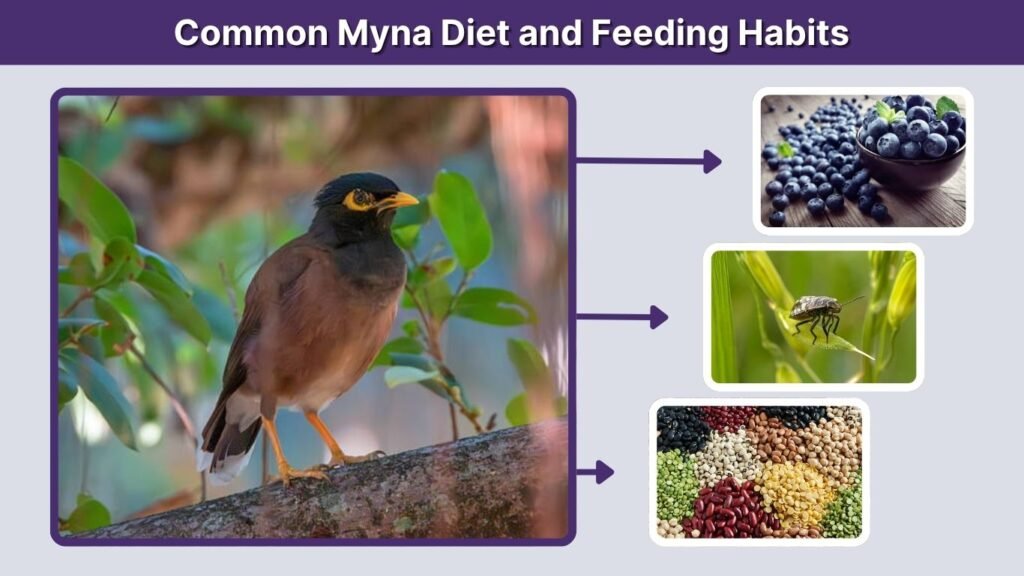
Common mynas are omnivorous birds that eat a wide variety of foods. Their flexible diet helps them survive in changing environments.
What Do Common Mynas Eat?
- Fruits and berries
- Insects and worms
- Seeds and grains
- Human food scraps
Feeding Behavior in Urban Areas
Mynas often search for food near restaurants, garbage bins, gardens, parks, and outdoor eating areas.
Foods for Pet Mynas
Pet mynas usually require balanced diets containing fruit, bird pellets, insects, and fresh water to remain healthy.
Water and Nutritional Needs
Fresh water is important for drinking and bathing. Balanced nutrition helps maintain healthy feathers and overall bird health.
Common Myna Nesting and Breeding
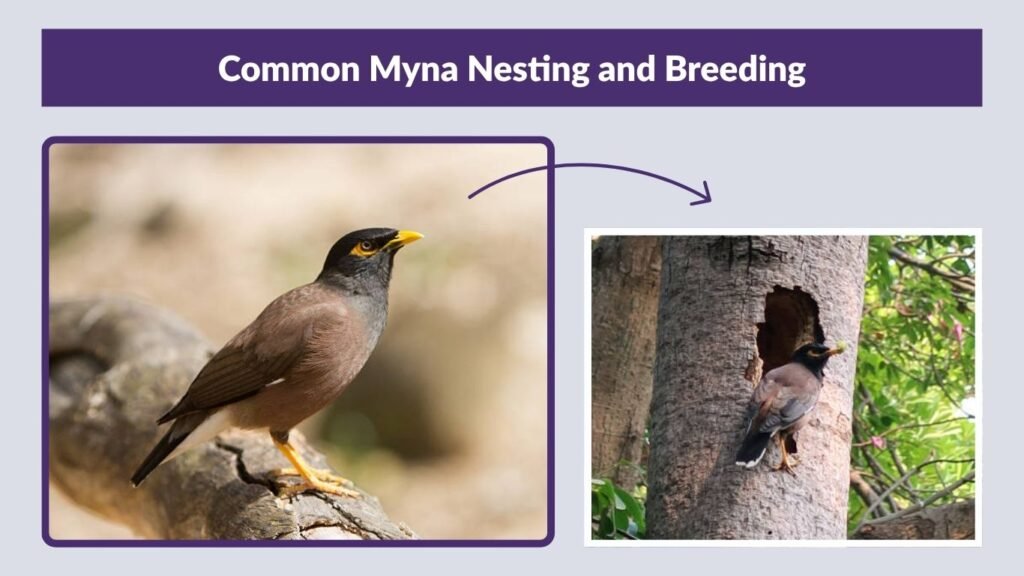
Common mynas breed successfully in urban environments because they can use many different nesting locations near human structures.
Common Myna Nest Locations
These birds commonly nest in tree holes, roof spaces, wall cavities, vents, and other sheltered openings.
Common Myna Eggs
- Smooth blue eggs
- Several eggs per clutch
- Eggs incubated by adults
- Nest protection behavior
Breeding Season
Breeding season often depends on local climate conditions, but many populations breed during warmer months with abundant food.
Raising Chicks
Both adult birds help feed and protect chicks until the young birds are strong enough to leave the nest.
Common Myna Lifespan and Growth
The lifespan of common mynas depends on food availability, habitat quality, predators, and environmental conditions.
Average Lifespan in the Wild
Wild mynas face predators, disease, and environmental dangers that may shorten survival compared to captive birds.
Lifespan in Captivity
- Longer survival with care
- Regular food supply
- Veterinary support
- Safer living conditions
Juvenile Common Myna Development
Young birds gradually develop adult feathers, improve flight skills, and learn social behavior from adult birds.
Adult Maturity
Adult mynas become territorial and active breeders once they reach reproductive maturity.
Common Myna Male and Female Differences
Male and female common mynas look very similar, which can make identification difficult for bird watchers and pet owners. Most differences are subtle and often based on behavior rather than appearance.
Size Differences
Males may sometimes appear slightly larger or heavier, but the difference is usually small and difficult to notice.
Behavioral Differences
- Males may defend territory more actively
- Females spend more time near nests
- Both parents care for chicks
- Vocal behavior can vary slightly
Plumage Comparison
Male and female birds usually share the same brown body, black head, yellow eye patch, and bright yellow legs.
Why Identification Is Difficult
Because physical differences are minimal, observing nesting behavior is often the easiest way to distinguish males from females.
Can Common Mynas Talk?
Some myna species are famous for copying sounds and human speech. Their intelligence and vocal learning ability make them popular pet birds in some regions.
Common Myna Talking Ability
Common mynas can imitate sounds, whistles, and simple words, especially when raised around humans from a young age.
Common Hill Myna Talking Skills
- Clear speech mimicry
- Strong learning ability
- Excellent vocal memory
- Popular talking pet bird
How Mynas Learn Sounds
Mynas learn sounds through repetition and social interaction. They often copy noises they hear regularly in their environment.
Popular Pet Bird Reputation
Hill mynas are especially valued for their impressive speech abilities and interactive personalities.
Common Hill Myna Overview
The common hill myna differs from the common myna in both appearance and vocal ability. It is known for glossy feathers and remarkable talking skills.
Common Hill Myna Appearance
Common hill mynas have glossy black feathers, orange-yellow beaks, and bright yellow fleshy wattles near the head.
Common Hill Myna Diet
- Fruits and berries
- Nectar and flowers
- Insects and small invertebrates
- Soft prepared bird foods
Common Hill Myna Lifespan
Hill mynas may live many years in captivity with proper nutrition, clean housing, and veterinary care.
Is the Common Hill Myna Endangered?
Some populations face threats from habitat loss and illegal trapping for the pet trade in certain regions.
Common Myna as an Invasive Species
The common myna is considered invasive in several countries because of its aggressive behavior and rapid spread in urban areas.
Why Common Mynas Are Invasive
Their adaptability, broad diet, and strong breeding success allow them to spread quickly in new environments.
Impact on Native Birds
- Compete for nesting spaces
- Chase away smaller birds
- Reduce nesting opportunities
- Disturb local ecosystems
Competition for Nesting Spaces
Mynas aggressively defend tree holes, roof cavities, and nest sites from native bird species.
Management and Control Efforts
Some regions use trapping programs, nest removal, and public awareness campaigns to reduce invasive populations.
Common Myna Predators and Threats
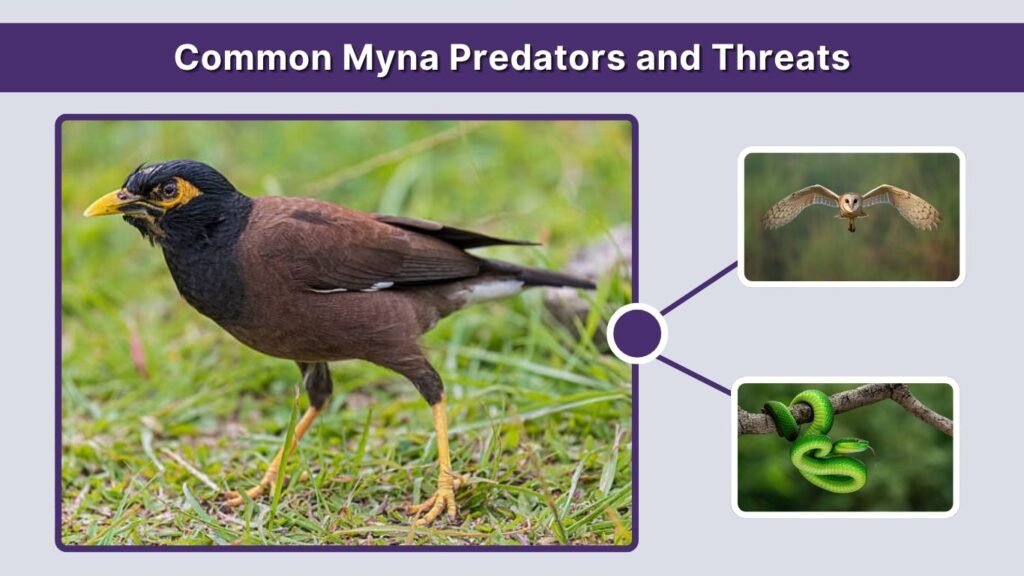
Although common mynas adapt well to urban life, they still face predators and environmental dangers in both natural and city habitats.
Natural Predators
Birds of prey, snakes, cats, and large mammals may prey on eggs, chicks, or adult mynas.
Human-Related Threats
- Habitat destruction
- Vehicle collisions
- Pollution exposure
- Illegal trapping
Disease and Parasites
Like many birds, mynas may carry parasites or diseases that affect both wild and captive populations.
Habitat Changes
Rapid urban expansion and environmental changes may alter nesting and feeding conditions in some areas.
Common Myna as a Pet
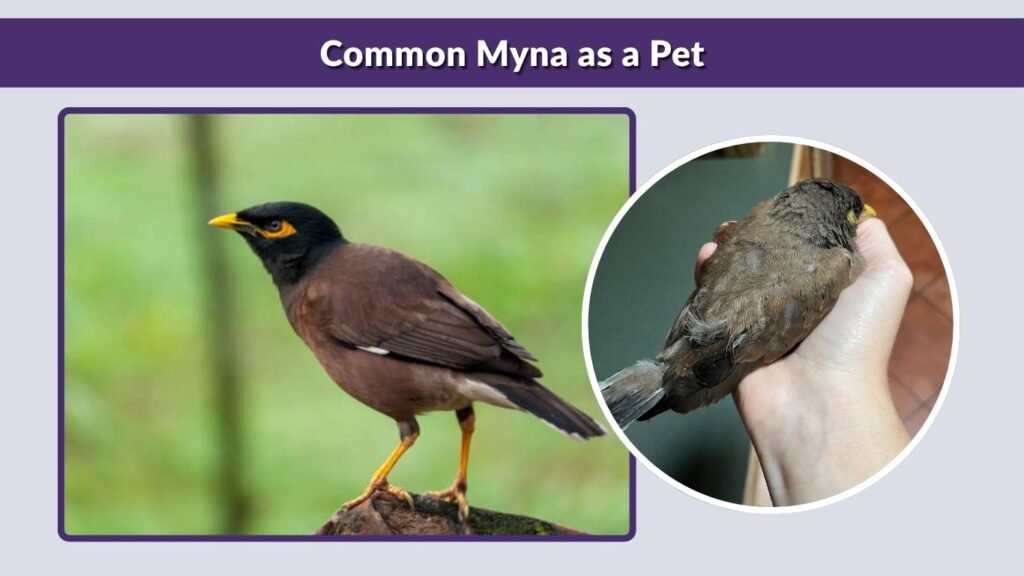
Some people keep mynas as pets because of their intelligence, social behavior, and vocal abilities. However, they require proper care and attention.
Common Myna Pet Care
Pet mynas need balanced diets, clean cages, social interaction, and regular mental stimulation to remain healthy.
Cage and Space Requirements
- Large cage space
- Perches and toys
- Fresh food and water
- Daily exercise opportunities
Legal Considerations
Keeping mynas may be restricted in some countries because of invasive species concerns or wildlife protection laws.
Challenges of Keeping Mynas
Mynas can be noisy, messy, and demanding pets that require regular cleaning and social interaction.
FAQs
What sound does a common myna make?
Common mynas produce loud whistles, squawks, chatter, and alarm calls. They are noisy birds that communicate frequently in groups.
Where do common mynas build nests?
Common mynas often build nests in tree cavities, roof spaces, wall openings, vents, and other sheltered areas near human activity.
Are common mynas friendly birds?
Common mynas can become comfortable around humans, especially in cities, but they are also territorial and aggressive toward other birds.
What is the difference between a common myna and a hill myna?
Hill mynas usually have glossy black feathers and stronger talking abilities, while common mynas have brown bodies and adapt better to urban areas.
Can common mynas survive in cities?
Yes, common mynas thrive in cities because urban environments provide food, nesting spaces, water, and shelter.
