
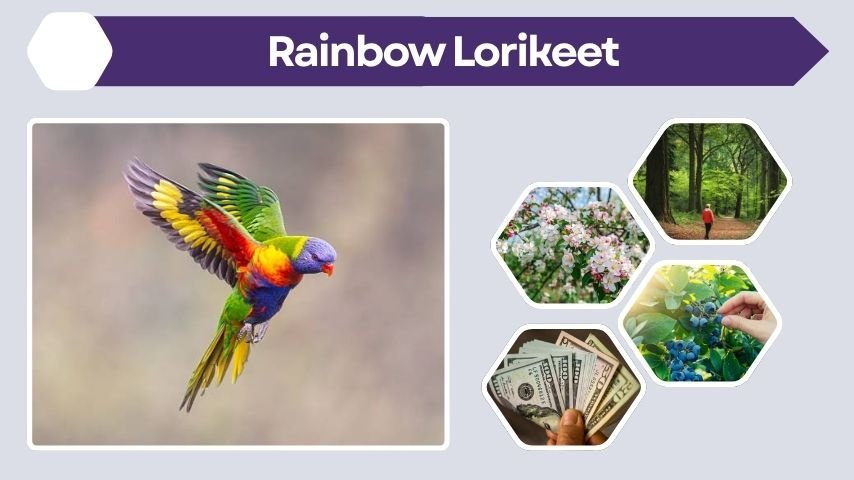
The Rainbow Lorikeet is one of the most colorful parrots in the world. Known for its bright feathers, playful behavior, and loud calls, this bird is common in many parts of Australia. Rainbow lorikeets are highly social and often gather in noisy flocks around gardens, forests, and city parks.
Many bird lovers also keep rainbow lorikeets as pets because of their intelligence and ability to mimic sounds. Their unique tongue, nectar-based diet, and energetic personality make them different from most parrots. This guide covers their appearance, habitat, diet, lifespan, and pet care basics.
What Is a Rainbow Lorikeet?
The rainbow lorikeet is a medium-sized parrot species famous for its colorful plumage and active personality. It belongs to the lorikeet group, which is known for feeding mainly on nectar and pollen. These birds are native to Australia and nearby islands, where they thrive in forests, coastal areas, and urban environments.
A Rainbow Lorikeet Is What Type of Animal?
The rainbow lorikeet is a bird in the parrot family. It belongs to the Psittaculidae family and is closely related to other lorikeets and lories. Unlike seed-eating parrots, rainbow lorikeets have evolved to eat liquid foods such as nectar and soft fruits.
Rainbow Lorikeet Species and Subspecies
Several subspecies of rainbow lorikeets exist across different regions. Some have slight differences in feather colors, chest markings, or head shades. Popular varieties include:
- Australian rainbow lorikeet
- Blue-fronted rainbow lorikeet
- Coconut lorikeet relative
- Northern regional forms
- Island subspecies
Are Rainbow Lorikeets Parrots?
Yes, rainbow lorikeets are true parrots. They share many parrot traits such as curved beaks, climbing ability, intelligence, and vocal communication. However, lorikeets are unique because of their specialized diet and brush-like tongue designed for collecting nectar.
Rainbow Lorikeet Identification and Appearance
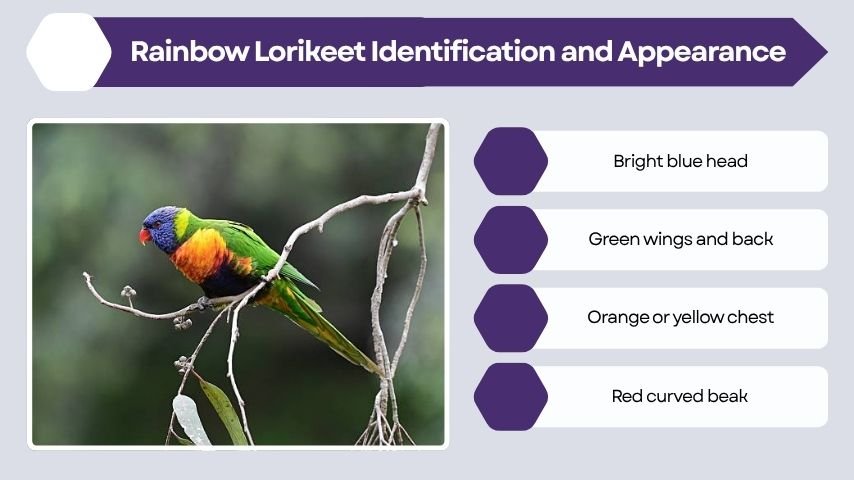
Rainbow lorikeets are easy to recognize because of their bright rainbow-like colors. Their feathers combine blue, green, orange, yellow, and red shades that make them stand out in trees and gardens. These birds are slim, fast flyers with long tails and strong curved beaks suited for feeding on flowers and fruit.
Rainbow Lorikeet Colors and Markings
Adult rainbow lorikeets display a mix of striking colors across their bodies. Their appearance usually includes:
- Bright blue head
- Green wings and back
- Orange or yellow chest
- Red curved beak
- Dark tail feathers
- Red-orange eyes
Juvenile birds are usually duller and gain brighter feathers as they mature.
Rainbow Lorikeet Tongue Close Up
One of the most interesting features of the rainbow lorikeet is its tongue. The tip contains tiny brush-like structures called papillae. These help the bird gather nectar and pollen from flowers efficiently. This adaptation allows lorikeets to feed similarly to hummingbirds.
Rainbow Lorikeet Sounds and Talking Ability
Rainbow lorikeets are extremely vocal birds. In the wild, they communicate constantly with loud screeches and chatter while flying in groups. Pet lorikeets can also learn sounds and words with regular interaction.
Some birds learn simple phrases, whistles, or household noises. While they may not talk as clearly as larger parrots, many owners enjoy their playful and noisy personalities.
Where Do Rainbow Lorikeets Live?
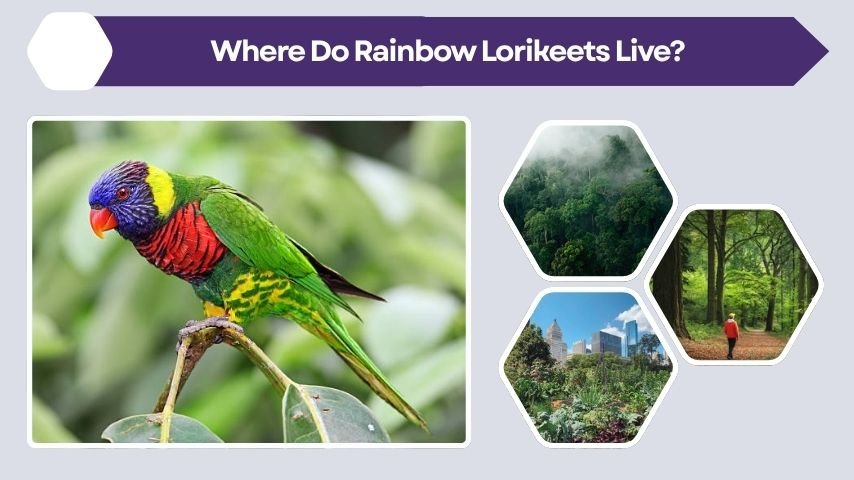
Rainbow lorikeets are native to Australia and nearby island regions. They adapt well to different habitats and are commonly seen in both natural forests and busy urban areas. Their ability to find flowering plants and fruit trees helps them survive in parks, gardens, and suburban neighborhoods.
Where Are Rainbow Lorikeets Native To?
Rainbow lorikeets naturally occur in:
- Eastern Australia
- Northern Australia
- Papua New Guinea
- Parts of Indonesia
- Coastal island regions
They are especially common along Australia’s eastern coastline.
Rainbow Lorikeet Habitat
These parrots prefer habitats with flowering trees and reliable food sources. Common habitats include eucalyptus forests, rainforests, mangroves, woodlands, and urban gardens. In cities, rainbow lorikeets often visit backyard feeders and flowering plants.
Their adaptability has helped them expand into new environments where food is available year-round.
Australia Rainbow Lorikeet Population
In Australia, rainbow lorikeets are among the most visible native birds. Large flocks can gather in parks and suburban streets, especially during feeding times. Their numbers remain stable in many areas because they adapt successfully to human environments and changing landscapes.
Rainbow Lorikeet Diet and Feeding Habits
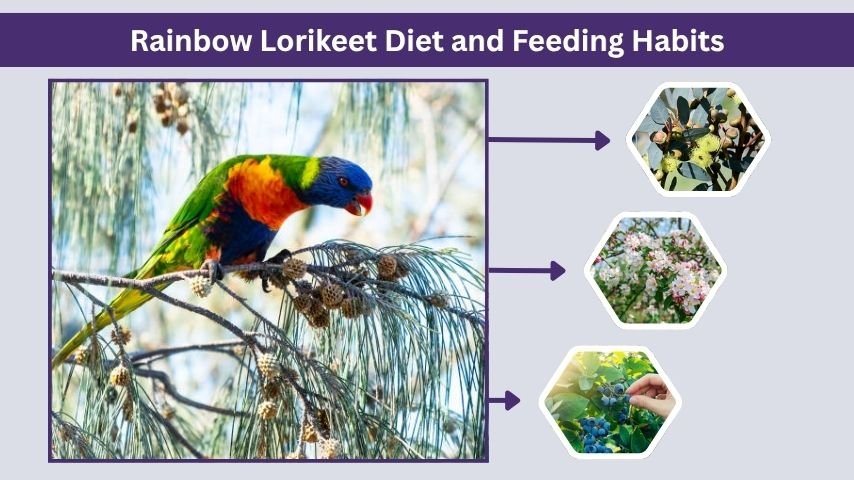
Rainbow lorikeets have a specialized diet that differs from many parrots. Instead of mainly eating seeds, they rely heavily on nectar, pollen, and soft fruits. Their brush-tipped tongue helps collect liquid food from flowers, making them important pollinators in nature.
What Do Rainbow Lorikeets Eat?
Wild rainbow lorikeets commonly eat:
- Flower nectar
- Pollen
- Native fruits
- Blossoms
- Berries
- Soft fruits
- Occasional seeds
They often feed in flowering eucalyptus trees and fruiting plants throughout the day.
Fruits Rainbow Lorikeets Can Eat
Pet rainbow lorikeets can safely enjoy several fruits as part of a balanced diet. Popular options include bananas, grapes, strawberries, blueberries, pineapple, cherries, and apples. Fresh fruit should always be washed properly and served in small portions to avoid digestive problems.
Rainbow Lorikeet Lifespan and Life Cycle
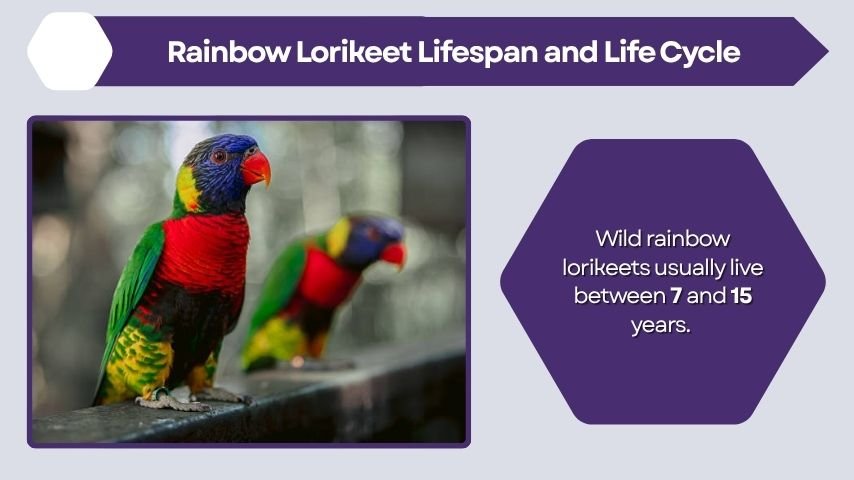
Rainbow lorikeets are active birds that can live for many years when given proper care and nutrition. Their lifespan depends on factors such as habitat quality, diet, predators, and health conditions. Wild birds face more dangers, while captive lorikeets often live longer with veterinary care and balanced feeding routines.
Rainbow Lorikeet Lifespan in the Wild
Wild rainbow lorikeets usually live between 7 and 15 years. Their survival depends on food availability, weather conditions, and protection from predators. Common threats include:
- Hawks and snakes
- Habitat destruction
- Vehicle collisions
- Disease outbreaks
- Extreme weather
Even with these dangers, healthy wild lorikeets can survive for many years in protected habitats.
Rainbow Lorikeet Lifespan in Captivity
Pet rainbow lorikeets often live much longer than wild birds. With proper nutrition and care, some captive lorikeets may reach 20 years or more. Clean cages, daily exercise, social interaction, and regular veterinary checkups are important for long-term health.
A poor diet can shorten their lifespan because lorikeets have sensitive digestive systems that require specialized nectar-based foods.
Rainbow Lorikeet Breeding and Nesting
Rainbow lorikeets usually breed during spring and early summer. They build nests inside hollow tree cavities where the female lays eggs. Both parents help care for the chicks after hatching.
Young lorikeets grow quickly and develop feathers within several weeks. The chicks remain dependent on their parents until they can fly and feed independently.
Rainbow Lorikeets as Pets
Rainbow lorikeets are popular pet parrots because of their colorful appearance and playful behavior. They are intelligent birds that enjoy human interaction and mental stimulation. However, they also require significant attention, regular cleaning, and specialized diets that make them more demanding than some other pet birds.
Are Rainbow Lorikeets Good Pets?
Many bird owners consider rainbow lorikeets entertaining and affectionate companions. Their personalities often include:
- High energy levels
- Curious behavior
- Strong social bonds
- Playful personalities
- Loud vocalizations
- Intelligent problem-solving skills
They enjoy climbing, exploring toys, and interacting with their owners daily.
Are Rainbow Lorikeets Friendly?
Rainbow lorikeets can become very friendly when raised with regular handling and positive interaction. They often bond closely with one or two people and enjoy sitting on shoulders or playing nearby. Without enough attention, however, some birds may become noisy or aggressive.
Proper socialization from a young age usually improves their behavior around humans and other birds.
Rainbow Lorikeet Care Basics
Caring for a rainbow lorikeet requires time and consistency. Important care needs include:
- Fresh nectar mix daily
- Clean drinking water
- Large cage space
- Daily exercise time
- Interactive toys
- Routine cage cleaning
Lorikeets produce wetter droppings than many parrots because of their liquid diet, so hygiene is especially important.
Rainbow Lorikeet Cage Requirements
A rainbow lorikeet cage should provide enough room for climbing and wing movement. Horizontal bars, natural perches, and safe toys help keep the bird active. The cage should also be placed in a bright, well-ventilated area away from cold drafts.
Daily out-of-cage activity helps prevent boredom and encourages healthy exercise.
Rainbow Lorikeet Price and Availability
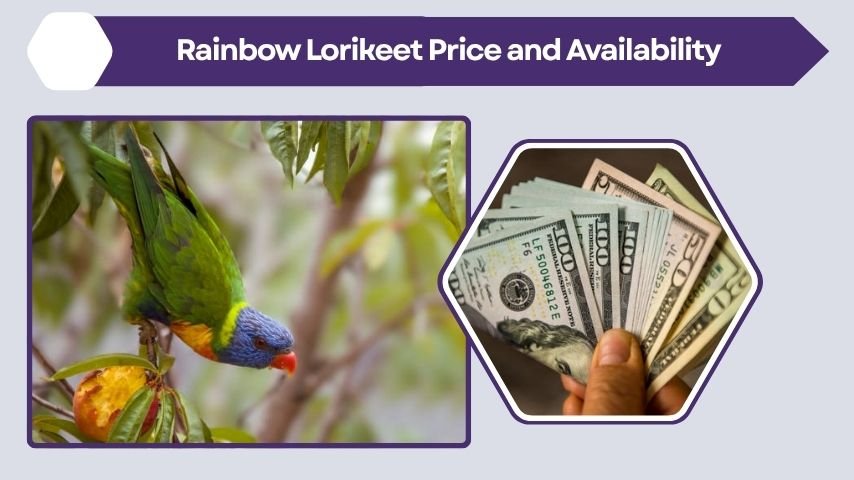
Rainbow lorikeets are available through breeders, bird rescues, and specialty pet stores in some countries. Prices vary depending on the bird’s age, color variation, location, and breeder reputation. Potential owners should research local laws because keeping native parrots may require permits in certain regions.
Rainbow Lorikeet Price Range
The average rainbow lorikeet price can vary widely. Factors that affect cost include:
- Bird age
- Hand-raised training
- Rare color mutations
- Breeder reputation
- Location and demand
Hand-fed young birds are often more expensive because they are easier to tame.
Rainbow Lorikeet Breeders
Choosing a responsible breeder is important when buying a pet lorikeet. Healthy birds usually have bright eyes, clean feathers, and active behavior. Ethical breeders also provide information about diet, health history, and proper care requirements.
Avoid purchasing birds from sellers with poor living conditions or unhealthy animals.
Interesting Facts About Rainbow Lorikeets
Rainbow lorikeets are fascinating birds with several unusual behaviors and physical adaptations. Their colorful feathers and social lifestyles make them favorites among bird watchers and pet owners alike.
10 Fun Facts About Rainbow Lorikeets
- They have brush-tipped tongues.
- They can fly very quickly.
- Their feathers help with camouflage in trees.
- They often travel in noisy flocks.
- They are important flower pollinators.
- Some can mimic sounds and speech.
- They enjoy bathing frequently.
- Their diet is mostly liquid.
- They are highly intelligent birds.
- They thrive in urban environments.
FAQs
How long do rainbow lorikeets live?
Wild rainbow lorikeets usually live between 7 and 15 years, while captive birds can sometimes live over 20 years with proper care and nutrition.
Can rainbow lorikeets talk?
Yes, some rainbow lorikeets can mimic words, whistles, and household sounds. Their talking ability varies from bird to bird.
What do rainbow lorikeets eat?
Rainbow lorikeets mainly eat nectar, pollen, fruits, and blossoms. Pet lorikeets also require specialized nectar mixes and fresh fruits.
Are rainbow lorikeets native to Australia?
Yes, rainbow lorikeets are native to Australia and are commonly found across eastern and northern regions of the country.
Are rainbow lorikeets good pets?
Rainbow lorikeets can make excellent pets for experienced bird owners because they are intelligent, social, and playful, but they also require daily attention and specialized care.
