
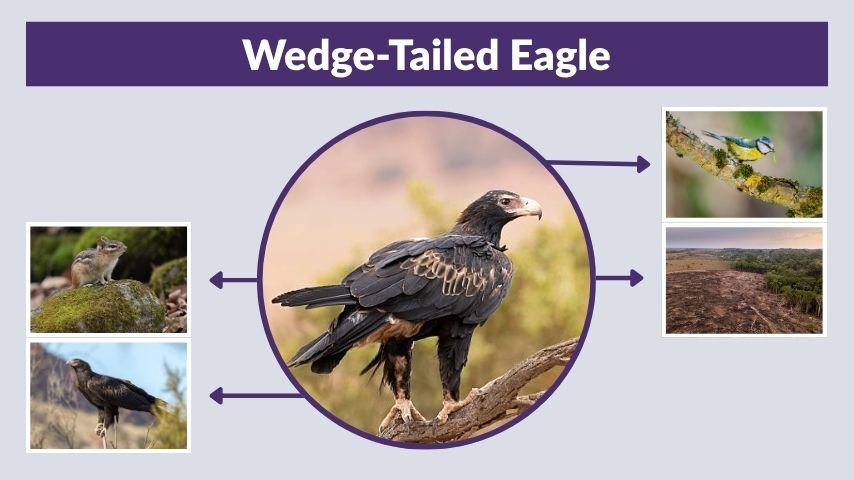
The wedge-tailed eagle is the largest bird of prey in Australia and one of the most powerful eagles in the world. Known for its long wings, wedge-shaped tail, and strong hunting skills, this impressive raptor can soar for hours across open landscapes. The species is highly adaptable and lives in forests, mountains, deserts, and grasslands throughout Australia.
Many people compare the australian wedge tailed eagle with the bald eagle because of its huge size and massive wingspan. These birds are expert hunters that feed on rabbits, reptiles, birds, and carrion. Their strength, speed, and soaring ability make them one of Australia’s most fascinating predators.
What Is a Wedge-Tailed Eagle?
The wedge-tailed eagle is a large bird of prey native to Australia. It belongs to the eagle genus Aquila and is recognized by its long diamond-shaped tail and broad wings. These birds are skilled hunters and powerful fliers that can travel long distances while searching for prey across open landscapes.
Scientific Name and Classification
The scientific name of the wedge-tailed eagle is Aquila audax. It belongs to the Accipitridae family, which includes hawks, kites, and other eagles. The species is closely related to several large eagles found in Europe, Asia, and Africa.
Why It Is Called the Wedge-Tailed Eagle
The bird gets its name from the distinctive wedge-shaped tail that becomes more visible during flight. This tail shape helps birdwatchers easily identify the eagle while soaring high above the ground.
Physical Appearance
- Dark brown feathers covering most of the body
- Long broad wings for soaring flight
- Strong curved beak for tearing meat
- Sharp talons used for catching prey
- Wedge-shaped tail with pointed edges
- Golden-brown feathers around the neck in some birds
Wedge-Tailed Eagle Size and Wingspan
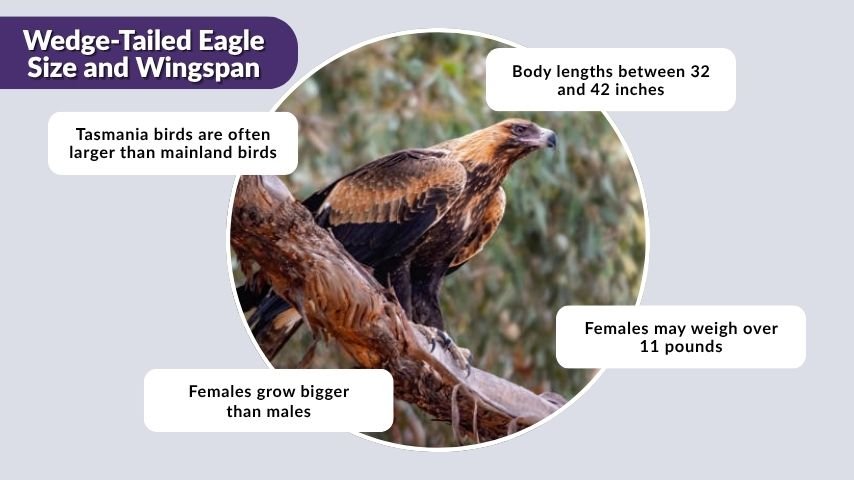
The wedge-tailed eagle is famous for its massive size and impressive wingspan. Females are usually larger than males, which is common among birds of prey. Their long wings allow them to glide efficiently using rising warm air currents, helping them travel great distances without using much energy.
Average Size and Weight
Adult wedge-tailed eagles can reach body lengths between 32 and 42 inches. Females may weigh over 11 pounds, while males are usually lighter. Their large body size makes them Australia’s biggest eagle species.
Wedge-Tailed Eagle Wingspan
The wingspan of a wedge-tailed eagle can range from 6 to nearly 9 feet. Some large females have wingspans longer than many adult humans are tall. Their huge wings help them soar for hours while hunting or searching for food.
Largest Wedge-Tailed Eagle Records
- Tasmania birds are often larger than mainland birds
- Females grow bigger than males
- Some birds approach a 9-foot wingspan
- One of the largest eagles in the Southern Hemisphere
- Strong enough to carry medium-sized prey
Habitat and Distribution
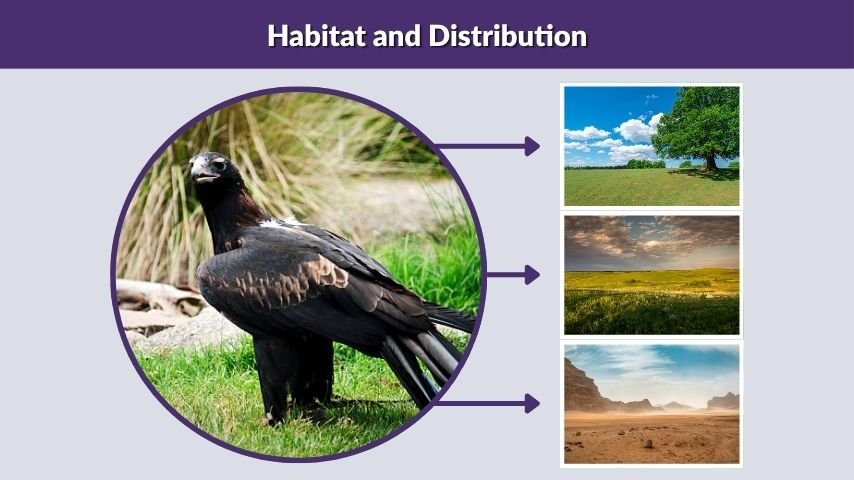
Wedge-tailed eagles are found across most parts of Australia and nearby islands. These adaptable birds can survive in many environments as long as food and nesting sites are available. They often prefer wide open areas where soaring flight and hunting are easier.
Native Range in Australia
The species occurs throughout mainland Australia and Tasmania. Small populations are also found in parts of New Guinea. Their wide range shows how adaptable these birds are to different climates and habitats.
Preferred Habitats
- Open woodlands
- Grasslands and plains
- Mountain regions
- Desert environments
- Farmland and rural areas
Tasmanian Wedge-Tailed Eagle
The Tasmanian wedge-tailed eagle is a unique subspecies found only in Tasmania. It is generally darker and larger than mainland birds. Because of habitat loss and low breeding numbers, this subspecies is considered threatened.
Wedge-Tailed Eagle Diet and Hunting
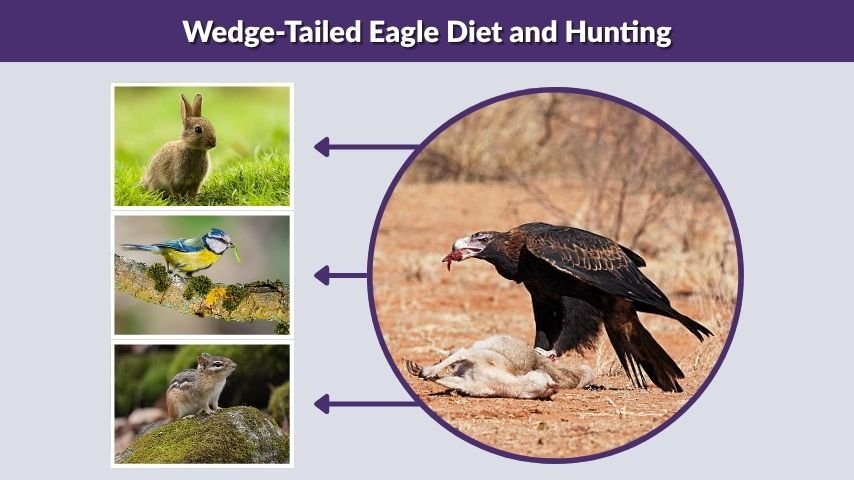
Wedge-tailed eagles are powerful carnivores that sit at the top of the food chain. They use their sharp eyesight and strong talons to capture prey from the ground. These birds often soar high above open areas before suddenly diving toward animals below.
What Do Wedge-Tailed Eagles Eat?
Their diet mainly includes rabbits, small mammals, reptiles, birds, and carrion. Rabbits became one of their primary food sources after being introduced to Australia. Eagles may also feed on dead animals found along roads or in open fields.
Hunting Techniques
Wedge-tailed eagles rely heavily on soaring flight while searching for prey. They use warm air currents to stay high in the sky and conserve energy. Once prey is spotted, the eagle dives quickly and grabs it with powerful talons.
Main Predators and Threats
Although adult wedge-tailed eagles have few natural predators, they still face many dangers caused by humans. Habitat destruction, poisoning, vehicle collisions, and powerline accidents continue to threaten eagle populations in some areas.
Behavior and Life Cycle
Wedge-tailed eagles are mostly solitary birds, but breeding pairs form strong long-term bonds. These birds spend much of their day soaring high above open landscapes while searching for prey. During breeding season, pairs become highly territorial and protect their nesting areas from intruders and other birds of prey.
Do Wedge-Tailed Eagles Mate for Life?
Many wedge-tailed eagle pairs remain together for years and may mate for life. They perform aerial courtship displays that include soaring, diving, and chasing each other through the sky. Strong pair bonds help them successfully raise chicks.
Nesting Habits
These eagles build large nests high in tall trees or on cliff ledges. The nests are made from sticks and lined with leaves or green vegetation. Some nests become enormous because the birds reuse and add new material each year.
Eggs and Chick Development
Female wedge-tailed eagles usually lay one to three eggs during the breeding season. Both parents help incubate the eggs and feed the chicks after hatching. Young eagles remain dependent on their parents for several months before becoming independent hunters.
Flight and Soaring Ability
Wedge-tailed eagles are expert soarers that use thermal air currents to glide effortlessly. They can stay in the air for long periods while using very little energy. Their broad wings and wedge-shaped tail provide excellent balance and control during flight.
Wedge-Tailed Eagle vs Bald Eagle
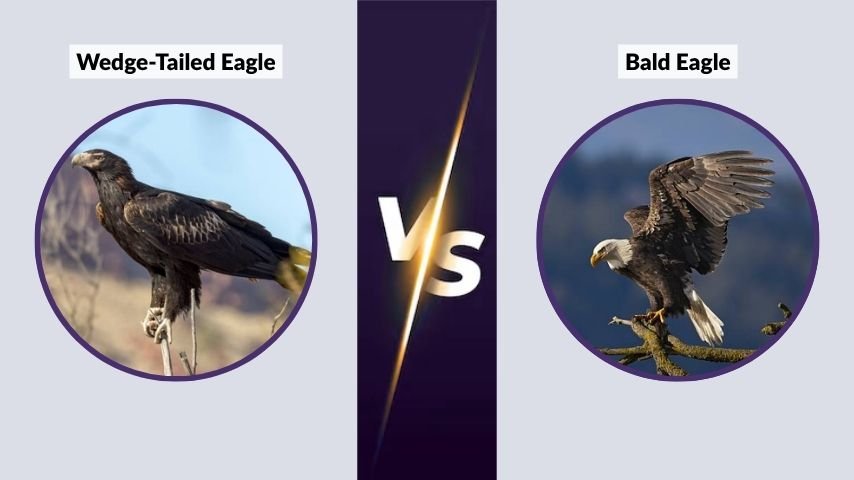
The wedge-tailed eagle and bald eagle are two of the world’s most famous eagle species. Although both are powerful predators, they differ in appearance, habitat, and hunting style. The australian wedge tailed eagle is generally known for its larger wingspan and soaring ability.
Size Comparison
| Feature | Wedge-Tailed Eagle | Bald Eagle |
| Average Wingspan | Up to 9 feet | Up to 8 feet |
| Main Range | Australia | North America |
| Tail Shape | Wedge-shaped | Fan-shaped |
| Feather Color | Dark brown | Brown with white head |
Strength and Hunting Ability
| Feature | Wedge-Tailed Eagle | Bald Eagle |
| Main Prey | Mammals and carrion | Fish and birds |
| Hunting Style | Soaring and diving | Coastal hunting |
| Talon Strength | Very powerful | Powerful |
Golden Eagle vs Wedge-Tailed Eagle
Golden eagles and wedge-tailed eagles share many similarities because both belong to the Aquila genus. However, wedge-tailed eagles usually have longer wings and a more distinctive tail shape. Both species are excellent hunters that dominate their ecosystems.
Are Wedge-Tailed Eagles Dangerous?
Wedge-tailed eagles are powerful predators, but attacks on humans are extremely rare. These birds generally avoid people and prefer remote habitats. Most aggressive behavior happens only when humans approach active nests during the breeding season.
Do Wedge-Tailed Eagles Attack Humans?
Healthy wild eagles almost never attack humans without reason. Breeding adults may swoop at people who get too close to nests, but serious injuries are uncommon. Giving nesting birds plenty of space helps avoid conflicts.
Risks to Livestock and Pets
Small pets or weak livestock may occasionally be vulnerable to eagle attacks, although many reports are exaggerated. Most wedge-tailed eagles mainly hunt rabbits and other wild prey instead of farm animals.
Safe Viewing Tips
- Observe eagles from a distance
- Avoid disturbing nesting sites
- Use binoculars for closer views
- Never feed wild eagles
- Respect wildlife protection laws
Wedge-Tailed Eagle Conservation Status
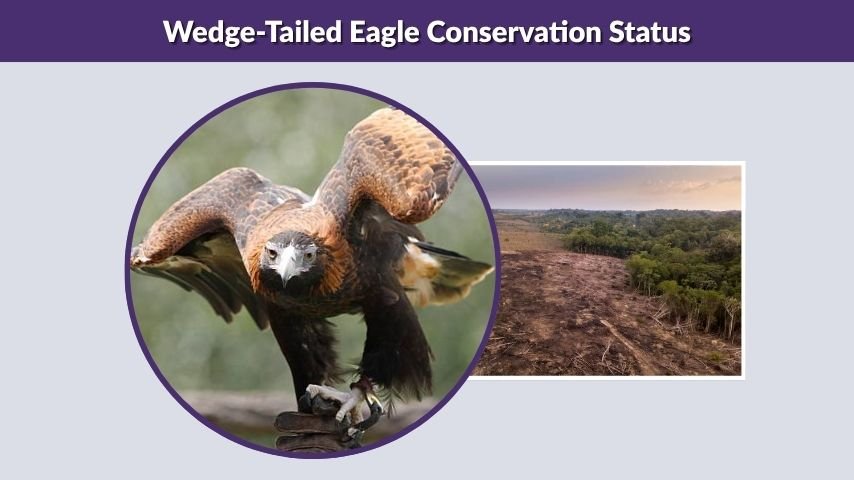
Wedge-tailed eagles remain widespread across Australia, but some regional populations face conservation challenges. Human activity continues to affect nesting sites and food availability. The Tasmanian wedge-tailed eagle is especially vulnerable because of habitat loss and low breeding success.
Are Wedge-Tailed Eagles Endangered?
The species is not considered globally endangered, but some local populations are declining. The Tasmanian subspecies is listed as endangered due to its small population size and environmental threats.
Main Conservation Threats
- Habitat destruction
- Powerline collisions
- Illegal poisoning
- Vehicle strikes
- Disturbance near nests
Conservation Efforts
Wildlife organizations and government agencies work to protect nesting habitats and monitor eagle populations. Education programs also help reduce human-related threats and increase awareness about eagle conservation.
FAQs
How big is a wedge-tailed eagle?
The wedge-tailed eagle is Australia’s largest bird of prey. Adults can reach body lengths of over 3 feet, and large females may weigh more than 11 pounds. Their huge size and powerful build make them one of the world’s most impressive eagles.
What is the wingspan of a wedge-tailed eagle?
A wedge-tailed eagle can have a wingspan between 6 and 9 feet depending on age and sex. Females are usually larger than males. Their broad wings help them soar for long periods while searching for prey across open landscapes.
What do wedge-tailed eagles eat?
Wedge-tailed eagles mainly eat rabbits, birds, reptiles, and small mammals. They also feed on carrion when available. Their strong talons and excellent eyesight allow them to hunt effectively in grasslands, forests, and desert environments throughout Australia.
Are wedge-tailed eagles bigger than bald eagles?
Wedge-tailed eagles often have a larger wingspan than bald eagles, although body weight can vary between individuals. The wedge-tailed eagle is generally considered one of the largest eagles in the Southern Hemisphere and is famous for its long soaring wings.
Are wedge-tailed eagles dangerous to humans?
Attacks on humans are extremely rare. Wedge-tailed eagles usually avoid people and only become defensive near nests during breeding season. Observing these birds from a safe distance helps prevent disturbance and keeps both humans and wildlife safe.
