
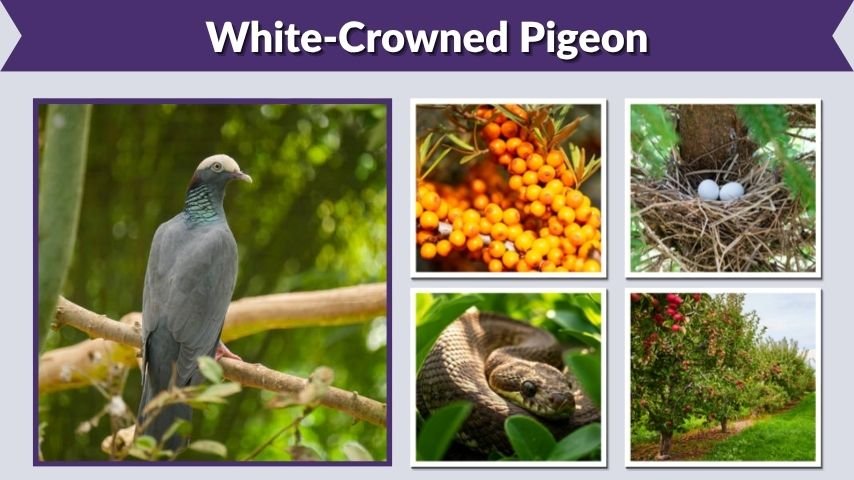
The white-crowned pigeon is a large, elegant pigeon best known for its dark slate-gray body, bright white crown, pale eyes, and strong connection to the Caribbean and southern Florida. In the United States, this bird is most closely associated with the Florida Keys, Biscayne Bay, Florida Bay, and coastal hardwood habitats. Though beautiful and distinctive, it faces pressure from habitat loss, hunting in parts of its range, storms, and other threats.
What Is a White-Crowned Pigeon?
The white-crowned pigeon is a tropical and subtropical pigeon found mainly around the Caribbean, Bahamas, and the southern tip of Florida. Its scientific name is Patagioenas leucocephala. It belongs to the pigeon and dove family, Columbidae, but it is very different from the common city pigeon seen in urban streets and parks.
This bird is often searched as white crowned pigeon, white-crowned pigeon, white crown pigeon, and white crowned pigeons. The correct common spelling is usually white-crowned pigeon, with a hyphen, but all these search terms usually refer to the same species.
Unlike feral pigeons, white-crowned pigeons rely heavily on native fruiting trees and coastal habitats. They are strong fliers and often travel between nesting islands and inland feeding areas.
White-Crowned Pigeon Identification
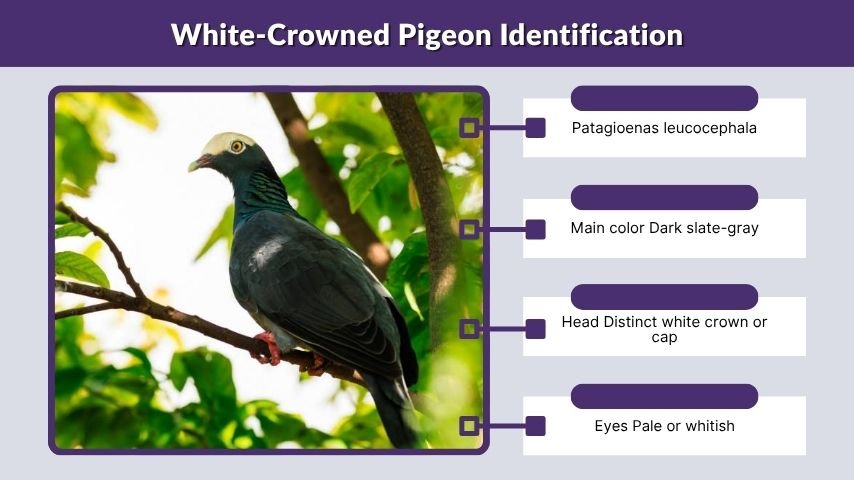
The white-crowned pigeon is fairly easy to identify when seen clearly. It is a large pigeon with a dark gray or slate-colored body and a clean white cap on the head. The eyes are pale, giving the bird a striking facial appearance. The neck may show subtle greenish or purplish iridescence in good light.
Its body is more streamlined than a typical city pigeon, and it often perches high in trees. Many people first notice the bird flying overhead between islands or feeding areas.
| Feature | White-Crowned Pigeon |
| Scientific name | Patagioenas leucocephala |
| Family | Columbidae |
| Main color | Dark slate-gray |
| Head | Distinct white crown or cap |
| Eyes | Pale or whitish |
| Diet | Mostly fruits and seeds |
| U.S. range | Southern Florida and Florida Keys |
| Global status | Near Threatened |
| Main threats | Habitat loss, hunting pressure, storms, disease |
Male and Female White-Crowned Pigeon
Male and female white-crowned pigeons look very similar. Both have the white crown, dark gray body, and pale eyes. In the field, it is usually difficult to separate a male from a female by appearance alone.
Behavior can sometimes offer clues during the breeding season. A male may call, display, or defend a perch, but even then, sex identification is not always simple without close observation.
Female White-Crowned Pigeon
Searches for female white crowned pigeon are common, but there is no dramatic visual difference between males and females. A female may appear slightly duller in some cases, but this is not a reliable field mark. For most birdwatchers, identifying the species is easier than identifying the sex.
White-Crowned Pigeon Range
The white-crowned pigeon is mainly a Caribbean species. It occurs in places such as the Bahamas, Cuba, Jamaica, the Cayman Islands, parts of Central America, and southern Florida. In the United States, it is a very localized bird.
Florida wildlife sources describe its U.S. distribution as restricted mainly to Florida Bay, Biscayne Bay, and the Florida Keys, with some nesting possibly occurring inland in Monroe and Miami-Dade counties.
White-Crowned Pigeon in Florida
The Florida white crowned pigeon is a major search topic because Florida is the only U.S. state where this species is regularly found. It is most strongly linked to southern Florida, especially coastal mangroves and tropical hardwood hammocks.
Good places to associate with the species include:
- Florida Keys
- Key West area
- Biscayne Bay
- Florida Bay
- Everglades region
- Coastal islands
- Mangrove nesting areas
- Tropical hardwood hammocks
Birders in Florida may see white-crowned pigeons flying over roads, islands, or coastal areas in the morning and evening as they move between roosting, nesting, and feeding sites.
Florida Keys White-Crowned Pigeon
The Florida Keys white-crowned pigeon is especially important because the Keys provide both nesting and feeding habitats. Many nesting colonies are located on small offshore islands, while feeding often occurs in hardwood hammocks where fruiting trees are available.
Habitat protection in the Florida Keys is critical because development, storms, sea-level rise, and habitat degradation can reduce the places these birds need to survive.
White-Crowned Pigeon in Key West and Miami
Searches for white crowned pigeon Key West, Little Hamaca Park Key West white crowned pigeons, and white crowned pigeon Miami show local birdwatching interest. Key West and parts of Miami-Dade County can be relevant areas, especially where suitable fruiting trees and coastal habitats remain.
However, sightings can be seasonal or local. These pigeons may fly high and fast, and they are not always easy to observe closely from the ground.
White-Crowned Pigeon Habitat
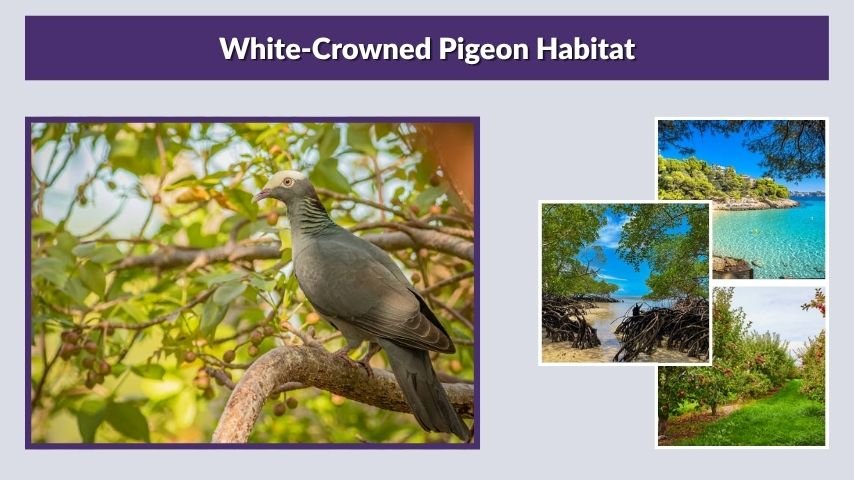
White-crowned pigeons depend on low-lying forest habitats with fruiting trees. In Florida, they use mangrove islands for nesting and tropical hardwood hammocks for feeding. This link between nesting and feeding habitat makes them vulnerable when either habitat type is damaged.
Main Habitat Types
White-crowned pigeon habitat may include:
- Mangrove forests
- Coastal islands
- Tropical hardwood hammocks
- Low-lying forests
- Caribbean dry forests
- Fruiting tree areas
- Coastal scrub
- Protected island refuges
These birds often travel between different habitat types. They may nest in mangroves but fly inland or to nearby islands to feed on fruits and seeds.
Why Habitat Matters
The white-crowned pigeon is sometimes described as a habitat specialist because it depends heavily on native fruiting trees and safe nesting sites. If tropical hammocks are cleared or degraded, the bird loses essential food sources. If mangrove islands are disturbed or damaged, nesting success may decline.
This is one reason the species is considered vulnerable in Florida and Near Threatened globally. BirdLife lists the species as Near Threatened because it depends on low-lying areas where habitat degradation is intense.
White-Crowned Pigeon Diet
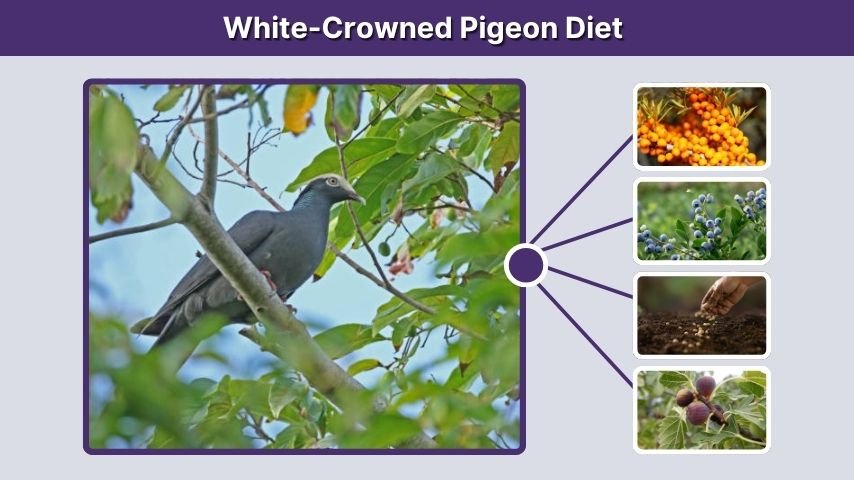
White-crowned pigeons eat mostly fruits and seeds. They are especially important in tropical ecosystems because they swallow fruits and help move seeds across islands and forests.
Searches like what do white crowned pigeons eat, white crowned pigeon diet, white crowned pigeon food, and white-crowned pigeon diet all point to one of the bird’s most important ecological roles.
What Do White-Crowned Pigeons Eat?
Their diet may include:
- Wild fruits
- Berries
- Seeds
- Figs
- Poisonwood fruit
- Fruits from tropical hardwood trees
- Other native tree fruits
They usually feed in trees rather than on sidewalks or city streets. This helps separate them from feral pigeons, which commonly feed on human scraps and grains in urban areas.
Why Is the White-Crowned Pigeon a Keystone Species?
One keyword asks, why is the white crowned pigeon a keystone species. The reason is its role as a seed disperser. By eating fruits and flying long distances, white-crowned pigeons can spread seeds between islands, mangroves, hammocks, and coastal forests.
This is especially important in Caribbean and Florida Keys ecosystems. When fruit-eating birds decline, some native plants may have fewer chances to spread and regenerate naturally.
White-Crowned Pigeon Call and Sound
The white-crowned pigeon call is usually a deep, repeated cooing sound. It is not as familiar as the calls of mourning doves or city pigeons, but it is important for identification in areas where the bird occurs.
Searches such as white crowned pigeon call, white crowned pigeon sound, white crowned pigeon calls sounds, white crowned pigeon coo, and white crowned pigeon call download show that many people want to identify the bird by sound.
What Does a White-Crowned Pigeon Sound Like?
The call is often described as a low, hollow coo. It can be repeated from a perch, especially during the breeding season. Because these pigeons often stay high in trees, the sound may help birdwatchers detect them before they are visible.
When Do They Call?
White-crowned pigeons may call during breeding activity, territorial behavior, or communication with other birds. Early morning and evening can be good times to listen, especially near nesting or feeding habitat.
White-Crowned Pigeon Nesting and Breeding
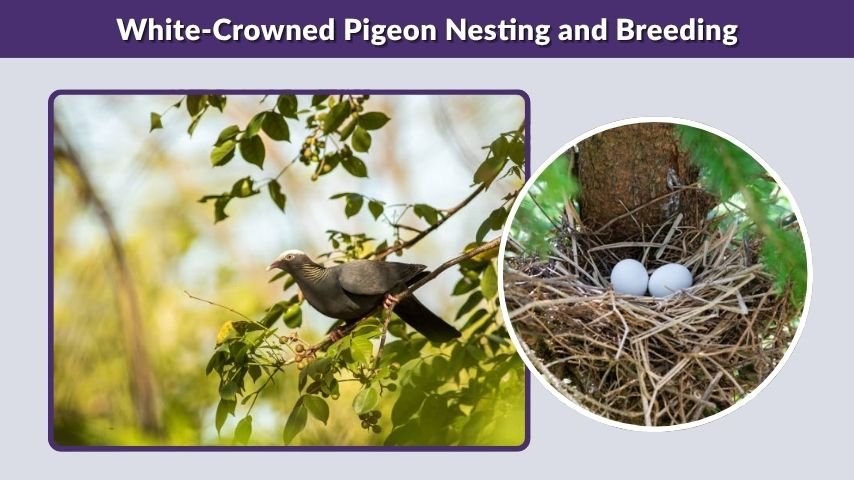
White-crowned pigeons often nest in mangroves or on small islands. Nesting colonies may be located away from heavy human disturbance, which helps protect eggs and chicks from some predators.
Like many pigeons and doves, the nest is usually a simple platform of sticks. It may not look elaborate, but it serves the purpose of holding the eggs and young.
Breeding Behavior
During the breeding season, white-crowned pigeons may commute between nesting colonies and feeding areas. This can involve long flights over water or coastal landscapes. Audubon notes that they are strong, fast fliers and that many Florida nesting colonies are on small offshore islands.
Chicks and Young Birds
Young white-crowned pigeons are cared for by both parents. As with other pigeons and doves, chicks are fed crop milk when young. After leaving the nest, they may still depend on the parents for food for a period of time.
White-Crowned Pigeon Predators and Threats
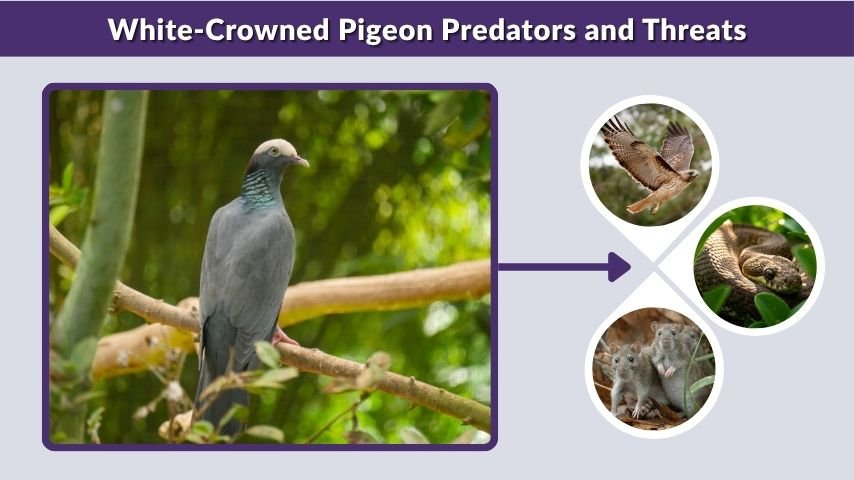
White-crowned pigeons face both natural predators and human-related threats. Predators may take eggs, chicks, or adult birds, while habitat loss can reduce nesting and feeding opportunities.
Natural Predators
Possible predators include:
- Hawks and other raptors
- Snakes
- Raccoons
- Rats
- Feral cats
- Nest predators on islands
- Other opportunistic animals
Predation can be especially serious on nesting islands if invasive mammals are present.
Major Conservation Threats
The biggest threats include:
- Loss of tropical hardwood hammocks
- Mangrove habitat disturbance
- Coastal development
- Hunting pressure in parts of the range
- Illegal hunting
- Severe storms
- Sea-level rise
- Disease
- Human disturbance at nesting sites
NatureServe notes that the population continues to decline due to loss of nesting and foraging habitat as well as legal and illegal hunting.
Is the White-Crowned Pigeon Endangered?
The white-crowned pigeon is not currently listed globally as “Endangered” by the IUCN. It is listed as Near Threatened, with a decreasing population trend.
However, that does not mean it is safe everywhere. In Florida, it is considered vulnerable because its U.S. range is limited and its habitat is under pressure. Audubon estimates the Florida population at about 7,500 pairs and describes it as vulnerable due to habitat loss in the Florida Keys and elsewhere.
White-Crowned Pigeon Florida Protected Species
In Florida, white-crowned pigeons are protected as native wildlife. They occur in sensitive habitats, including federal parks and refuges. Anyone who sees them should avoid disturbing nesting colonies or feeding sites.
Because rules can change and vary by jurisdiction, people should check official Florida Fish and Wildlife Conservation Commission guidance before making any decisions related to handling, hunting, keeping, or disturbing the species.
White-Crowned Pigeon Disease: Trichomonas gallinae
Several keywords mention Trichomonas gallinae in white-crowned pigeons. This refers to a protozoan parasite that can affect pigeons and doves. In birds, trichomoniasis can cause lesions in the mouth, throat, or digestive tract and may interfere with feeding.
This topic is more scientific and veterinary than general birdwatching. If someone finds a sick or weak white-crowned pigeon, they should not try to treat it themselves. Instead, they should contact a licensed wildlife rehabilitator or local wildlife authority.
To reduce disease risk around wild birds:
- Keep birdbaths clean
- Avoid overcrowded feeding areas
- Do not feed moldy or spoiled food
- Report unusual sick bird sightings
- Avoid handling sick wildlife without guidance
White-Crowned Pigeon for Sale: Can You Buy One?
Searches like white crowned pigeon for sale and white-crowned pigeon for sale suggest some people may want to buy this bird. This requires caution.
The white-crowned pigeon is a wild native species in parts of its range and is a conservation concern. Buying, selling, importing, capturing, or keeping one may be illegal without permits. It should not be taken from the wild.
People interested in keeping pigeons should consider legal domestic pigeon breeds instead. Domestic pigeons are bred for human care and are much more appropriate for aviaries or pets.
Before buying any pigeon or dove, check:
- Local wildlife laws
- Import and export rules
- Captive-bred documentation
- Permit requirements
- Seller legality
- Animal welfare standards
Never purchase wild birds from unclear or illegal sources.
White-Crowned Pigeon Hunting and Recipes
Some keywords include white crowned pigeon hunting and white crowned pigeon recipes. These searches should be handled carefully because the species is vulnerable in parts of its range and protected in some places.
Hunting laws vary by country and region. In some Caribbean areas, hunting has historically affected white-crowned pigeon populations. In Florida, anyone should check current official regulations and protections before assuming any hunting is legal.
For an informational article, it is better to emphasize conservation, identification, and habitat protection rather than recipes or hunting guidance.
White-Crowned Pigeon Audubon Print
Searches such as white crowned pigeon Audubon print, Audubon white crowned pigeon, Audubon white-crowned pigeon print, and white crowned pigeon print 16×20 are about artwork rather than the living bird.
John James Audubon illustrated the white-crowned pigeon in Birds of America. Today, reproductions and prints are popular among bird lovers, collectors, and people decorating coastal or nature-themed spaces.
If writing a separate commercial article, you could target keywords around Audubon prints, wall art sizes, framing, and historical bird illustration. For this wildlife article, it is enough to mention that Audubon art is a separate search intent.
White-Crowned Pigeon vs White Victoria Crowned Pigeon
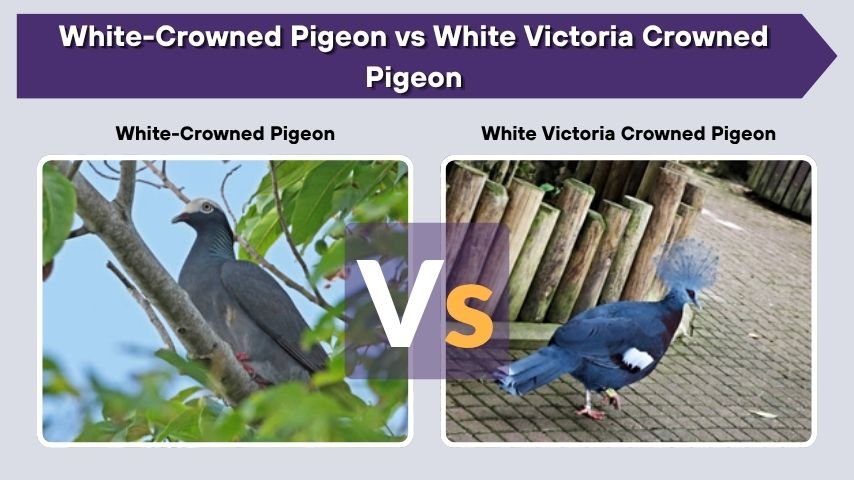
The keyword white Victoria crowned pigeon can cause confusion. A white-crowned pigeon and a Victoria crowned pigeon are completely different birds.
The white-crowned pigeon is a dark gray Caribbean and Florida species with a white cap. The Victoria crowned pigeon is a large blue pigeon from New Guinea with a dramatic lace-like crest. A “white Victoria crowned pigeon” may refer to a rare color variation, captive bird, or confused search term, but it is not the same as the white-crowned pigeon.
FAQs
What is a white-crowned pigeon?
The white-crowned pigeon is a large tropical pigeon with a dark gray body, white crown, and pale eyes. Its scientific name is Patagioenas leucocephala. It lives mainly in the Caribbean and southern Florida, especially around the Florida Keys and coastal habitats.
What do white-crowned pigeons eat?
White-crowned pigeons eat mostly fruits and seeds from native trees. They are important seed dispersers because they swallow fruit and fly between islands, mangroves, and tropical hardwood hammocks, helping some plants spread naturally.
Is the white-crowned pigeon endangered?
Globally, the white-crowned pigeon is currently listed as Near Threatened, not Endangered. However, its population is decreasing, and it is vulnerable in Florida because of habitat loss, limited range, storms, hunting pressure in parts of its range, and coastal development.
Where can you see white-crowned pigeons in Florida?
In Florida, white-crowned pigeons are most associated with the Florida Keys, Biscayne Bay, Florida Bay, Everglades region, and parts of southern Miami-Dade and Monroe counties. They are often seen flying over coastal areas or feeding in fruiting trees.
Can you buy a white-crowned pigeon?
Buying or keeping a white-crowned pigeon may be illegal without proper permits because it is a wild native bird and a conservation concern. It should never be taken from the wild. People interested in pet pigeons should choose legal domestic pigeon breeds instead.