
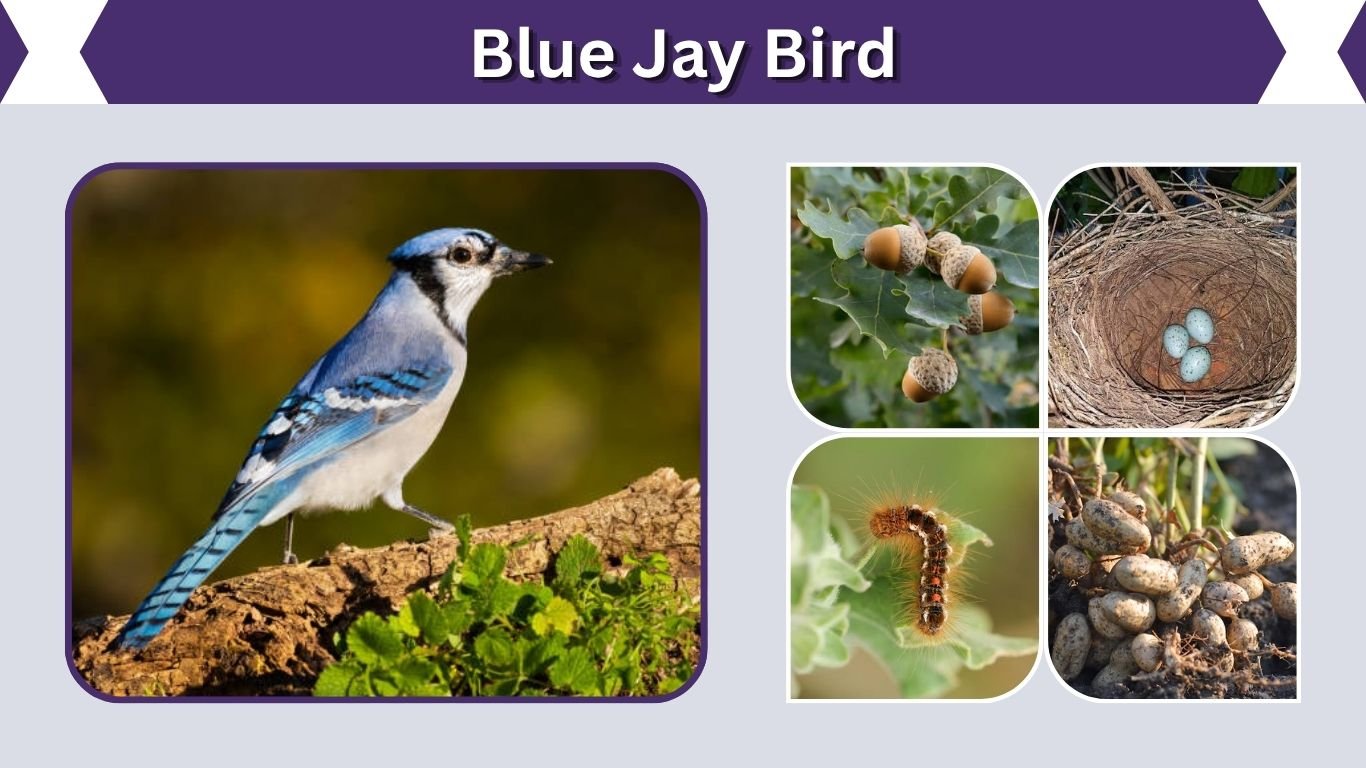
The Blue Jay bird is one of the most recognizable birds in North America, famous for its bright blue feathers, bold personality, and loud calls. These intelligent birds are often seen in forests, parks, gardens, and backyard feeders. Although they look colorful and beautiful, Blue Jays are also strong, clever, and sometimes aggressive around food. Their behavior, diet, nesting habits, and calls make them one of the most interesting backyard birds to watch.
What Is a Blue Jay Bird?
A Blue Jay is a medium-sized songbird in the crow family. It is known for its blue upper body, white or grayish underside, black necklace-like markings, and tall crest on the head. Blue Jays are smart, social, and vocal birds that can adapt well to many habitats.
They are not only beautiful but also very active. You may see them flying between trees, calling loudly, hiding food, or visiting feeders for peanuts and sunflower seeds.
Blue Jay Bird Identification
Blue Jays are easy to recognize once you know their main features.
- Size: Medium-sized songbird, larger than many sparrows and finches
- Color: Bright blue on wings, back, tail, and crest
- Underside: White to pale gray belly and chest
- Head: Blue crest that rises or lowers with mood
- Face: White face with black markings
- Neck: Black collar or necklace-like band
- Wings: Blue, black, and white pattern
- Tail: Long blue tail with black barring
- Bill: Strong black bill for cracking seeds and nuts
Despite their blue appearance, Blue Jays do not have true blue pigment in their feathers. Their color comes from the way feather structure reflects light. This is why a feather may look dull or brownish if crushed or viewed differently.
Male and Female Blue Jays
Male and female Blue Jays look very similar. Unlike Northern Cardinals, where males are bright red and females are brownish, both male and female Blue Jays have blue feathers, black markings, and crests.
The male may be slightly larger, but this difference is difficult to notice in the field. Behavior can sometimes help. During courtship, several males may follow a female, and pairs may stay close during nesting season.
Because their appearance is almost the same, most birdwatchers cannot confidently identify male and female Blue Jays by color alone.
Blue Jay Bird Habitat and Range
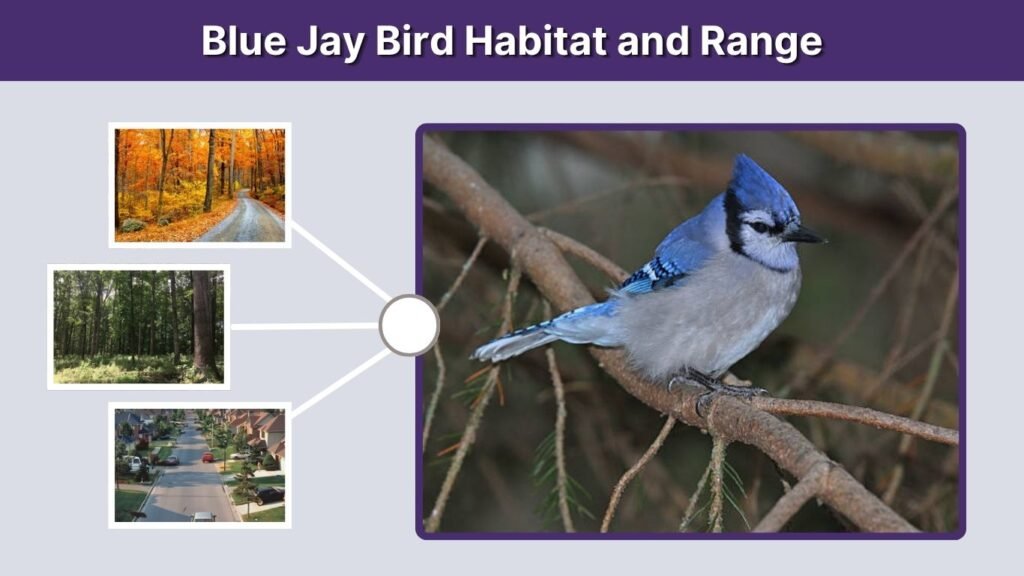
Blue Jays live in many habitats, especially where trees are available. They are common in eastern and central North America and are often seen in forests, suburban yards, city parks, farms, and wooded neighborhoods.
They prefer areas with oak trees because acorns are an important food. However, they can also live around mixed forests, pine woods, gardens, and backyard landscapes.
Where Do Blue Jays Live?
Blue Jays are found across much of eastern and central North America. They are especially common in the eastern United States and parts of southern Canada. Some live year-round in the same area, while others may move seasonally.
Blue Jays can live in:
- Deciduous forests
- Mixed woodlands
- Oak forests
- Pine forests
- Suburban neighborhoods
- City parks
- Farms with trees
- Backyard gardens
- Woodland edges
They are adaptable birds, which is one reason people see them so often near homes. If a yard has trees, shrubs, water, and food, Blue Jays may visit regularly.
Blue Jays in Backyards
Blue Jays often visit backyards with feeders, birdbaths, and trees. They are bold birds and may dominate smaller birds at feeders. Their loud calls can alert other birds to danger, but their aggressive feeding behavior can also make them seem bossy.
They like yards with large trees because trees provide perches, nesting places, and protection. Oak trees are especially useful because Blue Jays love acorns. Shrubs and thick vegetation can also offer cover from predators.
If you want Blue Jays in your yard, provide natural food sources, clean water, and a feeder that can hold larger birds.
What Do Blue Jays Eat?
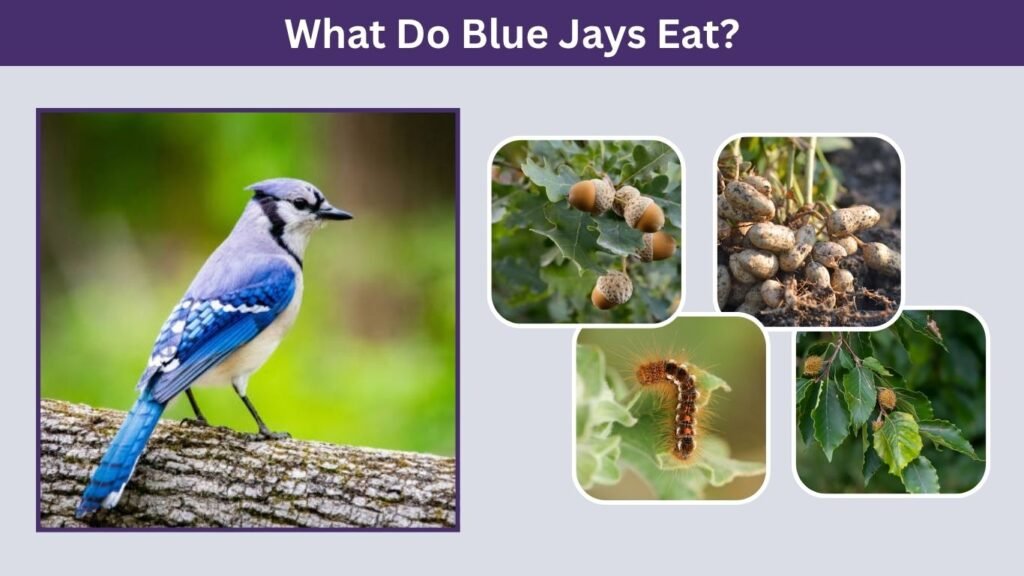
Blue Jays are omnivores, which means they eat both plant and animal foods. Their diet includes nuts, seeds, berries, insects, grains, eggs, and sometimes small animals. However, most of their diet is made up of plant-based foods such as acorns, seeds, and nuts.
They are also known for storing food. Blue Jays may carry acorns or seeds in their throat pouch and hide them in the ground for later.
Common Blue Jay Foods
Blue Jays eat a wide variety of foods depending on the season and location.
Common foods include:
- Acorns
- Beechnuts
- Sunflower seeds
- Peanuts
- Corn
- Berries
- Fruits
- Caterpillars
- Beetles
- Grasshoppers
- Spiders
- Bird eggs on rare occasions
- Small nestlings on rare occasions
Although Blue Jays are sometimes blamed for eating other birds’ eggs, this is not their main food. Most of the time, they eat seeds, nuts, fruits, and insects.
Best Bird Feeder Foods for Blue Jays
Blue Jays are large enough to use platform feeders and hopper feeders. They may struggle with small tube feeders made for tiny birds. A stable feeder gives them space to land and pick up food.
Good feeder foods for Blue Jays include:
- Whole peanuts in the shell
- Shelled peanuts
- Black oil sunflower seeds
- Striped sunflower seeds
- Suet
- Cracked corn
- Mealworms
- Fruit pieces
Peanuts are one of the best foods for attracting Blue Jays. They often grab a peanut quickly and fly away to eat or store it. Always offer unsalted and unseasoned peanuts. Salted snacks, processed foods, and moldy seeds should be avoided.
Blue Jay Bird Call and Sounds
Blue Jays are loud and vocal birds. Their calls can be harsh, sharp, musical, or even imitative. One of their most common calls sounds like a loud “jay-jay,” which is likely where the bird gets its name.
They can also mimic hawk calls, especially Red-shouldered Hawks. This behavior may help warn other birds, confuse competitors, or test whether a predator is nearby.
Why Blue Jays Are So Noisy
Blue Jays use calls to communicate with each other. Their sounds can warn of danger, claim territory, keep family groups together, or announce food. When a hawk, owl, cat, or snake appears, Blue Jays may call loudly and gather in a group.
This behavior is called mobbing. Several birds may scold a predator until it leaves the area. Other birds often pay attention when Blue Jays sound the alarm.
Their loud voices may seem annoying to some people, but these calls play an important role in the bird community.
Blue Jay Song vs Call
Blue Jays are better known for calls than songs. Their calls are loud and sharp, while their softer sounds may be used between mates or family members. They can make squeaks, whistles, rattles, and clicking sounds.
A Blue Jay’s crest can also show mood. When excited, alarmed, or aggressive, the crest may stand high. When calm, the crest may lie flatter. By watching both sound and body language, you can understand more about what the bird is doing.
Blue Jay Bird Nest and Eggs
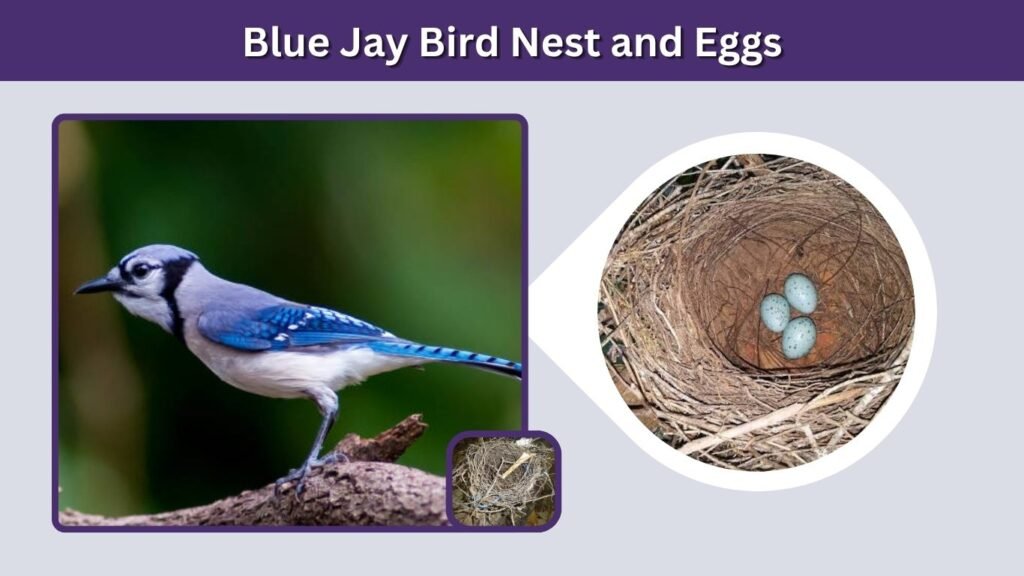
Blue Jays build open cup-shaped nests in trees or large shrubs. Both males and females may help gather materials, but the female usually does much of the nest shaping. They often place nests in the fork of a tree branch, where leaves and branches provide cover.
Their nests are usually made from twigs, grass, bark strips, roots, leaves, and sometimes mud. The inside is lined with softer materials.
Blue Jay Nesting Facts
Blue Jays are careful nest builders and protective parents. They may become noisy or defensive if people or predators come too close to the nest.
| Nesting Feature | Blue Jay Details |
| Nest type | Open cup nest |
| Nest location | Trees or large shrubs |
| Common height | Often medium height in branches |
| Eggs per clutch | Usually 3 to 6 eggs |
| Egg color | Greenish, bluish, or buff with spots |
| Incubation | About 16 to 18 days |
| Baby bird stage | Chicks stay in nest about 17 to 21 days |
Blue Jays often choose nesting sites with good cover. They do not usually nest in standard birdhouses because they are not cavity nesters.
Blue Jay Eggs and Baby Birds
Blue Jay eggs are usually light greenish, bluish, or buff-colored with brown or gray markings. The female does most of the incubation, while the male may bring food.
Baby Blue Jays hatch helpless and depend fully on their parents. Both parents feed the chicks. Young birds eat mostly insects at first because insects provide protein for fast growth.
After leaving the nest, young Blue Jays may still follow their parents and beg for food. They gradually learn to find food, avoid predators, and make calls.
Blue Jay Behavior and Intelligence
Blue Jays belong to the corvid family, the same bird family that includes crows, ravens, and magpies. This family is known for intelligence, memory, and problem-solving ability.
Blue Jays can remember food storage places, recognize danger, communicate with many calls, and adapt to human environments. Their clever behavior is one reason they are so successful.
Food Caching Behavior
One of the most interesting Blue Jay behaviors is food caching. They collect acorns, nuts, and seeds, then hide them in soil, leaves, or tree bark. Later, they return to eat the stored food.
This behavior helps Blue Jays survive winter, but it also helps forests. When Blue Jays forget some hidden acorns, those acorns may grow into new oak trees. In this way, Blue Jays play a role in spreading trees.
A single Blue Jay can carry more than one seed or acorn at a time. It may hold food in its bill, mouth, or throat pouch before flying away to hide it.
Are Blue Jays Aggressive?
Blue Jays can be aggressive, especially around feeders, nests, or predators. They may chase smaller birds away from food or loudly scold animals that come too close. This behavior makes some people think they are mean birds.
However, Blue Jays are not aggressive all the time. They are simply bold, intelligent, and protective. Their loud warnings can help other birds notice predators. In a natural setting, this behavior is part of their survival strategy.
To reduce feeder conflict, offer food in more than one location. A separate peanut feeder for Blue Jays can help smaller birds feed peacefully elsewhere.
Blue Jay Feathers and Meaning
Blue Jay feathers are admired for their beautiful blue, black, and white pattern. Many people also connect Blue Jays with symbolism, such as confidence, communication, courage, protection, or curiosity.
However, the biological side of their feathers is just as interesting. Their blue color is structural, not pigment-based, and their feather pattern helps them stand out.
Blue Jay Feather Facts
Blue Jay feathers may look bright blue in sunlight, but the color comes from light reflection. If the feather structure is damaged, the blue may disappear or appear dull.
Blue Jays use their feathers for flight, insulation, communication, and display. The crest is especially expressive. A raised crest can signal alarm, excitement, or aggression, while a lowered crest can show calm behavior.
In many places, wild bird feathers are protected by law, so people should not collect or keep Blue Jay feathers unless local rules allow it.
Blue Jay Bird Symbolism
Many people see Blue Jays as symbols of confidence, clarity, intelligence, and strong communication. Their loud calls and bold behavior make them easy to notice, so they often appear in folklore, personal signs, and spiritual meanings.
A Blue Jay may represent courage, alertness, loyalty, or protection. These meanings are cultural and personal, not scientific facts. Still, they show how strongly this bird captures human attention.
Whether you view it spiritually or naturally, the Blue Jay is a bird with a powerful presence.
Birds That Look Like Blue Jays
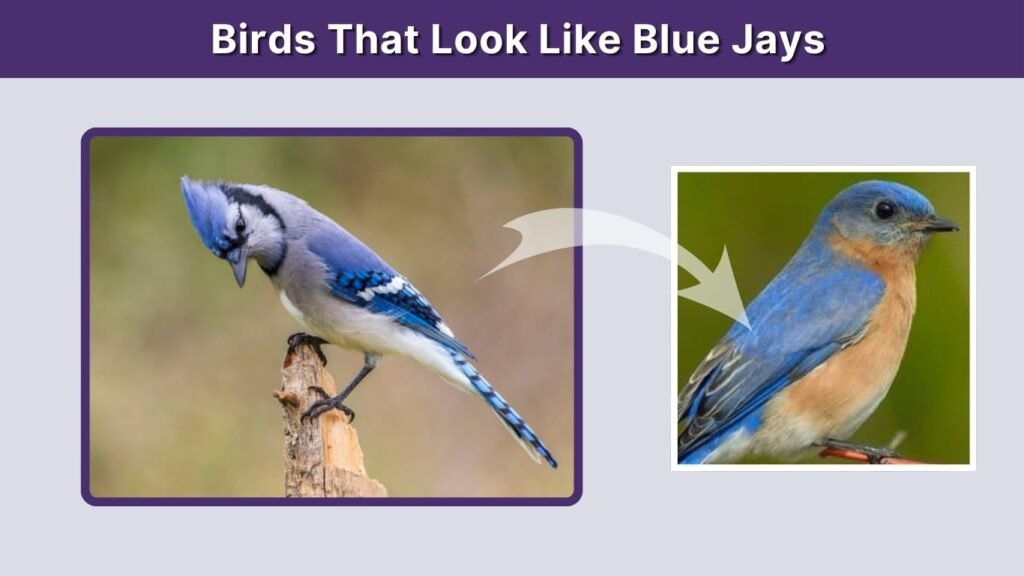
Several birds may look similar to Blue Jays because they have blue feathers, crests, or black markings. However, the Blue Jay has a unique combination of a blue crest, white face, black collar, and barred wings and tail.
Some people also confuse Blue Jays with bluebirds, but they are very different birds.
Blue Jay vs Bluebird
Blue Jays and bluebirds both have blue coloring, but they are not the same. Blue Jays are larger, louder, and have a crest. Bluebirds are smaller, softer-looking, and usually have orange or rusty coloring on the chest.
Bluebirds are gentle insect- and berry-eating birds that often use nest boxes. Blue Jays are stronger, louder, and usually nest in trees. Blue Jays also have black-and-white wing markings, while bluebirds have smoother blue plumage.
Similar Birds
Birds that may remind people of Blue Jays include Steller’s Jay, California Scrub-Jay, Florida Scrub-Jay, Canada Jay, and Mountain Bluebird. Some have blue coloring, but their body shape, crest, range, and markings are different.
Steller’s Jays, for example, have a dark head and tall crest. Scrub-jays are blue and gray but do not have the same bold crest as Blue Jays. Learning location and field marks helps with correct identification.
FAQs
What does a Blue Jay bird eat?
A Blue Jay eats acorns, nuts, seeds, berries, fruits, insects, and sometimes eggs or small animals. Most of its diet is plant-based, especially acorns and seeds. At backyard feeders, Blue Jays enjoy peanuts, sunflower seeds, suet, and cracked corn.
How can I attract Blue Jays to my feeder?
To attract Blue Jays, offer unsalted peanuts, sunflower seeds, suet, and cracked corn in a platform or hopper feeder. Blue Jays need a stable feeding space because they are larger than many songbirds. Nearby trees and shrubs also make them feel safer.
Do male and female Blue Jays look different?
Male and female Blue Jays look almost the same. Both have blue feathers, black markings, white or pale undersides, and a crest. Males may be slightly larger, but the difference is hard to see. Behavior during courtship may be more useful than color.
Do Blue Jays eat other birds?
Blue Jays may occasionally eat eggs or nestlings, but this is not their main diet. Most of their food comes from acorns, nuts, seeds, fruits, and insects. Their reputation for raiding nests is often stronger than their actual dependence on that food.
Where do Blue Jays build their nests?
Blue Jays usually build open cup nests in trees or large shrubs. They often choose branch forks with good cover. Their nests are made from twigs, bark, roots, grass, leaves, and sometimes mud. They usually do not nest in standard birdhouses.
