
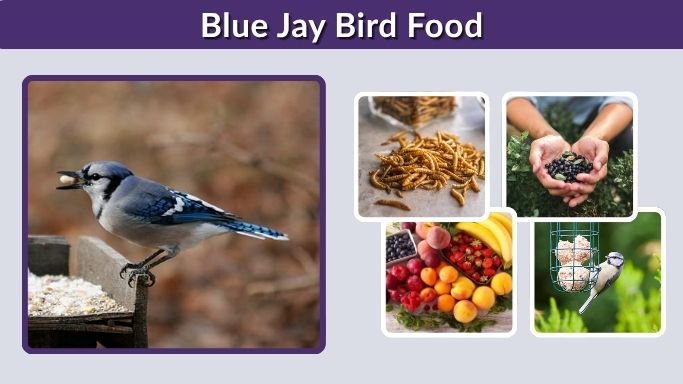
Blue Jays are bold, intelligent birds with a flexible diet. They eat nuts, seeds, fruits, insects, grains, and sometimes small animal foods. In backyards, they are especially attracted to peanuts, sunflower seeds, suet, and platform feeders. Their strong bills help them crack hard foods, while their excellent memory helps them store nuts and seeds for later. Understanding the best Blue Jay bird food can help you attract them safely and support them through every season.
What Do Blue Jays Eat?
Blue Jays are omnivores, which means they eat both plant and animal foods. Most of their diet includes nuts, seeds, acorns, berries, fruits, and insects. They may occasionally eat eggs or nestlings, but this is not their main food source.
Their diet changes with the season. In spring and summer, they eat more insects and protein-rich foods. In fall and winter, they rely more on acorns, nuts, seeds, and stored food.
Blue Jay Diet Overview
Blue Jays are members of the corvid family, the same bird family as crows and ravens. Like other corvids, they are smart and adaptable. They can remember where they hide food and return to it later.
Common Blue Jay foods include:
- Nuts
- Acorns
- Seeds
- Berries
- Fruits
- Insects
- Suet
- Corn
- Mealworms
- Small animal foods on rare occasions
Blue Jays often carry food away from feeders instead of eating everything on the spot. They may hide peanuts, seeds, or acorns in soil, leaves, tree bark, or other secret places.
Wild Food vs Feeder Food
In the wild, Blue Jays eat whatever is available in their habitat. Oak forests are especially important because acorns are one of their favorite natural foods. They also eat insects, berries, fruits, and seeds from native plants.
At feeders, Blue Jays usually prefer larger, high-energy foods. They like peanuts, sunflower seeds, suet, and cracked corn. Small seed mixes made for finches are not ideal because Blue Jays are larger birds and need a stable feeding space.
A good feeding setup should include both natural habitat and feeder food. Feeders attract Blue Jays quickly, but trees, shrubs, and native plants support them for the long term.
10 Best Foods for Blue Jays
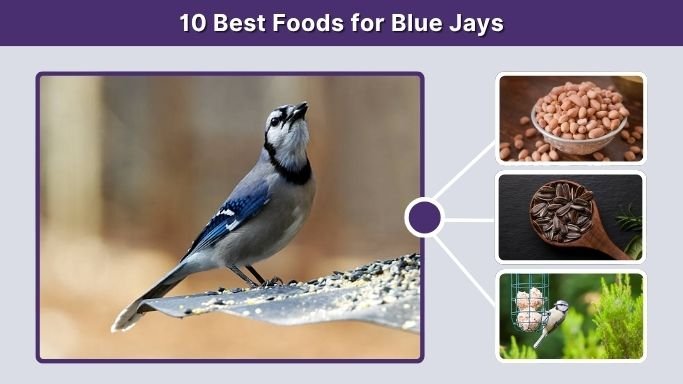
Blue Jays are not picky, but some foods attract them better than others. The best foods give them energy, protein, fat, and natural nutrition. These foods also match what they eat in forests, yards, and parks.
If you want to bring Blue Jays to your backyard, offer the right food in the right feeder. A tray, platform, or hopper feeder works better than a small tube feeder.
1. Peanuts
Peanuts are one of the best foods for Blue Jays. Many backyard birdwatchers use peanuts to attract them because Blue Jays quickly recognize this food and return often.
You can offer peanuts in the shell or shelled peanut pieces. Whole peanuts in the shell are exciting for Blue Jays because they pick them up, fly away, and crack them open elsewhere. Shelled peanuts are easier to eat and work well in tray feeders.
Only offer unsalted, unseasoned peanuts. Salted peanuts, roasted snack peanuts with flavoring, or old moldy peanuts can harm birds. Peanuts should be fresh and dry.
2. Black Oil Sunflower Seeds
Black oil sunflower seeds are excellent Blue Jay bird food. They are high in fat, easy to crack, and loved by many backyard birds. Blue Jays use their strong bills to open the shells and eat the nutritious seed inside.
These seeds are useful in winter because they provide energy during cold weather. They also work well in mixed feeding stations where cardinals, chickadees, finches, and nuthatches visit.
For Blue Jays, use a hopper feeder or platform feeder. Small hanging tube feeders may not give them enough room to land comfortably.
3. Striped Sunflower Seeds
Striped sunflower seeds are larger and have thicker shells than black oil sunflower seeds. Blue Jays can handle them easily because of their strong bills.
These seeds are good if you want to attract larger birds while reducing visits from some smaller birds. Blue Jays, cardinals, grosbeaks, and other strong-billed birds can crack them.
Striped sunflower seeds are not always as popular as black oil sunflower seeds, but they are still a strong choice for Blue Jays. They are especially useful in a feeder designed for bigger birds.
4. Acorns
Acorns are one of the most important natural foods for Blue Jays. In oak forests, Blue Jays collect and hide acorns for later. This behavior helps them survive colder months and may also help spread oak trees.
Blue Jays can carry acorns in their bill and throat pouch. They often hide them in the ground and return later when food is harder to find.
If your yard has oak trees, Blue Jays may visit naturally. Leaving some acorns under trees can support them, but avoid placing spoiled or moldy acorns in feeders. Natural acorns are best when they come from healthy trees.
5. Suet
Suet is a high-fat food that can attract Blue Jays, especially in colder weather. It gives birds quick energy and can be helpful during winter, migration periods, or harsh weather.
Blue Jays may eat plain suet, peanut suet, or suet mixed with seeds and insects. Use a strong suet feeder because Blue Jays are larger than many small songbirds.
Avoid soft, melting suet in hot weather. Spoiled or greasy suet can become unsafe. In warm climates, use no-melt suet cakes or offer suet only during cooler parts of the year.
Natural Foods Blue Jays Love
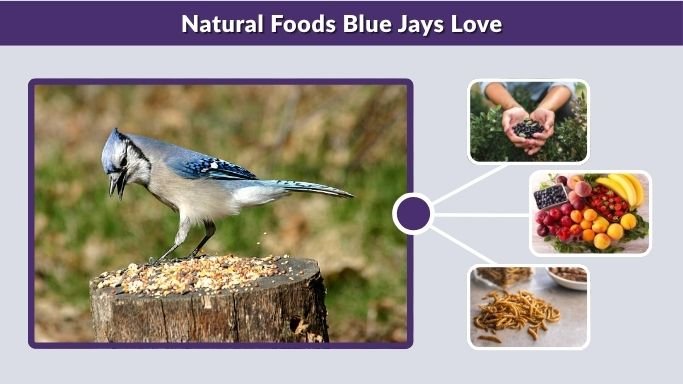
Blue Jays are not only feeder birds. They are wild birds that depend heavily on natural food sources. A yard with trees, shrubs, leaf litter, and native plants can support them better than feeders alone.
Natural foods also help during nesting season. Adult Blue Jays may eat seeds and nuts, but young birds need more soft protein from insects.
6. Berries
Blue Jays eat many types of berries. Berries provide natural sugar, moisture, and nutrients. They are especially useful in late summer, fall, and winter when insects may be less available.
They may eat berries from dogwood, elderberry, serviceberry, blackberry, raspberry, grape, holly, and viburnum. Native berry plants are especially helpful because they also support insects and provide cover.
Planting berry-producing shrubs is one of the best ways to attract Blue Jays naturally. These plants also help other birds, such as cardinals, thrushes, waxwings, and mockingbirds.
7. Fruits
Blue Jays may eat fruits when they find them in yards, gardens, orchards, or wild habitats. They can peck at soft fruits and carry small pieces away.
They may eat apple pieces, grapes, cherries, blueberries, mulberries, blackberries, and other soft fruits. Fruit is not their main food, but it adds variety to their diet.
If you offer fruit, use small fresh pieces. Remove leftovers quickly because fruit spoils fast and may attract ants, flies, rodents, or raccoons. Never offer fruit with sugar, syrup, chocolate, or seasoning.
8. Insects
Insects are important Blue Jay food, especially in spring and summer. Blue Jays eat beetles, caterpillars, grasshoppers, crickets, spiders, moths, and other small invertebrates.
Insects provide protein, which is especially important during breeding season. Parent Blue Jays feed many insects to their chicks because baby birds need protein to grow feathers, muscles, and strong bodies.
A yard with native plants and fewer pesticides will naturally have more insects. This helps Blue Jays and many other birds raise healthier young.
9. Mealworms
Mealworms are a useful feeder food for Blue Jays, especially during nesting season. They provide protein and can attract insect-eating birds.
You can offer dried or live mealworms in a tray feeder. Live mealworms may be more attractive, but dried mealworms are easier to store. Soaking dried mealworms in water can make them softer and more useful during hot weather.
Mealworms should be offered as a supplement, not the only food. Blue Jays still need a varied diet that includes seeds, nuts, fruits, and natural insects.
10. Cracked Corn
Cracked corn is another food Blue Jays may eat at feeders. It provides energy and is often included in birdseed mixes. Blue Jays can pick up corn pieces easily from trays or platform feeders.
However, cracked corn must be kept dry. Wet corn can spoil or grow mold, which is unsafe for birds. Offer it in small amounts and clean the feeder area regularly.
Cracked corn can also attract squirrels, pigeons, doves, ducks, and other animals. If unwanted visitors become a problem, use peanuts and sunflower seeds instead.
Best Feeder for Blue Jay Bird Food
Blue Jays are larger than many backyard birds, so feeder style matters. They need space to land, balance, pick up food, and fly away. A tiny tube feeder may work for small birds but is usually not the best choice for Blue Jays.
The right feeder can make your yard more attractive to them while reducing wasted food.
Feeder Types That Work Well
Blue Jays prefer feeders that are open, strong, and stable.
Good feeder options include:
- Platform feeders
- Tray feeders
- Hopper feeders
- Peanut wreath feeders
- Large suet feeders
- Ground feeding trays
- Wide window feeders
A peanut wreath feeder can be especially fun because Blue Jays must pull peanuts out one by one. This gives them a natural challenge and keeps them returning.
Place feeders near trees or shrubs, but not too close to hiding spots for cats. Blue Jays like cover, but they also need a safe view of the area.
How to Feed Blue Jays Safely
Safe feeding is not only about food choice. Cleanliness matters too. Old food, wet seeds, moldy peanuts, and dirty feeders can spread disease.
To feed Blue Jays safely, keep food fresh and remove spoiled items. Wash feeders regularly and allow them to dry before refilling. During rainy weather, use smaller amounts of food so it does not sit wet for too long.
Also avoid feeding too much processed human food. Blue Jays may eat many things, but that does not mean all foods are healthy for them.
Foods Blue Jays Should Not Eat
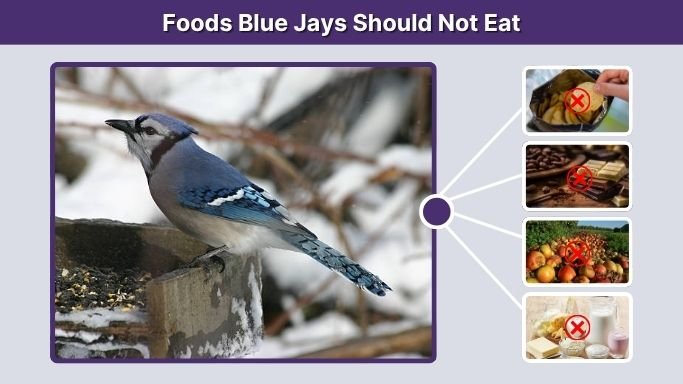
Blue Jays are bold and curious, so they may try foods that are not good for them. Backyard feeding should focus on natural, safe, and simple foods.
Avoid salty, sugary, greasy, moldy, or heavily processed items. These foods can cause health problems and may attract pests.
Unsafe Foods for Blue Jays
Do not offer foods that can harm birds or spoil quickly.
Avoid these foods:
- Salted peanuts
- Seasoned nuts
- Chips
- Cookies
- Chocolate
- Bread as a main food
- Moldy seeds
- Moldy corn
- Spoiled fruit
- Greasy leftovers
- Candy
- Milk or dairy products
Bread is a common mistake. It fills birds but gives poor nutrition. Moldy bread can be dangerous. If you want to feed Blue Jays well, choose peanuts, sunflower seeds, suet, berries, and clean water instead.
Why Moldy Food Is Dangerous
Moldy food can make birds sick. Seeds, peanuts, corn, and fruit can all grow mold if they stay wet or old. Birds may not always avoid spoiled food, so it is your job to keep feeders clean.
Check feeders after rain. Remove clumped seed, wet corn, and old peanut pieces. Clean trays and feeding surfaces often.
Good feeding habits protect not only Blue Jays but also cardinals, finches, chickadees, woodpeckers, and other backyard birds.
Seasonal Blue Jay Feeding Tips
Blue Jays eat different foods during different seasons. A smart feeding plan changes with the weather and the birds’ needs.
Spring and summer feeding should support nesting and chick growth. Fall and winter feeding should provide energy and stored food.
Spring and Summer
In spring and summer, Blue Jays need protein-rich food. Insects, caterpillars, and mealworms are especially useful. Adult birds may also eat seeds and nuts, but chicks need soft animal foods.
This is a good time to avoid pesticides. If you kill too many insects, parent birds may have trouble finding enough food for their young.
Offer mealworms, peanuts, sunflower seeds, and clean water. Keep feeders clean because warm weather can spoil food faster.
Fall and Winter
In fall and winter, Blue Jays rely more on acorns, nuts, sunflower seeds, suet, and stored food. They may visit feeders more often when natural food is covered by snow or less available.
Peanuts and suet are excellent cold-weather foods. Black oil sunflower seeds also provide energy. Keep feeders filled during early morning and late afternoon when birds are most active.
A heated birdbath can help in freezing areas, but even a regular clean water source is useful when temperatures are mild.
FAQs
What is the best food for Blue Jays?
The best food for Blue Jays is unsalted peanuts, especially whole peanuts in the shell or shelled peanut pieces. They also enjoy black oil sunflower seeds, striped sunflower seeds, suet, acorns, berries, mealworms, and cracked corn. A platform or hopper feeder works best for them.
Do Blue Jays eat sunflower seeds?
Yes, Blue Jays eat sunflower seeds. They can crack both black oil sunflower seeds and striped sunflower seeds with their strong bills. Black oil sunflower seeds are easier to open and provide good energy, while striped sunflower seeds are larger and attract strong-billed birds.
Can Blue Jays eat peanuts?
Yes, Blue Jays love peanuts. Offer only unsalted and unseasoned peanuts. Peanuts in the shell are great because Blue Jays enjoy carrying them away and cracking them open. Shelled peanut pieces also work well in platform feeders or peanut feeders.
Do Blue Jays eat insects?
Yes, Blue Jays eat insects such as beetles, caterpillars, grasshoppers, crickets, spiders, and moths. Insects are especially important during nesting season because baby Blue Jays need protein-rich food. Native plants and fewer pesticides help provide natural insects.
What foods are bad for Blue Jays?
Bad foods for Blue Jays include salted peanuts, chips, cookies, chocolate, moldy seeds, spoiled fruit, greasy leftovers, and bread as a main food. These foods can be unhealthy or dangerous. Fresh peanuts, sunflower seeds, suet, berries, insects, and clean water are safer choices.
