
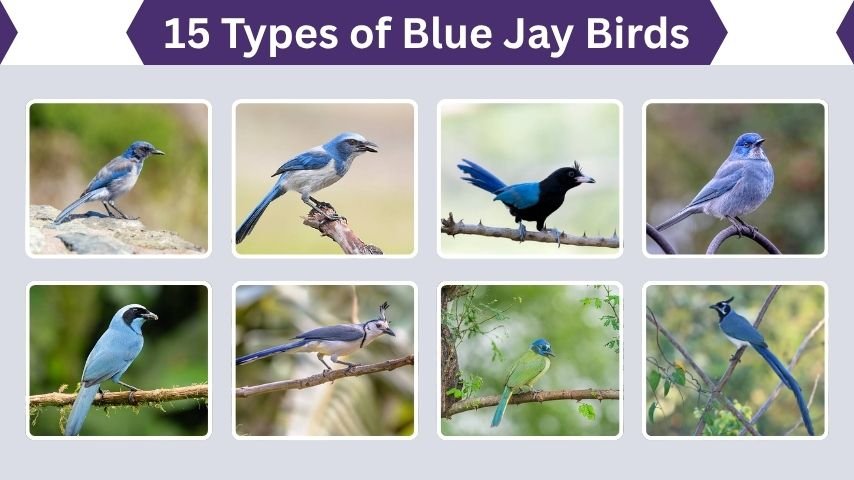
Blue jay birds are some of the most colorful and intelligent members of the crow family. While the name “Blue Jay” often refers to one familiar North American species, many other jay birds also show beautiful shades of blue, turquoise, green, black, and white. These birds live in forests, scrublands, mountains, islands, and even backyard habitats. Some are common and easy to spot, while others have very limited ranges. In this article, we will explore 15 types of blue jay birds, including their identification, habitat, behavior, diet, and lifecycle.
1. Blue Jay
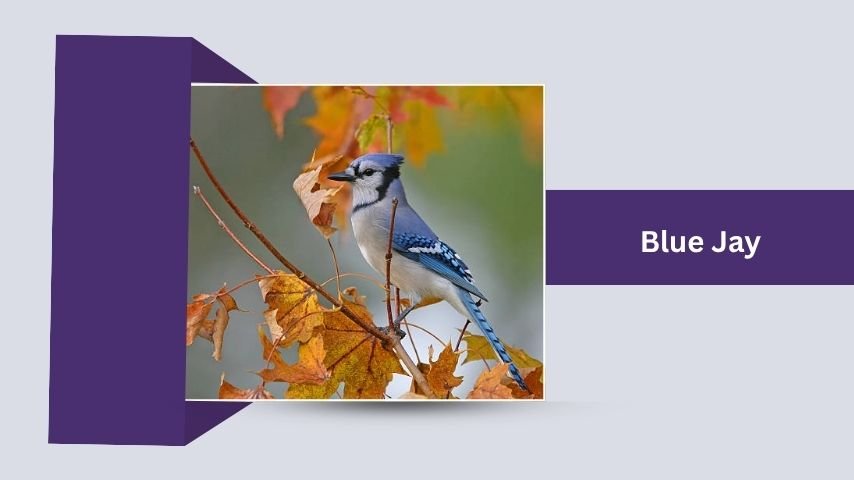
The Blue Jay is one of the most recognizable blue birds in North America. Known for its bright color, loud calls, and bold personality, this bird is common around forests, parks, gardens, and backyard feeders. It belongs to the crow family, which helps explain its intelligence and curious behavior. Blue Jays are often seen near oak trees because acorns are one of their favorite foods.
Identification
- Medium-sized songbird with a strong body and long tail
- Bright blue upperparts with white and black markings
- Noticeable crest on the head that can rise or flatten
- White or pale gray underside
- Black necklace-like marking around the throat
- Males and females look very similar
- Often recognized by its loud “jay-jay” call
Habitat and Distribution
Blue Jays are mostly found in eastern and central North America. They live in deciduous forests, mixed woodlands, forest edges, towns, parks, and suburban neighborhoods. They are especially common where oak trees grow because acorns provide an important food source. They also adapt well to human areas and often visit bird feeders, especially when peanuts, sunflower seeds, or suet are available.
Behavior and Diet
Blue Jays are active, noisy, and intelligent birds. They often move through trees in small groups and may warn other birds when predators are nearby. Their diet includes acorns, nuts, seeds, berries, insects, and sometimes eggs or nestlings from other birds. They also store food for later, which helps spread oak trees when forgotten acorns grow into new plants.
Lifecycle
Blue Jays usually build open cup-shaped nests in trees. Both parents help care for the young. After hatching, the chicks stay in the nest for about 17 to 21 days before they leave. Young birds may remain near their parents for some time while they learn to find food and survive on their own.
2. Steller’s Jay
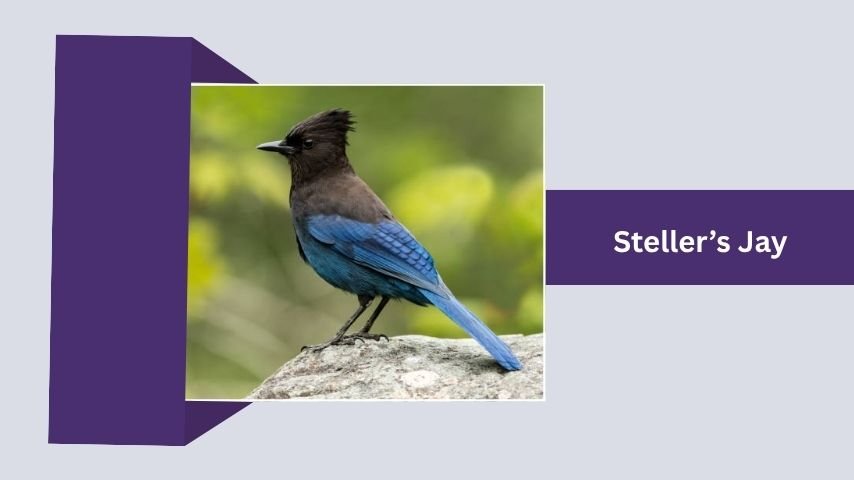
The Steller’s Jay is a striking blue-and-black jay known for its tall crest, bold attitude, and loud calls. It is closely related to the Blue Jay but usually has a darker head and upper body. This bird is often seen in mountain forests, campgrounds, parks, and wooded neighborhoods, especially in western North America.
Identification
- Medium-sized jay with a strong body and long tail
- Deep blue wings, tail, and lower body
- Dark black or charcoal head, crest, neck, and upper chest
- Tall pointed crest on the head
- Blue or pale streaks sometimes visible on the forehead
- Strong black bill and dark eyes
- Loud, harsh calls often heard before the bird is seen
Habitat and Distribution
Steller’s Jays are mostly found in western North America, from Alaska and western Canada down through the western United States, Mexico, and parts of Central America. They prefer coniferous forests, mixed woodlands, and mountain areas, but they can also live near towns and picnic sites. In many places, they become comfortable around people and may visit campsites or backyard feeders.
Behavior and Diet
Steller’s Jays are intelligent, curious, and sometimes bold around humans. They often search for food in trees, on the ground, and near picnic areas. Their diet includes nuts, seeds, berries, fruits, insects, eggs, and small animals. They also enjoy peanuts and sunflower seeds at feeders. Like other jays, they may store food in hidden spots and return to it later.
Lifecycle
During the breeding season, Steller’s Jays build nests in trees, usually using twigs, grass, moss, and other plant materials. The female lays several eggs, and both parents help protect the nest and feed the young. After hatching, the chicks stay in the nest until they are strong enough to fly. Young Steller’s Jays continue learning from their parents as they develop feeding and survival skills.
3. California Scrub-Jay
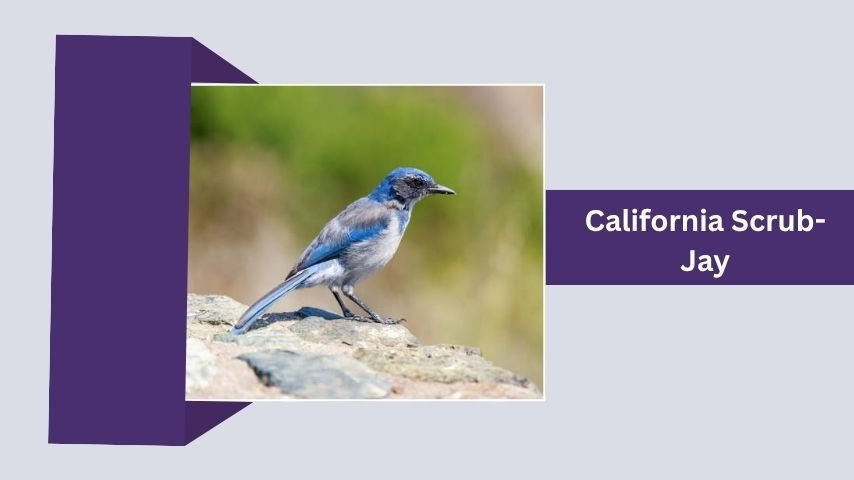
The California Scrub-Jay is a bright blue jay found mainly along the Pacific Coast. It is known for its bold behavior, sharp calls, and habit of visiting yards, parks, oak woodlands, and scrubby areas. Unlike the Blue Jay and Steller’s Jay, this species does not have a crest, giving it a smoother-headed appearance.
Identification
- Medium-sized jay with a long tail and strong bill
- Bright blue head, wings, and tail
- Grayish-brown back and pale underside
- White throat with a blue necklace-like border
- No crest on the head
- Dark eye line that gives the face a sharp look
- Often seen hopping on the ground or perching in shrubs
Habitat and Distribution
The California Scrub-Jay lives mostly in coastal and western parts of North America, especially California, western Oregon, Washington, and Baja California. It prefers oak woodlands, chaparral, scrublands, open forests, parks, and suburban neighborhoods. This bird adapts well to human areas, especially where trees, shrubs, and food sources are available. It is often seen in yards with bird feeders, fruit trees, or native plants.
Behavior and Diet
California Scrub-Jays are active, smart, and sometimes very bold. They often move in pairs or family groups while searching for food. Their diet includes acorns, seeds, berries, insects, spiders, small lizards, and occasionally eggs from other birds. They are famous for storing acorns in the ground and returning later to eat them. This caching behavior also helps oak trees spread when some buried acorns are forgotten.
Lifecycle
During the breeding season, California Scrub-Jays build nests in trees or dense shrubs. The nest is usually made from twigs, grass, roots, and other plant materials. The female lays several eggs, and both parents help protect the nest and feed the chicks. After the young birds leave the nest, they may stay close to their parents for a while as they learn how to find food and avoid danger.
4. Woodhouse’s Scrub-Jay

The Woodhouse’s Scrub-Jay is a blue, gray, and white jay found mainly in dry regions of western North America. It was once grouped with the California Scrub-Jay, but it is now treated as a separate species. This bird is known for its sharp calls, long tail, and ability to survive in open, dry habitats such as pinyon-juniper woodlands and desert edges.
Identification
- Medium-sized jay with a slim body and long tail
- Blue head, wings, and tail
- Grayish back and pale gray underside
- White throat with a blue border around it
- No crest on the head
- Long, strong bill used for cracking seeds and nuts
- Often looks slightly duller than the California Scrub-Jay
Habitat and Distribution
Woodhouse’s Scrub-Jays are mostly found in the interior western United States and parts of Mexico. They live in dry woodlands, pinyon-juniper forests, oak scrub, sagebrush areas, and desert foothills. Unlike coastal scrub-jays, they are more closely linked to arid landscapes. These birds are often seen perched on low trees, fence posts, or shrubs as they scan the area for food and danger.
Behavior and Diet
Woodhouse’s Scrub-Jays are intelligent and alert birds. They usually move alone, in pairs, or in small family groups. Their diet includes seeds, acorns, pine nuts, berries, insects, spiders, and small animals. They are especially known for storing food in the ground or under leaves. This habit helps them survive during colder months or dry periods when food is harder to find.
Lifecycle
During the breeding season, Woodhouse’s Scrub-Jays build nests in trees or dense shrubs. The nest is usually made with twigs, grasses, roots, and softer materials for lining. The female lays several eggs, and both parents help care for the young. After the chicks leave the nest, they may remain close to the adults while learning how to search for food and recognize threats in their environment.
5. Florida Scrub-Jay
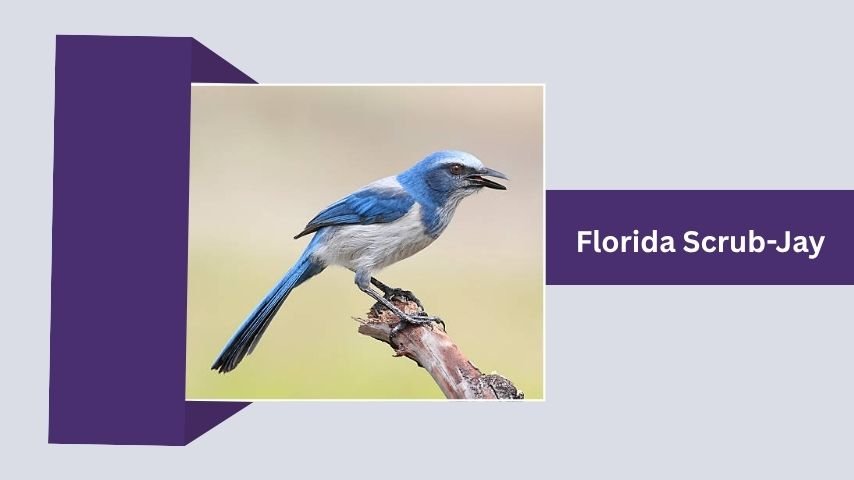
The Florida Scrub-Jay is a rare blue-and-gray jay found only in Florida. It is one of the most special birds in the United States because it lives in a very limited habitat and does not naturally occur anywhere else. This bird is known for its friendly-looking behavior, family groups, and strong connection to Florida scrublands.
Identification
- Medium-sized jay with a long tail and strong bill
- Blue head, wings, and tail
- Pale gray back and underside
- Whitish throat and chest area
- No crest on the head
- Blue necklace-like marking around the upper chest
- Often seen standing upright on low branches or sandy ground
Habitat and Distribution
Florida Scrub-Jays live only in Florida, mostly in dry scrub habitats with low oak shrubs, sandy soil, and open spaces. They prefer areas where the plants are not too tall because they need open ground for finding food and watching for predators. This makes them different from many other jays that can live in forests, towns, or mountains. Because Florida scrub habitat has been reduced by development and fire suppression, this bird is now considered threatened.
Behavior and Diet
Florida Scrub-Jays are intelligent, social, and highly territorial birds. They often live in family groups, and young birds may stay with their parents to help raise the next brood. Their diet includes acorns, insects, spiders, berries, seeds, and small reptiles. They are also known for storing acorns in the ground and returning later to eat them. This food-caching behavior helps them survive when fresh food is less available.
Lifecycle
During the breeding season, Florida Scrub-Jays build nests in low oak shrubs. The female lays a small clutch of eggs, while the family group helps guard the territory. After the chicks hatch, both parents feed and protect them. Older siblings may also help care for the young, which is one reason this species is well known for its cooperative family behavior.
6. Island Scrub-Jay
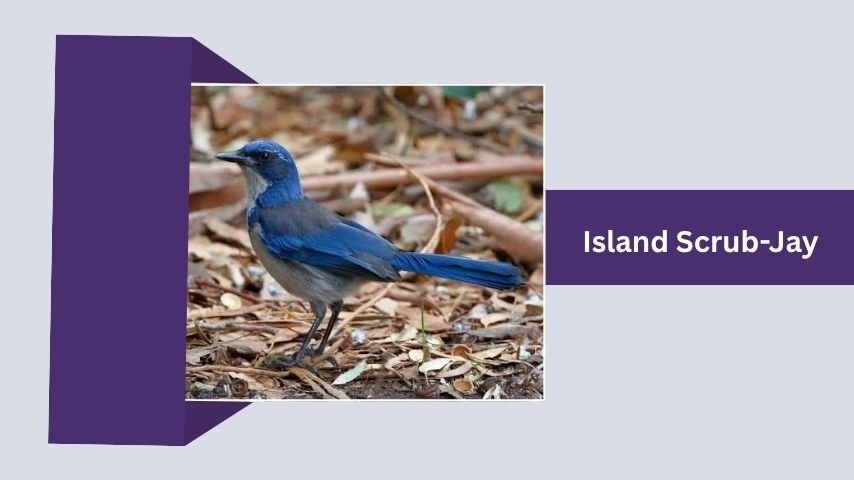
The Island Scrub-Jay is a rare blue jay found only on Santa Cruz Island, off the coast of Southern California. It is closely related to the California Scrub-Jay but is larger, darker, and more limited in range. Because it lives in just one small island area, it is considered one of the most geographically restricted jay species in North America.
Identification
- Medium-sized to large jay with a strong body
- Rich blue head, wings, and tail
- Grayish-brown back and pale underside
- No crest on the head
- Strong black bill, often larger than other scrub-jays
- White throat with a blue border
- Long tail and bold upright posture
Habitat and Distribution
Island Scrub-Jays live only on Santa Cruz Island in California’s Channel Islands. They are not naturally found on the mainland or on other nearby islands. Their main habitats include oak woodlands, chaparral, pine areas, and mixed island vegetation. Because their entire natural range is so small, habitat changes, disease, and environmental pressure can affect the species more seriously than birds with wider ranges.
Behavior and Diet
Island Scrub-Jays are intelligent, curious, and active birds. They often forage on the ground and in trees, using their strong bills to search through leaves, soil, and plant material. Their diet includes acorns, pine seeds, grass seeds, insects, lizards, snakes, mice, berries, and sometimes eggs or nestlings of smaller birds. They also store many acorns for later, especially during fall.
Lifecycle
During the breeding season, Island Scrub-Jays build nests in trees or dense shrubs. The nest is usually made from twigs, plant fibers, grasses, and softer lining materials. Both parents help protect the nesting area and feed the chicks after they hatch. Young birds leave the nest once they can fly, but they may stay near the adults while they improve their feeding skills and learn how to survive in the island habitat.
7. Mexican Jay
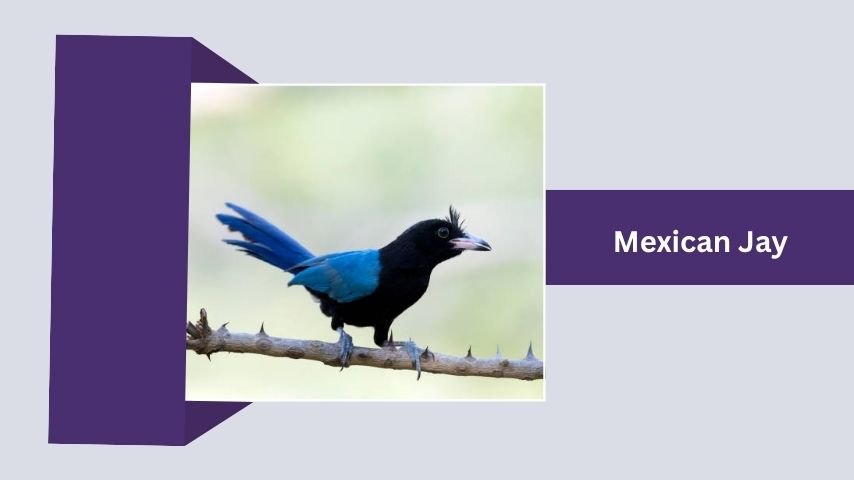
The Mexican Jay is a social blue-and-gray jay found in parts of Mexico and the southwestern United States. It is known for living in noisy family groups, moving through oak and pine woodlands, and storing food for later use. Compared with some scrub-jays, it has a plainer face and a heavier body.
Identification
- Medium-sized jay with a sturdy body
- Dull blue head, wings, back, and tail
- Smooth gray underside
- No crest on the head
- Strong bill, usually dark in adults
- Plainer face than many other blue jays
- Often seen in groups rather than alone
Habitat and Distribution
Mexican Jays are widespread in Mexico and also occur in limited parts of the United States, especially southeastern Arizona, nearby New Mexico, and the Big Bend area of Texas. They prefer open oak forests, oak-pine woodlands, canyons, and lower mountain slopes. In Arizona, they are often linked with oak woodlands, while in Texas and Mexico they may live in forests dominated by oaks and pines.
Behavior and Diet
Mexican Jays are intelligent, active, and highly social birds. They often forage in flocks, searching both on the ground and in trees. Their diet includes acorns, pinyon pine seeds, insects, berries, small lizards, small snakes, and sometimes eggs from other birds. They also store acorns in the ground and return later to retrieve them, a useful habit when food becomes scarce.
Lifecycle
Mexican Jays have interesting nesting behavior because several birds in the group may help with breeding. A flock can include multiple nesting females, and other adults may help feed the young. The female usually incubates the eggs, while other group members may bring food. Young birds leave the nest after several weeks but may remain with the group as they continue learning survival skills.
8. Pinyon Jay
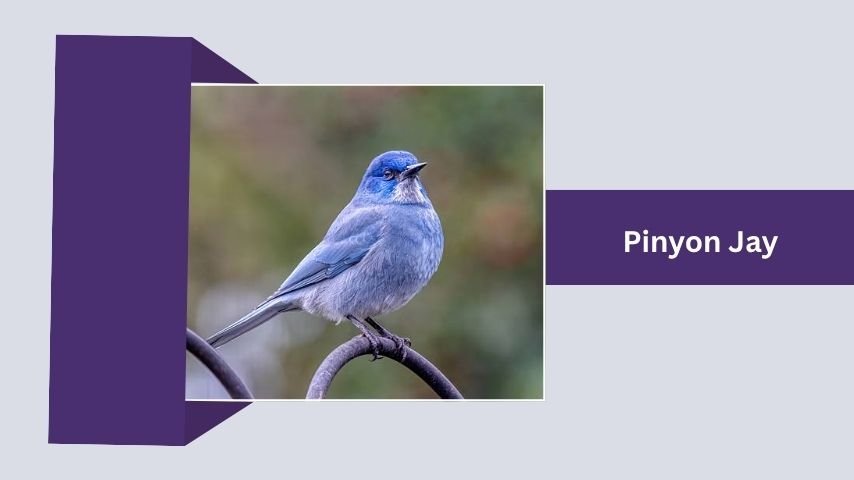
The Pinyon Jay is a blue-gray bird strongly connected to pinyon pine woodlands of the western United States. Unlike many other jays, it does not have a crest and often travels in large, noisy flocks. This species is best known for its close relationship with pinyon pine seeds, which are an important part of its diet.
Identification
- Medium-sized jay with a slender body
- Overall blue-gray color
- Slightly darker blue wings and tail
- No crest on the head
- Long, pointed bill used for opening pine seeds
- Shorter tail than many other jay species
- Often seen in flocks flying over open woodlands
Habitat and Distribution
Pinyon Jays are mostly found in the western United States, especially in areas with pinyon pine and juniper trees. They live in pinyon-juniper woodlands, dry pine forests, sagebrush edges, and open mountain foothills. Their range includes states such as Nevada, Utah, Colorado, Arizona, New Mexico, Wyoming, and nearby regions. Because they depend heavily on pinyon pine seeds, they are usually most common where these trees grow well.
Behavior and Diet
Pinyon Jays are very social birds and may gather in large groups throughout the year. Their diet includes pinyon pine seeds, juniper berries, acorns, insects, grains, and small fruits. They are excellent food storers and may hide thousands of seeds in the soil. Later, they return to many of these hidden food spots. Forgotten seeds may grow into new trees, making the Pinyon Jay important for spreading pinyon pines.
Lifecycle
Pinyon Jays often nest earlier than many other birds because they time breeding with the availability of stored pine seeds. They usually build nests in trees, using twigs, grasses, bark strips, and softer materials. Both parents help care for the young. After the chicks leave the nest, they may remain with the flock, where they learn feeding habits, flock movement, and survival skills from other birds.
9. Azure Jay

The Azure Jay is a beautiful blue-and-black jay found in parts of South America. It is especially associated with araucaria forests, where it helps spread seeds by carrying and storing them. This bird belongs to the crow family, so it is intelligent, social, and often seen moving in small groups through forested areas.
Identification
- Medium-sized jay with a strong body
- Bright cobalt-blue wings, back, and tail
- Black head, throat, neck, and upper chest
- Short, bushy crest on the forehead
- Dark bill, legs, and feet
- Long tail with rich blue coloring
- Males and females look similar
Habitat and Distribution
Azure Jays are mainly found in southern Brazil and nearby parts of Argentina, with possible records in Paraguay and Uruguay. They prefer humid evergreen forests, especially areas with Paraná pine or araucaria trees. These forests provide both nesting cover and an important food source. Because much of this habitat has been reduced by farming, development, and deforestation, the Azure Jay is considered a species of conservation concern.
Behavior and Diet
Azure Jays are social birds and often travel in small groups. They are omnivores, feeding on araucaria seeds, fruits, insects, arthropods, eggs, and small animals. Their habit of carrying and hiding seeds makes them important for forest regeneration. When they forget some stored seeds, those seeds may grow into new trees.
Lifecycle
The breeding season of the Azure Jay usually occurs from October to March. Its nest is a cup-shaped structure made from twigs and lined with softer roots. The female lays greenish-blue eggs marked with gray and brown spots. Like several other jays, this species is believed to show cooperative breeding behavior, where more than two birds may help with nesting duties.
10. Turquoise Jay
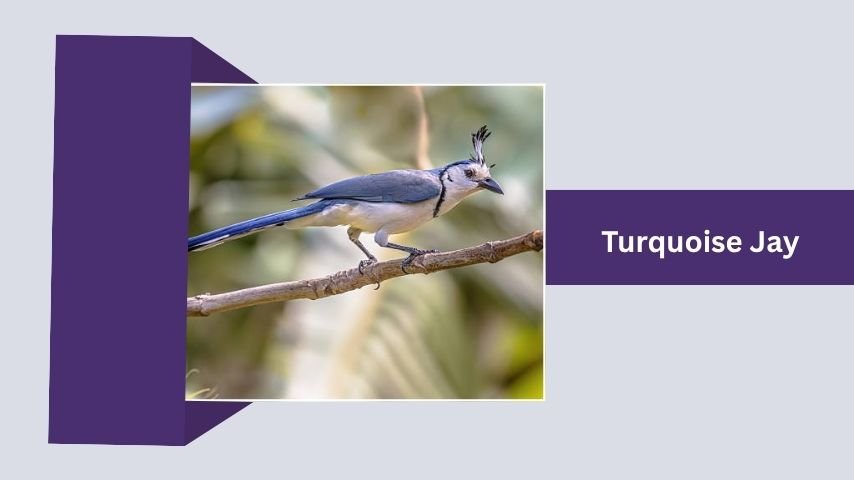
The Turquoise Jay is a colorful South American jay known for its blue-green body, dark face mask, and forest-dwelling lifestyle. It belongs to the crow family, making it intelligent, social, and active. This bird is mostly found in humid Andean forests, where it moves through trees in pairs, small groups, or mixed-species flocks.
Identification
- Medium-sized jay with a bright turquoise-blue body
- Black face mask around the eyes and cheeks
- Thin dark collar across the throat
- Pale bluish or whitish forehead
- Black bill, legs, and feet
- Long tail with blue-green coloring
- Juveniles usually look duller than adults
Habitat and Distribution
Turquoise Jays are found in the Andes of South America, mainly from southern Colombia through Ecuador to northern Peru. They prefer humid montane evergreen forests, cloud forests, and elfin forests with thick vegetation. They may also use some secondary forest areas if enough cover and food are available. Because they live mostly in forested mountain habitats, they are usually seen in the middle and upper levels of trees rather than open ground.
Behavior and Diet
The Turquoise Jay is an active and social bird. It often travels in small groups and may join mixed flocks with other forest birds. Its diet includes insects, berries, fruits, eggs, and sometimes young birds of other species. Like many jays, it searches carefully through branches, leaves, and tree cover while looking for food. Its loud calls help group members stay connected in dense forest.
Lifecycle
Less is known about the breeding life of the Turquoise Jay compared with common North American jays. It usually builds a mossy nest in the fork of a tree branch, often near the crown of the tree. More than one bird may help build the nest and care for the young, showing cooperative behavior. The male may also feed the female while she is incubating the eggs.
11. Azure-hooded Jay

The Azure-hooded Jay is a dark blue and black jay from Middle America. It is known for its bright sky-blue hood on the back of the head and neck, which makes it easy to separate from many other jays. This species usually lives in moist mountain forests and can be difficult to see because it often stays within dense tree cover.
Identification
- Medium-sized jay with a dark blue body
- Black head, face, throat, and upper chest
- Bright sky-blue hood on the back of the head and neck
- Pale or white border around the blue hood
- Strong dark bill and dark legs
- Long blue tail
- Often moves quietly through dense forest cover
Habitat and Distribution
Azure-hooded Jays are found from southeastern Mexico through parts of Central America, including Guatemala, Honduras, Costa Rica, and western Panama. They mainly live in subtropical or tropical moist montane forests, especially humid evergreen forest and cloud forest edges. They are usually seen in the middle and upper levels of trees rather than open ground.
Behavior and Diet
The Azure-hooded Jay is usually social, traveling in pairs or small groups. It may also join mixed-species flocks while moving through the forest. Its diet includes berries, seeds, insects, and small animal matter, making it an omnivorous bird like many other members of the crow family.
Lifecycle
The nesting habits of this jay are not as widely known as those of common backyard jays. Available records show that females may lay three to four eggs, and the young can leave the nest after about 20 days. Because this bird lives in thick montane forest, much of its breeding behavior is still less familiar to casual birdwatchers.
12. Green Jay

The Green Jay is a colorful tropical jay known for its green body, yellow underside, blue head markings, and noisy family groups. In the United States, it is mainly found in southern Texas, but its wider range extends through Mexico and Central America. It is an intelligent bird that belongs to the crow family and is known for active foraging and strong social behavior.
Identification
- Medium-sized jay with a bright, colorful body
- Green back, wings, and upperparts
- Yellowish or pale green underside
- Blue and black markings on the head and face
- Long greenish-blue tail
- Strong dark bill and dark legs
- Often heard making loud rattling or harsh calls
Habitat and Distribution
Green Jays live in brushlands, woodlands, thickets, and forest edges. In southern Texas, they are often found in native brush, mesquite areas, lowland woods, and places with dense vegetation. Farther south, they also live in tropical forests, plantations, and wooded foothills. They usually stay in the same general area year-round and do not migrate long distances.
Behavior and Diet
Green Jays are active, social birds that often travel in pairs or family flocks. They search through trees, shrubs, and leaf litter for food. Their diet includes insects, spiders, seeds, berries, fruits, small lizards, frogs, eggs, and sometimes young birds. They may also visit feeders, especially where fruit, seeds, or other food is available. Like some other corvids, they are clever foragers and have even been recorded using sticks to uncover insects under bark.
Lifecycle
Green Jays usually nest in dense trees or thorny shrubs. Both male and female help build the nest, which is often a cup made of sticks, roots, grasses, moss, vines, and leaves. A female typically lays three to five eggs. The young leave the nest after about 19 to 22 days, but they may remain near their parents for some time while learning how to feed and defend the territory.
13. Yucatan Jay
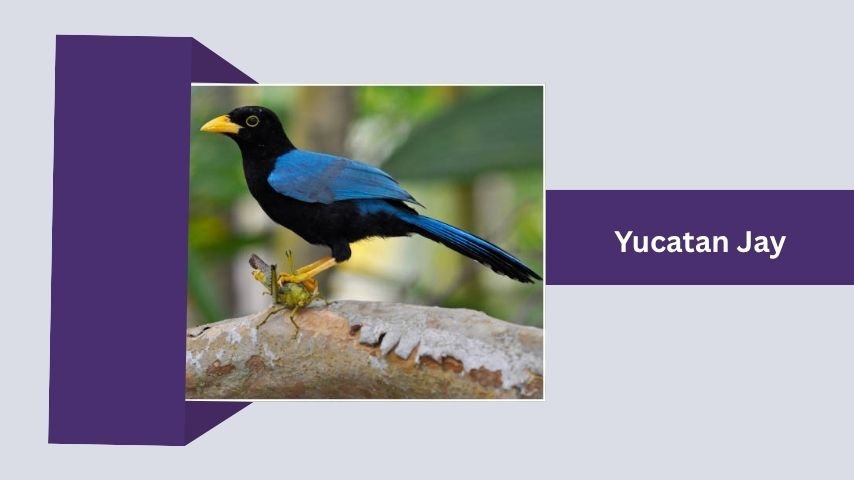
The Yucatan Jay is a striking blue, black, and white jay found mainly in the Yucatán Peninsula. It is known for its social nature, loud calls, and bold movements through forests and scrublands. Young birds look very different from adults, which makes this species especially interesting for birdwatchers.
Identification
- Medium-sized jay with a long tail
- Adult has black head, throat, and upper chest
- Bright blue wings, back, and tail
- White or pale underside
- Strong dark bill and dark legs
- No tall crest on the head
- Young birds often have a yellow bill, yellow eye-ring, and paler facial markings
Habitat and Distribution
Yucatan Jays are found mostly in Mexico’s Yucatán Peninsula, including areas of Yucatán, Quintana Roo, and Campeche. They also occur in nearby parts of Belize and Guatemala. Their preferred habitats include dry forests, scrublands, woodland edges, plantations, and areas with scattered trees. They are often seen in groups moving through low trees and shrubs, especially where food is easy to find.
Behavior and Diet
Yucatan Jays are active and social birds that usually travel in family groups or small flocks. They communicate with loud calls and often move together while searching for food. Their diet includes insects, fruits, seeds, berries, small reptiles, eggs, and other small animal matter. Like many jays, they are intelligent and opportunistic, meaning they can adjust their feeding habits depending on what food is available in their habitat.
Lifecycle
During the breeding season, Yucatan Jays build nests in trees or dense vegetation. They are known for cooperative family behavior, where more than two birds may help protect the nesting area or feed the young. This group-living habit helps young birds survive in their natural environment. After leaving the nest, young Yucatan Jays may remain close to the family group while they learn how to find food, recognize danger, and communicate with other flock members.
14. Black-throated Magpie-Jay
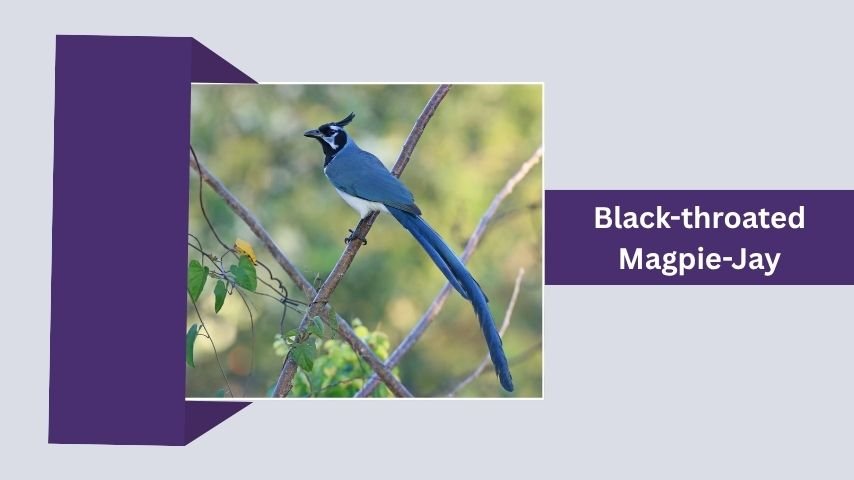
The Black-throated Magpie-Jay is a dramatic, long-tailed jay found in western Mexico. It is known for its bold blue-and-white body, black throat, and very long crest feathers that curve above the head. This bird is noisy, social, and often seen moving through dry forests, scrublands, and open wooded areas in small groups.
Identification
- Large jay with a very long tail
- Blue wings, back, and tail
- White underside and pale body markings
- Black throat, chest patch, and facial markings
- Long, loose crest feathers on the head
- Strong dark bill and dark legs
- Females usually have a longer crest than males
Habitat and Distribution
Black-throated Magpie-Jays live mainly along the Pacific slope of western Mexico. They are usually found in tropical dry forests, thorn forests, scrublands, woodland edges, and semi-open areas with scattered trees. They can also appear near farms, villages, and plantations when enough trees and food sources are available. Their long tails and loud calls make them easy to notice when they move through open branches.
Behavior and Diet
Black-throated Magpie-Jays are intelligent and social birds. They often travel in small flocks, calling loudly as they search for food. Their diet includes insects, fruits, seeds, lizards, eggs, and small animals. They forage in trees, shrubs, and sometimes on the ground. Like other jays, they are opportunistic feeders, meaning they can adjust their diet based on season and habitat.
Lifecycle
During breeding season, Black-throated Magpie-Jays build nests in trees using sticks, roots, and softer plant materials. They may show cooperative breeding behavior, where group members help defend the territory or care for the young. After the chicks hatch, adults feed and protect them until they are ready to leave the nest. Young birds may stay with the group while they learn how to find food and avoid predators.
15. White-throated Magpie-Jay
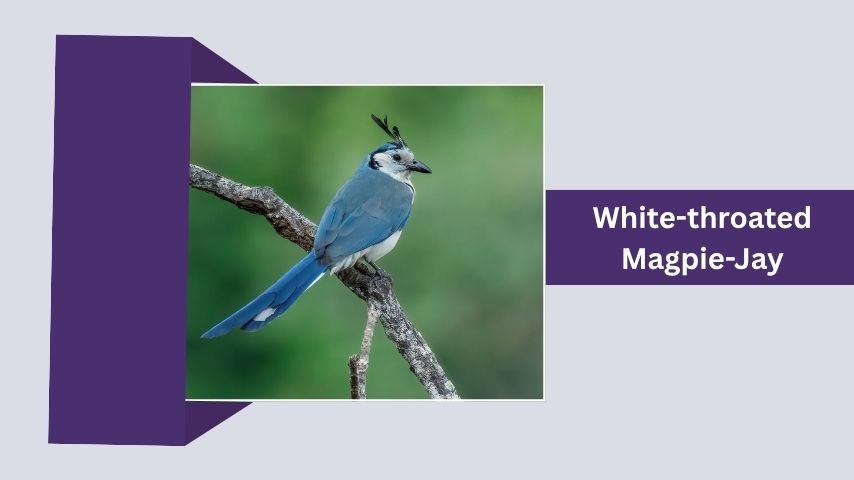
The White-throated Magpie-Jay is a large, long-tailed jay found from Mexico into Central America. It is known for its bright blue upperparts, white throat, bold facial markings, and dramatic crest. Like other members of the crow family, this bird is intelligent, noisy, and highly social, often moving in groups through dry forests and open woodland areas.
Identification
- Large jay with a very long tail
- Blue wings, back, and tail
- White throat, chest, belly, and face
- Black crown and narrow dark markings around the face
- Long, curved crest feathers on the head
- Grayish bill with dark legs and eyes
- Females usually have a shorter tail and duller upperparts
Habitat and Distribution
White-throated Magpie-Jays live mostly along the Pacific slope from western Mexico to northern Costa Rica. They prefer dry forests, thorn forests, gallery forests, forest edges, cultivated areas, and open woodlands. They are also seen near coffee plantations and human-settled areas when trees and food sources are available. This species is generally nonmigratory and often remains within its home range year-round.
Behavior and Diet
White-throated Magpie-Jays are noisy, gregarious birds that often travel in groups. They are omnivores, feeding on insects, caterpillars, frogs, lizards, bird eggs, nestlings, seeds, fruits, grain, and nectar. Their bold behavior makes them easy to notice, and they may call loudly when disturbed or when moving with their group through trees and brush.
Lifecycle
During breeding season, White-throated Magpie-Jays live in social groups and may show cooperative breeding behavior. Group members can help defend the territory and support nesting success. Nests are usually built in trees using sticks and softer plant materials. After the young hatch, adults feed and protect them while they grow, and young birds may take time to learn the full foraging skills of the adults.
FAQs
Are Blue Jays and other blue jay birds the same species?
No, “Blue Jay” usually refers to one specific species found in North America. However, many other jay species also have blue feathers, such as Steller’s Jay, California Scrub-Jay, Mexican Jay, and Azure Jay. They all belong to the crow family but live in different regions and habitats.
Why are many jay birds blue?
Many jay birds look blue because of the way light reflects from the structure of their feathers. Their feathers do not usually contain blue pigment. Instead, tiny feather structures scatter light, creating the bright blue appearance that makes these birds so noticeable.
Do blue jay birds migrate?
Some Blue Jays migrate, but not all of them do. Migration depends on location, weather, food supply, and individual behavior. Other jay species, such as Green Jays and many scrub-jays, usually stay in the same general area year-round instead of making long seasonal migrations.
What do blue jay birds eat?
Blue jay birds are mostly omnivores. They eat nuts, seeds, acorns, fruits, berries, insects, spiders, eggs, small reptiles, and sometimes young birds. Many jay species also store food for later, especially acorns and pine seeds.
Are blue jay birds intelligent?
Yes, blue jay birds are very intelligent. Like crows and ravens, jays belong to the corvid family, which is known for problem-solving, memory, social behavior, and food caching. Some jays can remember where they hide food and may even use tools or clever feeding strategies.
