
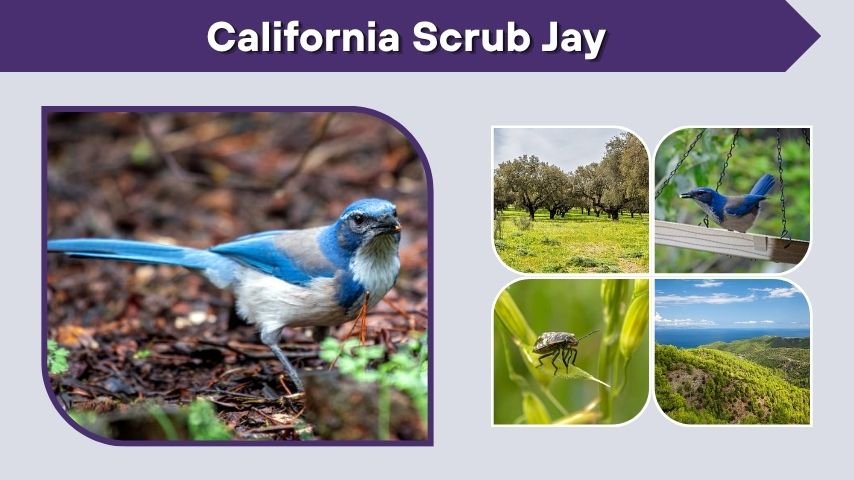
The California Scrub Jay is a bold, bright blue bird found along the western side of North America. It is known for its loud calls, long tail, curious behavior, and strong connection to oak woodlands and scrubby habitats. Many people call it a “California blue jay,” but it is not the same bird as the Blue Jay found in eastern North America. This guide explains how to identify the California Scrub Jay, where it lives, what it eats, how it nests, and how it compares with similar jay species.
What Is a California Scrub Jay?
The California Scrub Jay, officially written as California Scrub-Jay, is a medium-sized jay in the crow family. Its scientific name is Aphelocoma californica. Like crows, ravens, and other jays, it is intelligent, watchful, and good at remembering food locations.
This bird was once grouped with Woodhouse’s Scrub-Jay under the older name “Western Scrub-Jay.” Today, California Scrub-Jay and Woodhouse’s Scrub-Jay are treated as separate species. The California Scrub-Jay is mostly linked with the Pacific Coast region, while Woodhouse’s Scrub-Jay is more of an inland western species.
| Quick Fact | California Scrub Jay |
| Scientific name | Aphelocoma californica |
| Bird family | Corvid family |
| Main colors | Blue, gray-brown, white |
| Crest | No crest |
| Diet | Omnivore |
| Common habitat | Oak woodland, chaparral, scrub, suburbs |
| Migration | Mostly nonmigratory |
California Scrub Jay Identification
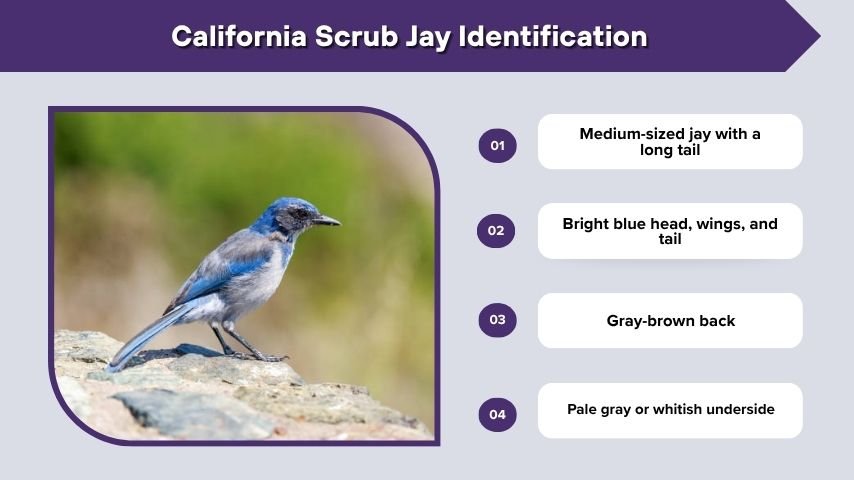
The California Scrub Jay is easy to recognize once you know its main field marks. It has a bright blue head, wings, and tail, along with a gray-brown back and pale underside. Unlike the Blue Jay and Steller’s Jay, it does not have a crest on its head.
Key Identification Features
- Medium-sized jay with a long tail
- Bright blue head, wings, and tail
- Gray-brown back
- Pale gray or whitish underside
- White throat with a blue necklace-like border
- Dark eye line that gives the face a sharp look
- Strong black bill
- No crest on the head
- Often seen hopping on the ground, perching on fences, or moving through shrubs
California Scrub-Jays are usually found in open habitats, oak woodlands, chaparral, backyards, pastures, and orchards along the West Coast. They are often seen in lower and drier habitats than Steller’s Jays.
California Scrub Jay Range and Location
The California Scrub Jay is native to western North America. Its range runs along the Pacific side from parts of southern British Columbia through Washington, Oregon, California, and into Baja California. It also occurs in some nearby inland areas, including parts of western Nevada.
In California, this bird is common in many regions, including the Bay Area, Central Valley edges, foothills, coastal scrub, oak woodland, and suburban neighborhoods. In Oregon and Washington, it may be seen in suitable lowland habitats, towns, and wooded areas.
Is the California Scrub Jay Rare?
The California Scrub Jay is not rare across much of its range. In many parts of California, Oregon, and nearby regions, it is a familiar backyard and woodland bird. However, its numbers can vary by local habitat. Areas with oak trees, shrubs, open woodland, and feeder-friendly yards are more likely to attract it.
California Scrub Jay Habitat
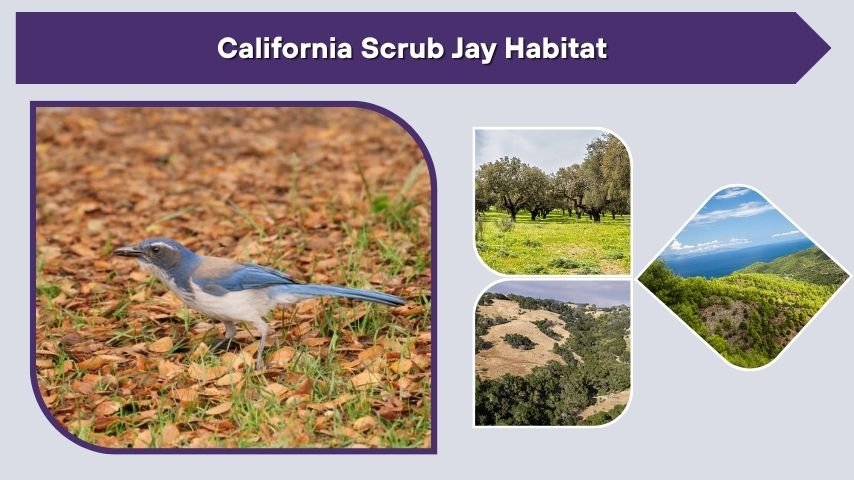
California Scrub Jays prefer habitats with a mix of open space, trees, and shrubs. They are especially common around oak woodlands, chaparral, scrublands, brushy edges, orchards, and suburban neighborhoods.
A good habitat gives them places to perch, hide, nest, and search for food. Oak trees are especially important because acorns are a major seasonal food source. Dense shrubs and small trees also provide nesting cover and protection from predators.
California Scrub-Jays have adapted well to many human-altered areas. They may visit gardens, parks, farms, and yards, especially where native plants, fruiting shrubs, and bird feeders are available.
California Scrub Jay Call and Sound
The California Scrub Jay call is loud, rough, and noticeable. Many people hear this bird before they see it. Its common sounds include harsh scolding calls, sharp “shreep” notes, and noisy alarm calls.
These calls help scrub jays communicate with mates, family members, and nearby birds. They may call when they discover food, notice danger, defend territory, or move through shrubs and trees. Their loud voice can make them seem aggressive, but much of this behavior is normal communication.
Why Do California Scrub Jays Call So Much?
California Scrub Jays are social and alert birds. Their calls help them warn others about cats, hawks, snakes, and other threats. They also use sound to defend nesting areas and keep contact with partners or family groups. Around feeders, they may call loudly when competing with other birds.
What Do California Scrub Jays Eat?
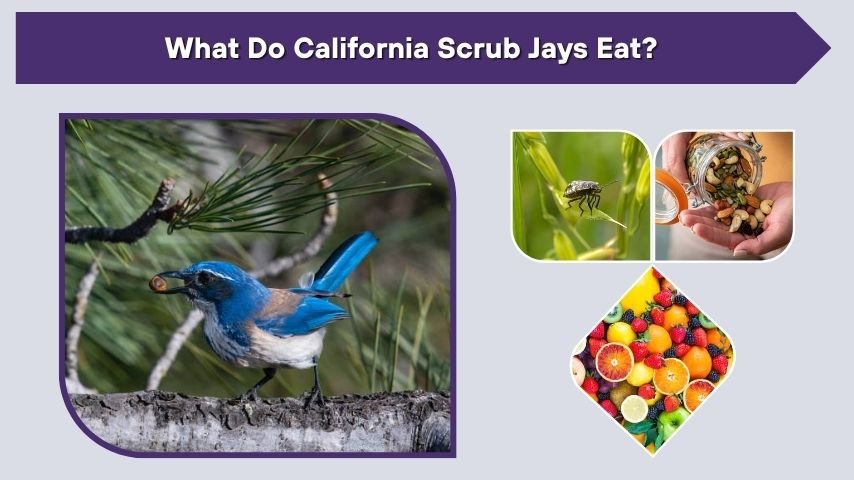
California Scrub Jays are omnivores, which means they eat both plant and animal foods. Their diet changes by season. In spring and summer, they eat more insects and fruit. In fall and winter, they rely more on nuts and seeds, especially acorns. They also eat small animals, eggs, and nestlings when available.
| Food Category | Examples |
| Nuts and seeds | Acorns, sunflower seeds, peanuts, walnuts, almonds |
| Fruits | Berries, cherries, cultivated fruit |
| Insects | Beetles, caterpillars, grasshoppers |
| Small animals | Lizards, eggs, nestlings |
| Feeder foods | Peanuts, sunflower seeds, suet |
California Scrub Jays are famous for caching food. They hide acorns, seeds, and nuts in the ground or other secret places. Later, they return to many of these hidden food spots. When some acorns are forgotten, they may grow into new oak trees.
California Scrub Jay Male vs Female
Male and female California Scrub Jays look very similar. Both have blue heads, wings, and tails, gray-brown backs, pale undersides, and no crest. For most birdwatchers, it is difficult to tell male and female apart by appearance alone.
Males may be slightly larger on average, but size difference is not reliable in the field. Behavior during breeding season may offer better clues. One bird may guard the area while the other spends more time near the nest, but even this is not always easy to judge.
So, if you see a California Scrub Jay in your yard, the safest answer is usually to identify the species rather than trying to label it male or female.
California Scrub Jay Nest and Eggs
California Scrub Jays usually build nests in shrubs, small trees, or dense branches. If a yard has shrubs or small trees, a pair may even build a nest nearby.
The nest is usually a cup-shaped structure made from twigs, roots, grasses, and other plant material. Softer materials may be used inside the cup. During nesting season, the adults can become protective and noisy if people, pets, or predators get too close.
Juvenile California Scrub Jay
A juvenile California Scrub Jay may look duller than an adult. Young birds often have less polished blue coloring and may act clumsy while learning to fly and forage. Fledglings may beg loudly for food and follow adults around.
If you find a fledgling on the ground, it is often best to leave it alone unless it is clearly injured or in immediate danger. Many young jays leave the nest before they are perfect flyers, and the parents may still be feeding them nearby.
California Scrub Jay vs Blue Jay
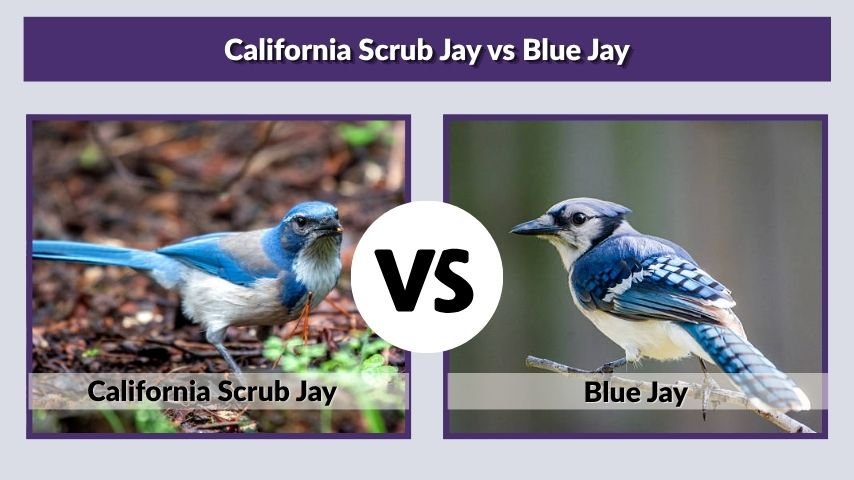
Many people compare the California Scrub Jay vs Blue Jay because both birds are blue and belong to the jay family. However, they are different species.
The Blue Jay is mostly found in eastern and central North America. It has a crest, blue upperparts, white underside, and bold black markings. The California Scrub Jay is mostly a western bird. It has no crest, a longer-looking tail, a gray-brown back, and a cleaner blue-and-gray appearance.
| Feature | California Scrub Jay | Blue Jay |
| Crest | No crest | Has crest |
| Range | Western North America | Eastern and central North America |
| Back color | Gray-brown | Blue, black, and white pattern |
| Habitat | Oak woodland, scrub, suburbs | Forests, parks, suburbs |
| Common nickname issue | Sometimes called “California blue jay” | True Blue Jay species |
California Scrub Jay vs Woodhouse Scrub Jay
California Scrub Jay and Woodhouse’s Scrub-Jay were once grouped together as “Western Scrub-Jay.” This is why many people still search for “western scrub jay vs California scrub jay.”
California Scrub Jays are generally brighter blue, with stronger contrast and a clearer blue breast band. Woodhouse’s Scrub-Jays are often duller, grayer below, and more common in interior western habitats. Their ranges overlap only in limited areas, especially around eastern California and western Nevada.
California Scrub Jay Behavior
California Scrub Jays are bold, intelligent, and active. They often perch in open spots, scan their surroundings, and quickly move toward food. They may hop on the ground, fly between shrubs, or investigate feeders and gardens.
They can also be territorial. Around nesting sites, they may scold cats, hawks, crows, snakes, and humans. At feeders, they may dominate smaller birds because of their size and confidence. This does not mean they are “bad” birds; it is normal jay behavior.
Because they are corvids, California Scrub Jays have strong memory and problem-solving ability. Their food-caching behavior is one of the best examples of their intelligence.
How to Attract California Scrub Jays
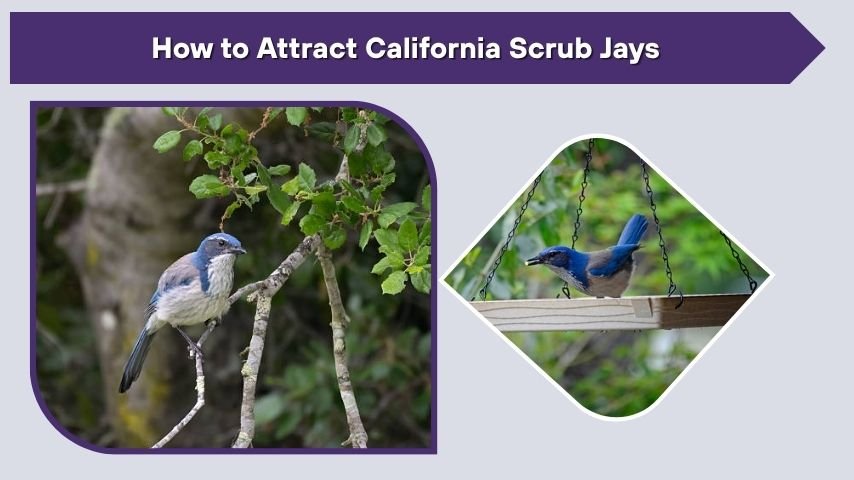
If you live within their range, you can attract California Scrub Jays by creating a yard with natural cover and safe food sources. They are especially fond of sunflower seeds and peanuts at feeders.
Good options include platform feeders, unsalted peanuts, sunflower seeds, suet, native shrubs, oak trees, and a clean birdbath. Avoid salty snacks, bread, candy, and processed human foods. These foods can harm wild birds and encourage unhealthy behavior.
If scrub jays become too dominant, place smaller feeders in protected spots where little birds can feed more safely.
California Scrub Jay Facts
California Scrub Jays are year-round residents in much of their range. They do not usually make long seasonal migrations, although they may move locally when food becomes scarce.
They are also important in oak woodland ecosystems. By hiding acorns, they help spread oak trees. Their strong memory helps them recover many stored foods, but forgotten acorns may become future trees.
FAQs
Is a California Scrub Jay the same as a Blue Jay?
No, the California Scrub Jay and Blue Jay are different species. The California Scrub Jay lives mostly in western North America and has no crest. The Blue Jay is common in eastern and central North America and has a noticeable crest.
What do California Scrub Jays eat?
California Scrub Jays eat acorns, seeds, nuts, berries, fruit, insects, lizards, eggs, and sometimes nestlings. At feeders, they often like peanuts, sunflower seeds, and suet.
What does a California Scrub Jay sound like?
A California Scrub Jay sounds loud, harsh, and raspy. Its calls often include sharp scolding notes and rough alarm sounds. These calls help it communicate, warn others, and defend territory.
Are California Scrub Jays aggressive?
California Scrub Jays can seem aggressive, especially near nests or feeders. They may chase smaller birds, scold predators, or defend food. This is normal territorial and protective behavior.
Do California Scrub Jays mate for life?
California Scrub Jays often form long-term pair bonds, and pairs may stay together across breeding seasons. They usually defend a territory and work together during nesting and chick care.