
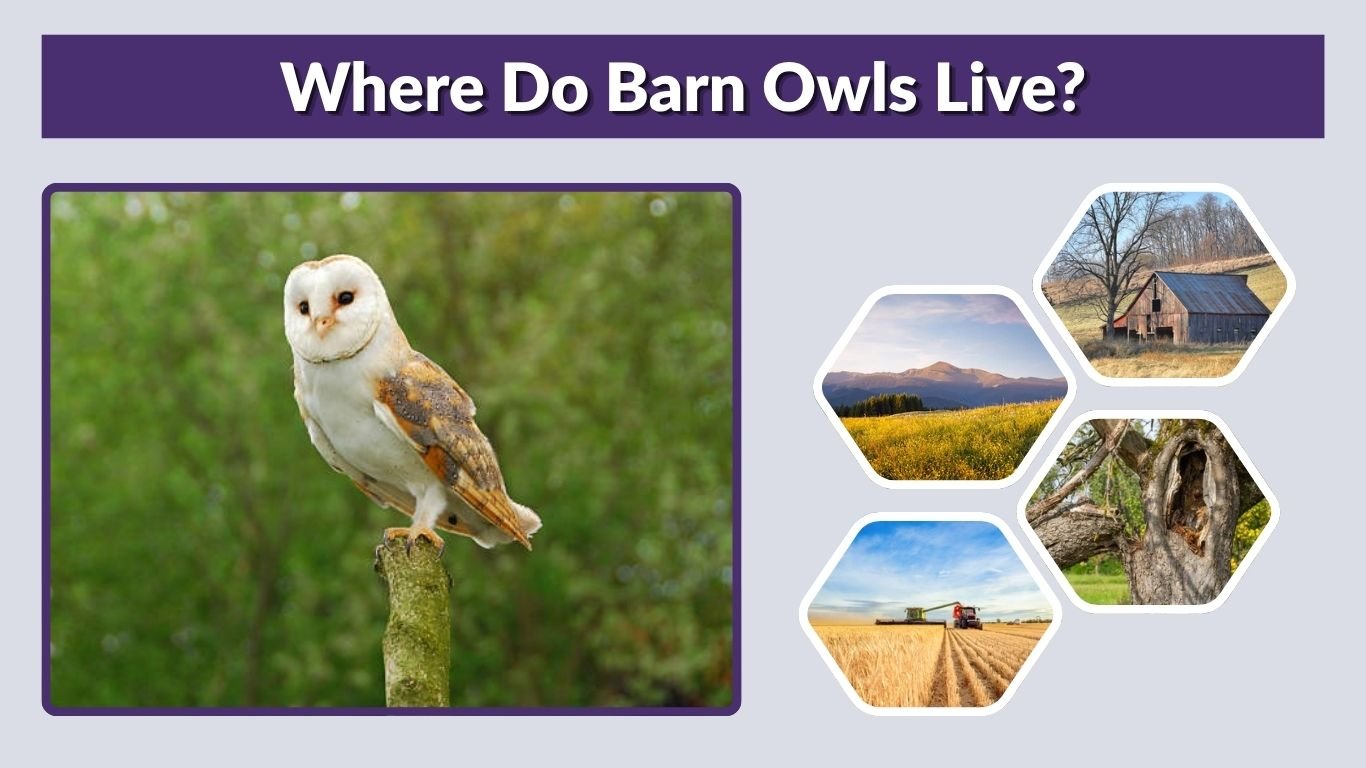
Barn owls live in open habitats where they can hunt small mammals and find safe places to nest. They are often linked with barns, farms, grasslands, marshes, old buildings, hollow trees, and nest boxes. Barn owls avoid dense forests and high mountains in many regions because they need open hunting ground. Their exact range depends on the species, but barn owls and their close relatives are found across many parts of the world, including North America, Europe, Africa, Asia, and Australia.
Barn Owl Habitat Overview
Barn owls need two main things to survive: good hunting habitat and a safe nesting or roosting place. Their best habitats usually have rough grassland, field edges, meadows, farmland, marshes, and other open spaces where mice, voles, rats, and shrews are common.
What Kind of Places Do Barn Owls Like?
Barn owls usually like quiet, open areas instead of crowded city centers or thick forests. In the UK, the Barn Owl Trust says barn owls generally avoid dense forest and high mountains and are rarely found in urban and suburban areas.
They are most often found near:
- Farms and barns
- Grasslands and meadows
- Marshes and wetlands
- Field edges and hedgerows
- Old buildings and church towers
- Hollow trees
- Nest boxes
- Open countryside
Why Open Habitat Matters
Open habitats are important because barn owls hunt by flying low over fields and listening for prey. The Wildlife Trusts describe barn owls as hunting over farmland and grassland, flying back and forth while searching for small mammals.
Rough grassland is especially valuable because it supports small mammals. The RSPB notes that barn owls can be encouraged by prey-rich rough grassland and artificial nest sites.
Where Do Barn Owls Live in the World?
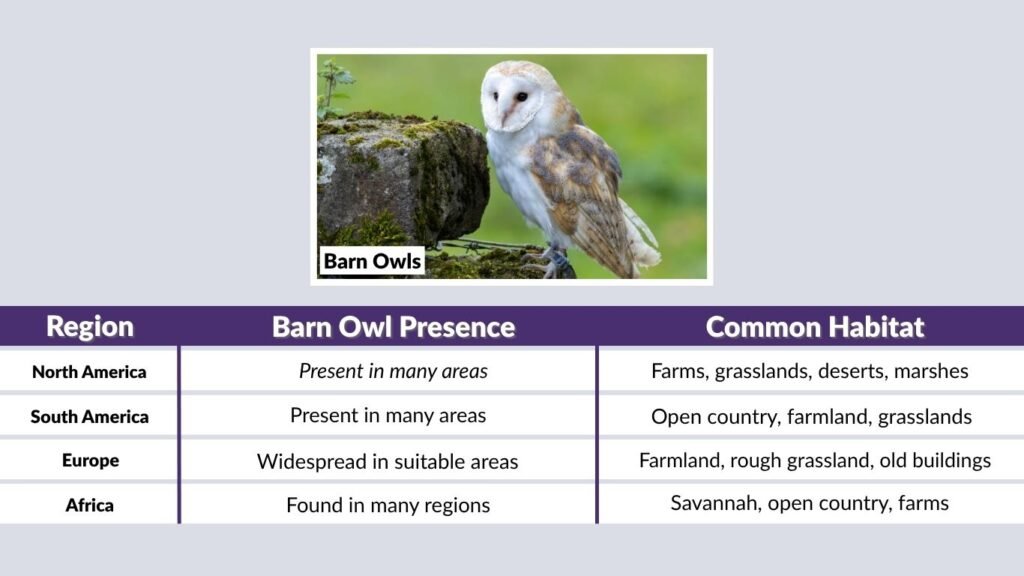
Barn owls have one of the widest ranges of any owl group. In the past, the barn owl was often described as one of the most widely distributed land birds, present on every continent except Antarctica. Modern taxonomy has split the former widespread barn owl into separate species, including the American barn owl, Eastern barn owl, and Western barn owl. Cornell Lab explains that the American barn owl is found in the Americas, the Eastern barn owl occurs from South Asia to Australia, and the Western barn owl is found in Europe, Africa, and western Asia.
Barn Owl Range by Region
| Region | Barn Owl Presence | Common Habitat |
| North America | Present in many areas | Farms, grasslands, deserts, marshes |
| South America | Present in many areas | Open country, farmland, grasslands |
| Europe | Widespread in suitable areas | Farmland, rough grassland, old buildings |
| Africa | Found in many regions | Savannah, open country, farms |
| Asia | Found in many regions | Farmland, grassland, villages, open land |
| Australia | Widespread | Open woodland, grassland, farmland |
| Antarctica | Not present | Too cold and unsuitable |
Where Do Most Barn Owls Live?
Most barn owls live in places where open hunting land and nesting cavities are close together. They do not need a real barn, even though their name suggests it. They can live in tree hollows, cliffs, old buildings, nest boxes, and other sheltered sites.
The most suitable places are usually quiet rural or semi-rural landscapes with plenty of prey. Areas with healthy grassland and low rodent poison use are especially helpful for barn owl survival.
Where Do Barn Owls Live in the United States?
In the United States, barn owls live in many regions, especially where open habitat is available. They may be found in farmland, grasslands, deserts, marshes, ranchland, open woodland edges, and agricultural areas.
Cornell Lab describes the American barn owl as a bird of the Americas and notes that it hunts in open fields and meadows.
Common U.S. Barn Owl Habitats
Barn owls in the United States may live around:
- Farms and ranches
- Hayfields and pastures
- Desert edges
- Marshes and wetlands
- Open grasslands
- Roadside fields
- Old barns and silos
- Nest boxes on farms
They are often easier to notice at dusk or night when they fly low over fields. During the day, they usually stay hidden in a quiet roost.
Where Do Barn Owls Live in Ohio and Utah?
In Ohio, barn owls are usually linked with farmland, grassland, old barns, and nest boxes. Because much of their habitat depends on open land and nesting sites, they are more likely to occur where suitable rural landscapes remain.
In Utah, barn owls may use open desert edges, agricultural areas, grasslands, cliffs, and farm structures. Dry open landscapes can support barn owls if enough rodents are available.
Where Do Barn Owls Live in the UK?
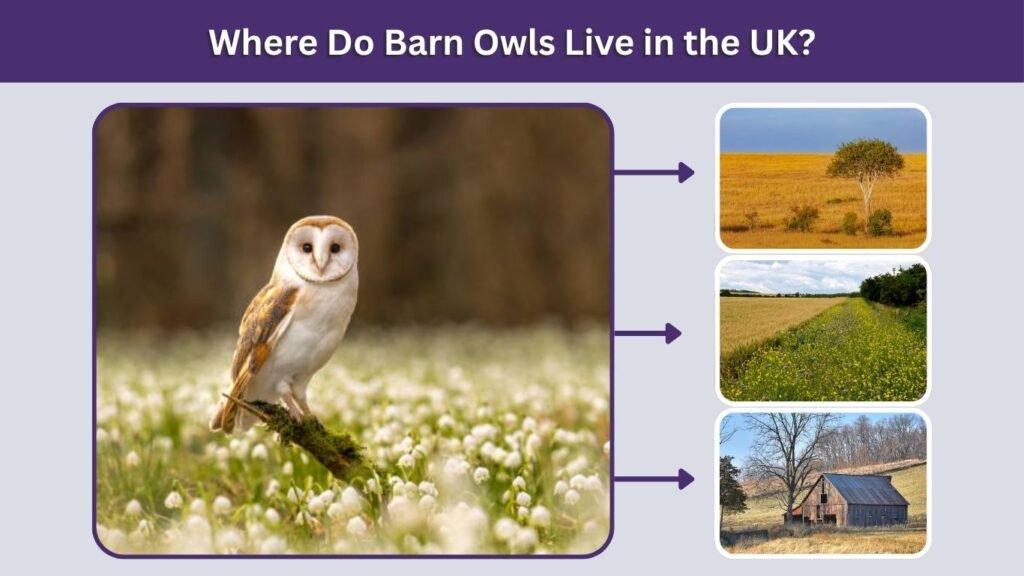
In the UK, barn owls are strongly associated with open countryside, farmland, rough grassland, field margins, and quiet nesting sites. They are often seen hunting at dusk over grassy fields or along hedgerows.
The Barn Owl Trust says that once a barn owl establishes a home range, it will often remain there for life, and the nest site may be used for generations.
British Barn Owl Habitat
British barn owls commonly live near:
- Rough grassland
- Field edges
- Farm buildings
- Old barns
- Church towers
- Tree cavities
- Nest boxes
- Marshes and river valleys
RSPB farming advice highlights the value of prey-rich rough grassland and artificial nest sites for encouraging barn owls.
Where Do Barn Owls Nest in the UK?
Barn owls in the UK often nest in old buildings, barns, hollow trees, nest boxes, and church towers. The Barn Owl Trust explains that barn owls do not build a nest and need a level or concave surface, often in a cavity such as a tree hollow or nest box, or on a wide ledge in places like church towers.
Where Do Barn Owls Live in Australia?
Barn owls occur throughout Australia where suitable habitat and prey are available. Australian sources describe the barn owl, often treated as the Eastern barn owl, as found throughout Australia, with distribution limited mainly by habitat and conditions.
Australian Barn Owl Habitat
In Australia, barn owls may live in:
- Open woodland
- Farmland
- Grassland
- Dry open country
- Town edges
- Roadside habitats
- Tree hollows
- Old buildings
They often hunt small mammals and other prey in open areas at night. Like barn owls elsewhere, they need safe roosts and nesting sites near hunting grounds.
Where Do Barn Owls Live in Canada?
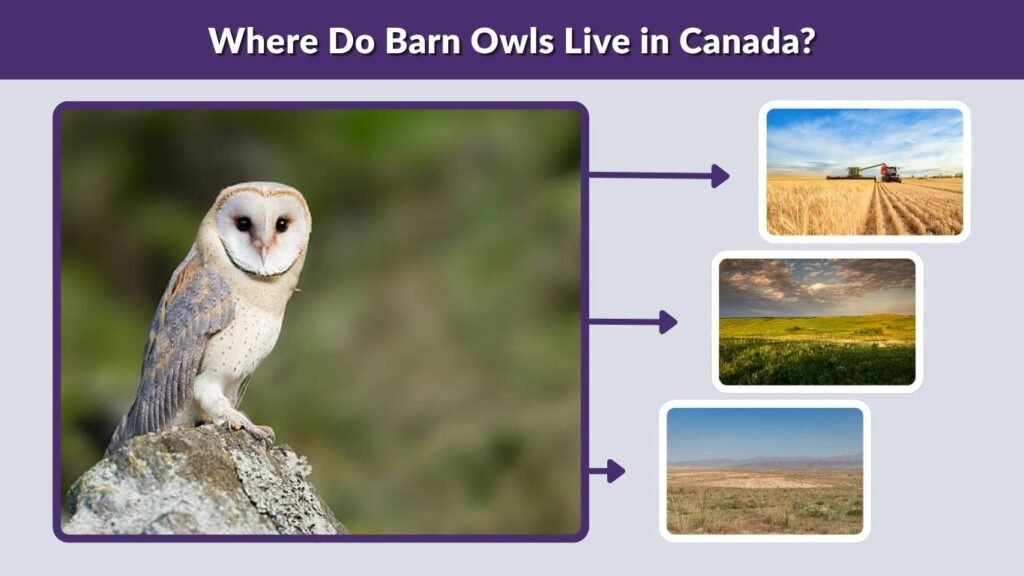
Barn owls have a more limited distribution in Canada compared with warmer regions. They are generally associated with milder areas that have open farmland, grassland, and suitable nesting places.
Canadian Barn Owl Habitat
In Canada, barn owls are most likely to be found in open lowland habitats, agricultural areas, grasslands, and places with mild winters. They need enough prey during cold months, so harsh winter conditions can limit where they survive.
Good habitat includes old barns, nest boxes, rough fields, and open hunting areas with healthy small mammal populations.
Where Do Barn Owls Live in Hawaii?
Barn owls also occur in Hawaii, where they are often seen in open landscapes. They may live around grasslands, agricultural areas, roadsides, and open country.
Barn Owls in Hawaiian Habitats
In Hawaii, barn owls may use open fields, pastures, plantations, and rural edges. They often hunt at night and roost during the day in hidden places.
Because island ecosystems are sensitive, barn owls may interact differently with local wildlife compared with mainland habitats. Their presence can affect native birds in some areas, especially where nesting seabirds or other vulnerable species occur.
Where Do Barn Owls Live and Nest?
Barn owls do not build typical nests with sticks. Instead, they use cavities, ledges, boxes, and sheltered spaces. Their nest sites are usually hidden, quiet, and close to hunting areas.
Common Barn Owl Nest Sites
- Hollow trees
- Barn lofts
- Old buildings
- Church towers
- Nest boxes
- Cliffs and rock cavities
- Silos
- Roof spaces
- Large tree cavities
The Barn Owl Trust says barn owls need a level or concave surface for eggs because they do not build a nest. This surface is often in a tree hollow, nest box, or hidden ledge.
Do Barn Owls Always Live in Barns?
No, barn owls do not always live in barns. They are called barn owls because they often use barns and farm buildings, but they can live in many other places. A barn owl may nest in a tree, cliff, nest box, tower, or abandoned building if the location is safe.
Where Do Barn Owls Live During the Day?
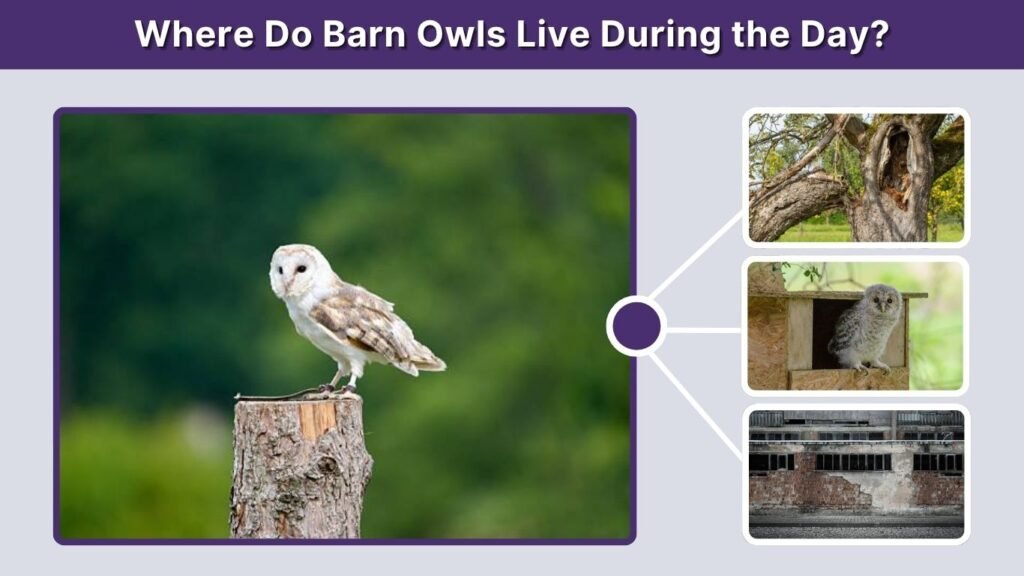
During the day, barn owls usually rest in quiet roosting places. They are mostly nocturnal, so they avoid open activity in bright daylight unless they need to hunt or move.
Daytime Roosting Places
Barn owls may roost during the day in:
- Barn rafters
- Hollow trees
- Dense tree cover
- Old buildings
- Nest boxes
- Straw bales
- Church towers
- Quiet roof spaces
The Barn Owl Trust notes that roosting in warm straw bales can help conserve energy, especially in winter.
Why They Hide During the Day
Barn owls hide during the day to rest and avoid disturbance. Roosting also protects them from bad weather and predators. If you see a barn owl during the day, it may be resting, disturbed, feeding young, or hunting during a time when food demand is high.
Where Do Barn Owls Live in the Winter?
Barn owls usually stay within or near their home range during winter if they can find enough food. They do not migrate long distances like many birds. However, their hunting area may become larger in winter because prey can be harder to find.
The Barn Owl Trust says barn owl home ranges can be much larger in winter, up to 5,000 hectares, compared with about 350 hectares in summer when food is more available.
Winter Habitat Needs
In winter, barn owls need:
- Safe roosting places
- Enough small mammals
- Rough grassland with prey cover
- Shelter from cold weather
- Low disturbance
- Poison-free hunting areas
Winter can be difficult for barn owls because cold weather, rain, snow, and poor prey availability can make hunting harder.
What Makes a Good Barn Owl Habitat?
A good barn owl habitat is not just one building or one field. It is a mix of hunting land, prey, shelter, and nesting places.
Best Habitat Features
| Habitat Feature | Why It Helps Barn Owls |
| Rough grassland | Supports mice, voles, and shrews |
| Field margins | Provides hunting routes |
| Old barns | Offers nesting and roosting spaces |
| Hollow trees | Natural nesting cavities |
| Nest boxes | Replaces lost natural nest sites |
| Low poison use | Reduces risk of secondary poisoning |
| Quiet areas | Lowers disturbance near nests |
| Open land | Allows low hunting flight |
Why Rough Grassland Is Important
Rough grassland is one of the best habitat types for barn owls because it supports small mammals. The Barn Owl Trust says rough grassland is better for barn owls than traditional hay meadow because it provides more cover and supports more prey.
Where Barn Owls Usually Do Not Live
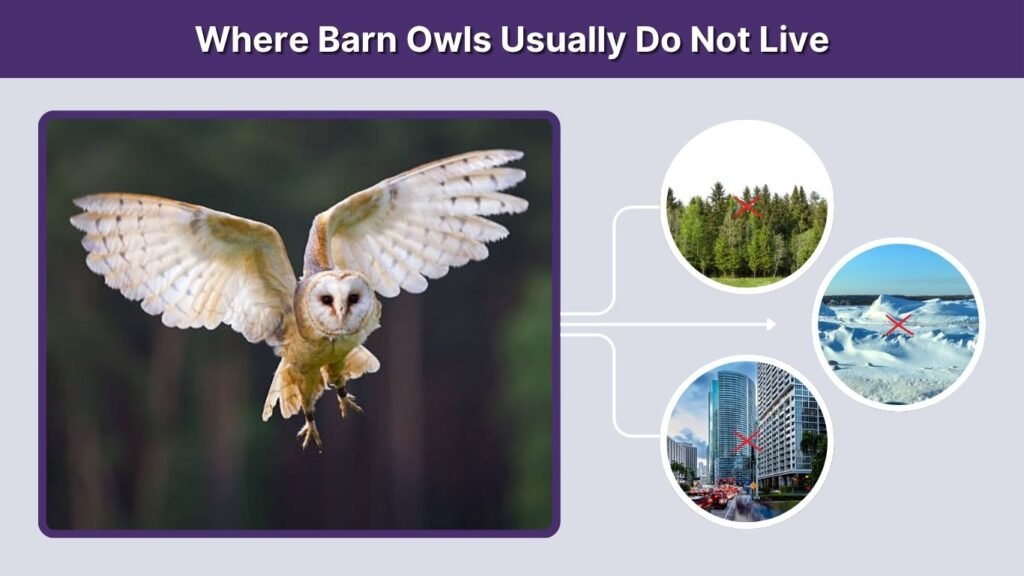
Barn owls are adaptable, but they do not thrive everywhere. Some places are unsuitable because there is not enough prey, not enough nesting space, or too much disturbance.
Less Suitable Places
Barn owls usually avoid:
- Dense forests
- High mountains
- Very cold regions
- Busy city centers
- Areas with little prey
- Places with heavy pesticide or rodenticide use
- Landscapes without nesting cavities or boxes
They may pass through some of these areas, but they are less likely to breed successfully there.
How Humans Can Help Barn Owls Live Safely
Barn owls often live close to people, especially in farmland and rural areas. Simple habitat improvements can make a big difference.
Helpful Actions
- Protect rough grassland and field edges
- Avoid using rodent poison
- Keep old barns safe when possible
- Install proper barn owl nest boxes
- Avoid disturbing active nests
- Maintain hedgerows and natural margins
- Protect wetlands and open countryside
RSPB advice for farmers specifically highlights prey-rich rough grassland and artificial nest sites as ways to support barn owls.
FAQs
Where do barn owls usually live?
Barn owls usually live in open habitats such as farmland, grassland, marshes, meadows, field edges, and open countryside. They also need safe nesting or roosting places such as barns, hollow trees, old buildings, or nest boxes.
Do barn owls live in barns?
Yes, barn owls can live in barns, but they do not only live there. They may also use hollow trees, cliffs, church towers, roof spaces, old buildings, silos, and nest boxes.
Where do barn owls live during the day?
During the day, barn owls usually roost in quiet hidden places such as barn rafters, hollow trees, nest boxes, old buildings, straw bales, or roof spaces.
Where do barn owls live in the United States?
In the United States, barn owls live in many open habitats, including farms, grasslands, deserts, marshes, ranches, and agricultural areas. They are most common where prey and nesting sites are available.
Where do barn owls live in the winter?
In winter, barn owls usually stay near their home range but may hunt over a larger area to find food. They need safe roosts, open hunting land, and enough mice, voles, rats, or shrews to survive.
