
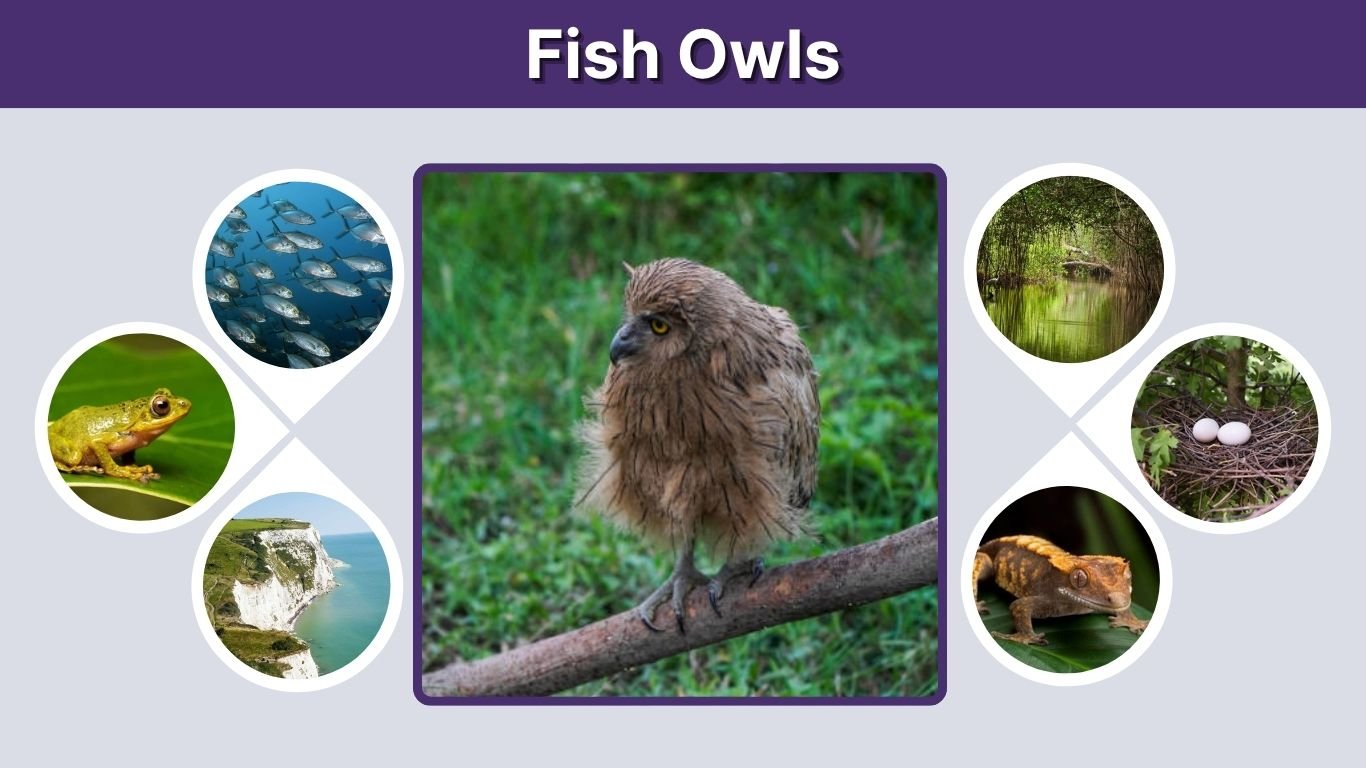
Fish owls are large, powerful owls that live close to rivers, lakes, wetlands, and forest streams. Unlike many owls that mainly hunt rodents, fish owls are specially adapted to catch fish, frogs, crabs, and other aquatic prey. They have strong feet, rough soles, and less silent flight than typical forest owls because their prey usually lives in water. These rare and impressive birds are found mostly in Asia and parts of Africa, depending on the species.
What Are Fish Owls?
Fish owls are owl species that hunt mainly around water. They belong mostly to the genus Ketupa, though some are also closely related to eagle-owls. These birds are usually large, brownish, and heavily streaked, which helps them blend into tree bark and riverbank forests.
Unlike small owls that catch mice in open fields, fish owls often sit on branches, rocks, or river edges and wait for movement in shallow water. When they spot prey, they swoop down or wade into the water to grab it with their talons. Brown fish owls, for example, feed heavily on fish, frogs, crabs, crayfish, reptiles, insects, small mammals, and birds.
Common Types of Fish Owls
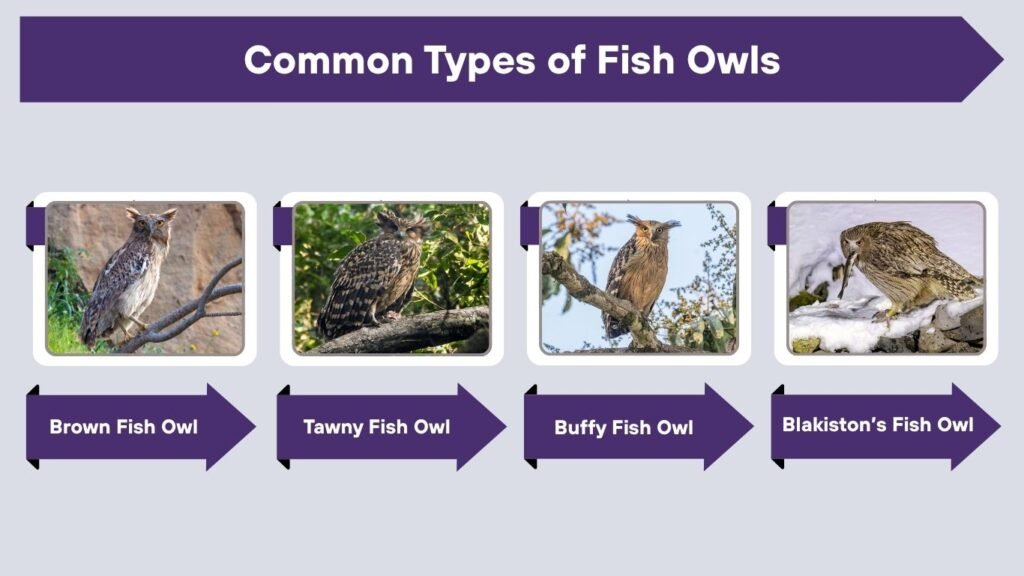
Fish owls are not a huge group, but they include some of the most impressive owls in the world. The most commonly discussed types include Brown Fish Owl, Tawny Fish Owl, Buffy Fish Owl, Pel’s Fishing Owl, and Blakiston’s Fish Owl.
| Type of Fish Owl | Scientific Name | Main Range |
|---|---|---|
| Brown Fish Owl | Ketupa zeylonensis | South Asia, Southeast Asia, Middle East |
| Tawny Fish Owl | Ketupa flavipes | Himalayas, China, Southeast Asia |
| Buffy Fish Owl | Ketupa ketupu | Southeast Asia |
| Blakiston’s Fish Owl | Ketupa blakistoni | Russia, Japan, China, Korea region |
| Pel’s Fishing Owl | Scotopelia peli | Sub-Saharan Africa |
Brown Fish Owl
The Brown Fish Owl is one of the best-known fish owls. It is a large owl with brown upperparts, streaked underparts, orange-yellow eyes, and long ear tufts. It is usually found near wooded rivers, lakes, marshes, ponds, and wetlands.
This species has a wide distribution from parts of the Middle East through South Asia and Southeast Asia. It is often seen near water because its diet depends strongly on aquatic animals. Animal Diversity Web notes that Brown Fish Owls catch prey by perching near water, skimming the surface, or wading into shallow water. Their common prey includes fish, frogs, crabs, crayfish, and sometimes rats or carrion.
Tawny Fish Owl
The Tawny Fish Owl is another large Asian fish owl. It has a warm tawny-brown body, strong streaking, and a powerful build. This owl is often found along mountain streams, forested rivers, and wet valleys.
Its range includes parts of the Himalayas, southern China, and Southeast Asia. Like other fish owls, it hunts mainly near water. It waits on a perch and drops down to catch fish, frogs, crustaceans, and other prey from the water’s edge.
Buffy Fish Owl
The Buffy Fish Owl is found in Southeast Asia, especially in lowland forests, mangroves, swamps, and wooded wetlands. It has a buff-brown body, dark streaks, and bright yellow eyes.
This species is strongly connected to wet habitats. It often hunts at night from branches overhanging streams, ponds, or flooded forest areas. Its food includes fish, frogs, crabs, insects, reptiles, and small mammals.
Blakiston’s Fish Owl
Blakiston’s Fish Owl is one of the largest owls in the world. It lives in cold river forests in northeast Asia, including parts of Russia, Japan, China, and nearby regions. It needs mature forests with large old trees for nesting and clean rivers for hunting.
This owl mainly eats fish such as salmon, trout, and other river fish, but it may also catch amphibians, crustaceans, birds, and mammals. Research on Blakiston’s Fish Owl describes one of its common hunting methods as dropping onto prey in shallow water from a low perch, rock, or snag.
Pel’s Fishing Owl
Pel’s Fishing Owl is an African species and is slightly different from Asian fish owls. It lives near rivers, lakes, swamps, and floodplains in sub-Saharan Africa.
This owl is large, reddish-brown, and usually found close to permanent water. It mainly hunts fish but also eats frogs and other aquatic animals. It is most active at night and usually catches prey by watching from a branch near water.
Fish Owl Habitat
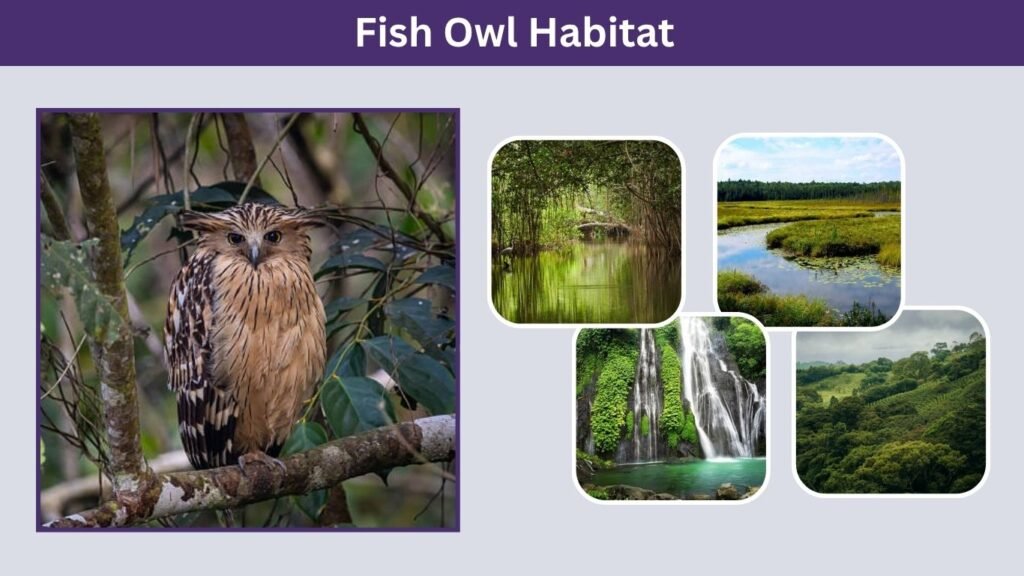
Fish owls need habitats where water and trees are close together. They usually avoid dry open areas because they depend on aquatic prey and safe daytime roosting sites.
Common fish owl habitats include:
- Forested rivers
- Lakeshores
- Mangrove forests
- Wooded wetlands
- Swamps and marshes
- Mountain streams
- Floodplain forests
- Large ponds and reservoirs
Fish owls often prefer quiet places with low human disturbance. Large trees are especially important because many fish owls roost and nest in tree cavities, broken trunks, or old forest structures. Blakiston’s Fish Owl is strongly linked to old-growth river forests because it needs huge natural tree hollows for nesting.
Fish Owl Diet
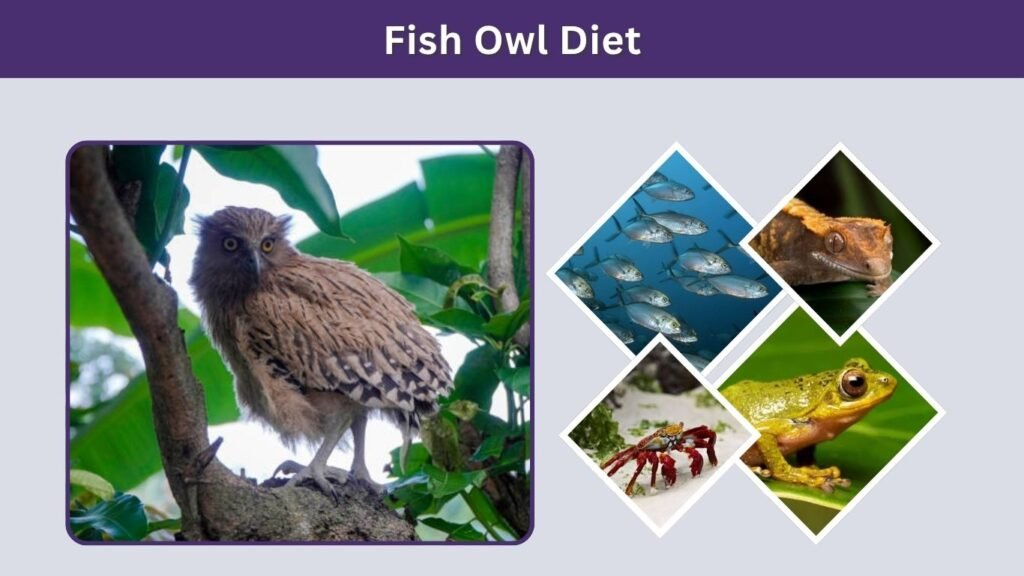
Fish owls are carnivores, and their diet is closely linked to water. Fish is the main food for many species, but they are not limited to fish only.
| Food Type | Examples |
|---|---|
| Fish | Trout, salmon, small river fish, pond fish |
| Amphibians | Frogs and toads |
| Crustaceans | Crabs, crayfish, freshwater shrimp |
| Reptiles | Small snakes and lizards |
| Birds | Waterbirds and small birds |
| Mammals | Rats, mice, small mammals |
| Insects | Large aquatic or forest insects |
| Carrion | Dead animals, rarely |
The Brown Fish Owl is a good example of a flexible hunter. It eats fish, amphibians, crabs, crayfish, reptiles, insects, small mammals, birds, and sometimes carrion.
How Fish Owls Hunt
Fish owls usually hunt at night or during low-light hours. Their hunting style is different from many other owls. Instead of silently flying over grasslands to catch mice, they often sit near water and watch carefully.
Perch Hunting
The owl sits on a low branch, rock, stump, or riverbank. When it sees movement in the water, it drops down quickly and grabs the prey with its strong talons.
Wading in Shallow Water
Some fish owls walk or stand in shallow water to catch fish, frogs, or crabs. This behavior is unusual compared with many other owl species.
Strong Feet and Talons
Fish owls have powerful feet that help them grip slippery prey. Some fish owls have rough pads or spiny surfaces on their toes, making it easier to hold fish.
Identification of Fish Owls
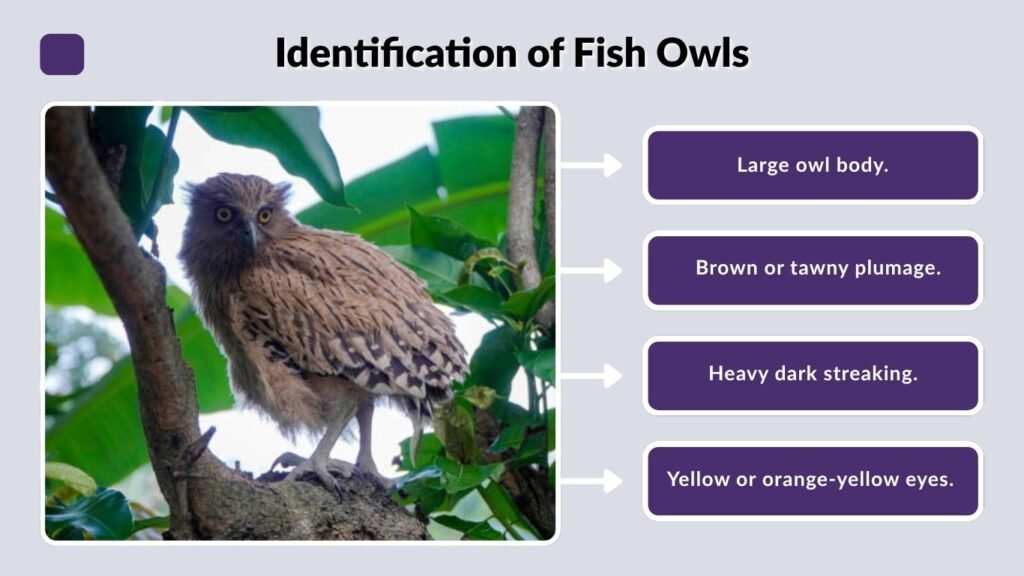
Fish owls can be difficult to identify because several species look brown, streaked, and large. However, a few features can help.
Look for these signs:
- Large owl body
- Brown or tawny plumage
- Heavy dark streaking
- Yellow or orange-yellow eyes
- Long ear tufts in many species
- Found near water
- Strong legs and feet
- Often roosting in riverside trees
Their location is also important. For example, Pel’s Fishing Owl is African, while Brown, Tawny, Buffy, and Blakiston’s Fish Owls are Asian species.
Fish Owl Behavior
Fish owls are mostly nocturnal, meaning they are active at night. During the day, they rest in dense trees, riverine forests, or shaded branches. They are usually solitary or seen in pairs.
Many fish owls are territorial. A pair may use the same river stretch or forest area for a long time. Blakiston’s Fish Owls are known for deep duet calls between pairs, especially in quiet river valleys.
Breeding and Nesting
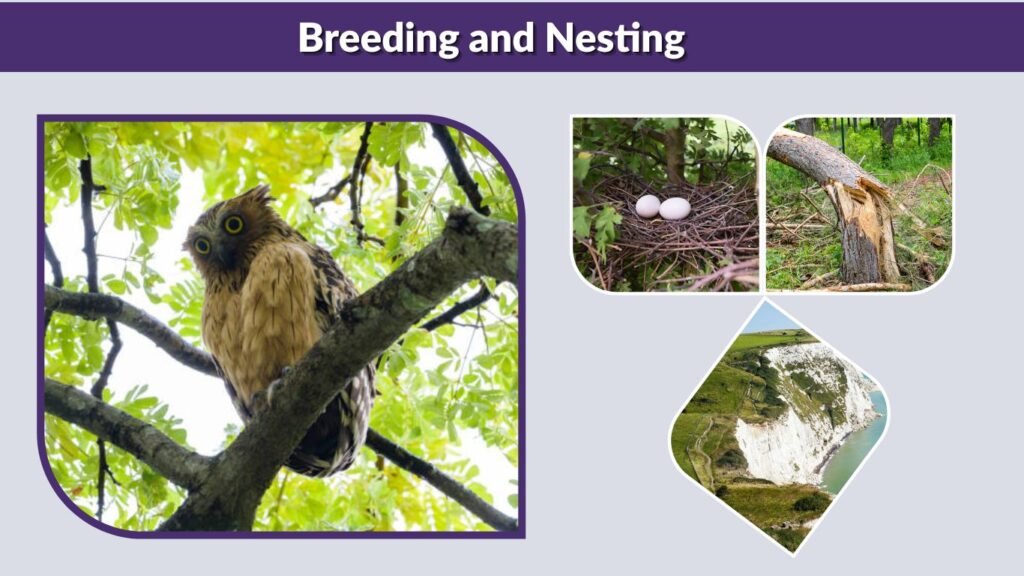
Fish owls usually nest in large tree cavities, broken trunks, cliffs, or abandoned nests, depending on the species and habitat. Large old trees are very important for some species because suitable nesting holes can take many decades to form.
The female usually lays one or two eggs. The chicks grow slowly and depend on their parents for food. In large species like Blakiston’s Fish Owl, young birds may stay near their parents for a long time before becoming independent.
Interesting Facts About Fish Owls
Fish owls are unique among owls because of their water-based lifestyle. They have several special traits that make them different from typical forest owls.
- Fish owls often hunt from branches above rivers.
- They may wade into shallow water to catch prey.
- Their diet includes fish, frogs, crabs, crayfish, and small animals.
- Some species are among the largest owls in the world.
- Blakiston’s Fish Owl is considered endangered.
- Fish owls often need old riverside forests for nesting.
- They are less dependent on silent flight than many mouse-hunting owls.
- Their strong feet help them hold slippery fish.
- They are mostly nocturnal.
- They are excellent indicators of healthy river ecosystems.
Are Fish Owls Rare?
Some fish owl species are more common than others. The Brown Fish Owl is relatively widespread and is listed as Least Concern because it has a broad range. However, other species face more serious threats.
Blakiston’s Fish Owl is endangered because it depends on old-growth river forests, large nesting trees, and healthy fish populations. Habitat loss, river development, logging, pollution, and human disturbance can all reduce suitable habitat.
Threats to Fish Owls
Fish owls are closely tied to rivers and wetlands, so damage to these habitats affects them directly.
Major threats include:
- Forest clearing near rivers
- Loss of old nesting trees
- Wetland drainage
- River pollution
- Overfishing
- Human disturbance
- Road development
- Decline of fish and amphibian populations
Protecting fish owls means protecting clean rivers, mature trees, wetlands, and natural shorelines.
FAQs
What is a fish owl?
A fish owl is a large owl that lives near water and hunts fish, frogs, crabs, and other aquatic animals. Most fish owls belong to the genus Ketupa.
How many types of fish owls are there?
Commonly known fish owl types include Brown Fish Owl, Tawny Fish Owl, Buffy Fish Owl, Blakiston’s Fish Owl, and Pel’s Fishing Owl.
What do fish owls eat?
Fish owls mainly eat fish, but they also eat frogs, crabs, crayfish, reptiles, insects, small mammals, birds, and sometimes carrion.
Where do fish owls live?
Fish owls live near rivers, lakes, swamps, mangroves, wetlands, forest streams, and wooded water bodies. Most species are found in Asia, while Pel’s Fishing Owl lives in Africa.
Are fish owls dangerous?
Fish owls are not usually dangerous to humans. They are wild birds of prey and should not be handled or disturbed, especially near nests.
