
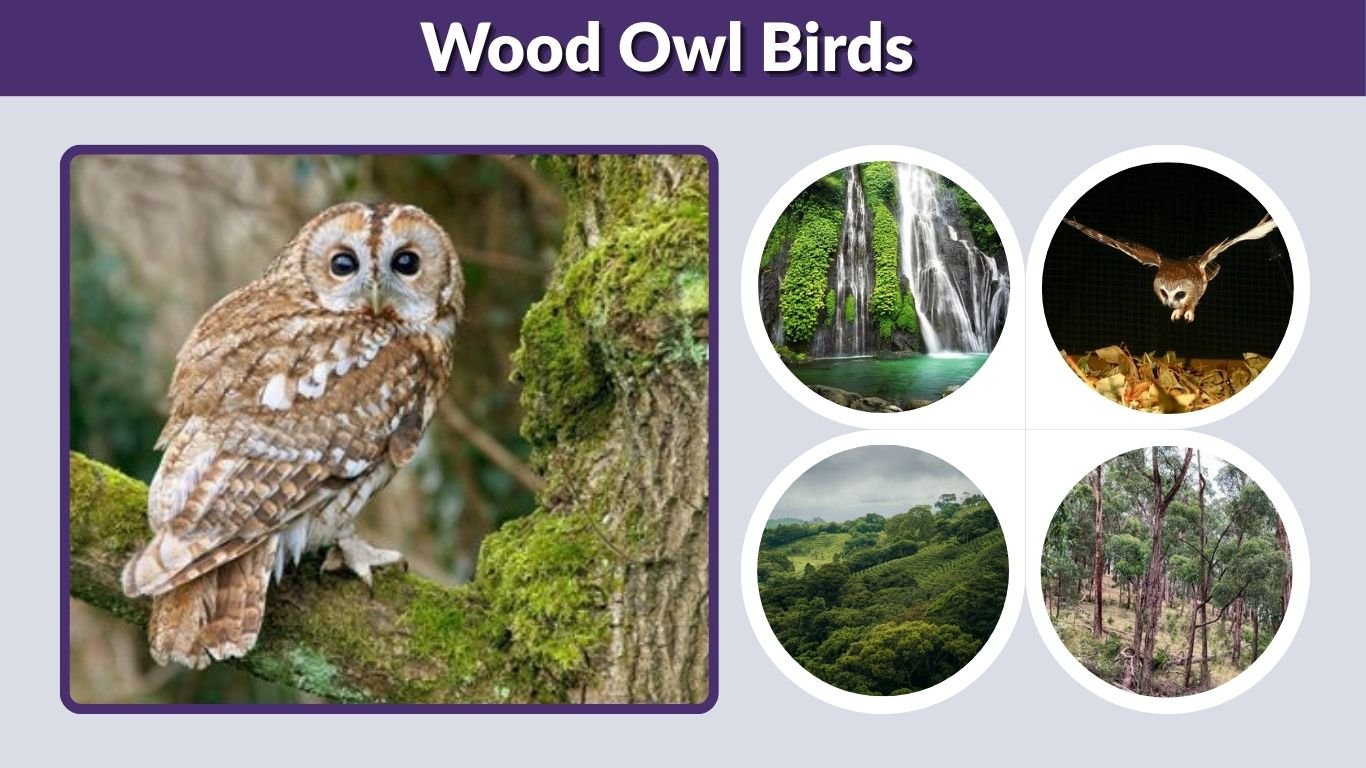
Wood owls are forest-loving owls that usually live in wooded areas, dense forests, plantations, wooded gardens, and riverine forests. The name “wood owl” is often used for owls in the genus Strix, such as the Brown Wood Owl, African Wood Owl, Spotted Wood Owl, Mottled Wood Owl, and Tawny Owl. These owls are usually medium to large, rounded-headed, mostly nocturnal, and excellent hunters in dark forest habitats.
What Are Wood Owls?
Wood owls are typical owls that prefer forest or woodland habitats. Many of them do not have long ear tufts like horned owls or eagle-owls. Instead, they often have a rounded head, large facial disc, dark or brown eyes, soft feathers, and strong talons.
Most wood owls are active at night. During the day, they hide in thick branches, tree cavities, or shaded forest areas. At night, they hunt small mammals, birds, reptiles, frogs, insects, and other small prey. The African Wood Owl, for example, hunts mostly from low perches and drops onto prey on the ground. Its diet includes insects, small birds, rodents, frogs, small snakes, small mammals, and centipedes.
Wood owls are important forest predators. They help control populations of rats, mice, insects, and other small animals. Because many species depend on trees for roosting and nesting, healthy woodland habitat is very important for their survival.
Common Types of Wood Owls
There are several owl species commonly called wood owls or closely related forest owls. Some are found in Asia, some in Africa, and some in Europe.
| Wood Owl Type | Scientific Name | Main Range |
|---|---|---|
| Brown Wood Owl | Strix leptogrammica | South Asia and Southeast Asia |
| African Wood Owl | Strix woodfordii | Sub-Saharan Africa |
| Spotted Wood Owl | Strix seloputo | Southeast Asia |
| Mottled Wood Owl | Strix ocellata | Indian Subcontinent |
| Tawny Owl | Strix aluco | Europe and western Asia |
Brown Wood Owl
The Brown Wood Owl is a large forest owl found in South Asia and Southeast Asia. Its range includes India, Bangladesh, Sri Lanka, Indonesia, Taiwan, and southern China. It is usually found in dense forests and is highly nocturnal. The bird has dark brown upperparts, buff underparts with streaking, a rounded head, dark eyes, and no obvious ear tufts.
This owl mainly eats small mammals, birds, and reptiles. It often stays hidden during the day, but small birds may reveal its location by mobbing it while it roosts in a tree. Its deep calls can sometimes be heard at night in forested areas.
African Wood Owl
The African Wood Owl is a woodland owl found in many parts of sub-Saharan Africa. It is usually linked with forests, wooded savannas, riverine woodland, plantations, and gardens with mature trees.
It has a rounded head, dark eyes, brownish upperparts, and barred or streaked underparts. This owl hunts from low perches and often detects prey by sound before dropping down to catch it. Its food includes insects, rodents, frogs, small snakes, birds, small mammals, and centipedes. It may also catch insects or bats in flight.
Spotted Wood Owl
The Spotted Wood Owl is a Southeast Asian species. It belongs to the earless owl genus Strix and occurs in several areas around Borneo, but not on Borneo itself. Its habitats include forests and some human-influenced landscapes.
This owl has a large body, orange-brown facial disc, dark eyes, and heavily marked plumage. It usually hunts from a perch and feeds mainly on small rodents, small birds, and large insects. It may also catch snakes and bats. Spotted Wood Owls may nest in tree hollows, large epiphytic ferns, or old nests of other birds.
Mottled Wood Owl
The Mottled Wood Owl is found mainly in the Indian Subcontinent. It is a medium-large owl with a rounded head, dark eyes, brownish plumage, and mottled markings. It is often found in open woodland, groves, agricultural areas with trees, and village edges.
Its diet includes rodents, birds, reptiles, insects, and other small animals. One study on Mottled Wood Owl prey recorded several rodent species in the diet, including Millardia meltada, Bandicota bengalensis, Mus booduga, Tatera indica, and Rattus rattus.
Tawny Owl
The Tawny Owl is one of the most familiar forest owls in Europe. It is strongly associated with woodland, parks, old gardens, and tree-rich areas. It has a rounded head, dark eyes, broad wings, and brown or greyish-brown plumage.
The Tawny Owl is a nocturnal predator that hunts mainly by dropping suddenly from a perch. Its typical prey includes rodents, but in urban areas it may eat more birds. It can also take smaller owls and other prey when available.
Wood Owl Habitat
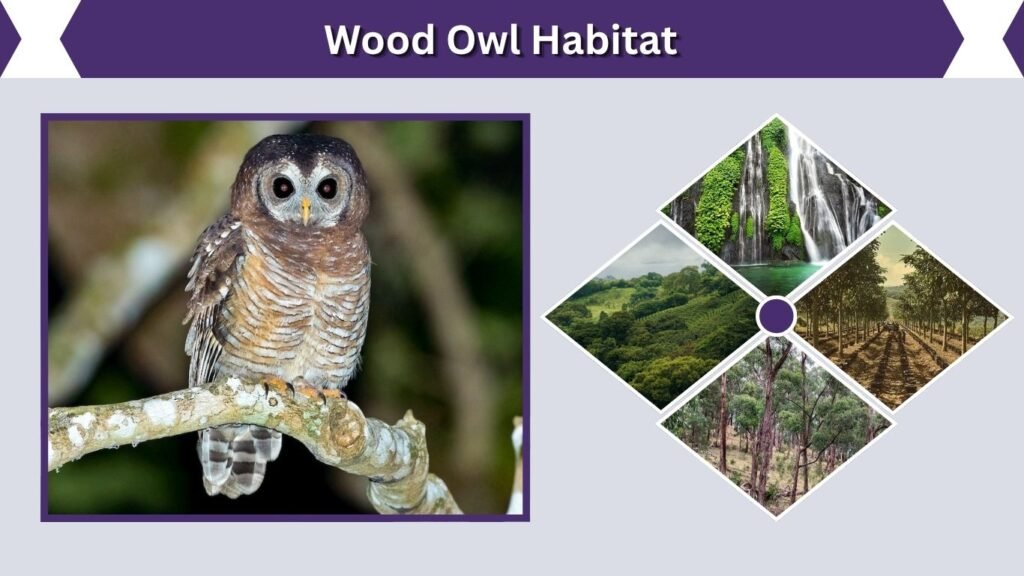
Wood owls usually prefer areas with trees. Some species live in thick forests, while others can survive in open woodland, plantations, parks, large gardens, and wooded farmland.
Common wood owl habitats include:
- Dense forests
- Tropical rainforests
- Dry woodland
- Riverine forests
- Old gardens and parks
- Plantations with mature trees
- Wooded farms
- Groves near villages
- Forest edges
- Mountain forests
Large old trees are especially useful because many wood owls need safe daytime roosting sites and nesting cavities. Forest owls also need enough prey nearby, such as rodents, insects, frogs, reptiles, and small birds.
Some wood owls are more adaptable than others. The Spotted Wood Owl can use forests and some anthropogenic habitats, meaning landscapes influenced by humans. However, species that depend heavily on mature forests may decline when large trees are removed.
Wood Owl Diet
Wood owls are carnivores. Their diet depends on species, habitat, season, and prey availability. In forests, they often hunt small mammals and birds. In wetter habitats, they may eat frogs and reptiles. In warmer regions, insects can also be an important food source.
| Food Type | Common Examples |
|---|---|
| Small mammals | Rats, mice, shrews, small squirrels |
| Birds | Small forest birds, young birds |
| Reptiles | Lizards and small snakes |
| Amphibians | Frogs and toads |
| Insects | Beetles, crickets, moths, large insects |
| Other prey | Centipedes, bats, earthworms, snails |
Tawny Owls are good examples of flexible forest hunters. A study from northeastern Poland found that rodents, amphibians, and insectivores were dominant prey groups in one forest population. Birds were only occasional prey in that study.
How Wood Owls Hunt
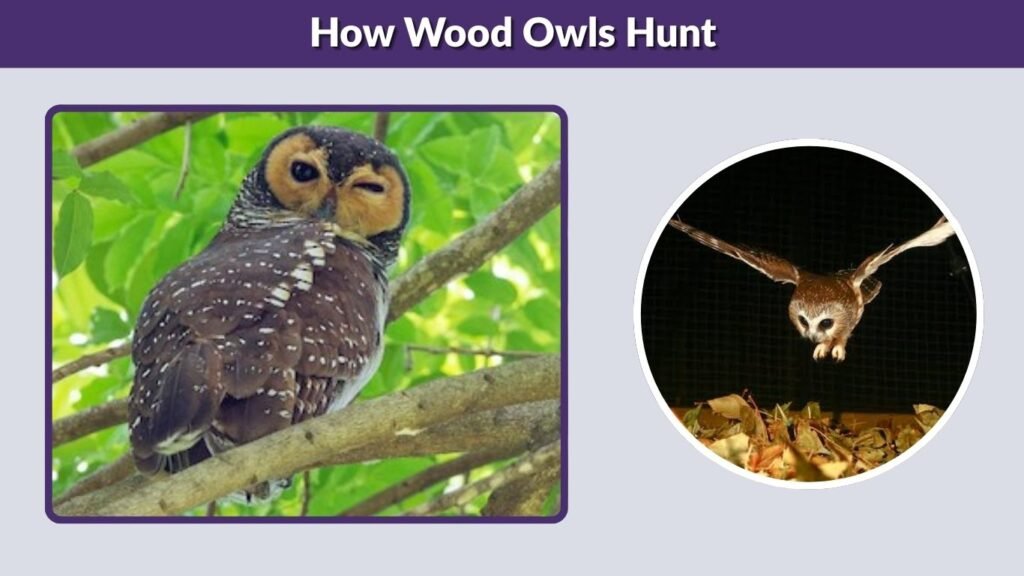
Wood owls are built for night hunting. Their large eyes help them see in low light, while their facial disc helps direct sound toward the ears. This makes it easier to locate prey moving under leaves, grass, or branches.
Perch-and-Drop Hunting
Many wood owls use a perch-and-drop hunting style. They sit quietly on a branch, listen for movement, then drop quickly onto the prey. African Wood Owls commonly hunt from low perches and drop onto prey on the ground.
Silent Flight
Wood owls have soft feathers that reduce flight noise. This helps them approach prey without being detected. Spotted Wood Owls, like many other owls, have wing feather patterns that support silent flight.
Night Vision and Hearing
Wood owls do not rely only on eyesight. Their hearing is extremely important. In dark forests, an owl may hear a mouse, frog, insect, or bird before it sees it.
Identification of Wood Owls
Wood owls can look similar, but several features help with identification.
Look for these signs:
- Rounded head
- No long ear tufts in many species
- Dark or brown eyes
- Brown, grey, or rufous plumage
- Streaked or barred underparts
- Large facial disc
- Nocturnal behavior
- Forest or woodland habitat
- Deep hooting calls
The Brown Wood Owl is medium-large, about 45–57 cm long, with dark brown upperparts, buff underparts with brown streaking, a brown or rufous facial disc, dark brown eyes, and a white neckband.
Wood Owl Behavior
Wood owls are mostly nocturnal and secretive. During the day, they usually rest quietly in trees. They may sit close to the trunk or hide in dense foliage. Smaller birds sometimes gather around and scold a hidden owl, which can help birdwatchers locate it.
At night, wood owls become active. They call to defend territory, attract mates, and communicate with partners. Many species have deep, repeated hoots. Some also produce barks, screams, or other calls.
Wood owls are usually solitary or found in pairs. A breeding pair may stay in the same territory if food and nesting sites are available.
Breeding and Nesting
Wood owls usually nest in tree cavities, broken trunks, old nests, or natural platforms. Some species may use abandoned nests of other large birds. The Spotted Wood Owl may nest in a tree hollow, an epiphytic fern, or sometimes on top of another bird’s nest. The female usually lays white eggs directly on the nest floor without much lining.
Most wood owls lay a small clutch, often one to three eggs depending on the species. The female usually incubates the eggs, while the male brings food. After hatching, the chicks remain dependent on their parents for several weeks.
Interesting Facts About Wood Owls
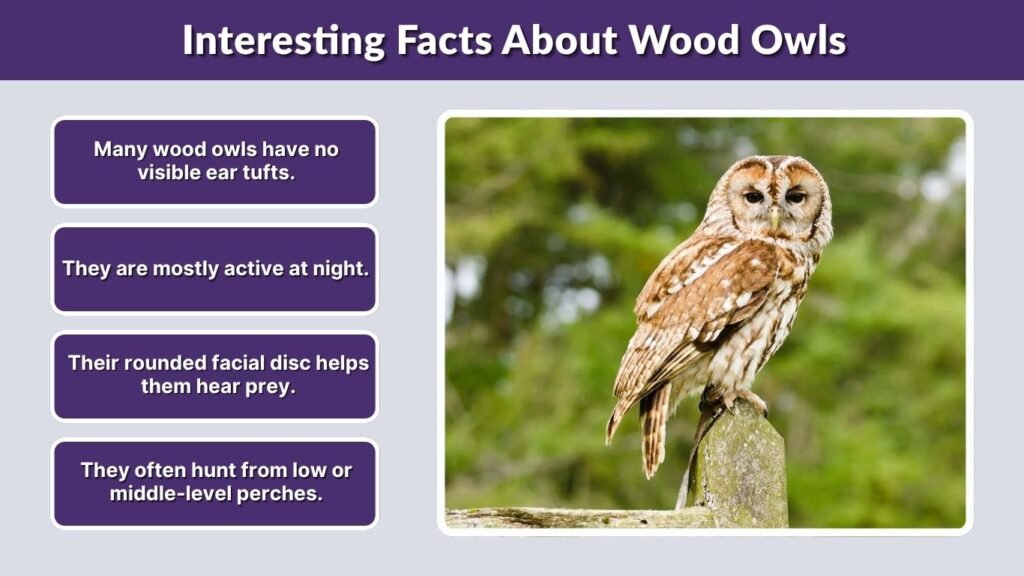
Wood owls are fascinating birds because they are quiet, powerful, and well adapted to forest life.
- Many wood owls have no visible ear tufts.
- They are mostly active at night.
- Their rounded facial disc helps them hear prey.
- They often hunt from low or middle-level perches.
- Their soft feathers allow quiet flight.
- They eat rodents, birds, frogs, reptiles, insects, and other small animals.
- Some species can live near villages, parks, and plantations.
- Large old trees are important for nesting.
- Their calls are often heard more easily than the birds are seen.
- They help control rodent and insect populations.
Threats to Wood Owls
Wood owls face different threats depending on the species and region. The most common problem is habitat loss. When forests are cleared, old trees are removed, or wooded areas are fragmented, wood owls lose nesting and hunting places.
Major threats include:
- Deforestation
- Loss of mature trees
- Pesticide use
- Decline of prey animals
- Road accidents
- Human disturbance near nests
- Illegal trapping in some areas
- Urban expansion into woodland
Protecting forests, old trees, and natural woodland edges can help wood owl populations survive.
FAQs
Are wood owls real birds?
Yes, wood owls are real owls. The name is commonly used for several forest-dwelling owls, especially species in the genus Strix, such as Brown Wood Owl, African Wood Owl, and Spotted Wood Owl.
What do wood owls eat?
Wood owls eat small mammals, birds, frogs, reptiles, insects, centipedes, bats, and other small animals. Their exact diet depends on species and habitat.
Where do wood owls live?
Wood owls live in forests, woodlands, riverine forests, plantations, old gardens, parks, and wooded farmland. Some species prefer dense forest, while others can live near human areas with enough trees.
Do wood owls come out during the day?
Most wood owls are nocturnal, so they are mainly active at night. During the day, they usually roost quietly in trees, but they may sometimes be seen if disturbed or mobbed by smaller birds.
Are wood owls dangerous?
Wood owls are not normally dangerous to humans. However, they are wild birds of prey and should not be handled or disturbed, especially during the nesting season.