
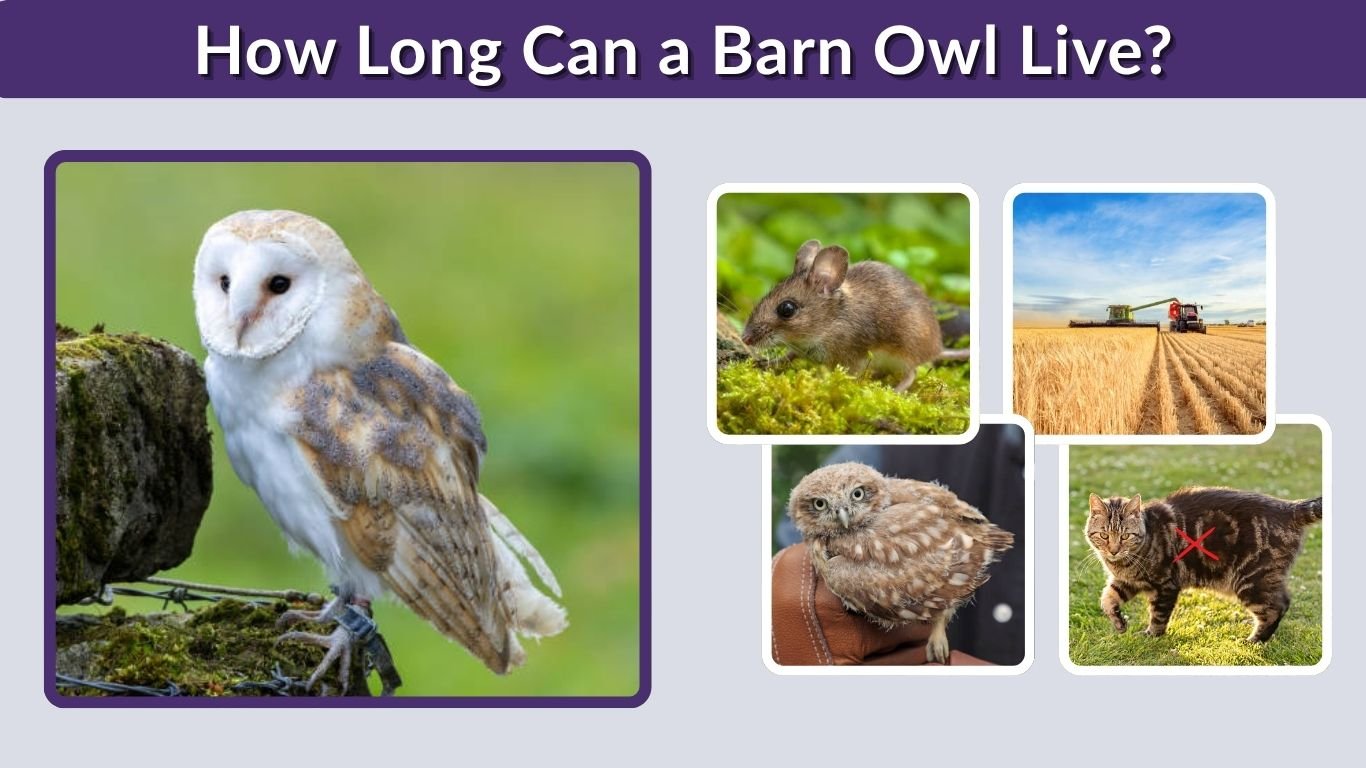
Barn owls are quiet night hunters with pale heart-shaped faces, silent wings, and strong hearing. Many readers ask how long a barn owl can live, how big it gets, whether it can eat cats, and whether people can keep one as a pet. This guide answers those common questions in simple language. You’ll also learn where barn owls live, what they can do, what they cannot do, and why these birds are best respected as wild raptors rather than house animals.
Quick Barn Owl Fact File
Barn owls are medium-sized birds of prey in the genus Tyto. They are famous for their white face, golden-brown back, dark eyes, and ghost-like flight. They live in open places where small mammals are easy to find. This quick fact file gives the main details before we answer the most common “can” and “how” questions.
Basic barn owl facts
- Common name: Barn owl
- Scientific name: Tyto alba
- Length: About 33–39 cm
- Wingspan: About 80–95 cm
- Weight: Around 250–350 g
- Average wild lifespan: Often around 4 years for adults
- Main food: Mice, voles, shrews, rats, and other small animals
- Best habitat: Farmland, grassland, marshes, rough fields, and open country
The Natural History Museum lists barn owls at 33–39 cm long, 80–95 cm in wingspan, 250–350 g in weight, and about 4 years average lifespan.
How Long Can a Barn Owl Live?
Barn owls can live several years, but many do not survive long in the wild. Their lifespan depends on food supply, weather, road danger, disease, and age. Young birds face the hardest first year. Adults that survive early dangers may live longer, and captive birds can sometimes live much longer than wild ones.
Wild barn owl lifespan
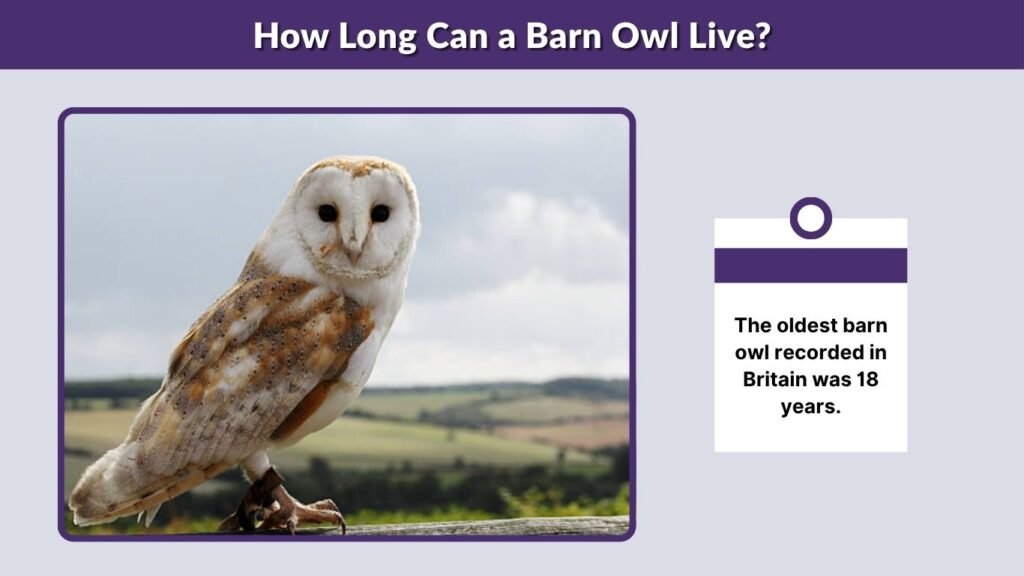
In Britain, the Barn Owl Trust says average life expectancy is only about 18 months because many barn owls die in their first year. If first-year deaths are ignored, one study found an average of about 4 years. The oldest barn owl recorded in Britain was 18 years, while the European longevity record is 30 years.
Captive barn owl lifespan
Captive barn owls may live longer because they are protected from starvation, traffic, and harsh weather. The Barn Owl Trust says captive barn owls can have a life expectancy of about 20 years, which is one reason keeping one is a major long-term responsibility.
Why many barn owls die young
- Lack of food in winter
- Heavy rain, snow, or cold weather
- Road accidents while hunting low over fields
- Poisoned prey from rodenticides
- Injury during hunting
- Poor nesting conditions
Starvation is considered a major cause of barn owl mortality, especially for young birds and during severe winter weather.
How Big Can a Barn Owl Get?
A barn owl may look large when it spreads its wings, but its body is fairly light. Its long wings help it glide slowly and silently over open fields. Compared with heavier owls, the barn owl is slim, graceful, and built for low hunting flights rather than carrying large prey or fighting big animals.
Adult barn owl size
Most adult barn owls are about 33–39 cm long, with a wingspan close to 80–95 cm. Their weight is usually only 250–350 g, which means many barn owls weigh less than a common city pigeon even though their wings look broad.
Size compared with prey
Barn owls mostly hunt animals much smaller than themselves. Their usual prey includes mice, voles, shrews, and rats. They may also take small birds or other small animals when available, but they are not built to carry heavy pets or large prey. Animal Diversity Web notes that barn owls prefer small mammals and rely strongly on hearing when hunting in darkness.
Can a Barn Owl Eat or Kill a Cat?
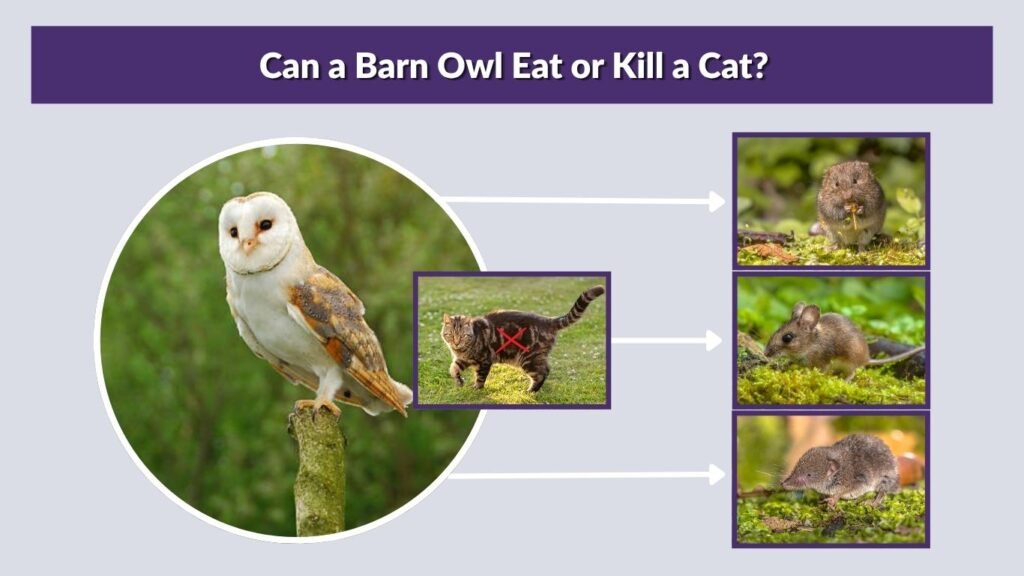
Many people worry about barn owls attacking cats, kittens, or small dogs. In normal situations, a barn owl is not a serious threat to an adult cat. Barn owls are light birds that specialize in small rodents. Their feet are sharp, but their body weight limits what they can lift, carry, and safely kill.
What barn owls usually eat
- Mice
- Voles
- Shrews
- Small rats
- Small birds
- Sometimes frogs, insects, or reptiles
Barn owls are skilled rodent hunters, not pet hunters. Their hunting style is designed for finding small animals hidden in grass. Cornell Lab describes American Barn Owls flying slowly over open fields at night or dusk and using hearing to locate mice and other rodents.
Can a barn owl pick up a cat?
A healthy adult cat is usually too heavy and dangerous for a barn owl. A tiny kitten could be more vulnerable outdoors, but this would still be unusual. Great horned owls and other larger raptors are more likely to threaten pets than barn owls. For safety, very small pets should be kept indoors or supervised at night.
Can You Have a Barn Owl as a Pet?
Barn owls are beautiful, but they are not good pets. They are wild birds of prey with special food, housing, veterinary, and legal needs. They need space to fly, whole-prey diets, expert handling, and proper permits in many places. A barn owl is not like a parrot, pigeon, or domestic bird.
Why barn owls are poor pets
- They are nocturnal and active at night
- They need whole prey, not normal birdseed
- They produce pellets and messy waste
- They need large, safe aviaries
- They may injure people with sharp talons
- They do not behave like social pet birds
- They can live around 20 years in captivity
In the United States, migratory bird permits cover possession, transport, sale, purchase, rehabilitation, education, falconry, and related activities. The U.S. Fish and Wildlife Service issues these permits only for qualified purposes, not ordinary pet ownership.
Can you own a barn owl in the UK or Canada?
In the UK, barn owls are protected under the Wildlife and Countryside Act, 1981. In Canada, barn owls have a very limited range, mainly in southwestern British Columbia and Ontario, with the western population assessed as threatened and the eastern population as endangered. Laws vary by region, so anyone dealing with a wild or captive barn owl should contact local wildlife authorities.
Where Can Barn Owls Be Found?
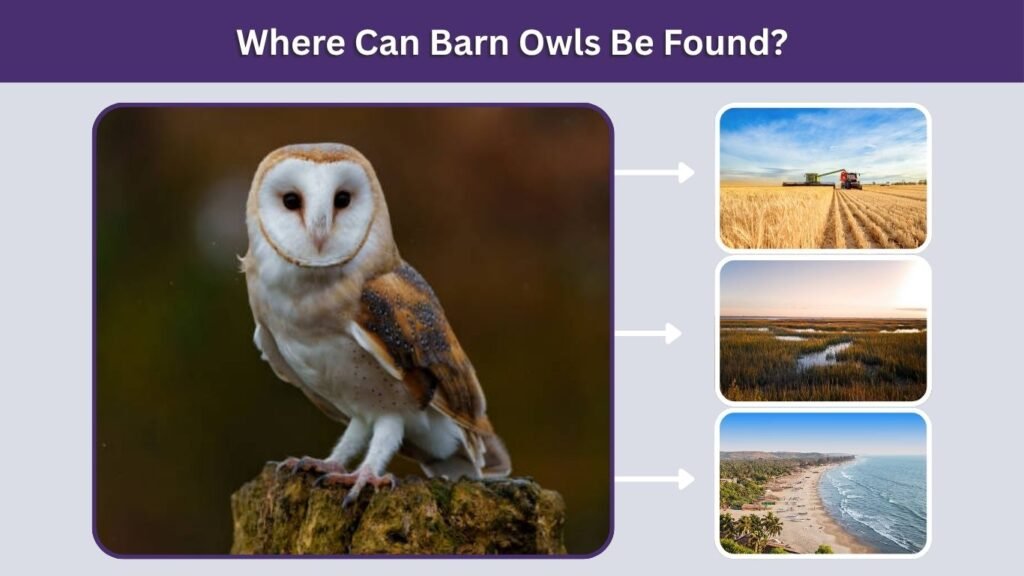
Barn owls are widespread, but they are not found equally everywhere. They prefer open land with enough prey and safe nesting places. You may see them near farms, old barns, grassland, marsh edges, roadside fields, and rough meadows. They are most active at dusk, dawn, and night, though daytime hunting can happen.
Common barn owl habitats
Barn owls usually avoid dense forests. They do better in open habitats where they can fly low and listen for prey. Good barn owl places include farmland, grassland, wetlands, field edges, heathland, and coastal areas. The Wildlife Trusts describe barn owls hunting low over farmland and grassland while searching for small mammals.
Barn owls in Canada
Barn owls exist in Canada, but their range is limited. NatureCounts says they are restricted mainly to southwestern British Columbia and Ontario. The western population is estimated at 250–1,000 individuals, while the eastern population likely has fewer than 20 individuals.
What Can Barn Owls Do?
Barn owls have several amazing abilities, but some online claims are exaggerated. They cannot turn their heads 360 degrees, carry large animals, or live like a normal pet. Their real powers are better: silent flight, sharp hearing, low-light vision, and excellent hunting accuracy in open fields at night.
Special barn owl abilities
- Silent flight: Soft feather edges reduce sound.
- Strong hearing: Their face helps direct sound to the ears.
- Night hunting: They can hunt in very low light.
- Sound location: They can find prey hidden in grass.
- Low flight: They fly slowly over fields while searching.
- Pellet casting: They cough up undigested fur and bones.
Animal Diversity Web notes that barn owls can locate prey by sound with extreme accuracy, helped by sensitive hearing and asymmetrically placed ears.
Can barn owls fly in the rain or swim?
Barn owls can fly in light rain, but heavy rain makes hunting harder. Wet feathers reduce silent flight and make it difficult to stay warm. Barn owls are not swimming birds. If one falls into water, it may struggle to escape, especially if its feathers become soaked.
Barn Owl Babies and Breeding
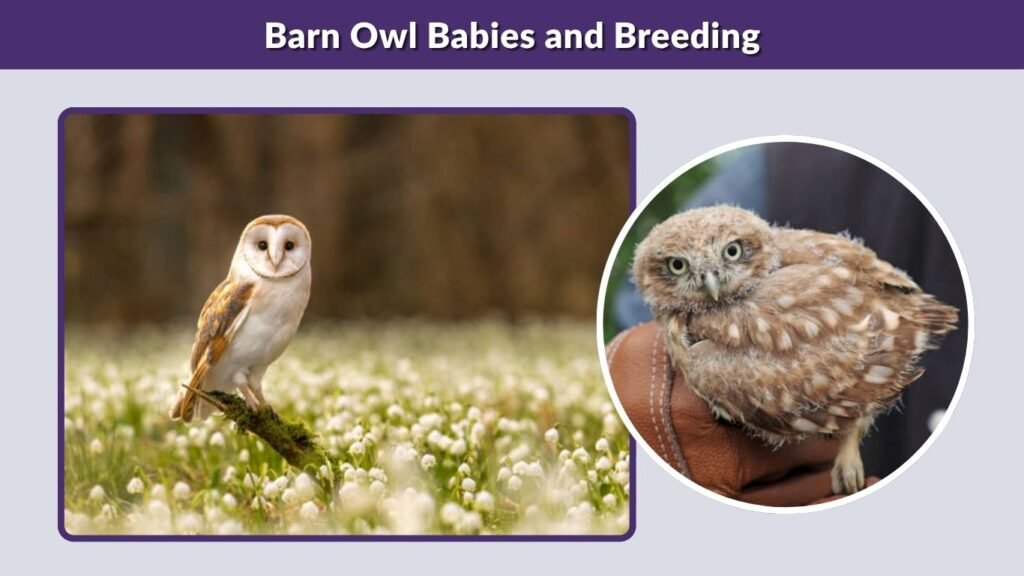
Baby barn owls are called owlets. They hatch helpless, covered in white down, and depend completely on their parents. Barn owls can breed when food is plentiful, and the number of eggs may vary widely. A nest with many chicks usually means the adults are finding enough prey nearby.
Barn owl chicks
Cornell Lab lists a clutch size of 2–18 eggs, an incubation period of 29–34 days, and a nestling period of 50–55 days for American Barn Owls. The chicks hatch helpless and covered in white down.
When young barn owls leave the nest
Young barn owls take their first flights after several weeks, but they still rely on their parents for food for a short time. Animal Diversity Web notes that chicks may leave the nest on first flight 50–70 days after hatching and become independent 3–5 weeks after they begin flying.
FAQs
1. How long can a barn owl live?
Many wild barn owls die young, but adults often average around 4 years. Some wild individuals live much longer, and captive barn owls may live around 20 years with expert care.
2. How big can a barn owl get?
A barn owl is usually 33–39 cm long, with a wingspan of about 80–95 cm and a weight of about 250–350 g.
3. Can a barn owl eat a cat?
A barn owl usually eats small mammals such as mice, voles, shrews, and rats. An adult cat is normally too large and risky for a barn owl.
4. Can you have a barn owl as a pet?
In many places, you cannot keep a barn owl as a normal pet. They are wild raptors and often require permits for possession, rehabilitation, education, or similar legal purposes.
5. Can barn owls see in the dark?
Barn owls have strong low-light vision, but their most impressive hunting tool is hearing. They can locate hidden prey by sound while flying over grassland at night.
