
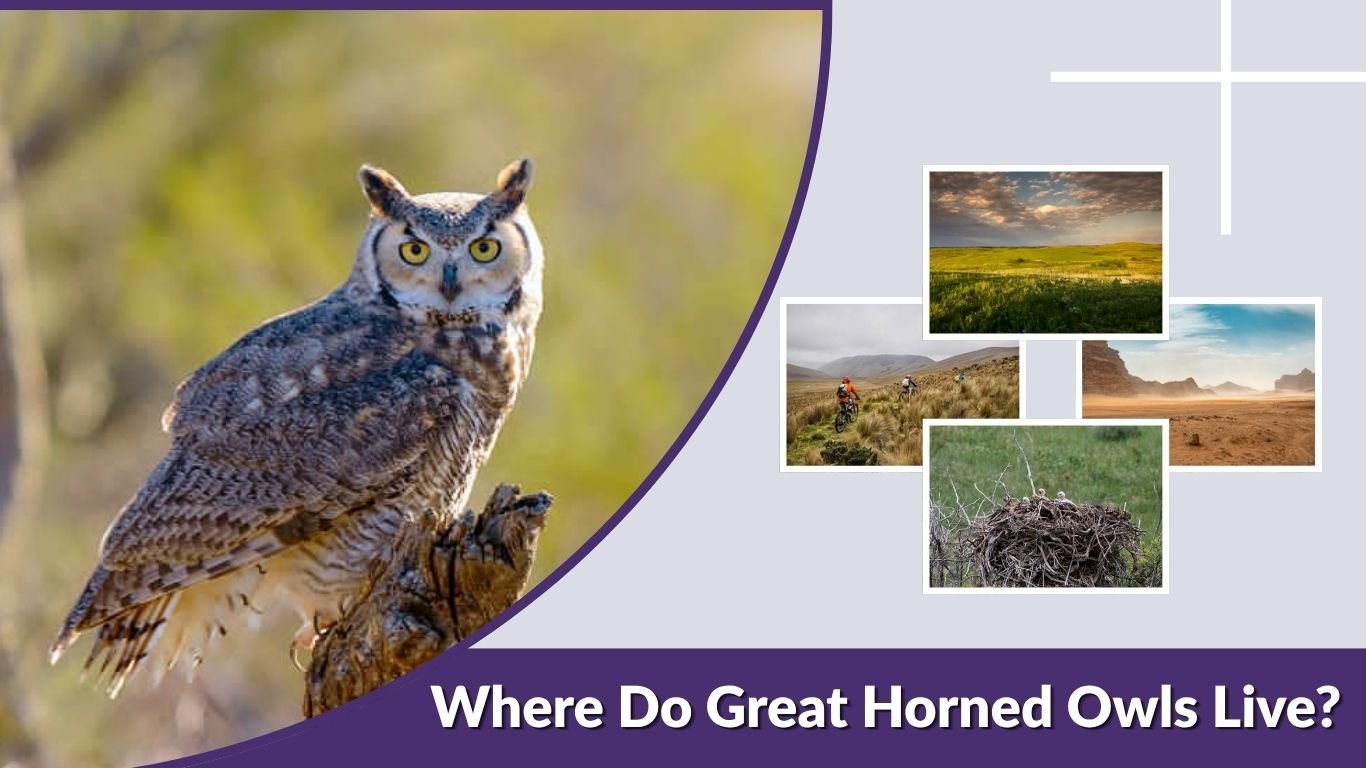
Great horned owls live across most of North America and parts of Central and South America. They are one of the most adaptable owls, using forests, deserts, wetlands, grasslands, mountains, suburbs, and city parks. These powerful birds of prey can survive anywhere they find enough food, safe nesting sites, and good hunting perches. This guide explains where great horned owls live, what habitats they prefer, which states they occur in, and how long they can live in the wild or captivity.
Where Do Great Horned Owls Live?
Great horned owls live in a wide range of habitats across the Americas. They are found from northern forests and Canadian woodlands to deserts, swamps, farmland, and urban neighborhoods. Unlike some owls that need very specific habitat, great horned owls are generalists.
They usually need three things: prey, nesting sites, and places to perch. If an area has rabbits, rodents, birds, squirrels, skunks, or other prey, great horned owls may live there. They often nest in old hawk, crow, raven, or squirrel nests instead of building their own.
Common Places They Live
- Forests and woodland edges
- Deserts and desert canyons
- Grasslands and prairies
- Wetlands and marsh edges
- Farmland and ranchland
- Mountains and foothills
- City parks and suburbs
- River corridors
- Open areas with scattered trees
Great horned owls are especially common where open hunting areas are close to trees or nesting sites.
Great Horned Owl Range
The great horned owl has one of the widest ranges of any owl in the Americas. It is found throughout most of the United States, Canada, Mexico, and parts of Central and South America.
In the United States, great horned owls live in nearly every state. They occur in Florida, Texas, Arizona, California, Oregon, Ohio, Illinois, Indiana, Georgia, New Jersey, Michigan, and many other states. They also live in Alaska, although they are less common in the farthest northern regions.
| Region | Presence of Great Horned Owls | Common Habitat |
|---|---|---|
| United States | Widespread | Forests, farms, deserts, suburbs |
| Canada | Widespread, except far Arctic areas | Boreal forest, edges, open country |
| Mexico | Common in many regions | Deserts, mountains, woodlands |
| Central America | Present in suitable areas | Forest edges and open habitats |
| South America | Present in parts of the continent | Grasslands, scrub, woodland edges |
Because they are so adaptable, many people may hear great horned owls calling near homes, farms, wooded neighborhoods, or parks.
What Habitat Do Great Horned Owls Live In?
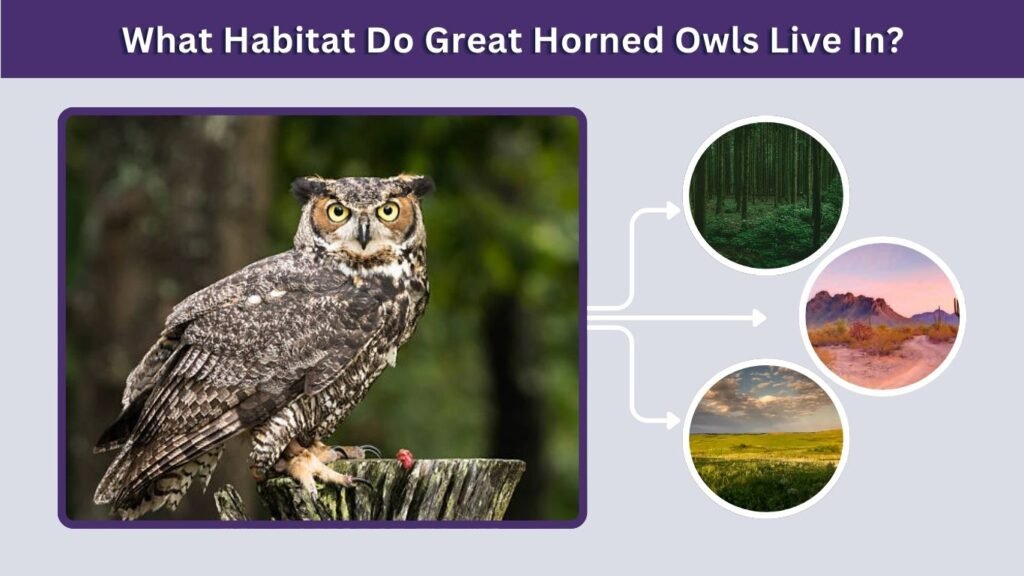
Great horned owls live in many habitats, but they often prefer areas with a mix of open space and cover. Open areas help them hunt, while trees, cliffs, or structures give them places to roost and nest.
They do not need deep wilderness. A wooded suburban neighborhood with squirrels, rabbits, and tall trees can support a pair. A desert canyon with cliffs and rodents can also be excellent habitat.
Main Habitat Types
- Forests: Deciduous, coniferous, and mixed forests
- Deserts: Cactus areas, rocky slopes, and dry washes
- Wetlands: Swamps, marshes, and wooded river edges
- Grasslands: Prairies, pastures, and open fields
- Urban areas: Parks, cemeteries, golf courses, and wooded suburbs
- Mountains: Foothills, cliffs, and forested slopes
The best habitat usually has good prey numbers and safe nesting sites nearby.
Do Great Horned Owls Live in Forests?
Yes, great horned owls live in forests. They can be found in deciduous forests, coniferous forests, mixed woodlands, and forest edges. However, they often hunt along openings, fields, roadsides, meadows, and clearings rather than deep inside thick forest.
In forests, they may nest in old nests built by red-tailed hawks, crows, ravens, or other large birds. They may also use broken tree cavities or large tree forks.
Forested areas with rabbits, squirrels, mice, and birds are ideal for them.
Do Great Horned Owls Live in Deserts?
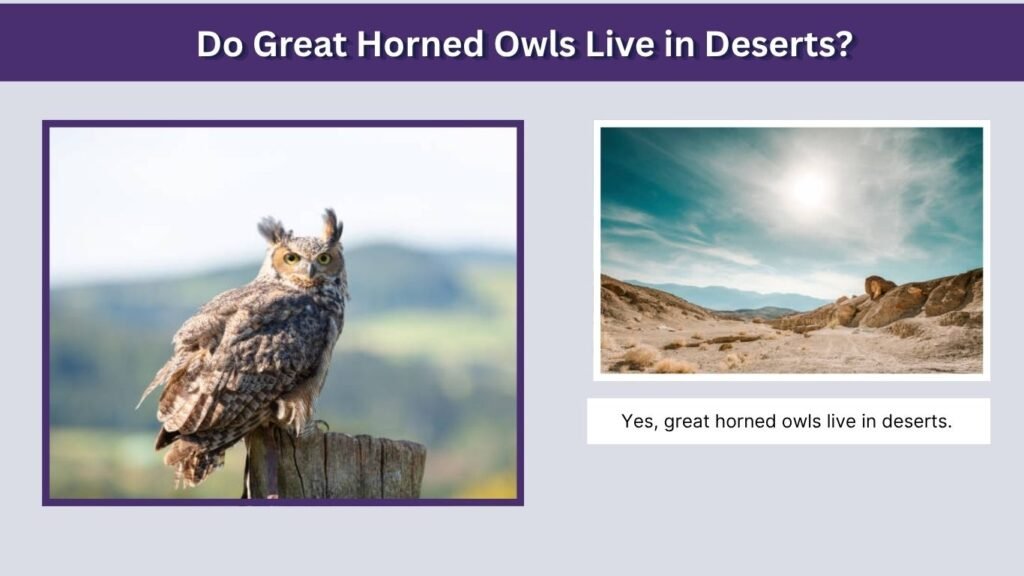
Yes, great horned owls live in deserts. They are common in many desert regions, including parts of Arizona, Texas, California, Nevada, New Mexico, and northern Mexico. In desert habitats, they may nest on cliffs, ledges, large cactus arms, old raven nests, or human structures.
Deserts may seem harsh, but they provide plenty of prey. Great horned owls may hunt rodents, rabbits, snakes, lizards, insects, and birds in dry environments.
Desert Nesting Sites
- Cliff ledges
- Rock outcrops
- Large cactus arms
- Old raven nests
- Abandoned hawk nests
- Utility structures
- Desert trees
Their ability to use different nesting sites helps them survive in places with few tall trees.
Do Great Horned Owls Live in Florida, Texas, and Arizona?
Great horned owls live in Florida, Texas, and Arizona. These states provide different habitats, but all have suitable prey and nesting areas.
In Florida, great horned owls may live in pine forests, swamps, wooded neighborhoods, wetlands, and open fields. In Texas, they occur in deserts, ranchlands, forests, suburbs, and brush country. In Arizona, they are found in deserts, canyons, mountains, riparian areas, and cities.
| State | Do They Live There? | Common Habitat |
|---|---|---|
| Florida | Yes | Swamps, pine woods, suburbs, wetlands |
| Texas | Yes | Ranchland, desert, woodland, cities |
| Arizona | Yes | Desert, canyon, mountain, urban areas |
| Georgia | Yes | Forests, suburbs, river edges |
| Ohio | Yes | Woodlands, farms, parks |
| Oregon | Yes | Forests, grasslands, farmland |
They are year-round residents in many of these places.
What Biome Does the Great Horned Owl Live In?
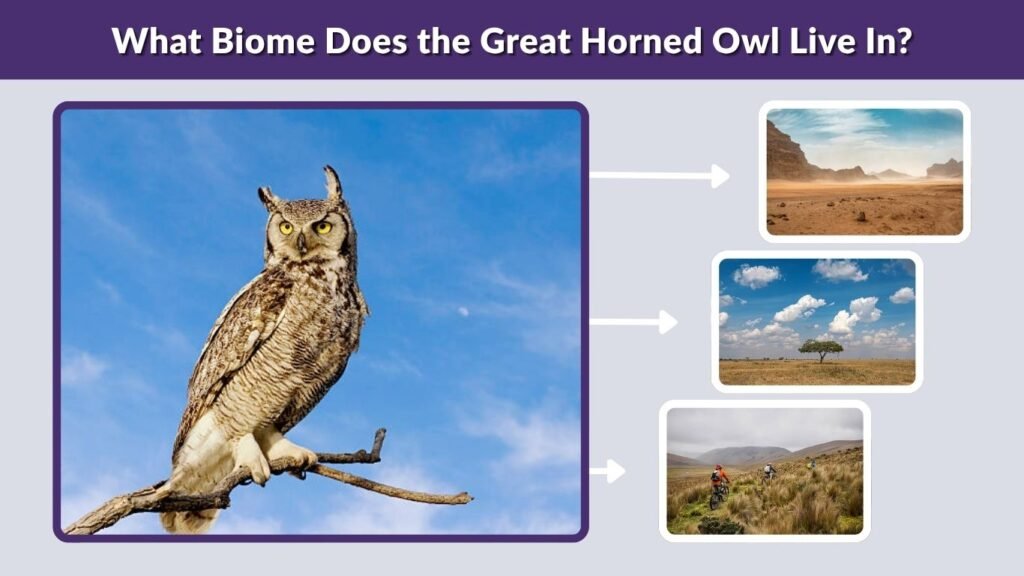
Great horned owls live in several biomes because they are highly adaptable. They are not limited to one environment. They can survive in cold northern forests, hot deserts, temperate woodlands, wetlands, and grasslands.
Biomes Used by Great Horned Owls
- Temperate forest
- Boreal forest
- Desert
- Grassland
- Shrubland
- Wetland edges
- Mountain ecosystems
- Urban ecosystems
This wide biome range is one reason the great horned owl is so successful.
Do Great Horned Owls Live Alone or in Groups?
Great horned owls usually live alone or in pairs, not in large groups. A mated pair may stay together in the same territory, especially during breeding season. Outside nesting season, they may be more solitary, but pairs often remain within the same general area.
Young owls stay near their parents for a time after leaving the nest. Eventually, they disperse to find their own territories. Adult great horned owls are territorial and may defend their area from other owls.
How Long Do Great Horned Owls Live?
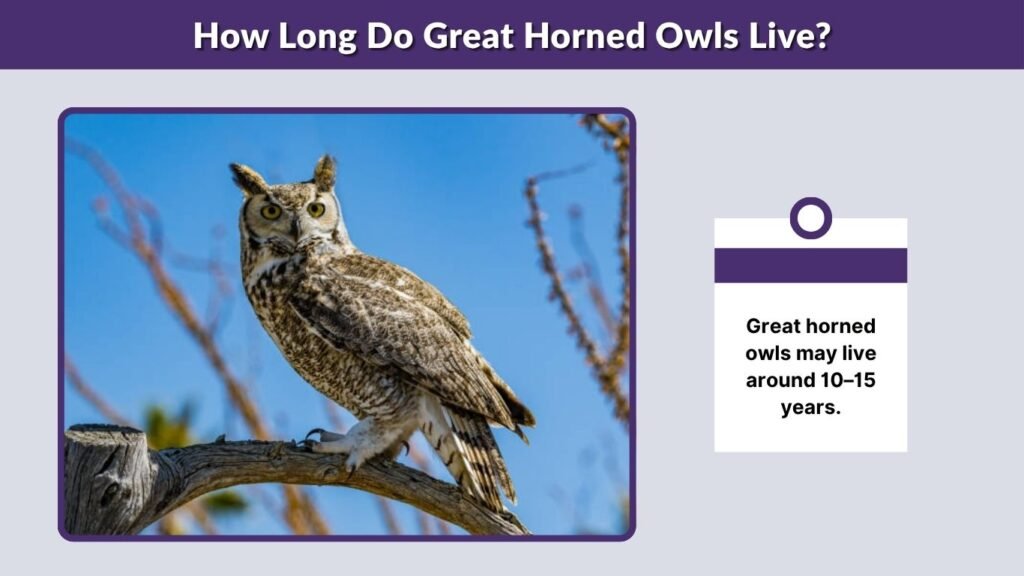
Great horned owls can live many years, especially if they survive the dangerous early stages of life. In the wild, many young owls die before reaching adulthood because of predators, starvation, accidents, or lack of hunting skill.
Adults can live much longer. In the wild, great horned owls may live around 10–15 years, and some survive longer. In captivity, where they have steady food, medical care, and protection from predators or vehicles, they may live over 20 years.
| Life Stage or Setting | Typical Lifespan |
|---|---|
| Young owls | High mortality in first year |
| Wild adults | Often 10–15 years |
| Long-lived wild individuals | Can live longer |
| Captive owls | Often 20+ years with care |
Threats include vehicle collisions, poisoning from rodenticides, electrocution, habitat loss, and injuries from prey or territorial fights.
Where Do Great Horned Owls Nest and Roost?
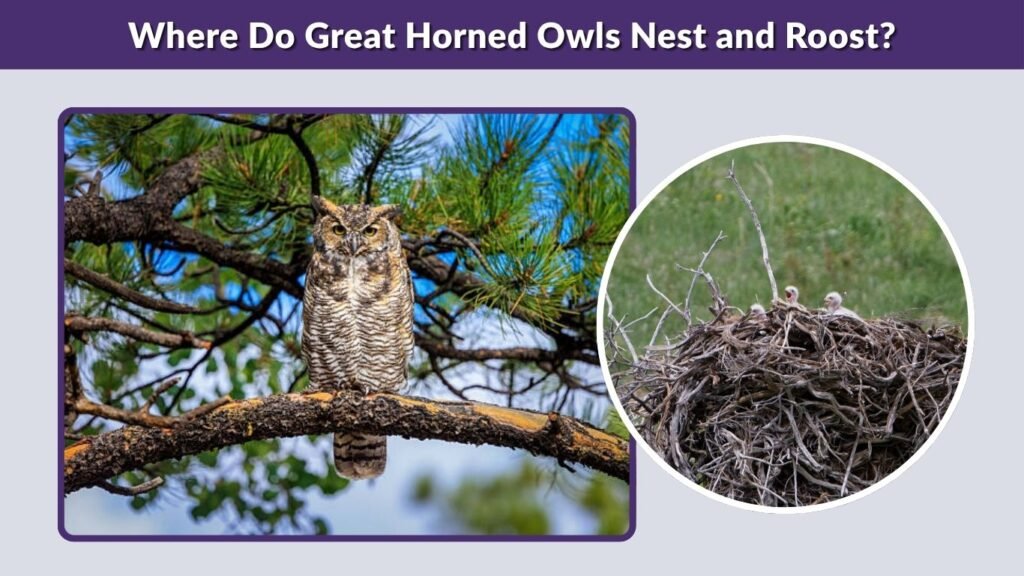
Great horned owls do not usually build their own nests. They use old nests made by hawks, crows, ravens, herons, eagles, or squirrels. They may also nest on cliffs, ledges, cactus arms, buildings, or artificial platforms.
Roosting sites are different from nesting sites. During the day, great horned owls often rest in dense trees, near trunks, or on hidden branches. Their brown, mottled feathers help them blend with bark.
Common Nesting and Roosting Spots
- Tall tree forks
- Old raptor nests
- Dense conifers
- Cliff ledges
- Barns and buildings
- Large cactus arms
- River trees
- Quiet wooded parks
During the day, they may be hard to spot because they sit still and rely on camouflage.
Great Horned Owl Live Cams
Many people search for great horned owl live cams because these owls are fascinating during nesting season. Live bird cams may show adults incubating eggs, feeding chicks, defending nests, and caring for young owlets.
Great horned owl nest cams are usually active during breeding season. Viewers may see adults bringing prey, chicks growing quickly, and young owls entering the branching stage before flight.
However, not every live cam is active every year. Some nests fail, some owls move, and some cameras are only seasonal.
Are Great Horned Owls Near Your Home?
Great horned owls may live near your home if you have tall trees, wooded areas, open fields, parks, farms, or natural edges nearby. They are often heard before they are seen. Their deep hooting is most noticeable at night, dawn, or dusk.
Signs of great horned owls nearby may include:
- Deep hooting calls
- Owl pellets under trees
- White droppings below roosts
- Feathers or prey remains
- Crows mobbing a hidden owl
- Large stick nests in tall trees
If you hear a pair calling back and forth, they may have a territory nearby.
FAQs
Where do great horned owls live?
Great horned owls live across most of North America and parts of Central and South America. They use forests, deserts, wetlands, grasslands, mountains, farmland, suburbs, and city parks. They need prey, safe nesting sites, and good places to perch.
How long do great horned owls live?
Great horned owls often live around 10–15 years in the wild if they survive their first year. Some individuals may live longer. In captivity, with steady food and protection from danger, they can live more than 20 years.
Do great horned owls live in the United States?
Yes, great horned owls live throughout most of the United States. They occur in states such as Florida, Texas, Arizona, Georgia, Ohio, Oregon, Michigan, Illinois, Indiana, and California. They are year-round residents in many areas.
Do great horned owls live in the desert?
Yes, great horned owls live in deserts. They may nest on cliffs, cactus arms, old raven nests, or structures. Desert prey includes rabbits, rodents, snakes, lizards, insects, and birds, making deserts suitable habitat for them.
Do great horned owls live alone?
Great horned owls usually live alone or in pairs. A breeding pair may defend the same territory, especially during nesting season. They do not live in large flocks. Young owls stay near parents for a while before finding their own areas.
