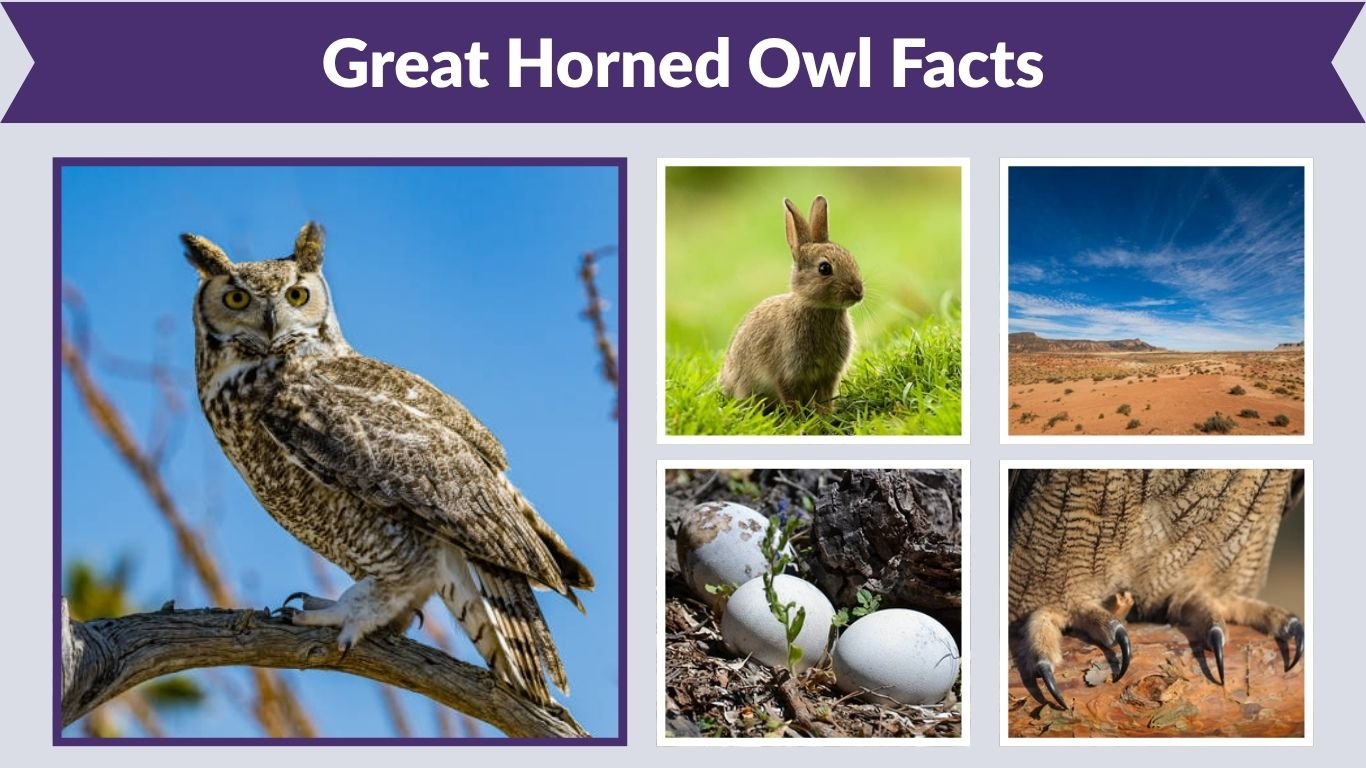
The great horned owl is one of the most powerful and recognizable owls in North America. With its yellow eyes, deep hoot, strong talons, and “horn-like” feather tufts, this bird is often called the classic owl of forests, farms, deserts, and even cities. Here are 12 great horned owl facts covering its size, diet, habitat, nesting habits, hunting style, and behavior.
1. Great Horned Owls Are Large Birds of Prey
Great horned owls are big, heavy-bodied owls with broad wings and strong feet. Their size makes them one of the most impressive owls in the Americas.
Size and Wingspan
Adult great horned owls are about 18–24 inches long, with a wingspan of about 3 feet 4 inches to 4 feet 9 inches. They usually weigh 32–88 ounces, and females are generally larger than males.
| Feature | Great horned owl measurement |
| Length | 18–24 in |
| Wingspan | 3 ft 4 in–4 ft 9 in |
| Weight | 32–88 oz |
| Female size | Larger than male |
2. Their “Horns” Are Not Real Horns
The great horned owl gets its name from the tall feather tufts on its head. These tufts look like horns or ears, but they are not used for hearing.
What the Tufts Do
The feather tufts may help with camouflage, display, and body language. When the owl sits upright against tree bark, the tufts break up the shape of its head and make it harder to spot.
3. They Have Powerful Talons
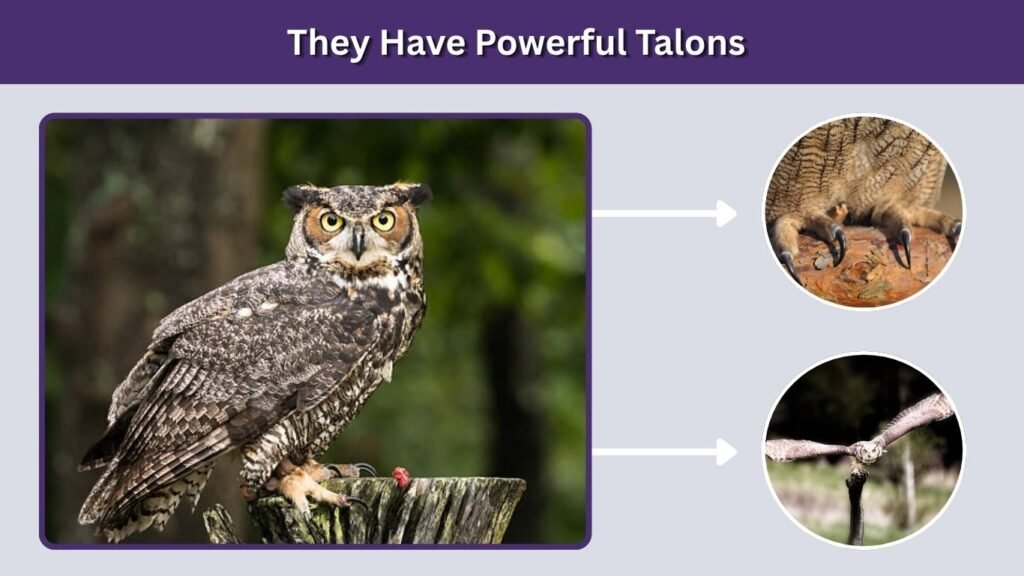
Great horned owls are famous for their grip. Their feet are not just sharp; they are extremely strong.
Talon Strength
Cornell notes that a clenched great horned owl’s talons require about 28 pounds of force to open. This powerful grip helps the owl capture and hold struggling prey.
Their hunting tools include:
- Sharp curved talons
- Strong toes
- Silent flight
- Excellent night vision
- Sudden surprise attacks
4. They Eat a Very Wide Range of Prey
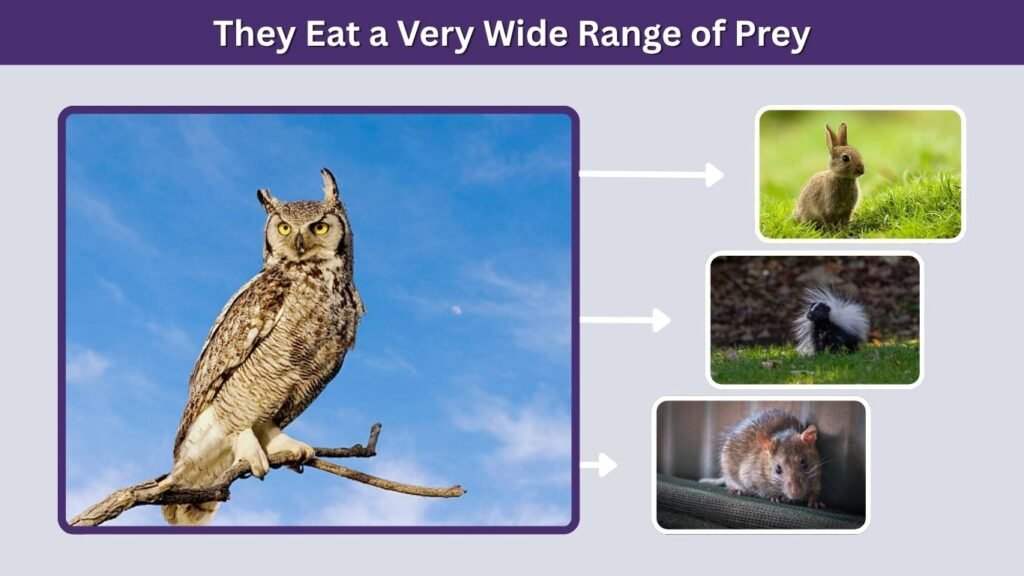
A great horned owl is not a picky eater. It has one of the most varied diets among North American raptors.
Common Foods
Great horned owls eat many mammals and birds, including rabbits, mice, rats, squirrels, skunks, ducks, crows, hawks, and smaller owls. They may also eat reptiles, insects, fish, invertebrates, and carrion.
This flexible diet helps them survive in many habitats, from forests to deserts.
5. Great Horned Owls Can Hunt Animals Larger Than Themselves
One surprising fact is that great horned owls can attack prey that may be larger than their own body size. They do not always carry large prey away; sometimes they eat it on the ground.
Prey Size
Their prey can range from tiny scorpions and rodents to hares, skunks, geese, and other raptors.
This does not mean they can fly away with every animal they kill. A great horned owl may kill large prey but only carry smaller prey.
6. They Are Mostly Night Hunters
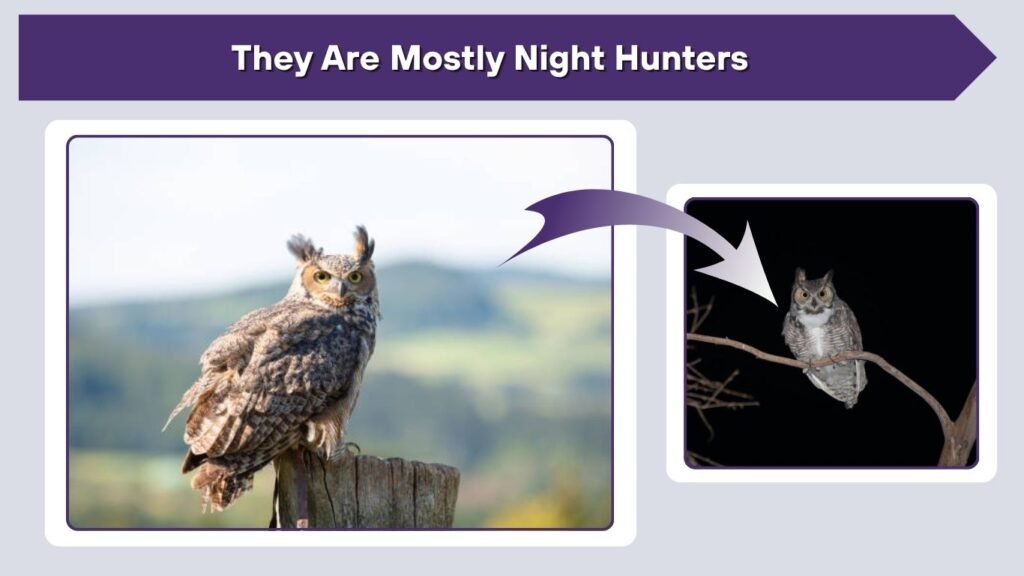
Great horned owls are mainly nocturnal, meaning they are most active at night. They often hunt at dusk, during the night, and before dawn.
Hunting Style
They usually watch from a high perch, then swoop down and grab prey with their talons. Audubon notes that they have very good hearing and good vision in low light.
Their soft feathers also help them fly quietly, making it harder for prey to hear them coming.
7. They Have Excellent Eyes and Hearing
Great horned owls are built for nighttime hunting. Their large eyes collect light well, and their hearing helps them find prey in darkness.
Night Vision Facts
Their eyes have wide pupils and many rod cells, which help them see in low light. Their eyes do not move much in the sockets, so they turn their head to look around. Cornell also notes that facial disc feathers help direct sound toward their ears.
8. Great Horned Owls Live in Many Habitats
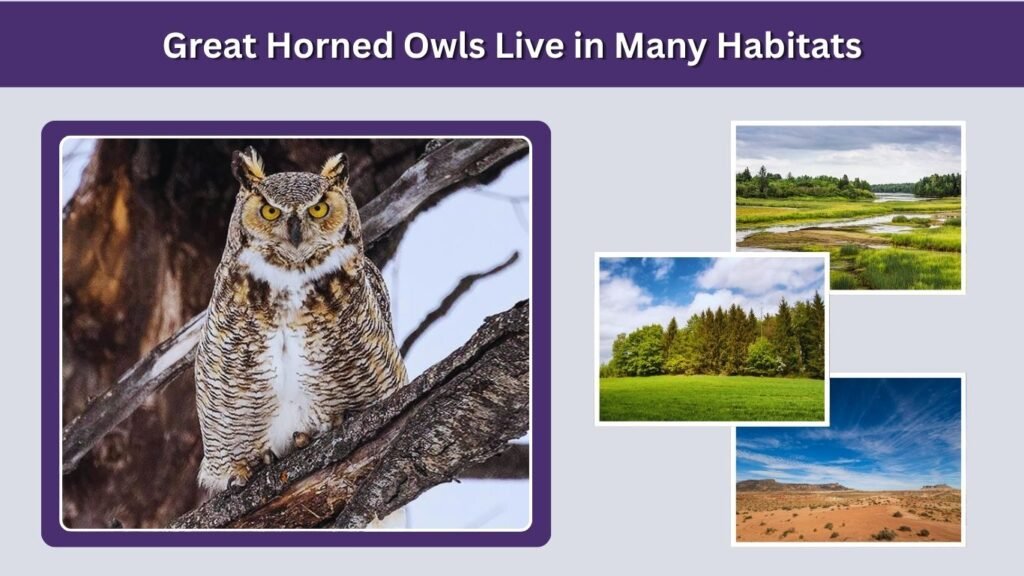
The great horned owl is highly adaptable. It can live in wild areas, farmland, suburbs, and cities if food and nesting places are available.
Habitat Range
They are found in forests, woodlots, swamps, orchards, agricultural areas, deserts, wooded parks, suburbs, and even cities. Their home range often includes both wooded cover and open hunting areas.
Common habitats include:
- Forest edges
- Wetlands
- Desert cliffs
- Farms and fields
- Wooded parks
- Suburban neighborhoods
9. They Often Reuse Other Birds’ Nests
Great horned owls usually do not build their own stick nests from the beginning. Instead, they often take over old nests.
Nesting Behavior
They may use old nests built by hawks, crows, ravens, herons, or squirrels. They can also nest in tree cavities, dead snags, cliff ledges, abandoned buildings, human-made platforms, and sometimes even on the ground.
This habit allows them to begin nesting early in the season.
10. Their Eggs Are Dull White and Nearly Round
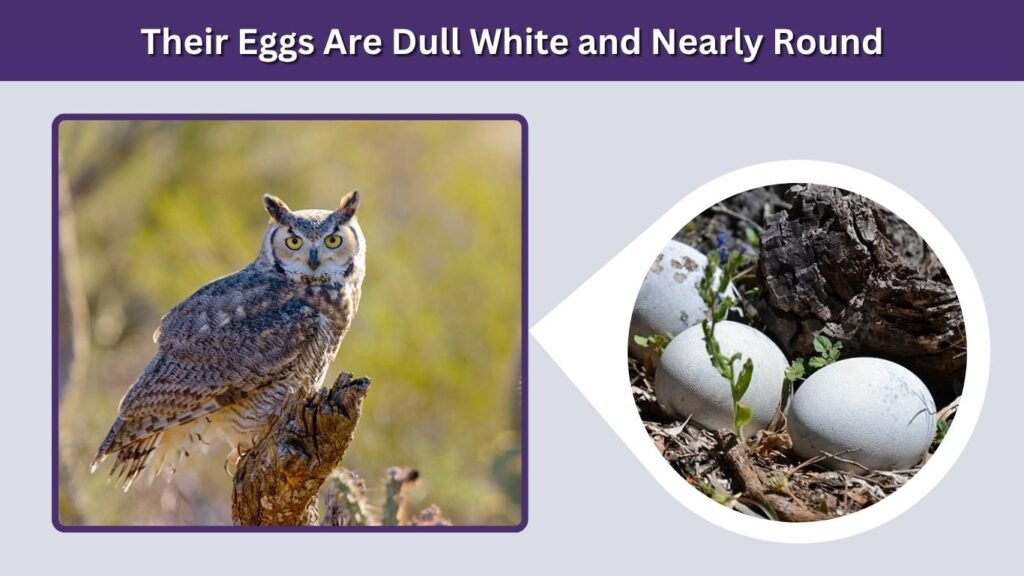
Great horned owl eggs are simple-looking but distinctive. They are usually dull white and almost round.
Clutch Size and Egg Size
A typical clutch has 1–4 eggs. Each egg is about 2.1–2.2 inches long and 1.8–1.9 inches wide. The incubation period is about 30–37 days, and the nestling period is about 42 days.
11. Baby Great Horned Owls Leave the Nest Before They Fly Well
Young great horned owls do not become strong flyers immediately. They often leave the nest and climb around nearby branches before they can fly properly.
Fledgling Stage
Audubon says young great horned owls may leave the nest and climb onto nearby branches at about 5 weeks, but they usually fly at around 9–10 weeks. Parents may continue feeding and caring for them for several months.
This branch-climbing stage is normal and does not always mean the baby owl is abandoned.
12. Great Horned Owls Have a Deep, Famous Hoot
The great horned owl’s call is one of the most familiar owl sounds. It is deep, rhythmic, and often heard at night or before breeding season.
Male and Female Calls
Both males and females hoot, but the male usually has a deeper voice. Cornell notes that even though the female is larger, the male has a larger voice box and a lower-pitched call.
Pairs may call together, creating a duet that helps mark territory and strengthen the bond between mates.
Quick Great Horned Owl Facts
This section gives readers fast answers to the most searched great horned owl questions.
| Question | Quick answer |
| Scientific name | Bubo virginianus |
| Average length | 18–24 in |
| Wingspan | Up to about 4 ft 9 in |
| Main food | Mammals and birds |
| Active time | Mostly night |
| Clutch size | 1–4 eggs |
| Nest style | Reuses old nests |
| Conservation status | Widespread and common |
FAQs
Are great horned owls dangerous?
Great horned owls are dangerous to small prey animals, but they usually avoid people. They can injure humans if threatened, especially near a nest. It is best to watch them from a safe distance and never try to touch or disturb them.
How long can a great horned owl live?
The oldest recorded great horned owl was at least 28 years old when found in Ohio in 2005. Many wild owls do not live that long because young birds face dangers such as accidents, starvation, predators, and human activity.
Can a great horned owl pick up a cat?
A great horned owl may attack small cats or kittens, but it usually cannot fly away with a heavy adult cat. Still, it can seriously injure or kill small pets, so cats and small dogs should be kept indoors or supervised at night.
What makes great horned owls special?
Great horned owls are special because they are strong, adaptable, and widespread. They can live in many habitats, eat many types of prey, and hunt silently at night. Their yellow eyes, feather tufts, and deep hoot also make them easy to recognize.
Do great horned owls live near humans?
Yes, great horned owls can live near people. They are found in wooded parks, suburbs, farms, and even cities if there are trees, nesting sites, and enough prey. They are adaptable birds and can survive in both wild and human-shaped landscapes.