
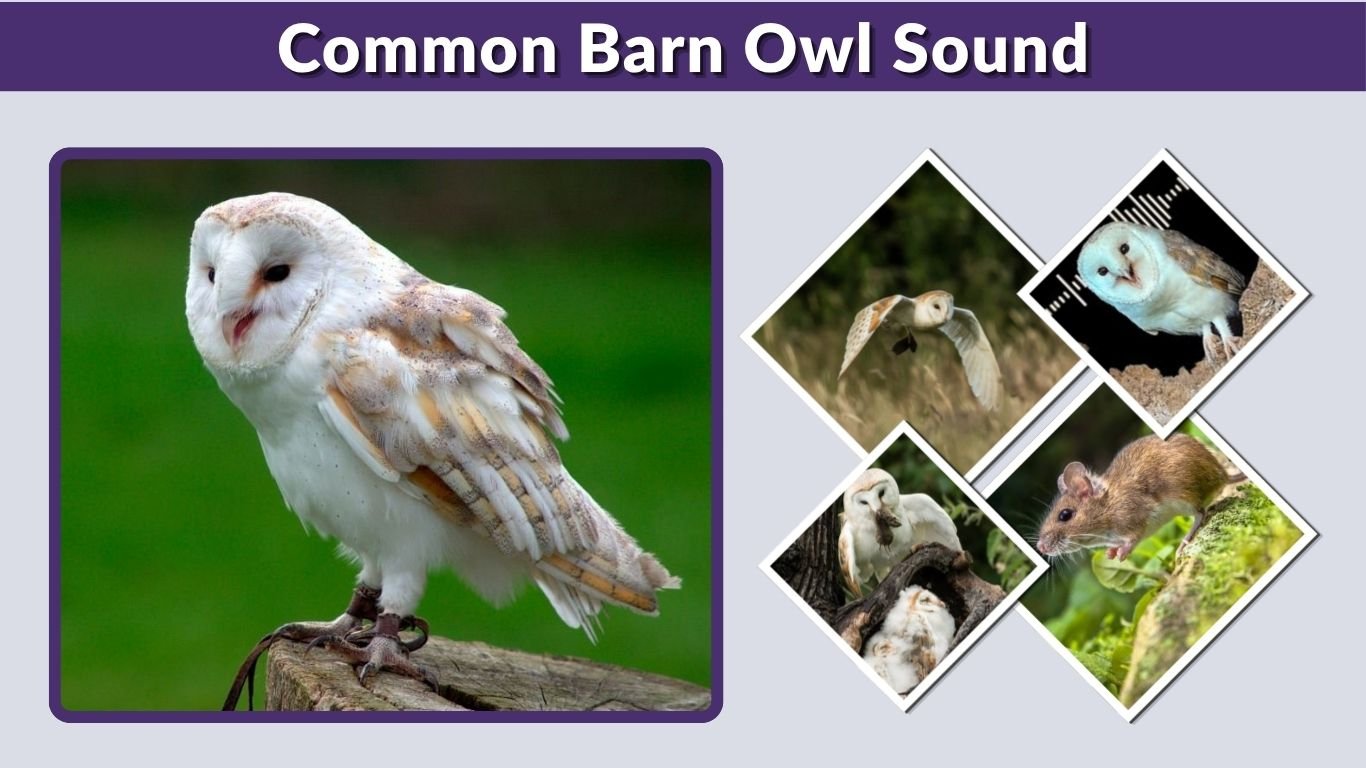
The common barn owl produces some of the most distinctive sounds heard after dark. Instead of the familiar “hoot” associated with many owl species, barn owls usually communicate through long screeches, hisses, squeals, and clicking noises. These vocalizations may sound frightening, but they serve practical purposes such as defending territory, attracting a mate, warning intruders, and begging for food. Learning to recognize a common barn owl call can help you identify this secretive nocturnal bird even when it remains hidden inside a barn, tree cavity, or nest box.
What Does a Common Barn Owl Sound Like?
The best-known common barn owl sound is a drawn-out, raspy screech. It may begin quietly and become louder, creating an eerie noise that carries across open farmland at night. Barn owls also make hissing, snoring, chittering, and clicking sounds depending on their age and situation.
The Classic Barn Owl Screech
An adult barn owl’s main call is a harsh screech lasting one or two seconds. The sound is often described as a tearing, shrieking, or screaming noise rather than a musical bird call.
Males frequently use this screech while flying over their territory. The call announces their presence and may help them communicate with a female during the breeding season. Females can also screech, although their voices are usually deeper and rougher.
Because the sound is loud and unexpected, people sometimes mistake it for a distressed animal or even a human scream.
Hissing and Snoring Calls
Barn owls hiss when they feel threatened. A bird inside a nest, barn, or tree cavity may spread its wings, lower its head, and produce a forceful hissing sound to frighten an approaching predator.
Young barn owls commonly make a steady snoring call when asking their parents for food. Several chicks calling together can create a continuous, wheezing sound around a nest site. This begging call becomes especially noticeable after sunset when the adults begin hunting.
Clicking, Chittering, and Squealing
Barn owls sometimes snap or click their beaks as a warning. This behavior may occur when a person, raccoon, cat, or other potential threat approaches the nest.
Soft chittering noises are often exchanged between mates. Adults may also produce squeals or twittering calls during courtship, feeding, or close contact. These quieter sounds are difficult to hear unless the listener is near the roost or nesting area.
Do Common Barn Owls Hoot?
Common barn owls do not normally produce the deep, rhythmic hooting associated with great horned owls, barred owls, or tawny owls. Their vocal structure and communication style are different.
Hearing a long, harsh screech is therefore a better indication of a barn owl than hearing repeated “hoo-hoo” notes. However, other nocturnal animals can produce similar noises, so identification should also consider the location, time, and pattern of the call.
| Barn owl sound | Usual meaning |
|---|---|
| Long screech | Territorial or mating communication |
| Hissing | Defense or warning |
| Snoring call | Young owl begging for food |
| Beak clicking | Threat display |
| Chittering | Communication between mates |
| Squealing | Courtship, alarm, or close contact |
When and Why Do Barn Owls Call?
Barn owls are generally quiet compared with some other owl species. They become more vocal during courtship and nesting, especially when adults are communicating with each other or feeding hungry chicks.
Territorial Communication
Male barn owls may screech while patrolling their hunting territory. The call tells other barn owls that the area is occupied and can reduce the need for physical conflict.
A productive territory often contains open grassland, fields, marsh edges, or pastures where small mammals are abundant. The owl may repeatedly follow similar flight paths while calling over these areas.
Courtship and Mating Calls
Barn owl vocal activity often increases during the breeding season. A male may screech in flight, perform display flights, and bring prey to a female. The female responds with calls that help strengthen the pair bond.
Courtship communication is not limited to one sound. Screeches, squeals, soft twittering, and food-begging notes may all be heard near an active pair.
Nest Defense
A barn owl that feels cornered can create a dramatic defensive display. It may hiss loudly, click its beak, sway its head, or spread its wings to appear larger.
Young owls may also hiss when disturbed. Although this behavior looks intimidating, barn owls usually prefer to avoid direct contact and escape when possible.
Young Owls Begging for Food
Barn owl chicks need large quantities of food while growing. At night, they produce repetitive snoring or rasping calls that encourage their parents to return with prey.
These begging calls may continue for hours around a productive nest. As the chicks mature and begin flying, their calls can be heard from nearby roofs, beams, trees, and fence posts.
Common Barn Owl Habitat and Range
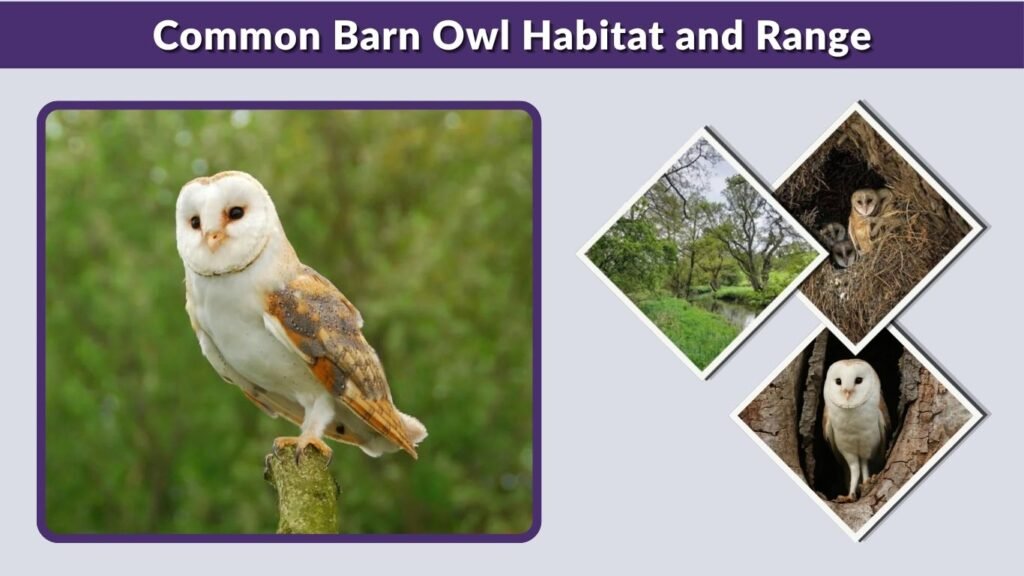
The common barn owl is one of the most widely distributed land birds in the world. It occupies many warm and temperate regions, although its local abundance varies according to prey availability, climate, nesting sites, and land management.
Where Common Barn Owls Live
Barn owls favor open habitats where they can fly low while listening for rodents. Typical environments include:
- Agricultural fields and pastures
- Grasslands and meadows
- Marshes and wetland edges
- Orchards and vineyards
- Open woodland borders
- Rural settlements and farm buildings
Dense forests are generally less suitable because thick vegetation makes low-level hunting more difficult.
Nesting and Roosting Sites
The species often nests in barns, church towers, abandoned buildings, silos, tree cavities, cliffs, and specially designed nest boxes. A suitable site must provide shelter and enough space for eggs and growing chicks.
Barn owls do not build a traditional stick nest. The female usually lays her eggs on accumulated pellets, feathers, dust, and other material already present inside the cavity.
Are Barn Owls Rare or Common?
Barn owls may be widespread but still difficult to observe. They are nocturnal, fly quietly, and often remain hidden during daylight. In some agricultural regions they are relatively common, while in other areas their populations have declined.
Loss of grassland, disappearance of old farm buildings, road collisions, severe winters, rodenticide exposure, and reduced nesting opportunities can all affect local numbers. Installing nest boxes and preserving rough grass margins may support breeding pairs where natural cavities are limited.
Common Barn Owl Diet and Hunting
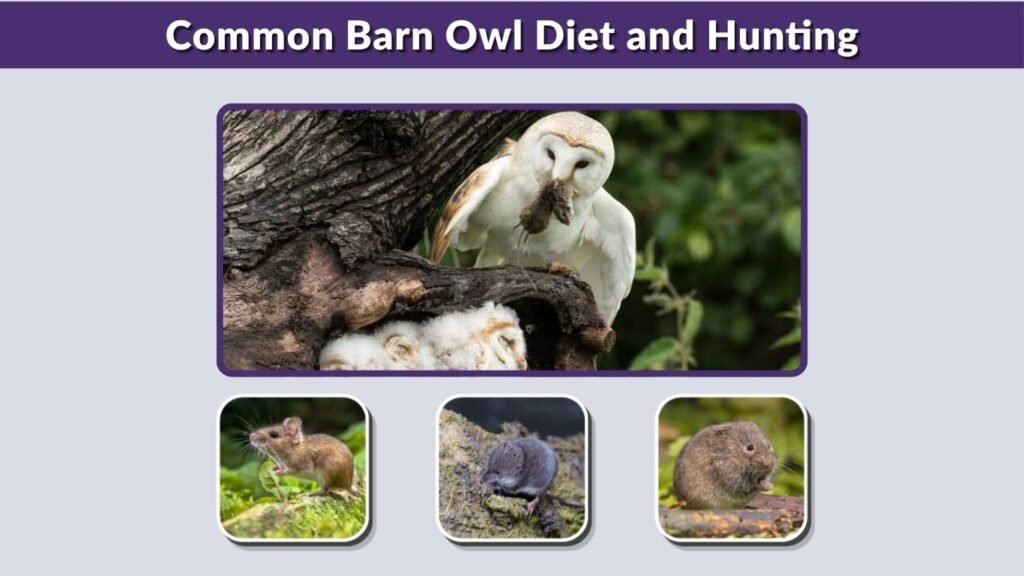
Barn owls are specialized hunters of small mammals. Their diet varies by region, but rodents and shrew-sized animals usually provide most of their food.
What Do Common Barn Owls Eat?
Common prey includes mice, voles, rats, shrews, and other small mammals. Barn owls may occasionally capture small birds, bats, frogs, insects, or reptiles, but these foods normally form a smaller part of the diet.
| Prey type | Importance in the diet |
|---|---|
| Voles | Often a major food source |
| Mice | Common in farms and grasslands |
| Shrews | Frequently captured |
| Young rats | Taken when manageable |
| Small birds | Occasional prey |
| Insects and reptiles | Minor or seasonal prey |
A breeding pair and its chicks can consume many rodents during a nesting season, making barn owls valuable natural predators around farms.
How Much Does a Barn Owl Eat?
An adult barn owl commonly eats several small prey animals during a night, although the amount depends on prey size, weather, activity, and whether chicks need feeding.
Growing owlets require frequent meals. During peak nesting periods, both parents may make repeated hunting trips between dusk and dawn.
Barn Owl Pellets
Barn owls swallow much of their prey whole. Fur, feathers, teeth, and bones cannot be fully digested, so the owl compresses them into a pellet and later regurgitates it.
Researchers examine barn owl pellets to identify prey species and study local small-mammal populations. Pellets are often found beneath roosting beams, nest boxes, tree cavities, or favored perches.
Common Barn Owl Identification and Adaptations
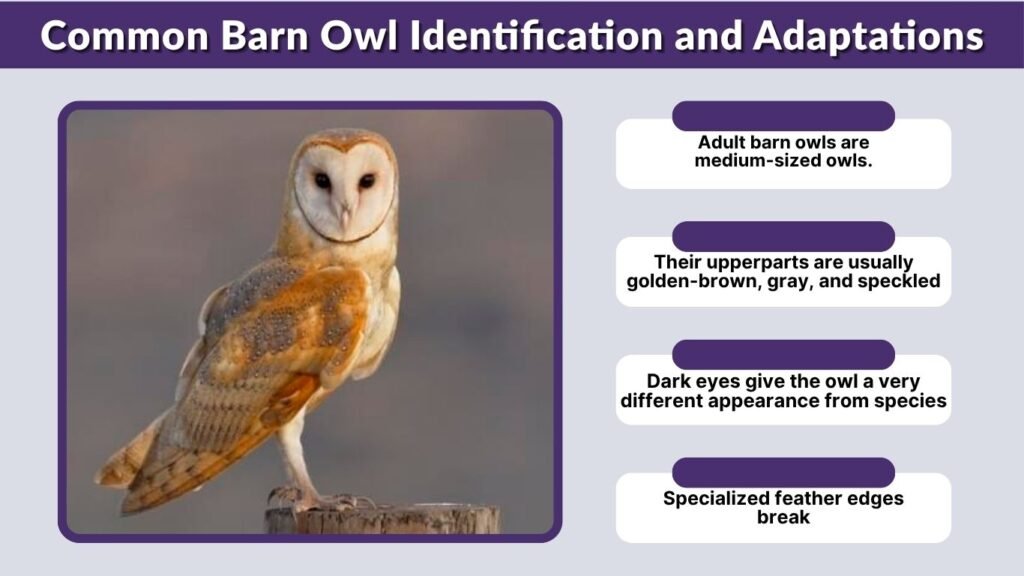
The common barn owl is easily recognized by its pale plumage, long legs, and heart-shaped facial disc. Its body is designed for quiet flight and highly accurate nighttime hunting.
Size and Appearance
Adult barn owls are medium-sized owls with slender bodies and broad, rounded wings. Their upperparts are usually golden-brown, gray, and speckled, while the underparts range from white to buff.
The face is pale and distinctly heart-shaped. Dark eyes give the owl a very different appearance from species with round facial discs and bright yellow eyes.
Females are generally larger and may have darker or more heavily spotted underparts than males, although appearance varies among individuals and regional populations.
Silent Flight
Specialized feather edges break up air turbulence as the wings move. This reduces flight noise and allows the owl to approach prey without being easily detected.
Quiet flight also helps the owl hear faint rustling sounds while airborne. Even minor wing noise could interfere with its ability to locate prey hidden under vegetation.
Exceptional Hearing
The heart-shaped facial disc directs sound toward the ears. The ear openings are positioned unevenly, helping the owl determine whether a noise is coming from above, below, left, or right.
This adaptation allows barn owls to hunt in very low light. They can sometimes capture prey concealed beneath grass by relying largely on sound.
Long Legs and Sharp Talons
Barn owls have relatively long legs covered with feathers. Their sharp talons can reach through grass and securely grasp small mammals.
The combination of low flight, precise hearing, silent feathers, and powerful feet makes the species exceptionally effective at hunting rodents.
Common Barn Owl Facts and Scientific Classification
The scientific name commonly used for the barn owl is Tyto alba. However, barn owl classification can vary among authorities because some regional populations are treated as separate species.
| Feature | Common barn owl information |
|---|---|
| Common name | Common barn owl or barn owl |
| Scientific name | Tyto alba |
| Family | Tytonidae |
| Activity | Mainly nocturnal |
| Main diet | Small mammals |
| Typical habitat | Open grassland and farmland |
| Nest type | Cavity or sheltered structure |
| Most recognizable call | Long, raspy screech |
Barn owls belong to the family Tytonidae, often called the barn owl family. This separates them from the “typical owls” in the family Strigidae, which includes barred owls, great horned owls, and many familiar hooting species.
FAQs
Why does a common barn owl scream at night?
A barn owl usually screeches to advertise its territory, communicate with a mate, or maintain contact while flying. The call can sound alarming, but it is a normal part of barn owl behavior and does not necessarily indicate that the bird is injured or attacking something.
What is the most common barn owl call?
The most recognizable call is a long, harsh, rasping screech. Unlike many typical owls, barn owls rarely produce a conventional hoot. Young birds also make repetitive snoring or wheezing calls when begging their parents to bring food.
Are common barn owls nocturnal?
Common barn owls are primarily nocturnal and usually begin hunting around dusk. They may occasionally hunt during daylight, particularly when feeding chicks or when food is scarce. Their pale feathers, sensitive hearing, and silent flight make them well adapted to nighttime activity.
What do common barn owls most commonly eat?
Their diet consists mainly of small mammals, especially voles, mice, shrews, and young rats. The exact prey varies according to location and availability. Small birds, insects, bats, amphibians, and reptiles may also be captured occasionally.
How are barn owls different from common hooting owls?
Barn owls have heart-shaped faces, dark eyes, long legs, and screeching calls. Typical owls often have rounder facial discs and produce hoots, whistles, or trills. Barn owls also belong to the family Tytonidae rather than the typical owl family Strigidae.
