
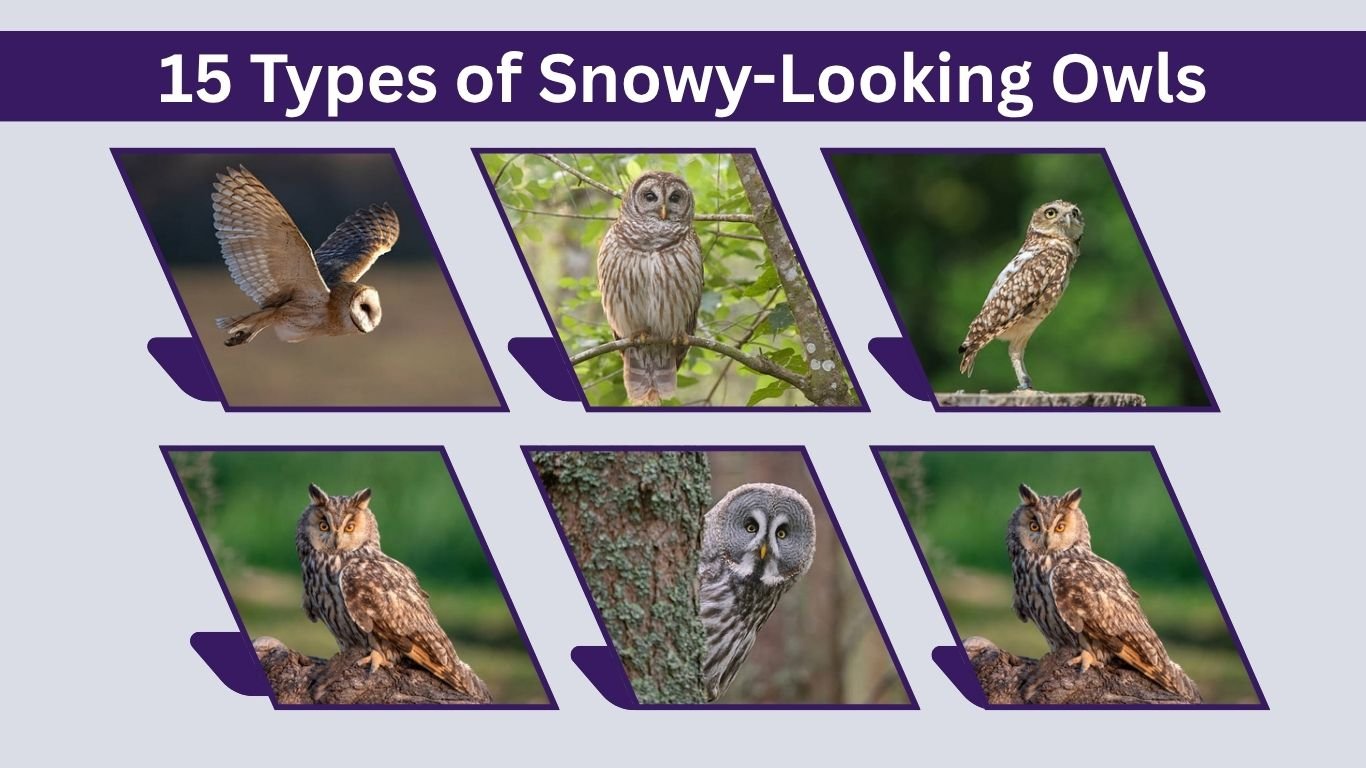
Snowy owls are famous for their pale plumage, powerful build, and ability to survive in cold, open landscapes. Although only one true Snowy Owl species exists, several other owls share similar white, gray, or lightly patterned feathers. This guide explores 15 snowy-looking owl species from Arctic tundra, boreal forests, grasslands, deserts, and mountain regions. You will learn how to identify each owl by its eye color, facial disc, ear tufts, body size, wing shape, and feather markings. Pictures can make comparison easier and help birdwatchers distinguish the true Snowy Owl from other pale or northern owls found worldwide with confidence.
1. Snowy Owl
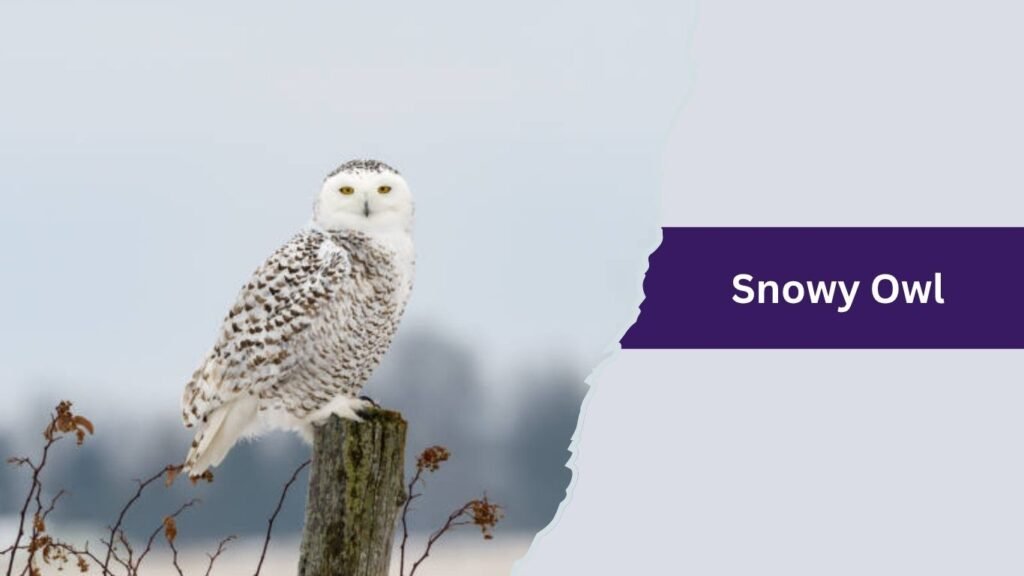
The Snowy Owl is a large, powerful owl best known for its bright white plumage and life in cold Arctic regions. It is one of the most recognizable owl species and often hunts during daylight, especially in summer when the Arctic experiences long hours of sunlight.
Identification
- Large, rounded head with no visible ear tufts
- Mostly white plumage with dark brown or black markings
- Bright yellow eyes and a dark bill
- Heavily feathered legs and feet
- Broad wings and a bulky body
- Females usually have more dark markings than males
Size and Appearance
Snowy Owls are among the heaviest owl species in North America. Females are generally larger and darker than males. Adult males may become almost completely white as they age, while females and young owls usually retain noticeable dark bars or spots across the body and wings.
Habitat and Range
Snowy Owls breed across the Arctic tundra of North America, Europe, and Asia. During winter, some travel south into open fields, coastlines, airports, grasslands, and agricultural areas. They prefer wide, treeless landscapes where they can easily watch for prey.
Diet and Hunting Behavior
Their main prey includes lemmings, voles, mice, rabbits, and birds. Snowy Owls often hunt from low perches or directly from the ground. Unlike many other owls, they may hunt during both the day and night, depending on light conditions and prey availability.
2. Great Gray Owl
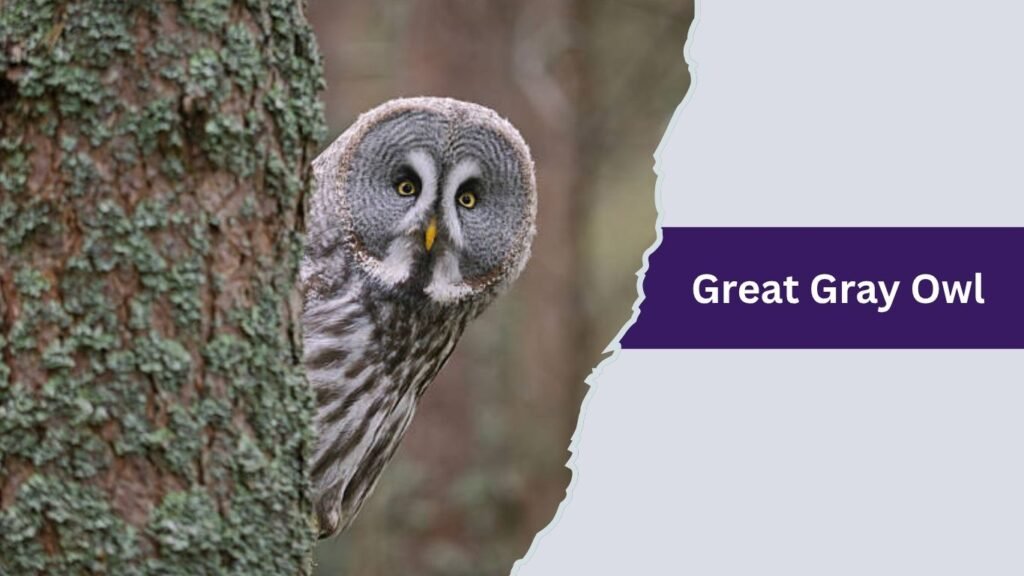
The Great Gray Owl is a striking northern owl known for its enormous round face, silvery-gray feathers, and long body. Although it appears very large, much of its size comes from thick plumage. This quiet owl is commonly found in forests near open meadows and wetlands.
Identification
- Large, rounded head without ear tufts
- Broad gray facial disc with dark circular rings
- Small yellow eyes surrounded by dark markings
- White throat patch shaped like a bow tie
- Gray plumage covered with brown and white streaks
- Long tail and heavily feathered body
Size and Appearance
The Great Gray Owl is one of the tallest owl species in the world. Its long feathers make it look heavier than it actually is. Females are usually larger than males, but both sexes have similar gray coloring, finely streaked underparts, and a distinctive circular face.
Habitat and Range
Great Gray Owls live in northern forests across North America, Europe, and Asia. They prefer coniferous or mixed woodlands located near bogs, clearings, meadows, and open fields. These habitats provide suitable nesting areas and good hunting grounds.
Diet and Hunting Behavior
This owl mainly feeds on voles, mice, shrews, and other small mammals. It often watches from a low tree branch before diving toward prey. Its excellent hearing allows it to detect animals moving beneath grass or deep snow, even when the prey cannot be seen.
3. Northern Hawk Owl
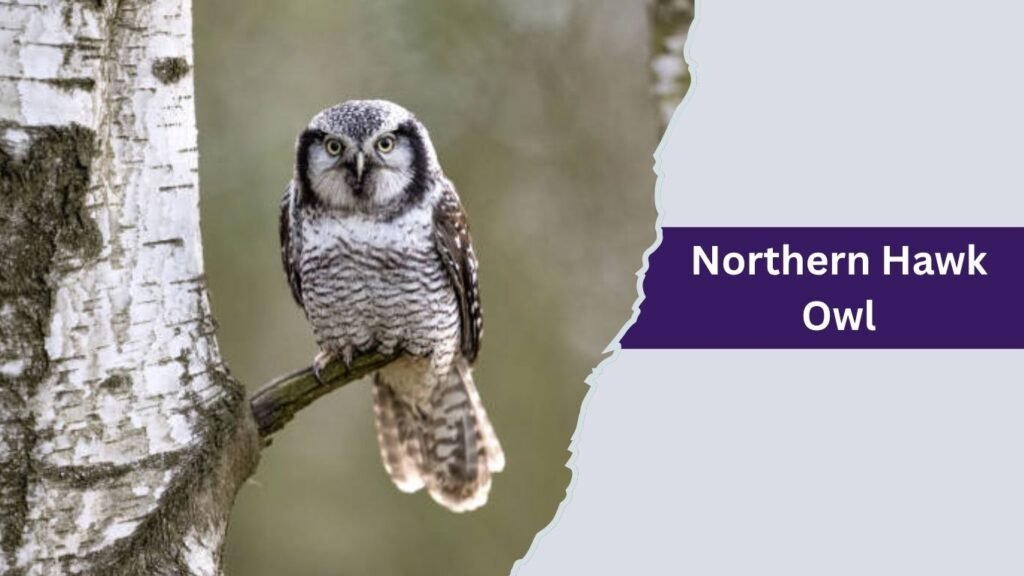
The Northern Hawk Owl is a medium-sized owl with a long tail, pointed wings, and a hawk-like shape. It is active mainly during daylight and often perches on exposed treetops, poles, or branches while searching for prey across open northern landscapes.
Identification
- Round head without visible ear tufts
- Bright yellow eyes and a pale facial disc
- Dark brown upperparts covered with white spots
- White underparts with narrow brown horizontal bars
- Long, tapered tail with pale bands
- Slender body and pointed wings
- Upright, alert posture similar to a hawk
Size and Appearance
The Northern Hawk Owl is slimmer than many other northern owls. Its long tail and narrow wings give it a distinctive silhouette in flight. Males and females look similar, although females are usually slightly larger. Its bold chest barring and spotted back make it easy to recognize.
Habitat and Range
This owl lives across the boreal forests of North America, northern Europe, and Asia. It prefers open coniferous woodland, burned forest areas, wetlands, and clearings. In winter, some individuals move farther south when food becomes difficult to find.
Diet and Hunting Behavior
Northern Hawk Owls mainly eat voles, mice, lemmings, shrews, and small birds. They hunt from high, exposed perches and use sharp eyesight to locate prey. After spotting movement, the owl flies quickly and directly toward its target, much like a hunting hawk.
4. Short-Eared Owl
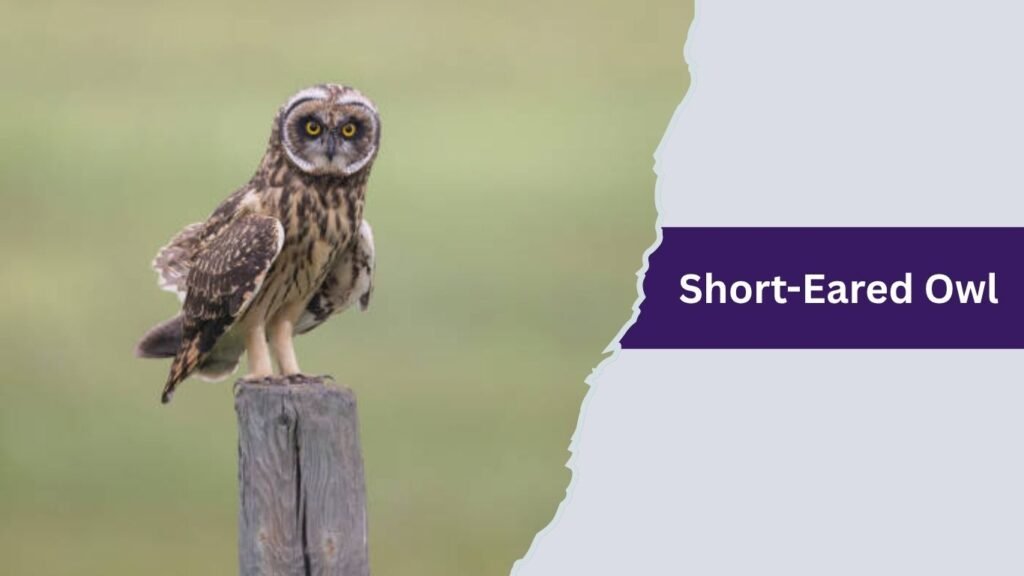
The Short-Eared Owl is a medium-sized owl commonly seen flying low over grasslands, marshes, and open fields. Its short ear tufts are usually difficult to see, giving the bird a rounded head. Unlike many owls, it often hunts during daylight, especially near dawn and dusk.
Identification
- Rounded head with very small ear tufts
- Yellow eyes surrounded by dark patches
- Pale facial disc with a dark border
- Mottled brown, tan, and cream plumage
- Heavily streaked chest and lighter belly
- Long, broad wings with dark wrist patches
- Short tail with several dark bands
Size and Appearance
Short-Eared Owls have a slim body, long wings, and a relatively short tail. Females are usually slightly larger and darker than males. Their loose, buoyant flight often resembles that of a large moth, with slow wingbeats and frequent gliding.
Habitat and Range
These owls live across North America, Europe, Asia, South America, and several island regions. They prefer open habitats, including prairies, tundra, coastal marshes, farmland, and wet meadows. They often nest directly on the ground among tall grass or low vegetation.
Diet and Hunting Behavior
Short-Eared Owls mainly eat voles, mice, shrews, and other small mammals. They hunt by flying slowly and close to the ground while listening and watching for movement. Once prey is detected, the owl suddenly drops into the grass and captures it with its talons.
5. Long-Eared Owl
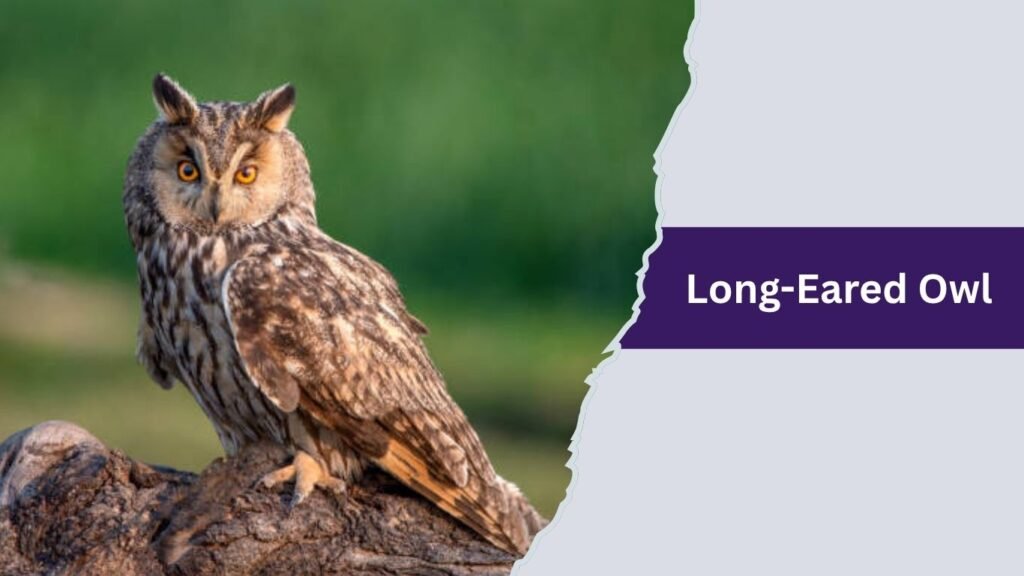
The Long-Eared Owl is a slender, secretive owl recognized by its prominent ear tufts and orange-yellow eyes. It spends much of the day hidden among dense branches and becomes active after sunset. Its narrow body and streaked plumage provide excellent camouflage against tree bark.
Identification
- Long, upright ear tufts
- Orange or yellow eyes
- Dark facial disc with pale edges
- Brown, gray, and buff-colored plumage
- Heavily streaked chest and belly
- Long wings and a relatively slim body
- Dark patches near the wrists in flight
Size and Appearance
Long-Eared Owls are medium-sized birds with narrow bodies, broad wings, and long feathers. Their ear tufts are not true ears but decorative feather structures used for communication and camouflage. Males and females look similar, although females are generally slightly larger and darker.
Habitat and Range
These owls inhabit North America, Europe, Asia, and parts of northern Africa. They favor dense coniferous forests, woodland edges, shelterbelts, and tree groves near open grasslands. During winter, several Long-Eared Owls may gather together in communal daytime roosts.
Diet and Hunting Behavior
Long-Eared Owls mainly feed on voles, mice, rats, shrews, and small birds. They hunt at night by flying low and silently over fields. Their exceptional hearing helps them locate prey in darkness, after which they quickly drop down and seize it with sharp talons.
6. Boreal Owl
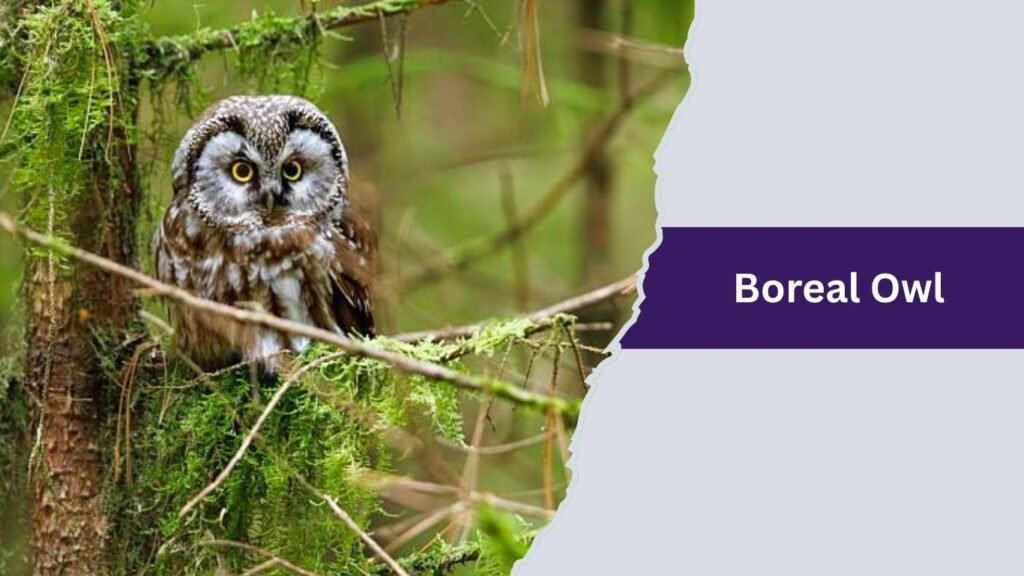
The Boreal Owl is a small, secretive forest owl with a large rounded head and bright yellow eyes. It is primarily nocturnal and often remains hidden in dense northern woodlands during the day. Its soft brown-and-white plumage provides excellent camouflage against tree trunks and branches.
Identification
- Large, rounded head without ear tufts
- Bright yellow eyes
- Pale facial disc outlined in dark brown
- Brown upperparts covered with white spots
- White underparts marked with brown streaks
- Short tail and broad, rounded wings
- Small hooked bill partly hidden by facial feathers
Size and Appearance
Boreal Owls are compact birds with short tails and relatively large heads. Females are noticeably larger and heavier than males, although both sexes have similar markings. Juveniles appear darker overall and may lack the bold white spotting seen on adults.
Habitat and Range
These owls inhabit boreal and mountain forests across northern North America, Europe, and Asia. They prefer mature coniferous or mixed forests containing old trees and abandoned woodpecker cavities. During harsh winters, some individuals move southward in search of food.
Diet and Hunting Behavior
Boreal Owls mainly feed on voles, mice, shrews, and small birds. They hunt at night from low branches, listening carefully for movement below. Once prey is detected, the owl drops quickly and captures it with its talons, even beneath light snow or vegetation.
7. Northern Saw-Whet Owl
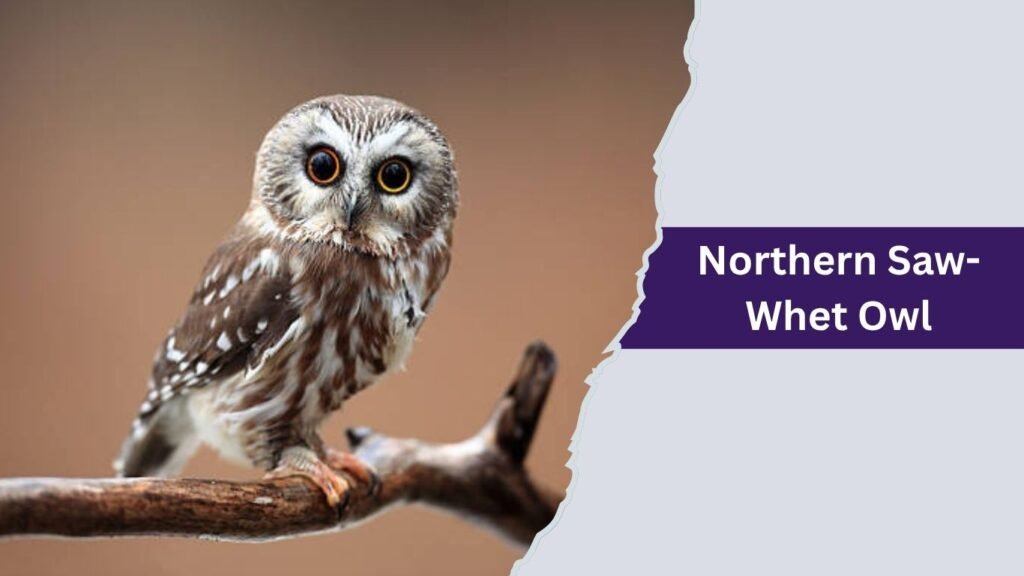
The Northern Saw-Whet Owl is one of the smallest owl species in North America. It has a large round head, bright yellow eyes, and a gentle expression. This secretive woodland owl is mostly active at night and often remains hidden in thick vegetation during the day.
Identification
- Small, compact body with a large rounded head
- Bright yellow eyes and a dark hooked bill
- Pale facial disc bordered with brown
- Brown upperparts covered with white spots
- White underparts marked with reddish-brown streaks
- No visible ear tufts
- Short tail and broad, rounded wings
Size and Appearance
Northern Saw-Whet Owls are about the size of a robin, though their thick feathers make them appear slightly larger. Males and females have similar plumage, but females are generally larger. Young birds are darker brown with a warm orange chest and fewer white markings.
Habitat and Range
These owls inhabit forests across Canada, the United States, and parts of Mexico. They prefer dense coniferous or mixed woodlands with nearby clearings. Northern Saw-Whet Owls commonly nest in abandoned woodpecker holes or natural tree cavities.
Diet and Hunting Behavior
Northern Saw-Whet Owls mainly eat deer mice, voles, shrews, and small birds. They hunt at night from low branches, using excellent hearing to locate prey. After detecting movement, the owl silently drops from its perch and captures the animal with its sharp talons.
8. Great Horned Owl
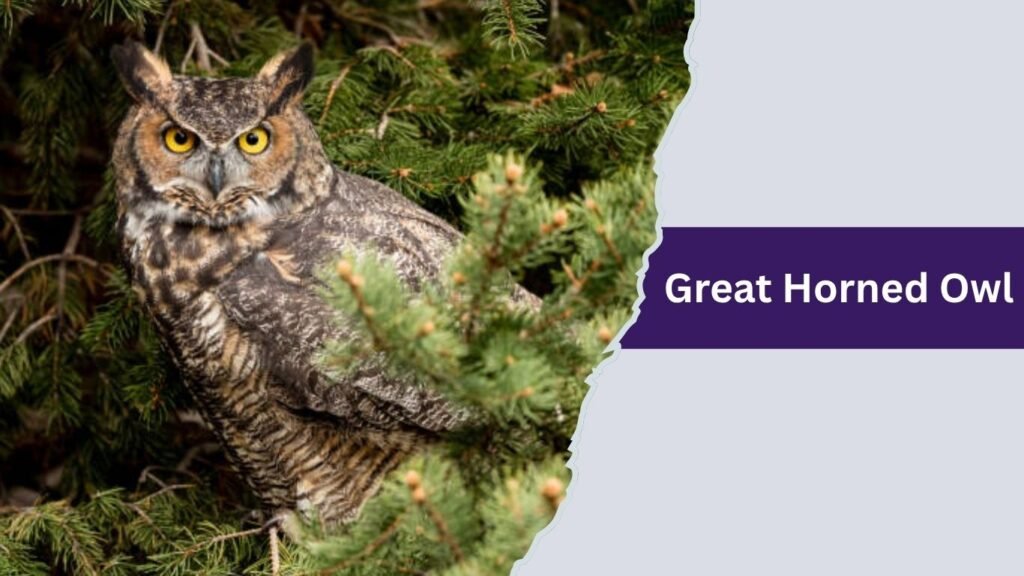
The Great Horned Owl is a large and powerful owl recognized by its prominent feather tufts, broad body, and intense yellow eyes. It is highly adaptable and lives in many environments, from forests and deserts to farmland and urban parks.
Identification
- Large body with a broad, rounded head
- Long, horn-like ear tufts
- Bright yellow eyes
- White throat patch
- Mottled brown, gray, and reddish plumage
- Heavily barred underparts
- Strong legs and large, sharp talons
Size and Appearance
Great Horned Owls have thick bodies, broad wings, and powerful feet. Females are larger than males, though both sexes have similar plumage. Their feather color varies by region, ranging from pale gray to dark brown or reddish-brown, helping them blend into different habitats.
Habitat and Range
These owls are found throughout North America and parts of Central and South America. They occupy forests, deserts, wetlands, grasslands, mountains, farmland, and suburban areas. Great Horned Owls often use abandoned nests built by hawks, crows, or other large birds.
Diet and Hunting Behavior
Great Horned Owls eat rabbits, rodents, birds, reptiles, skunks, and other small to medium-sized animals. They usually hunt at night from elevated perches. Their silent flight, strong grip, and excellent hearing allow them to capture a wide variety of prey.
9. American Barn Owl
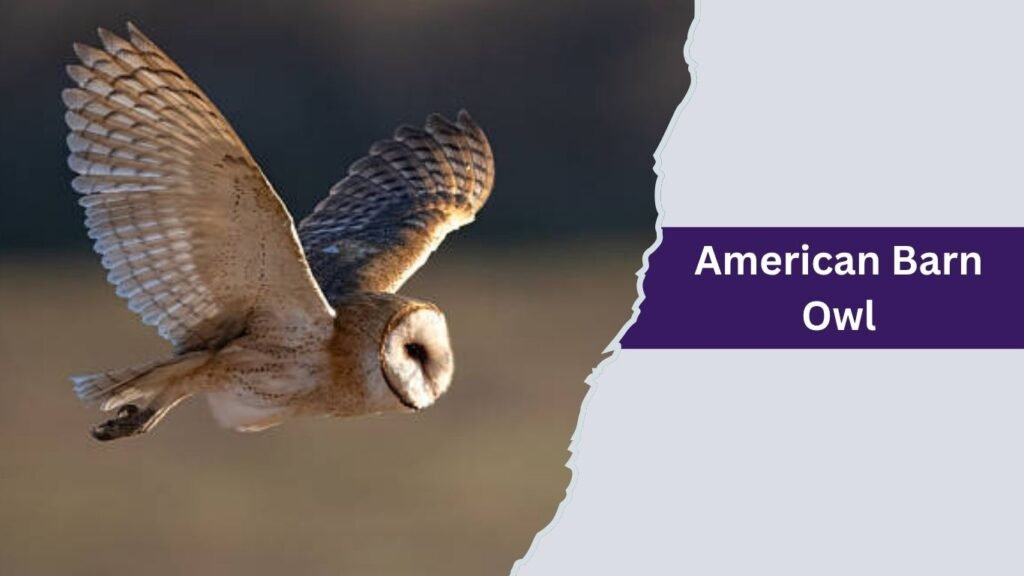
The American Barn Owl is a pale, medium-sized owl known for its heart-shaped face and silent flight. It often lives near farms, grasslands, marshes, and open countryside, where it hunts small mammals at night. Its ghostly appearance and unusual screeching call make it easy to distinguish from other owls.
Identification
- White, heart-shaped facial disc
- Dark eyes rather than yellow eyes
- Pale buff, gray, and golden upperparts
- White or lightly spotted underparts
- Long legs covered with pale feathers
- Long, rounded wings and a short tail
- No visible ear tufts
Size and Appearance
American Barn Owls have slender bodies, narrow heads, and long wings. Females are usually slightly larger and often have darker, more heavily spotted underparts than males. Their soft feathers reduce noise during flight, helping them approach prey without being detected.
Habitat and Range
These owls occur throughout much of North America, Central America, and parts of South America. They favor open habitats such as farmland, prairies, deserts, marshes, and grasslands. They commonly nest in barns, church towers, tree cavities, abandoned buildings, and specially designed nest boxes.
Diet and Hunting Behavior
American Barn Owls mainly feed on mice, voles, rats, shrews, and other small mammals. They usually hunt at night by flying slowly over open ground. Their highly sensitive hearing allows them to locate prey in darkness, even when vegetation hides it from view.
10. Barred Owl
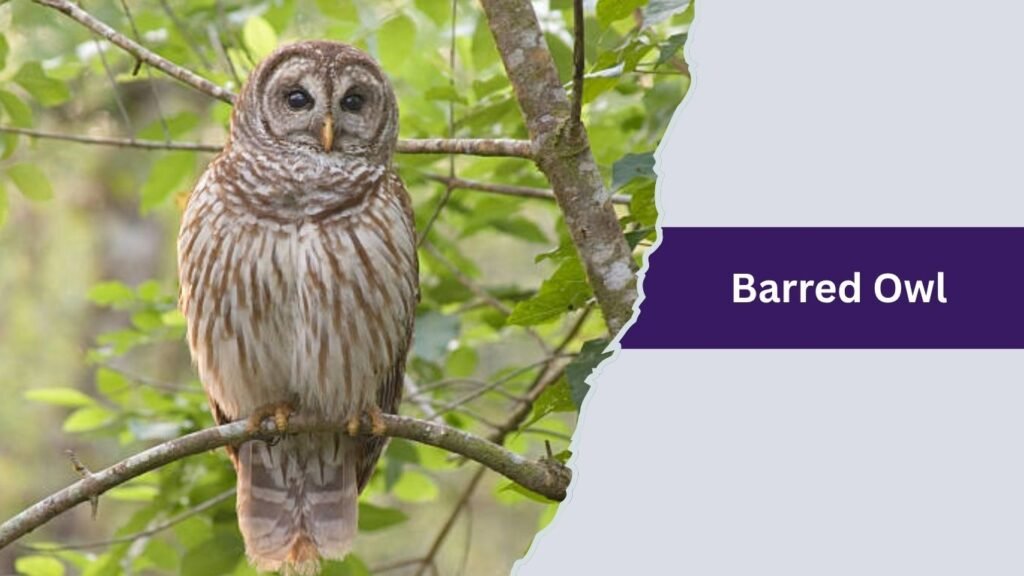
The Barred Owl is a large woodland owl recognized by its rounded head, dark eyes, and strongly patterned plumage. It is commonly heard calling from mature forests, wetlands, and wooded neighborhoods. Unlike many other owl species, it has no visible ear tufts.
Identification
- Large, rounded head without ear tufts
- Dark brown or nearly black eyes
- Pale facial disc outlined with darker feathers
- Brown-and-white barred upper chest
- Vertical brown streaks across the lower body
- Broad wings and a relatively short tail
- Yellow bill partly hidden by facial feathers
Size and Appearance
Barred Owls have broad bodies, rounded wings, and thick feathers that make them appear bulky. Males and females have nearly identical plumage, although females are usually larger. Their combination of horizontal chest bars and vertical belly streaks is a useful identification feature.
Habitat and Range
These owls live mainly in eastern North America, although their range has expanded into parts of western Canada and the United States. They prefer mature forests near rivers, swamps, lakes, and wetlands. Barred Owls may also live in wooded suburban areas with large trees.
Diet and Hunting Behavior
Barred Owls eat mice, voles, squirrels, rabbits, birds, frogs, fish, and crayfish. They usually hunt from a low perch and drop silently onto prey. Although most active at night, they may also hunt during cloudy weather, early morning, or late afternoon.
11. Spotted Owl
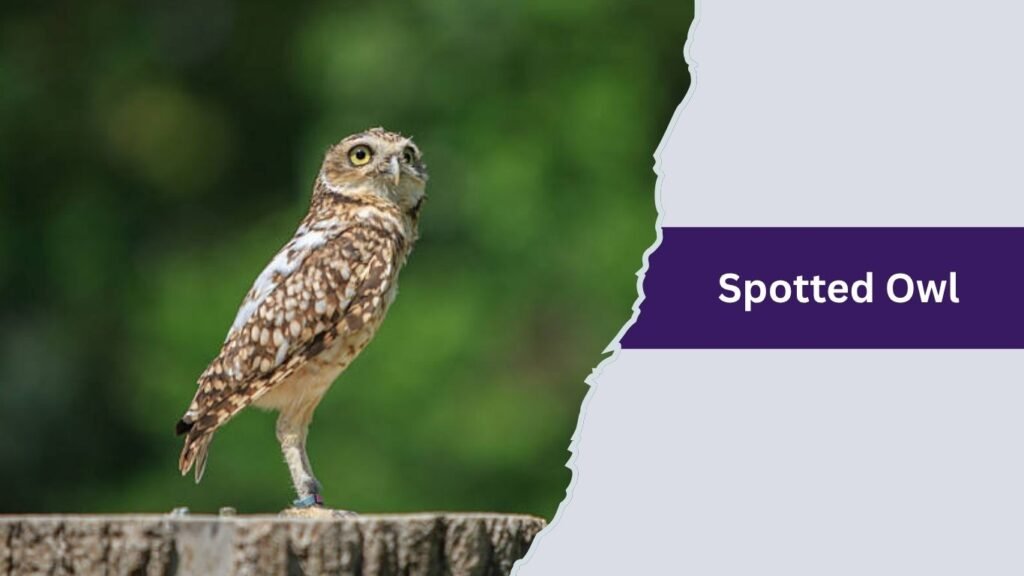
The Spotted Owl is a medium-sized forest owl known for its dark eyes, rounded head, and white-spotted plumage. It is strongly associated with mature forests containing large trees, dense canopies, and natural cavities. This secretive owl is most active at night and is often detected by its distinctive calls.
Identification
- Rounded head without visible ear tufts
- Large, dark brown eyes
- Brown facial disc with pale borders
- Dark brown plumage covered with white spots
- White markings across the head, back, and chest
- Broad, rounded wings
- Medium-length tail with pale horizontal bands
Size and Appearance
Spotted Owls have compact bodies, broad wings, and thick feathers. Females are usually larger than males, but both sexes have similar coloring. Their dark eyes help separate them from many other brown woodland owls that have yellow or orange eyes.
Habitat and Range
These owls inhabit mature and old-growth forests in western North America. Different populations occur from southwestern Canada through the western United States and into Mexico. They prefer forests with large trees, shaded nesting areas, broken branches, and plenty of protective cover.
Diet and Hunting Behavior
Spotted Owls mainly eat flying squirrels, woodrats, mice, voles, bats, and small birds. They hunt at night by waiting quietly on a branch before flying toward detected prey. Their soft feathers allow nearly silent movement through dense forest habitats.
12. Ural Owl
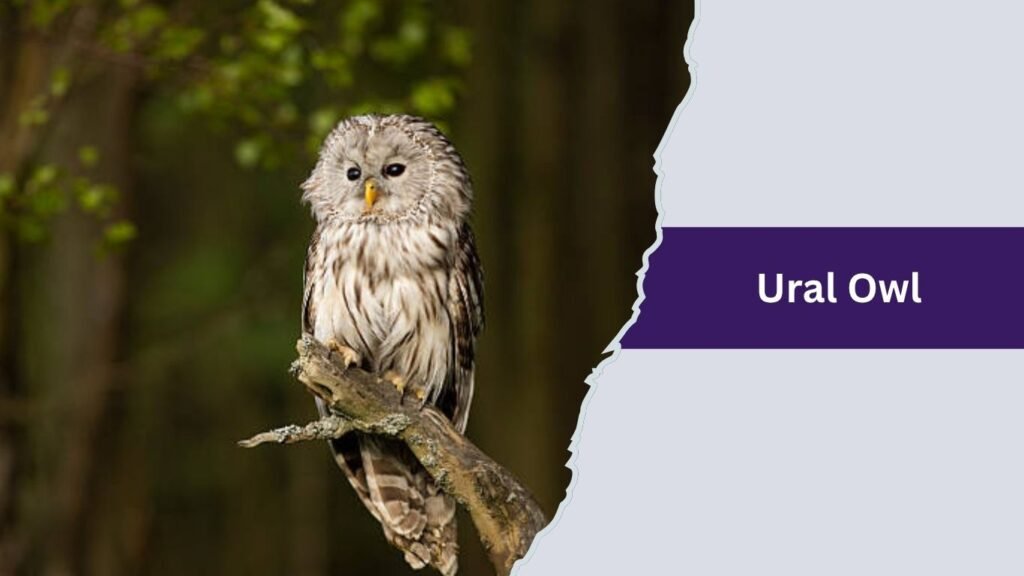
The Ural Owl is a large woodland owl with a rounded head, long tail, and pale gray-brown plumage. It is known for its calm appearance, dark eyes, and powerful territorial behavior. This northern owl usually lives in mature forests near clearings, wetlands, and open hunting areas.
Identification
- Large, rounded head without visible ear tufts
- Small, dark brown or black eyes
- Pale gray facial disc with a darker border
- Grayish-brown plumage with dark vertical streaks
- Light-colored underparts with narrow markings
- Long, wedge-shaped tail with dark bands
- Broad, rounded wings and strong feathered legs
Size and Appearance
Ural Owls have long bodies, broad wings, and noticeably long tails. Females are generally larger and heavier than males, although both sexes have similar plumage. Their pale facial disc and relatively small dark eyes give them a gentle expression despite their powerful build.
Habitat and Range
These owls are found across northern and central Europe, Russia, and parts of northern and eastern Asia. They prefer mature coniferous, deciduous, or mixed forests with open areas nearby. Ural Owls nest in large tree cavities, broken trunks, old nests, and artificial nest boxes.
Diet and Hunting Behavior
Ural Owls mainly feed on voles, mice, rats, shrews, squirrels, and small birds. They usually hunt from a perch, listening for movement before gliding silently toward prey. They may hunt during the night, at dusk, or occasionally during daylight in northern regions.
13. Tawny Owl
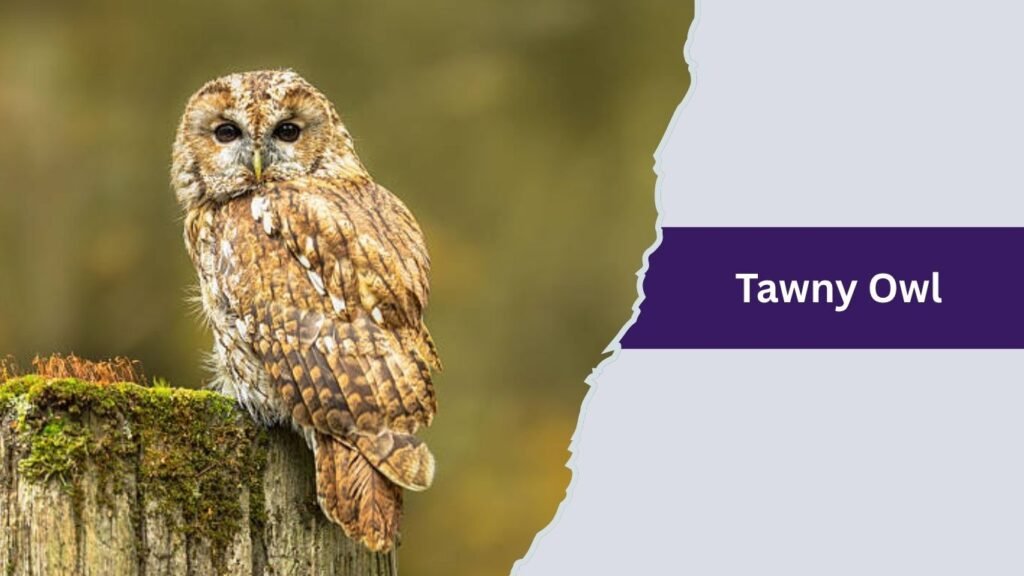
The Tawny Owl is a medium-sized woodland owl recognized by its rounded head, dark eyes, and heavily patterned plumage. It is mainly active at night and is famous for its familiar hooting call. Its brown or gray feathers provide excellent camouflage while resting against tree trunks.
Identification
- Rounded head without visible ear tufts
- Large, dark brown or black eyes
- Pale facial disc with a darker border
- Brown, reddish-brown, or gray plumage
- Dark streaks and mottled markings across the body
- Broad, rounded wings
- Short tail and strongly feathered legs
Size and Appearance
Tawny Owls have compact bodies, broad wings, and thick plumage. Their coloration varies from warm reddish-brown to cool gray, depending on the individual and region. Females are generally larger than males, although both sexes have nearly identical feather patterns.
Habitat and Range
These owls are widely distributed across Europe, western Asia, and parts of North Africa. They prefer mature deciduous, coniferous, and mixed forests with large trees. Tawny Owls may also live in wooded parks, gardens, farmland, and suburban areas.
Diet and Hunting Behavior
Tawny Owls mainly eat mice, voles, shrews, small birds, frogs, insects, and occasionally young rabbits. They hunt from tree branches, listening for prey before gliding silently downward. Most hunting occurs after sunset, although they may sometimes become active around dusk or dawn.
14. Eurasian Eagle-Owl
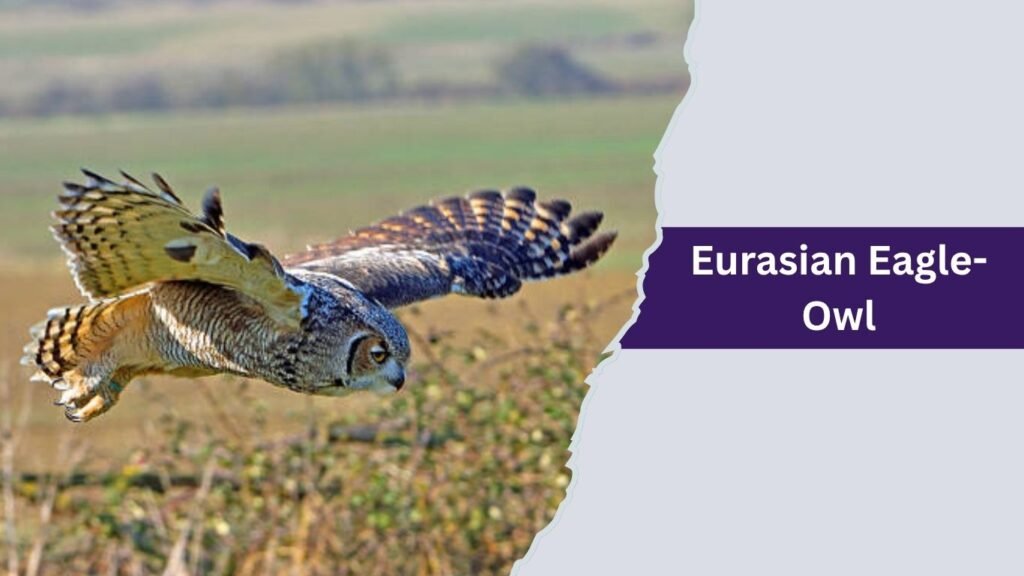
The Eurasian Eagle-Owl is one of the largest and most powerful owl species in the world. It has prominent ear tufts, vivid orange eyes, and a heavily built body. This impressive predator occupies rocky landscapes, forests, mountains, and open countryside across Europe and Asia.
Identification
- Large, bulky body with broad wings
- Long, prominent ear tufts
- Bright orange or reddish-orange eyes
- Dark facial disc with lighter edges
- Mottled brown, black, buff, and gray plumage
- Heavily streaked chest and barred belly
- Strong feathered legs and massive talons
Size and Appearance
Eurasian Eagle-Owls have thick bodies, large heads, and broad, rounded wings. Females are noticeably larger and heavier than males. Their mottled plumage provides excellent camouflage against rocks, cliffs, and tree bark, while their intense orange eyes are visible even from a distance.
Habitat and Range
These owls are widely distributed across Europe, Russia, Central Asia, and parts of East Asia. They inhabit rocky cliffs, mountain slopes, forests, grasslands, deserts, and agricultural areas. Nesting sites are often located on cliff ledges, rocky outcrops, or sheltered ground.
Diet and Hunting Behavior
Eurasian Eagle-Owls feed on rabbits, rodents, birds, reptiles, hedgehogs, and other medium-sized animals. They usually hunt at night from elevated perches. Their powerful talons, silent flight, and sharp hearing allow them to capture prey efficiently across varied landscapes.
15. Pharaoh Eagle-Owl
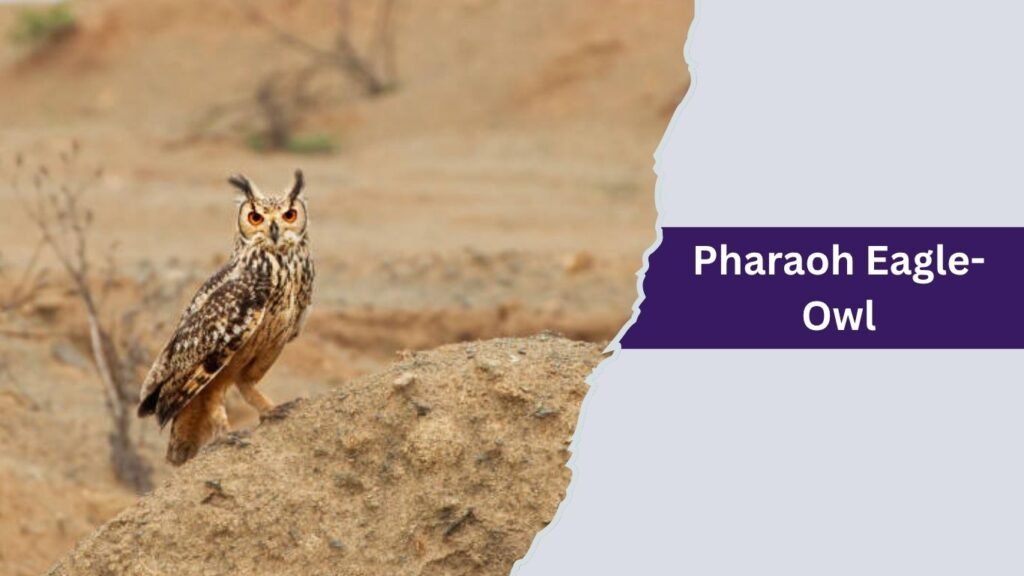
The Pharaoh Eagle-Owl is a large desert-dwelling owl recognized by its prominent ear tufts, orange-yellow eyes, and sandy-colored plumage. Its pale feathers provide effective camouflage among cliffs, rocky slopes, and dry landscapes. This powerful nocturnal hunter occurs mainly across North Africa and the Middle East.
Identification
- Large, rounded body with prominent ear tufts
- Bright orange-yellow eyes
- Sandy brown, buff, and cream-colored plumage
- Dark streaks across the head, chest, and upper body
- Pale underparts with fine brown barring
- Broad, rounded wings and a short tail
- Strong feathered legs with sharp talons
Size and Appearance
Pharaoh Eagle-Owls have sturdy bodies, broad wings, and large heads. Females are generally larger and heavier than males, although both sexes have similar markings. Their light desert coloration distinguishes them from the darker Eurasian Eagle-Owl and helps them blend into rocky surroundings.
Habitat and Range
These owls inhabit deserts, rocky hills, dry mountains, cliffs, wadis, and semi-arid grasslands. Their range extends across northern Africa, the Arabian Peninsula, and parts of the Middle East. They usually nest in rocky crevices, shallow caves, cliff ledges, or protected spaces on the ground.
Diet and Hunting Behavior
Pharaoh Eagle-Owls mainly eat rodents, hares, hedgehogs, reptiles, birds, and large insects. They usually begin hunting after sunset, watching from rocks or other elevated perches. Once prey is detected, the owl glides silently downward and captures it with its powerful talons.
FAQs
1. How many true Snowy Owl species are there?
There is only one true Snowy Owl species, scientifically known as Bubo scandiacus. The other owls in this list are pale, northern, or snowy-looking species that share similar habitats, coloring, body shapes, or hunting behaviors.
2. Which owl looks most similar to a Snowy Owl?
The Great Gray Owl may resemble a Snowy Owl because of its large size, rounded head, gray-white plumage, and northern habitat. However, it has darker markings, a large circular facial disc, and smaller yellow eyes.
3. Are Snowy Owls always completely white?
No. Adult males may become almost entirely white as they age, but females and young Snowy Owls usually have dark brown bars or spots. Females are generally more heavily marked than males, making their plumage appear darker.
4. Where do snowy-looking owls usually live?
Many snowy-looking owls live in Arctic tundra, boreal forests, mountain woodlands, wetlands, and open grasslands. Some remain in northern regions throughout the year, while others travel south during winter when prey becomes scarce.
5. How can you identify different northern owl species?
Look at the owl’s eye color, facial disc, ear tufts, body size, tail length, and feather patterns. Habitat and hunting time are also useful clues because some northern owls hunt during daylight, while others are mainly nocturnal.