
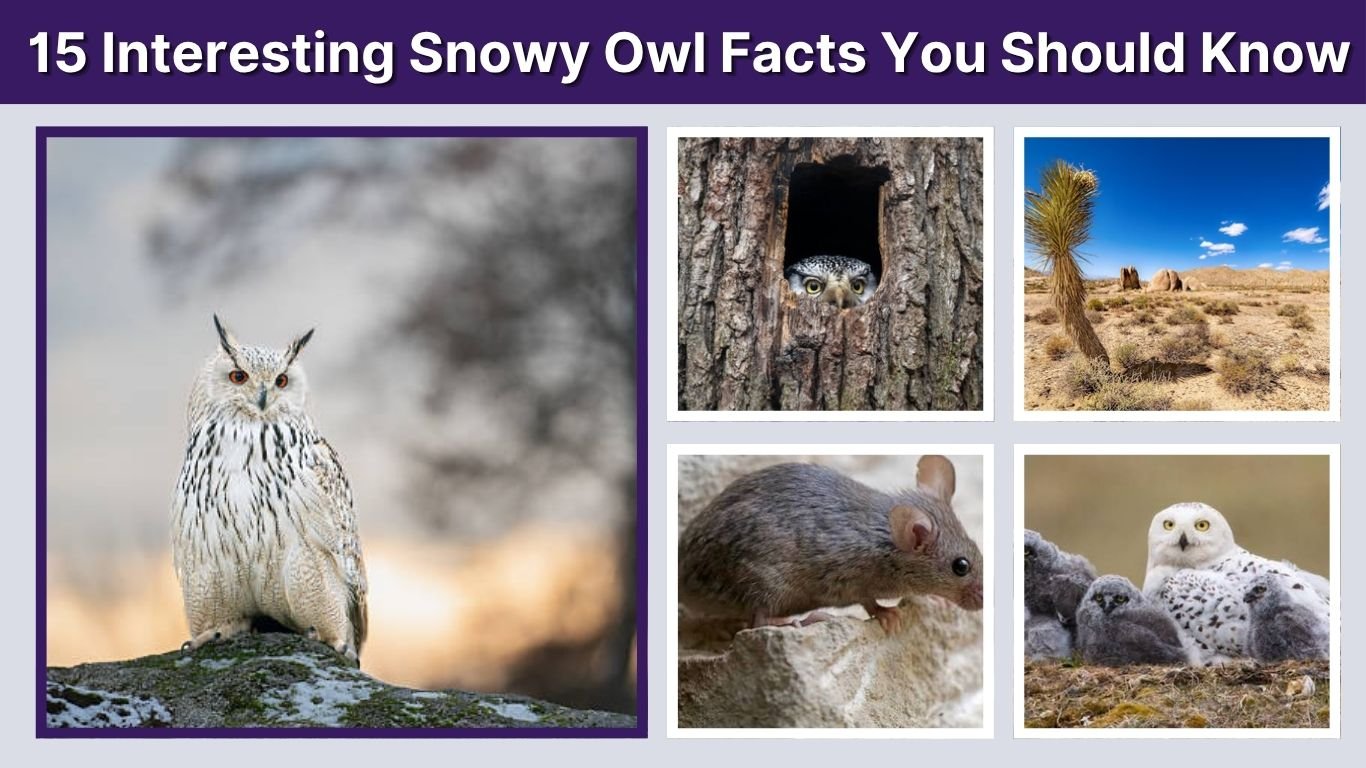
Snowy Owls are impressive Arctic predators recognized by their white plumage, brilliant yellow eyes, and powerful bodies. Unlike many forest-dwelling owls, they spend much of their lives in open tundra, coastal areas, fields, and other treeless landscapes. Their behavior, appearance, diet, and migration patterns are closely connected to Arctic conditions and changing prey populations. From hunting in continuous summer daylight to producing unusually large clutches when lemmings are abundant, these birds have many remarkable adaptations. Here are 15 interesting Snowy Owl facts that reveal how this extraordinary species survives in some of the coldest and most exposed environments on Earth.
Snowy Owl Appearance and Identification Facts
Snowy Owls are among the easiest owls to recognize, but their color, size, and markings vary considerably. Age and sex can affect how white or heavily patterned an individual appears.
1. Their Scientific Name Means “Owl of Scandinavia”
The Snowy Owl’s scientific name is Bubo scandiacus. It belongs to the family Strigidae, commonly called the true owls. The species is also sometimes known as the Arctic Owl, Polar Owl, or White Owl because of its northern habitat and pale plumage.
2. Snowy Owls Are North America’s Heaviest Owls
Although the Great Gray Owl may appear taller, the Snowy Owl is the heaviest owl species found in North America. Adults measure approximately 52–71 centimeters long, have wingspans of about 126–145 centimeters, and may weigh up to 2.95 kilograms.
3. Males Become Whiter as They Age
Young male Snowy Owls have dark brown bars and spots, but their plumage usually becomes whiter as they mature. Some old males appear almost completely white. Females retain more dark markings throughout their lives and often have a salt-and-pepper appearance.
4. Females Are Usually Larger and Darker
Female Snowy Owls are generally larger and heavier than males. They also tend to have denser brown or black barring across their bodies and wings. Young birds may resemble females because they are also heavily marked, making age and sex difficult to determine from a distance.
5. Their Legs and Feet Are Covered With Feathers
Dense feathering covers the Snowy Owl’s body, legs, and feet, providing insulation against Arctic temperatures. The thick leg feathers also make a perched owl appear especially wide and bulky near the base of its body. Only the sharp tips of its talons remain exposed.
Habitat, Movement and Daily Behavior
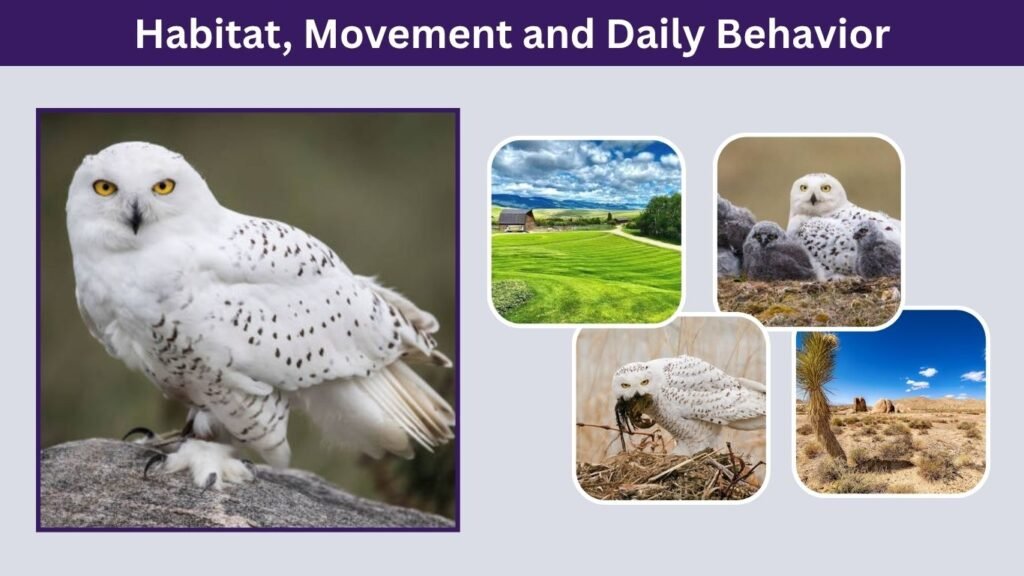
Snowy Owls are adapted to vast landscapes with few or no trees. Their movements are less predictable than those of many familiar migratory birds because they often travel according to prey availability.
6. They Breed on Treeless Arctic Tundra
Snowy Owls breed across Arctic regions of North America, Greenland, Europe, and Asia. They prefer exposed tundra north of the treeline, where low vegetation and raised ground provide clear views of prey and approaching predators.
7. Snowy Owls Can Hunt During Daylight
Most owls are associated with nighttime hunting, but Snowy Owls regularly hunt during the day. Their breeding range experiences nearly continuous daylight during Arctic summers, so these owls must be capable of finding and capturing prey in bright conditions. In winter, they may hunt during either day or night.
8. They Are Nomadic Rather Than Strictly Migratory
Snowy Owls do not always follow the same migration route each year. They move across large areas in response to changing food supplies and breeding opportunities. Some remain in the Arctic throughout winter, while others travel into southern Canada and the northern United States.
9. Large Southward Movements Are Called Irruptions
During certain winters, unusually large numbers of Snowy Owls travel south. These movements are called irruptions. They may follow successful breeding seasons in which plentiful lemmings allowed many young owls to survive, rather than simply indicating that every southward-moving owl is starving.
10. Southern Landscapes Resemble Arctic Tundra
When Snowy Owls move south, they usually choose open areas such as agricultural fields, coastal dunes, beaches, marshes and airports. These flat, treeless locations resemble their natural Arctic habitat and offer unobstructed views for spotting prey.
Diet, Hunting and Nesting Facts

Snowy Owls are powerful and adaptable predators. Their reproductive success can change dramatically depending on the abundance of rodents within their Arctic breeding range.
11. Lemmings Are an Important Food Source
Lemmings are a major part of the Snowy Owl’s summer diet. The owls also catch voles, mice, ptarmigan and other available animals. When lemming populations increase, Snowy Owls may gather and breed in areas where these small rodents are particularly abundant.
12. They Can Capture Surprisingly Large Prey
Snowy Owls do not survive on rodents alone. Their broad diet can include rabbits, waterfowl, seabirds and other birds, sometimes as large as geese. This flexibility helps them survive when lemmings and other small mammals become difficult to find.
13. They Swallow Smaller Prey Whole
Like many owls, Snowy Owls may swallow small prey whole. Their digestive system processes the soft tissues but cannot digest materials such as bones, teeth, feathers and fur. These remains are compressed and later regurgitated as pellets.
14. Their Number of Eggs Depends on Food
A female may lay only three to five eggs when prey is limited and occasionally may not breed at all. During excellent lemming years, she may lay seven to eleven eggs or even more. Abundant food can therefore produce a rapid increase in young Snowy Owls.
15. Snowy Owls Build Their Nests on the Ground
Instead of nesting in trees, the female creates a shallow depression directly on the tundra. She usually selects slightly raised ground that provides better visibility, improved drainage and an opportunity to watch for foxes or other threats. The male supplies food while the female incubates and guards the nest.
Are Snowy Owls Endangered?
Snowy Owl populations are difficult to measure because the birds nest in remote areas, occupy enormous territories and move unpredictably. Current estimates suggest a global breeding population of around 29,000, and the species is listed as Vulnerable. Major concerns include population decline, collisions, disturbance and possible climate-related changes to Arctic food webs and habitats.
FAQs
1. Where do Snowy Owls live?
Snowy Owls mainly live and breed across the Arctic tundra of North America, Europe, Greenland, and Asia. During winter, some move south into open fields, coastlines, marshes, airports, and farmland, where the flat landscape resembles their treeless Arctic habitat.
2. What do Snowy Owls eat?
Snowy Owls mainly eat lemmings, voles, mice, rabbits, and small birds. They may also capture ducks, ptarmigan, seabirds, and other larger prey. Their diet changes according to location, season, and the availability of animals within their hunting territory.
3. Are Snowy Owls active during the day?
Yes, Snowy Owls frequently hunt during daylight. In the Arctic summer, the sun may remain visible for most or all of the day, so these owls are well adapted to daytime activity. They can also hunt at dusk, at night, or in low light.
4. How can you tell a male Snowy Owl from a female?
Adult males are generally whiter and may lose many of their dark markings as they age. Females are usually larger and retain heavier brown or black barring across their wings and bodies. Young Snowy Owls are also heavily marked and may resemble adult females.
5. Are Snowy Owls dangerous to humans?
Snowy Owls do not normally attack people, but they may become aggressive when defending a nest or young. Their sharp talons and strong feet can cause injury. Observers should keep a respectful distance and avoid approaching, feeding, or disturbing wild owls.
