
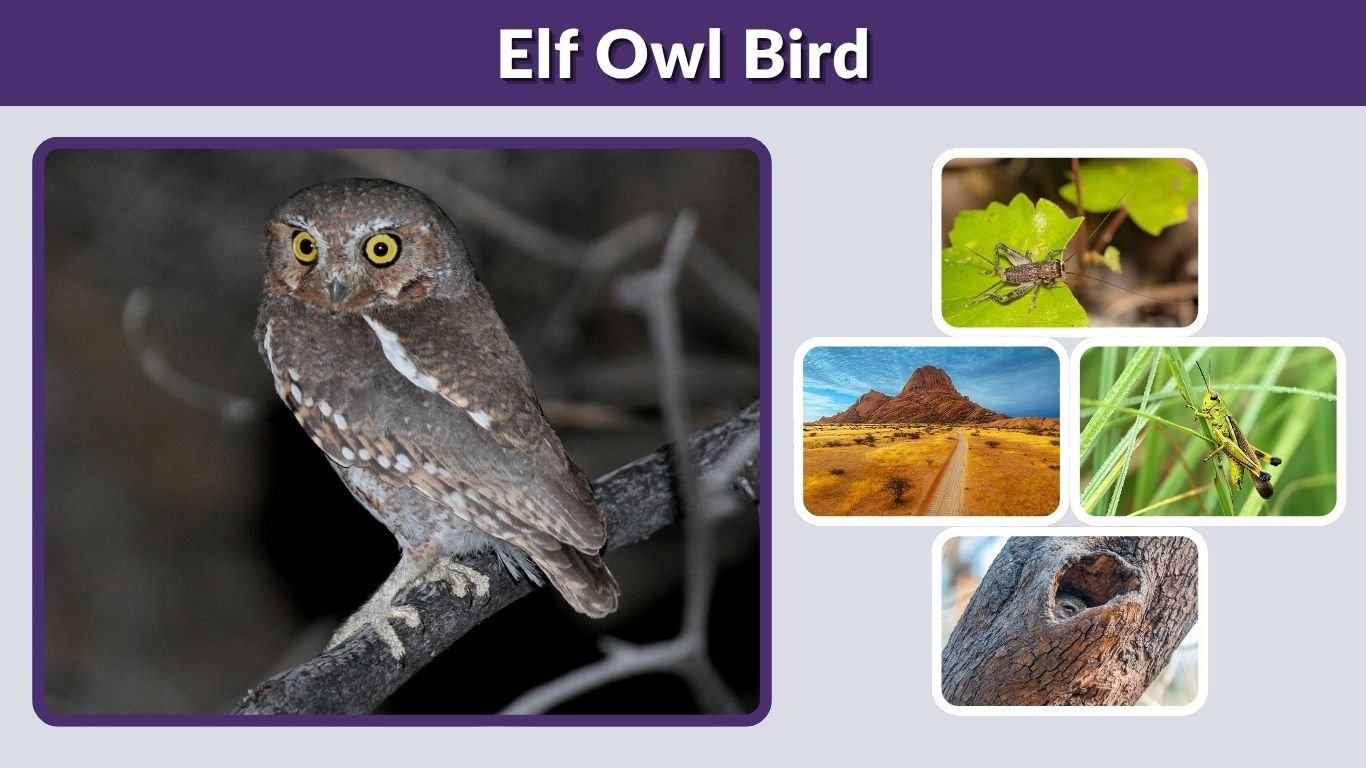
The elf owl (Micrathene whitneyi) is a tiny nocturnal bird found in deserts, dry woodlands, and river valleys of the southwestern United States and Mexico. Barely larger than a sparrow, it is widely recognized as one of the world’s smallest owls. Despite its delicate appearance, the elf owl is an efficient nighttime hunter that captures moths, beetles, crickets, scorpions, and other small creatures.
Elf owls spend the day resting inside tree or cactus cavities. After sunset, they emerge to hunt and communicate through distinctive yapping or whistling calls. Their small size, bright yellow eyes, and habit of nesting in abandoned woodpecker holes make them one of North America’s most unusual birds of prey.
What Is an Elf Owl?
The elf owl is a member of the typical owl family, Strigidae. It is the only living species placed in the genus Micrathene. Its scientific name, Micrathene whitneyi, reflects its extremely small size.
Elf owls are summer visitors to parts of the southwestern United States, including Arizona, New Mexico, western Texas, and limited areas of southern California. Much of the population lives in Mexico, including the Baja California Peninsula. Northern birds generally migrate south after the breeding season, while some populations in warmer parts of Mexico remain in the same region throughout the year.
Elf Owl Identification
Important identification features include:
- Very small, compact body
- Large, round yellow eyes
- Thin white eyebrows
- Round head without ear tufts
- Grayish-brown upperparts
- Rusty or buff markings on the chest
- White spots on the wings
- Short tail with narrow bars
- Small gray or horn-colored bill
Its mottled feathers closely resemble tree bark, making the owl difficult to notice when it is resting beside a trunk or looking out from a cavity.
Elf owls resemble small screech-owls, but they are considerably smaller and lack prominent ear tufts. Their yellow eyes also help distinguish them from several other small owl species.
How Big Is an Elf Owl?
An adult elf owl is approximately 12.4–14.2 centimeters long and commonly weighs only 35–55 grams. That makes it about the size of a large sparrow and lighter than many common songbirds. Its wingspan is roughly 27 centimeters, although measurements vary between individuals.
Females are usually slightly larger and heavier than males, but both sexes have nearly identical plumage. Size alone is therefore not always reliable for distinguishing them in the wild.
| Feature | Typical measurement |
|---|---|
| Body length | 12.4–14.2 cm |
| Weight | 35–55 g |
| Wingspan | Approximately 27 cm |
| Relative size | Similar to a sparrow |
Although tiny, an elf owl has the hooked bill, strong feet, sharp talons, excellent hearing, and night vision expected of a predatory bird.
Where Do Elf Owls Live?
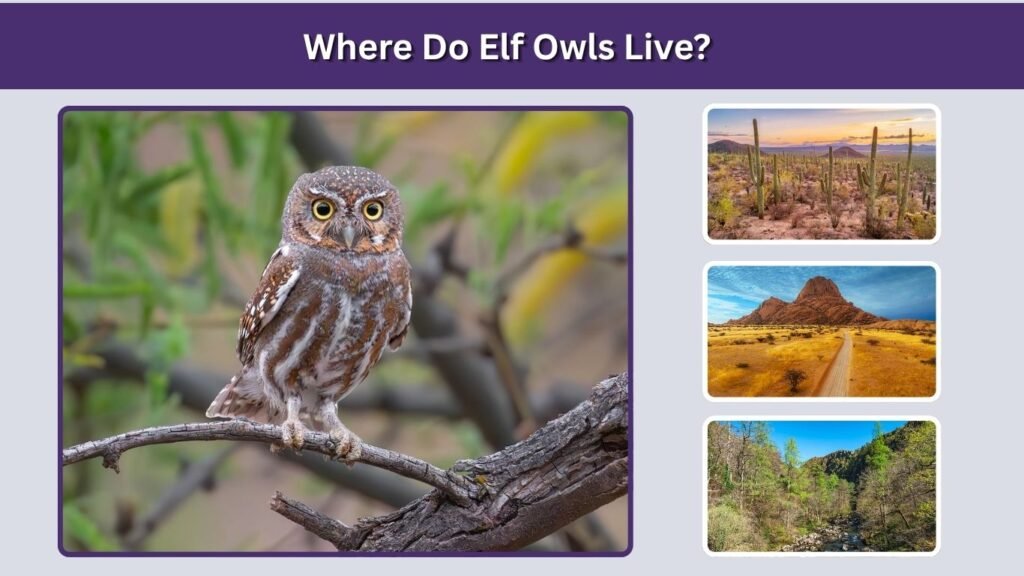
Elf owls inhabit the southwestern United States, Mexico, and parts of the Baja California Peninsula. In the United States, their breeding range is concentrated near the Mexican border. They are present in northern parts of their range primarily during spring and summer.
Elf Owl Habitat
Elf owls occupy several warm, relatively dry habitats, including:
- Sonoran Desert cactus forests
- Desert scrub
- Oak and pine-oak woodland
- Wooded canyons
- Cottonwood and sycamore river valleys
- Mesquite woodland
- Dry tropical forest
- Palm groves
In desert areas, they are particularly associated with mature saguaro cacti containing old woodpecker holes. In wooded canyons and river habitats, they use cavities in sycamores, cottonwoods, oaks, mesquites, and other trees.
Their survival depends heavily on suitable nesting cavities. Because elf owls cannot excavate their own holes, they rely on woodpeckers, natural decay, and damaged trees to create nesting and roosting spaces.
What Do Elf Owls Eat?
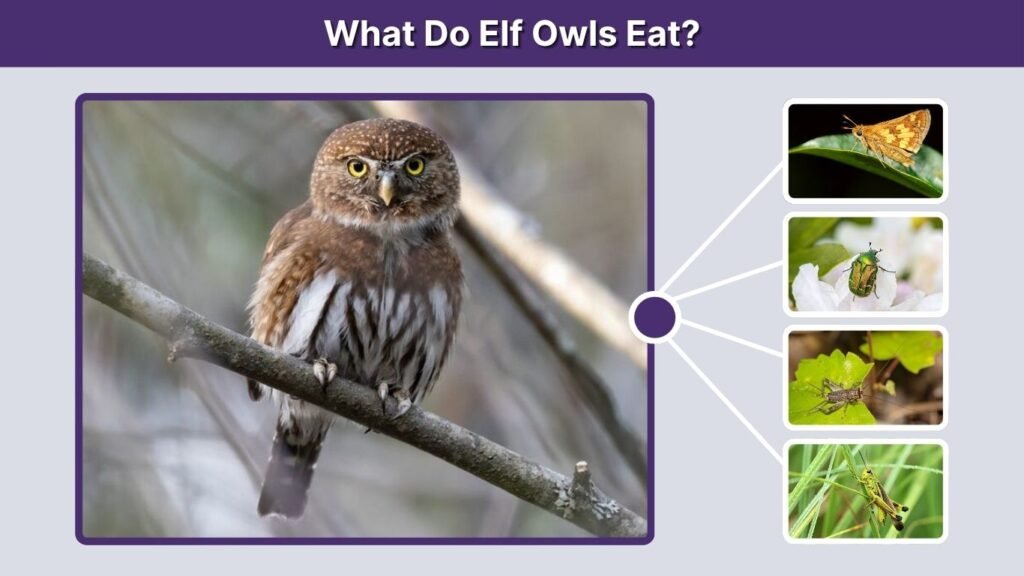
Elf owls are primarily insectivorous. Instead of hunting large mammals like many bigger owls, they capture small prey that can be carried and eaten easily.
Their diet commonly includes:
- Moths
- Beetles
- Crickets
- Grasshoppers
- Katydids
- Cicadas
- Spiders
- Centipedes
- Scorpions
- Other small invertebrates
They may occasionally catch small lizards, mice, birds, or snakes, but vertebrate prey represents a relatively small portion of their usual diet.
How Do Elf Owls Hunt?
Elf owls become active around dusk and continue hunting throughout the night. They commonly wait on a low perch, listen for movement, and then fly down to seize prey. They may also catch insects in flight or gather them from leaves, branches, and the ground.
Outdoor lights can attract moths and beetles, sometimes creating convenient feeding areas for elf owls. Birdwatchers may therefore notice them hunting near lights in otherwise suitable desert or canyon habitat.
Elf owls have been observed capturing scorpions and removing or disabling the stinger before eating them. This behavior allows such a small bird to handle potentially dangerous prey.
Are Elf Owls Nocturnal?
Elf owls are strongly nocturnal. They normally remain hidden during daylight inside cavities, dense vegetation, or shaded places. They emerge around sunset, becoming especially active during dusk, dawn, and the hours of darkness.
Their mottled plumage helps hide them while they sleep. Remaining inside a narrow cavity also protects them from high daytime temperatures and larger predators.
Because these owls are active at night, people are much more likely to hear one than see one. Searching during the day can also disturb a nesting or roosting bird, so nighttime listening from a respectful distance is usually the better observation method.
What Does an Elf Owl Sound Like?
The elf owl’s voice is surprisingly noticeable for such a tiny bird. Its most familiar call is a rapid series of high-pitched notes often described as yapping, chuckling, whistling, or puppy-like.
Males call to advertise territories and attract females during the breeding season. Pairs also use softer calls to communicate near the nesting site. Vocal activity is usually strongest during spring and early summer.
Listening for its repeated yapping call along a quiet desert or canyon road after dark is one of the most effective ways to locate the species.
Elf Owl Nesting and Breeding
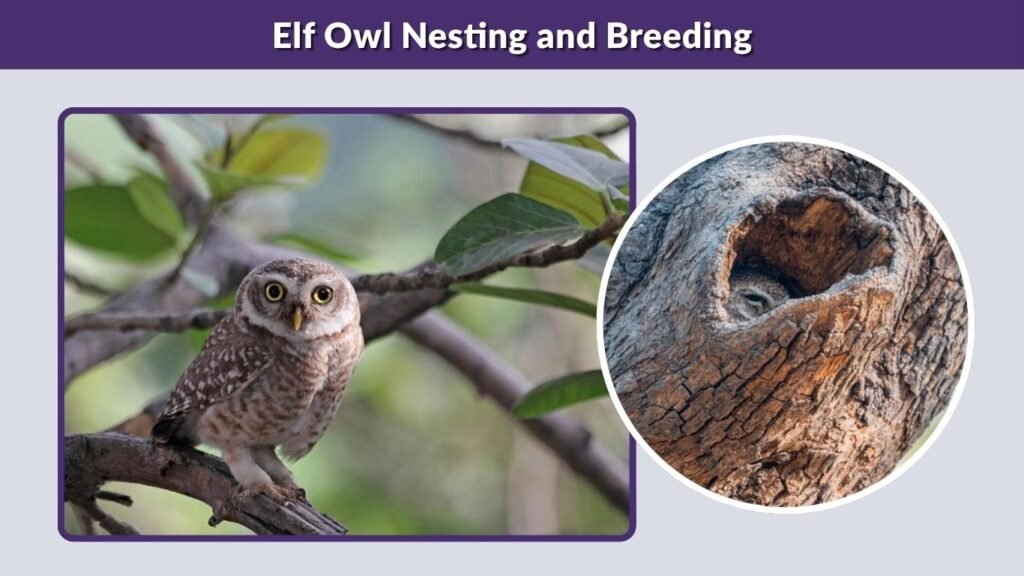
Elf owls are secondary cavity nesters, meaning they use holes made by other animals rather than excavating their own nests. Abandoned woodpecker cavities in saguaros and trees are especially important.
Other nesting locations can include cavities in telephone poles, fence posts, nest boxes, and human-made structures. The nest chamber generally contains little nesting material.
Eggs and Young Elf Owls
The breeding season begins during spring. Females usually lay about three white eggs, although clutches may contain between one and five. The female performs most of the incubation, which lasts approximately 24 days.
During incubation, the male brings food to the female. After the eggs hatch, the female initially remains with the chicks while the male supplies much of the food. As the young grow, both parents participate in caring for them.
Young elf owls gradually become strong enough to leave the cavity and begin flying during summer. They remain dependent on their parents while developing their hunting skills.
Elf Owl Behavior and Defense
An elf owl usually avoids fighting larger animals. When threatened, it may retreat deeply into its cavity, remain motionless, or fly into dense vegetation.
These small owls can also produce alarm calls that attract nearby birds. Several birds may gather and mob a snake, owl, or other predator, making the area uncomfortable until the threat leaves.
Elf owls may face predation from:
- Larger owls
- Hawks
- Jays
- Snakes
- Raccoons
- Other climbing mammals
A nest cavity with a narrow entrance offers valuable protection because many larger predators cannot enter it.
Elf owls have also been reported to become motionless when captured, a behavior sometimes interpreted as feigning death. This may cause a predator to loosen its grip and give the owl an opportunity to escape.
Elf Owl Migration
Many elf owls breeding in the United States and northern Mexico migrate south for winter. They return to their northern breeding grounds during spring, when insects become abundant and nesting conditions improve.
Migration separates the elf owl from several other small desert owls that remain within their territories throughout the year. By late summer or fall, elf owls become difficult to find in the northern parts of their range.
How Long Do Elf Owls Live?
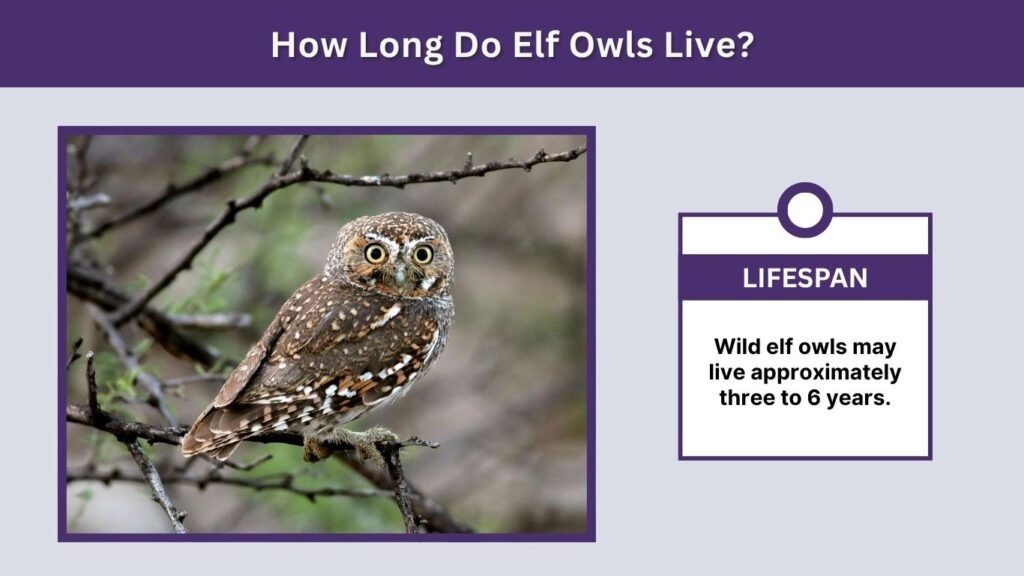
Wild elf owls may live approximately three to six years, although many young birds do not survive their first year. Individuals kept under protected conditions may live longer, sometimes reaching about ten years.
Predation, extreme weather, habitat loss, collisions, competition for cavities, and shortages of food can reduce survival. Their small size makes them vulnerable, but it also allows them to hide and nest inside cavities inaccessible to many predators.
Are Elf Owls Endangered?
The elf owl is not currently considered globally endangered. However, populations can decline locally when desert vegetation, wooded river corridors, and mature cavity-bearing trees are removed.
Habitat protection is especially important because these owls depend on existing holes for nesting. The loss of saguaros, cottonwoods, sycamores, and woodpecker populations can reduce the number of available nest sites.
Conservation measures include protecting mature desert plants, preserving riverside woodland, retaining safe dead trees, and installing suitable nest boxes where natural cavities are scarce.
Elf Owl vs Burrowing Owl
| Feature | Elf Owl | Burrowing Owl |
|---|---|---|
| Size | Extremely small | Noticeably larger |
| Eyes | Yellow | Yellow |
| Nest | Tree or cactus cavity | Underground burrow |
| Main habitat | Desert woodland and canyons | Open grassland and desert |
| Activity | Mostly nocturnal | Active day and night |
| Diet | Mainly insects | Insects and small vertebrates |
| Legs | Short | Long and visible |
The elf owl is usually observed in trees, saguaros, or wooded canyons. The burrowing owl spends much of its time on the ground and often stands near the entrance to an underground burrow.
FAQs
Is the elf owl the smallest owl in the world?
The elf owl is commonly described as the world’s smallest or one of its smallest owls. Adults are only around 12.4–14.2 centimeters long and may weigh less than 40 grams, making them comparable in size to a sparrow.
Can an elf owl attack a person?
Elf owls are not dangerous to people. They normally retreat when approached and rely on camouflage or cavities for protection. A nesting bird may call or behave defensively, but its tiny size prevents it from posing a serious threat.
Do elf owls eat mice?
Elf owls may occasionally catch very small mice, but insects and other invertebrates make up most of their diet. Moths, beetles, crickets, grasshoppers, spiders, and scorpions are much more typical foods.
Do elf owls live in cactus holes?
Yes. Elf owls frequently use abandoned woodpecker holes in saguaro cacti, particularly in the Sonoran Desert. They also nest in cavities found in sycamores, cottonwoods, oaks, mesquites, telephone poles, and nest boxes.
Can elf owls be kept as pets?
Elf owls are wild birds and are not suitable pets. In the United States, native owls are protected by federal wildlife laws, and keeping one without proper authorization is generally illegal. They require specialized food, habitat, and professional care.
