
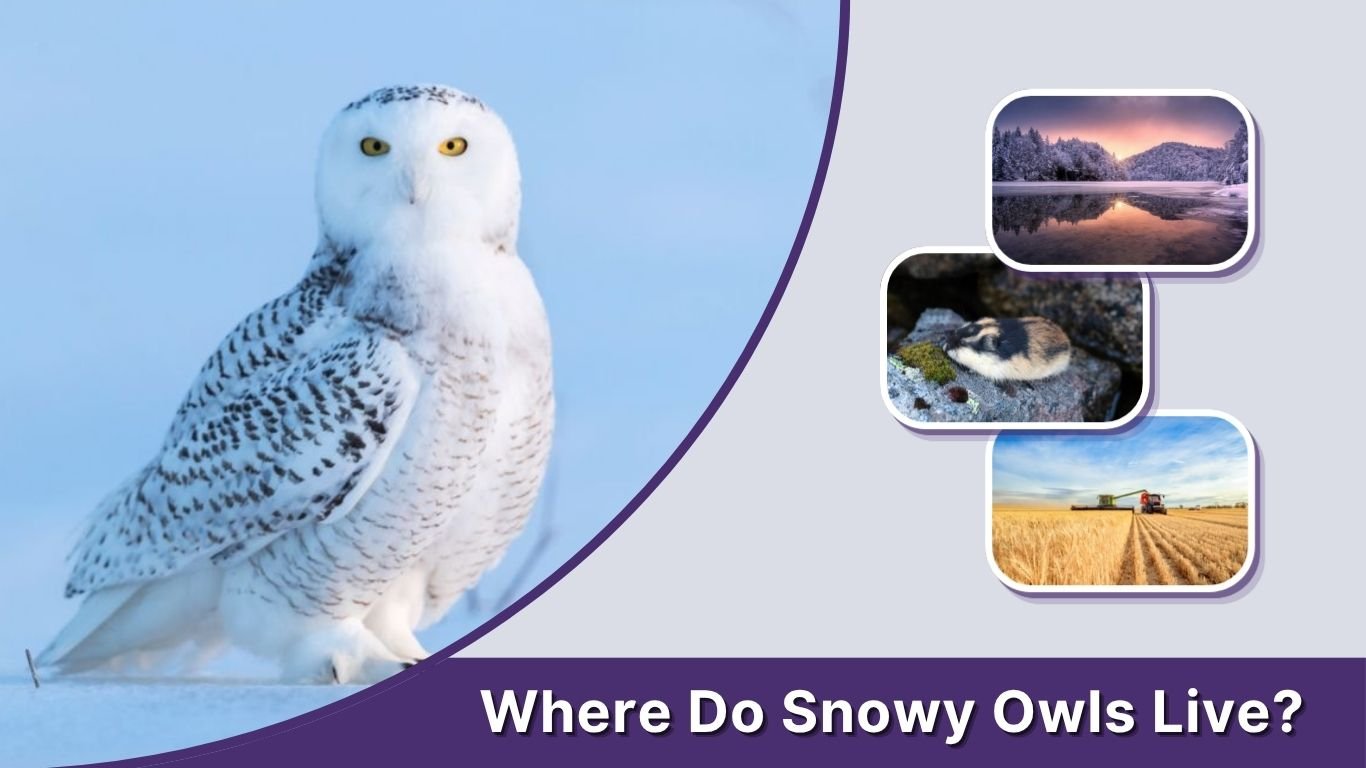
Snowy owls live mainly in the Arctic regions of North America, Europe, and Asia. During summer, most breed on remote, treeless tundra in northern Canada, Alaska, Greenland, Scandinavia, and Russia. In winter, some remain in the Arctic, while others travel south into southern Canada, the northern United States, and parts of Europe and Asia. Wherever they go, snowy owls usually choose flat, open habitats that give them a clear view of prey.
Where Do Snowy Owls Live in the World?
The snowy owl’s natural range circles the top of the Northern Hemisphere. This type of distribution is called circumpolar, meaning the species occurs around the Arctic rather than in only one country or continent.
Snowy owls can be found across:
- Northern Canada and the Canadian Arctic islands
- Northern and western Alaska
- Greenland
- Iceland and northern Scandinavia
- Northern Russia and Siberia
- Northern Europe during some winters
- Southern Canada and the northern United States in winter
Their exact location changes from year to year. Snowy owls are highly mobile and may travel long distances in response to prey availability and breeding conditions.
| Season | Main range | Common habitat |
| Spring and summer | Arctic Canada, Alaska, Greenland, Scandinavia and Russia | Open tundra and raised nesting ground |
| Fall | Arctic and migration routes farther south | Coastlines, grasslands and open country |
| Winter | Arctic, southern Canada, northern U.S. and northern Eurasia | Farms, beaches, marshes, airports and dunes |
| Irruption years | Occasionally much farther south | Any broad, treeless landscape with prey |
What Is the Natural Habitat of a Snowy Owl?
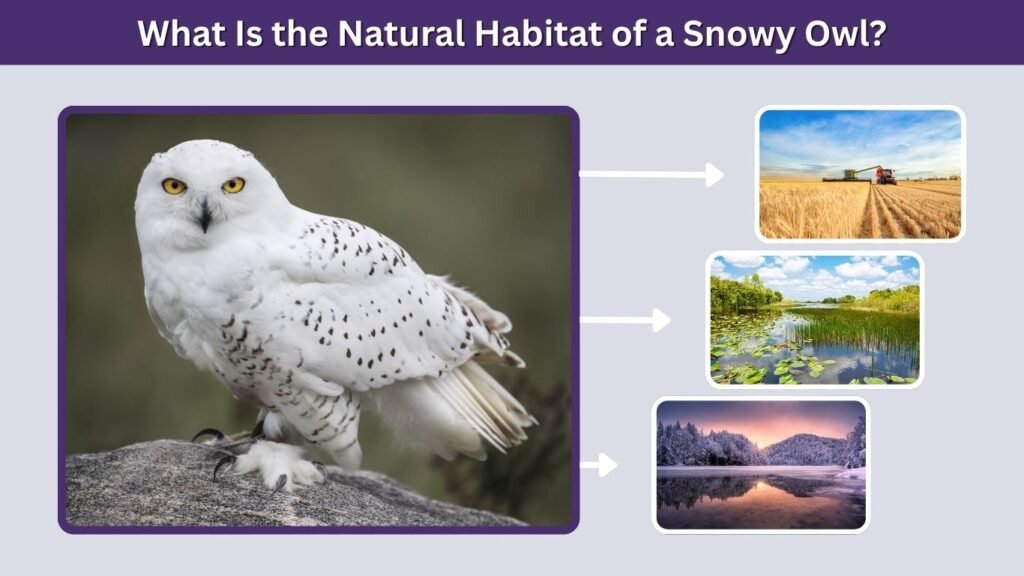
Snowy owls are birds of wide-open, treeless landscapes. Their preferred habitat allows them to sit on the ground or a low rise while watching a large area for rodents and birds.
Arctic Tundra
The Arctic tundra is the snowy owl’s main breeding habitat. It is a cold, windy region where permanently frozen ground limits the growth of large trees. Vegetation usually consists of mosses, lichens, grasses, sedges and small shrubs.
Snowy owls build their nests directly on the ground, often choosing a small mound or raised area that provides better visibility and protection from wet ground. These elevated nesting sites also help the adults watch for predators and nearby prey.
Open Winter Habitats
Outside the breeding season, snowy owls may live in:
- Agricultural fields
- Coastal beaches and dunes
- Marshes and wetlands
- Prairie and grassland
- Frozen lakeshores
- Airport fields
- Harbors and coastal islands
These places resemble Arctic tundra because they are flat, open and mostly free of trees. Snowy owls may perch on fence posts, hay bales, utility poles, buildings and other raised structures while searching for food.
Where Do Snowy Owls Live in Canada?
Canada contains a large part of the snowy owl’s breeding range. During summer, they primarily inhabit tundra across northern Canada and the Arctic islands. They are especially associated with the enormous open landscapes of the Canadian Arctic.
In winter, snowy owls may move into southern Canada. They are regularly observed in open areas of provinces such as Ontario, Quebec and the Prairie Provinces, although their abundance varies considerably each year.
Some owls remain in northern Canada throughout winter, while others travel south toward the Great Lakes, Atlantic coast or northern United States. Canada’s official bird-status information identifies northern tundra as the species’ primary Canadian breeding habitat.
Where Do Snowy Owls Live in Summer?
During summer, most snowy owls live north of the Arctic Circle. This is their primary nesting and chick-rearing season.
They choose open tundra where small mammals, particularly lemmings, may be plentiful. Rather than returning to one permanent territory every year, snowy owls can move between different Arctic regions in search of suitable feeding and breeding conditions.
A productive area may attract numerous nesting pairs one year and very few the next. Their summer distribution is therefore much less predictable than that of birds that return to the same nesting location annually.
Where Do Snowy Owls Live in Winter?
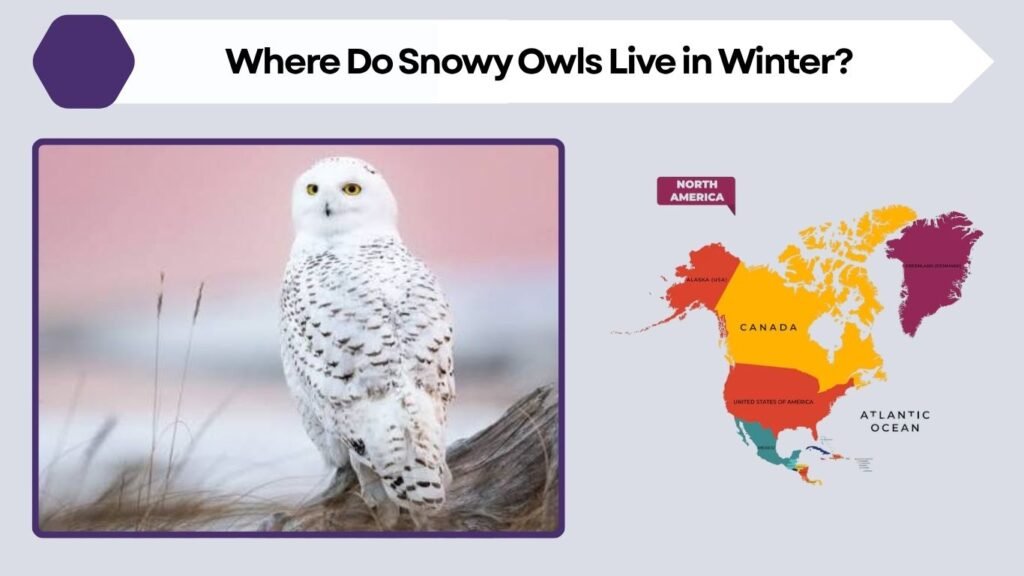
Snowy owls have several possible winter strategies. Some remain in the High Arctic, while others migrate hundreds or thousands of miles south.
In North America, regular wintering areas include southern Canada, the Great Lakes region and New England. Snowy owls may also appear in the northern Great Plains and along the Atlantic coast.
During exceptional movements called irruptions, larger numbers travel much farther south. In extreme years, individual snowy owls have appeared in distant parts of the continental United States. These movements vary greatly and do not happen in the same way every winter.
Where Do Snowy Owls Live in December?
By December, many migrating snowy owls have reached their winter territories. They may be seen around frozen shorelines, coastal dunes, farmland, open marshes and large airport properties.
Other individuals remain much farther north. Therefore, there is no single location where all snowy owls live in December. Their distribution depends on age, prey availability, weather and regional conditions.
Do Snowy Owls Live in the United States?
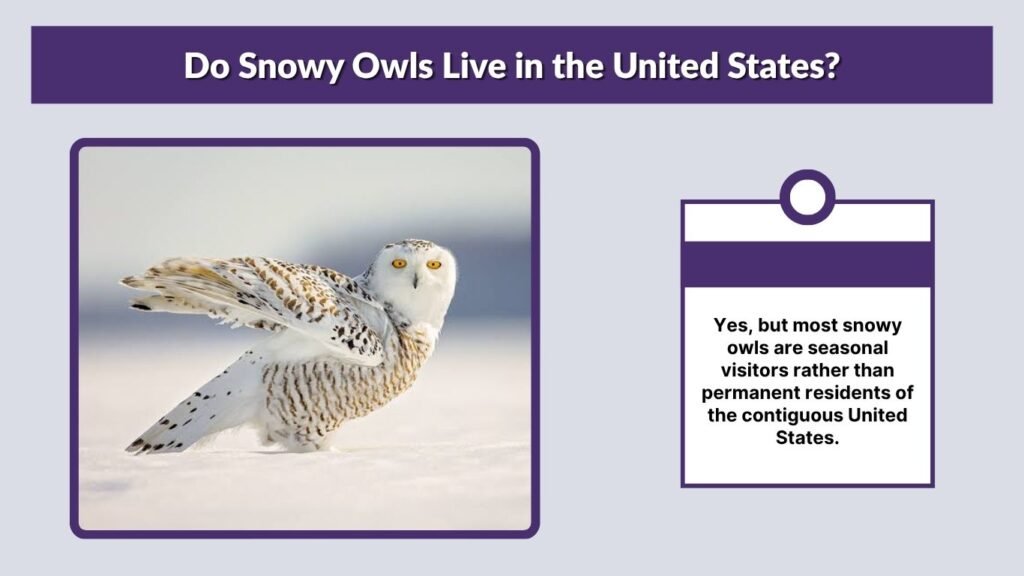
Yes, but most snowy owls are seasonal visitors rather than permanent residents of the contiguous United States.
They breed regularly in northern Alaska. During winter, they can move into states around the Great Lakes, northern Great Plains and New England. Coastal areas are also important because beaches, dunes and marshes provide the open visibility these owls prefer.
Sightings farther south are uncommon and are usually connected with an irruption. Even in northern states, the number of snowy owls can differ dramatically from one winter to another.
Do Snowy Owls Live in the UK?
Snowy owls are not common resident birds in the United Kingdom. They are rare visitors, most often associated with Scotland and northern islands.
A small breeding population once occurred on Fetlar in the Shetland Islands, but snowy owls do not currently maintain a regular UK breeding population. Occasional birds may arrive from Arctic regions during winter or remain temporarily in remote upland and coastal habitats.
Why Do Snowy Owls Prefer Open Land?
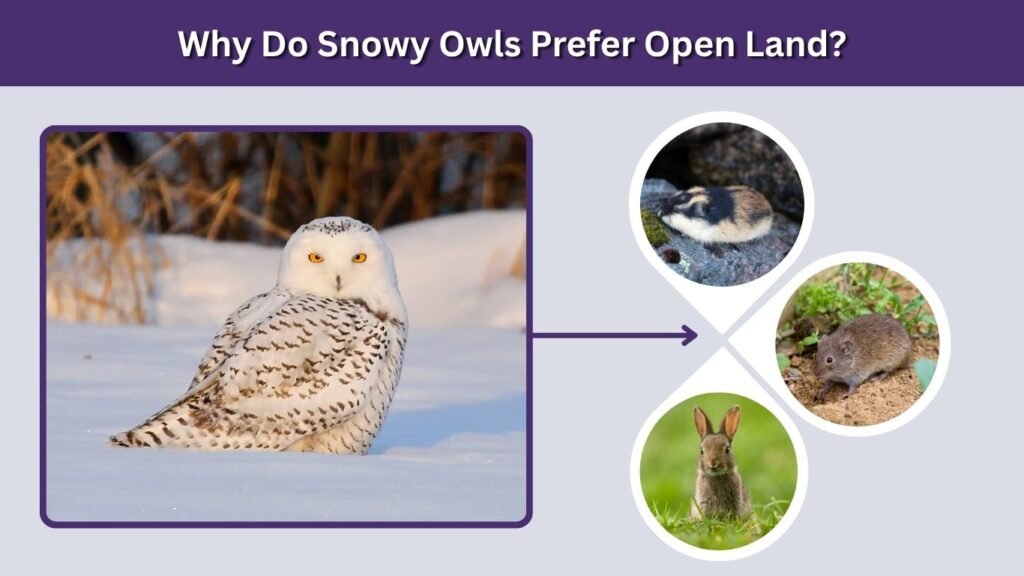
Snowy owls rely heavily on sight when hunting. A broad, unobstructed landscape makes it easier for them to detect lemmings, voles, rabbits and birds moving across the ground.
Their pale feathers also provide camouflage against snow, pale grasses and open shorelines. Unlike woodland owls, they rarely need trees for nesting or hunting. They can rest directly on the ground and use small hills, rocks or human-made structures as lookout points.
This preference explains why snowy owls sometimes settle around airports. Large grassy airfields resemble tundra, although aircraft and human activity make these locations dangerous for both owls and people.
FAQs
Do snowy owls always live in snowy places?
No. Although snowy owls breed in the Arctic, they can spend winter in places with little or no snow. Open terrain is usually more important than snow cover. Farmland, beaches, marshes and airports can all provide suitable hunting habitat.
Where do most snowy owls live?
Most snowy owls are associated with the circumpolar Arctic. Their main breeding grounds extend across northern Canada, Alaska, Greenland, Scandinavia and Russia. Their exact concentration changes as they search for areas with enough prey to support nesting and chick development.
Do snowy owls live in trees?
Snowy owls may occasionally perch in a tree, but they are not woodland birds. They normally live in treeless habitats and nest on the ground. In winter, they often use poles, buildings, hay bales and fence posts as hunting lookouts.
How far south do snowy owls migrate?
Many winter in southern Canada and the northern United States. During major irruptions, individual birds may travel considerably farther south. The southern limit changes each year, so sightings outside the regular winter range are possible but unpredictable.
Do snowy owls return to the same place every year?
Not necessarily. Snowy owls are nomadic and follow changing food supplies across enormous areas. A location containing several owls during one breeding or winter season may have few or none the next year, particularly when local rodent numbers decline.
