
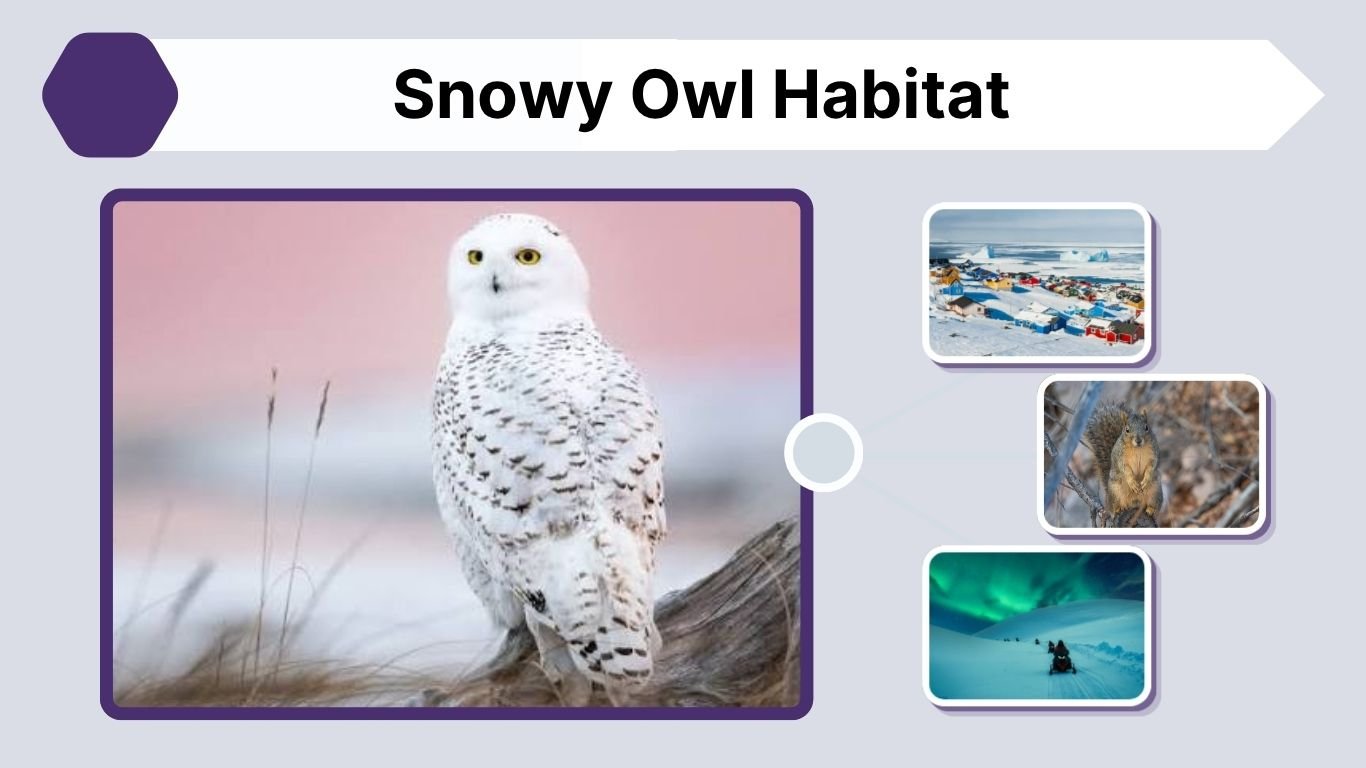
The natural habitat of a snowy owl consists mainly of wide, treeless landscapes across the Arctic. During the breeding season, snowy owls live on open tundra in northern Canada, Alaska, Greenland, Scandinavia and Russia. In winter, many move into grasslands, farmland, marshes, beaches and frozen coastal areas farther south. Although these habitats may look different, they all provide open views, suitable hunting ground and access to rodents or birds.
What Is a Snowy Owl’s Habitat?
A snowy owl’s primary habitat is the Arctic tundra, a cold biome found around the northernmost parts of the world. It has few or no trees because low temperatures, short growing seasons and frozen ground prevent forests from developing.
The landscape may contain:
- Low grasses and sedges
- Mosses and lichens
- Small shrubs
- Rocky ridges
- Wet depressions
- Snow-covered plains
- Low hills and raised mounds
Snowy owls prefer open ground because it allows them to watch for prey across a large area. They frequently sit directly on the ground or use a low mound as a lookout. Cornell Lab notes that the species favors treeless places with rolling terrain and elevated points that provide a clear view.
Snowy Owl Habitat Range
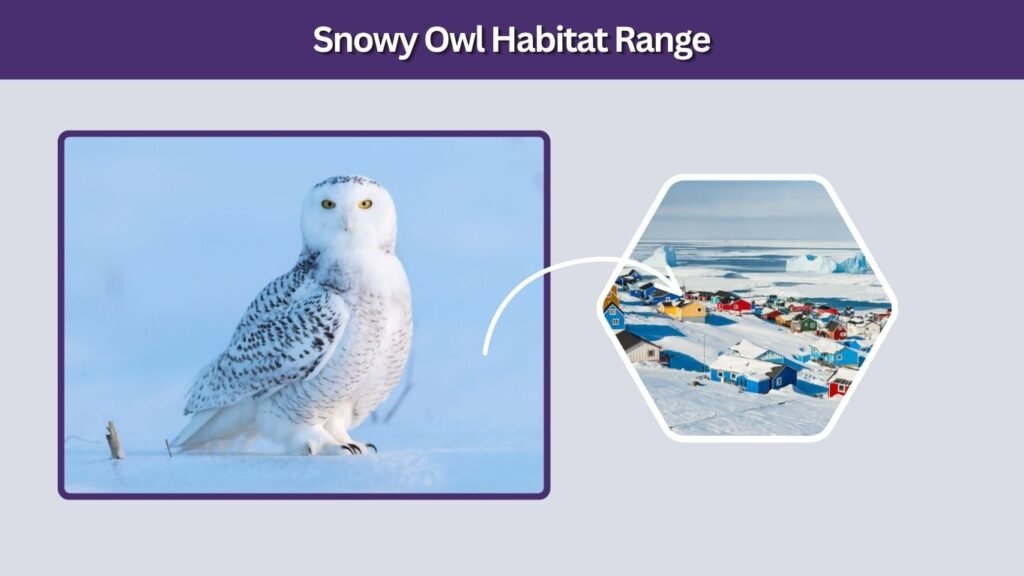
The snowy owl has a circumpolar distribution, meaning its range extends around the Arctic regions of the Northern Hemisphere. Its breeding range includes northern portions of North America, Europe and Asia.
Main Breeding Regions
Snowy owls breed in:
- Northern Canada and the Canadian Arctic islands
- Northern and western Alaska
- Greenland
- Northern Scandinavia
- Northern Russia and Siberia
Canada supports an especially important share of the North American breeding population. A 2026 Canadian government consultation document reports that an estimated 90–95% of North America’s snowy owls breed in Canada.
Habitat Map Explained
A snowy owl habitat map normally shows the Arctic as the main breeding zone. Winter distribution covers a much larger area extending into southern Canada, the northern United States and parts of northern Europe and Asia.
However, snowy owl movements are not identical each year. Their locations can change according to food supplies, weather conditions, age and breeding success.
| Season | Typical location | Main habitat |
| Spring | Arctic migration routes | Coastlines, tundra and open land |
| Summer | Circumpolar Arctic | Treeless tundra |
| Autumn | Arctic and areas farther south | Fields, shores and grasslands |
| Winter | Arctic to temperate regions | Farmland, prairies, marshes and beaches |
Snowy Owl Tundra Habitat
The tundra is the most important snowy owl habitat because it provides breeding ground, nesting sites and abundant seasonal prey.
Snowy owls usually select mesic-to-dry tundra rather than thick vegetation or forest. Their preferred breeding areas may include gentle hills, coastal tundra and low-lying ground containing raised hummocks.
The open landscape benefits snowy owls in several ways:
- Prey is easier to see and hear.
- Adults can detect approaching predators.
- Raised ground stays drier than surrounding wetlands.
- Strong winds may keep nesting areas partly free of snow.
- Treeless terrain provides clear flying and hunting space.
Audubon describes the breeding habitat as a very open tundra extending from north of the treeline to some of the northernmost available land.
Snowy Owl Nesting Habitat
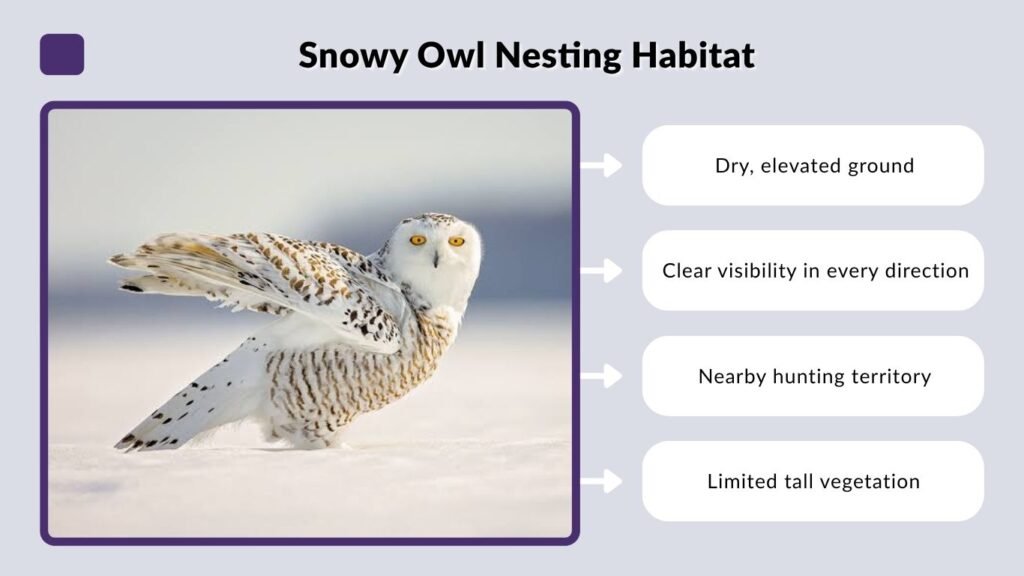
Snowy owls do not normally build nests in trees. Females create shallow scrapes directly on the ground, usually on a raised mound, ridge or windswept rise.
Choosing a Nest Site
A good nesting location offers:
- Dry, elevated ground
- Clear visibility in every direction
- Nearby hunting territory
- Limited tall vegetation
- Protection from standing water
- Early exposure as winter snow melts
The female shapes a shallow depression with her body. The nest may contain little material beyond a few feathers or pieces of vegetation. Cornell Lab reports that females prefer slight rises that are dry and blown free of snow.
The elevated position is especially useful during the Arctic summer. Low areas can become wet as snow and ice melt, while raised mounds provide better drainage and a wider view of potential danger.
Snowy Owl Winter Habitat
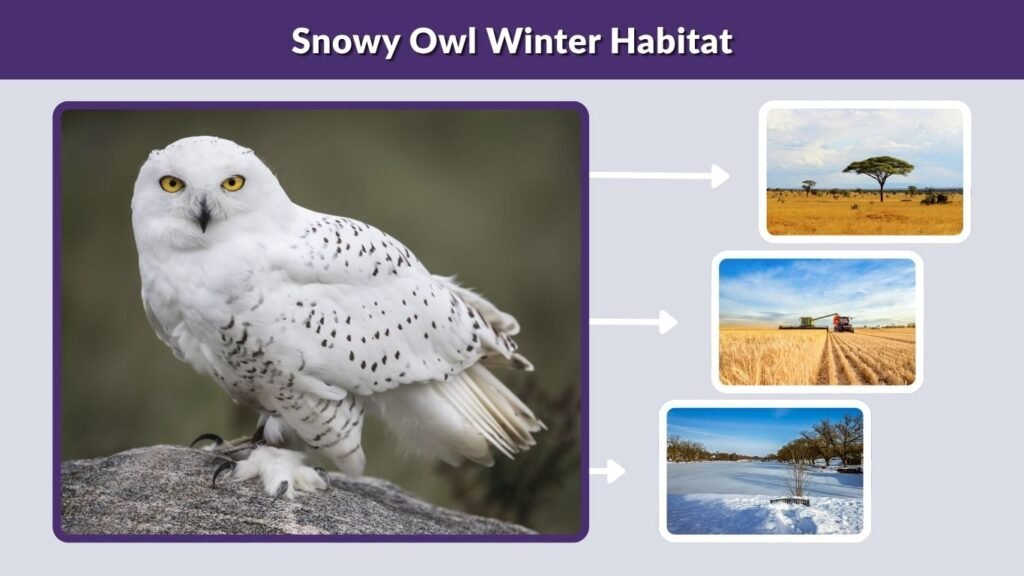
Not every snowy owl leaves the Arctic in winter. Some remain in northern regions, including areas around sea ice, while others travel hundreds or thousands of miles south.
Winter habitats commonly include:
- Prairies and grasslands
- Agricultural fields
- Coastal marshes
- Beaches and sand dunes
- Frozen lakeshores
- Harbors and coastal islands
- Large airport fields
These locations resemble tundra because they are broad, flat and relatively treeless. Airport grasslands can look particularly suitable, although aircraft collisions make them dangerous places for owls.
In Canada and the northern United States, snowy owls are frequently observed in open fields and along the shores of large lakes. They may perch on fence posts, hay bales, utility poles or buildings while surveying the ground.
Snowy Owl Habitat Climate and Temperature
The Arctic tundra has long, cold winters and short, cool summers. Snow, ice, strong winds and freezing temperatures shape most of the landscape.
During summer, the upper layer of soil thaws enough for grasses, mosses and small plants to grow. The deeper ground often remains permanently frozen. This frozen layer is known as permafrost.
Snowy owls can tolerate extremely cold conditions because they have:
- Thick body feathers
- Dense feathering on their legs and feet
- A compact, rounded body
- A layer of insulating down
- Small, partly hidden ears
- Plumage that reduces heat loss
Their feathers also cover much of the bill and toes, helping protect exposed body parts from cold wind.
How Does Habitat Provide Food?
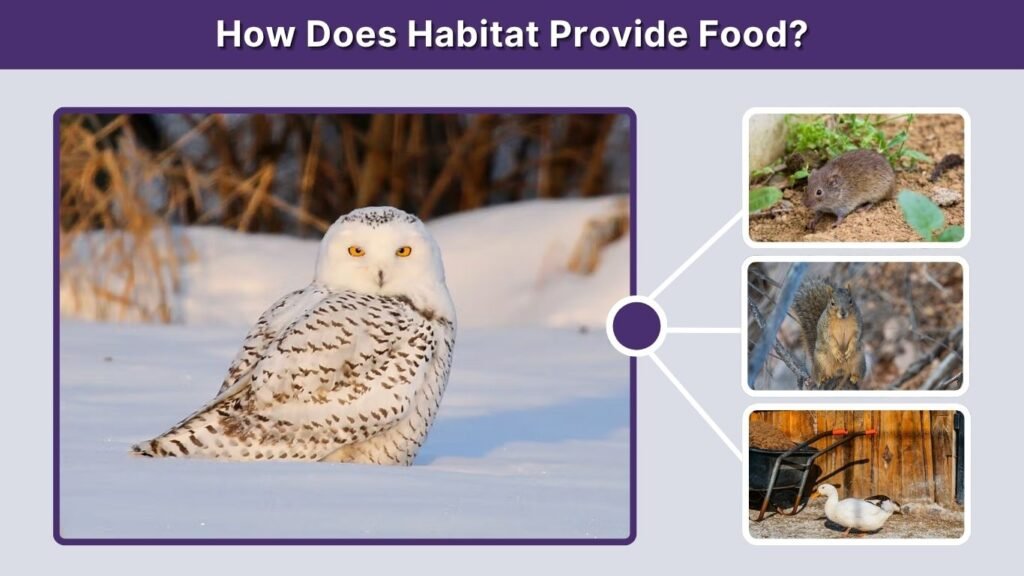
Snowy owl habitat provides both open hunting space and populations of small animals. Lemmings are especially important during the breeding season and may form most of the owl’s summer diet.
Other prey includes:
- Voles and mice
- Ground squirrels
- Hares and rabbits
- Ptarmigan
- Ducks and geese
- Shorebirds
- Seabirds
- Fish and carrion occasionally
Snowy owls often breed where lemmings are unusually abundant. When lemming numbers are low, the owls may move to another region or avoid nesting that year.
Because the tundra has little tall vegetation, an owl can detect movement from a considerable distance. Its excellent hearing also helps it locate rodents moving beneath grass or snow. Cornell Lab reports that snowy owls hunt a wide range of mammals and birds when lemmings are unavailable.
Snowy Owl Habitat Adaptations
Snowy owls possess several adaptations that allow them to survive in open Arctic environments.
White and Barred Plumage
White feathers help adult owls blend into snowy landscapes. Females and young birds generally have more dark markings, which may provide camouflage against rocks, plants and partly snow-covered tundra.
Powerful Vision and Hearing
Their large yellow eyes detect prey across open ground. Sensitive hearing helps them find small mammals, even when those animals are partly hidden.
Daytime Hunting
Unlike many woodland owls, snowy owls regularly hunt during daylight. This is essential in the Arctic summer, when the sun may remain above the horizon for most or all of the day.
Nomadic Movement
Snowy owls do not always return to one fixed breeding location. They can travel great distances to find regions with plentiful prey, making them well adapted to unpredictable Arctic food cycles.
Snowy Owl Habitat Loss and Threats
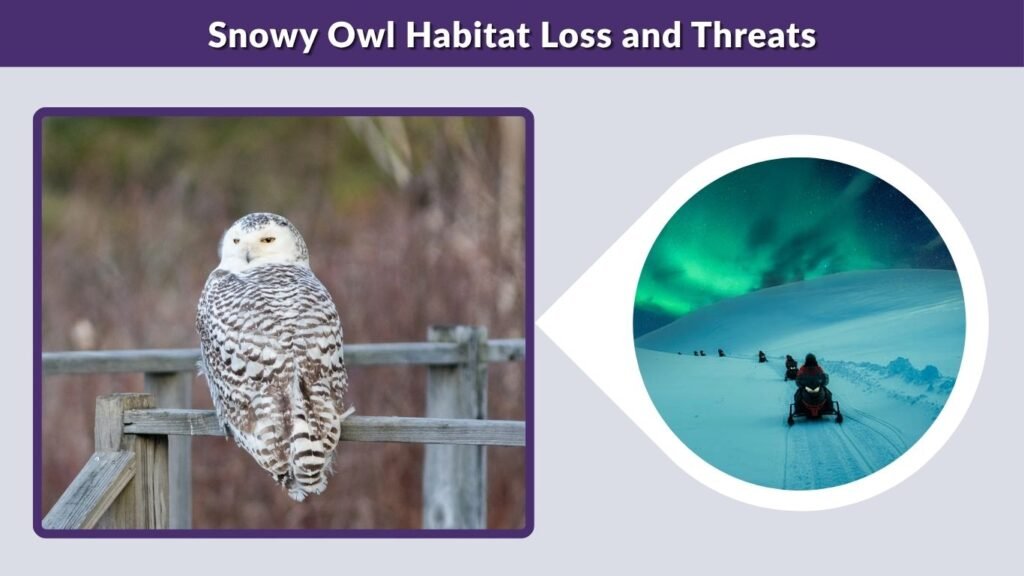
Much of the breeding range is remote, but the snowy owl’s habitat is changing. Rising Arctic temperatures can affect tundra vegetation, snow conditions, sea ice and lemming populations.
Shrubs may expand into formerly open tundra as the climate warms. Ice crusts caused by rain and refreezing can also make it harder for lemmings to survive beneath the snow. These changes may reduce suitable hunting and breeding conditions.
On wintering grounds, snowy owls face additional dangers from:
- Vehicle and aircraft collisions
- Electrocution
- Rodent poison
- Human disturbance
- Development of open land
- Disease and severe weather
Canada’s 2025 assessment identified climate-driven changes to breeding and wintering habitats as a serious plausible threat, while also highlighting collisions, poisoning and disease.
Snowy Owl Habitat Facts for Kids
- Snowy owls usually nest on the ground, not in trees.
- Their main home is the cold Arctic tundra.
- They like flat, open places where prey is easy to see.
- Some snowy owls travel south during winter.
- Thick feathers cover their bodies, legs and feet.
- Lemmings are one of their most important foods.
- Snowy owls can hunt during both daylight and darkness.
- Their white feathers provide camouflage in snowy surroundings.
FAQs
What habitat do snowy owls live in?
Snowy owls mainly live in open Arctic tundra. During winter, some move south and use farmland, grasslands, beaches, marshes, frozen lakeshores and airports. They avoid dense forests because open terrain provides better visibility for hunting.
What does a snowy owl habitat look like?
A snowy owl habitat usually looks broad, flat and treeless. Arctic breeding areas contain grasses, mosses, lichens, rocks, shallow wetlands and low hills. Winter habitats may include pale farm fields, coastal dunes or snow-covered grasslands.
Do snowy owls live only in snow?
No. Snowy owls can live in areas without permanent snow. Habitat structure is more important than snow cover. They need wide-open land with low vegetation, suitable perches and enough rodents or birds to hunt.
What temperature do snowy owls live in?
Snowy owls tolerate freezing Arctic winters but also experience cool tundra summers and milder winter conditions farther south. Their dense feathers and compact bodies help them conserve heat across a wide range of temperatures.
How do snowy owls survive in their habitat?
They survive through thick insulating plumage, feathered feet, excellent eyesight, sensitive hearing and flexible hunting behavior. They can also travel long distances when prey becomes scarce, allowing them to find more productive habitats.
