
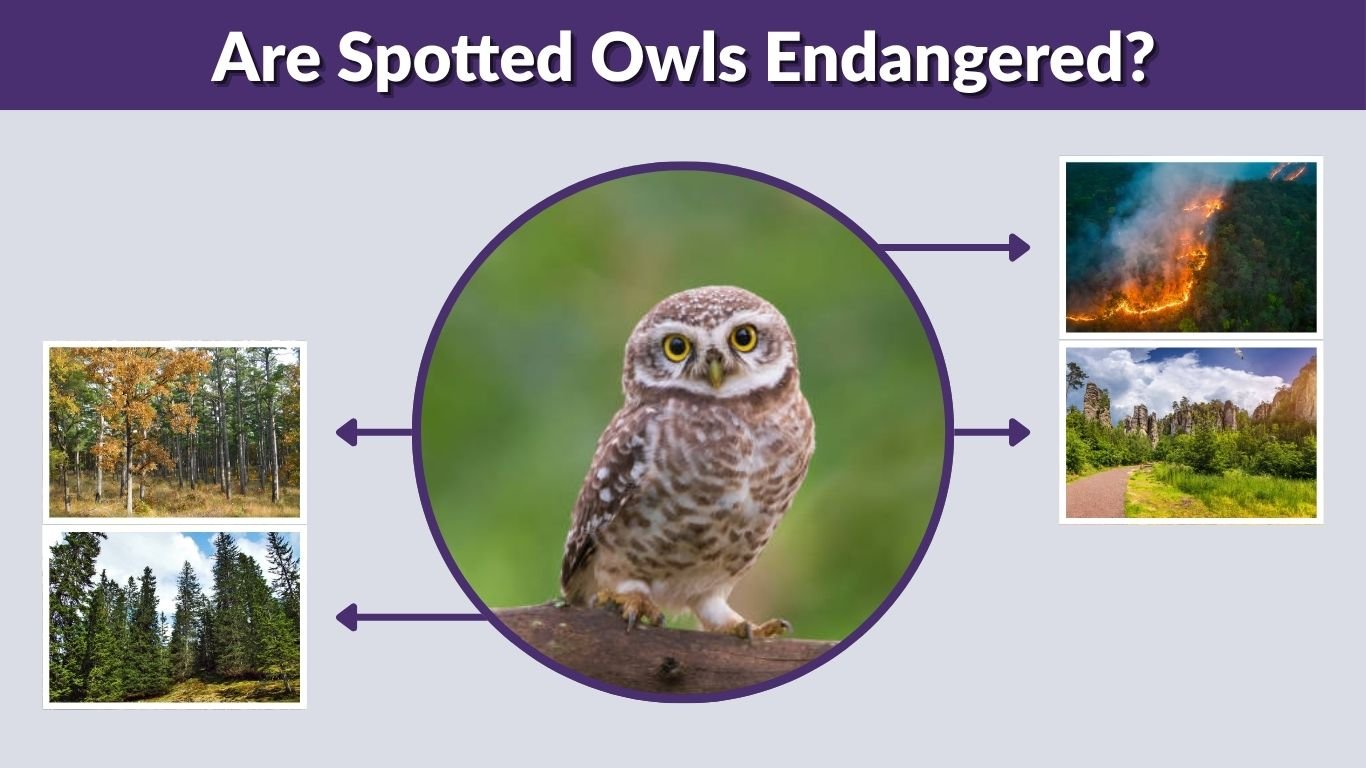
Spotted owls are seriously at risk, but not every population is legally classified as endangered. Under the U.S. Endangered Species Act, the northern and Mexican spotted owls are currently listed as threatened. The California spotted owl has been proposed for federal protection, with endangered status proposed for its Coastal–Southern California population and threatened status proposed for its Sierra Nevada population. Their decline is primarily connected to habitat loss, severe wildfire and competition from barred owls.
Spotted Owl Conservation Status at a Glance
The spotted owl, Strix occidentalis, is divided into three recognized subspecies. Each occupies a different part of western North America and faces a somewhat different combination of threats.
| Spotted owl subspecies | U.S. federal status | Main distribution |
| Northern spotted owl | Threatened | Pacific Northwest and northern California |
| Mexican spotted owl | Threatened | Southwestern United States and Mexico |
| California spotted owl | Proposed endangered and proposed threatened | Sierra Nevada and Southern California |
The word endangered is often used generally to describe an animal facing extinction. Legally, however, “endangered” and “threatened” are different classifications. A threatened species is considered likely to become endangered in the foreseeable future.
Is the Northern Spotted Owl Endangered?
The northern spotted owl is still officially listed as threatened under the U.S. Endangered Species Act. It received this protection in June 1990 because widespread habitat loss had caused serious population declines across Washington, Oregon and northern California.
However, its situation is increasingly severe. In 2020, the U.S. Fish and Wildlife Service determined that changing its classification from threatened to endangered was scientifically warranted. The reclassification was not completed at that time because other listing actions had higher priority. Its current federal profile continues to show it as threatened.
Why Is the Northern Spotted Owl Declining?
The northern spotted owl depends heavily on structurally complex forests containing large trees, cavities, broken branches, multiple canopy layers and fallen wood. Historical timber harvesting removed substantial areas of this habitat.
Today, the invasive barred owl is one of its most serious threats. Barred owls are larger, more aggressive and able to live in a wider variety of habitats. They compete with spotted owls for food, nesting areas and territories. Northern spotted owl populations are declining rapidly because of this competition combined with continuing habitat loss.
Is the Mexican Spotted Owl Endangered?
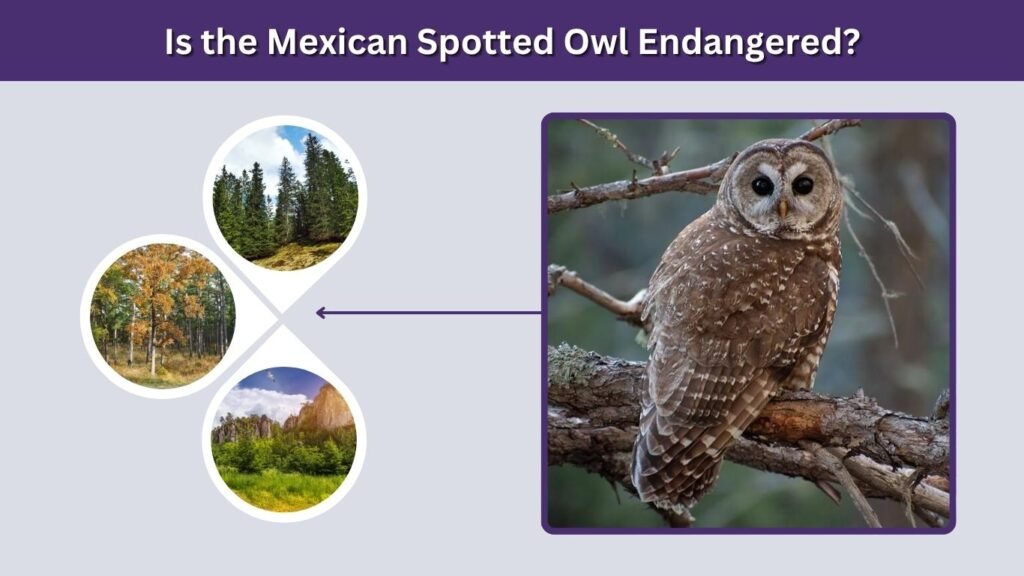
The Mexican spotted owl is federally classified as threatened, not endangered. It was listed under the Endangered Species Act in 1993 because of habitat changes caused partly by historical timber-management practices.
This subspecies lives in mountain forests and rocky canyon systems across Arizona, New Mexico, Utah, Colorado, western Texas and parts of Mexico. It commonly uses mature mixed-conifer forests, pine-oak woodlands and sheltered canyon ledges.
Why Is the Mexican Spotted Owl Threatened?
The U.S. Fish and Wildlife Service identifies large, stand-replacing wildfires as the primary current threat to the Mexican spotted owl in the United States. These intense fires can eliminate nesting trees, roosting cover and prey habitat over extensive areas.
Other pressures include:
- Drought and rising temperatures
- Loss or alteration of mature forest
- Fragmentation between owl territories
- Human disturbance near nesting areas
- Reduced availability of suitable prey
Climate-related drying can increase tree mortality and contribute to larger, more destructive wildfires, making suitable habitat harder to maintain.
Is the California Spotted Owl Endangered?
The California spotted owl’s federal status is more complicated. The U.S. Fish and Wildlife Service proposed dividing it into two distinct population segments:
- Coastal–Southern California population: proposed as endangered
- Sierra Nevada population: proposed as threatened
As of July 2026, the federal species profile still identifies these classifications as proposed, meaning the listing process has not yet produced a final federal designation.
Why Are Southern California Owls at Greater Risk?
California spotted owls in Southern California live in isolated mountain forests surrounded by cities, deserts and other unsuitable landscapes. This isolation makes it difficult for young owls to move between populations, locate mates and establish new territories.
Severe wildfires can also affect an entire isolated mountain population. The Sierra Nevada contains a larger and more continuous distribution, although its owls still face habitat change, drought, wildfire and the southward expansion of barred owls.
Why Are Spotted Owls Endangered or Threatened?
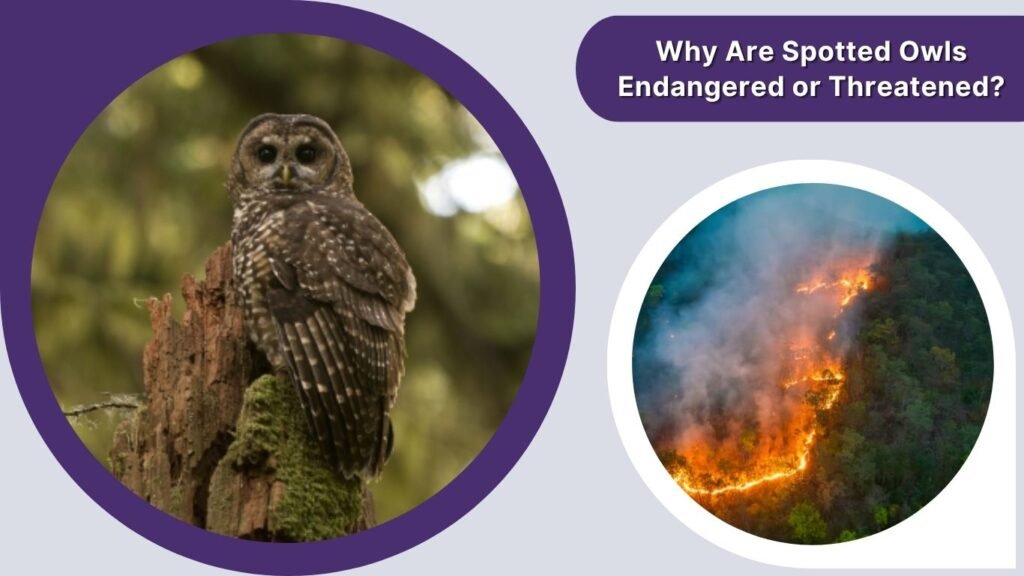
Although the severity varies among the three subspecies, several major pressures affect spotted owls throughout their range.
Loss of Mature Forest Habitat
Spotted owls need more than individual trees. They rely on complex forest ecosystems containing large trees, shaded roosts, nesting cavities and healthy populations of small mammals.
Logging, development and poorly planned forest treatments can simplify these habitats. Even when trees remain, the forest may no longer provide adequate nesting or daytime shelter.
Competition From Barred Owls
Barred owls expanded westward from their historical range and now occupy much of the northern spotted owl’s territory. They consume a wider variety of prey and can live in younger, more fragmented forests.
The U.S. Fish and Wildlife Service adopted a barred owl management strategy in 2024 to protect northern spotted owls and help prevent barred owls from becoming established throughout the California spotted owl’s range.
Severe Wildfires
Not every wildfire is harmful to spotted owls. Low- and moderate-severity fires can create varied forest conditions while leaving many large trees standing.
Large, high-severity fires are more dangerous because they can remove entire nesting and roosting areas. Repeated drought, accumulated vegetation and warmer conditions can increase the possibility of extensive forest loss.
Low Reproductive Rate
Spotted owls reproduce relatively slowly. Pairs may not nest every year, and they generally raise only a small number of young.
This makes recovery difficult because adult deaths or repeated nesting failures cannot quickly be replaced by new birds.
How Are Spotted Owls Protected?
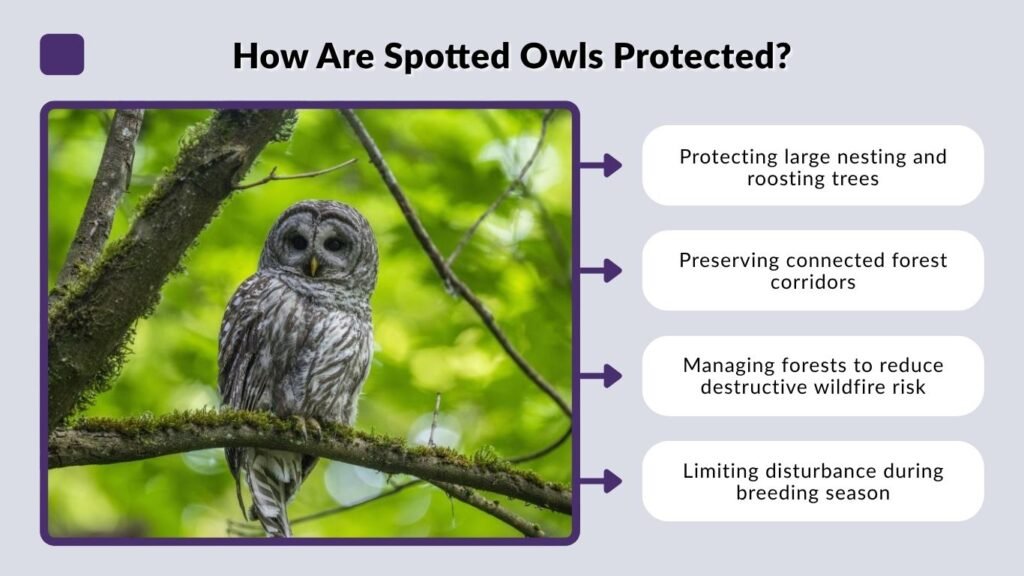
Spotted owl conservation involves protecting nesting territories, maintaining mature forest structure and reducing the threats that prevent populations from recovering.
Important conservation measures include:
- Protecting large nesting and roosting trees
- Preserving connected forest corridors
- Managing forests to reduce destructive wildfire risk
- Limiting disturbance during breeding season
- Monitoring owl territories and reproductive success
- Controlling invasive barred owls in selected areas
- Restoring damaged forest habitat
The northern spotted owl also has federally designated critical habitat across parts of Washington, Oregon and California. This designation identifies areas containing features considered important for its conservation and recovery.
Are Spotted Owls Still Endangered?
Spotted owls remain imperiled even when their official classification uses the word threatened rather than endangered. Legal status does not mean their populations are stable or safe.
The northern spotted owl remains threatened federally despite a scientific finding that endangered status is warranted. The Mexican spotted owl remains threatened, while federal decisions for the two proposed California spotted owl populations are still pending.
FAQs
Why is the northern spotted owl endangered?
The northern spotted owl is declining because of mature forest loss and competition from invasive barred owls. It remains federally classified as threatened, although the U.S. Fish and Wildlife Service previously determined that reclassification as endangered was warranted.
When was the northern spotted owl listed?
The northern spotted owl was listed as threatened under the U.S. Endangered Species Act on June 26, 1990. The listing followed extensive loss and fragmentation of its mature forest habitat across the Pacific Northwest.
Is the Mexican spotted owl endangered?
The Mexican spotted owl is legally classified as threatened in the United States. Severe, landscape-scale wildfire is currently considered its primary U.S. threat, along with drought, habitat alteration and isolation between suitable forest and canyon habitats.
Is the California spotted owl endangered?
Federal endangered status has been proposed for the Coastal–Southern California population. Threatened status has been proposed for the Sierra Nevada population. As of July 2026, both classifications remain proposals rather than finalized federal listings.
How can people help spotted owls?
People can support responsible forest conservation, avoid disturbing known nesting areas, follow seasonal trail closures and report injured owls to qualified wildlife authorities. Reducing unnecessary habitat clearing and supporting research and monitoring programs can also assist long-term recovery.