
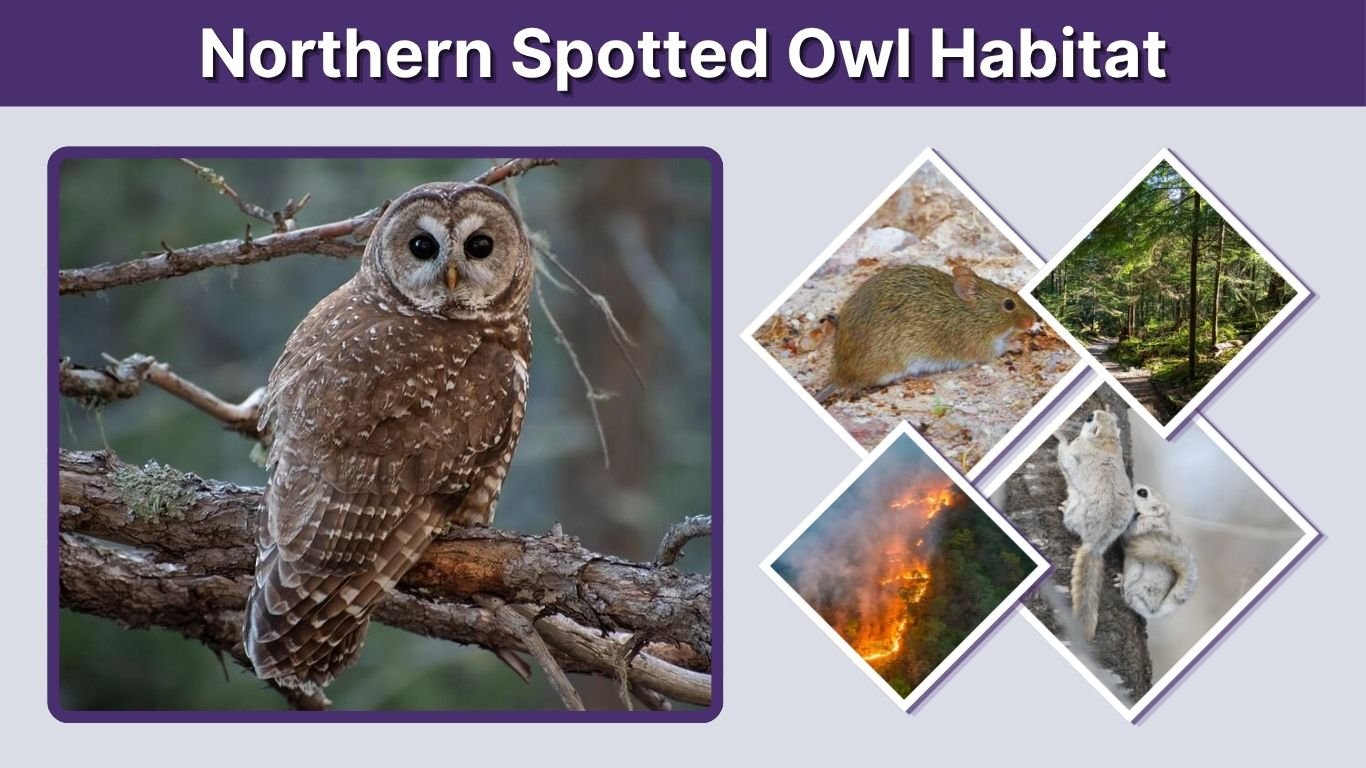
The northern spotted owl lives in the cool, structurally complex forests of the Pacific Northwest. It depends on large trees, connected canopies, standing dead trees, fallen logs and shaded nesting locations. Its range extends from southwestern British Columbia through Washington and Oregon into northern California. Although commonly associated with old-growth forests, the owl can also use mature and younger forests when they provide suitable nesting, roosting and hunting conditions.
Northern Spotted Owl Habitat at a Glance
Northern spotted owls use different parts of the forest for nesting, resting, hunting and moving between territories. A single forest stand may not provide everything they need, so connected landscapes containing several forest types are important.
| Habitat feature | Importance to the owl |
| Large, mature trees | Provide cavities, broken tops and nesting platforms |
| Multiple canopy layers | Create shade, shelter and hunting cover |
| Standing dead trees | Offer nesting sites and support prey |
| Fallen logs | Provide habitat for small mammals |
| Dense foliage | Protects daytime roosts |
| Forest openings | May provide access to hunting areas |
| Connected tree cover | Helps young owls disperse safely |
These characteristics are commonly found in mature and old forests that have developed complex structures over many decades or centuries.
Where Do Northern Spotted Owls Live?
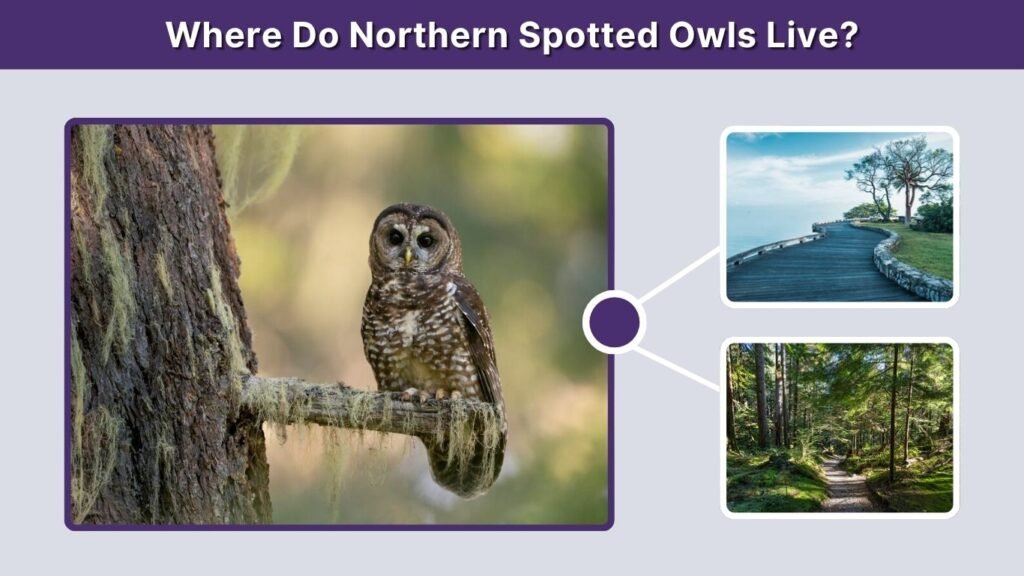
The northern spotted owl inhabits forests along the Pacific Coast of North America. Its geographical range begins in southwestern British Columbia and continues south through western Washington and Oregon into northwestern and north-central California.
Habitat in Washington
In Washington, northern spotted owls occupy forests on the Olympic Peninsula, in the Cascade Range and in parts of southwestern Washington. Suitable areas include old Douglas-fir, western hemlock and western red cedar forests.
At Mount Rainier National Park, the owls are associated with old-growth forests containing trees that may be more than 200 years old. These forests provide several layers of tree and shrub cover that the owls can use for nesting and hunting.
Habitat in Oregon
Oregon contains an extensive portion of the owl’s historical range. Northern spotted owls occur in the Coast Range, western Cascade forests and the Klamath region of southwestern Oregon.
Forests used by the owls vary across the state. Moist northern forests may contain Douglas-fir, western hemlock and western red cedar, while southern Oregon habitat may include Douglas-fir, tanoak, madrone and other mixed-evergreen species.
Habitat in California
In California, the northern spotted owl is primarily found in the northwestern part of the state. Its distribution includes coastal redwood forests, Douglas-fir forests and the Klamath mountain region.
Its range reaches south toward Marin County and approaches the northern edge of the California spotted owl’s range. National park lands within its broader distribution include Redwood National and State Parks and Whiskeytown National Recreation Area.
What Type of Forest Does a Spotted Owl Need?
Northern spotted owls are strongly associated with mature and old forests, but tree age alone does not determine habitat quality. The arrangement and variety of forest features are equally important.
Large Trees and Nesting Structures
Northern spotted owls do not build traditional nests from sticks. They usually use existing structures, including:
- Natural tree cavities
- Broken tree tops
- Large platforms formed by branches
- Abandoned nests built by other birds
- Cavities in standing dead trees
Large trees are more likely than small trees to contain cavities, broken tops and broad limbs capable of supporting an owl and its young.
A Complex Forest Canopy
Suitable habitat usually contains several layers of vegetation. Tall overstory trees form the upper canopy, while smaller trees and shrubs create lower layers.
This complex arrangement provides shaded roosting locations, protection from weather and cover from predators. It can also support a greater variety of prey than a forest containing trees of one size and age.
Snags and Fallen Wood
A snag is a standing dead or dying tree. Snags can provide owl nesting cavities and habitat for woodpeckers, squirrels and other forest animals.
Fallen trees and decaying logs are also important. They create shelter and feeding areas for mice, voles and other small mammals hunted by northern spotted owls. Removing too much dead wood may reduce the forest’s value even when living trees remain.
Nesting and Roosting Habitat
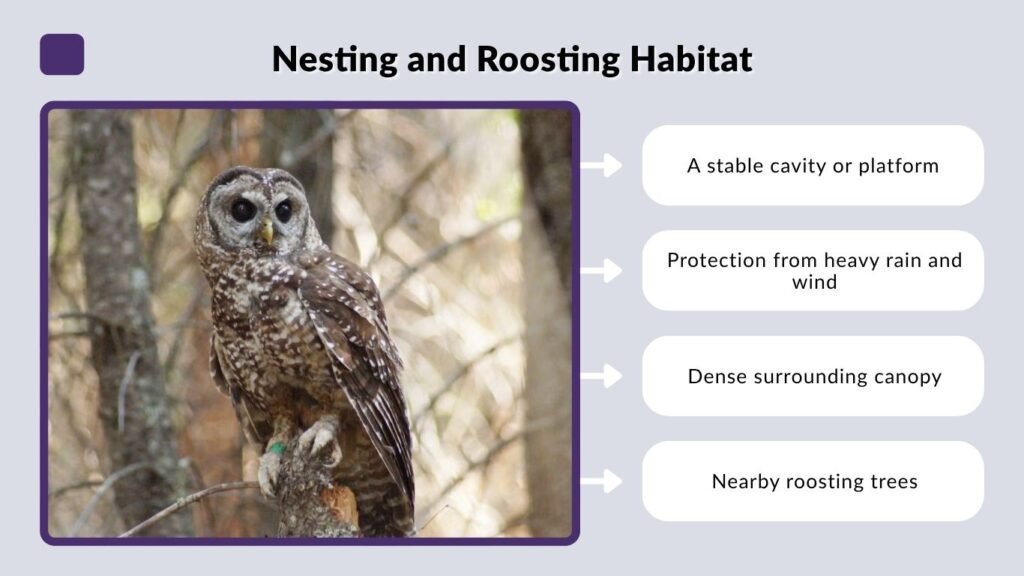
Nesting habitat generally contains some of the oldest and most structurally complex trees within an owl’s territory. A breeding pair may return to the same nesting area for several years when the location remains secure.
Nesting Requirements
A successful nesting location generally needs:
- A stable cavity or platform
- Protection from heavy rain and wind
- Dense surrounding canopy
- Nearby roosting trees
- Adequate prey within hunting distance
- Limited disturbance during breeding
Northern spotted owls have a low reproductive rate and do not necessarily produce young every year. Protecting established nesting territories is therefore particularly important.
Daytime Roosts
These owls are primarily nocturnal and spend much of the day resting. They often select shaded branches beneath a dense canopy.
Cool roosting conditions may help the birds avoid excessive heat. A roost must also allow the owl to remain concealed while maintaining space to leave quickly when darkness approaches.
Foraging Habitat and Diet
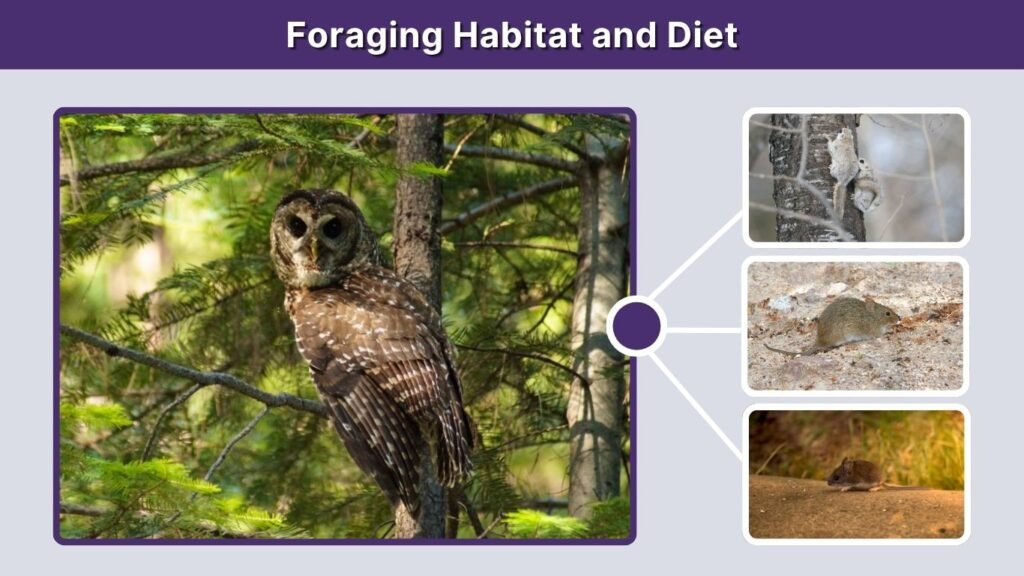
Northern spotted owls hunt in mature forests, younger stands and along edges where prey is available. They are perch-and-pounce predators: an owl waits on a branch, locates an animal by sight or sound and then drops or glides toward it.
Their major prey includes:
- Northern flying squirrels
- Woodrats
- Red tree voles
- Deer mice
- Pocket gophers
- Small birds
- Large insects
Flying squirrels are particularly important in many northern forests, while woodrats become more important in parts of southern Oregon and northern California.
A productive hunting landscape may contain a mixture of dense cover and small openings. However, heavily cleared areas with little tree cover generally provide poor conditions for nesting, roosting and secure movement.
Northern Spotted Owl Dispersal Habitat
Juvenile owls eventually leave their parents’ territories and search for places of their own. This movement is known as dispersal.
Dispersal habitat may not have all the qualities required for breeding, but it must provide enough trees, prey and shelter for young birds to travel and survive. Continuous forest corridors help connect isolated populations.
Large gaps caused by development, extensive clear-cutting or severe fire can make dispersal more dangerous. Young owls moving through fragmented landscapes may have difficulty finding food, avoiding predators or reaching another suitable forest.
Northern Spotted Owl Critical Habitat
Critical habitat is a legal designation under the U.S. Endangered Species Act. It identifies areas containing physical or biological features considered essential to the conservation of a listed species.
Northern spotted owl critical habitat includes areas in Washington, Oregon and California that support, or can be restored to support, nesting, roosting, foraging and dispersal. The designation focuses heavily on public lands and the connected forest network needed for long-term recovery.
Critical habitat does not automatically make land a wildlife refuge or prohibit every activity. Instead, federal agencies must consider whether activities they authorize, fund or carry out could destroy or adversely modify designated habitat.
Northern Spotted Owl Habitat Loss
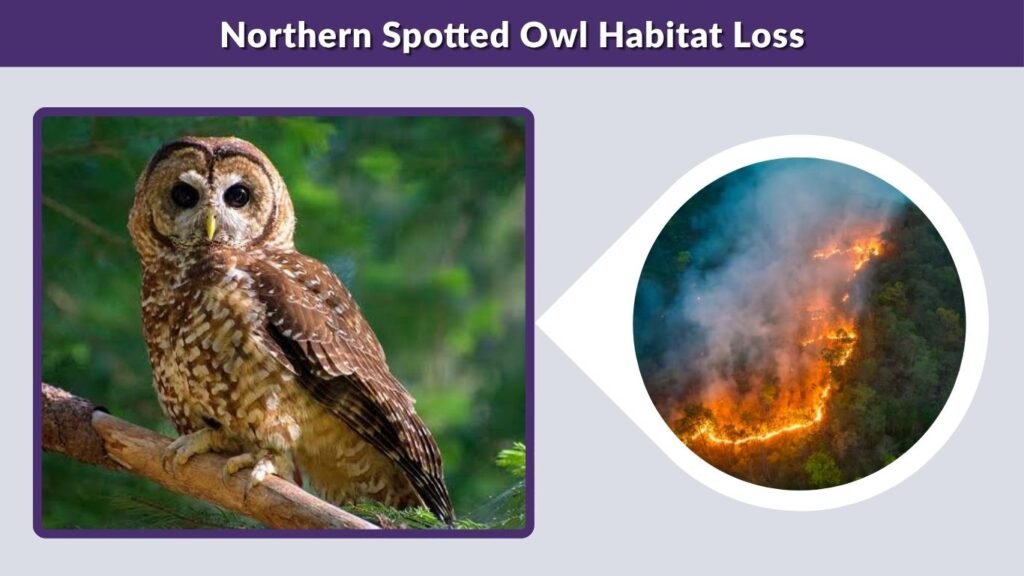
Historical logging removed or fragmented large areas of mature forest across the Pacific Northwest. The owl was federally listed as threatened in 1990 partly because of widespread habitat loss and inadequate protections at that time.
Major Habitat Threats
Northern spotted owl habitat continues to be affected by:
- Logging and forest conversion: Removal of large trees can eliminate nesting and roosting structures.
- Severe wildfire: High-severity fire can destroy extensive areas of canopy and nesting habitat.
- Development: Roads and construction can divide connected forest landscapes.
- Drought and climate change: Drier conditions may increase tree mortality and the risk of severe fires.
- Barred owl competition: Barred owls use similar forests and compete with northern spotted owls for space and prey.
Habitat conservation has helped retain important forests on federal lands, but barred owl competition and continuing habitat changes have contributed to serious population declines.
Habitat Protection and Restoration
Protecting the northern spotted owl requires both preserving existing high-quality forest and restoring younger or damaged areas.
Important management actions include retaining large trees, protecting occupied nesting areas, maintaining forest corridors and allowing younger stands to develop complex structures. Carefully planned thinning and prescribed fire may reduce the risk of destructive wildfire in some landscapes, but treatments must protect the features owls currently use.
The federal recovery plan identifies three central priorities: conserving high-quality habitat, improving forest health and reducing competition from invasive barred owls.
FAQs
What is the northern spotted owl’s main habitat?
The northern spotted owl mainly occupies structurally complex mature and old forests in the Pacific Northwest. Its habitat usually contains large trees, several canopy layers, cavities, standing dead trees and fallen logs that support nesting, roosting and prey.
Do northern spotted owls live only in old-growth forests?
No. They can hunt, travel or occasionally live in younger forests that contain suitable structural features. However, mature and old forests are particularly important because they are more likely to provide secure nest sites, shaded roosts and stable prey populations.
Where is northern spotted owl critical habitat located?
Federally designated critical habitat occurs within the owl’s U.S. range in Washington, Oregon and California. It includes forest areas important for nesting, roosting, foraging, dispersal and maintaining connections between owl populations.
How does logging affect spotted owl habitat?
Logging can remove large nesting trees, open the protective canopy and reduce snags or fallen wood. The severity of the effect depends on how much forest is removed and whether important habitat structures and connections are maintained.
Why are forest corridors important to northern spotted owls?
Forest corridors allow juvenile owls to move between territories and help maintain connections among populations. Without connected cover, dispersing birds may struggle to find food, avoid predators and reach suitable breeding habitat.
