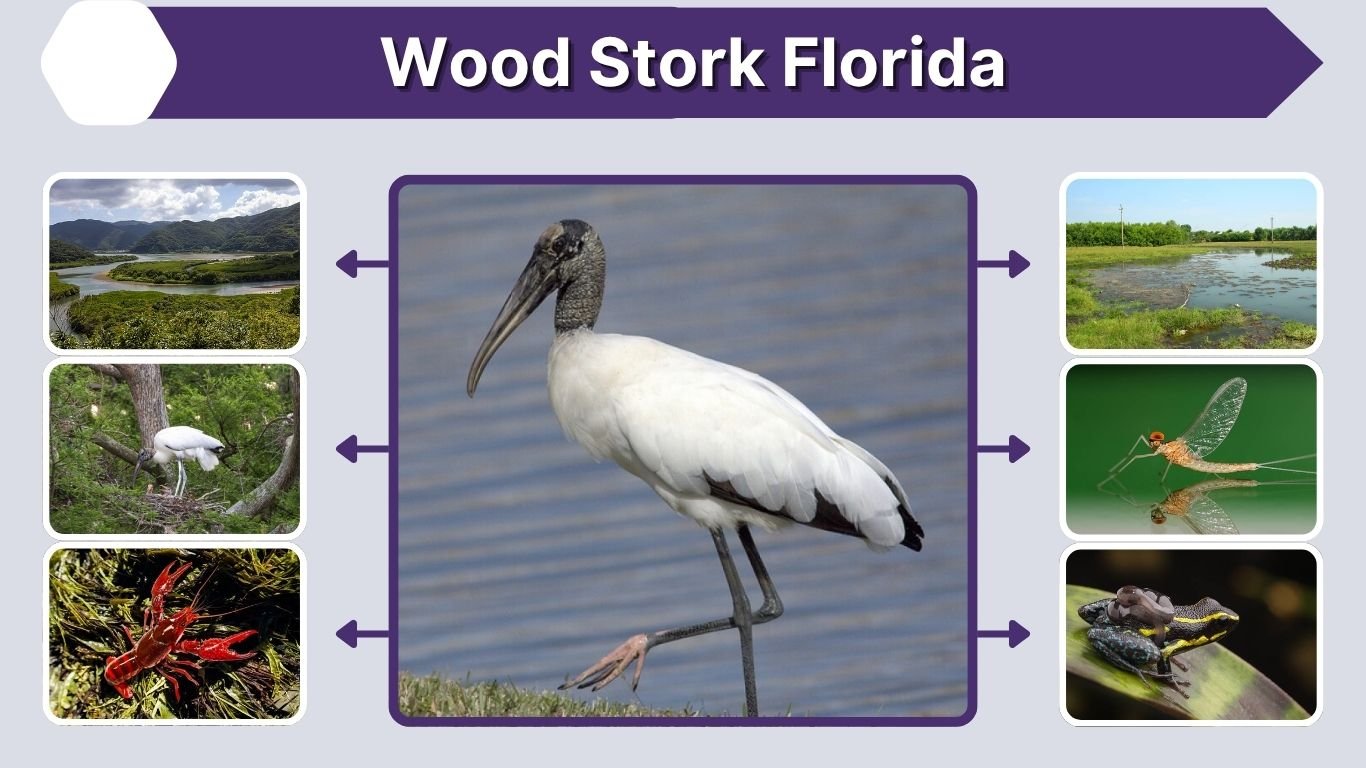
The wood stork is one of Florida’s largest and most distinctive wading birds. Its white body, black flight feathers, bald dark head and long curved bill create an almost prehistoric appearance. Wood storks live throughout Florida, using freshwater marshes, cypress swamps, mangrove wetlands and shallow roadside canals. Their survival and nesting success depend heavily on seasonal water levels that concentrate fish in shallow pools. Once federally endangered, the species has made a substantial recovery, although wetland protection remains essential.
Florida Wood Stork Quick Facts
The wood stork, Mycteria americana, is the only stork that regularly breeds in the United States. Florida remains an important part of its breeding and year-round range.
| Feature | Description |
| Scientific name | Mycteria americana |
| Height | Approximately 35–45 inches |
| Wingspan | Approximately 60–65 inches |
| Weight | Usually 5–7 pounds |
| Colour | White body with black flight feathers |
| Diet | Fish, crayfish, amphibians and aquatic animals |
| Habitat | Marshes, swamps, mangroves, ponds and shallow wetlands |
| Clutch size | Usually 2–5 eggs |
| Incubation | Approximately 30 days |
| Lifespan | Commonly estimated at 11–18 years in the wild |
Although wood storks appear heavy on land, they are excellent fliers. They ride rising columns of warm air called thermals and can travel considerable distances with very little wing flapping.
How to Identify a Wood Stork in Florida
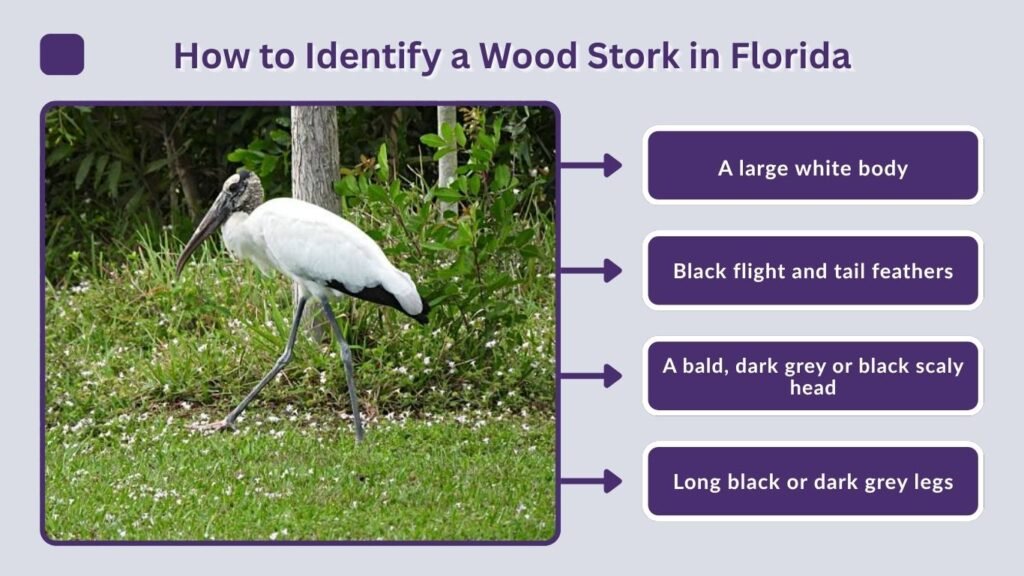
Adult wood storks are difficult to confuse with most other Florida birds once their bald head and heavy bill are visible.
Adult Identification
Important identification features include:
- A large white body
- Black flight and tail feathers
- A bald, dark grey or black scaly head
- A thick black bill that curves slightly downward
- Long black or dark grey legs
- Pinkish feet and toes
- A wingspan exceeding five feet
- A neck held fully extended during flight
The black wing feathers are particularly noticeable when the bird flies. At a distance, a group of soaring wood storks may resemble large black-and-white crosses circling high above the wetlands.
Immature Wood Stork
Immature wood storks have a softer and less rugged appearance. Their heads and necks may retain pale grey feathers, while their bills are yellowish or horn-coloured rather than completely black.
As the bird matures, the head loses its feathers and develops the dark, scaly skin seen in adults. Young birds usually reach breeding maturity at three to four years old.
Similar Florida Birds
A white ibis is considerably smaller and has a slender orange-red bill and red legs. A great egret has a yellow bill, a feathered head and neck, and folds its neck into an S-shape when flying.
A bird with a red crest or red head is not a wood stork. Wood storks have bald grey-black heads without a crest.
Where Do Wood Storks Live in Florida?
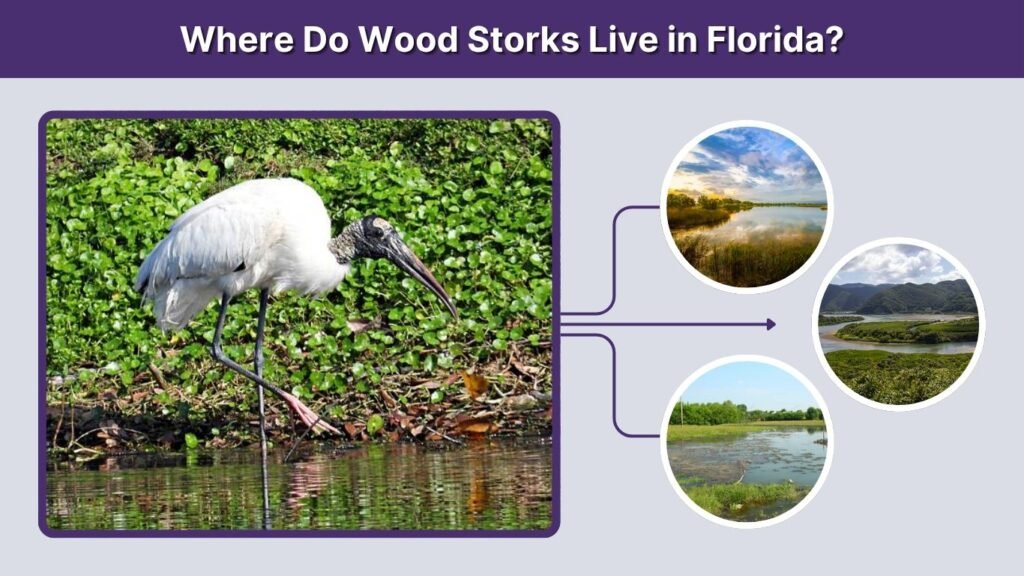
Wood storks occur across much of Florida, although their abundance changes with rainfall, water depth, food availability and nesting conditions.
Preferred Florida Habitat
Wood stork habitats include:
- Cypress swamps and domes
- Freshwater marshes
- Mangrove islands and estuaries
- Wet prairies and sloughs
- Shallow ponds and flooded fields
- Retention ponds
- Roadside canals and drainage ditches
- Constructed treatment wetlands
They forage most successfully in calm water approximately 2–15 inches deep with limited dense vegetation. Falling water levels concentrate fish and other aquatic prey, allowing the storks to capture enough food for themselves and their chicks.
Nesting Habitat
Wood storks usually build large stick nests in trees surrounded by water. Suitable trees include cypress, willow, mangrove, gum, red maple and wax myrtle. They may also use non-native Australian pine or Brazilian pepper.
Water beneath a colony makes it more difficult for raccoons and other mammals to reach the nests. Alligators may provide indirect protection by discouraging nest predators, although they can consume chicks or birds that fall into the water.
Florida Range
Wood storks can be seen in South, Central and North Florida. Some remain in the state throughout the year, while others move between Florida and breeding or feeding areas elsewhere in the Southeast.
Their distribution is highly flexible. If a wetland becomes too deep, too dry or unproductive, the birds may travel many miles to find better feeding conditions.
What Do Florida Wood Storks Eat?
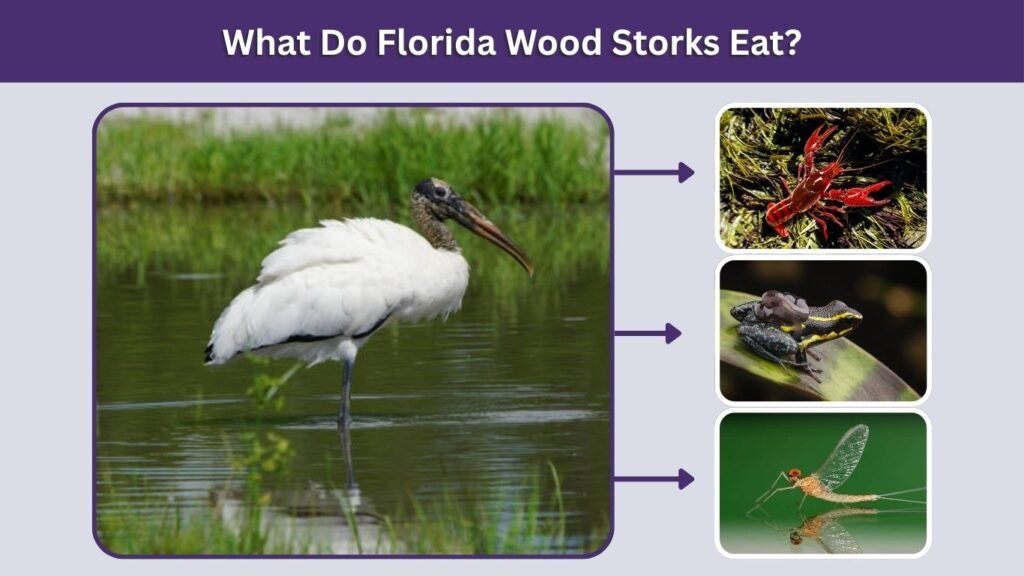
Fish form the largest part of a wood stork’s diet. However, these birds are opportunistic feeders and consume several types of small aquatic animals.
Common Foods
A Florida wood stork may eat:
- Small and medium-sized fish
- Crayfish and shrimp
- Frogs and tadpoles
- Aquatic insects
- Small snakes
- Lizards
- Young turtles
- Other small reptiles
- Occasionally rodents or small birds
They usually swallow prey whole. Fish availability is especially important during nesting because adults must capture enough food to support rapidly growing chicks.
How Wood Storks Catch Fish
Wood storks primarily use touch rather than sight to locate prey. A bird walks slowly through shallow water with its bill partly open and submerged. It may shuffle its feet or move its wings to disturb hidden fish.
When an animal touches the bill, it snaps shut almost instantly. This feeding method, called tactolocation, works particularly well in dark or muddy water where visually hunting birds may struggle.
The Florida Fish and Wildlife Conservation Commission reports that wood storks feed mainly on fish in calm, relatively open water approximately 2–15 inches deep.
Wood Stork Nesting and Life Cycle in Florida
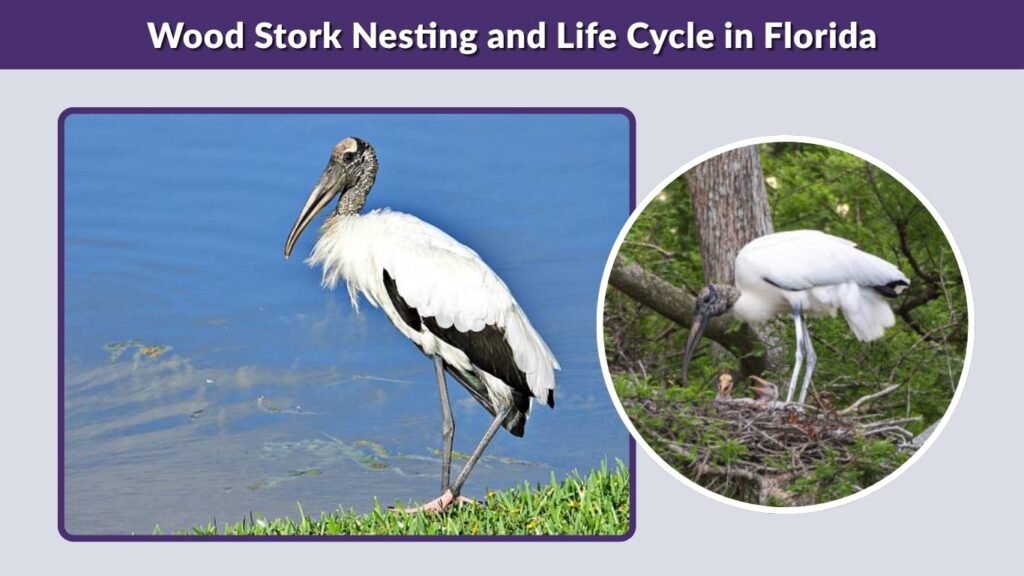
Wood storks nest in large social colonies, sometimes alongside herons, egrets, ibises, anhingas and roseate spoonbills. A colony may contain hundreds of nests.
Florida Nesting Season
Nesting schedules vary across the state. Colonies in South Florida may begin forming from late November through early March. Central and North Florida colonies typically become active later, often during February or March.
Across Florida, eggs may be laid from October through June. The timing depends on regional rainfall and whether receding water levels produce dependable feeding areas.
Eggs and Incubation
A female generally lays one clutch containing two to five dull white eggs, with three being most common. Both parents incubate the eggs for approximately 30 days.
The parents also share nest defence and chick-feeding duties. Adults regurgitate partially digested fish directly into the nest for their young.
Chicks and Fledging
Newly hatched chicks are helpless and covered in white down. They grow rapidly but depend completely on their parents for food and protection.
Young wood storks can make short flights at approximately seven to eight weeks. They usually leave the colony when they are around 10–12 weeks old. Juveniles may wander for several years before returning to breeding colonies as mature adults.
Are Wood Storks Endangered in Florida?
The answer changed in 2026. Wood storks were federally listed as endangered in 1984 and reclassified as threatened in 2014. Following decades of recovery, the Southeast U.S. population was removed from the federal endangered and threatened species list.
Current Conservation Status
Federal delisting became effective in March 2026. The U.S. Fish and Wildlife Service estimated approximately 10,000–14,000 breeding pairs at roughly 100 colonies across the southeastern United States.
Florida has begun the process required to review the bird against state-listing criteria following federal delisting. Some older Florida agency pages may still display the previous “federally threatened” classification.
Wood storks remain protected under the Migratory Bird Treaty Act. Their birds, eggs, chicks and active nests cannot be intentionally captured, killed, collected or disturbed without proper authorisation.
Why Did Wood Storks Decline?
The major cause of their historic decline was the loss and alteration of wetlands, especially in South Florida. Canals, levees, drainage and development changed natural flooding and drying cycles.
Wood storks need wetlands to flood long enough to produce fish and then dry gradually enough to concentrate that prey. Water that remains too deep or disappears too quickly can cause parents to abandon nesting attempts or fail to feed their chicks.
How Many Wood Storks Are Left in Florida?
There is no single fixed count of wood storks living in Florida. Birds move frequently, and colony numbers and nesting success vary each year.
The federal estimate of 10,000–14,000 nesting pairs covers the entire southeastern U.S. population, not Florida alone. Florida remains a major breeding and feeding area, but state totals should be interpreted as seasonal estimates rather than a permanent population.
Where to See Wood Storks in Florida
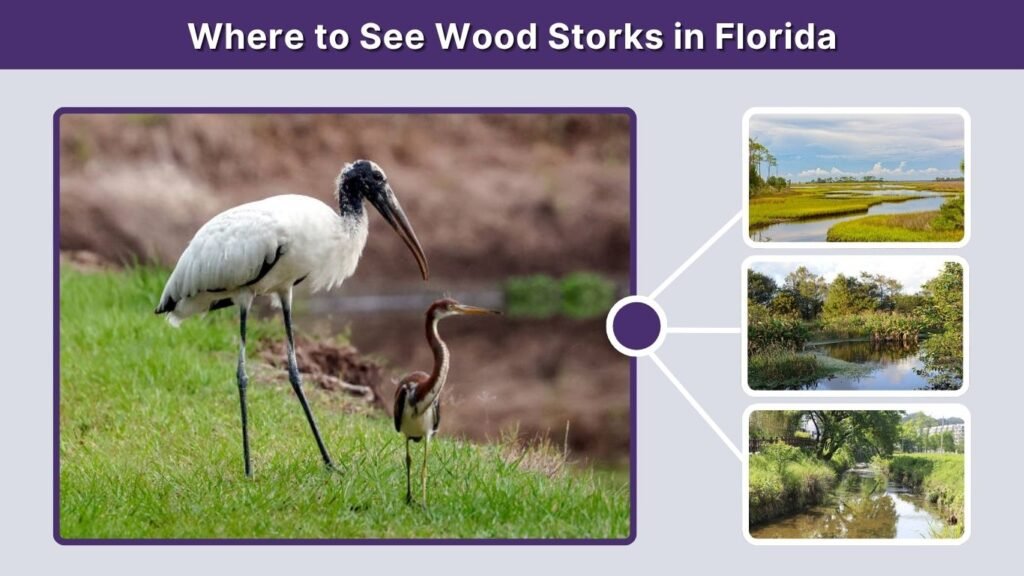
Wood storks can be observed in natural and constructed wetlands throughout the state. Sightings are often best during the dry season, when fish become concentrated in shallow water.
Reliable Viewing Areas
Potential viewing locations include:
- Everglades National Park
- Big Cypress National Preserve
- Wakodahatchee Wetlands in Delray Beach
- Green Cay Nature Center and Wetlands
- Corkscrew Swamp Sanctuary near Naples
- J.N. “Ding” Darling National Wildlife Refuge
- Merritt Island National Wildlife Refuge
- Shallow canals and wetlands along designated wildlife drives
Wakodahatchee Wetlands has a public boardwalk through ponds and nesting islands where more than 170 bird species have been recorded.
Wood stork presence is never guaranteed. Check current park hours, closures and bird reports before travelling, especially when access is restricted to protect nesting colonies.
Responsible Viewing
Remain on marked trails and boardwalks, use binoculars or a long camera lens and keep noise low. Never approach nests, enter closed areas or fly drones near a colony.
A disturbed adult may leave its eggs or chicks exposed to heat, rain and predators. Responsible observation is particularly important during nesting season.
Is It Legal to Feed Wood Storks in Florida?
Feeding wood storks is strongly discouraged. It can make the birds dependent on humans, encourage them to approach roads and homes, and increase conflict with people or pets.
Rules may vary among parks, municipalities and managed wildlife areas, many of which prohibit wildlife feeding. The FWC’s wood stork guidance advises people never to feed them. Observe wood storks from a distance and allow them to find natural prey.
FAQs
Are wood storks dangerous to humans?
Wood storks are not aggressive toward people and normally move away when approached. Their large bill is designed for capturing aquatic prey rather than attacking humans. However, any wild bird may defend itself if cornered, handled or placed under severe stress.
What should I do if I find an injured wood stork?
Keep people and pets away, do not offer food or water, and avoid handling the bird unless directed by a professional. Contact the Florida Fish and Wildlife Conservation Commission or a licensed wildlife rehabilitator for instructions. Record the exact location and visible injuries.
Do Florida panthers eat wood storks?
Wood storks are not considered a regular or important part of the Florida panther’s diet. Panthers mainly consume deer, wild hogs and medium-sized mammals. A panther could potentially take a vulnerable bird opportunistically, but raccoons and other nest predators are more significant threats.
Can wood storks fly?
Wood storks are powerful fliers with wingspans exceeding five feet. They extend their necks and legs during flight and use warm air currents to soar. Although takeoff may appear slow and heavy, they can glide efficiently over long distances between nesting and feeding wetlands.
Do wood storks live in the Florida Keys?
Wood storks can occur in the Florida Keys, especially around mangroves, shallow wetlands, ponds and protected wildlife areas. Their presence varies with water levels and food availability. They are more consistently observed in larger wetland systems across mainland South Florida.