
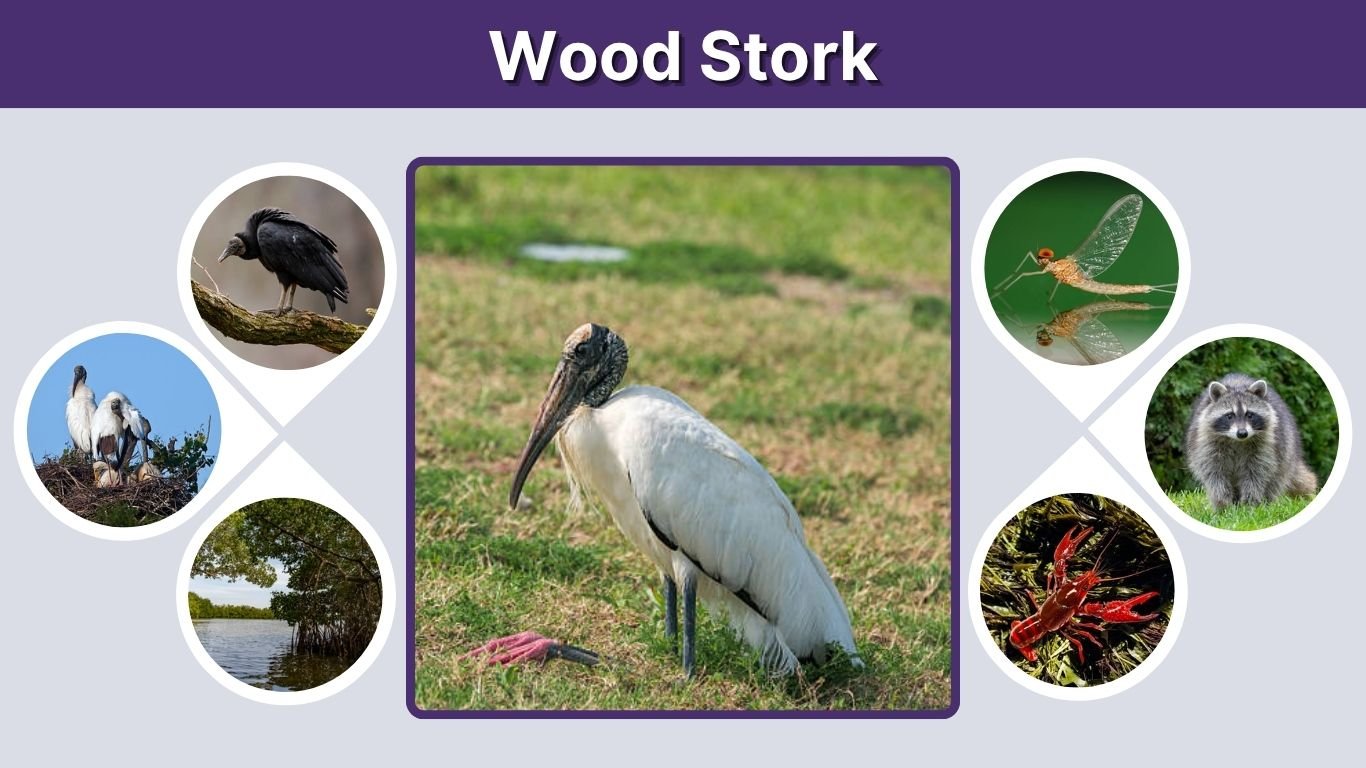
The wood stork (Mycteria americana) is a large American wading bird recognised by its white body, black flight feathers and bald, dark head. It is the only stork species that regularly breeds in the United States. Wood storks depend on shallow wetlands, where they use their sensitive bills to capture fish by touch. Once federally endangered, the southeastern U.S. population recovered enough to be removed from the federal threatened species list in 2026. However, wetland loss and disrupted water cycles remain important concerns.
What Is a Wood Stork?
The American wood stork belongs to the family Ciconiidae, which includes the world’s true storks. Its scientific name is Mycteria americana. Older regional names include wood ibis and flinthead, although the bird is not an ibis.
| Feature | Description |
| Scientific name | Mycteria americana |
| Family | Ciconiidae |
| Length | Approximately 35–45 inches |
| Wingspan | Approximately 60–65 inches |
| Weight | Usually 5–7 pounds |
| Diet | Primarily fish and other aquatic animals |
| Clutch size | Usually 2–5 eggs |
| Incubation | Approximately 30 days |
| Fledging age | Around 10–12 weeks |
| Wild lifespan | Commonly estimated at 11–18 years |
Wood storks are social birds that often feed, roost and nest in groups. A nesting group is generally called a colony or rookery, while a group in flight may simply be called a flock. “Muster” is another traditional collective term for storks.
Wood Stork Identification and Size
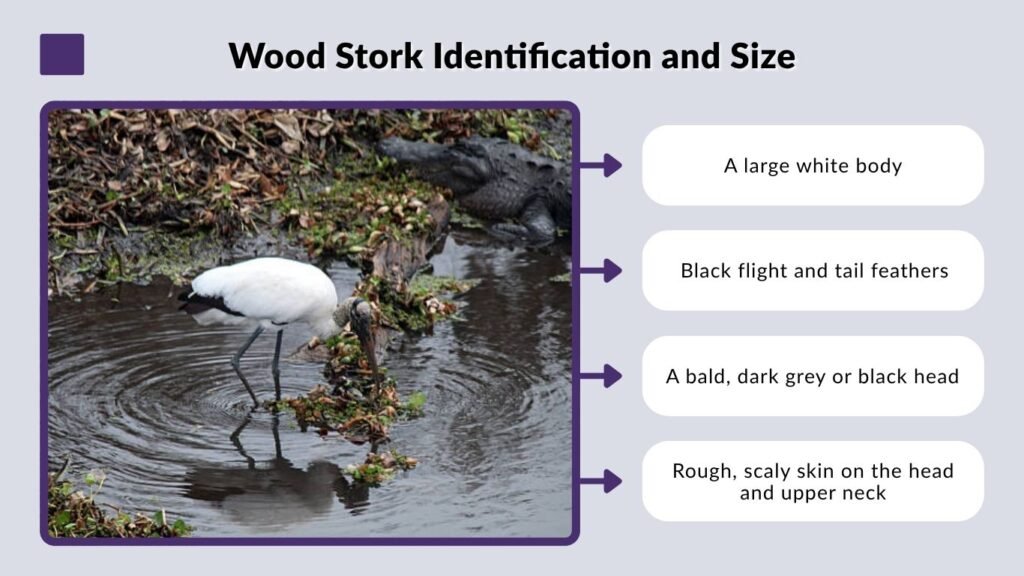
A mature wood stork has one of the most recognisable appearances among North American waterbirds. Males and females look nearly identical, although males are usually slightly larger and have heavier bills.
Adult Wood Stork Identification
Important features include:
- A large white body
- Black flight and tail feathers
- A bald, dark grey or black head
- Rough, scaly skin on the head and upper neck
- A thick black bill that curves slightly downward
- Long dark legs with pinkish toes
- A standing height approaching four feet
- A wingspan of approximately five to five-and-a-half feet
The bird’s black flight feathers may be difficult to see when it is standing. They become highly visible when its wings are open.
Juvenile and Immature Wood Storks
A juvenile wood stork has a feathered or partially feathered greyish head. Its bill is yellowish, tan or horn-coloured rather than completely black.
The head gradually becomes darker and loses its feathers as the bird matures. Immature wood storks may wander considerable distances before reaching breeding age, which helps explain occasional sightings far beyond their normal range.
Wood Stork in Flight
Wood storks fly with their necks and legs fully extended. This distinguishes them from herons, which normally pull their necks into an S-shape during flight.
Takeoff may appear slow and heavy, but the birds are efficient long-distance fliers. They use rising columns of warm air, known as thermals, to circle upward and glide with minimal wing flapping.
Wood Stork Habitat and Range
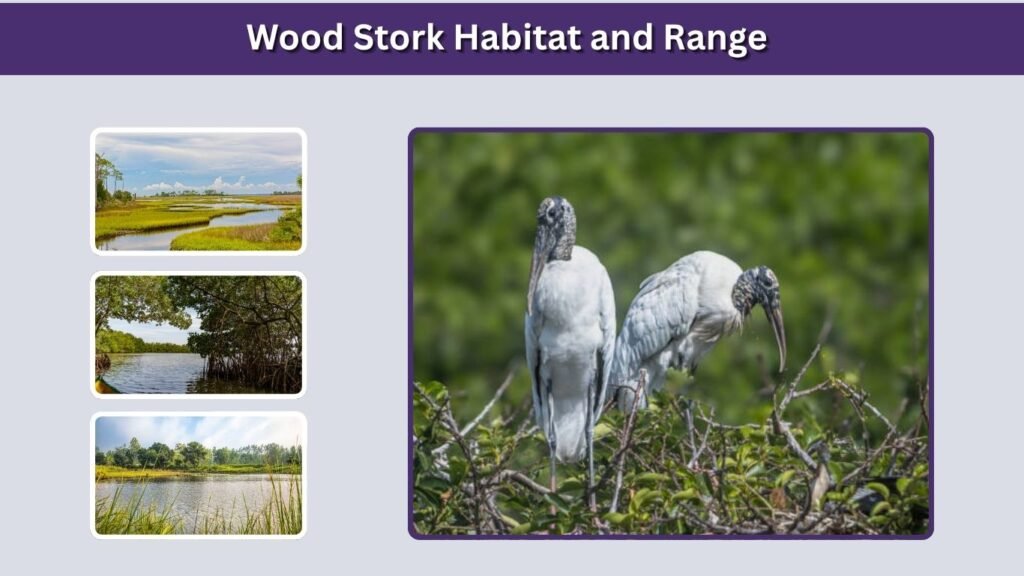
Wood storks depend on wetlands for feeding and trees or shrubs for nesting. Their distribution changes in response to water depth, rainfall and prey availability.
Preferred Habitat
Wood stork habitats include:
- Cypress swamps and domes
- Freshwater marshes
- Mangrove forests and islands
- Wet prairies and sloughs
- Estuaries and tidal wetlands
- Shallow ponds
- Flooded fields
- Retention ponds
- Roadside canals and drainage ditches
The most productive feeding areas have calm, shallow water with relatively open surfaces. Seasonal drying is important because it concentrates fish into smaller pools.
Wood Stork Range
In the United States, wood storks primarily inhabit the Southeast. Their breeding range includes Florida, Georgia, South Carolina and North Carolina, with birds also occurring in Alabama, Mississippi and nearby Gulf Coast areas.
Outside the United States, they range through Mexico, Central America, the Caribbean and much of South America. Populations in tropical regions may remain in suitable areas throughout the year.
Do Wood Storks Migrate?
Wood storks do not follow one simple long-distance migration pattern. Instead, they make seasonal and irregular movements based on rainfall, wetland conditions and food availability.
After breeding, adults and juveniles may disperse hundreds of miles. These movements occasionally bring individual birds into states well beyond their recognised range.
Rare Wood Stork in Wisconsin
In August 2025, a juvenile wood stork was discovered at Mud Lake Wildlife Area in Columbia County, Wisconsin. Its pale bill helped identify it as a young bird. The sighting was exceptionally unusual because Wisconsin lies far north of the wood stork’s normal range.
The bird was later observed flying with pelicans. Experts suggested it was probably a wandering juvenile rather than evidence of a new Wisconsin breeding population. The incident was reported by AP News.
What Do Wood Storks Eat?
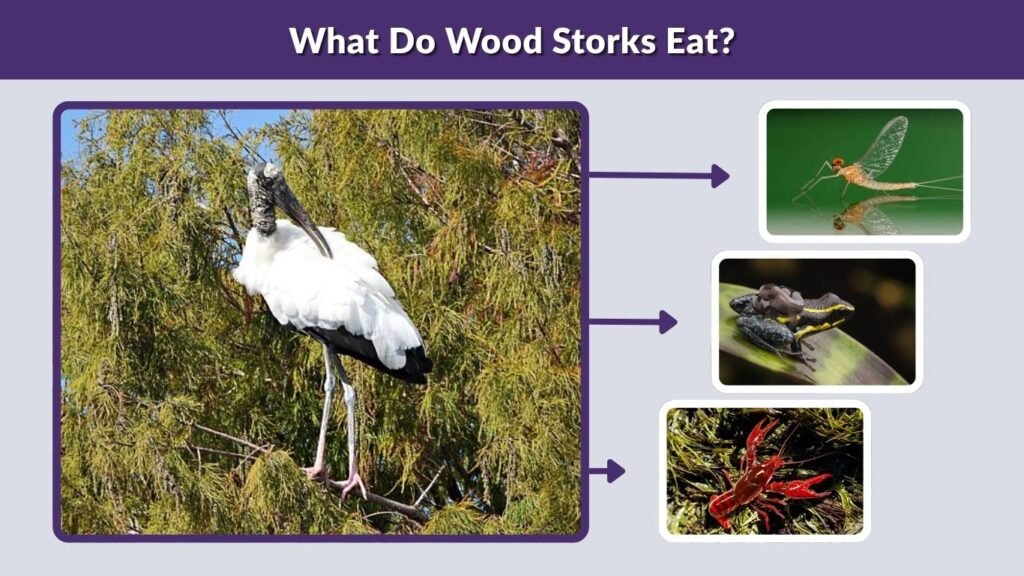
Wood storks are carnivorous birds that feed primarily on fish. They may forage alone, but groups often gather where falling water levels have concentrated prey.
Wood Stork Diet
Common foods include:
- Small and medium-sized fish
- Crayfish and shrimp
- Frogs and tadpoles
- Aquatic insects
- Small snakes
- Lizards
- Young turtles
- Other aquatic invertebrates
- Occasionally rodents or small birds
Their diet varies with habitat and seasonal prey availability. Fish become especially important during nesting because parents must provide a large and dependable food supply for their chicks.
How Wood Storks Catch Food
Wood storks usually hunt through touch rather than sight. A feeding bird walks slowly through shallow water with its partly opened bill submerged.
It shuffles its feet or moves its wings to disturb hidden animals. When fish or another prey item touches the bill, the jaws snap shut extremely quickly. This method is called tactolocation.
Because they do not need to see their prey, wood storks can feed effectively in cloudy, muddy or dark water. However, deep water and dense aquatic vegetation make hunting more difficult.
Wood Stork Life Cycle
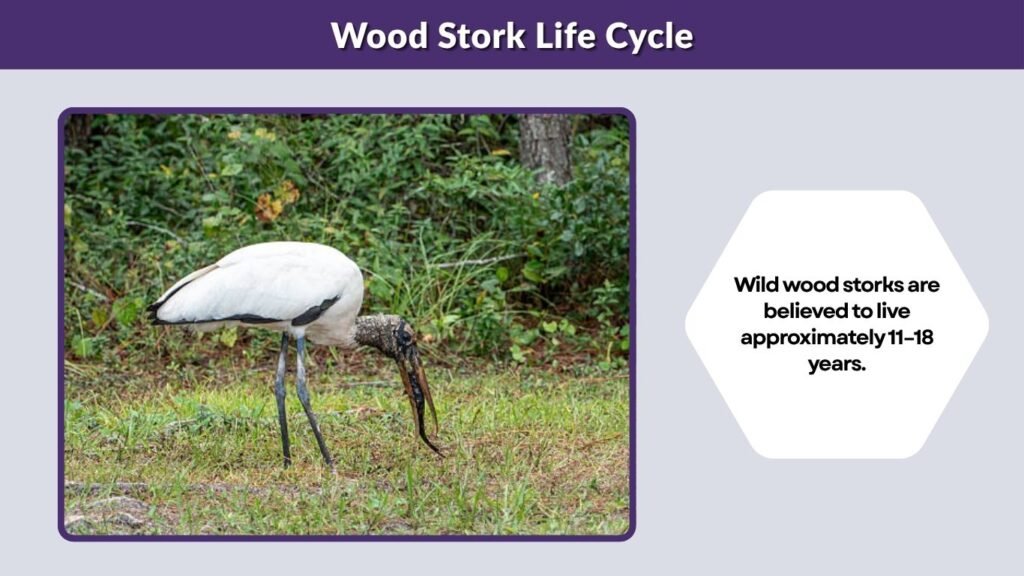
The wood stork life cycle begins in a large nesting colony. The timing of breeding varies according to region and local water conditions.
Courtship and Pairing
Wood storks generally begin breeding at three to four years old. Males select potential nesting locations and display to females. After forming a pair, both birds participate in nest construction and chick care.
It is unclear whether pairs remain together throughout life. They may form a monogamous partnership for a breeding season, but permanent lifelong pairing has not been conclusively established.
Egg and Incubation Stage
A female usually lays two to five dull white eggs, with three being the most common clutch size. Both parents share incubation duties.
The eggs hatch after approximately 30 days. If a clutch is lost early, a female may sometimes lay another, provided she has sufficient energy reserves and the feeding conditions remain favourable.
Chick Development
Wood stork chicks hatch with white down and depend entirely on their parents. Adults regurgitate fish and other prey directly into the nest.
Young birds become fully feathered and may make short flights at seven to eight weeks. They normally become independent and leave the nesting colony at approximately 10–12 weeks old.
Lifespan
Wild wood storks are believed to live approximately 11–18 years, although some survive longer. FWC records indicate that the oldest known captive wood stork lived more than 27 years.
Mortality is highest among eggs, nestlings and recently fledged juveniles. Food shortages, storms, nest collapse, predators, power-line collisions and vehicle strikes can reduce survival.
Wood Stork Nesting Behaviour
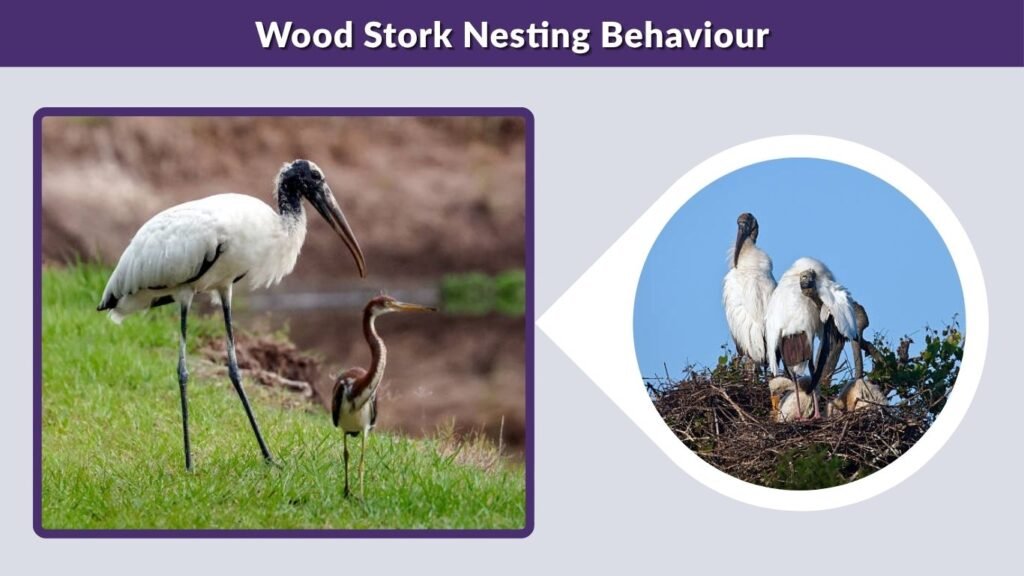
Wood storks are colonial nesters. A rookery may contain 100–500 wood stork nests along with nesting herons, egrets, ibises, anhingas and spoonbills.
Where Do Wood Storks Nest?
They usually build large stick nests in trees standing in water or on islands surrounded by water. Common nesting trees include cypress, mangrove, willow, gum, oak, wax myrtle and red maple.
Water beneath the colony discourages raccoons and other climbing predators. Alligators may indirectly protect the colony by keeping mammals away, although they may eat chicks or birds that fall into the water.
Nest Construction
The male generally collects sticks while both partners arrange the nest. A nest begins as a simple platform but becomes deeper as additional twigs and vegetation are added.
Wood storks may reuse a general colony location, although individual nests can be rebuilt or repaired. Both parents incubate the eggs, shade the chicks and defend the nest.
Nesting Success and Water Levels
Successful nesting depends on nearby feeding wetlands remaining productive until the chicks become independent. Parents may abandon a nesting attempt if water becomes too deep, dries too rapidly or fails to concentrate enough fish.
This close relationship between nesting success and wetland hydrology makes the wood stork an important indicator of ecosystem health.
Wood Stork Behaviour and Sounds
Wood storks generally appear calm and deliberate while walking through wetlands. However, they are wild birds and should not be approached or treated as friendly pets.
Are Wood Storks Friendly or Aggressive?
Wood storks are not normally aggressive toward people. They usually walk or fly away when approached. Their heavy bill could cause injury if someone attempted to capture or corner them, but attacks on humans are not typical.
Feeding wood storks can make them lose their natural caution and become dependent on people. Wildlife agencies therefore recommend observing them without offering food.
What Sound Does a Wood Stork Make?
Adult wood storks are mostly silent because they lack the complex vocal abilities of many songbirds. They can produce soft hisses, particularly around the nest, and may clatter their bills during social interactions.
Chicks are more vocal and use croaking or begging sounds when requesting food from their parents.
Wood Stork Predators
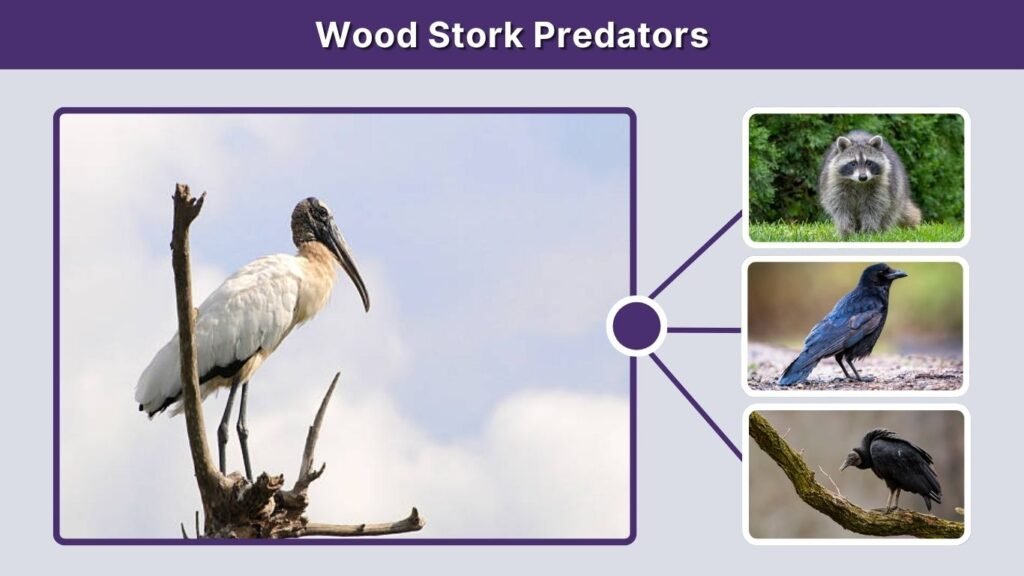
Eggs and chicks face greater predation risks than healthy adults. Nest predators may include raccoons, crows, vultures and other opportunistic animals.
Natural Threats
Alligators, bobcats and other large predators may occasionally take vulnerable adults, young birds or fallen chicks. However, alligators can also protect nesting trees by preventing raccoons from crossing the surrounding water.
Storms, prolonged rainfall, extreme drought and food shortages can kill more chicks than predators during an unsuccessful nesting season.
Are Wood Storks Endangered?
The conservation status of the U.S. population changed recently. Wood storks were federally listed as endangered in 1984 and downlisted to threatened in 2014.
Updated 2026 Status
In March 2026, the Southeast U.S. wood stork population was removed from the federal endangered and threatened wildlife list due to recovery. The U.S. Fish and Wildlife Service estimated approximately 10,000–14,000 nesting pairs across about 100 colony locations.
Wood storks remain protected under the Migratory Bird Treaty Act. People cannot intentionally kill, capture, possess or disturb the birds, eggs or active nests without authorisation.
Continuing Threats
Wetland drainage, development and altered water-management systems remain serious concerns. Pollution, pesticide exposure, vehicle collisions and power lines can also affect wood storks.
Federal delisting means the population no longer meets Endangered Species Act listing requirements. It does not mean the species is free from environmental threats or no longer requires wetland conservation.
FAQs
How big is a wood stork?
A wood stork measures approximately 35–45 inches long and has a wingspan of around 60–65 inches. Adults commonly weigh between five and seven pounds. Males and females look similar, although males are generally slightly heavier and possess longer, thicker bills.
Where do wood storks live?
Wood storks inhabit shallow freshwater and coastal wetlands from the southeastern United States through Central and South America. Typical habitats include marshes, cypress swamps, mangroves, ponds, flooded fields and estuaries. They move between wetlands as water levels and food availability change.
Are wood storks friendly?
Wood storks are generally calm and nonaggressive, but they are not domesticated or naturally friendly toward humans. They should be observed from a respectful distance. Feeding them can cause dependence, encourage unsafe roadside behaviour and increase undesirable interactions with people and pets.
How many wood storks are left?
The U.S. Fish and Wildlife Service estimated approximately 10,000–14,000 breeding pairs across the southeastern United States in 2026. This figure does not represent the entire global population, which extends through Mexico, Central America and much of South America.
What is the spiritual meaning of a wood stork?
No single spiritual meaning applies universally. Storks have traditionally represented birth, renewal, patience and family care in various cultures. A wood stork may personally symbolise adaptability or resilience because it depends on changing wetlands and recovered after a severe population decline.