
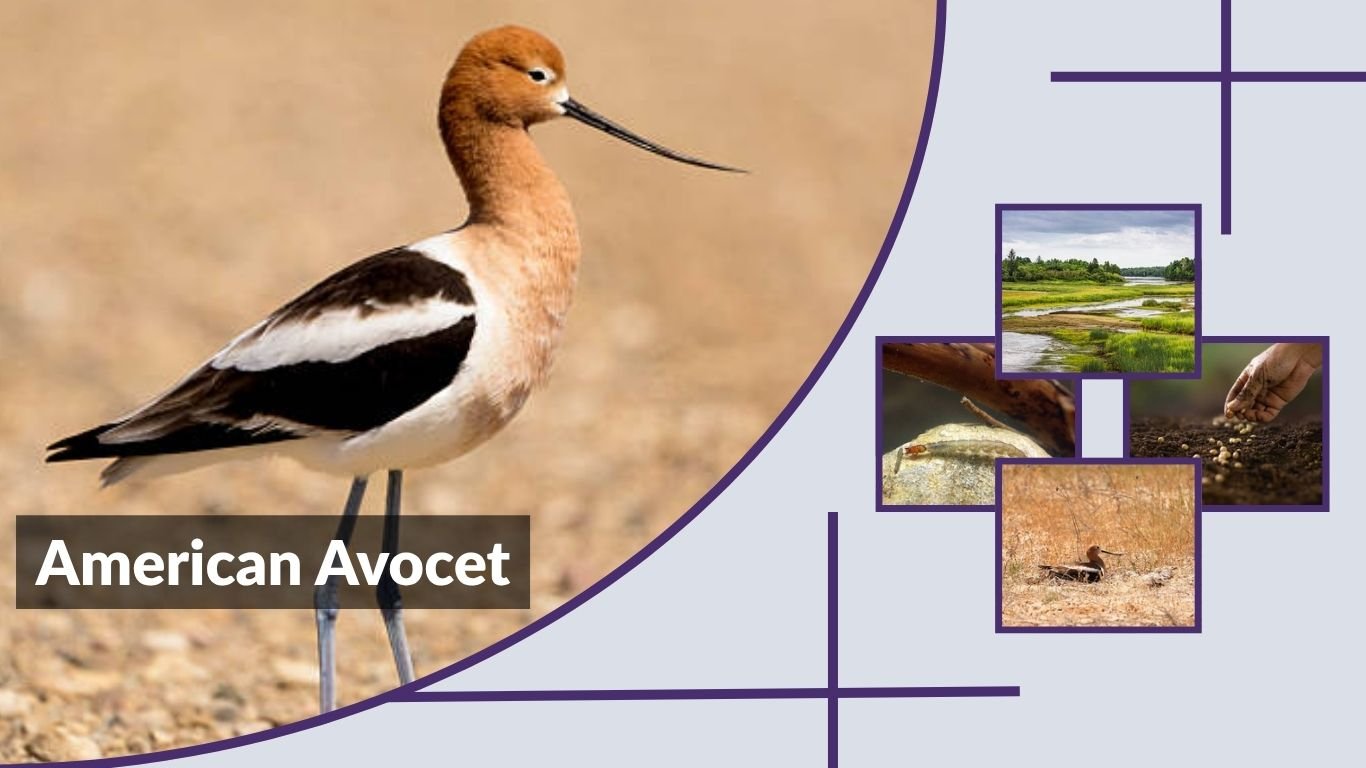
The American Avocet (Recurvirostra americana) is a graceful wading bird known for its elegant shape and unique upturned bill. Found across North America, this striking bird stands out with its long blue-gray legs and contrasting black-and-white wings. During the breeding season, its head and neck turn a warm cinnamon color, making it even more distinctive. Commonly seen in wetlands, lakes, and coastal areas, the American Avocet plays an important role in maintaining ecological balance through its feeding habits and behavior.
What Is an American Avocet?
The American Avocet is a medium-sized shorebird belonging to the avocet and stilt family. It is well known for its specialized bill and graceful movements, especially when feeding in shallow water.
Physical Appearance
- Black-and-white wings that are visible during flight
- Cinnamon-colored head and neck during breeding season
- Long, thin, upturned bill adapted for feeding
American Avocet Size
- Body length typically ranges from 40 to 50 cm
- Wingspan can reach up to 70–80 cm
- Long legs designed for wading in shallow water
American Avocet Habitat and Range
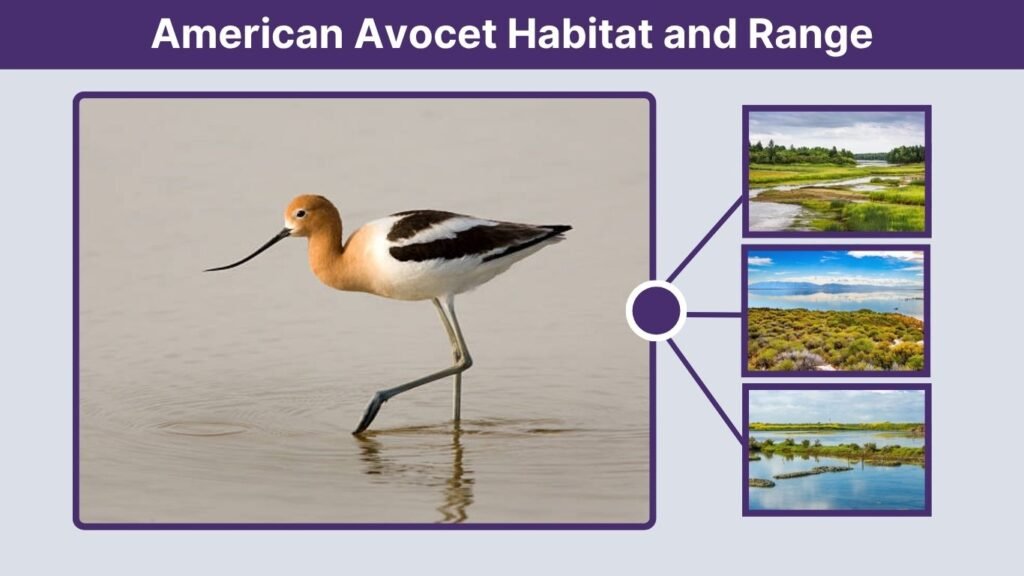
The American Avocet thrives in shallow water environments where food is abundant. It prefers open spaces with minimal vegetation, allowing it to move freely while feeding and nesting. This species is widely distributed across North America, especially during the breeding season.
Preferred Habitat
- Shallow lakes and wetlands
- Mudflats and salt ponds
- Coastal lagoons and marshes
American Avocet Range
- Found mainly in western and central North America
- Expands to coastal regions during migration
- Seen in both inland and coastal habitats
Where Do American Avocets Live?
- Breeding areas include inland wetlands and prairies
- Wintering grounds are often coastal regions
- Some populations remain in mild climates year-round
American Avocet Diet and Feeding Behavior
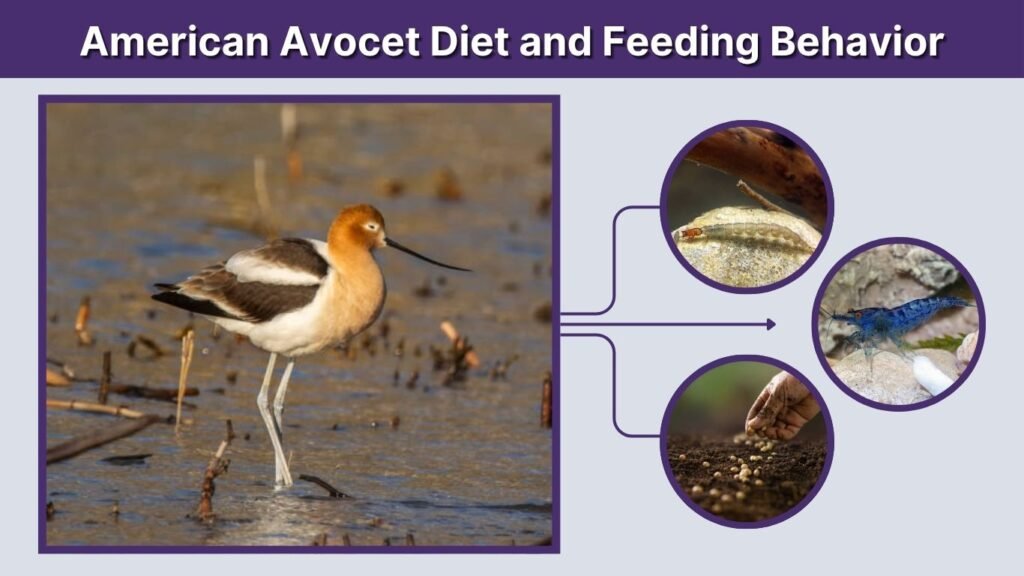
The American Avocet has a highly specialized feeding style that sets it apart from many other shorebirds. It uses its upturned bill to sweep through shallow water, catching small aquatic organisms. This method allows it to efficiently gather food in wetland environments.
American Avocet Diet
- Aquatic insects and larvae
- Small crustaceans and invertebrates
- Seeds and plant material occasionally
Feeding Techniques
- Sweeps its bill side to side in water
- Probes soft mud for hidden prey
- Often feeds in groups for better efficiency
American Avocet Behavior and Lifestyle
The American Avocet is a social and active bird, often seen in flocks, especially outside the breeding season. It spends much of its day feeding, resting, and maintaining its feathers. During nesting, however, it becomes more territorial and protective of its area. This bird is also known for its strong flight, moving gracefully between feeding and breeding grounds. Its ability to adapt to different wetland conditions makes it a resilient and successful species across a wide range of habitats.
American Avocet Migration
The American Avocet is a migratory bird, traveling long distances between breeding and wintering areas. These movements are essential for survival, as they allow the bird to access food and suitable nesting sites throughout the year.
Migration Routes
- Moves from inland breeding grounds to coastal wintering areas
- Follows major migration flyways across North America
- Often stops at wetlands along the route
Migration Timing
- Migration occurs during spring and fall
- Timing varies depending on location and climate
- Birds return to breeding areas when conditions improve
American Avocet Breeding, Nesting, and Reproduction
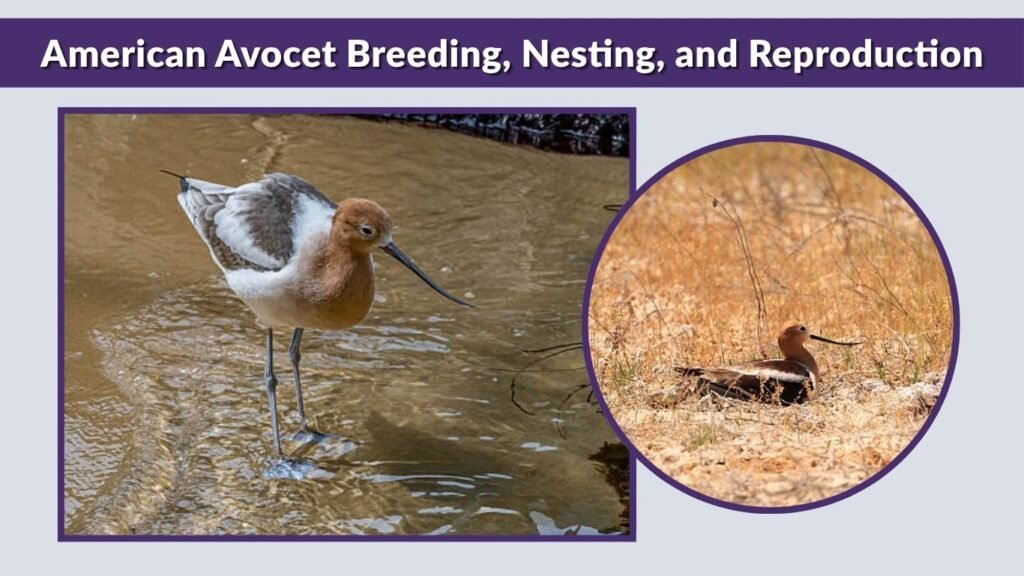
The American Avocet breeds in open wetlands where visibility is high, helping it detect predators early. During the breeding season, these birds become more territorial and protective, especially around nesting sites.
American Avocet Nest
- Nests are simple ground scrapes near shallow water
- Often lined with grass, pebbles, or debris
- Located in open areas with good visibility
Eggs and Chicks
- Typically lays 3 to 4 eggs per clutch
- Eggs are speckled, helping them blend into surroundings
- Chicks leave the nest shortly after hatching and begin foraging
Mating Ritual
- Includes synchronized movements and displays
- Pair bonding is strong during breeding season
- Both parents share incubation and care duties
Male vs Female American Avocet
Male and female American Avocets look very similar, making identification challenging. However, subtle differences can help distinguish between them.
Key Differences
- Females usually have more curved bills
- Males tend to have slightly straighter bills
- Both share similar size and plumage
American Avocet vs Black-Necked Stilt
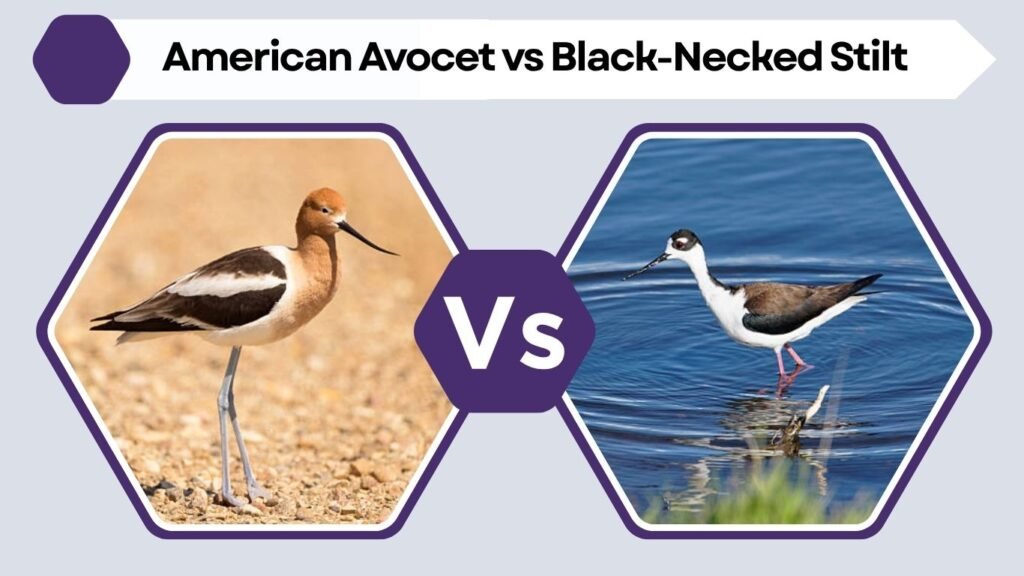
The American Avocet and Black-necked Stilt often share the same habitats, which can lead to confusion. Despite this, they have clear physical and behavioral differences.
Identification Differences
- Avocet has an upturned bill; stilt has a straight bill
- Stilt has longer legs compared to body size
- Avocet shows broader black-and-white wing patterns
Competition and Interaction
- Both species feed in shallow water
- May compete for food in shared habitats
- Often nest in nearby areas without major conflict
American Avocet Sound and Communication
The American Avocet uses sharp, high-pitched calls to communicate, especially during breeding and when alerting others to danger. These calls are often repeated quickly and can be heard across wetland areas. Sound plays a key role in maintaining group awareness and protecting nesting territories. During the breeding season, vocal activity increases as birds interact with mates and defend their nests from intruders.
Interesting American Avocet Facts
The American Avocet has several unique characteristics that make it stand out among shorebirds.
- Known for its elegant side-to-side feeding motion
- Can swim when necessary despite being a wader
- Displays seasonal color changes in plumage
- Strong parental instincts in protecting chicks
Adaptations and Anatomy
The American Avocet is specially adapted to thrive in wetland environments. Its long legs allow it to wade through shallow water, while its uniquely shaped bill is perfect for sweeping through water to catch prey. Its lightweight body supports efficient flight, and its coloration provides camouflage in natural habitats. These adaptations help the species survive and reproduce successfully in a variety of environments.
FAQs
What is the scientific name of the American Avocet?
The scientific name of the American Avocet is Recurvirostra americana. It belongs to the avocet and stilt family and is known for its distinctive upturned bill.
Where do American Avocets live?
American Avocets live in shallow wetlands, lakes, mudflats, and coastal areas across North America. They migrate between inland breeding grounds and coastal wintering areas.
What do American Avocets eat?
They mainly eat aquatic insects, crustaceans, and small invertebrates. They use their specialized bill to sweep through water and mud to catch food.
How can you tell male vs female American Avocets?
Females usually have more curved bills, while males have slightly straighter bills. Otherwise, they look very similar in size and coloration.
What sound does the American Avocet make?
The American Avocet produces sharp, high-pitched calls. These sounds are often used as alarm signals or during social interactions in flocks.
