
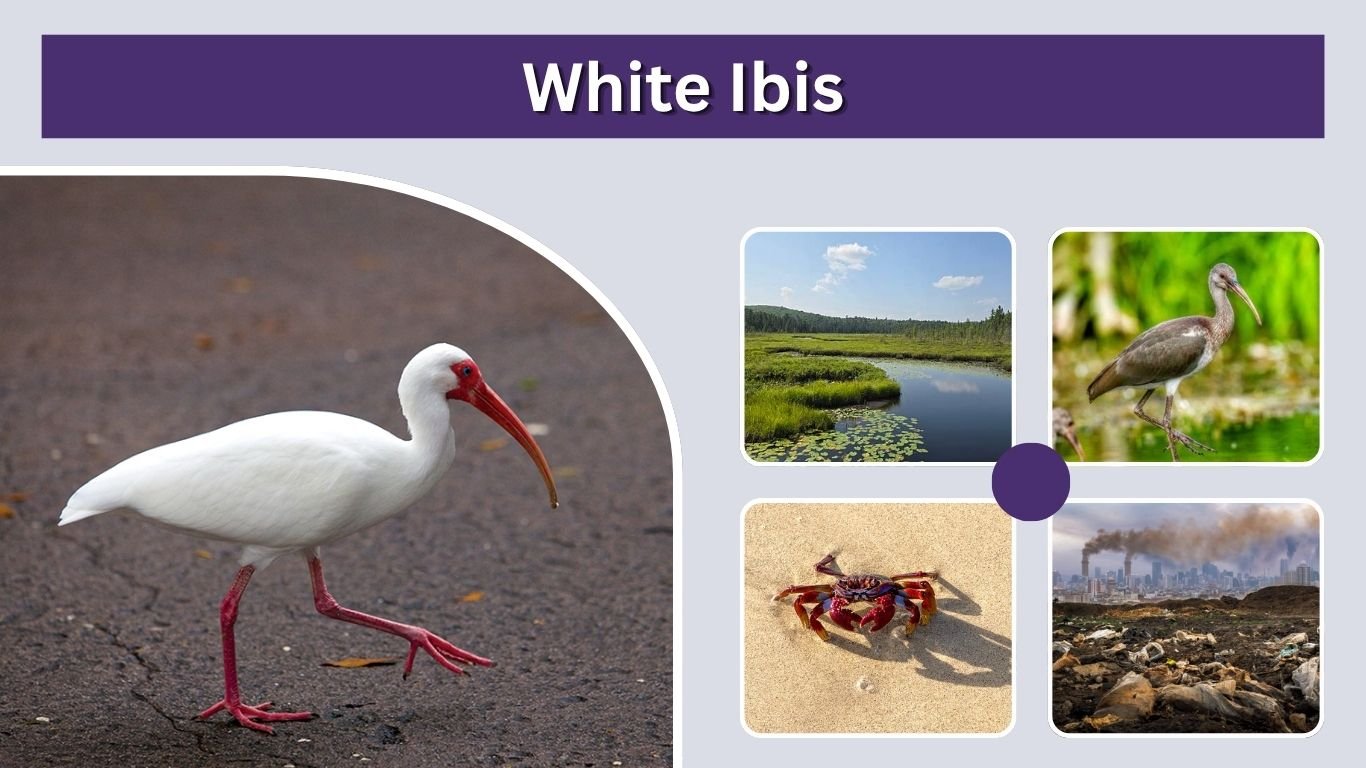
The White Ibis is one of the most recognizable wading birds in the southeastern United States. Known for its bright white feathers, curved reddish-orange bill, and long pinkish legs, this bird is especially common in Florida. White Ibises spend much of their day searching wetlands, lawns, marshes, and shallow water for small animals. From their unusual feeding behavior to the dramatic color change from juvenile to adult plumage, these social birds have many fascinating characteristics worth discovering.
What Is a White Ibis?
The White Ibis, commonly called the American White Ibis, is a medium-sized wading bird belonging to the ibis and spoonbill family. Its scientific name is Eudocimus albus. It is native to the Americas and is particularly associated with wetlands and coastal environments.
Adult White Ibises are easy to recognize, although young birds look surprisingly different.
White Ibis Identification
An adult White Ibis typically has:
- Mostly bright white plumage
- A long, downward-curving reddish-orange bill
- Long reddish or pinkish legs
- Reddish facial skin
- Black wing tips visible during flight
- A long neck and relatively compact body
Males and females look similar, although males are generally larger and have longer bills.
How Big Is a White Ibis?
White Ibises are medium-sized birds, generally measuring around 22–27 inches long. Their wingspan can reach approximately 35–41 inches.
Their long legs and bill make them look taller when they are walking through shallow water.
White Ibis Scientific Name
The scientific name of the American White Ibis is Eudocimus albus.
The species belongs to the family Threskiornithidae, which also includes other ibises and spoonbills.
Where Do White Ibises Live?
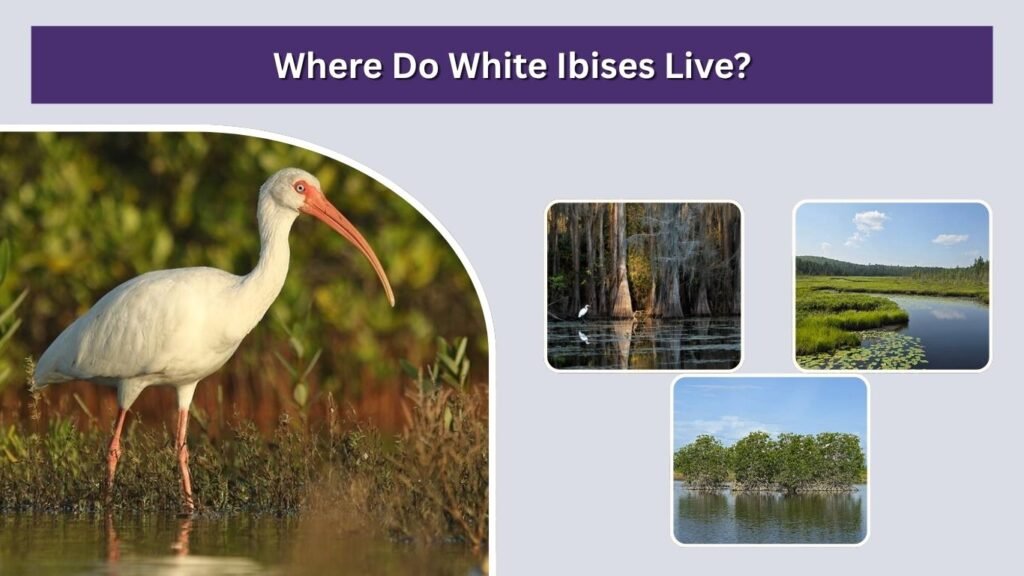
White Ibises depend heavily on wetlands because these environments provide abundant food. They can occupy freshwater, saltwater, and brackish habitats, giving them considerable flexibility when searching for feeding and nesting areas.
They may also appear surprisingly close to houses and cities.
White Ibis Habitat
Common habitats include marshes, mangrove swamps, wetlands, shallow ponds, coastal lagoons, mudflats, flooded fields, and estuaries.
White Ibises sometimes feed on lawns, golf courses, parks, and residential areas, especially where insects and other small prey are plentiful.
White Ibis Range
The White Ibis occurs primarily in the southeastern United States, Mexico, Central America, the Caribbean, and parts of northern South America.
Within the United States, populations are particularly noticeable along the Gulf Coast and Atlantic Coast.
White Ibis in Florida
Florida is one of the best places to see White Ibises.
They are common throughout many parts of the state and can be found around the Everglades, wetlands, beaches, canals, ponds, parks, and suburban neighborhoods.
Large groups sometimes walk across grassy areas while repeatedly probing the ground for insects.
What Do White Ibises Eat?
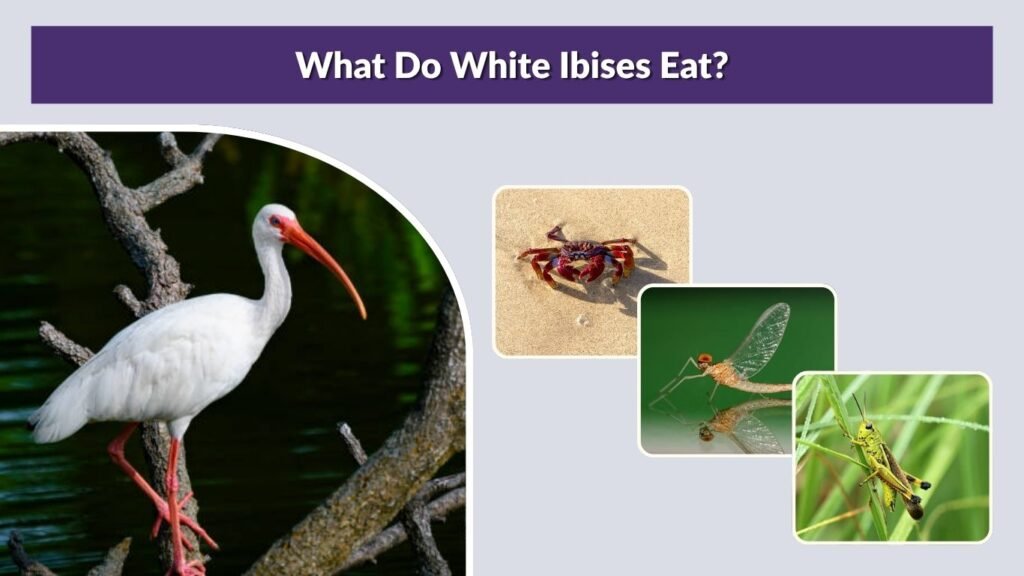
White Ibises are opportunistic carnivorous feeders. Instead of depending heavily on their eyesight while hunting, they often insert their curved bills into mud, grass, or shallow water and detect prey by touch.
Their diet changes depending on habitat, water levels, and seasonal food availability.
Common White Ibis Foods
White Ibises commonly eat:
- Crayfish
- Small crabs
- Aquatic insects
- Beetles
- Grasshoppers
- Worms
- Snails
- Small fish
- Frogs
- Other small aquatic animals
Crayfish and small crustaceans can be especially important foods in wetland environments.
How Does a White Ibis Find Food?
White Ibises usually walk slowly through shallow water while repeatedly pushing their bills into mud or sediment.
When the sensitive bill touches potential prey, the bird quickly closes its bill and pulls the food out.
This technique allows White Ibises to find prey even when muddy water makes it difficult to see.
Do White Ibises Eat Human Food?
White Ibises living around people may sometimes accept bread or other human foods, but intentionally feeding them is generally best avoided.
Natural foods provide the nutrients these birds need, while regular feeding can encourage them to become dependent on people and gather unnaturally close to human activity.
Juvenile White Ibis vs Adult White Ibis
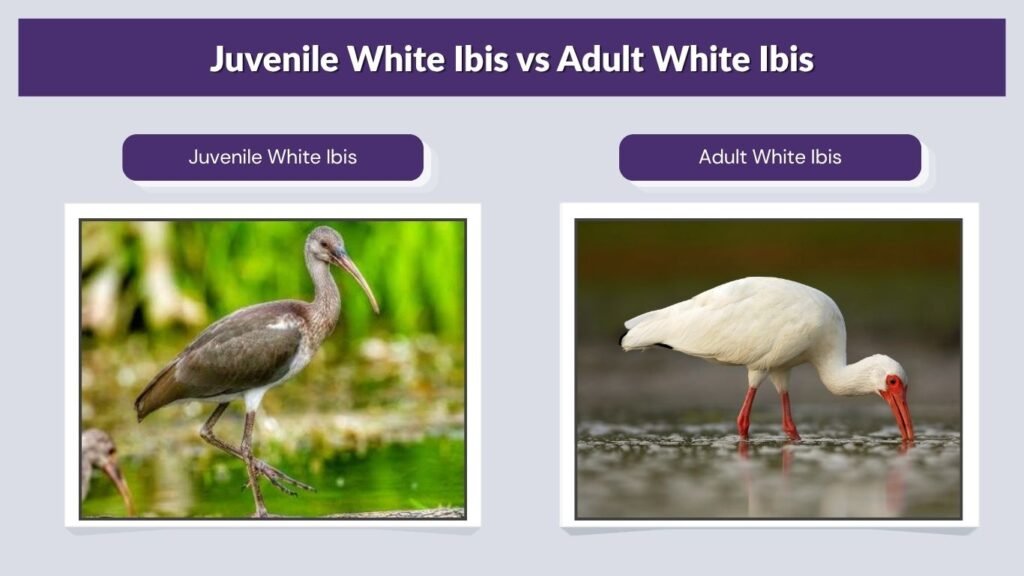
One of the most confusing things about identifying White Ibises is their dramatic change in appearance as they mature.
Young White Ibises are not white at all when they first leave the nest.
What Does a Juvenile White Ibis Look Like?
Juvenile White Ibises typically have brown feathers across much of the body, with lighter areas developing underneath.
Their bills and legs are also duller than those of adults.
As they mature, increasing amounts of white plumage appear until they eventually develop the characteristic appearance of an adult.
Why Are Young White Ibises Brown?
Brown juvenile plumage may provide better camouflage while young birds are still developing and learning to survive.
The gradual transition from brown to white can temporarily create birds with a mixture of brown and white feathers.
An immature brown-and-white ibis is therefore often simply a young American White Ibis rather than a separate species.
White Ibis Behavior
White Ibises are highly social birds and are rarely restricted to solitary lifestyles. They commonly forage, travel, roost, and breed alongside other members of their species.
Large concentrations can become especially noticeable where food is abundant.
Why Do White Ibises Form Flocks?
Flocking can help White Ibises locate productive feeding areas and may provide additional protection against predators.
A single wetland or lawn can sometimes attract dozens of birds.
They may also travel together between feeding grounds and communal roosting locations.
White Ibis in Flight
White Ibises look particularly distinctive when flying.
Their white bodies contrast with black wing tips that may not be visible while the bird is standing.
They usually fly with their necks and legs extended and may travel in organized groups or loose formations.
Are White Ibises Aggressive?
White Ibises are generally not aggressive toward people.
They usually walk away or fly off when approached too closely. However, like most wild birds, an ibis may defend itself if trapped, handled, or threatened.
Giving wild birds reasonable space is the safest approach.
Are White Ibises Dangerous?
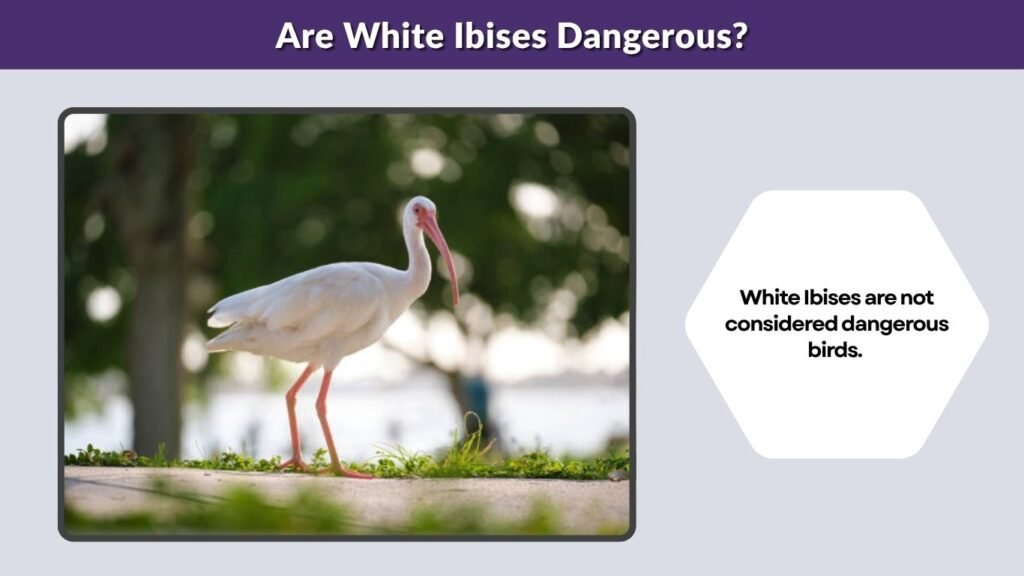
White Ibises are not considered dangerous birds. Their curved bills are designed primarily for probing soil and sediment rather than attacking large animals or humans.
Most encounters involve birds quietly searching for food.
Can a White Ibis Bite?
A White Ibis could potentially peck or jab if someone attempted to catch or restrain it, but this is not typical behavior.
People should avoid touching or handling wild ibises unless wildlife professionals specifically recommend doing so.
Are White Ibises Safe Around Homes?
Occasional visits from White Ibises generally cause little concern.
Problems are more likely when people regularly feed them, causing large numbers of birds to gather around homes, parks, or public areas.
Allowing them to forage naturally helps maintain healthier interactions between people and wildlife.
White Ibis Nesting and Reproduction
White Ibises often breed in colonies containing large numbers of birds. Nesting sites are usually positioned near water, which helps provide some protection and gives adults access to productive feeding areas.
Colonies may also include other species of wading birds.
Where Do White Ibises Nest?
Nests are commonly constructed in shrubs, mangroves, or low trees near wetlands.
Both parents participate in raising their young.
Adults must make repeated feeding trips to provide enough food for rapidly developing chicks.
What Do Young White Ibises Eat?
Young ibises depend on food delivered by their parents.
Adults collect insects, crustaceans, fish, and other small animals before returning to the nesting area to feed their chicks.
Reliable wetlands near breeding colonies are therefore extremely important.
Are White Ibises Endangered?

The American White Ibis is not generally considered globally endangered. However, populations can still be affected by habitat destruction, changes in wetland water levels, pollution, human disturbance, and declining availability of natural feeding areas.
Wetland conservation remains important for maintaining healthy ibis populations.
Protecting marshes, mangroves, coastal wetlands, and freshwater habitats benefits White Ibises along with numerous other birds, fish, reptiles, and mammals.
Interesting White Ibis Facts
The White Ibis may appear simple at first glance, but its appearance and behavior include several interesting adaptations.
- Adults are white, while juveniles begin life mostly brown.
- Their curved bills are extremely useful for probing mud.
- Black wing tips become especially noticeable in flight.
- Florida supports large and highly visible populations.
- White Ibises frequently forage in groups.
- They can use freshwater and coastal habitats.
- Their diet consists largely of small animals rather than plants.
- They sometimes adapt successfully to suburban environments.
FAQs
Are White Ibises Native to Florida?
Yes. The American White Ibis is native to Florida and naturally occurs throughout the state’s wetlands, coastal areas, and other suitable habitats.
What Is the Main Food of a White Ibis?
Crustaceans such as crayfish and small crabs are important foods, although White Ibises also eat insects, worms, fish, snails, and other small animals.
Why Is My White Ibis Brown?
A brown or brown-and-white White Ibis is probably a juvenile. Young birds gradually replace their brown feathers with white plumage as they mature.
Where Do White Ibises Sleep?
White Ibises usually roost in trees, shrubs, mangroves, or other protected vegetation, frequently gathering together in groups.
How Can You Identify a White Ibis?
Look for a white body, long downward-curving reddish bill, reddish legs and face, and black wing tips visible during flight. Juveniles are primarily brown before gradually developing adult white plumage.
