
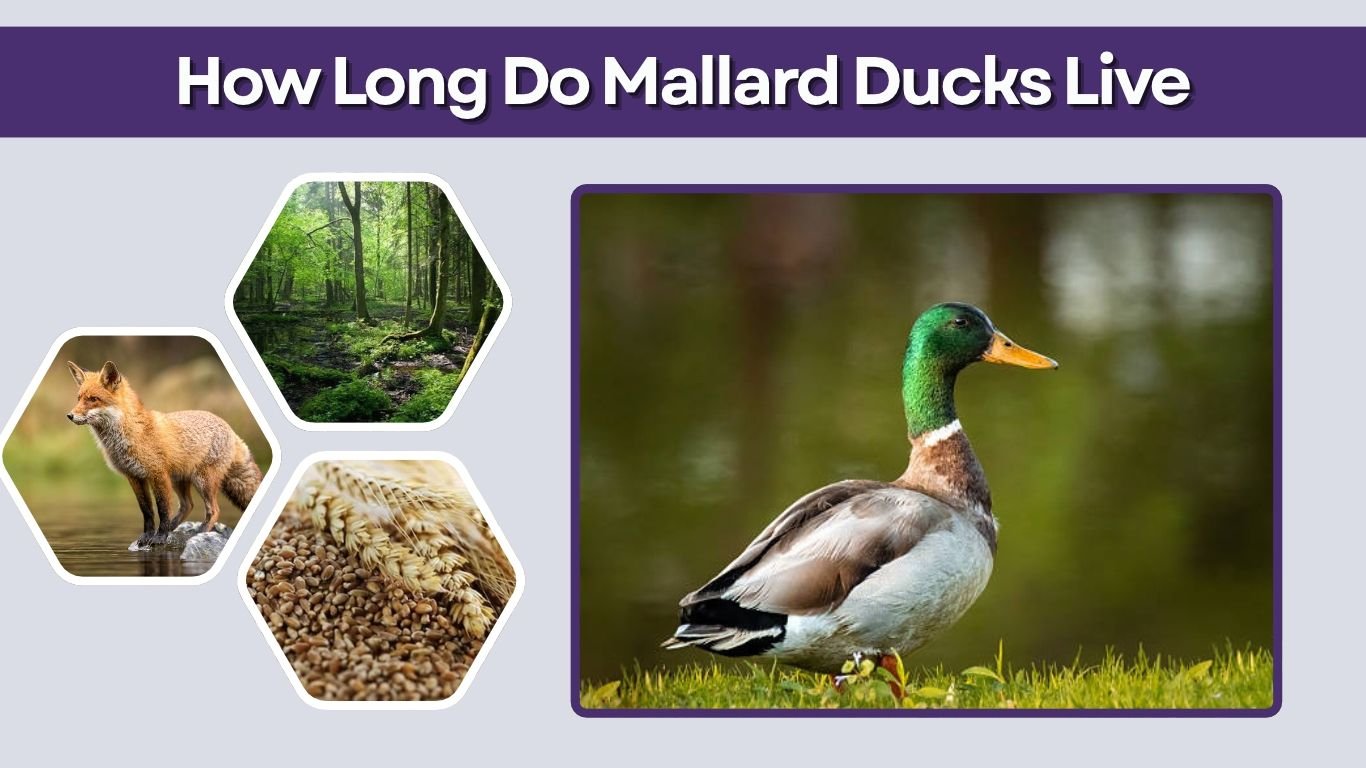
Mallard ducks are among the most familiar waterfowl, commonly seen swimming in ponds, lakes, rivers, and wetlands. But how long do mallard ducks live? Their lifespan varies considerably depending on habitat, predators, food availability, and environmental conditions. Some wild mallards survive only a few years, while exceptional individuals can live for decades. Ducks living under managed care may also benefit from greater protection and regular feeding. This guide explores mallard duck lifespan, survival challenges, egg incubation, and the development of ducklings from hatching to adulthood.
How Long Do Mallard Ducks Live on Average?
Mallard ducks (Anas platyrhynchos) can live for several years, but their average lifespan depends on how survival is measured. Some wildlife guides estimate a lifespan of 5–10 years, while bird-ringing studies indicate that typical life expectancy may be closer to three years for birds reaching breeding age. Most mallards never reach their maximum potential age.
Average Mallard Duck Lifespan
Mallards experience substantial mortality during their early development. Ducklings face predators, severe weather, and limited food availability.
Birds surviving their first year have a better chance of reaching several years of age.
The British Trust for Ornithology reports a typical life expectancy of around three years for mallards reaching breeding age. Other wildlife organizations describe 5–10 years as a general lifespan estimate.
How Long Do Mallard Ducks Live in Captivity?
Mallards kept under appropriate managed conditions may live longer because they receive regular food, shelter, and protection from predators.
Captive duck lifespan depends on veterinary care, nutrition, genetics, and housing. Many properly cared-for domestic ducks live approximately 8–12 years, although this is not a guaranteed range for every captive mallard.
Wild mallards should not be captured or kept without appropriate legal authorization.
What Is the Oldest Recorded Mallard Duck?
Mallards have occasionally survived for more than 20 years in the wild.
The U.S. Geological Survey documented a banded male mallard that reached at least 27 years and 7 months of age.
This remarkable record demonstrates the species’ longevity potential, but it is exceptionally rare and should not be confused with its typical lifespan.
How Long Do Mallard Ducks Live in the Wild?
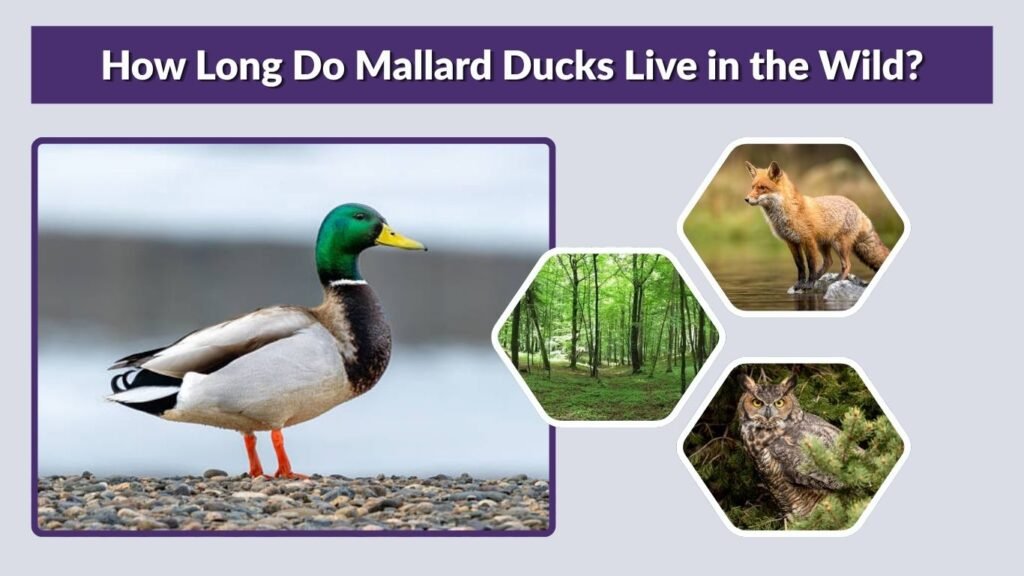
Wild mallards live across North America, Europe, Asia, and other regions. Their survival depends heavily on habitat conditions and seasonal environmental changes. Wetlands with abundant vegetation provide feeding opportunities and protection from predators. However, migration, hunting pressure, disease, and habitat degradation can reduce the lifespan of individual birds, particularly during their first year.
Survival in Natural Wetlands
Mallards typically inhabit freshwater ponds, lakes, marshes, and slow-moving rivers.
These environments provide aquatic plants, seeds, insects, and other foods essential for survival.
Healthy wetlands also contain vegetation where ducks can rest, hide from predators, and raise their young.
Mallards living in productive habitats may have better survival opportunities than those exposed to repeated disturbances.
Why Do Wild Mallards Die Young?
Several factors contribute to early mortality among wild mallards:
- Predators: Foxes, raccoons, birds of prey, and other predators threaten eggs, ducklings, and adults.
- Disease: Avian influenza, botulism, and other illnesses can affect survival.
- Habitat loss: Wetland drainage and development reduce suitable feeding and nesting areas.
- Severe weather: Flooding, drought, and extreme temperatures may threaten vulnerable birds.
- Hunting: Legal waterfowl hunting contributes to mortality in many regions.
Do Male and Female Mallards Live Equally Long?
Male and female mallards face many of the same environmental hazards, although their survival rates can differ.
Females experience additional risks during nesting and incubation because they spend extended periods near concealed ground nests.
Some population studies have documented higher annual survival among adult males than females, but these differences vary across locations and environmental conditions.
What Factors Affect Mallard Duck Lifespan?
Mallard longevity depends on a combination of biological and environmental factors. Although genetics and physical health play important roles, access to suitable habitat often determines survival opportunities. Ducks require adequate nutrition, clean water, shelter, and protection from threats. Conditions that support these needs can improve survival, particularly during the vulnerable breeding and duckling stages.
Food and Nutrition
Mallards are omnivores and consume a wide variety of foods, including:
- Aquatic plants and pondweed
- Grass seeds and agricultural grains
- Insects and insect larvae
- Snails, worms, and small crustaceans
- Other small aquatic invertebrates
A varied natural diet provides nutrients for feather growth, reproduction, and seasonal energy requirements.
Habitat and Water Quality
Clean freshwater supports feeding, bathing, and healthy feather maintenance.
Polluted wetlands may expose mallards to harmful chemicals, discarded fishing equipment, and disease-causing organisms.
Wetland restoration and responsible water management help maintain suitable habitats for ducks throughout their lives.
Predators and Human Disturbance
Mallards rely on vigilance and rapid flight to escape many predators.
However, nesting females and young ducklings are particularly vulnerable because they cannot always escape quickly.
Frequent disturbance near nests can also interfere with incubation and reduce breeding success.
How Long Do Mallard Duck Eggs Take to Hatch?
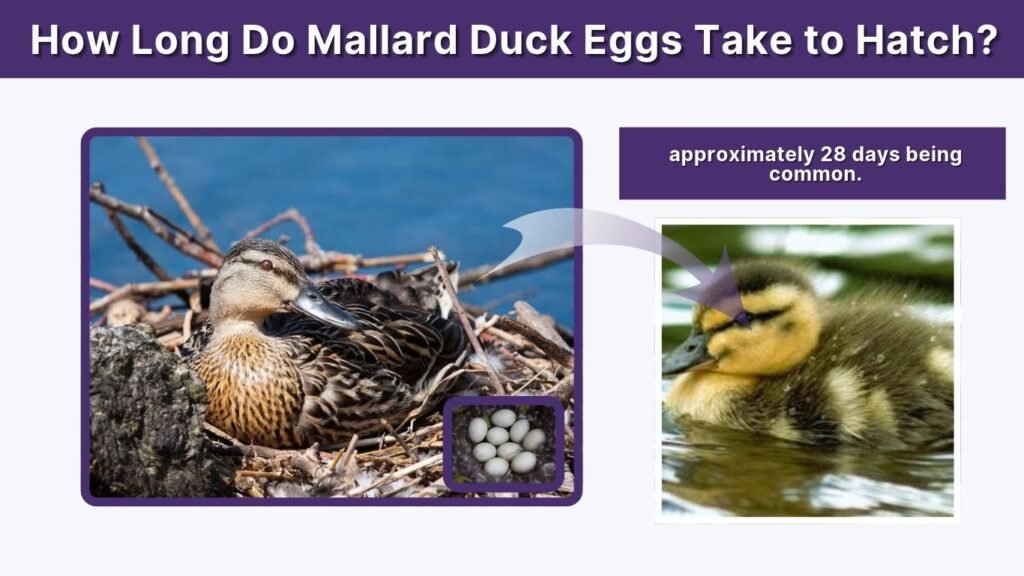
Mallard reproduction begins with seasonal courtship and nesting. Female mallards generally construct nests on the ground, often concealed beneath grass or other vegetation near water. After laying their eggs, they begin incubation, maintaining the warmth required for embryo development. Understanding this process helps explain the earliest and most vulnerable stage of the mallard life cycle.
Mallard Duck Egg Incubation Period
Mallard duck eggs typically take 23–30 days to hatch, with approximately 28 days being common.
The female usually begins full incubation after laying most or all of her clutch, helping the ducklings hatch within a relatively short period.
Temperature, weather conditions, and nest disturbances can influence incubation success.
How Long Do Mallard Ducks Sit on Their Eggs?
Female mallards spend much of the incubation period sitting on their eggs.
They occasionally leave the nest briefly to feed, drink, and maintain their feathers.
Before leaving, a hen may cover the eggs with down feathers and surrounding nesting material. These short natural breaks do not necessarily indicate abandonment.
How Many Eggs Do Mallards Lay?
A typical mallard clutch contains several eggs, although the exact number varies.
Cornell Lab of Ornithology reports clutch sizes ranging from 1 to 13 eggs.
The eggs usually have creamy, grayish, or greenish-buff shells.
Successful hatching depends on suitable incubation conditions and protection from predators.
Mallard Duck Life Cycle: From Egg to Adult
Mallards develop rapidly after hatching. Unlike many songbirds, newly hatched ducklings are covered in down, have open eyes, and can walk and swim shortly after birth. However, they still depend heavily on their mother for warmth, protection, and guidance. Their early development is especially important because young ducklings face high mortality before becoming independent.
Stage 1: Egg and Hatching
The female mallard incubates her clutch for approximately four weeks.
Once hatching begins, ducklings emerge with downy feathers and relatively well-developed mobility.
Healthy ducklings usually leave the nest within a day of hatching and follow their mother toward suitable water.
Stage 2: Duckling Development
During their first weeks, ducklings feed on small aquatic animals and gradually increase their independence.
Their mother leads them to suitable feeding areas and protects them from threats.
Young mallards replace their down with developing feathers as they grow.
They generally begin flying when they are approximately 50–60 days old.
Stage 3: Juvenile and Adult Mallards
After learning to fly, young mallards become increasingly independent.
Their plumage gradually develops toward the appearance of adult birds. Males eventually acquire the familiar glossy green head and chestnut breast during their seasonal plumage cycle.
Mallards typically begin breeding at around one year of age.
How to Help Mallard Ducks Live Longer
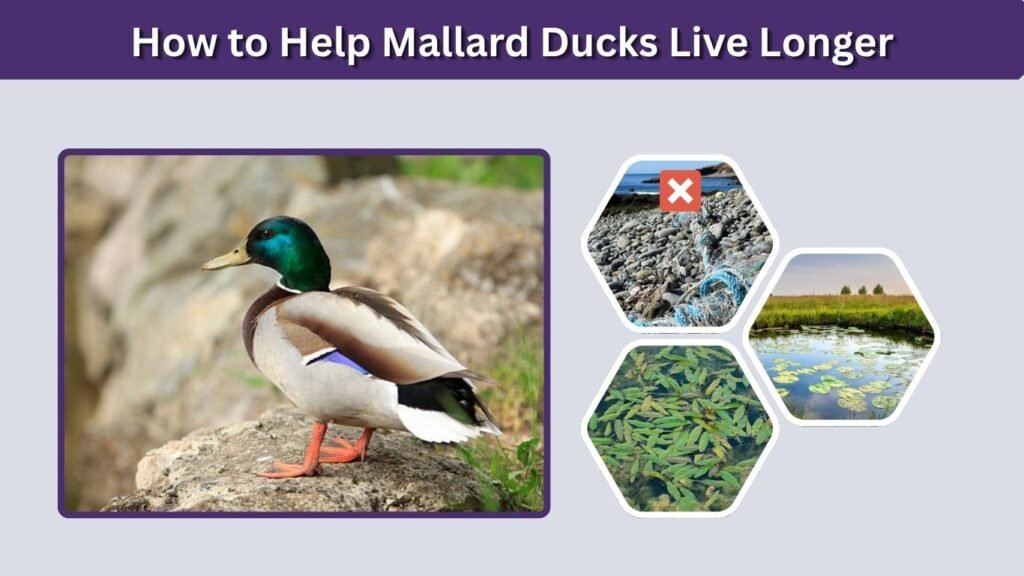
Protecting mallards involves maintaining suitable natural habitats rather than attempting to control individual wild birds. Wetlands, ponds, and vegetated shorelines provide important resources throughout their lives. Responsible human behavior can also reduce avoidable injuries, prevent disturbance around nesting areas, and improve conditions for ducklings and adults.
Protect Natural Habitats
Several practices can benefit local mallard populations:
- Preserve natural wetlands and vegetated shorelines.
- Reduce litter and discarded fishing lines near water.
- Avoid unnecessary disturbance around active nests.
- Keep domestic animals away from nesting birds.
- Support clean water and responsible wetland management.
Provide Safe Food Sources
Mallards obtain most of their required nutrients through natural foraging.
Avoid routinely feeding them bread or highly processed foods, which are poor substitutes for a balanced natural diet.
If feeding is permitted locally, small amounts of suitable foods such as oats or peas are preferable, but preserving natural feeding opportunities is more beneficial.
Protect Ducklings and Nesting Females
Nesting females and young ducklings are particularly sensitive to human disturbance.
Avoid touching eggs, moving nests, or separating ducklings from their mother.
If a duck appears injured or genuinely abandoned, contact a licensed wildlife rehabilitator rather than attempting to raise it yourself.
FAQs
1. How Long Do Mallard Ducks Live in the Wild?
Wild mallard lifespan varies considerably. Bird-ringing data indicate a typical life expectancy of approximately three years for individuals reaching breeding age, while some wildlife guides report 5–10 years. Exceptional mallards can survive much longer, but predation, disease, and environmental hazards limit the lives of many birds.
2. How Long Do Mallard Ducks Live in Captivity?
Mallards under proper managed care may live for many years when provided with balanced nutrition, clean water, suitable shelter, and veterinary attention. Domestic ducks often live around 8–12 years in captivity, although individual lifespans vary. Keeping wild mallards may require legal authorization.
3. How Long Does It Take Mallard Duck Eggs to Hatch?
Mallard duck eggs usually hatch after approximately 23–30 days of incubation, with 28 days being typical. The female incubates the eggs and occasionally leaves the nest for short breaks. Most healthy ducklings emerge within a relatively short period and leave the nest within a day.
4. How Long Do Mallard Ducklings Stay With Their Mother?
Mallard ducklings usually remain under their mother’s care until they can fly, typically around 50–60 days after hatching. During this period, the female guides them to feeding areas and protects them from predators. Ducklings become increasingly independent as their wings and flight feathers develop.
5. How Long Before Mallard Ducks Can Fly?
Young mallards generally begin flying around seven to nine weeks after hatching. Their flight feathers and muscles develop gradually during this period. Until they can fly, ducklings rely on swimming, hiding, and maternal protection to escape danger. Growth rates can vary with nutrition and environmental conditions.