
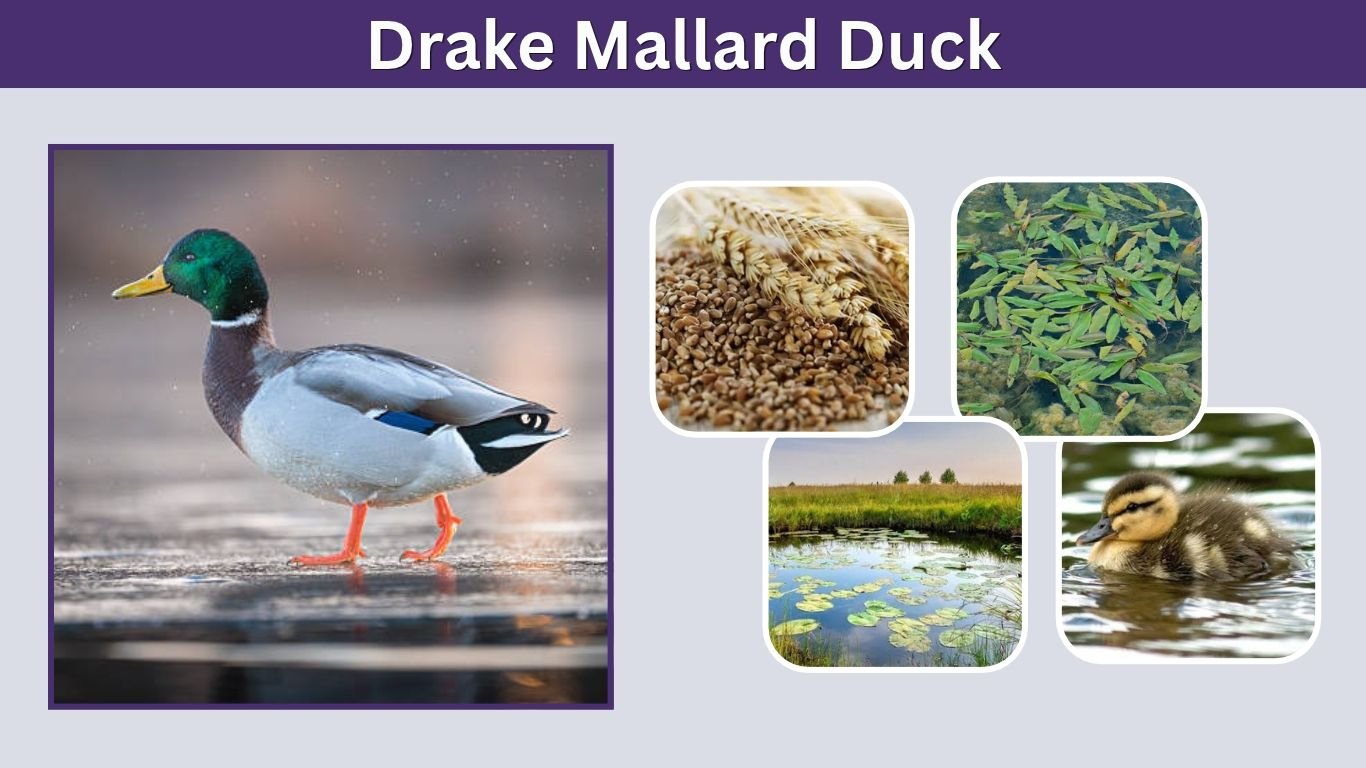
The drake mallard duck is one of the most recognizable waterfowl species, famous for its glossy green head, bright yellow bill, and chestnut-brown breast. As the male of the mallard species (Anas platyrhynchos), the drake has colorful plumage that distinguishes it from the brown female. These ducks inhabit wetlands, ponds, rivers, and even urban parks across much of the Northern Hemisphere. Understanding their appearance, behavior, calls, and breeding habits can help birdwatchers identify them confidently. This guide explores the fascinating characteristics of the male mallard duck.
What Is a Drake Mallard Duck?
A drake mallard is simply an adult male mallard duck. The term “drake” refers to a male duck, while a female duck is commonly called a hen. Both belong to the same species, but their feathers, vocalizations, and reproductive roles differ. Male mallards are especially recognizable during the breeding season because of their distinctive colors.
What Does Drake Mean in Ducks?
The term “drake” is used for male ducks of many species, including mallards, wood ducks, and northern pintails.
A drake mallard belongs to the family Anatidae, which includes ducks, geese, and swans. Adult male mallards are generally slightly larger and heavier than females, although their body shapes are similar.
Is a Drake Different From a Mallard?
A drake is not a separate duck species. “Mallard” identifies the species, while “drake” identifies its male sex.
Therefore, every drake mallard is a mallard, but not every mallard is a drake. Female mallards are called hens, and young birds are called ducklings.
Drake Mallard Duck Identification and Appearance
Identifying an adult drake mallard is relatively easy when it displays its colorful breeding plumage. Its green head, white neck ring, yellow bill, and gray body form a distinctive combination. However, males undergo seasonal feather changes that can make identification more difficult. Understanding these physical characteristics helps distinguish drakes from female mallards and similar-looking ducks.
Key Physical Features of a Drake Mallard
An adult male mallard in breeding plumage usually displays these characteristics:
- Head: Glossy, iridescent green feathers that may appear blue or black under different lighting.
- Bill: Bright yellow to yellowish-olive with a dark tip.
- Neck: Narrow white ring separating the head from the chest.
- Breast: Rich chestnut-brown or reddish-brown feathers.
- Body: Mostly pale gray with darker upperparts.
- Tail: Black-and-white markings with distinctive curled central tail feathers.
- Wings: Iridescent blue-purple speculum bordered by white.
- Feet: Bright orange legs and webbed feet.
Drake Mallard Duck Size and Weight
Drake mallards are medium-to-large dabbling ducks with sturdy bodies and broad wings.
Adult mallards generally measure 19.7–25.6 inches in length and have wingspans of approximately 32.3–37.4 inches.
Males commonly weigh around 2–3 pounds, although body weight varies with age, season, and environmental conditions.
Why Do Male Mallards Have Green Heads?
The bright green appearance comes primarily from microscopic feather structures that reflect light, producing iridescent coloration.
This structural coloration changes in appearance depending on the viewing angle and lighting conditions.
The colorful plumage also plays an important role in courtship displays and helps distinguish breeding males from females.
Drake Mallard vs Female Mallard Duck
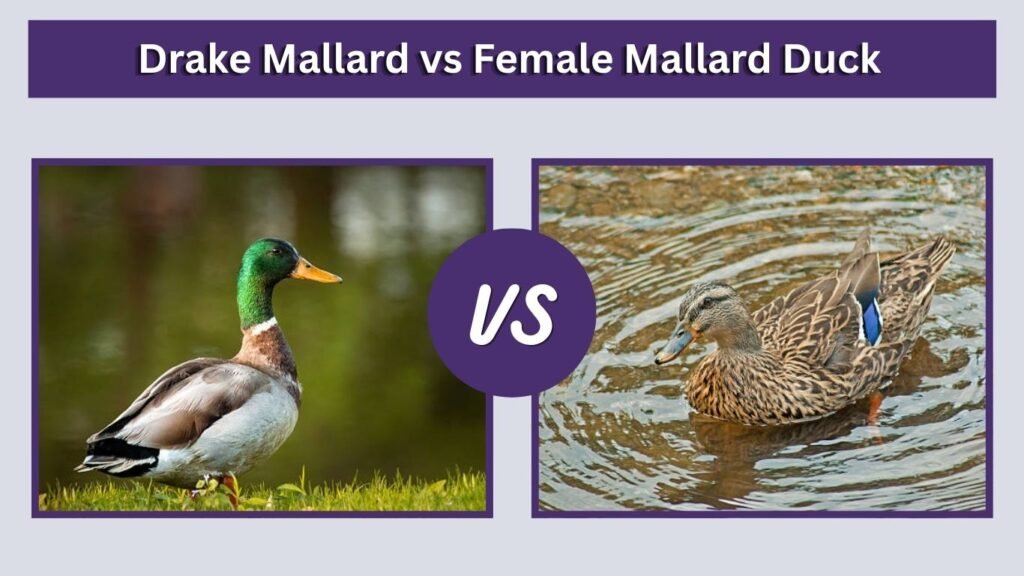
Male and female mallards look noticeably different during most of the year. This difference is called sexual dimorphism. Males display colorful plumage, while females have brown feathers that provide camouflage during nesting. Their bills, vocalizations, and breeding responsibilities also differ, although both sexes share similar body shapes, feeding habits, and blue wing patches.
| Feature | Drake Mallard | Female Mallard |
| Sex | Male | Female |
| Head | Iridescent green in breeding plumage | Mottled brown |
| Bill | Yellow or yellowish-olive | Orange with dark markings |
| Breast | Chestnut-brown | Brown with darker patterns |
| Body | Gray with black-and-white tail | Brown and heavily patterned |
| Voice | Soft, raspy calls | Loud, familiar quacks |
| Nesting role | Courtship and pairing | Egg incubation and duckling care |
Why Are Female Mallards Brown?
Female mallards have mottled brown plumage that blends with grass, reeds, and surrounding vegetation.
This coloration provides protection while the hen incubates eggs in her ground-level nest.
The subdued feathers make females less conspicuous to predators compared with brightly colored breeding males.
Can Drake Mallard Look Like a Female?
Yes. During the summer molt, male mallards develop a temporary brownish appearance known as eclipse plumage.
They may resemble females, but their yellowish bills, darker tail markings, and remaining traces of green help with identification.
Once new breeding feathers develop, the familiar green-headed appearance returns.
Mallard Drake Duck Call and Sounds
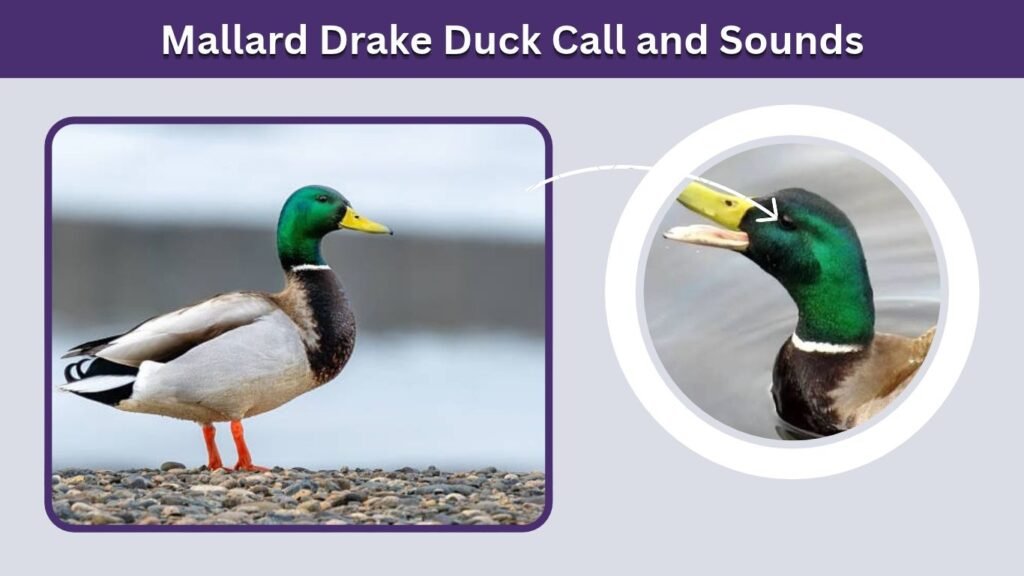
Drake mallards produce several distinctive vocalizations, but they do not make the loud, familiar quack associated with female ducks. Their calls are generally softer, raspier, and less noticeable. Male mallards use different sounds during courtship and social interactions. Learning to recognize these vocalizations can help birdwatchers identify drakes even when their colorful plumage is difficult to see.
What Does a Drake Mallard Sound Like?
The typical male mallard call is a quiet, nasal, raspy sound, sometimes described as “raeb” or “rhaeb.”
Males also produce short whistles and grunts during courtship displays.
These calls are usually much softer than female mallard vocalizations and may be difficult to hear from a distance.
Drake Mallard Call vs Hen Call
Female mallards produce the familiar loud quacking sounds commonly associated with ducks.
Their calls often begin loudly and gradually become softer in a repeated sequence.
Drakes, in contrast, produce quieter rasping notes. The differences in voice can be useful when identifying birds hidden among vegetation.
What Is a Mallard Drake Duck Call?
A mallard drake duck call is also the name of a hunting accessory designed to imitate the vocalizations of male mallards.
These devices reproduce the softer raspy sounds associated with drakes rather than the loud calls of hens.
Birdwatchers interested in natural vocalizations can compare recordings of both sexes using established bird sound libraries.
Drake Mallard Habitat, Diet, and Behavior
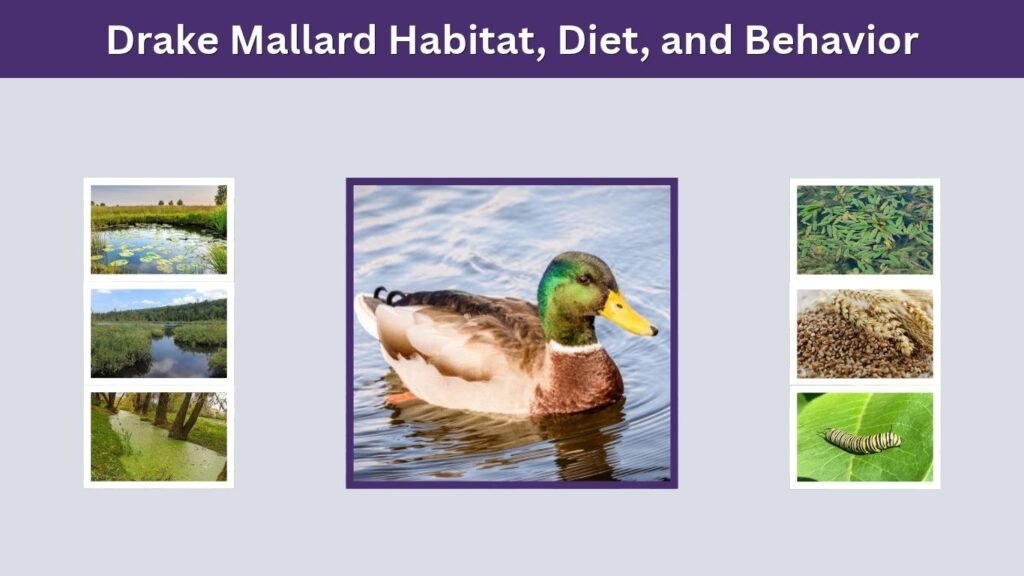
Drake mallards are highly adaptable birds that occupy natural and artificial wetlands. They thrive in environments with shallow water, aquatic vegetation, and accessible feeding areas. Like female mallards, males are dabbling ducks that obtain much of their food near the water’s surface. Their flexible diets and ability to tolerate human activity make mallards particularly successful in urban environments.
Where Do Drake Mallard Ducks Live?
Drake mallards can be found in many freshwater environments, including:
- Lakes and ponds
- Marshes and wetlands
- Slow-moving rivers and streams
- Agricultural fields near water
- Urban parks and reservoirs
Mallards occur naturally across much of North America, Europe, and Asia. They have also been introduced to other regions.
Some populations migrate seasonally, while others remain in areas where suitable water and food are available year-round.
What Do Drake Mallards Eat?
Male mallards are omnivores that consume both plants and small animals.
Their diet includes aquatic seeds, grasses, pondweeds, grains, insects, snails, and other small invertebrates.
They often feed by tipping their heads underwater while keeping their tails above the surface. This feeding behavior is known as dabbling.
How Do Drake Mallards Behave?
Drakes frequently gather with other mallards outside the breeding season.
They spend considerable time swimming, feeding, resting, and preening their feathers.
Mallards are also capable fliers and often travel between feeding areas and safe resting locations. Their movements vary with seasonal weather and food availability.
Drake Mallard Mating, Breeding, and Life Cycle
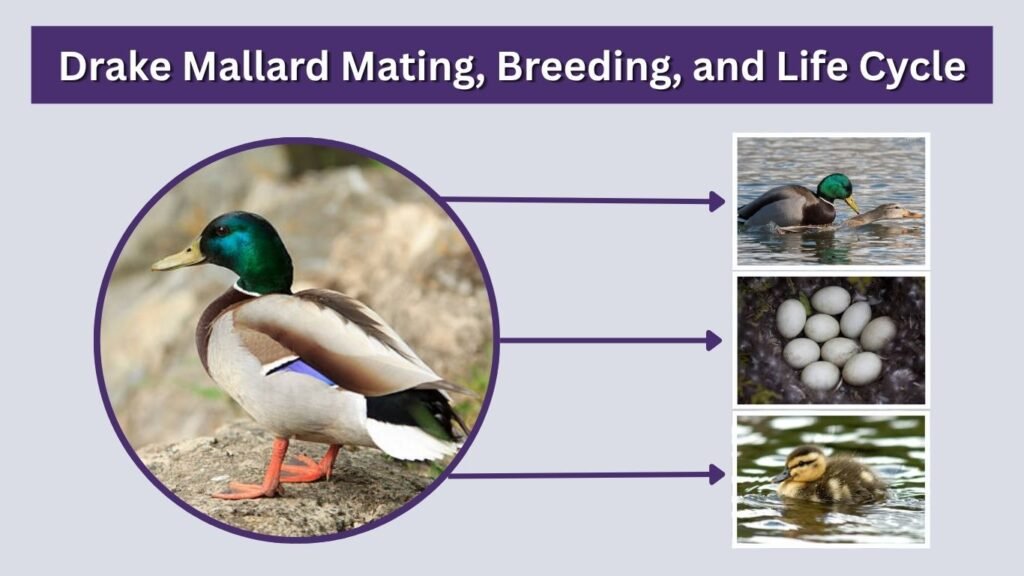
Male mallards participate actively in courtship, displaying colorful feathers and performing synchronized movements to attract females. However, their breeding responsibilities are different from those of hens. While males establish seasonal pair bonds, females perform incubation and care for ducklings. Understanding this reproductive cycle also helps explain why male mallards change plumage and behavior throughout the year.
How Do Drake Mallards Attract Females?
During courtship, drakes perform several noticeable behaviors, including:
- Head-bobbing: Moving the head rhythmically during displays.
- Head-up-tail-up: Raising the head and tail while producing a short call.
- Water movements: Dipping the bill and splashing water during courtship.
- Vocal displays: Producing soft whistles and grunts.
Mallard pairs often form during fall or winter before the spring nesting season.
Do Drake Mallards Care for Ducklings?
Male mallards generally do not incubate eggs or raise ducklings.
Female mallards construct nests, incubate their eggs for approximately 23–30 days, and lead the young to feeding areas after hatching.
Drakes typically separate from females during the nesting period and later undergo their annual molt.
How Long Do Drake Mallards Live?
Wild mallards may survive several years, although many die young because of predation, disease, hunting, and environmental hazards.
Their survival depends on habitat quality, available food, weather conditions, and other factors.
Some banded mallards have survived for more than 20 years, but such exceptional longevity is uncommon in wild populations.
FAQs
1. What Is a Drake Mallard Duck?
A drake mallard duck is an adult male mallard (Anas platyrhynchos). It typically has a glossy green head, bright yellow bill, white neck ring, chestnut-brown breast, and gray body during the breeding season. These features distinguish it from the brown female mallard.
2. Do Drake Mallard Ducks Quack?
Male mallards do not produce the familiar loud quack associated with females. Instead, they make softer, rasping calls, short whistles, and grunts. Female mallards are responsible for the recognizable repeated quacking sounds commonly heard around ponds and wetlands.
3. Why Do Drake Mallards Have Curly Tail Feathers?
Adult male mallards commonly develop curled black central tail feathers as part of their breeding plumage. These feathers are useful identification features, especially when distinguishing males from females during periods when their overall body coloration is less distinctive.
4. Do Drake Mallards Stay With Their Mates?
Mallards usually form seasonal pair bonds during fall or winter. However, the male generally leaves the female during the nesting period rather than helping raise ducklings. Unlike species that maintain long-term partnerships, mallards typically establish new pair bonds in subsequent breeding seasons.
5. Are All Green-Headed Ducks Drake Mallards?
No. Although the green head is characteristic of breeding male mallards, some other duck species also have green or iridescent head feathers. Hybrid ducks may display similar coloration. Accurate identification should consider the bill, body markings, white neck ring, tail, and wing patterns.