
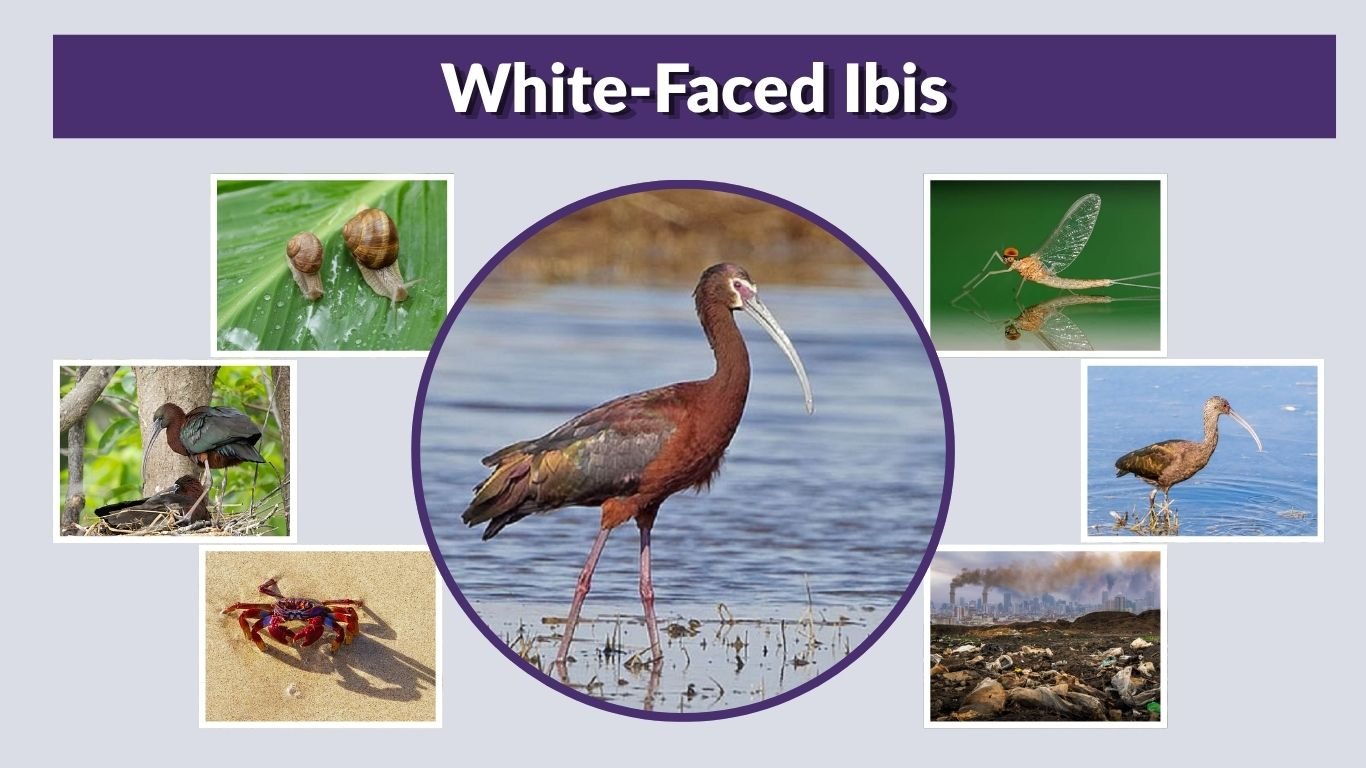
The White-Faced Ibis is a striking wading bird known for its glossy, dark plumage, long curved bill, and reddish legs. During breeding season, adults develop a distinctive border of white feathers around the face, making them easier to identify. These birds are commonly associated with marshes, flooded fields, and shallow wetlands across western North America. Although often confused with the Glossy Ibis, the White-Faced Ibis has several useful identifying characteristics. Here is a complete guide to its appearance, habitat, diet, migration, behavior, and life cycle.
What Is a White-Faced Ibis?
The White-Faced Ibis is a medium-sized wading bird in the ibis and spoonbill family. Its scientific name is Plegadis chihi. Despite its name, the bird does not have a completely white face. Instead, breeding adults develop a narrow white border around the reddish facial skin near the base of the bill.
White-Faced Ibis Identification
A breeding adult White-Faced Ibis typically has:
- Glossy dark maroon-brown body
- Metallic green and purple highlights
- Long, downward-curved bill
- Reddish or pinkish legs
- Red facial skin
- Thin white feathers bordering the face
- Long neck and relatively long legs
- Dark wings with iridescent coloration
Outside breeding season, the white facial border becomes less noticeable, making identification more difficult.
White-Faced Ibis Size
White-Faced Ibises generally measure about 18–23 inches long and have a wingspan of roughly 35–36 inches.
Their long legs and neck make them appear larger when standing upright in shallow water.
Males and females look very similar, although males may average slightly larger.
White-Faced Ibis Scientific Name and Family
The scientific name of the White-Faced Ibis is Plegadis chihi.
It belongs to the family Threskiornithidae, which includes ibises and spoonbills. The species is closely related to the Glossy Ibis, explaining why the two birds can be difficult to distinguish.
White-Faced Ibis Habitat
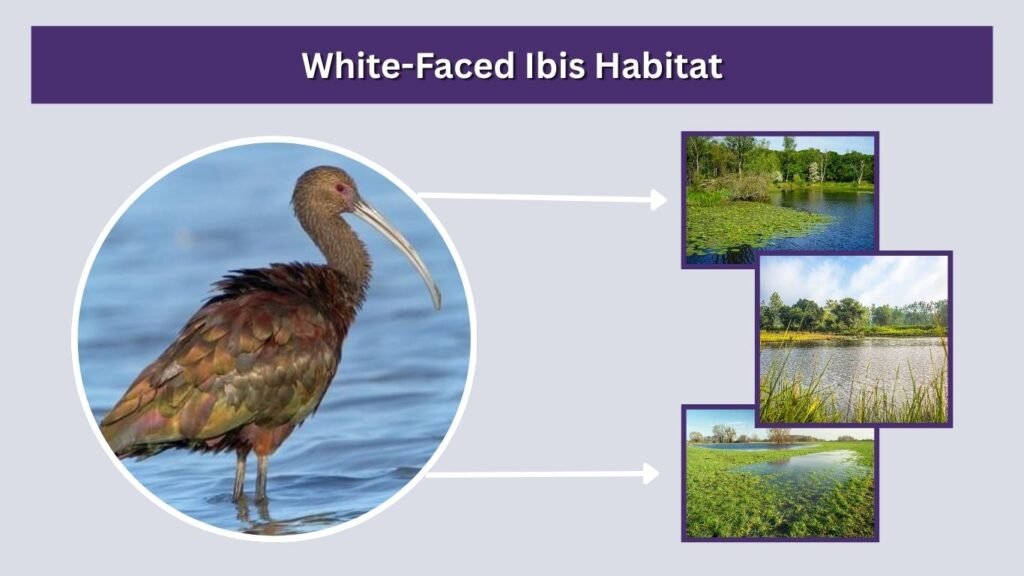
White-Faced Ibises depend heavily on wetlands for feeding and breeding. They prefer areas with shallow water, soft mud, and abundant aquatic animals.
They may use both natural wetlands and human-modified landscapes, particularly agricultural fields that provide suitable feeding conditions.
Where Do White-Faced Ibises Live?
Typical habitats include:
- Freshwater marshes
- Shallow wetlands
- Flooded agricultural fields
- Mudflats
- Ponds
- Reservoir edges
- Wet meadows
- Irrigation areas
- Marshy lake margins
During the breeding season, they often select large marsh complexes with dense vegetation for nesting.
White-Faced Ibis Range
The White-Faced Ibis is primarily associated with western and central North America.
Breeding populations occur across portions of the western United States and southern Canada. Birds may be seen in states including Utah, California, Colorado, Nevada, Idaho, Oregon, Texas, and surrounding regions.
Some populations also occur in Mexico and parts of Central and South America.
White-Faced Ibis in Utah
Utah provides important breeding and feeding habitat for White-Faced Ibises.
Large numbers can occur around wetlands associated with the Great Salt Lake and other marsh systems. Areas near Brigham City and northern Utah can support impressive gatherings during migration and breeding periods.
What Do White-Faced Ibises Eat?
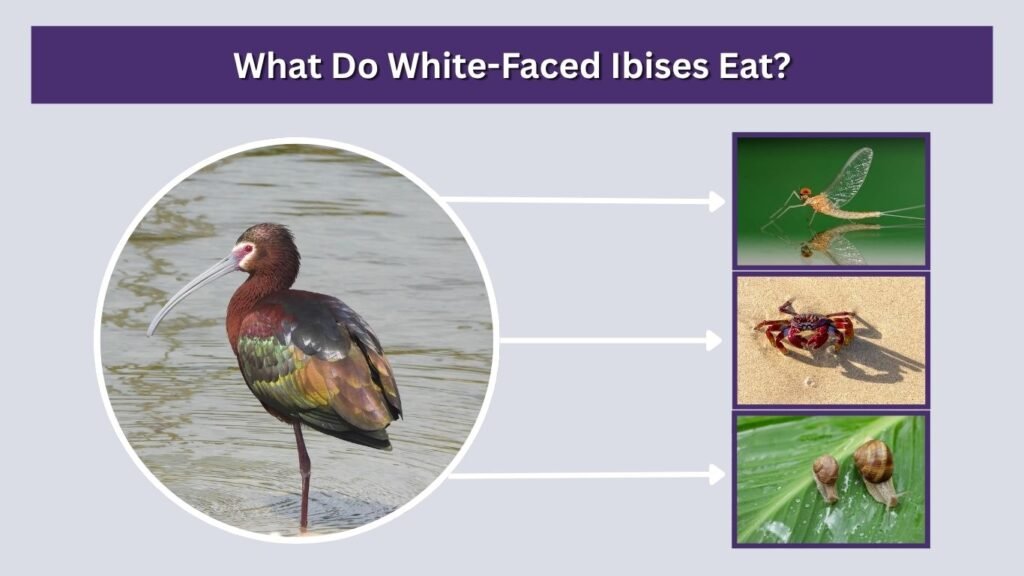
White-Faced Ibises eat a wide variety of small animals found in shallow wetlands and moist soils. Their long curved bills allow them to probe beneath the surface where prey may be hidden from view.
Diet can vary significantly depending on season and habitat.
White-Faced Ibis Diet
Common foods include:
- Aquatic insects
- Insect larvae
- Crayfish
- Small crustaceans
- Worms
- Snails
- Small fish
- Frogs and tadpoles
- Spiders
- Other small invertebrates
In agricultural landscapes, White-Faced Ibises may also search flooded fields for insects and worms.
How Does a White-Faced Ibis Hunt?
A White-Faced Ibis usually walks slowly through shallow water or wet soil while inserting its long bill into the mud.
The bird often searches by touch rather than sight. Once its sensitive bill detects an animal beneath the surface, it quickly closes the bill around the prey.
This feeding adaptation allows the ibis to hunt successfully even in muddy or cloudy water.
White-Faced Ibis vs Glossy Ibis
The White-Faced Ibis and Glossy Ibis are extremely similar. Both belong to the genus Plegadis and have dark, glossy plumage with long curved bills.
Identification can be especially challenging outside breeding season.
How to Tell White-Faced and Glossy Ibises Apart
Important differences include:
- Face: Breeding White-Faced Ibises have red facial skin surrounded by white feathers.
- Eye: White-Faced Ibises usually have reddish eyes.
- Legs: White-Faced Ibises generally show brighter reddish legs during breeding season.
- Glossy Ibis face: Breeding Glossy Ibises usually have dark bluish-gray facial skin bordered by pale lines.
- Range: White-Faced Ibises are more common in western North America, while Glossy Ibises are more strongly associated with eastern and southeastern regions.
Location can therefore provide an important clue when identifying an unfamiliar ibis.
Which Species Is Easier to Identify?
Breeding adults are much easier to separate because facial and leg colors become more pronounced.
Immature birds and nonbreeding adults can look remarkably alike. In these cases, birders often consider several characteristics together rather than relying on one feature.
Juvenile White-Faced Ibis
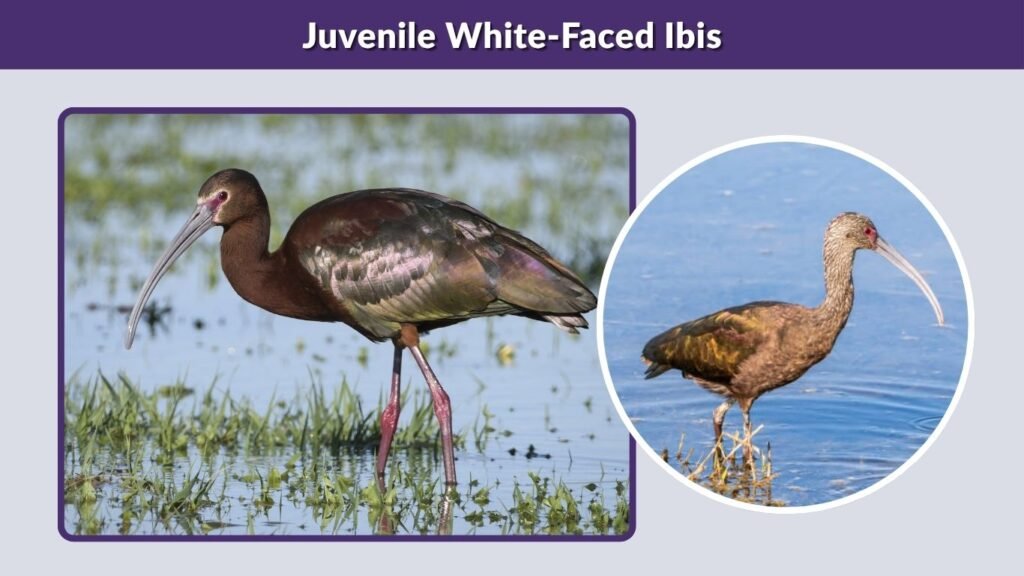
Young White-Faced Ibises lack many of the colorful characteristics found in breeding adults.
Their subdued appearance can make them difficult to distinguish from juvenile Glossy Ibises.
What Does a Juvenile White-Faced Ibis Look Like?
A juvenile generally has dark brown plumage without the strong metallic colors of an adult.
The face is less colorful, and the characteristic white facial border is absent or poorly developed.
As the bird matures, its plumage gradually becomes richer and more iridescent.
Immature White-Faced Ibis Identification
Immature birds may show:
- Brownish body feathers
- Duller legs
- Dark curved bill
- Less obvious facial coloration
- Limited green or purple iridescence
- No distinctive breeding-season white facial border
Because young White-Faced and Glossy Ibises are so similar, location and association with adults can help with identification.
White-Faced Ibis Migration
Many White-Faced Ibises living in northern portions of their range are migratory.
As colder weather arrives and shallow wetlands begin to freeze, birds move toward warmer areas with accessible feeding habitat.
When Do White-Faced Ibises Migrate?
Northward migration generally occurs during spring, when birds return to breeding regions.
After nesting and raising their young, many begin moving south during late summer and fall.
Exact timing varies according to location, temperature, water conditions, and food availability.
White-Faced Ibis in Flight
White-Faced Ibises fly with their necks and legs fully extended.
Their flight often consists of steady wingbeats interrupted by short glides. Groups may form lines, loose flocks, or V-shaped formations while moving between feeding locations or during migration.
White-Faced Ibis Breeding and Nesting
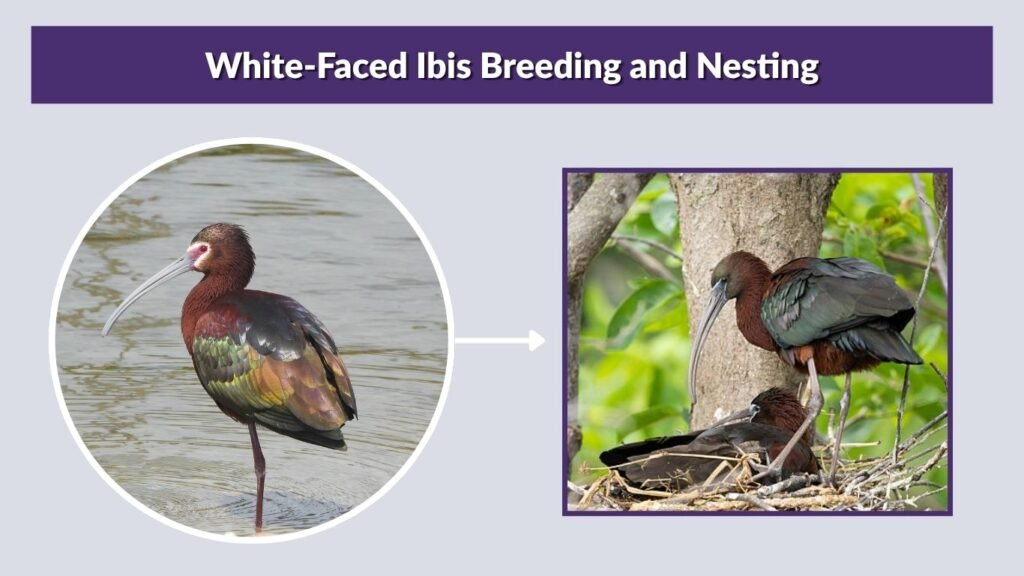
White-Faced Ibises are social nesters and may breed in large colonies.
Suitable nesting habitat usually contains shallow water and dense marsh vegetation, which can provide protection from some predators.
Where Do White-Faced Ibises Nest?
Nests are commonly constructed among:
- Reeds
- Cattails
- Rushes
- Low shrubs
- Other dense wetland vegetation
The nest is generally made from sticks, reeds, and other plant material.
White-Faced Ibis Chicks
Young chicks remain dependent on their parents after hatching.
Both parents participate in feeding and protecting the young. As chicks grow, they gradually become more active around the nesting colony before eventually learning to fly and feed independently.
White-Faced Ibis Behavior and Calls
White-Faced Ibises are highly social birds. They often forage, roost, migrate, and breed in groups.
Large numbers may gather where wetlands or agricultural areas provide abundant food.
White-Faced Ibis Sound
White-Faced Ibises are generally quieter than many familiar songbirds.
Their calls are usually low grunts, croaks, or nasal sounds, particularly around breeding colonies or when birds interact with one another.
Are White-Faced Ibises Aggressive?
They are generally not aggressive toward humans.
Like most wild birds, however, nesting adults may become defensive if people approach their nests or chicks too closely. Observing them from a respectful distance reduces disturbance.
Are White-Faced Ibises Endangered?

White-Faced Ibises are not generally considered globally endangered, but they remain highly dependent on healthy wetland ecosystems.
Potential threats include wetland drainage, drought, pollution, changes in water management, disturbance around breeding colonies, and loss of suitable feeding habitat.
Protecting major marshes and maintaining appropriate water levels can benefit both White-Faced Ibises and numerous other wetland species.
Interesting White-Faced Ibis Facts
The White-Faced Ibis has several fascinating characteristics:
- Its feathers can appear green, purple, bronze, or maroon depending on the light.
- The “white face” is mainly noticeable during breeding season.
- Its curved bill helps locate prey hidden in mud.
- The species often forms large feeding and nesting colonies.
- Juveniles are much duller than breeding adults.
- Many northern populations migrate south for winter.
- White-Faced and Glossy Ibises can be extremely difficult to distinguish.
- Wetlands of the western United States provide important breeding habitat.
FAQs
Why Is It Called a White-Faced Ibis?
Breeding adults develop a thin border of white feathers around the red facial skin near the base of the bill. The entire face is not actually white.
What Do White-Faced Ibises Eat?
They mainly eat aquatic insects, worms, crustaceans, snails, small fish, amphibians, and other small animals found in wetlands and moist soil.
What Is the Difference Between a Glossy Ibis and a White-Faced Ibis?
Breeding White-Faced Ibises have reddish facial skin surrounded by white feathers and typically reddish eyes. Glossy Ibises generally have darker facial skin with pale borders. Their geographic ranges also differ.
Where Can You See White-Faced Ibises?
They are most commonly found in wetlands across western and central North America, particularly around marshes, flooded fields, lakes, and shallow ponds.
Do White-Faced Ibises Migrate?
Yes. Many populations breeding in northern parts of the range migrate south during fall and return north in spring, while some birds in warmer regions may remain year-round.
