
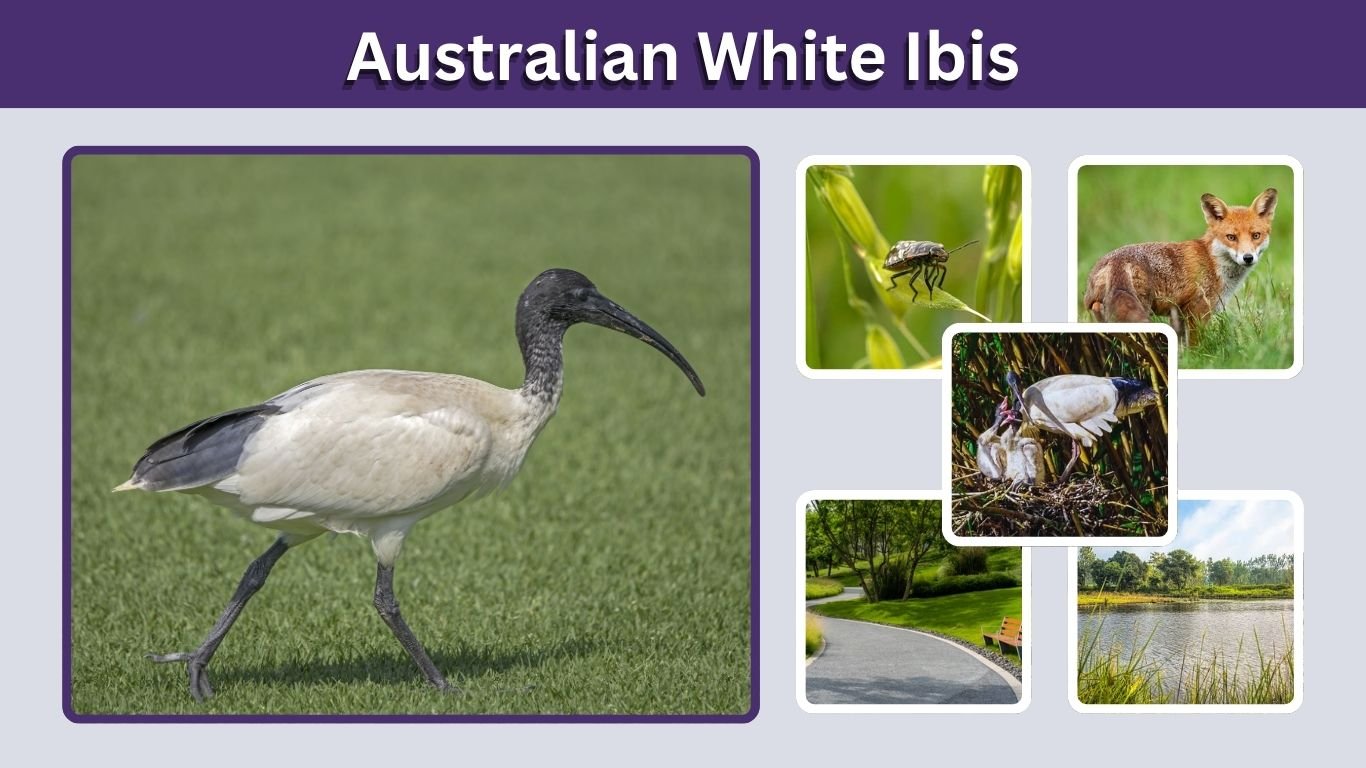
The Australian White Ibis is one of Australia’s most recognizable birds, known for its white body, black featherless head, long curved bill, and habit of appearing in city parks and urban areas. Once strongly associated with wetlands, the species has adapted remarkably well to human environments, especially in cities such as Sydney. This adaptability has earned it the humorous nickname “bin chicken.” Despite its reputation, the Australian White Ibis is a native and ecologically important bird with fascinating feeding, breeding, and survival behaviors.
What Is an Australian White Ibis?
The Australian White Ibis is a large wading bird native to Australia. It belongs to the ibis and spoonbill family and naturally inhabits wetlands, grasslands, floodplains, and coastal areas. In recent decades, many birds have also become common in cities where food and artificial water sources are readily available.
Australian White Ibis Identification
An adult Australian White Ibis usually has:
- Mostly white body feathers
- Bare black head and upper neck
- Long, downward-curved black bill
- Long dark legs
- Black tail feathers
- Dark ornamental feathers around the lower neck
- Large wings with black tips
- Upright wading-bird posture
Its unusual combination of a white body and black head makes it relatively easy to identify.
Australian White Ibis Scientific Name
The scientific name of the Australian White Ibis is Threskiornis molucca.
It belongs to the family Threskiornithidae, which includes ibises and spoonbills.
Australian White Ibis Size
Australian White Ibises are fairly large birds. Adults generally measure around 25–30 inches long and have broad wings suitable for strong, sustained flight.
Males are usually larger than females and often have longer bills.
Australian White Ibis Habitat and Distribution
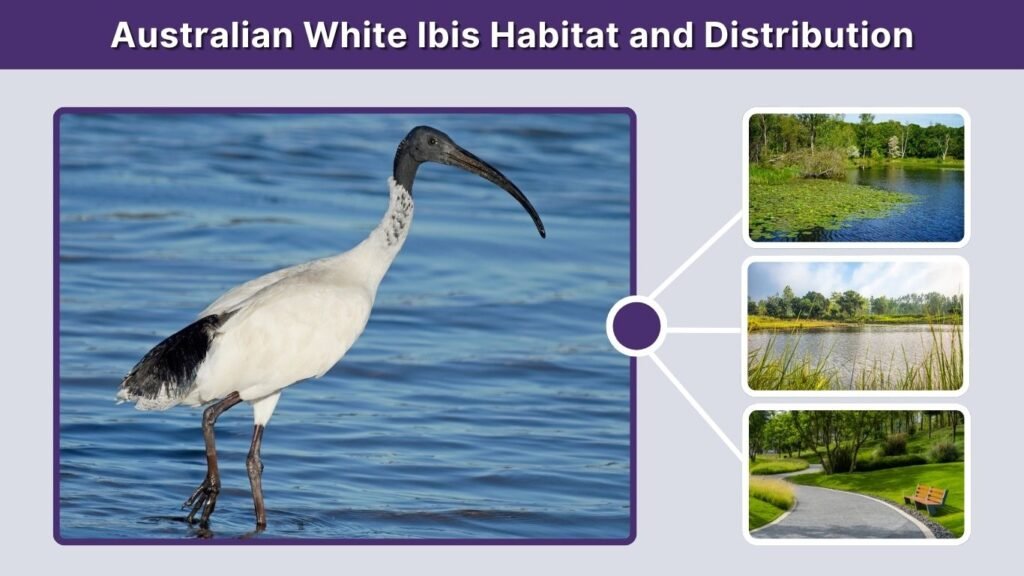
Australian White Ibises were historically associated with inland wetlands, marshes, floodplains, and other areas where shallow water provided abundant food. Changes to water availability and the expansion of urban areas have encouraged many populations to move into towns and cities.
Today, they can be found across a wide variety of landscapes.
Common Australian White Ibis Habitats
Typical habitats include:
- Freshwater wetlands
- Marshes
- Floodplains
- Lakes and ponds
- Mudflats
- Grasslands
- Agricultural fields
- Urban parks
- Golf courses
- City waterways
Urban environments can provide permanent water sources and predictable food, making them attractive to ibis populations.
Are White Ibises Native to Australia?
Yes. The Australian White Ibis is native to Australia.
Its increasing presence in cities sometimes causes people to assume it is an introduced species, but it naturally occurs across much of the continent.
Australian White Ibis in Sydney
The Australian White Ibis has become especially famous in Sydney.
Large numbers can be seen in parks, gardens, picnic areas, wetlands, and around waterways. Their willingness to investigate rubbish bins and discarded food has made them one of Sydney’s most recognizable urban birds.
Why Is the Australian White Ibis Called a Bin Chicken?
The nickname “bin chicken” comes from the bird’s habit of searching through rubbish bins and eating discarded food in Australian cities.
The name is usually humorous rather than scientific and has become strongly associated with urban ibis populations.
Why Do They Search Rubbish Bins?
Australian White Ibises are opportunistic feeders.
When natural wetlands become less reliable, city environments can offer abundant food. Open rubbish bins, food scraps, picnic areas, and outdoor dining spaces provide easy feeding opportunities.
Their intelligence and adaptability allow them to take advantage of these resources.
Are Australian White Ibises Pests?
Some people consider them pests when large numbers gather around urban areas.
However, they are native wildlife and should not simply be treated as unwanted invasive animals. Problems are often linked to easy access to human food and rubbish.
Secure bins, clean public spaces, and responsible food disposal can reduce unwanted ibis activity.
What Do Australian White Ibises Eat?
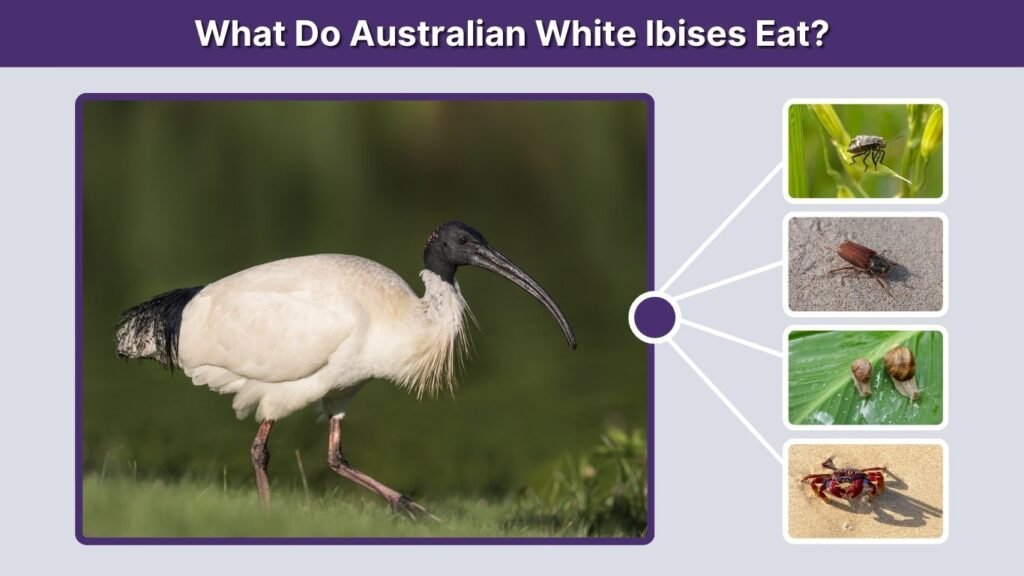
The Australian White Ibis has a varied diet and is an opportunistic feeder. In natural environments, it uses its long curved bill to probe mud, soft soil, and shallow water for small animals.
Urban birds may supplement this natural diet with discarded human food.
Australian White Ibis Diet
Natural foods include:
- Insects
- Beetles
- Grasshoppers
- Crayfish
- Small crustaceans
- Worms
- Snails
- Small fish
- Frogs
- Aquatic animals
- Seeds and plant material
Their diet changes according to habitat and available food.
How Does an Australian White Ibis Find Food?
The bird often walks slowly through shallow water or grass while probing the ground with its long bill.
Its bill helps detect prey hidden beneath mud or vegetation.
This feeding technique is particularly effective in wetlands, where many insects and small aquatic animals remain hidden below the surface.
Should People Feed Australian White Ibises?
Feeding wild ibises is generally discouraged.
Human foods may not provide suitable nutrition, and regular feeding can encourage birds to gather unnaturally close to people. It can also make them more dependent on urban food sources.
Allowing them to search for natural foods is usually healthier.
Australian White Ibis Behavior
Australian White Ibises are social and adaptable birds. They frequently gather in groups while feeding, roosting, and breeding.
Urban populations have learned to live successfully alongside people and can become remarkably comfortable in busy environments.
Are Australian White Ibises Aggressive?
Australian White Ibises are generally not aggressive toward humans.
They may approach people when they associate humans with food, but most prefer to walk away if threatened.
As with any wild bird, they may defend themselves if captured, cornered, or disturbed near a nest.
Australian White Ibis Call
The Australian White Ibis is not famous for musical songs.
Its vocalizations include low grunts, croaks, and harsh calls. These sounds are commonly heard when birds are interacting, nesting, or gathering in groups.
Australian White Ibis Flying
In flight, the Australian White Ibis extends its neck forward and its legs behind the body.
Its broad wings produce strong, steady wingbeats, although birds may also glide or soar when conditions are suitable.
Large groups can sometimes be seen traveling between feeding and roosting locations.
Australian White Ibis Breeding and Life Cycle
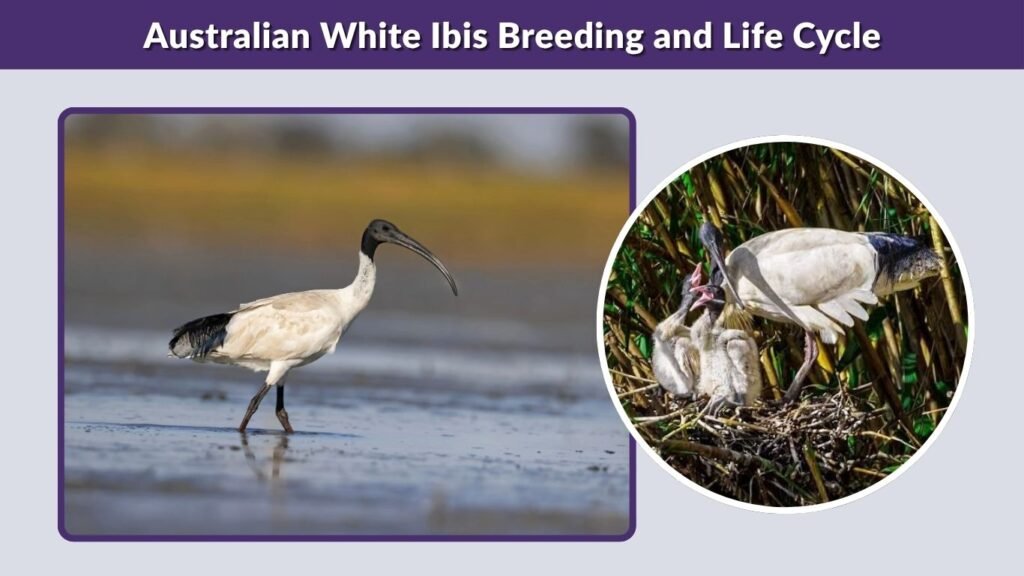
Breeding activity often depends strongly on rainfall and water conditions. When wetlands fill and food becomes abundant, ibis colonies may form and large numbers of birds may begin nesting.
They are social breeders and often nest close together.
Australian White Ibis Nest
Nests are generally constructed from sticks, reeds, and other plant materials.
They may be built:
- In trees
- In shrubs
- Among reeds
- On wetland islands
- Near shallow water
Nesting above or near water can help reduce access by some ground predators.
Baby Australian White Ibis
Young Australian White Ibises initially look very different from adults.
Chicks are covered with darker down and depend entirely on their parents for food and protection.
As they grow, they develop juvenile feathers and gradually acquire the distinctive black head and white body of adults.
Juvenile Australian White Ibis
Juveniles may show more feathering on the head and neck than mature adults.
Their bills and overall appearance also change as they grow. The characteristic bare black head becomes increasingly obvious with maturity.
Australian White Ibis Predators and Threats
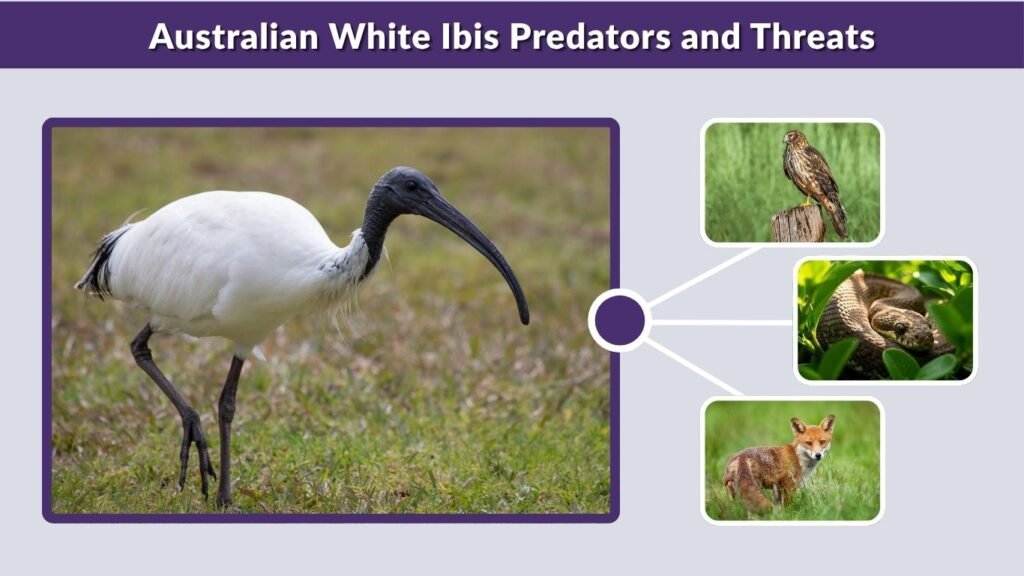
Australian White Ibises face natural predators as well as environmental pressures caused by human activity.
Eggs and chicks are especially vulnerable.
Common Predators
Potential predators can include:
- Large birds of prey
- Monitor lizards
- Snakes
- Foxes
- Feral cats
- Other animals that raid nests
Adult ibises are better able to escape predators because they can fly and often remain in social groups.
Major Threats
Australian White Ibises may be affected by:
- Wetland destruction
- Changes in natural water cycles
- Drought
- Pollution
- Human disturbance
- Poor waste management
- Loss of natural feeding areas
Urban adaptation helps the species survive, but it can also create conflict between birds and people.
Australian White Ibis Adaptations
Australian White Ibises have several adaptations that help them survive in changing environments.
Their long bills allow them to search beneath mud and soil for hidden prey, while their long legs help them walk through shallow water.
Their greatest advantage may be behavioral flexibility. They can switch feeding locations, explore urban environments, and take advantage of new food sources.
This adaptability explains why they have become so successful in Australian cities.
Interesting Australian White Ibis Facts
- The species is native to Australia.
- Its scientific name is Threskiornis molucca.
- It is commonly nicknamed the “bin chicken.”
- Sydney has large and highly visible urban populations.
- Its natural habitat includes wetlands and floodplains.
- Its long bill is designed for probing mud and soil.
- It eats insects, crustaceans, worms, fish, and other small animals.
- Urban populations often investigate human food and rubbish.
- Adults have a distinctive bare black head.
- They usually gather and breed in social groups.
FAQs
Why Are Australian White Ibises Called Bin Chickens?
They earned the nickname because urban birds frequently search rubbish bins for discarded food, particularly in large Australian cities.
What Do Australian White Ibises Eat?
They naturally eat insects, worms, crustaceans, snails, small fish, frogs, and other small animals. Urban birds may also consume discarded human food.
Are Australian White Ibises Native to Australia?
Yes. The Australian White Ibis is a native Australian species, despite its strong association with modern urban environments.
Are Australian White Ibises Dangerous?
No. They are generally not dangerous to humans. They may defend themselves if captured or threatened, but attacks are uncommon.
How Long Do Australian White Ibises Live?
Australian White Ibises can live for many years, especially when they survive the vulnerable juvenile stage. Lifespan varies according to habitat, food availability, disease, and other environmental pressures.
